Rigveda 5.78: To Asvins
Introduction
Rigveda 5.78 is a hymn of 9 verses addressed to Asvins. It stands in book (maṇḍala) 5, the family book of the Atri clan. The Rigveda is the oldest collection of Sanskrit hymns, composed in the second half of the second millennium BCE and handed down orally for many centuries before it was written down.
The manuscript shown is Penn Ms. Coll. 390 Item 41 (University of Pennsylvania), an undated paper manuscript of the padapāṭha (the word-by-word recitation text, in which every word is written separately and compounds are split) of the whole Ṛgveda in Devanāgarī, 884 leaves in fascicles, 7-9 lines to the page, accents in red; this hymn stands on fol. 392v-393v. Each section below gives the verses that end on one page; the page boundaries were read on the images (the opening words of every page), not counted out. Where the manuscript is a padapāṭha (the word-by-word recitation text), the section shows Aufrecht's continuous (saṃhitā) text first and, as the edition text, the padapāṭha of the same verses, which is the form written on the page.
How was this verified? (Provenance)
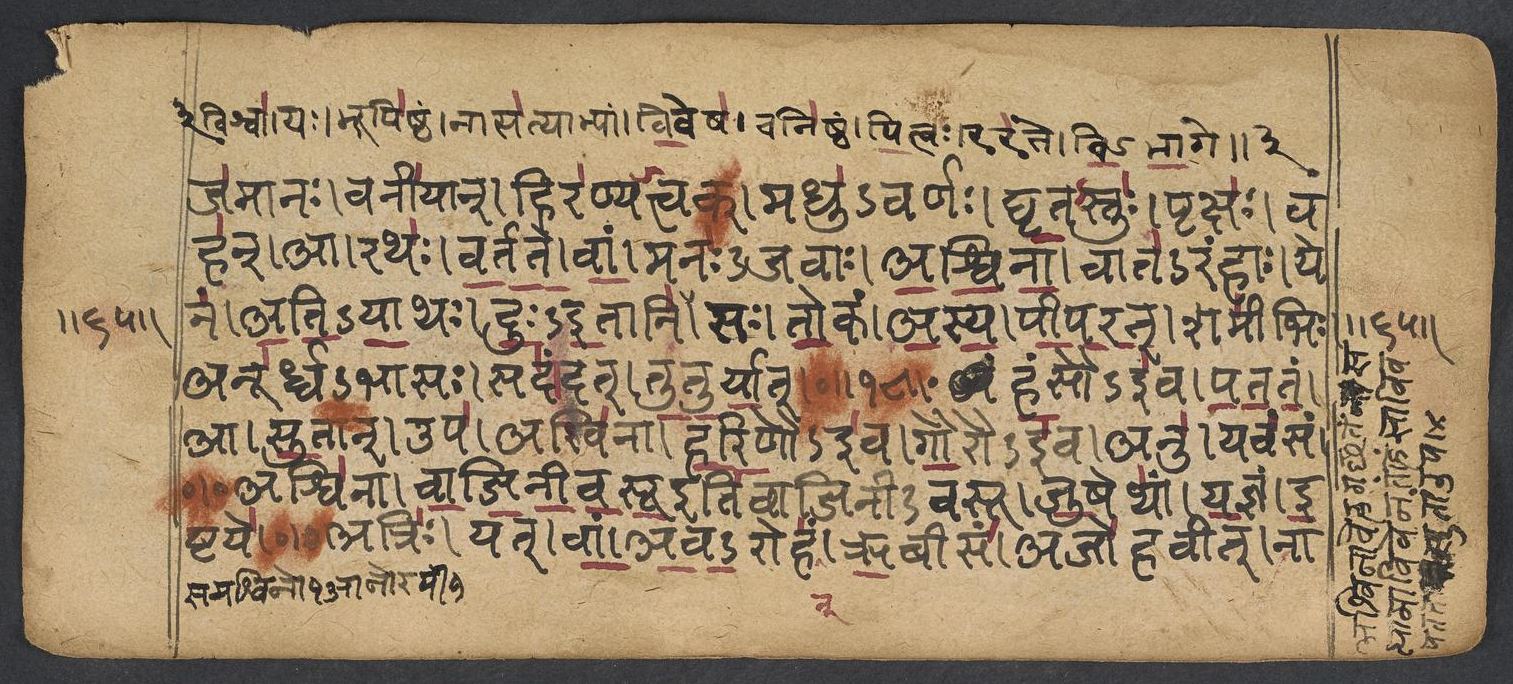
Where on the image
Penn Ms. Coll. 390 Item 41, fol. 392v (numbered 65v by the scribe) (OPenn image 393, upper leaf). Checked on the image: the Rigveda text on this page begins in RV 5.77.2 ‹-yajamānaḥ vanīyān›. The next page with Rigveda text, fol. 393r (numbered 66r by the scribe), begins in RV 5.78.4 ‹-nādhamānāiva yoṣā śyenasya cit›. Verses 5.78.1-3 end on this page.
1aśvi̍nā̱v eha ga̍cchata̱ṁ nāsa̍tyā̱ mā vi ve̍natam | ha̱ṁsāv i̍va patata̱m ā su̱tām̐ upa̍ ||
2aśvi̍nā hari̱ṇāv i̍va gau̱rāv i̱vānu̱ yava̍sam | ha̱ṁsāv i̍va patata̱m ā su̱tām̐ upa̍ ||
3aśvi̍nā vājinīvasū ju̱ṣethā̍ṁ ya̱jñam i̱ṣṭaye̍ | ha̱ṁsāv i̍va patata̱m ā su̱tām̐ upa̍ ||
Compare: Padapāṭha (word-by-word text written in the manuscript; Sansknet e-text via GRETIL)
1aśvinau | ā | iha | gacchatam | nāsatyā | mā | vi | venatam | haṃsau-iva | patatam | ā | sutān | upa
2aśvinā | hariṇau-iva | gaurau-iva | anu | yavasam | haṃsau-iva | patatam | ā | sutān | upa
3aśvinā | vājinīvasūitivājinī-vasū | juṣethām | yajñam | iṣṭaye | haṃsau-iva | patatam | ā | sutān | upa
1YE Aṣvins, hither come to us: Nâsatyas, be not disinclined. Fly hither like two swans unto the juice we shed.
2O Aṣvins, like a pair of deer, like two wild cattle to the mead: Fly hither like two swans unto the juice we shed.
3O Aṣvins rich in gifts, accept our sacrifice to prosper it: Fly hither like two swans unto the juice we shed.
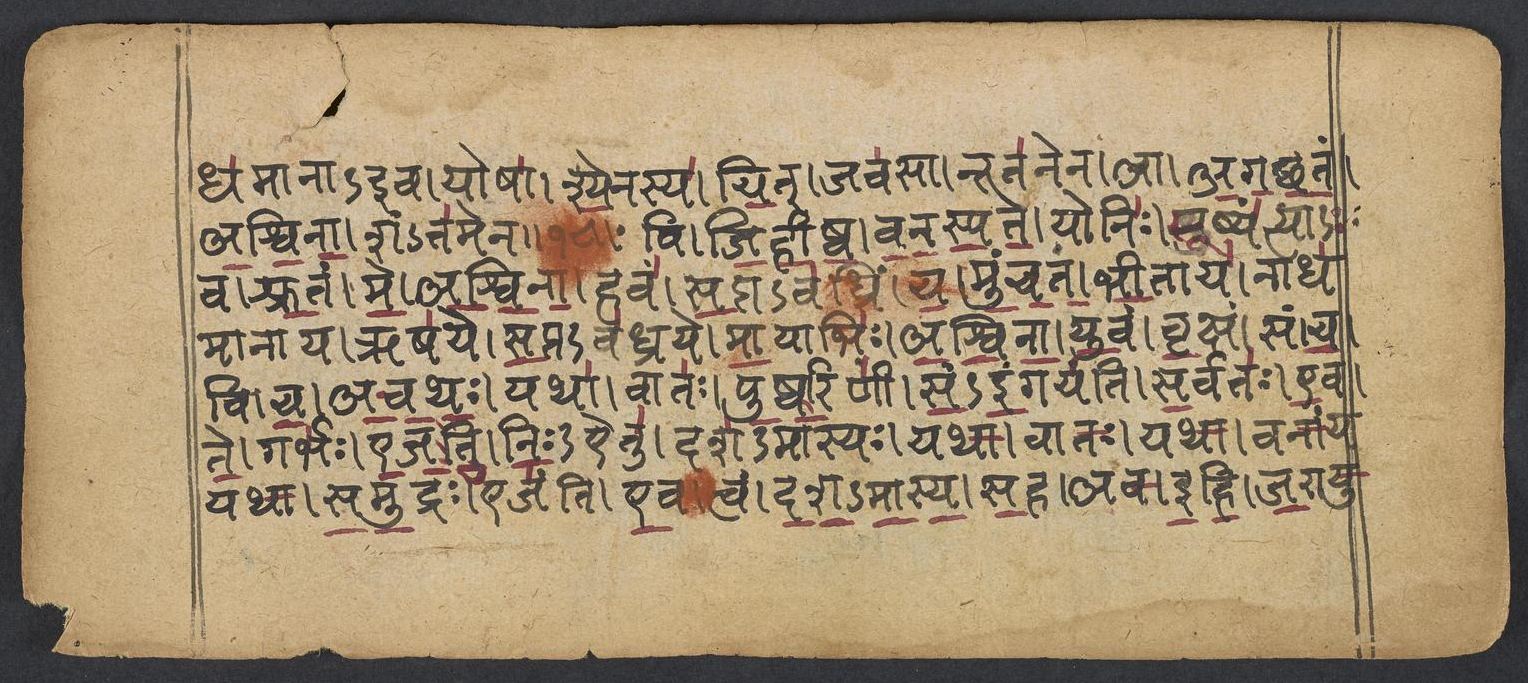
Where on the image
Penn Ms. Coll. 390 Item 41, fol. 393r (numbered 66r by the scribe) (OPenn image 393, lower leaf). Checked on the image: the Rigveda text on this page begins in RV 5.78.4 ‹-nādhamānāiva yoṣā śyenasya cit›. The next page with Rigveda text, fol. 393v (numbered 66v by the scribe), begins in RV 5.78.8 ‹-jarāyuṇā›. Verses 5.78.4-7 end on this page; 5.78.4 begins on fol. 392v (numbered 65v by the scribe).
4atri̱r yad vā̍m ava̱roha̍nn ṛ̱bīsa̱m ajo̍havī̱n nādha̍māneva̱ yoṣā̍ | śye̱nasya̍ ci̱j java̍sā̱ nūta̍ne̱nāga̍cchatam aśvinā̱ śaṁta̍mena ||
5vi ji̍hīṣva vanaspate̱ yoni̱ḥ sūṣya̍ntyā iva | śru̱tam me̍ aśvinā̱ hava̍ṁ sa̱ptava̍dhriṁ ca muñcatam ||
6bhī̱tāya̱ nādha̍mānāya̱ ṛṣa̍ye sa̱ptava̍dhraye | mā̱yābhi̍r aśvinā yu̱vaṁ vṛ̱kṣaṁ saṁ ca̱ vi cā̍cathaḥ ||
7yathā̱ vāta̍ḥ puṣka̱riṇī̍ṁ sami̱ṅgaya̍ti sa̱rvata̍ḥ | e̱vā te̱ garbha̍ ejatu ni̱raitu̱ daśa̍māsyaḥ ||
Compare: Padapāṭha (word-by-word text written in the manuscript; Sansknet e-text via GRETIL)
4atriḥ | yat | vām | ava-rohan | ṛbīsam | ajohavīt | nādhamānāiva | yoṣā | śyenasya | cit | javasā | nūtanena | ā | agacchatam | aśvinā | śam-tamena
5vi | jihīṣva | vanaspate | yoniḥ | sūṣyantyāḥ-iva | śrutam | me | aśvinā | havam | sapta-vadhrim | ca | muñcatam
6bhītāya | nādhamānāya | ṛṣaye | sapta-vadhraye | māyābhiḥ | aśvinā | yuvam | vṛkṣam | sam | ca | vi | ca | acathaḥ
7yathā | vātaḥ | puṣkariṇīm | sam-iṅgayati | sarvataḥ | eva | te | garbhaḥ | ejatu | niḥ-aitu | daśa-māsyaḥ
4As Atri when descending to the cavern called on you loudly like a wailing woman. Ye came to him, O Aṣvins, with the freshest and most auspicious fleetness of a falcon.
5Tree, part asunder like the side of her who bringeth forth a child. Ye Aṣvins, listen to my call: loose Saptavadhri from his bonds.
6For Saptavadhri, for the seer affrighted when he wept and wafled, Ye, Aṣvins, with your magic powers rent up the tree and shattered it.
7Like as the wind on every side ruffles a pool of lotuses, So stir in thee the babe unborn, so may the ten-month babe descend.
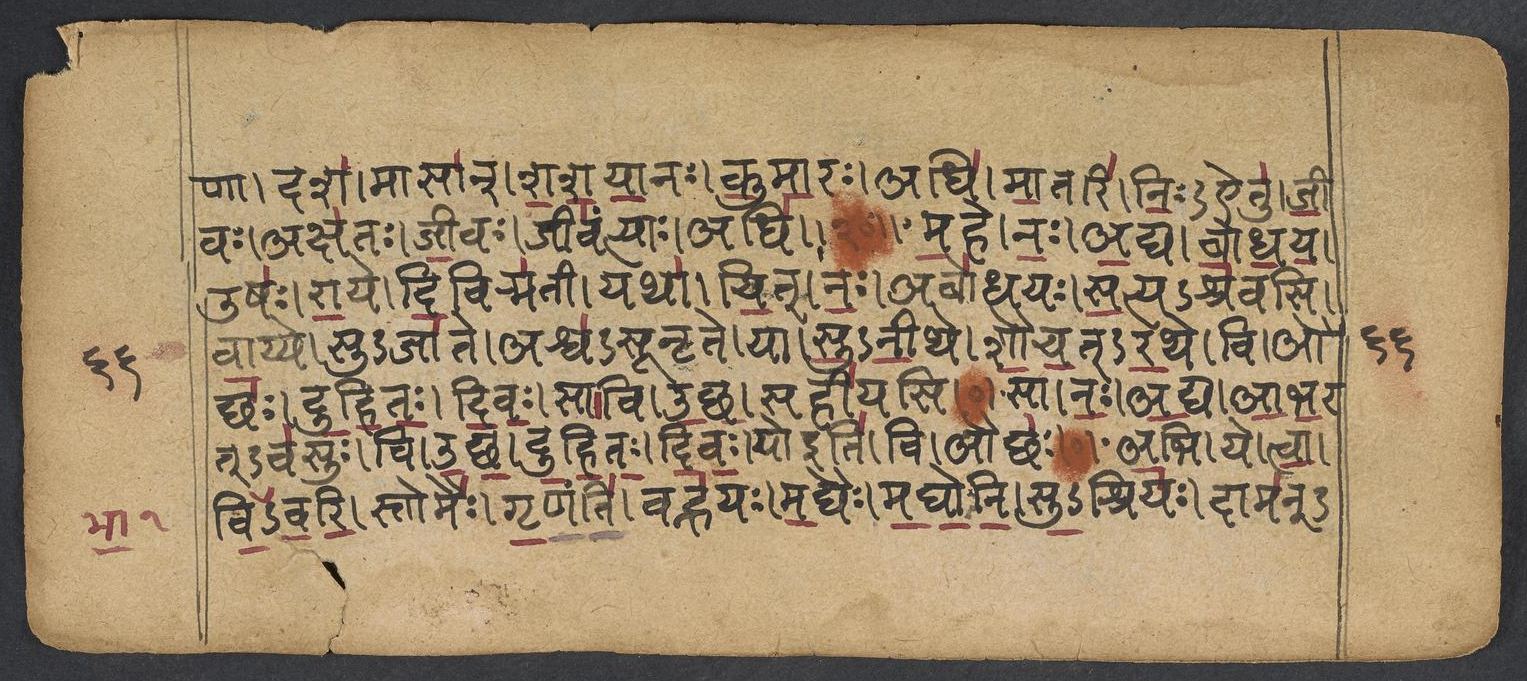
Where on the image
Penn Ms. Coll. 390 Item 41, fol. 393v (numbered 66v by the scribe) (OPenn image 394, upper leaf). Checked on the image: the Rigveda text on this page begins in RV 5.78.8 ‹-jarāyuṇā›. The next page with Rigveda text, fol. 394r (numbered 67r by the scribe), begins in RV 5.79.4 ‹-dāman-vantaḥ su-rātayaḥ su-jāte aśva-sūnṛte›. Verses 5.78.8-9 end on this page; 5.78.8 begins on fol. 393r (numbered 66r by the scribe).
8yathā̱ vāto̱ yathā̱ vana̱ṁ yathā̍ samu̱dra eja̍ti | e̱vā tvaṁ da̍śamāsya sa̱hāve̍hi ja̱rāyu̍ṇā ||
9daśa̱ māsā̍ñ chaśayā̱naḥ ku̍mā̱ro adhi̍ mā̱tari̍ | ni̱raitu̍ jī̱vo akṣa̍to jī̱vo jīva̍ntyā̱ adhi̍ ||
Compare: Padapāṭha (word-by-word text written in the manuscript; Sansknet e-text via GRETIL)
8yathā | vātaḥ | yathā | vanam | yathā | samudraḥ | ejati | eva | tvam | daśa-māsya | saha | ava | ihi | jarāyuṇā
9daśa | māsān | śaśayānaḥ | kumāraḥ | adhi | mātari | niḥ-aitu | jīvaḥ | akṣataḥ | jīvaḥ | jīvantyā | adhi
8Like as the wind, like as the wood, like as the sea is set astir, So also, ten-month babe, descend together with the after-birth.
9The child who hath for ten months' time been lying in his mother's side,– May he come forth alive, unharmed, yea, livingfrorn the living dame.
Notes
- Sanskrit: Aufrecht's edition (1877) with the Vedic accents, as entered by van Nooten and Holland (GRETIL).
- English: Ralph T. H. Griffith, The Hymns of the Rigveda (1889-1892; 2nd ed. 1896-1897), from the VedaWeb digital text; OCR slips in that text were corrected against the printed 2nd edition (data/sources/rigveda/griffith_errata.json).
- Padapāṭha (edition text): Sansknet e-text via GRETIL (CC BY-NC-SA 4.0).
Cite
Sources
- Source: Penn Ms. Coll. 390 Item 41 (undated (catalogued with Penn's 18th-19th c. Vedic manuscripts)), OPenn, Public Domain Mark + Aufrecht's accented text (GRETIL) + Griffith's English (VedaWeb) (holding institution)
- Critical edition: Aufrecht (1877), accented e-text via GRETIL
← previous · → next · v cycle view · l back to library