Rigveda 5.80: To Usas
Introduction
Rigveda 5.80 is a hymn of 6 verses addressed to Usas. It stands in book (maṇḍala) 5, the family book of the Atri clan. The Rigveda is the oldest collection of Sanskrit hymns, composed in the second half of the second millennium BCE and handed down orally for many centuries before it was written down.
The manuscript shown is Penn Ms. Coll. 390 Item 41 (University of Pennsylvania), an undated paper manuscript of the padapāṭha (the word-by-word recitation text, in which every word is written separately and compounds are split) of the whole Ṛgveda in Devanāgarī, 884 leaves in fascicles, 7-9 lines to the page, accents in red; this hymn stands on fol. 394v-395r. Each section below gives the verses that end on one page; the page boundaries were read on the images (the opening words of every page), not counted out. Where the manuscript is a padapāṭha (the word-by-word recitation text), the section shows Aufrecht's continuous (saṃhitā) text first and, as the edition text, the padapāṭha of the same verses, which is the form written on the page.
How was this verified? (Provenance)
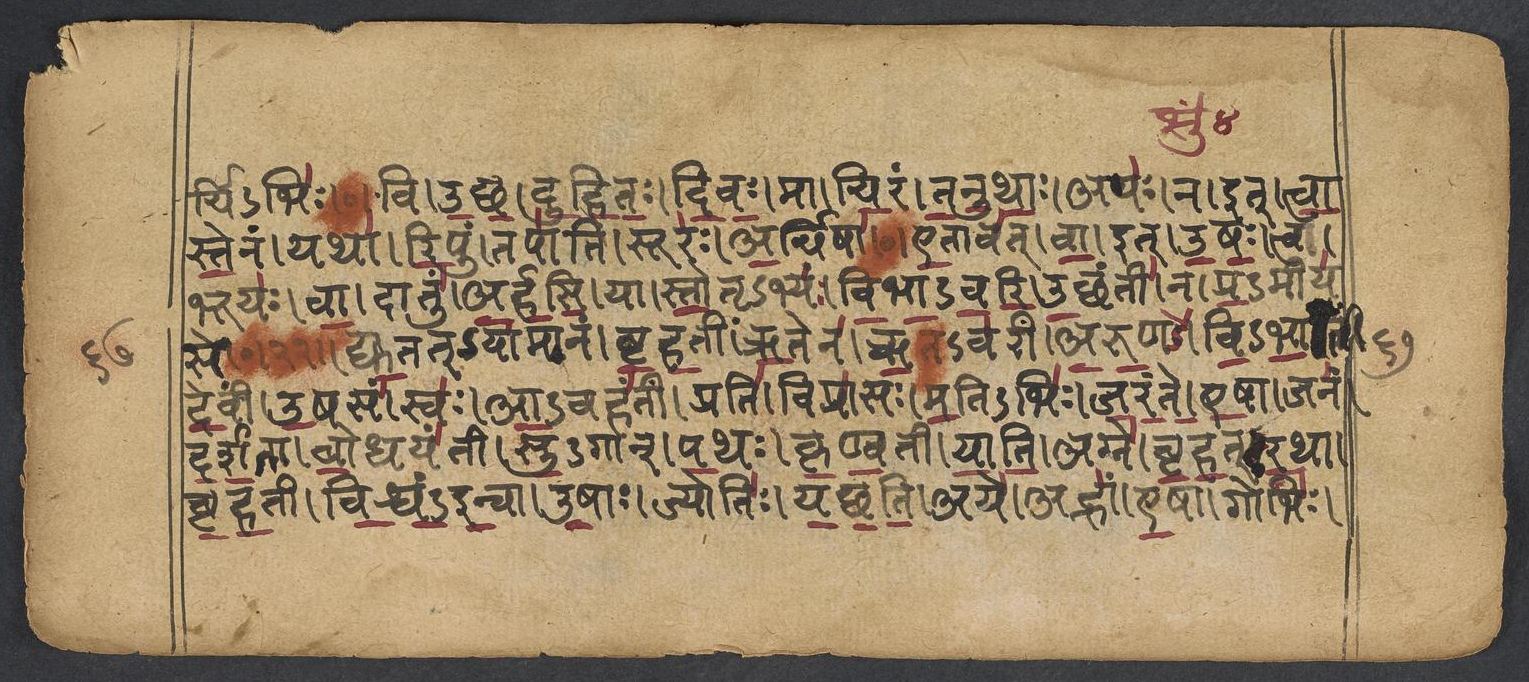
Where on the image
Penn Ms. Coll. 390 Item 41, fol. 394v (numbered 67v by the scribe) (OPenn image 395, upper leaf). Checked on the image: the Rigveda text on this page begins in RV 5.79.8 ‹-aśva-sūnṛte›. The next page with Rigveda text, fol. 395r (numbered 68r by the scribe), begins in RV 5.80.3 ‹aruṇebhiḥ yujānā asredhantī rayim›. Verses 5.80.1-2 end on this page.
1dyu̱tadyā̍mānam bṛha̱tīm ṛ̱tena̍ ṛ̱tāva̍rīm aru̱ṇapsu̍ṁ vibhā̱tīm | de̱vīm u̱ṣasa̱ṁ sva̍r ā̱vaha̍ntī̱m prati̱ viprā̍so ma̱tibhi̍r jarante ||
2e̱ṣā jana̍ṁ darśa̱tā bo̱dhaya̍ntī su̱gān pa̱thaḥ kṛ̍ṇva̱tī yā̱ty agre̍ | bṛ̱ha̱dra̱thā bṛ̍ha̱tī vi̍śvami̱nvoṣā jyoti̍r yaccha̱ty agre̱ ahnā̍m ||
Compare: Padapāṭha (word-by-word text written in the manuscript; Sansknet e-text via GRETIL)
1dyuta-dyāmānam | bṛhatīm | ṛtena | ṛta-varīm | aruṇa-psum | vi-bhātīm | devīm | uṣasam | svaḥ | āvahantīm | prati | viprāsaḥ | mati-bhiḥ | jarante
2eṣā | janam | darśatā | bodhayantī | su-mān | pathaḥ | kṛṇvatī | yāti | agre | bṛhat-rathā | bṛhatī | viśvam-invā | uṣāḥ | jyotiḥ | yacchati | agre | ahnām
1THE singers welcome with their hymns and praises the Goddess Dawn who bringeth in the sunlight, Sublime, by Law true to eternal Order, bright on her path, red-tinted, far-refulgent.
2She comes in front, fair, rousing up the people, making the pathways easy to be travelled. High, on her lofty chariot, all-impelling, Dawn gives her splendour at the days' beginning.
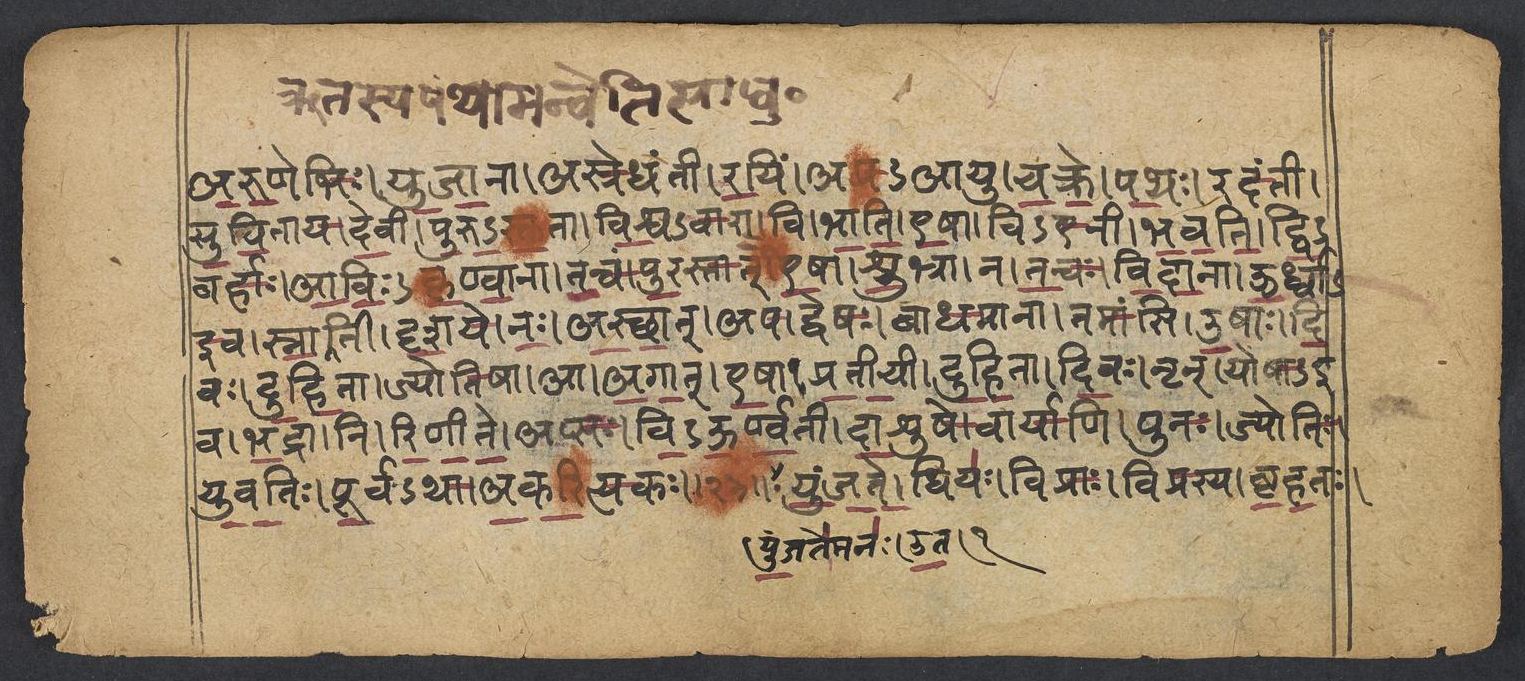
Where on the image
Penn Ms. Coll. 390 Item 41, fol. 395r (numbered 68r by the scribe) (OPenn image 395, lower leaf). Checked on the image: the Rigveda text on this page begins in RV 5.80.3 ‹aruṇebhiḥ yujānā asredhantī rayim›. The next page with Rigveda text, fol. 395v (numbered 68v by the scribe), begins in RV 5.81.1 ‹vipaḥ-citaḥ vi hotrāḥ dadhe›. Verses 5.80.3-6 end on this page; 5.80.3 begins on fol. 394v (numbered 67v by the scribe).
3e̱ṣā gobhi̍r aru̱ṇebhi̍r yujā̱nāsre̍dhantī ra̱yim aprā̍yu cakre | pa̱tho rada̍ntī suvi̱tāya̍ de̱vī pu̍ruṣṭu̱tā vi̱śvavā̍rā̱ vi bhā̍ti ||
4e̱ṣā vye̍nī bhavati dvi̱barhā̍ āviṣkṛṇvā̱nā ta̱nva̍m pu̱rastā̍t | ṛ̱tasya̱ panthā̱m anv e̍ti sā̱dhu pra̍jāna̱tīva̱ na diśo̍ mināti ||
5e̱ṣā śu̱bhrā na ta̱nvo̍ vidā̱nordhveva̍ snā̱tī dṛ̱śaye̍ no asthāt | apa̱ dveṣo̱ bādha̍mānā̱ tamā̍ṁsy u̱ṣā di̱vo du̍hi̱tā jyoti̱ṣāgā̍t ||
6e̱ṣā pra̍tī̱cī du̍hi̱tā di̱vo nṝn yoṣe̍va bha̱drā ni ri̍ṇīte̱ apsa̍ḥ | vyū̱rṇva̱tī dā̱śuṣe̱ vāryā̍ṇi̱ puna̱r jyoti̍r yuva̱tiḥ pū̱rvathā̍kaḥ ||
Compare: Padapāṭha (word-by-word text written in the manuscript; Sansknet e-text via GRETIL)
3eṣā | gobhiḥ | aruṇebhiḥ | yujānā | asredhantī | rayim | apra-āyu | cakre | pathaḥ | radantī | suvitāya | puru-stutā | viśva-vārā | vi | bhāti
4eṣā | vi-enī | bhavati | dvi-barhāḥ | āviḥ-kṛṇvānā | tanvam | purastāt | ṛtasya | panthām | anu | eti | sādhu | pra-jānatī-iva | na | diśaḥ | mināti
5eṣā | śubhrā | na | tanvaḥ | vidānā | ūrdhvāiva | snātī | dṛśaye | naḥ | asthāt | apa | dveṣaḥ | bādhamānā | tamāṃsi | uṣāḥ | divaḥ | duhitā | jyotiṣā | ā | agāt
6eṣā | pratīcī | duhitā | divaḥ | nṝn | yoṣāiva | bhadrā | ni | riṇīte | apsaḥ | vi-ūrṇvatī | dāśuṣe | vāryāṇi | punaḥ | jyotiḥ | yuvatiḥ | pūrva-thā | akar ity akaḥ
3She, harnessing her car with purple oxen. injuring none, hath brought perpetual riches. Opening paths to happiness, the Goddess shines, praised by all, giver of every blessing.
4With changing tints she gleams in double splendour while from the eastward she displays her body. She travels perfectly the path of Order, nor fails to reach, as one who knows, the quarters.
5As conscious that her limbs are bright with bathing, she stands, as 'twere, erect that we may see her. Driving away malignity and darkness, Dawn, Child of Heaven, hath come to us with lustre.
6The Daughter of the Sky, like some chaste woman, bends, opposite to men, her forehead downward. The Maid, disclosing boons to him who worships, hath brought again the daylight as aforetime.
Notes
- Sanskrit: Aufrecht's edition (1877) with the Vedic accents, as entered by van Nooten and Holland (GRETIL).
- English: Ralph T. H. Griffith, The Hymns of the Rigveda (1889-1892; 2nd ed. 1896-1897), from the VedaWeb digital text; OCR slips in that text were corrected against the printed 2nd edition (data/sources/rigveda/griffith_errata.json).
- Padapāṭha (edition text): Sansknet e-text via GRETIL (CC BY-NC-SA 4.0).
Cite
Sources
- Source: Penn Ms. Coll. 390 Item 41 (undated (catalogued with Penn's 18th-19th c. Vedic manuscripts)), OPenn, Public Domain Mark + Aufrecht's accented text (GRETIL) + Griffith's English (VedaWeb) (holding institution)
- Critical edition: Aufrecht (1877), accented e-text via GRETIL
← previous · → next · v cycle view · l back to library