Rigveda 5.9: To Agni
Introduction
Rigveda 5.9 is a hymn of 7 verses addressed to Agni. It stands in book (maṇḍala) 5, the family book of the Atri clan. The Rigveda is the oldest collection of Sanskrit hymns, composed in the second half of the second millennium BCE and handed down orally for many centuries before it was written down.
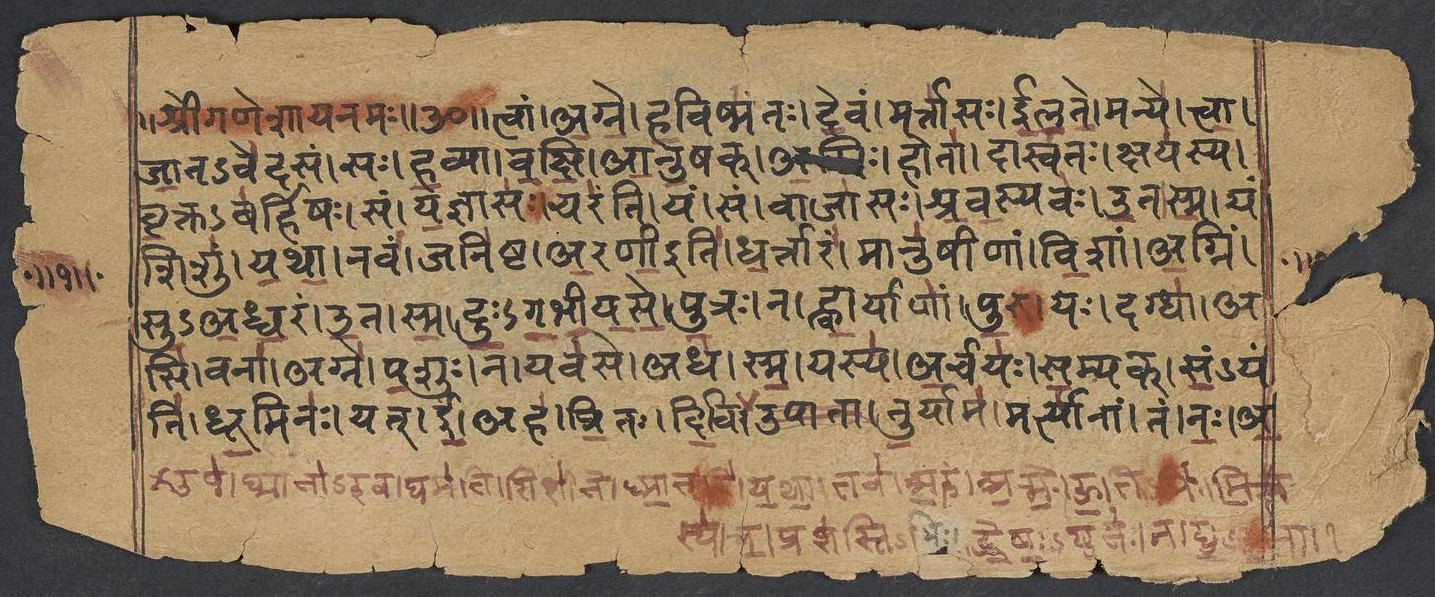
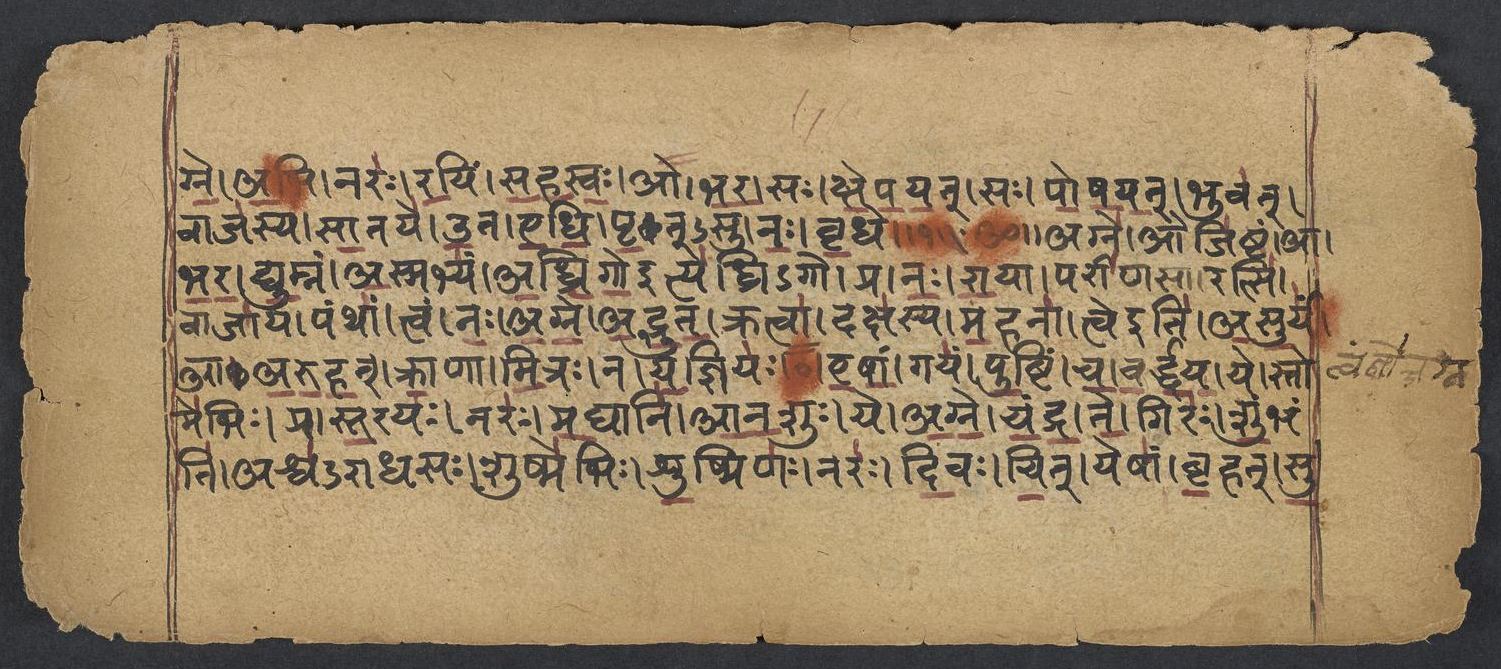
The manuscript shown is Penn Ms. Coll. 390 Item 41 (University of Pennsylvania), an undated paper manuscript of the padapāṭha (the word-by-word recitation text, in which every word is written separately and compounds are split) of the whole Ṛgveda in Devanāgarī, 884 leaves in fascicles, 7-9 lines to the page, accents in red; this hymn stands on fol. 328v-329r. Each section below gives the verses that end on one page; the page boundaries were read on the images (the opening words of every page), not counted out. Where the manuscript is a padapāṭha (the word-by-word recitation text), the section shows Aufrecht's continuous (saṃhitā) text first and, as the edition text, the padapāṭha of the same verses, which is the form written on the page.
How was this verified? (Provenance)
Where on the image
Penn Ms. Coll. 390 Item 41, fol. 328v (numbered 1v by the scribe) (OPenn image 329, upper leaf). Checked on the image: the Rigveda text on this page begins in RV 5.9.1 ‹tvām agne haviṣmantaḥ devam›. Line 1 opens with śrīgaṇeśāya namaḥ oṃ, then 5.9.1 (tvām agne haviṣmantaḥ). The next page with Rigveda text, fol. 329r (numbered 2r by the scribe), begins in RV 5.9.7 ‹-agne abhi naraḥ rayim›. Verses 5.9.1-6 end on this page.
1tvām a̍gne ha̱viṣma̍nto de̱vam martā̍sa īḻate | manye̍ tvā jā̱tave̍dasa̱ṁ sa ha̱vyā va̍kṣy ānu̱ṣak ||
2a̱gnir hotā̱ dāsva̍ta̱ḥ kṣaya̍sya vṛ̱ktaba̍rhiṣaḥ | saṁ ya̱jñāsa̱ś cara̍nti̱ yaṁ saṁ vājā̍saḥ śrava̱syava̍ḥ ||
3u̱ta sma̱ yaṁ śiśu̍ṁ yathā̱ nava̱ṁ jani̍ṣṭā̱raṇī̍ | dha̱rtāra̱m mānu̍ṣīṇāṁ vi̱śām a̱gniṁ sva̍dhva̱ram ||
4u̱ta sma̍ durgṛbhīyase pu̱tro na hvā̱ryāṇā̍m | pu̱rū yo dagdhāsi̱ vanāgne̍ pa̱śur na yava̍se ||
5adha̍ sma̱ yasyā̱rcaya̍ḥ sa̱myak sa̱ṁyanti̍ dhū̱mina̍ḥ | yad ī̱m aha̍ tri̱to di̱vy upa̱ dhmāte̍va̱ dhama̍ti̱ śiśī̍te dhmā̱tarī̍ yathā ||
6tavā̱ham a̍gna ū̱tibhi̍r mi̱trasya̍ ca̱ praśa̍stibhiḥ | dve̱ṣo̱yuto̱ na du̍ri̱tā tu̱ryāma̱ martyā̍nām ||
Compare: Padapāṭha (word-by-word text written in the manuscript; Sansknet e-text via GRETIL)
1tvām | agne | haviṣmantaḥ | devam | martāsaḥ | īḷate | manye | tvā | jāta-vedasam | saḥ | havyā | vakṣi | ānuṣak
2agniḥ | hotā | dāsvataḥ | kṣayasya | vṛkta-barhiṣaḥ | sam | yajñāsaḥ | carant i | yam | sam | vājāsaḥ | śravasyavaḥ
3uta | sma | yam | śiśum | yathā | navam | janiṣṭa | araṇī iti | dhartāram | mānuṣīṇām | viśām | agnim | su-adhvaram
4uta | sma | duḥ-gṛbhīyase | putraḥ | na | hvāryāṇām | puru | yaḥ | dagdhā | asi | vanā | agne | paśuḥ | na | yavase
5adha | sma | yasya | arcayaḥ | samyak | sam-yanti | dhūminaḥ | yat | īmahe | tr itaḥ | divi | upa | dhmātāiva | dhamati | śiśīte | dhmātari | yathā
6tava | aham | agne | ūti-bhiḥ | mitrasya | ca | praśasti-bhiḥ | dveṣaḥ-yutaḥ | na | duḥ-itā | turyāma | martyānām
1BEARING; oblations mortal men, O Agni, worship thee the God. I deem thee Jâtavedas: bear our offerings, thou, unceasingly.
2In the man's home who offers gifts, where grass is trimmed, Agni is Priest, To whom all sacrifices come and strengthenings that win renown.
3Whom, as an infant newly-born, the kindling-sticks have brought to life, Sustainer of the tribes of men, skilled in well-ordered sacrifice.
4Yea, very hard art thou to grasp, like offspring of the wriggling snakes, When thou consumest many woods like an ox, Agni, in the mead.
5Whose flames, when thou art sending forth the smoke, completely reach the mark, When Trita in the height of heaven, like as a smelter fanneth thee, e'en as a smelter sharpeneth thee.
6O Agni, by thy succour and by Mitra's friendly furtherance, May we, averting hate, subdue the wickedness of mortal men.
Where on the image
Penn Ms. Coll. 390 Item 41, fol. 329r (numbered 2r by the scribe) (OPenn image 329, lower leaf). Checked on the image: the Rigveda text on this page begins in RV 5.9.7 ‹-agne abhi naraḥ rayim›. The next page with Rigveda text, fol. 329v (numbered 2v by the scribe), begins in RV 5.10.4 ‹-su-kīrtiḥ bodhati tmanā›. Verse 5.9.7 ends on this page; 5.9.7 begins on fol. 328v (numbered 1v by the scribe).
7taṁ no̍ agne a̱bhī naro̍ ra̱yiṁ sa̍hasva̱ ā bha̍ra | sa kṣe̍paya̱t sa po̍ṣaya̱d bhuva̱d vāja̍sya sā̱taya̍ u̱taidhi̍ pṛ̱tsu no̍ vṛ̱dhe ||
Compare: Padapāṭha (word-by-word text written in the manuscript; Sansknet e-text via GRETIL)
7tat | naḥ | agne | abhi | naraḥ | rayim | sahasvaḥ | ā | bhara | saḥ | kṣepayat | saḥ | poṣayat | bhuvat | vājasya | sātaye | uta | edhi | naḥ | vṛdhe
7O Agni, to our heroes bring such riches, thou victorious God. May he protect and nourish us, and help in gaining strength: be thou near us in 6rht for our success.
Notes
- Sanskrit: Aufrecht's edition (1877) with the Vedic accents, as entered by van Nooten and Holland (GRETIL).
- English: Ralph T. H. Griffith, The Hymns of the Rigveda (1889-1892; 2nd ed. 1896-1897), from the VedaWeb digital text; OCR slips in that text were corrected against the printed 2nd edition (data/sources/rigveda/griffith_errata.json).
- Padapāṭha (edition text): Sansknet e-text via GRETIL (CC BY-NC-SA 4.0).
Cite
Sources
- Source: Penn Ms. Coll. 390 Item 41 (undated (catalogued with Penn's 18th-19th c. Vedic manuscripts)), OPenn, Public Domain Mark + Aufrecht's accented text (GRETIL) + Griffith's English (VedaWeb) (holding institution)
- Critical edition: Aufrecht (1877), accented e-text via GRETIL
← previous · → next · v cycle view · l back to library