Rigveda 6.1: To Agni
Introduction
Rigveda 6.1 is a hymn of 13 verses addressed to Agni. It stands in book (maṇḍala) 6, the family book of Bharadvāja. The Rigveda is the oldest collection of Sanskrit hymns, composed in the second half of the second millennium BCE and handed down orally for many centuries before it was written down.
The manuscript shown is Penn Ms. Coll. 390 Item 41 (University of Pennsylvania), an undated paper manuscript of the padapāṭha (the word-by-word recitation text, in which every word is written separately and compounds are split) of the whole Ṛgveda in Devanāgarī, 884 leaves in fascicles, 7-9 lines to the page, accents in red; this hymn stands on fol. 401v-403v. Each section below gives the verses that end on one page; the page boundaries were read on the images (the opening words of every page), not counted out. Where the manuscript is a padapāṭha (the word-by-word recitation text), the section shows Aufrecht's continuous (saṃhitā) text first and, as the edition text, the padapāṭha of the same verses, which is the form written on the page.
How was this verified? (Provenance)
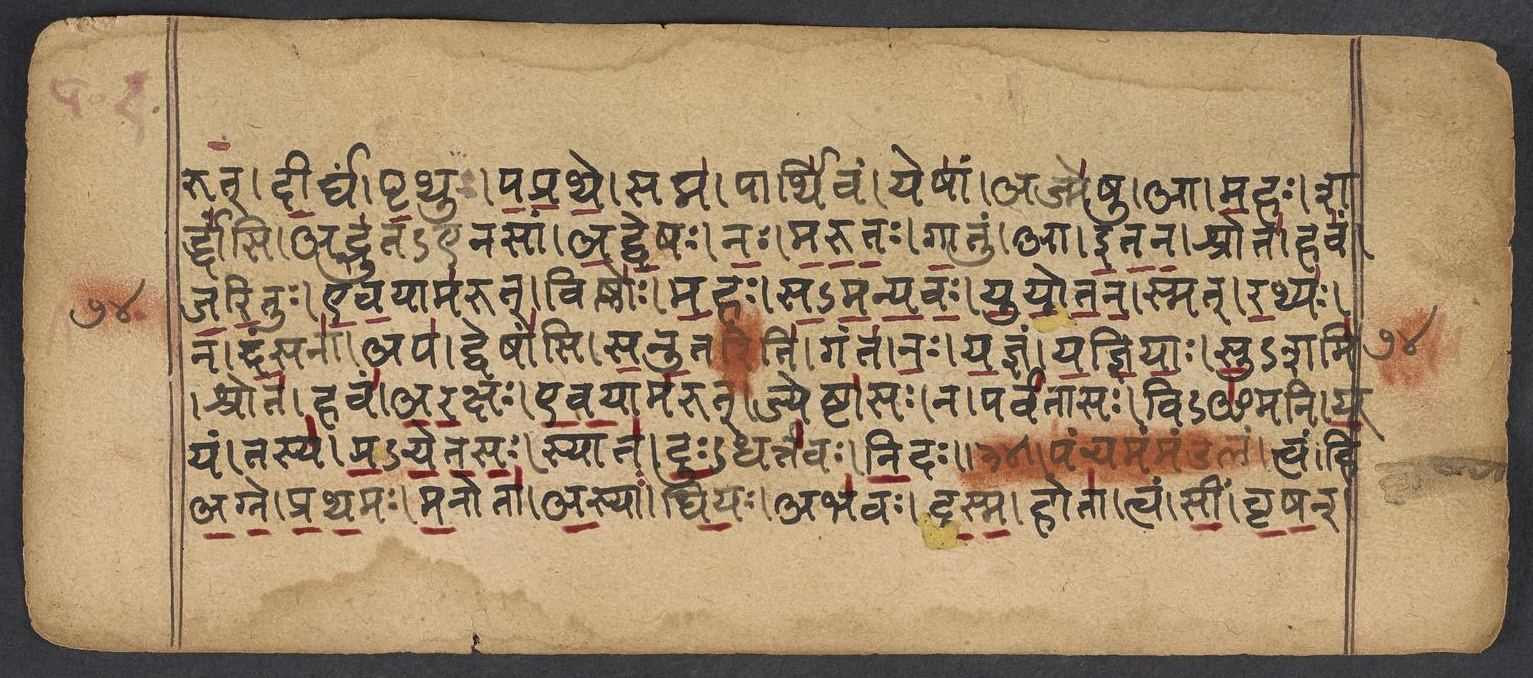
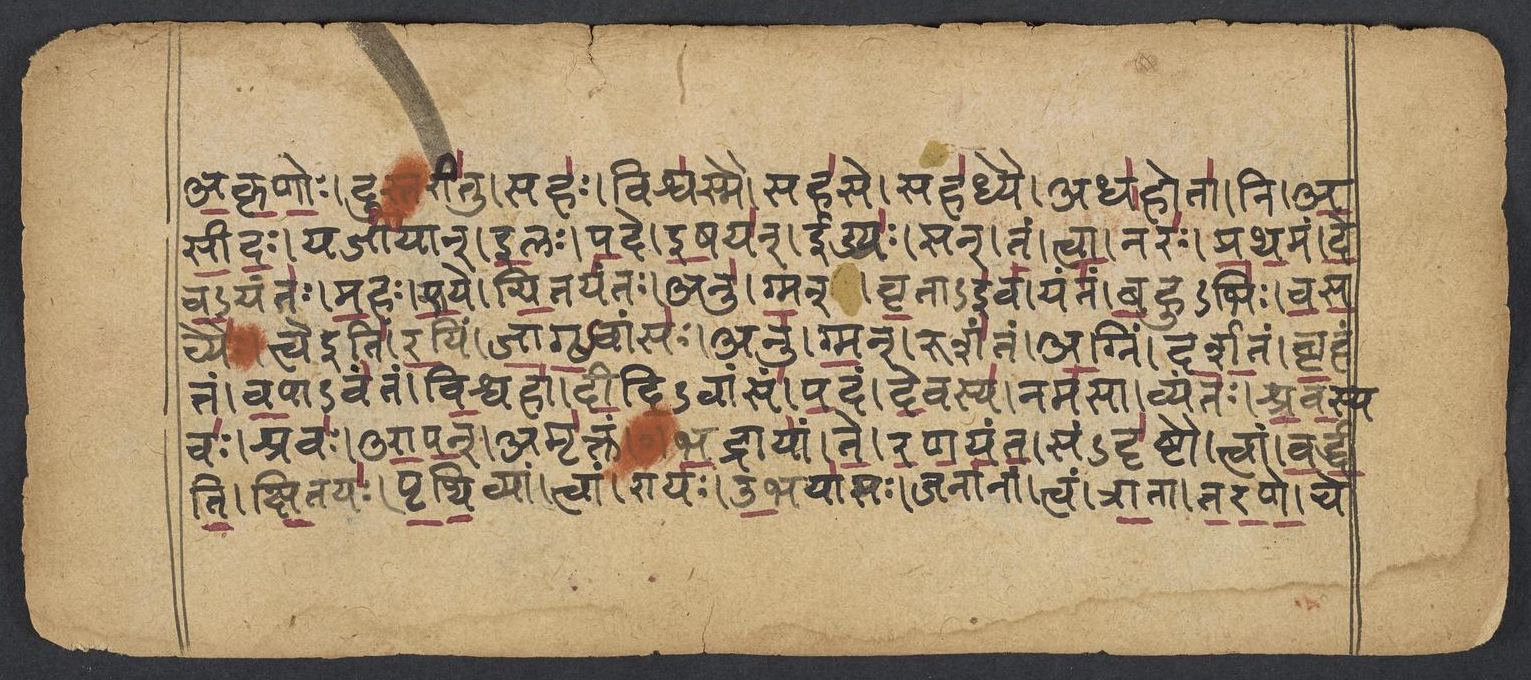
Where on the image
Penn Ms. Coll. 390 Item 41, fol. 402r (numbered 75r by the scribe) (OPenn image 402, lower leaf). Checked on the image: the Rigveda text on this page begins in RV 6.1.1 ‹akṛṇoḥ dustarītu sahaḥ viśvasmai›. The next page with Rigveda text, fol. 402v (numbered 75v by the scribe), begins in RV 6.1.5 ‹-cetyaḥ bhūḥ pitā mātā›. Verses 6.1.1-4 end on this page; 6.1.1 begins on fol. 401v (numbered 74v by the scribe).
1tvaṁ hy a̍gne pratha̱mo ma̱notā̱syā dhi̱yo abha̍vo dasma̱ hotā̍ | tvaṁ sī̍ṁ vṛṣann akṛṇor du̱ṣṭarī̍tu̱ saho̱ viśva̍smai̱ saha̍se̱ saha̍dhyai ||
2adhā̱ hotā̱ ny a̍sīdo̱ yajī̍yān i̱ḻas pa̱da i̱ṣaya̱nn īḍya̱ḥ san | taṁ tvā̱ nara̍ḥ pratha̱maṁ de̍va̱yanto̍ ma̱ho rā̱ye ci̱taya̍nto̱ anu̍ gman ||
3vṛ̱teva̱ yanta̍m ba̱hubhi̍r vasa̱vyai̱3̱̍s tve ra̱yiṁ jā̍gṛ̱vāṁso̱ anu̍ gman | ruśa̍ntam a̱gniṁ da̍rśa̱tam bṛ̱hanta̍ṁ va̱pāva̍ntaṁ vi̱śvahā̍ dīdi̱vāṁsa̍m ||
4pa̱daṁ de̱vasya̱ nama̍sā̱ vyanta̍ḥ śrava̱syava̱ḥ śrava̍ āpa̱nn amṛ̍ktam | nāmā̍ni cid dadhire ya̱jñiyā̍ni bha̱drāyā̍ṁ te raṇayanta̱ saṁdṛ̍ṣṭau ||
Compare: Padapāṭha (word-by-word text written in the manuscript; Sansknet e-text via GRETIL)
1tvam | hi | agne | prathamaḥ | manotā | asyāḥ | dhiyaḥ | abhavaḥ | dasma | hotā | tvam | sīm | vṛṣan | akṛṇoḥ | dustarītu | sahaḥ | viśvasmai | sahase | sahadhyai
2adha | hātā | ni | asīdaḥ | yajīyān | iḷaḥ | pade | iṣayan | īḍyaḥ | san | tam | tvā | naraḥ | prathamam | deva-yantaḥ | mahaḥ | rāye | citayantaḥ | anu | gman
3vṛtāiva | yantam | bahu-bhiḥ | vasavyaiḥ | tve iti | rayim | jāgṛ-vāṃsaḥ | anu | gman | ruśantam | agnim | darśatam | bṛhantam | vapāvantam | viśvahā | dīdi-vāṃsam
4padam | devasya | namasā | vyantaḥ | śravasyavaḥ | śravaḥ | āpan | amṛktam | nāmāni | cit | dadhire | yajñiyāni | bhadrāyām | te | raṇayanta | sam-dṛṣṭau
1THOU, first inventor of this prayer, O Agni, Worker of Marvels, hast become our Herald. Thou, Bull, hast made us strength which none may conquer, strength that shall overcome all other prowess.
2As Priest thou sattest at the seat of worship, furthering us, best Offerer, meet for honour. So first to thee have pious men resorted, turning thy mind to thoughts of ample riches.
3In thee, still watching, they have followed riches, who goest with much wealth as with an army, The radiant Agni, lofty, fair to look on, worshipped with marrow, evermore resplendent.
4They who approached the God's abode with homage, eager for glory, won them perfect glory: Yea, they gained even sacrificial titles, and found delight in thine auspicious aspect.
Where on the image
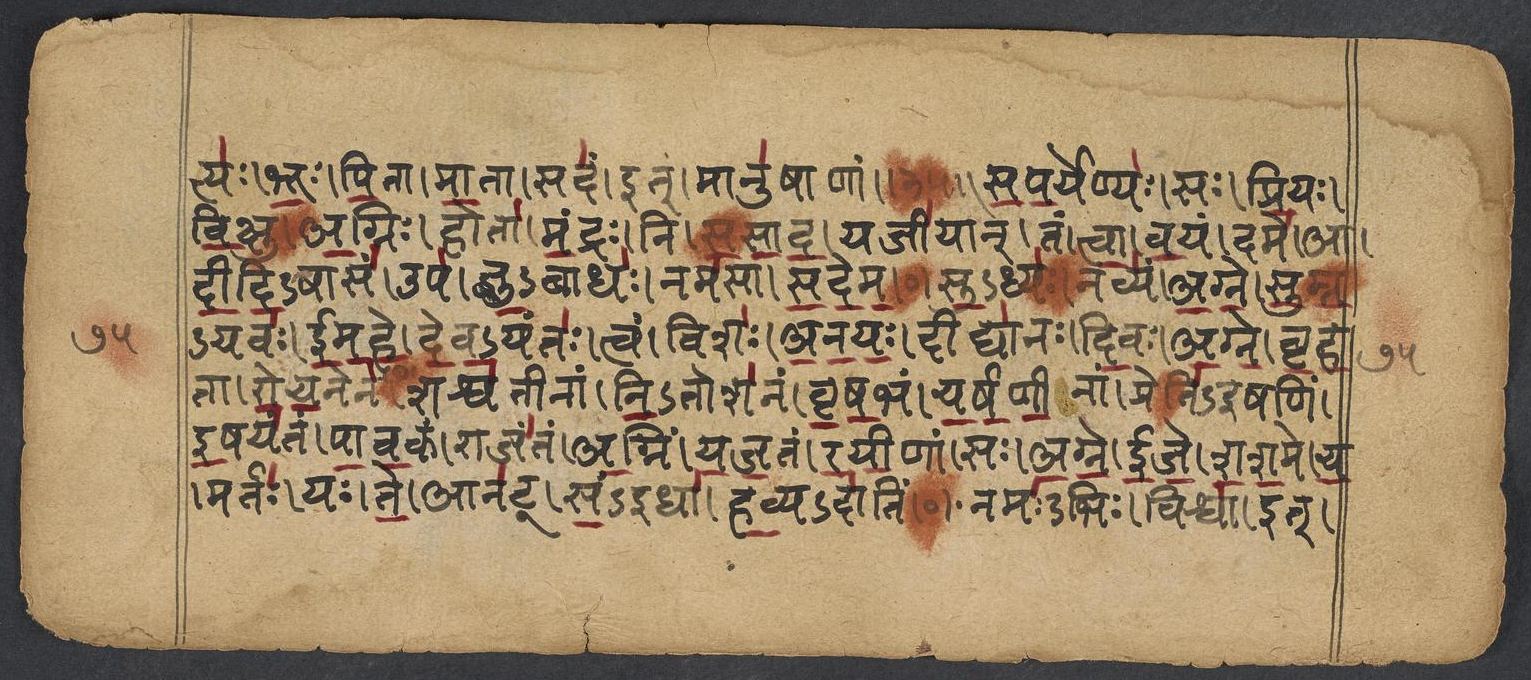
Penn Ms. Coll. 390 Item 41, fol. 402v (numbered 75v by the scribe) (OPenn image 403, upper leaf). Checked on the image: the Rigveda text on this page begins in RV 6.1.5 ‹-cetyaḥ bhūḥ pitā mātā›. The next page with Rigveda text, fol. 403r (numbered 76r by the scribe), begins in RV 6.1.9 ‹saḥ vāmā dadhate tvāūtaḥ›. Verses 6.1.5-8 end on this page; 6.1.5 begins on fol. 402r (numbered 75r by the scribe).
5tvāṁ va̍rdhanti kṣi̱taya̍ḥ pṛthi̱vyāṁ tvāṁ rāya̍ u̱bhayā̍so̱ janā̍nām | tvaṁ trā̱tā ta̍raṇe̱ cetyo̍ bhūḥ pi̱tā mā̱tā sada̱m in mānu̍ṣāṇām ||
6sa̱pa̱ryeṇya̱ḥ sa pri̱yo vi̱kṣv a1̱̍gnir hotā̍ ma̱ndro ni ṣa̍sādā̱ yajī̍yān | taṁ tvā̍ va̱yaṁ dama̱ ā dī̍di̱vāṁsa̱m upa̍ jñu̱bādho̱ nama̍sā sadema ||
7taṁ tvā̍ va̱yaṁ su̱dhyo̱3̱̍ navya̍m agne sumnā̱yava̍ īmahe deva̱yanta̍ḥ | tvaṁ viśo̍ anayo̱ dīdyā̍no di̱vo a̍gne bṛha̱tā ro̍ca̱nena̍ ||
8vi̱śāṁ ka̱viṁ vi̱śpati̱ṁ śaśva̍tīnāṁ ni̱tośa̍naṁ vṛṣa̱bhaṁ ca̍rṣaṇī̱nām | pretī̍ṣaṇim i̱ṣaya̍ntam pāva̱kaṁ rāja̍ntam a̱gniṁ ya̍ja̱taṁ ra̍yī̱ṇām ||
Compare: Padapāṭha (word-by-word text written in the manuscript; Sansknet e-text via GRETIL)
5tvām | vardhanti | kṣitayaḥ | pṛthivyām | tvām | rāyaḥ | ubhayāsaḥ | janānām | tvam | trātā | taraṇe | cetyaḥ | bhūḥ | pitā | mātā | sadam | it | mānuṣāṇām
6saparyeṇyaḥ | saḥ | priyaḥ | vikṣu | agniḥ | hotā | mandraḥ | ni | sisāda | yajīyān | tam | tvā | vayam | dame | ā | dīdi-vāṃsam | upa | jñu-bādhaḥ | namasā | sadema
7tvam | tvā | vayam | su-dhyaḥ | navyam | agne | sumna-yavaḥ | īmahe | deva-yantaḥ | tvam | viśaḥ | anayaḥ | dīdyānaḥ | divaḥ | agne | bṛhatā | rocanena
8viśām | kavim | viśpatim | śaśvatīnām | ni-tośanam | vṛṣabham | carṣaṇīnām | preti-iṣaṇim | iṣayantam | pāvakam | rājantam | agnim | yajatam | rayīṇām
5On earth the people magnify thee greatly, thee their celestial and terrestrial riches. Thou, Helper, must be known as our Preserver, Father and Mother of mankind for ever.
6Dear priest among mankind, adorable Agni hath seated him, joy-giver, skilled in worship. Let us approach thee shining in thy dwelling, kneeling upon our knees, with adoration.
7Longing for bliss, pure-minded, God-devoted, Agni, we seek thee, such, meet to be lauded. Thou, Agni, leddest forth our men to battle, refulgent with the heaven's exalted splendour.
8Sage of mankind, all peoples' Lord and Master, the Bull of men, the sender down of blessings, Still pressing on, promoting, purifying, Agni the Holy One, the Lord of riches.
Where on the image
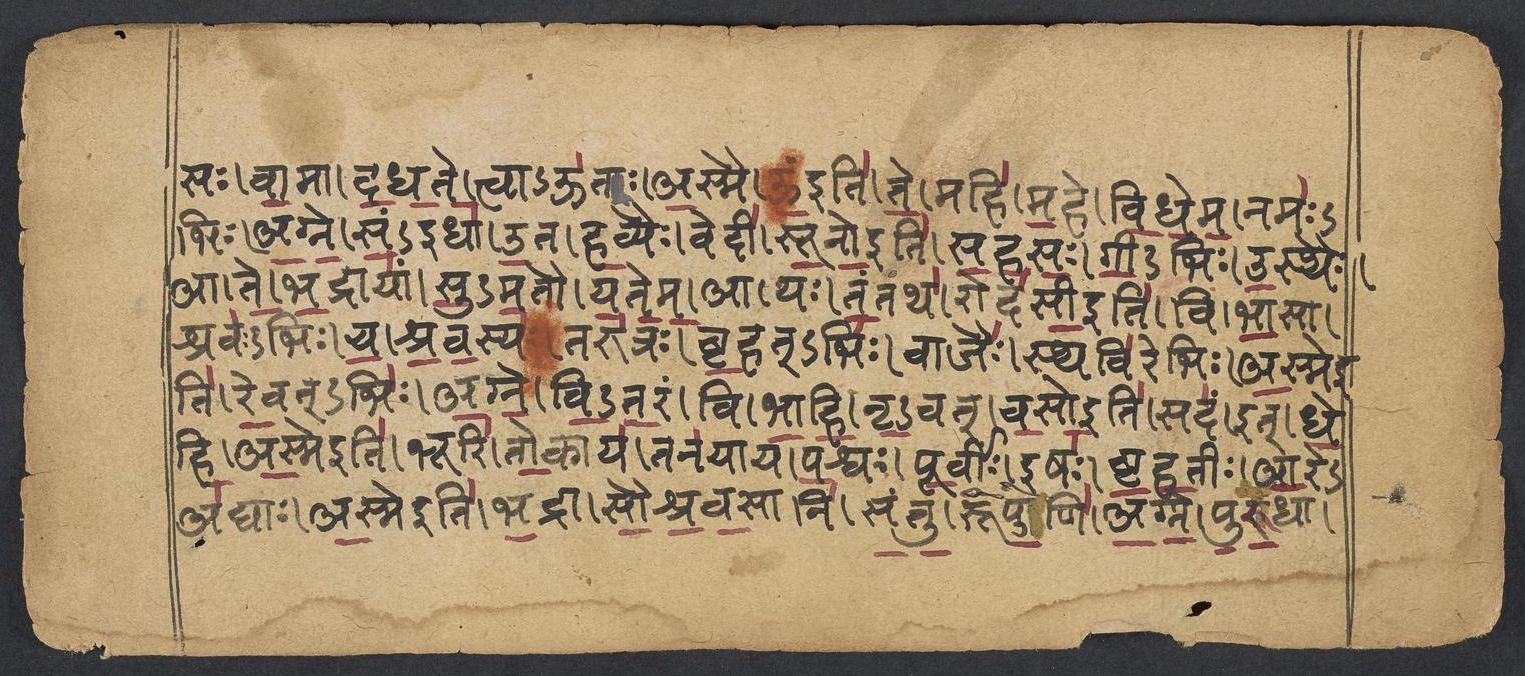
Penn Ms. Coll. 390 Item 41, fol. 403r (numbered 76r by the scribe) (OPenn image 403, lower leaf). Checked on the image: the Rigveda text on this page begins in RV 6.1.9 ‹saḥ vāmā dadhate tvāūtaḥ›. The next page with Rigveda text, fol. 403v (numbered 76v by the scribe), begins in RV 6.1.13 ‹tvāyā vasūni rājan vasutā›. Verses 6.1.9-12 end on this page; 6.1.9 begins on fol. 402v (numbered 75v by the scribe).
9so a̍gna īje śaśa̱me ca̱ marto̱ yas ta̱ āna̍ṭ sa̱midhā̍ ha̱vyadā̍tim | ya āhu̍ti̱m pari̱ vedā̱ namo̍bhi̱r viśvet sa vā̱mā da̍dhate̱ tvota̍ḥ ||
10a̱smā u̍ te̱ mahi̍ ma̱he vi̍dhema̱ namo̍bhir agne sa̱midho̱ta ha̱vyaiḥ | vedī̍ sūno sahaso gī̱rbhir u̱kthair ā te̍ bha̱drāyā̍ṁ suma̱tau ya̍tema ||
11ā yas ta̱tantha̱ roda̍sī̱ vi bhā̱sā śravo̍bhiś ca śrava̱sya1̱̍s taru̍traḥ | bṛ̱hadbhi̱r vājai̱ḥ sthavi̍rebhir a̱sme re̱vadbhi̍r agne vita̱raṁ vi bhā̍hi ||
12nṛ̱vad va̍so̱ sada̱m id dhe̍hy a̱sme bhūri̍ to̱kāya̱ tana̍yāya pa̱śvaḥ | pū̱rvīr iṣo̍ bṛha̱tīr ā̱re-a̍ghā a̱sme bha̱drā sau̍śrava̱sāni̍ santu ||
Compare: Padapāṭha (word-by-word text written in the manuscript; Sansknet e-text via GRETIL)
9saḥ | agne | īje | śaśame | ca | martaḥ | yaḥ | te | ānaṭ | sam-idhā | havya-dātim | yaḥ | āhutim | pari | veda | namaḥ-bhiḥ | viśvā | it | saḥ | vāmā | dadhate | tvāūtaḥ
10asmsi | oṃ iti | te | mahi | mahe | vidhema | namaḥ-bhiḥ | agne | sam-idhā | uta | havyaiḥ | vedī | sūno iti | sahasaḥ | gīḥ-bhiḥ | ukthaiḥ | ā | te | bhadrāyām | su-matau | yātema
11ā | yaḥ | tatantha | rodasī iti | vi | bhāsā | śravaḥ-bhiḥ | ca | śravasyaḥ | tarutraḥ | bṛhat-bhiḥ | vājaiḥ | sthavirebhiḥ | asme iti | revat-bhiḥ | agne | vi-taram | vi | bhāhi
12nṛ-vat | vaso iti | sadam | it | dhehi | asme iti | bhūri | tokāya | tanayāya | paśvaḥ | pūrvīḥ | iṣaḥ | bṛhatīḥ | āre--aghāḥ | asme iti | bhadrā | sauśravasāni | santu
9Agni, the mortal who hath toiled and worshipped, brought thee oblations with his kindled fuel, And well knows sacrifice with adoration, gains every joy with thee to guard and help him.
10Mightily let us worship thee the Mighty, with reverence, Agni! fuel and oblations, With songs, O Son of Strength, with hymns, with altar: so may we strive for thine auspicious favour.
11Thou who hast covered heaven and earth with splendour and with thy glories, glorious and triumphant. Continue thou to shine on us, O Agni, with strength abundant, rich, and long enduring.
12Vouchsafe us ever, as man needs, O Vasu, abundant wealth of kine for son and offspring. Food noble, plenteous, far from sin and evil, he with us, and fair fame to make us happy.
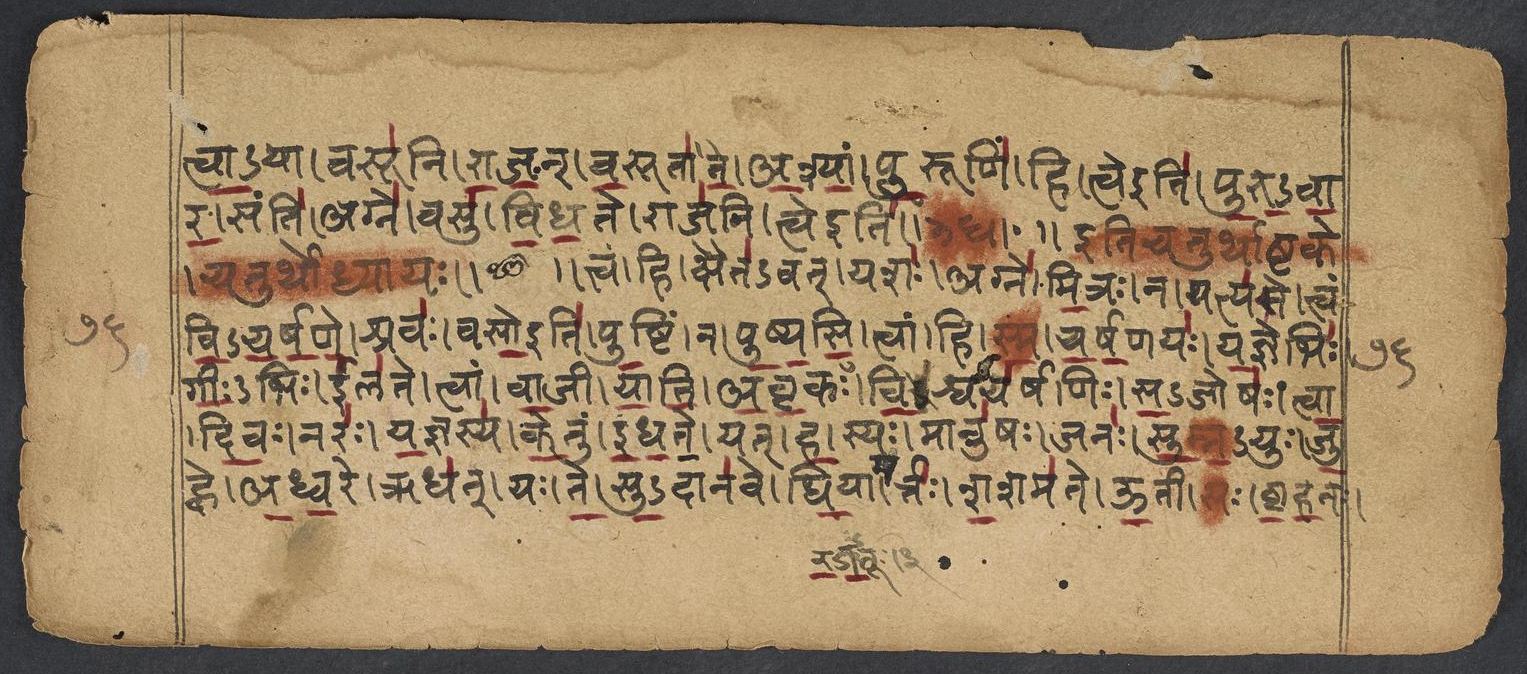
Where on the image
Penn Ms. Coll. 390 Item 41, fol. 403v (numbered 76v by the scribe) (OPenn image 404, upper leaf). Checked on the image: the Rigveda text on this page begins in RV 6.1.13 ‹tvāyā vasūni rājan vasutā›. The next page with Rigveda text, fol. 404r (numbered 77r by the scribe), begins in RV 6.2.4 ‹divaḥ dviṣaḥ aṃhaḥ na›. Verse 6.1.13 ends on this page; 6.1.13 begins on fol. 403r (numbered 76r by the scribe).
13pu̱rūṇy a̍gne puru̱dhā tvā̱yā vasū̍ni rājan va̱sutā̍ te aśyām | pu̱rūṇi̱ hi tve pu̍ruvāra̱ santy agne̱ vasu̍ vidha̱te rāja̍ni̱ tve ||
Compare: Padapāṭha (word-by-word text written in the manuscript; Sansknet e-text via GRETIL)
13purūṇi | agne | purudhā | tvāyā | vasūni | rājan | vasutā | te | aśyām | purūṇi | hi | tve iti | puru-vāra | santi | agne | vasu | vidhate | rājani | tve iti
13May I obtain much wealth in many places by love of thee and through thy grace, King Agni; For in thee Bounteous One, in thee the Sovran, Agni, are many boons for him who serves thee.
Notes
- Sanskrit: Aufrecht's edition (1877) with the Vedic accents, as entered by van Nooten and Holland (GRETIL).
- English: Ralph T. H. Griffith, The Hymns of the Rigveda (1889-1892; 2nd ed. 1896-1897), from the VedaWeb digital text; OCR slips in that text were corrected against the printed 2nd edition (data/sources/rigveda/griffith_errata.json).
- Padapāṭha (edition text): Sansknet e-text via GRETIL (CC BY-NC-SA 4.0).
Cite
Sources
- Source: Penn Ms. Coll. 390 Item 41 (undated (catalogued with Penn's 18th-19th c. Vedic manuscripts)), OPenn, Public Domain Mark + Aufrecht's accented text (GRETIL) + Griffith's English (VedaWeb) (holding institution)
- Critical edition: Aufrecht (1877), accented e-text via GRETIL
← previous · → next · v cycle view · l back to library