Rigveda 6.2: To Agni
Introduction
Rigveda 6.2 is a hymn of 11 verses addressed to Agni. It stands in book (maṇḍala) 6, the family book of Bharadvāja. The Rigveda is the oldest collection of Sanskrit hymns, composed in the second half of the second millennium BCE and handed down orally for many centuries before it was written down.
The manuscript shown is Penn Ms. Coll. 390 Item 41 (University of Pennsylvania), an undated paper manuscript of the padapāṭha (the word-by-word recitation text, in which every word is written separately and compounds are split) of the whole Ṛgveda in Devanāgarī, 884 leaves in fascicles, 7-9 lines to the page, accents in red; this hymn stands on fol. 403v-404v. Each section below gives the verses that end on one page; the page boundaries were read on the images (the opening words of every page), not counted out. Where the manuscript is a padapāṭha (the word-by-word recitation text), the section shows Aufrecht's continuous (saṃhitā) text first and, as the edition text, the padapāṭha of the same verses, which is the form written on the page.
How was this verified? (Provenance)
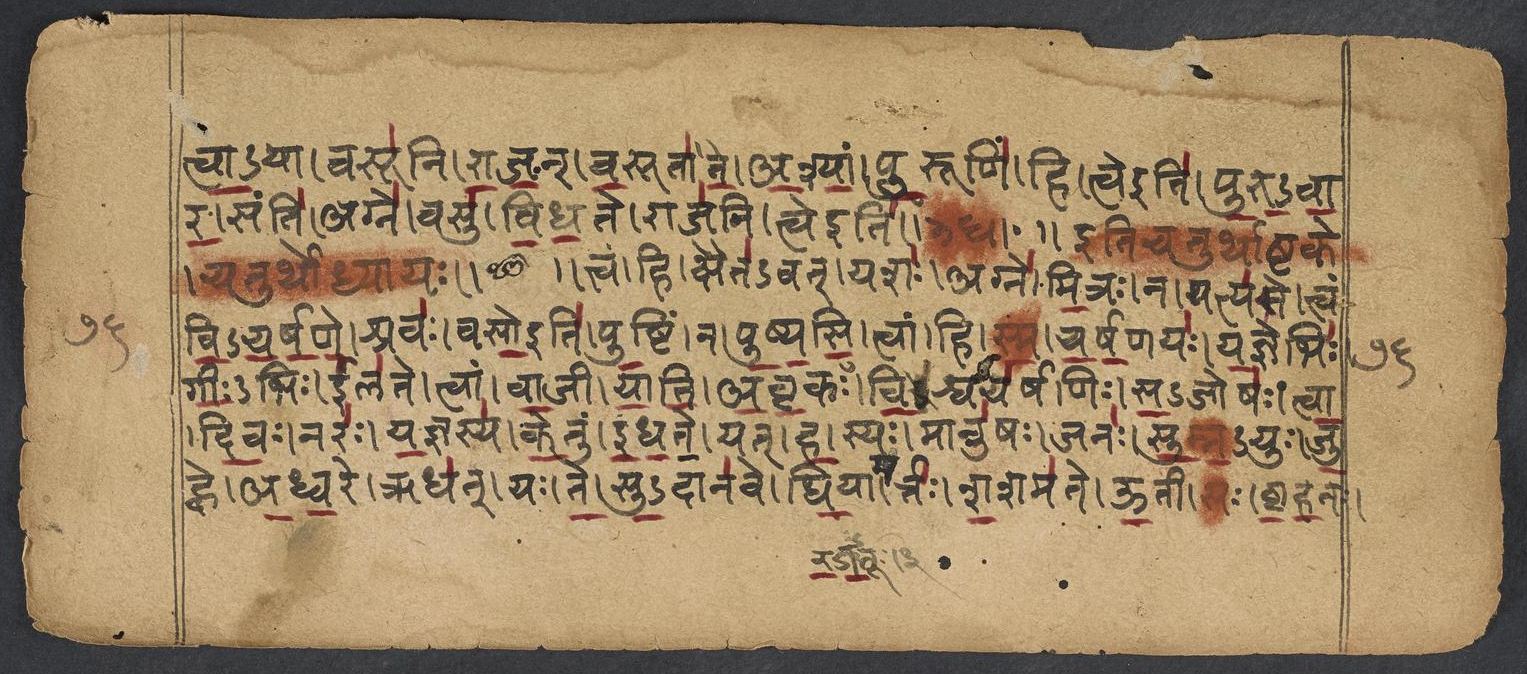
Where on the image
Penn Ms. Coll. 390 Item 41, fol. 403v (numbered 76v by the scribe) (OPenn image 404, upper leaf). Checked on the image: the Rigveda text on this page begins in RV 6.1.13 ‹tvāyā vasūni rājan vasutā›. The next page with Rigveda text, fol. 404r (numbered 77r by the scribe), begins in RV 6.2.4 ‹divaḥ dviṣaḥ aṃhaḥ na›. Verses 6.2.1-3 end on this page.
1tvaṁ hi kṣaita̍va̱d yaśo 'gne̍ mi̱tro na patya̍se | tvaṁ vi̍carṣaṇe̱ śravo̱ vaso̍ pu̱ṣṭiṁ na pu̍ṣyasi ||
2tvāṁ hi ṣmā̍ carṣa̱ṇayo̍ ya̱jñebhi̍r gī̱rbhir īḻa̍te | tvāṁ vā̱jī yā̍ty avṛ̱ko ra̍ja̱stūr vi̱śvaca̍rṣaṇiḥ ||
3sa̱joṣa̍s tvā di̱vo naro̍ ya̱jñasya̍ ke̱tum i̍ndhate | yad dha̱ sya mānu̍ṣo̱ jana̍ḥ sumnā̱yur ju̱hve a̍dhva̱re ||
Compare: Padapāṭha (word-by-word text written in the manuscript; Sansknet e-text via GRETIL)
1tvam | hi | kṣaita-vat | yaśaḥ | agne | mitraḥ | na | patyase | tvam | vi-carṣaṇe | śravaḥ | vaso iti | puṣṭim | na | puṣyasi
2tvām | hi | sma | carṣaṇayaḥ | yajñebhiḥ | gīḥ-bhiḥ | īḷate | tvām | vājī | yāti | avṛkaḥ | rajaḥ-tūḥ | viśva-carṣaṇiḥ
3sa-joṣaḥ | tvā | divaḥ | naraḥ | yajñasya | ketum | indhate | yat | ha | sya | mānuṣaḥ | janaḥ | sumna-yuḥ | juhve | adhvare
1THOU, Agni, even as Mitra, hast a princely glory of thine own. Thou, active Vasu, makest fame increase like full prosperity.
2For, verily, men pray to thee with sacrifices and with songs. To thee the Friendly Courser, seen of all, comes speeding through the air.
3Of one accord men kindle thee Heaven's signal of the sacrifice, When, craving bliss, this race of man invites thee to the solemn rite.
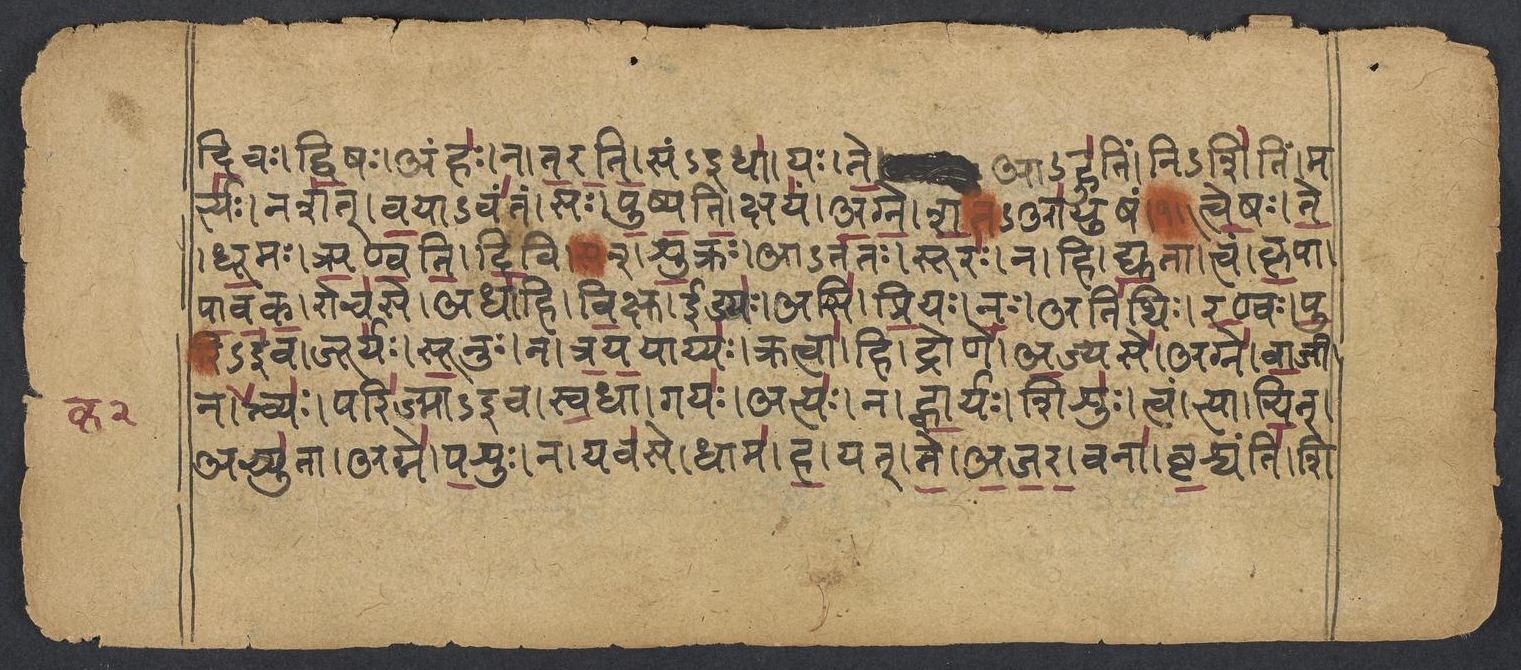
Where on the image
Penn Ms. Coll. 390 Item 41, fol. 404r (numbered 77r by the scribe) (OPenn image 404, lower leaf). Checked on the image: the Rigveda text on this page begins in RV 6.2.4 ‹divaḥ dviṣaḥ aṃhaḥ na›. The next page with Rigveda text, fol. 404v (numbered 77v by the scribe), begins in RV 6.2.10 ‹-adhvari-yatām agne hotā dame›. Verses 6.2.4-9 end on this page; 6.2.4 begins on fol. 403v (numbered 76v by the scribe).
4ṛdha̱d yas te̍ su̱dāna̍ve dhi̱yā marta̍ḥ śa̱śama̍te | ū̱tī ṣa bṛ̍ha̱to di̱vo dvi̱ṣo aṁho̱ na ta̍rati ||
5sa̱midhā̱ yas ta̱ āhu̍ti̱ṁ niśi̍ti̱m martyo̱ naśa̍t | va̱yāva̍nta̱ṁ sa pu̍ṣyati̱ kṣaya̍m agne śa̱tāyu̍ṣam ||
6tve̱ṣas te̍ dhū̱ma ṛ̍ṇvati di̱vi ṣañ chu̱kra āta̍taḥ | sūro̱ na hi dyu̱tā tvaṁ kṛ̱pā pā̍vaka̱ roca̍se ||
7adhā̱ hi vi̱kṣv īḍyo 'si̍ pri̱yo no̱ ati̍thiḥ | ra̱ṇvaḥ pu̱rī̍va̱ jūrya̍ḥ sū̱nur na tra̍ya̱yāyya̍ḥ ||
8kratvā̱ hi droṇe̍ a̱jyase 'gne̍ vā̱jī na kṛtvya̍ḥ | pari̍jmeva sva̱dhā gayo 'tyo̱ na hvā̱ryaḥ śiśu̍ḥ ||
9tvaṁ tyā ci̱d acyu̱tāgne̍ pa̱śur na yava̍se | dhāmā̍ ha̱ yat te̍ ajara̱ vanā̍ vṛ̱ścanti̱ śikva̍saḥ ||
Compare: Padapāṭha (word-by-word text written in the manuscript; Sansknet e-text via GRETIL)
4ṛdhat | yaḥ | te | su-dānave | dhiyā | martaḥ | śaśamate | ūtī | saḥ | bṛhataḥ | divaḥ | dviṣaḥ | aṃhaḥ | na | tarati
5sam-idhā | yaḥ | te | āhutim | ni-śitim | martyaḥ | naśat | vayāvantam | saḥ | puṣyati | kṣayam | agne | śata-āyuṣam
6tveṣaḥ | te | dhūmaḥ | ṛṇvati | divi | san | śukraḥ | ātataḥ | sūraḥ | na | hi | dyutā | tvam | kṛpā | pāvaka | rocase
7adha | hi | vikṣu | īḍyaḥ | asi | priyaḥ | naḥ | atithiḥ | raṇvaḥ | puri-iva | jūyarḥ | sūnuḥ | na | trayayāyyaḥ
8kratvā | hi | droṇe | ajyase | agne | vājī | na | kṛtvyaḥ | parijmāiva | svadhā | gayaḥ | atyaḥ | na | hvāryaḥ | śiśuḥ
9tvam | tyā | cit | acyutā | agne | paśuḥ | na | yavase | dhāma | ha | yat | te | ajara | vanā | vṛścanti | śikvasaḥ
4Let the man thrive who travails sore, in prayer, for thee the Bountiful. He with the help of lofty Dyaus comes safe through straits of enmity.
5The mortal who with fuel lights thy flame and offers unto thee, Supports a house with many a branch, Agni, to live a hundred years.
6Thy bright smoke lifts itself aloft, and far-extended shines in heaven. For, Purifier! like the Sun thou beamest with thy radiant glow.
7For in men's houses thou must be glorified as a well-loved guest, Gay like an elder in a fort, claiming protection like a son.
8Thou, Agni, like an able steed, art urged by wisdom in the wood. Thou art like wind; food, home art thou, like a young horse that runs astray.
9E'en things imperishable, thou, O Agni, like a gazing ox, Eatest, when hosts, Eternal One! of thee the Mighty rend the woods.
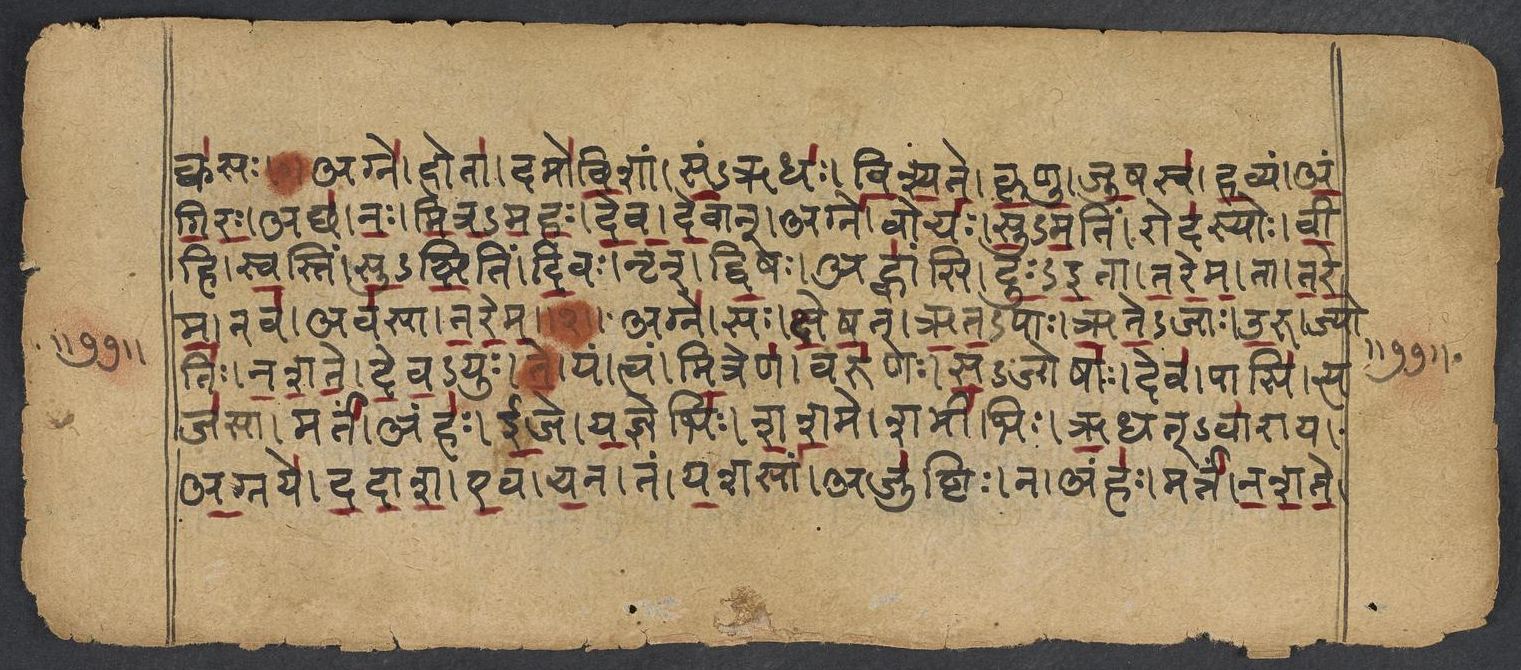
Where on the image
Penn Ms. Coll. 390 Item 41, fol. 404v (numbered 77v by the scribe) (OPenn image 405, upper leaf). Checked on the image: the Rigveda text on this page begins in RV 6.2.10 ‹-adhvari-yatām agne hotā dame›. The next page with Rigveda text, fol. 405r (numbered 78r by the scribe), begins in RV 6.3.2 ‹na pra-dṛptiḥ›. Verses 6.2.10-11 end on this page; 6.2.10 begins on fol. 404r (numbered 77r by the scribe).
10veṣi̱ hy a̍dhvarīya̱tām agne̱ hotā̱ dame̍ vi̱śām | sa̱mṛdho̍ viśpate kṛṇu ju̱ṣasva̍ ha̱vyam a̍ṅgiraḥ ||
11acchā̍ no mitramaho deva de̱vān agne̱ voca̍ḥ suma̱tiṁ roda̍syoḥ | vī̱hi sva̱stiṁ su̍kṣi̱tiṁ di̱vo nṝn dvi̱ṣo aṁhā̍ṁsi duri̱tā ta̍rema̱ tā ta̍rema̱ tavāva̍sā tarema ||
Compare: Padapāṭha (word-by-word text written in the manuscript; Sansknet e-text via GRETIL)
10veṣi | hi | adhvari-yatām | agne | hotā | dame | viśām | sam-ṛdhaḥ | viśpate | kṛṇu | juṣasva | havyam | aṅgiraḥ
11accha | naḥ | mitra-mahaḥ | deva | devān | agne | vocaḥ | su-matim | rodasyoḥ | vīhi | svastim | su-kṣitim | divaḥ | nṝn | dviṣaḥ | aṃhāṃsi | duḥ-itā | tarema | tā | tarema | tava | avasā | tarema
10Agni, thou enterest as Priest the home of men who sacrifice. Lord of the people, prosper them. Accept the offering, Angiras!
11O Agni, God with Mitra's might, call hither the favour of the Gods from earth and heaven. Bring weal from heaven, that men may dwell securely. May we o'ercome the foe's malign oppressions, may we o'ercome them, through thy help o'ercome them.
Notes
- Sanskrit: Aufrecht's edition (1877) with the Vedic accents, as entered by van Nooten and Holland (GRETIL).
- English: Ralph T. H. Griffith, The Hymns of the Rigveda (1889-1892; 2nd ed. 1896-1897), from the VedaWeb digital text; OCR slips in that text were corrected against the printed 2nd edition (data/sources/rigveda/griffith_errata.json).
- Padapāṭha (edition text): Sansknet e-text via GRETIL (CC BY-NC-SA 4.0).
Cite
Sources
- Source: Penn Ms. Coll. 390 Item 41 (undated (catalogued with Penn's 18th-19th c. Vedic manuscripts)), OPenn, Public Domain Mark + Aufrecht's accented text (GRETIL) + Griffith's English (VedaWeb) (holding institution)
- Critical edition: Aufrecht (1877), accented e-text via GRETIL
← previous · → next · v cycle view · l back to library