Rigveda 6.11: To Agni
Introduction
Rigveda 6.11 is a hymn of 6 verses addressed to Agni. It stands in book (maṇḍala) 6, the family book of Bharadvāja. The Rigveda is the oldest collection of Sanskrit hymns, composed in the second half of the second millennium BCE and handed down orally for many centuries before it was written down.
The manuscript shown is Penn Ms. Coll. 390 Item 41 (University of Pennsylvania), an undated paper manuscript of the padapāṭha (the word-by-word recitation text, in which every word is written separately and compounds are split) of the whole Ṛgveda in Devanāgarī, 884 leaves in fascicles, 7-9 lines to the page, accents in red; this hymn stands on fol. 413r-413v. Each section below gives the verses that end on one page; the page boundaries were read on the images (the opening words of every page), not counted out. Where the manuscript is a padapāṭha (the word-by-word recitation text), the section shows Aufrecht's continuous (saṃhitā) text first and, as the edition text, the padapāṭha of the same verses, which is the form written on the page.
How was this verified? (Provenance)
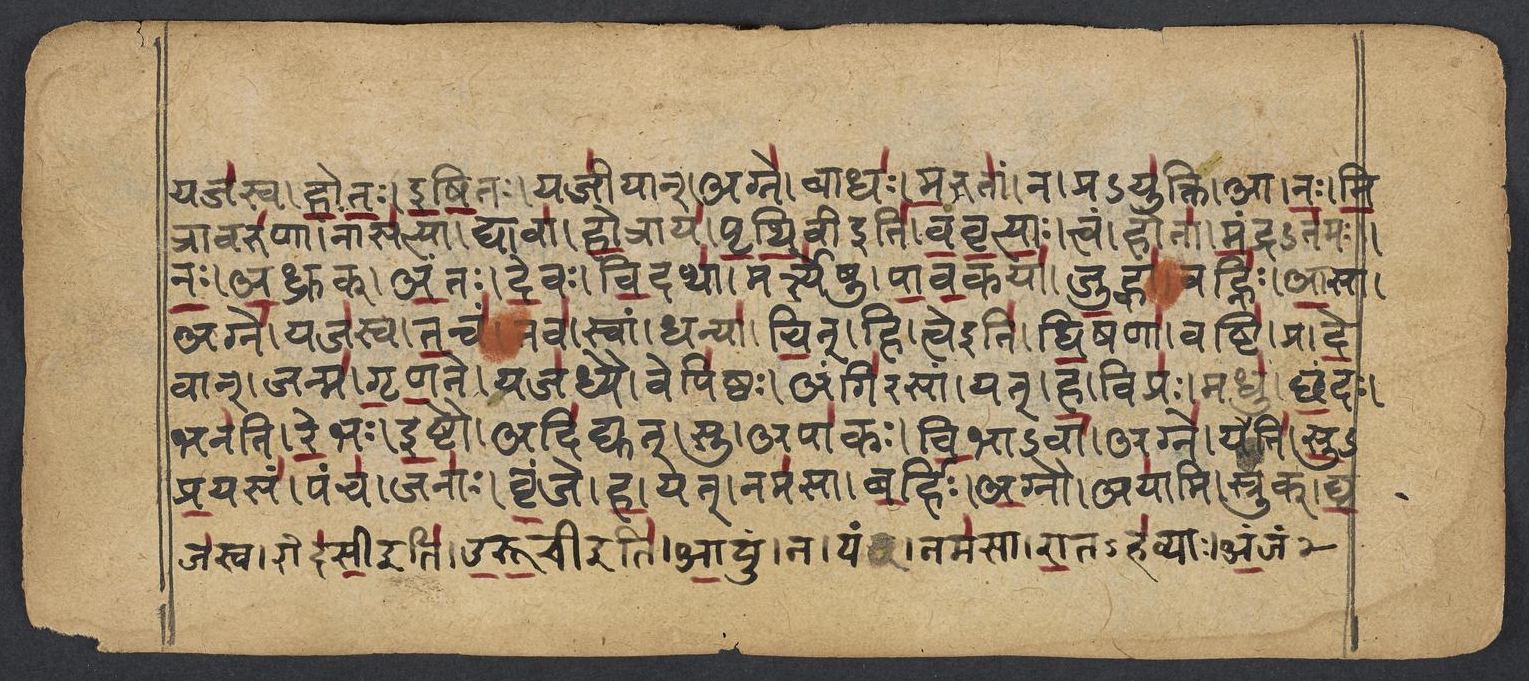
Where on the image
Penn Ms. Coll. 390 Item 41, fol. 413r (numbered 86r by the scribe) (OPenn image 413, lower leaf). Checked on the image: the Rigveda text on this page begins in RV 6.11.1 ‹yajasva hotaḥ iṣitaḥ yajīyān›. The next page with Rigveda text, fol. 413v (numbered 86v by the scribe), begins in RV 6.11.5 ‹-ghṛta-vatī su-vṛktiḥ amyakṣi sadma›. Verses 6.11.1-4 end on this page.
1yaja̍sva hotar iṣi̱to yajī̍yā̱n agne̱ bādho̍ ma̱rutā̱ṁ na prayu̍kti | ā no̍ mi̱trāvaru̍ṇā̱ nāsa̍tyā̱ dyāvā̍ ho̱trāya̍ pṛthi̱vī va̍vṛtyāḥ ||
2tvaṁ hotā̍ ma̱ndrata̍mo no a̱dhrug a̱ntar de̱vo vi̱dathā̱ martye̍ṣu | pā̱va̱kayā̍ ju̱hvā̱3̱̍ vahni̍r ā̱sāgne̱ yaja̍sva ta̱nva1̱̍ṁ tava̱ svām ||
3dhanyā̍ ci̱d dhi tve dhi̱ṣaṇā̱ vaṣṭi̱ pra de̱vāñ janma̍ gṛṇa̱te yaja̍dhyai | vepi̍ṣṭho̱ aṅgi̍rasā̱ṁ yad dha̱ vipro̱ madhu̍ ccha̱ndo bhana̍ti re̱bha i̱ṣṭau ||
4adi̍dyuta̱t sv apā̍ko vi̱bhāvāgne̱ yaja̍sva̱ roda̍sī urū̱cī | ā̱yuṁ na yaṁ nama̍sā rā̱taha̍vyā a̱ñjanti̍ supra̱yasa̱m pañca̱ janā̍ḥ ||
Compare: Padapāṭha (word-by-word text written in the manuscript; Sansknet e-text via GRETIL)
1yajasva | hotaḥ | iṣitaḥ | yajīyān | agne | bādhaḥ | marutām | na | pra-yukti | ā | naḥ | mitrāvaruṇā | nāsatyā | dyāvā | hotrāya | pṛthivī iti | vavṛtyāḥ
2tvam | hotā | mandra-tamaḥ | naḥ | adhruk | antaḥ | devaḥ | vidathā | marteṣu | pāvakayā | juhvā | vahniḥ | āsā | agne | yajasva | tanvam | tava | svām
3dhanyā | cit | hi | tve iti | dhiṣaṇā | vaṣṭi | pra | devān | janma | gṛṇate | yajadhyai | vepiṣṭhaḥ | aṅgirasām | yat | ha | vipraḥ | madhu | chandaḥ | bhanati | rebhaḥ | iṣṭau
4adidyutat | su | apākaḥ | vi-bhāvā | agne | yajasva | rodasī iti | urūcī iti | / āyum | na | yam | namasā | rāta-havyāḥ | añjanti | su-prayasam | pañca | janāḥ
1EAGERLY Sacrifice thou, most skilful, Agni! Priest, pressing on as if the Maruts sent thee. To our oblation bring the two Nâsatyas, Mitra and Varuṇa and Earth and Heaven.
2Thou art our guileless, most delightful Herald, the God, among mankind, of holy synods. A Priest with purifying tongue, O Agni, sacrifice with thy mouth to thine own body.
3For even the blessed longing that is in thee would bring the Gods down to the singer's worship, When the Angirases' sagest Sage, the Poet, sings the sweet measure at the solemn service.
4Bright hath he beamed, the wise, the far-refulgent. Worship the two widespreading Worlds, O Agni, Whom as the Living One rich in oblations the Five Tribes, bringing gifts, adorn with homage.
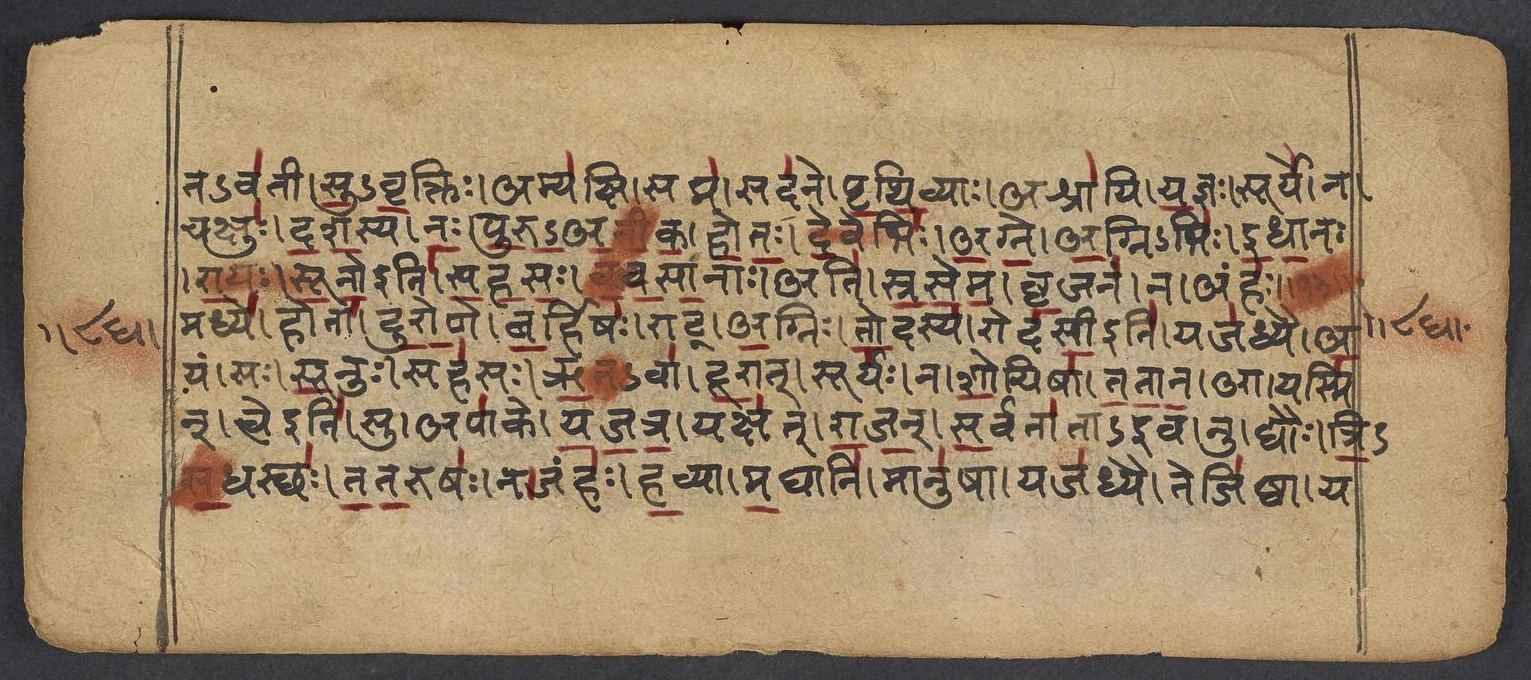
Where on the image
Penn Ms. Coll. 390 Item 41, fol. 413v (numbered 86v by the scribe) (OPenn image 414, upper leaf). Checked on the image: the Rigveda text on this page begins in RV 6.11.5 ‹-ghṛta-vatī su-vṛktiḥ amyakṣi sadma›. The next page with Rigveda text, fol. 414r (numbered 87r by the scribe), begins in RV 6.12.3 ‹-yasya aratiḥ vane--rāṭ todaḥ›. Verses 6.11.5-6 end on this page; 6.11.5 begins on fol. 413r (numbered 86r by the scribe).
5vṛ̱ñje ha̱ yan nama̍sā ba̱rhir a̱gnāv ayā̍mi̱ srug ghṛ̱tava̍tī suvṛ̱ktiḥ | amya̍kṣi̱ sadma̱ sada̍ne pṛthi̱vyā aśrā̍yi ya̱jñaḥ sūrye̱ na cakṣu̍ḥ ||
6da̱śa̱syā na̍ḥ purvaṇīka hotar de̱vebhi̍r agne a̱gnibhi̍r idhā̱naḥ | rā̱yaḥ sū̍no sahaso vāvasā̱nā ati̍ srasema vṛ̱jana̱ṁ nāṁha̍ḥ ||
Compare: Padapāṭha (word-by-word text written in the manuscript; Sansknet e-text via GRETIL)
5vṛñje | ha | yat | namasā | barhiḥ | agnau | ayāmi | sruk | ghṛta-vatī | su-vṛktiḥ | amyakṣi | sadma | sadane | pṛthivyāḥ | aśrāyi | yajñaḥ | sūrye | na | cakṣuḥ
6dṛśasya | naḥ | puru-aṇīka | hotaḥ | devebhiḥ | agne | agni-bhiḥ | idhānaḥ | rāyaḥ | sūno iti | sahasaḥ | vavasānāḥ | ati | srasema | vṛjanam | na | aṃhaḥ
5When I with reverence clip the grass for Agni, when the trimmed ladle, fullof oil, is lifted, Firm on the seat of earth is based the altar: eye-like, the sacrifice is directed Sun-ward.
6Enrich us, O thou Priest of many aspects, with the Gods, Agni, with thy fires, enkindled. O Son of Strength, clad in the robe of riches, may we escape from woe as from a prison.
Notes
- Sanskrit: Aufrecht's edition (1877) with the Vedic accents, as entered by van Nooten and Holland (GRETIL).
- English: Ralph T. H. Griffith, The Hymns of the Rigveda (1889-1892; 2nd ed. 1896-1897), from the VedaWeb digital text; OCR slips in that text were corrected against the printed 2nd edition (data/sources/rigveda/griffith_errata.json).
- Padapāṭha (edition text): Sansknet e-text via GRETIL (CC BY-NC-SA 4.0).
Cite
Sources
- Source: Penn Ms. Coll. 390 Item 41 (undated (catalogued with Penn's 18th-19th c. Vedic manuscripts)), OPenn, Public Domain Mark + Aufrecht's accented text (GRETIL) + Griffith's English (VedaWeb) (holding institution)
- Critical edition: Aufrecht (1877), accented e-text via GRETIL
← previous · → next · v cycle view · l back to library