Rigveda 6.15: To Agni
Introduction
Rigveda 6.15 is a hymn of 19 verses addressed to Agni. It stands in book (maṇḍala) 6, the family book of Bharadvāja. The Rigveda is the oldest collection of Sanskrit hymns, composed in the second half of the second millennium BCE and handed down orally for many centuries before it was written down.
The manuscript shown is Penn Ms. Coll. 390 Item 41 (University of Pennsylvania), an undated paper manuscript of the padapāṭha (the word-by-word recitation text, in which every word is written separately and compounds are split) of the whole Ṛgveda in Devanāgarī, 884 leaves in fascicles, 7-9 lines to the page, accents in red; this hymn stands on fol. 415v-419r. Each section below gives the verses that end on one page; the page boundaries were read on the images (the opening words of every page), not counted out. Where the manuscript is a padapāṭha (the word-by-word recitation text), the section shows Aufrecht's continuous (saṃhitā) text first and, as the edition text, the padapāṭha of the same verses, which is the form written on the page.
How was this verified? (Provenance)
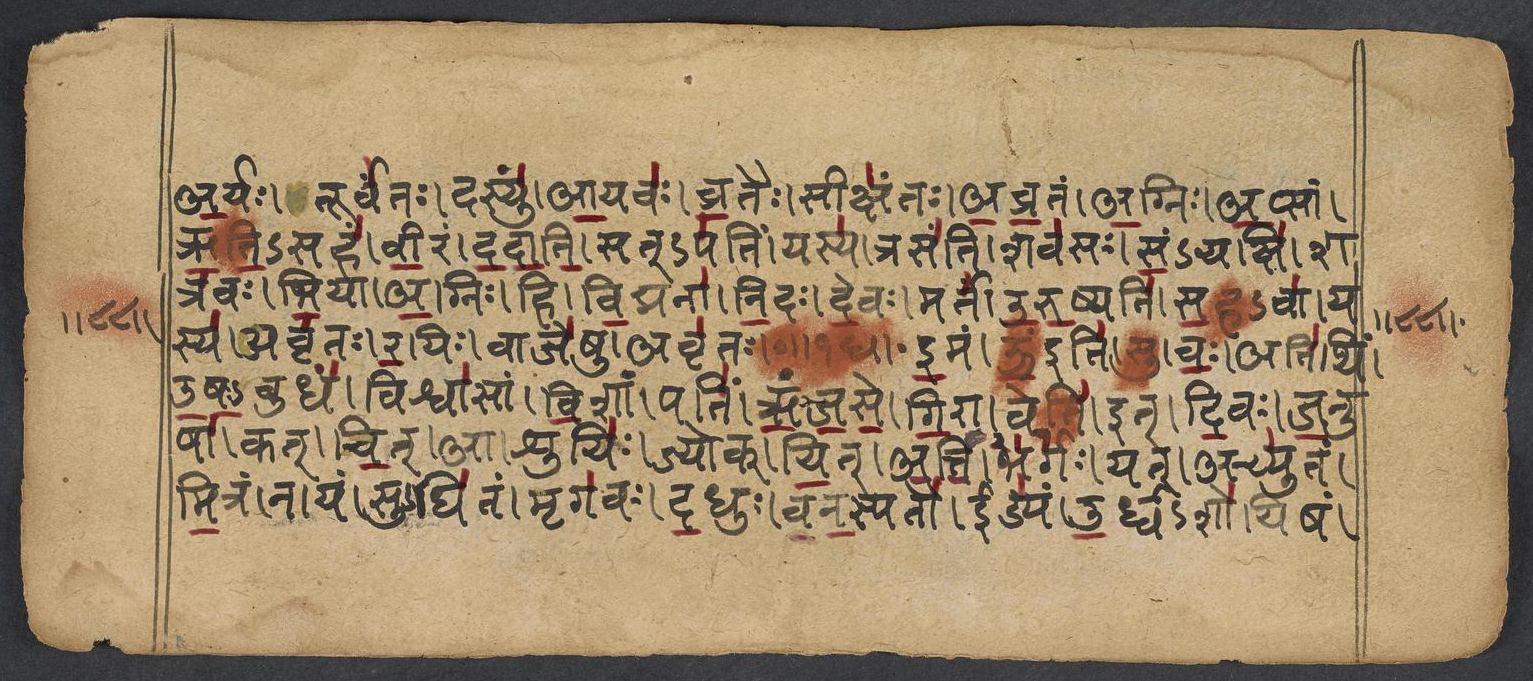
Where on the image
Penn Ms. Coll. 390 Item 41, fol. 415v (numbered 88v by the scribe) (OPenn image 416, upper leaf). Checked on the image: the Rigveda text on this page begins in RV 6.14.3 ‹aryaḥ tūrvantaḥ dasyum āyavaḥ›. The next page with Rigveda text, fol. 416r (numbered 89r by the scribe), begins in RV 6.15.2 ‹saḥ tvam su-prītaḥ vīta-havye›. Verse 6.15.1 ends on this page.
1i̱mam ū̱ ṣu vo̱ ati̍thim uṣa̱rbudha̱ṁ viśvā̍sāṁ vi̱śām pati̍m ṛñjase gi̱rā | vetīd di̱vo ja̱nuṣā̱ kac ci̱d ā śuci̱r jyok ci̍d atti̱ garbho̱ yad acyu̍tam ||
Compare: Padapāṭha (word-by-word text written in the manuscript; Sansknet e-text via GRETIL)
1imam | oṃ iti | su | vaḥ | atithim | uṣaḥ-budham | viśvāsām | viśām | patim | ṛñjase | girā | vet i | it | divaḥ | januṣā | kat | cit | ā | śuciḥ | jyok | cit | atti | garbhaḥ | yat | acyutam
1WITH this my song I strive to reach this guest of yours, who wakes at early morn, the Lord of all the tribes. Each time he comes from heaven, the Pure One from of old: from ancient days the Child eats everlasting food.
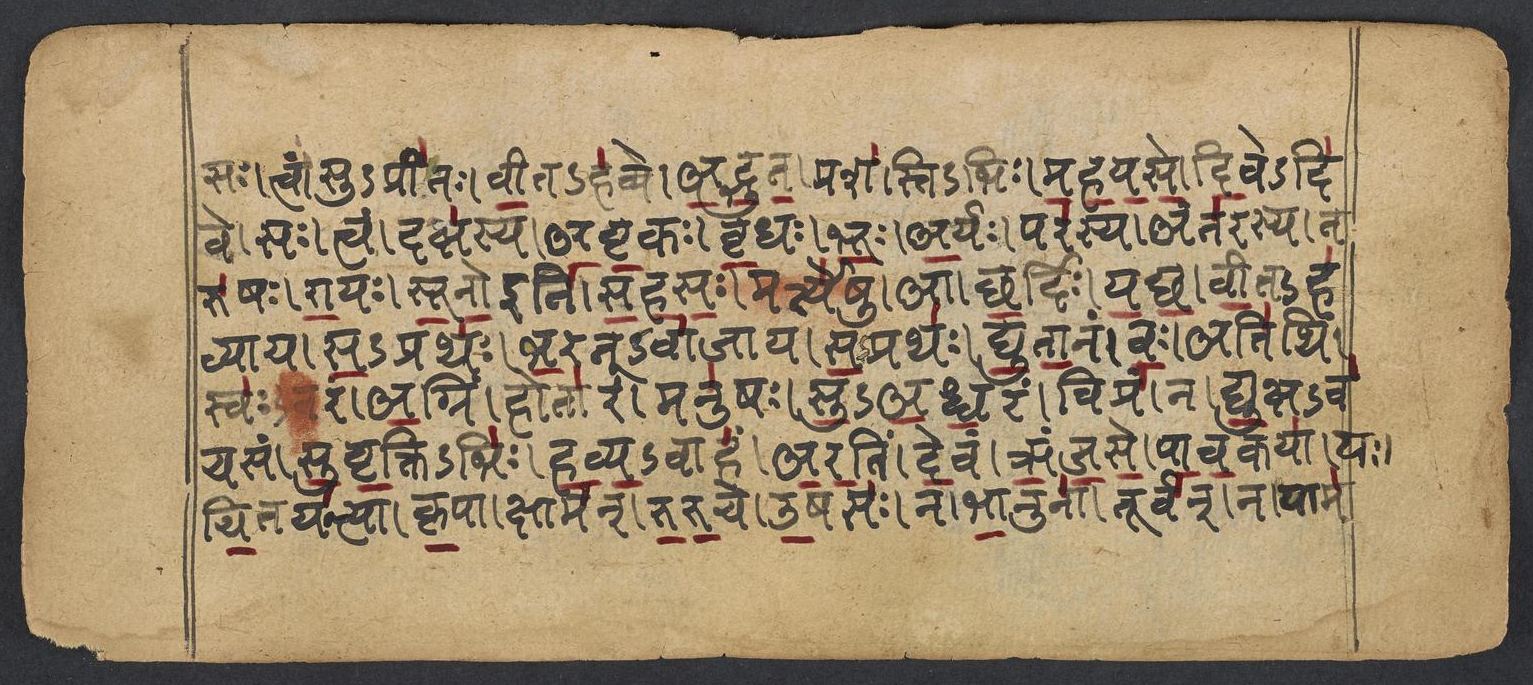
Where on the image
Penn Ms. Coll. 390 Item 41, fol. 416r (numbered 89r by the scribe) (OPenn image 416, lower leaf). Checked on the image: the Rigveda text on this page begins in RV 6.15.2 ‹saḥ tvam su-prītaḥ vīta-havye›. The next page with Rigveda text, fol. 416v (numbered 89v by the scribe), begins in RV 6.15.5 ‹etaśasya nu raṇe yaḥ›. Verses 6.15.2-4 end on this page; 6.15.2 begins on fol. 415v (numbered 88v by the scribe).
2mi̱traṁ na yaṁ sudhi̍ta̱m bhṛga̍vo da̱dhur vana̱spatā̱v īḍya̍m ū̱rdhvaśo̍ciṣam | sa tvaṁ suprī̍to vī̱taha̍vye adbhuta̱ praśa̍stibhir mahayase di̱ve-di̍ve ||
3sa tvaṁ dakṣa̍syāvṛ̱ko vṛ̱dho bhū̍r a̱ryaḥ para̱syānta̍rasya̱ taru̍ṣaḥ | rā̱yaḥ sū̍no sahaso̱ martye̱ṣv ā cha̱rdir ya̍ccha vī̱taha̍vyāya sa̱pratho̍ bha̱radvā̍jāya sa̱pratha̍ḥ ||
4dyu̱tā̱naṁ vo̱ ati̍thi̱ṁ sva̍rṇaram a̱gniṁ hotā̍ra̱m manu̍ṣaḥ svadhva̱ram | vipra̱ṁ na dyu̱kṣava̍casaṁ suvṛ̱ktibhi̍r havya̱vāha̍m ara̱tiṁ de̱vam ṛ̍ñjase ||
Compare: Padapāṭha (word-by-word text written in the manuscript; Sansknet e-text via GRETIL)
2mitram | na | yam | su-dhitam | bhṛgavaḥ | dadhuḥ | vanaspatau | īḍyam | ūrdhva-śociṣam | saḥ | tvam | su-prītaḥ | vīta-havye | adbhuta | praśasti-bhiḥ | mahayase | dive--dive
3saḥ | tvam | dakasya | avṛkaḥ | vṛdhaḥ | bhūḥ | aryaḥ | parasya | antarasya | taruṣaḥ | rāyaḥ | sūno iti | sahasaḥ | martyeṣu | ā | chardiḥ | yaccha | vīta-havyāya | sa-prathaḥ | bharat-vājāya | sa-prathaḥ
4dyutānam | vaḥ | atithim | svaḥ-naram | agnim | hotāram | manuṣaḥ | su-adhvaram | vipram | na | dyukṣa-vacasam | suvṛkti-bhiḥ | havya-vāham | aratim | devam | ṛñjase
2Whom, well-disposed, the Bhr̥igus stablished as a Friend, whom men must glorify, high-flaming in the wood. As such, most friendly, thou art every day extolled in lauds by Vîtahavya, O thou wondrous God.
3Be thou the foeless helper of the skilful man, subduer of the enemy near or far away. Bestow a wealthy home on men, O Son of Strength. Give Vîtahavya riches spreading far and wide, give Bharadvâja wide-spread wealth.
4Him, your refulgent guest, Agni who comes from heaven, the Herald of mankind, well-skilled in sacred rites, Who, like a holy singer, utters heavenly words, oblation-bearer, envoy, God, I seek with hymns.
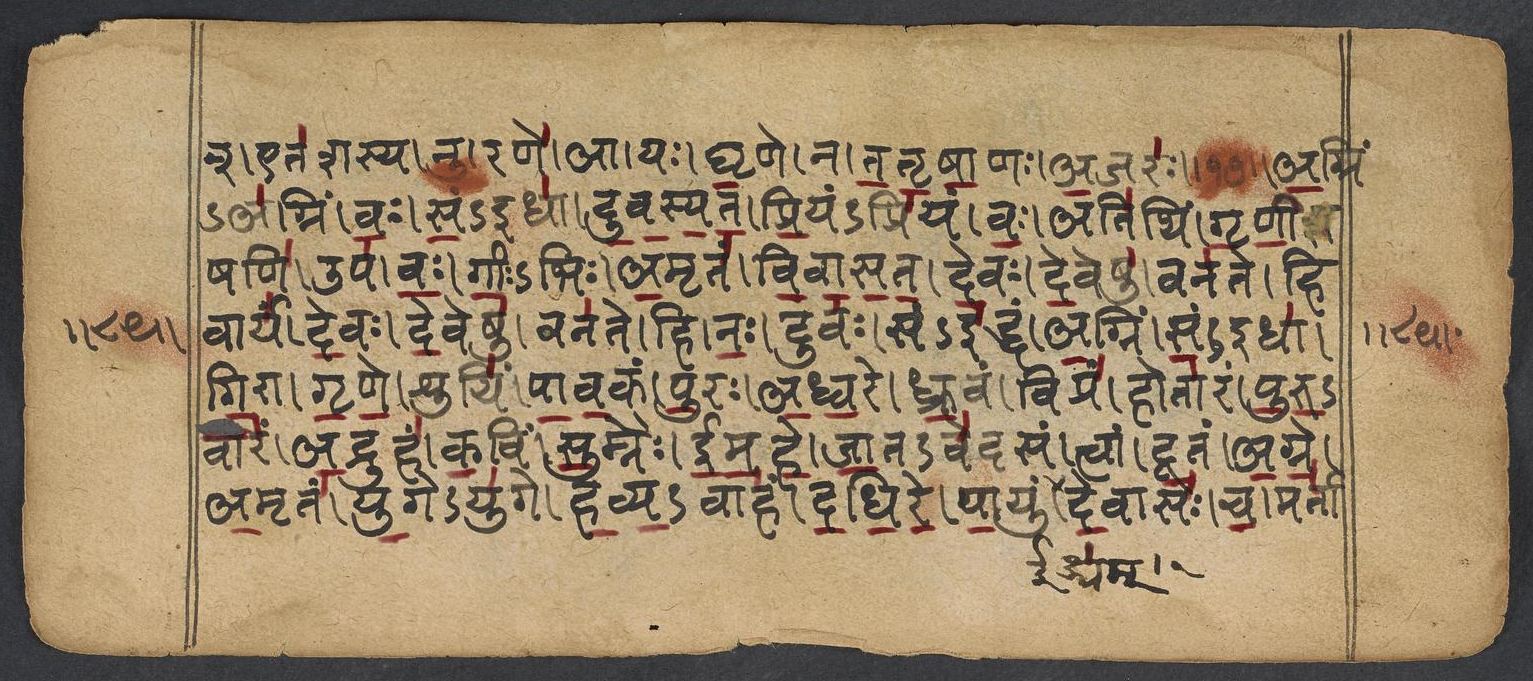
Where on the image
Penn Ms. Coll. 390 Item 41, fol. 416v (numbered 89v by the scribe) (OPenn image 417, upper leaf). Checked on the image: the Rigveda text on this page begins in RV 6.15.5 ‹etaśasya nu raṇe yaḥ›. The next page with Rigveda text, fol. 417r (numbered 90r by the scribe), begins in RV 6.15.8 ‹-martāsaḥ ca jāgṛvim vi-bhum›. Verses 6.15.5-7 end on this page; 6.15.5 begins on fol. 416r (numbered 89r by the scribe).
5pā̱va̱kayā̱ yaś ci̱taya̍ntyā kṛ̱pā kṣāma̍n ruru̱ca u̱ṣaso̱ na bhā̱nunā̍ | tūrva̱n na yāma̱nn eta̍śasya̱ nū raṇa̱ ā yo ghṛ̱ṇe na ta̍tṛṣā̱ṇo a̱jara̍ḥ ||
6a̱gnim-a̍gniṁ vaḥ sa̱midhā̍ duvasyata pri̱yam-pri̍yaṁ vo̱ ati̍thiṁ gṛṇī̱ṣaṇi̍ | upa̍ vo gī̱rbhir a̱mṛta̍ṁ vivāsata de̱vo de̱veṣu̱ vana̍te̱ hi vārya̍ṁ de̱vo de̱veṣu̱ vana̍te̱ hi no̱ duva̍ḥ ||
7sami̍ddham a̱gniṁ sa̱midhā̍ gi̱rā gṛ̍ṇe̱ śuci̍m pāva̱kam pu̱ro a̍dhva̱re dhru̱vam | vipra̱ṁ hotā̍ram puru̱vāra̍m a̱druha̍ṁ ka̱viṁ su̱mnair ī̍mahe jā̱tave̍dasam ||
Compare: Padapāṭha (word-by-word text written in the manuscript; Sansknet e-text via GRETIL)
5pāvakayā | yaḥ | citayantyā | kṛpā | kṣāman | ruruce | uṣasaḥ | na | bhānunā | tūvarn | na | yāman | etaśasya | nu | raṇe | yaḥ | ghṛṇe | na | tatṛṣāṇaḥ | ajaraḥ
6agnim-agnim | vaḥ | sam-idhā | duvasyata | priyam-priyam | vaḥ | atithim | gṛṇīṣaṇi | upa | vaḥ | gīḥ-bhiḥ | amṛtam | vivāsata | devaḥ | deveṣu | vanate | hi | vāryam | devaḥ | deveṣu | vanate | hi | naḥ | duvaḥ
7sam-iddham | agnim | sam-idhā | girā | gṛṇe | śucim | pāvakam | puraḥ | adhvare | dhruvam | vipram | hotāram | puru-vāram | adruham | kavim | sumnaiḥ | īmahe | jāta-vedasam
5Who with his purifying, eye-attracting form hath shone upon the earth as with the light of Dawn; Who speeding on, as in the fight of Etaṣa, cometh, untouched by age, as one athirst in heat.
6Worship ye Agni, Agni, with your log of wood; praise your beloved, your beloved guest with songs. Invite ye the Immortal hither with your hymns. A God among the Gods, he loveth what is choice, loveth our service, God mid Gods.
7Agni inflamed with fuel in my song I sing, pure, Cleanser, stedfast, set in front at sacrifice. Wise Jâtavedas we implore with prayers for bliss the Priest, the holy Singer, bounteous, void of guile.
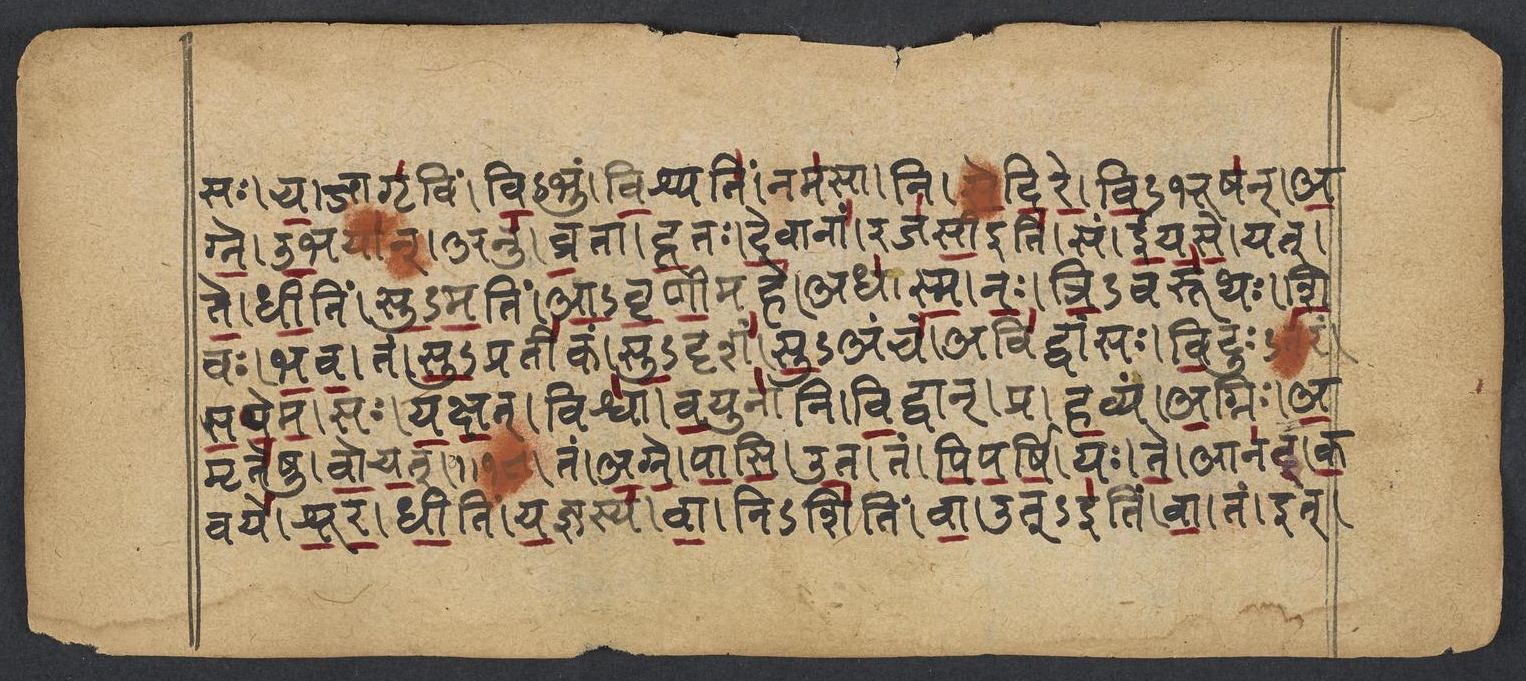
Where on the image
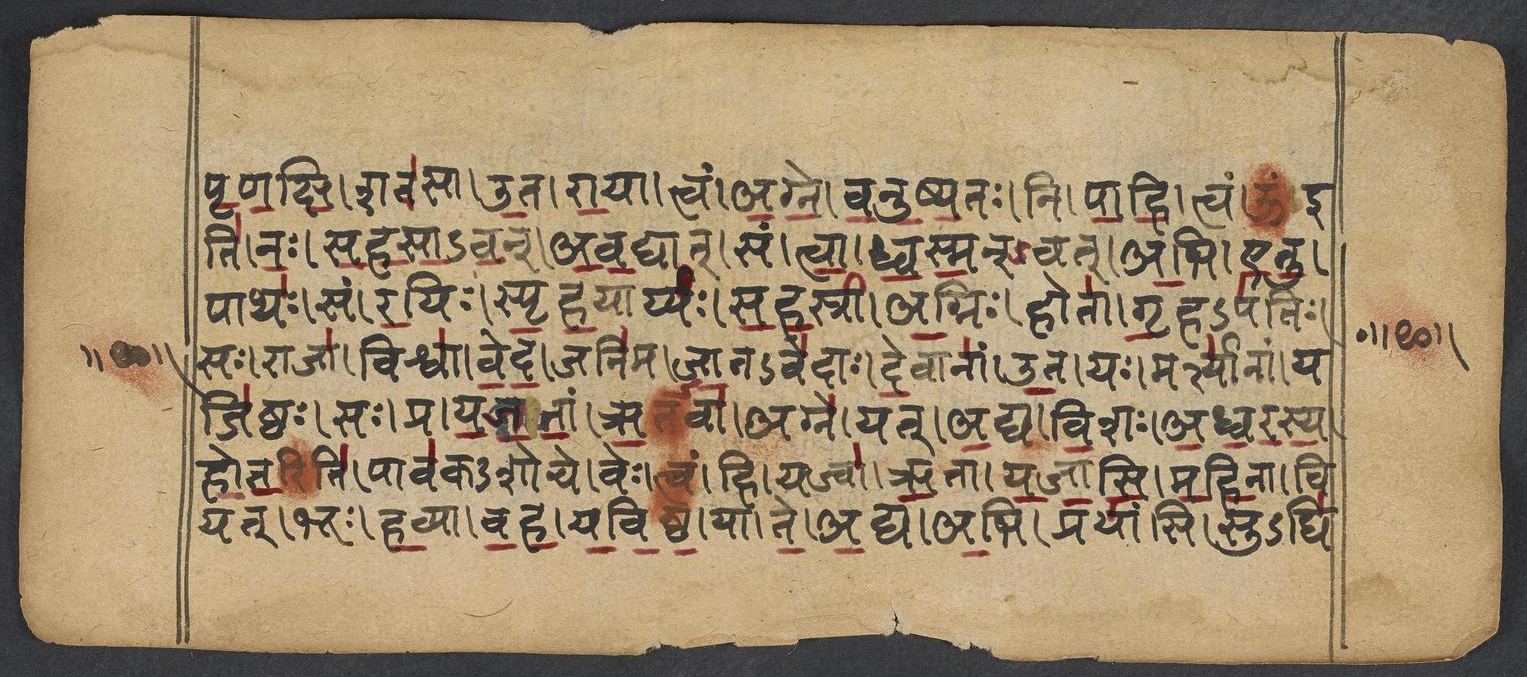
Penn Ms. Coll. 390 Item 41, fol. 417r (numbered 90r by the scribe) (OPenn image 417, lower leaf). Checked on the image: the Rigveda text on this page begins in RV 6.15.8 ‹-martāsaḥ ca jāgṛvim vi-bhum›. The next page with Rigveda text, fol. 417v (numbered 90v by the scribe), begins in RV 6.15.11 ‹pṛṇakṣi śavasā uta rāyā›. Verses 6.15.8-10 end on this page; 6.15.8 begins on fol. 416v (numbered 89v by the scribe).
8tvāṁ dū̱tam a̍gne a̱mṛta̍ṁ yu̱ge-yu̍ge havya̱vāha̍ṁ dadhire pā̱yum īḍya̍m | de̱vāsa̍ś ca̱ martā̍saś ca̱ jāgṛ̍viṁ vi̱bhuṁ vi̱śpati̱ṁ nama̍sā̱ ni ṣe̍dire ||
9vi̱bhūṣa̍nn agna u̱bhayā̱m̐ anu̍ vra̱tā dū̱to de̱vānā̱ṁ raja̍sī̱ sam ī̍yase | yat te̍ dhī̱tiṁ su̍ma̱tim ā̍vṛṇī̱mahe 'dha̍ smā nas tri̱varū̍thaḥ śi̱vo bha̍va ||
10taṁ su̱pratī̍kaṁ su̱dṛśa̱ṁ svañca̱m avi̍dvāṁso vi̱duṣṭa̍raṁ sapema | sa ya̍kṣa̱d viśvā̍ va̱yunā̍ni vi̱dvān pra ha̱vyam a̱gnir a̱mṛte̍ṣu vocat ||
Compare: Padapāṭha (word-by-word text written in the manuscript; Sansknet e-text via GRETIL)
8tvām | dūtam | agne | amṛtam | yuge--yuge | havya-vāham | dadhire | pāyum | īḍyam | devāsaḥ | ca | martāsaḥ | ca | jāgṛvim | vi-bhum | viśpatim | namasā | ni | sedire
9vi-bhūṣan | agne | ubhayān | anu | vratā | dūtaḥ | devānām | rajasī iti | sam | īyase | yat | te | dhītim | su-matim | āvṛṇīmahe | adha | sma | naḥ | tri-varūthaḥ | śivaḥ | bhava
10tam | su-pratīkam | su-dṛśam | su-añcam | avidvāṃsaḥ | viduḥ-taram | sapema | saḥ | yakṣat | viśvā | vayunāni | vidvān | pra | havyam | agniḥ | amṛteṣu | vocat
8Men, Agni, in each age have made thee, Deathless One, their envoy, offering-bearer, guard adorable. With reverence Gods and mortals have established thee, the ever-watchful, omnipresent Household Lord.
9Thou, Agni, ordering the works and ways of both, as envoy of the Gods traversest both the worlds. When we lay claim to thy regard and gracious care, be thou to us a thriceprotecting friendly guard.
10Him fair of face, rapid, and fair to look on, him very wise may we who know not follow. Let him who knows all rules invite for worship, Agru announce our offering to the Immortals.
Where on the image
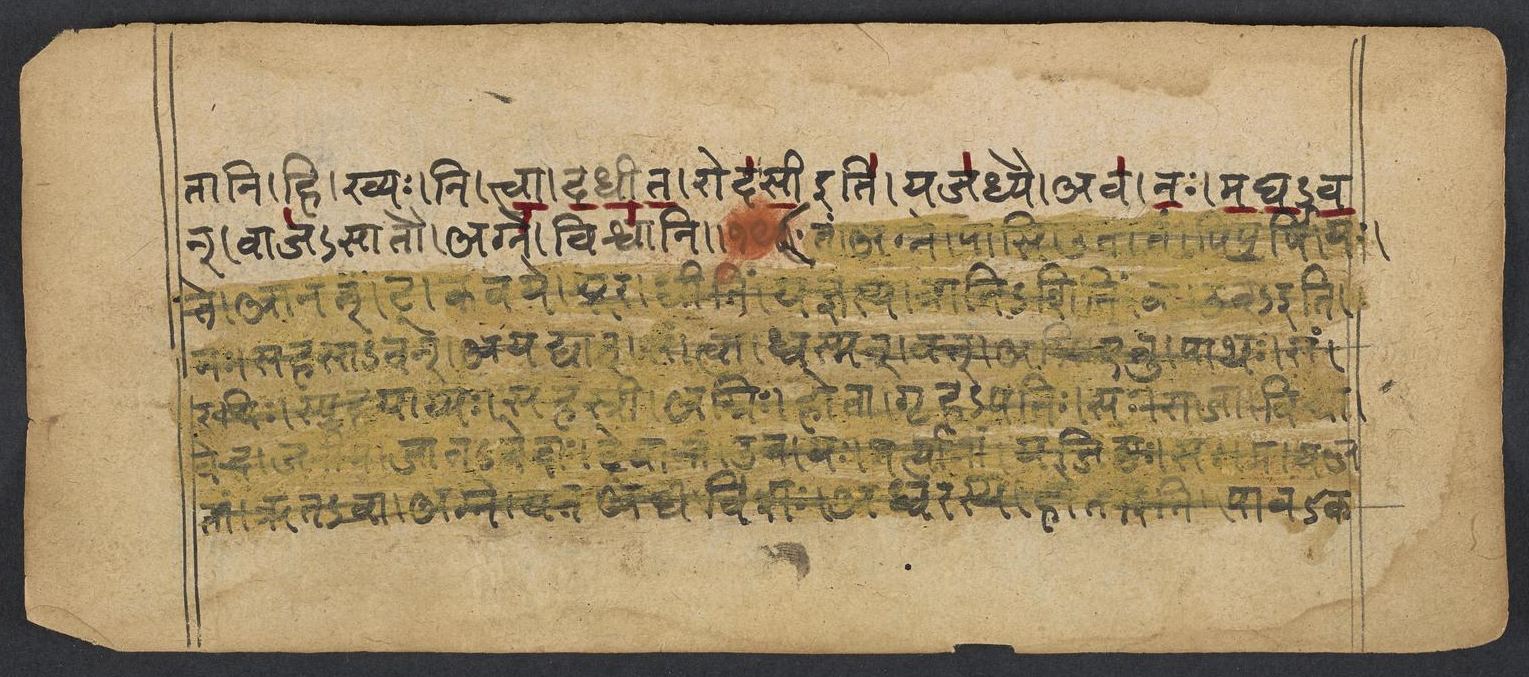
Penn Ms. Coll. 390 Item 41, fol. 417v (numbered 90v by the scribe) (OPenn image 418, upper leaf). Checked on the image: the Rigveda text on this page begins in RV 6.15.11 ‹pṛṇakṣi śavasā uta rāyā›. The next page with Rigveda text, fol. 418r (numbered 91r by the scribe), begins in RV 6.15.15 ‹-su-dhitāni hi khyaḥ ni›. Verses 6.15.11-14 end on this page; 6.15.11 begins on fol. 417r (numbered 90r by the scribe).
11tam a̍gne pāsy u̱ta tam pi̍parṣi̱ yas ta̱ āna̍ṭ ka̱vaye̍ śūra dhī̱tim | ya̱jñasya̍ vā̱ niśi̍ti̱ṁ vodi̍tiṁ vā̱ tam it pṛ̍ṇakṣi̱ śava̍so̱ta rā̱yā ||
12tvam a̍gne vanuṣya̱to ni pā̍hi̱ tvam u̍ naḥ sahasāvann ava̱dyāt | saṁ tvā̍ dhvasma̱nvad a̱bhy e̍tu̱ pātha̱ḥ saṁ ra̱yiḥ spṛ̍ha̱yāyya̍ḥ saha̱srī ||
13a̱gnir hotā̍ gṛ̱hapa̍ti̱ḥ sa rājā̱ viśvā̍ veda̱ jani̍mā jā̱tave̍dāḥ | de̱vānā̍m u̱ta yo martyā̍nā̱ṁ yaji̍ṣṭha̱ḥ sa pra ya̍jatām ṛ̱tāvā̍ ||
14agne̱ yad a̱dya vi̱śo a̍dhvarasya hota̱ḥ pāva̍kaśoce̱ veṣ ṭvaṁ hi yajvā̍ | ṛ̱tā ya̍jāsi mahi̱nā vi yad bhūr ha̱vyā va̍ha yaviṣṭha̱ yā te̍ a̱dya ||
Compare: Padapāṭha (word-by-word text written in the manuscript; Sansknet e-text via GRETIL)
11tam | agne | pāsi | uta | tam | piparṣi | yaḥ | te | ānaṭ | kavaye | śūra | dhītim | yajñasya | vā | ni-śitim | vā | ut-itim | vā | tam | it | pṛṇakṣi | śavasā | uta | rāyā
12tvam | agne | vanuṣyataḥ | ni | pāhi | tvam | oṃ iti | naḥ | sahasāvan | avadyāt | sam | tvā | dhvasman-vat | abhi | etu | pāthaḥ | sam | rayiḥ | spṛhayāyyaḥ | sahasrī
13agniḥ | hotā | gṛha-patiḥ | saḥ | rājā | viśvā | veda | janima | jāta-vedāḥ | devānām | uta | yaḥ | martyānām | yajiṣṭhaḥ | saḥ | pra | yajatām | ṛta-vā
14agne | yat | adya | viśaḥ | adhvarasya | hotariti | pāvaka-śoce | veḥ | tvam | hi | yajvā | ṛtā | yajāsi | mahinā | vi | yat | bhūḥ | havyā | vaha | yaviṣṭha | yā | te | adya
11Him, Agni, thou deliverest and savest who brings his prayer to thee the Wise, O Hero, The end of sacrifice or its inception; yea, thou endowest him with power and riches.
12Guard us from him who would assail us, Agni; preserve us, O thou Victor, from dishonour. Here let the place of darkening come upon thee: may wealth be ours, desirable in thousands.
13Agni, the Priest, is King, Lord of the homestead, he, Jatayedas, knows all generations. Most skilful worshipper mid Gods and mortals, may he begin the sacrifice, the Holy.
14Whate'er to-day thou, bright-flamed Priest, enjoyest from the man's rite-for thou art sacrificer Worship, for duly dost thou spread in greatness: bear off thine offerings of to-day, Most Youthful.
Where on the image
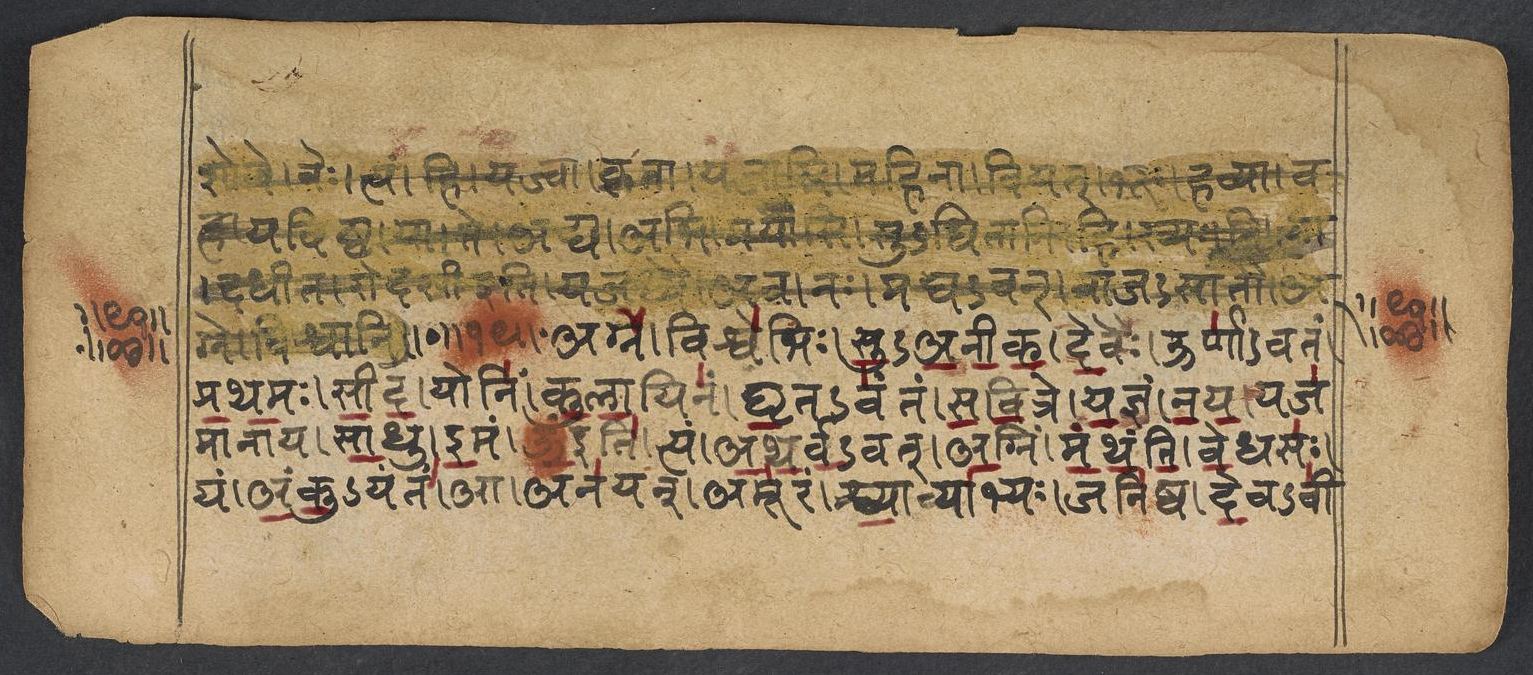
Penn Ms. Coll. 390 Item 41, fol. 418r (numbered 91r by the scribe) (OPenn image 418, lower leaf). Checked on the image: the Rigveda text on this page begins in RV 6.15.15 ‹-su-dhitāni hi khyaḥ ni›. From line 2 (after the varga number 19) the rest of the page is painted over in yellow: a deleted repeat of the text just written. The next page with Rigveda text, fol. 418v (numbered 91v by the scribe), begins in RV 6.15.16 ‹agne viśvebhiḥ su-anīka devaiḥ›. Verse 6.15.15 ends on this page; 6.15.15 begins on fol. 417v (numbered 90v by the scribe).
15a̱bhi prayā̍ṁsi̱ sudhi̍tāni̱ hi khyo ni tvā̍ dadhīta̱ roda̍sī̱ yaja̍dhyai | avā̍ no maghava̱n vāja̍sātā̱v agne̱ viśvā̍ni duri̱tā ta̍rema̱ tā ta̍rema̱ tavāva̍sā tarema ||
Compare: Padapāṭha (word-by-word text written in the manuscript; Sansknet e-text via GRETIL)
15abhi | prayāṃsi | su-dhitāni | hi | khyaḥ | ni | tvā | dadhīta | rodasī iti | yajadhyai | ava | naḥ | magha-van | vāja-sātau | agne | viśvāni | duḥ-itā | tarema | tā | tarema | tava | avasā | tarema
15Look thou upon the viands duly laid for thee. Fain would he set thee here to worship Heaven and,Earth. Help us, O liberal Agni, in the strife for spoil, so that we may o'ercome all things that trouble us, o'ercome, o'ercome them with thy help.
Where on the image
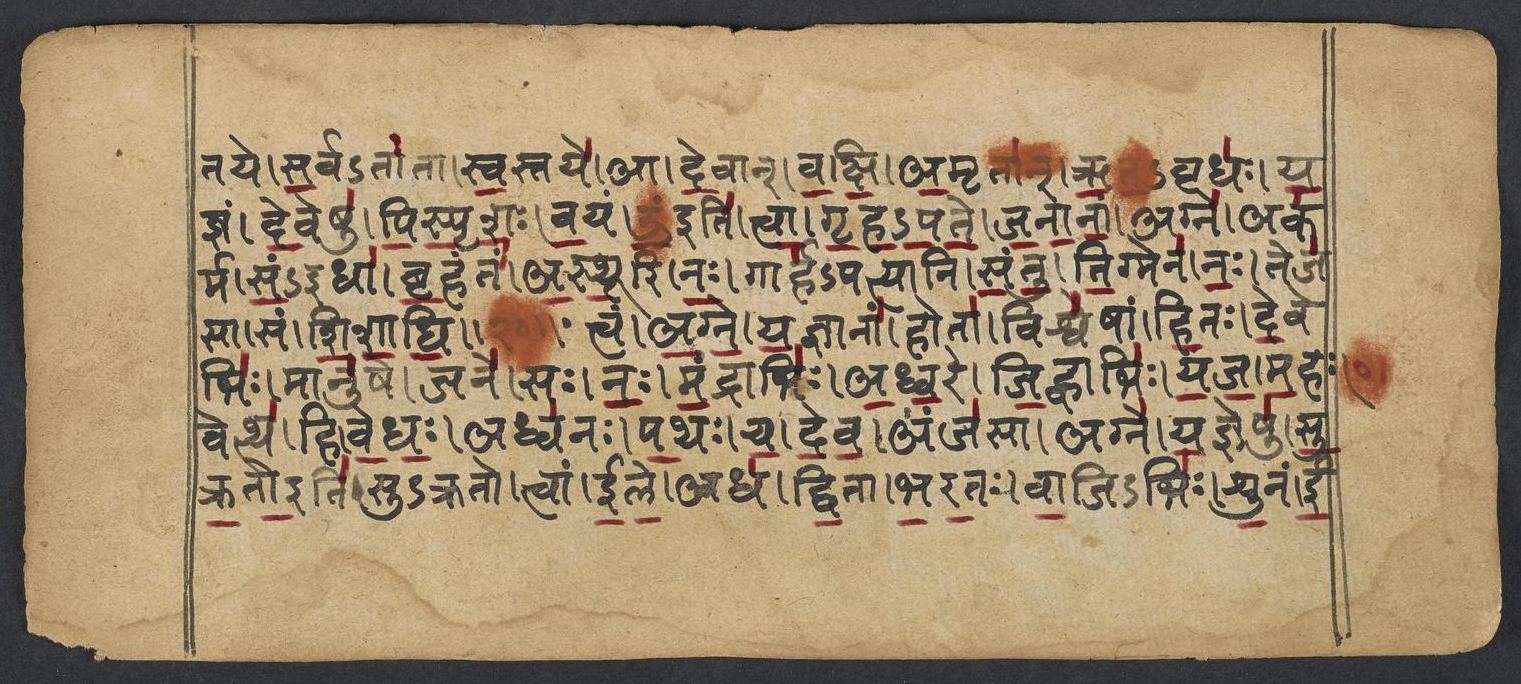
Penn Ms. Coll. 390 Item 41, fol. 418v (numbered 91v by the scribe) (OPenn image 419, upper leaf). Checked on the image: the Rigveda text on this page begins in RV 6.15.16 ‹agne viśvebhiḥ su-anīka devaiḥ›. Lines 1-3 and the start of line 4 are painted over in yellow (the deleted repeat begun on fol. 418r); the text resumes in line 4 after the varga number 19 with 6.15.16. The next page with Rigveda text, fol. 419r (numbered 92r by the scribe), begins in RV 6.15.18 ‹-deva-vītaye sarva-tātā svastaye ā›. Verses 6.15.16-17 end on this page.
16agne̱ viśve̍bhiḥ svanīka de̱vair ūrṇā̍vantam pratha̱maḥ sī̍da̱ yoni̍m | ku̱lā̱yina̍ṁ ghṛ̱tava̍ntaṁ savi̱tre ya̱jñaṁ na̍ya̱ yaja̍mānāya sā̱dhu ||
17i̱mam u̱ tyam a̍tharva̱vad a̱gnim ma̍nthanti ve̱dhasa̍ḥ | yam a̍ṅkū̱yanta̱m āna̍ya̱nn amū̍raṁ śyā̱vyā̍bhyaḥ ||
Compare: Padapāṭha (word-by-word text written in the manuscript; Sansknet e-text via GRETIL)
16agne | viśvebhiḥ | su-anīka | devaiḥ | ūrṇāvantam | prathamaḥ | sīda | yonim | kulāyanim | ghṛta-vantam | savitre | yajñam | naya | yajamānāya | sādhu
17imam | oṃ iti | tyam | atharva-vat | agnim | manthanti | vedhasaḥ | yam | aṅku-yantam | ā | anayan | amūram | syāvyābhyaḥ
16Together with all Gods, O fair-faced Agni, be seated first upon the woollined altar, Nest-like, bedewed with oil. Bear this our worship to Savitar who sacrifices rightly.
17Here the arranging priests, as did Atharvan, rub this Agni forth, Whom, not bewildered, as he moved in winding ways, they brought from gloom.
Where on the image
Penn Ms. Coll. 390 Item 41, fol. 419r (numbered 92r by the scribe) (OPenn image 419, lower leaf). Checked on the image: the Rigveda text on this page begins in RV 6.15.18 ‹-deva-vītaye sarva-tātā svastaye ā›. The next page with Rigveda text, fol. 419v (numbered 92v by the scribe), begins in RV 6.16.4 ‹-īje yajñeṣu yajñiyam›. Verses 6.15.18-19 end on this page; 6.15.18 begins on fol. 418v (numbered 91v by the scribe).
18jani̍ṣvā de̱vavī̍taye sa̱rvatā̍tā sva̱staye̍ | ā de̱vān va̍kṣy a̱mṛtā̍m̐ ṛtā̱vṛdho̍ ya̱jñaṁ de̱veṣu̍ pispṛśaḥ ||
19va̱yam u̍ tvā gṛhapate janānā̱m agne̱ aka̍rma sa̱midhā̍ bṛ̱hanta̍m | a̱sthū̱ri no̱ gārha̍patyāni santu ti̱gmena̍ na̱s teja̍sā̱ saṁ śi̍śādhi ||
Compare: Padapāṭha (word-by-word text written in the manuscript; Sansknet e-text via GRETIL)
18janiṣva | deva-vītaye | sarva-tātā | svastaye | ā | devān | vakṣi | amṛtān | ṛta-vṛdhaḥ | yajñam | deveṣu | pispṛśaḥ
19vayam | oṃ iti | tvā | gṛha-pate | janānām | agne | akarma | sam-idhā | bṛhantam | asthūri | naḥ | gārhapatyāni | santu | tigmena | naḥ | tejasā | sam | siśādhi
18For the Gods' banquet be thou born, for full perfection and for weal. Bring the Immortal Gods who strengthen holy Law: so let our sacrifice reach the Gods.
19O Agni, Lord and Master of men's homesteads, with kindled fuel we have made thee mighty. Let not our household gear be found defective. Sharpen us with thy penetrating splendour.
Notes
- Sanskrit: Aufrecht's edition (1877) with the Vedic accents, as entered by van Nooten and Holland (GRETIL).
- English: Ralph T. H. Griffith, The Hymns of the Rigveda (1889-1892; 2nd ed. 1896-1897), from the VedaWeb digital text; OCR slips in that text were corrected against the printed 2nd edition (data/sources/rigveda/griffith_errata.json).
- Padapāṭha (edition text): Sansknet e-text via GRETIL (CC BY-NC-SA 4.0).
Cite
Sources
- Source: Penn Ms. Coll. 390 Item 41 (undated (catalogued with Penn's 18th-19th c. Vedic manuscripts)), OPenn, Public Domain Mark + Aufrecht's accented text (GRETIL) + Griffith's English (VedaWeb) (holding institution)
- Critical edition: Aufrecht (1877), accented e-text via GRETIL
← previous · → next · v cycle view · l back to library