Rigveda 6.16: To Agni
Introduction
Rigveda 6.16 is a hymn of 48 verses addressed to Agni. It stands in book (maṇḍala) 6, the family book of Bharadvāja. The Rigveda is the oldest collection of Sanskrit hymns, composed in the second half of the second millennium BCE and handed down orally for many centuries before it was written down.
The manuscript shown is Penn Ms. Coll. 390 Item 41 (University of Pennsylvania), an undated paper manuscript of the padapāṭha (the word-by-word recitation text, in which every word is written separately and compounds are split) of the whole Ṛgveda in Devanāgarī, 884 leaves in fascicles, 7-9 lines to the page, accents in red; this hymn stands on fol. 419r-422v. Each section below gives the verses that end on one page; the page boundaries were read on the images (the opening words of every page), not counted out. Where the manuscript is a padapāṭha (the word-by-word recitation text), the section shows Aufrecht's continuous (saṃhitā) text first and, as the edition text, the padapāṭha of the same verses, which is the form written on the page.
How was this verified? (Provenance)
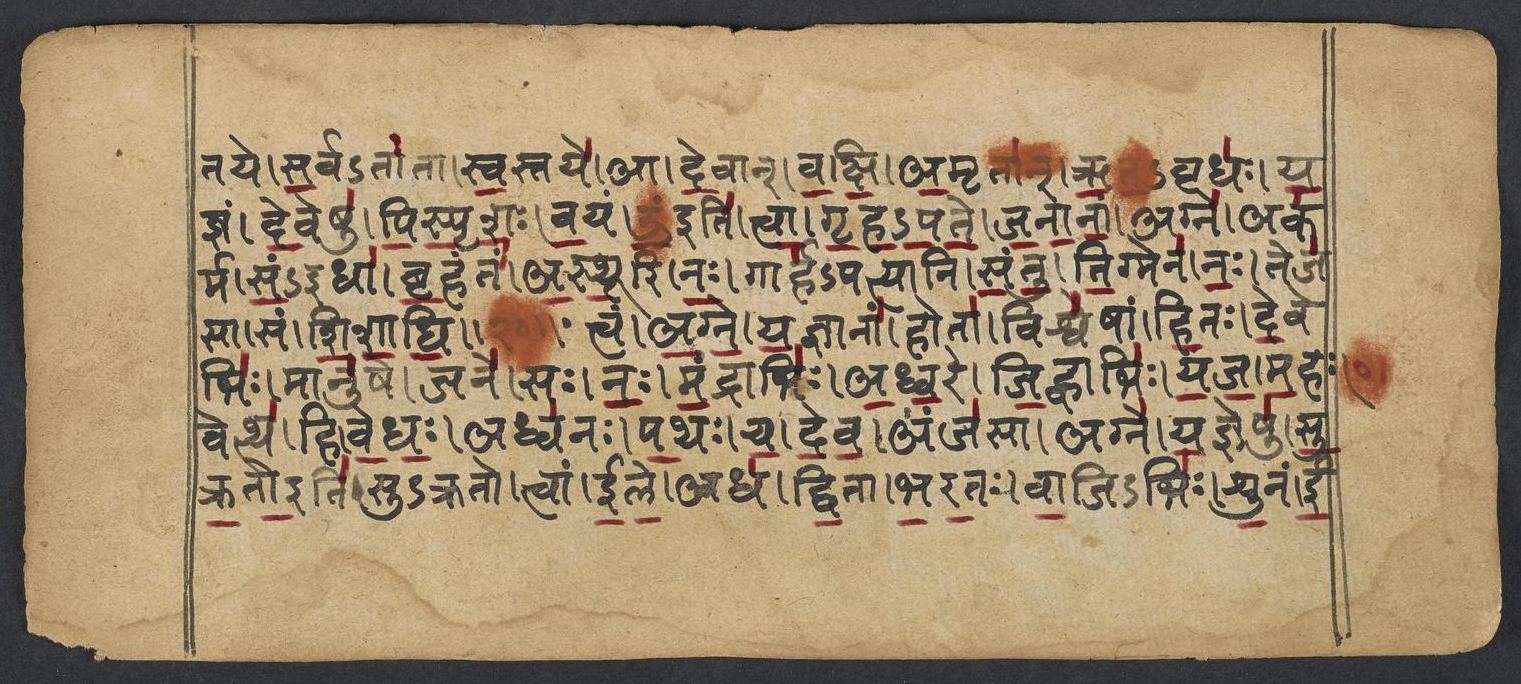
Where on the image
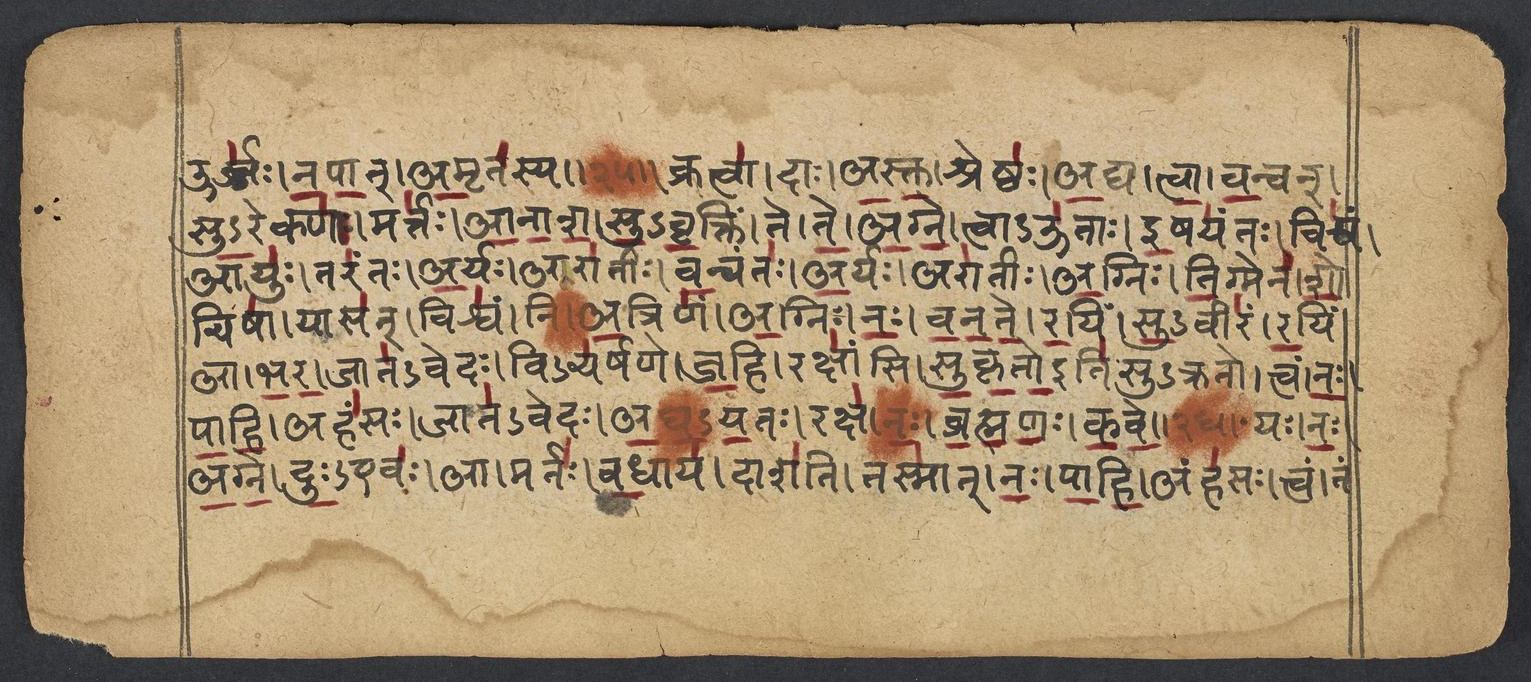
Penn Ms. Coll. 390 Item 41, fol. 419r (numbered 92r by the scribe) (OPenn image 419, lower leaf). Checked on the image: the Rigveda text on this page begins in RV 6.15.18 ‹-deva-vītaye sarva-tātā svastaye ā›. The next page with Rigveda text, fol. 419v (numbered 92v by the scribe), begins in RV 6.16.4 ‹-īje yajñeṣu yajñiyam›. Verses 6.16.1-3 end on this page.
1tvam a̍gne ya̱jñānā̱ṁ hotā̱ viśve̍ṣāṁ hi̱taḥ | de̱vebhi̱r mānu̍ṣe̱ jane̍ ||
2sa no̍ ma̱ndrābhi̍r adhva̱re ji̱hvābhi̍r yajā ma̱haḥ | ā de̱vān va̍kṣi̱ yakṣi̍ ca ||
3vetthā̱ hi ve̍dho̱ adhva̍naḥ pa̱thaś ca̍ de̱vāñja̍sā | agne̍ ya̱jñeṣu̍ sukrato ||
Compare: Padapāṭha (word-by-word text written in the manuscript; Sansknet e-text via GRETIL)
1tvam | agne | yajñānām | hotā | viśveṣām | hitaḥ | devebhiḥ | mānuṣe | jane
2saḥ | naḥ | mandrābhiḥ | adhvare | jihvābhiḥ | yaja | mahaḥ | ā | devān | vakṣi | yakṣi | ca
3vettha | hi | vedhaḥ | adhvanaḥ | pathaḥ | ce | deva | añjasā | agne | yajñeṣu | sukrato itisu-krato
1PRIEST of all sacrifices hast thou been appointed by the Gods, Agni, amid the race of man.
2So with thy joyous tongues for us sacrifice nobly in this rite. Bring thou the Gods and worship them.
3For well, O God, Disposer, thou knowest, straight on, the paths and ways, Agni, most wise in sacrifice.
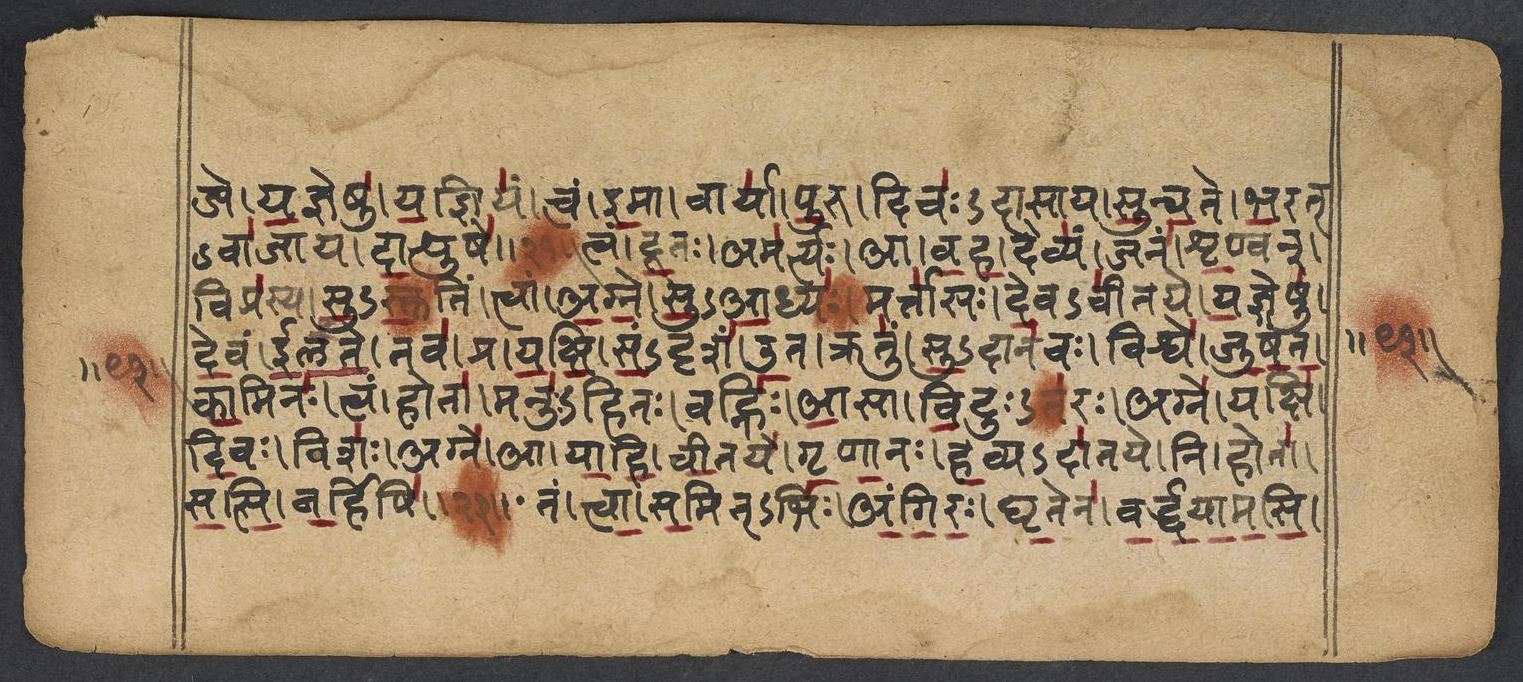
Where on the image
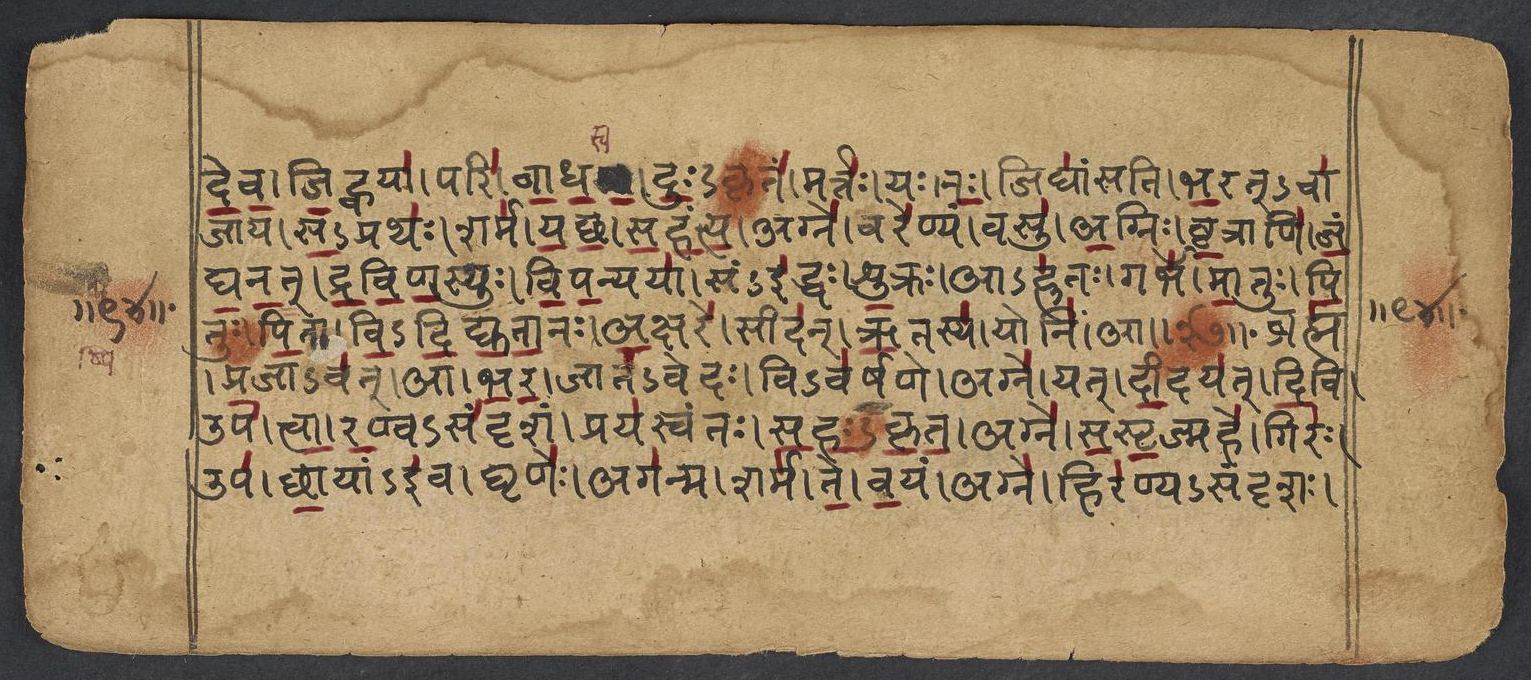
Penn Ms. Coll. 390 Item 41, fol. 419v (numbered 92v by the scribe) (OPenn image 420, upper leaf). Checked on the image: the Rigveda text on this page begins in RV 6.16.4 ‹-īje yajñeṣu yajñiyam›. The next page with Rigveda text, fol. 420r (numbered 93r by the scribe), begins in RV 6.16.11 ‹bṛhat śoca yaviṣṭhya›. Verses 6.16.4-10 end on this page; 6.16.4 begins on fol. 419r (numbered 92r by the scribe).
4tvām ī̍ḻe̱ adha̍ dvi̱tā bha̍ra̱to vā̱jibhi̍ḥ śu̱nam | ī̱je ya̱jñeṣu̍ ya̱jñiya̍m ||
5tvam i̱mā vāryā̍ pu̱ru divo̍dāsāya sunva̱te | bha̱radvā̍jāya dā̱śuṣe̍ ||
6tvaṁ dū̱to ama̍rtya̱ ā va̍hā̱ daivya̱ṁ jana̍m | śṛ̱ṇvan vipra̍sya suṣṭu̱tim ||
7tvām a̍gne svā̱dhyo̱3̱̍ martā̍so de̱vavī̍taye | ya̱jñeṣu̍ de̱vam ī̍ḻate ||
8tava̱ pra ya̍kṣi sa̱ṁdṛśa̍m u̱ta kratu̍ṁ su̱dāna̍vaḥ | viśve̍ juṣanta kā̱mina̍ḥ ||
9tvaṁ hotā̱ manu̍rhito̱ vahni̍r ā̱sā vi̱duṣṭa̍raḥ | agne̱ yakṣi̍ di̱vo viśa̍ḥ ||
10agna̱ ā yā̍hi vī̱taye̍ gṛṇā̱no ha̱vyadā̍taye | ni hotā̍ satsi ba̱rhiṣi̍ ||
Compare: Padapāṭha (word-by-word text written in the manuscript; Sansknet e-text via GRETIL)
4tvām | īḷe | adha | dvitā | bharataḥ | vāji-bhiḥ | śunam | īje | yajñeṣu | yajñiyam
5tvam | imā | vāryā | puru | divaḥ-dāsāya | sunvate | bharat-vājāya | dāśuṣe
6tvam | dūtaḥ | amartyaḥ | ā | vaha | daivyam | janam | śṛṇvan | viprasya | su-stutim
7tvām | agne | su-ādhyaḥ | martāsaḥ | deva-vītaye | yajñeṣu | devam | īḷate
8tava | pra | yakṣi | sam-dṛśam | uta | kratum | su-dānavaḥ | viśve | juṣanta | kāminaḥ
9tvam | hotā | manuḥ-hitaḥ | vahniḥ | āsā | viduḥ-taraḥ | agne | yakṣi | divaḥ | viśaḥ
10agne | ā | yāhi | vītaye | gṛṇānaḥ | havya-dātaye | ni | hotā | satsi | barhiṣi
4Thee, too, hath Bharata of old, with mighty men, implored for bliss. And worshipped thee the worshipful.
5Thou givest these abundant boons to Divodâsa pouring forth, To Bharadvâja offering gifts.
6Do thou, Immortal Messenger, bring hither the Celestial Folk; Hearing the singer's eulogy.
7Mortals with pious thought implore thee, Agni, God, at holy rites, To come unto the feast of Gods.
8I glorify thine aspect and the might of thee the Bountiful. All those who love shall joy in thee,
9Invoker placed by Manus, thou, Agni, art near, the wisest Priest: Pay worship to the Tribes of Heaven.
10Come, Agni, lauded, to the feast; come to the offering of the gifts. As Priest be seated on the grass.
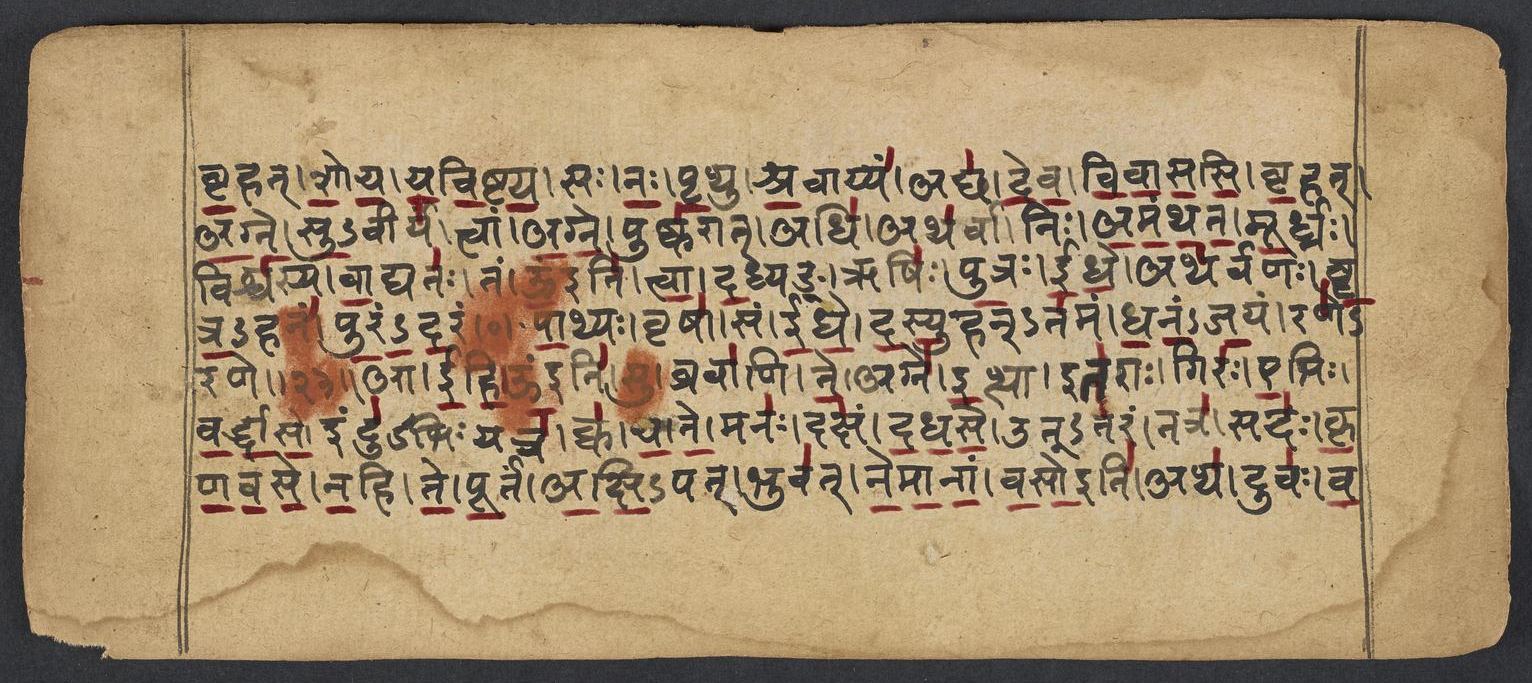
Where on the image
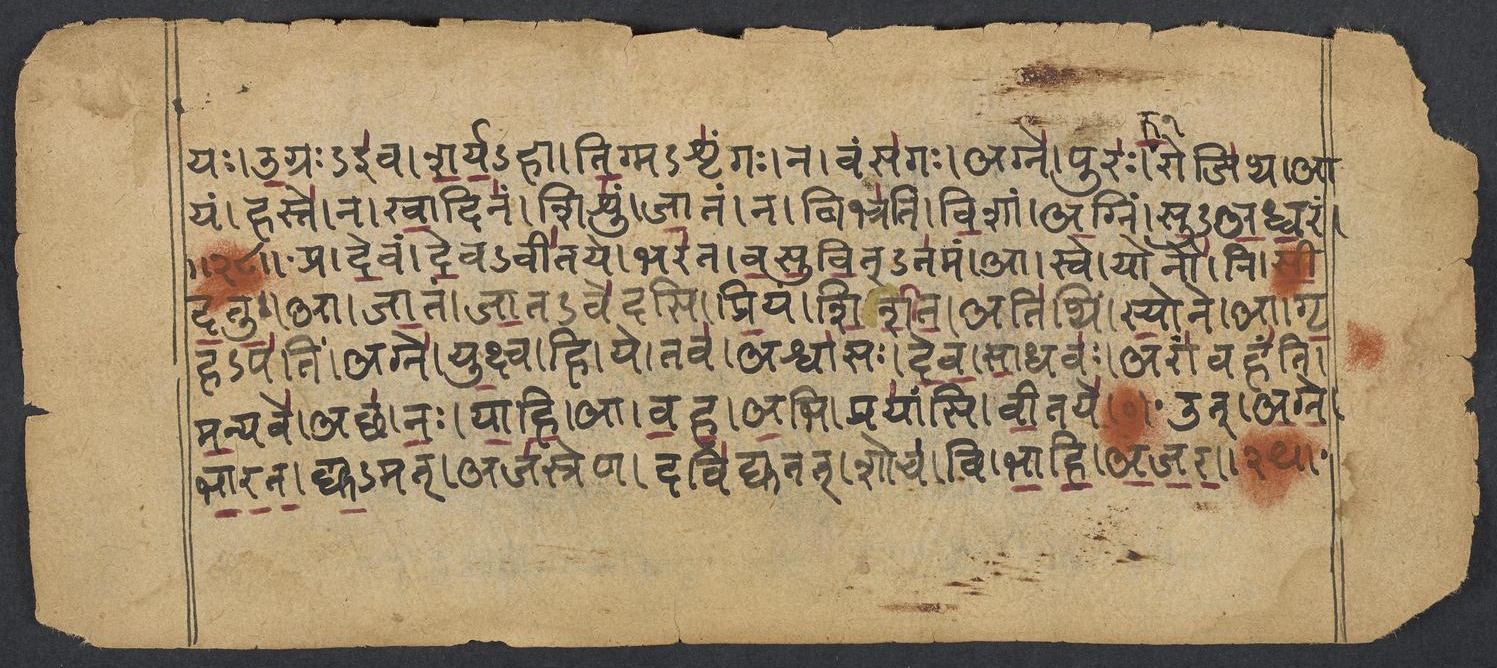
Penn Ms. Coll. 390 Item 41, fol. 420r (numbered 93r by the scribe) (OPenn image 420, lower leaf). Checked on the image: the Rigveda text on this page begins in RV 6.16.11 ‹bṛhat śoca yaviṣṭhya›. The next page with Rigveda text, fol. 420v (numbered 93v by the scribe), begins in RV 6.16.18 ‹-vanavase›. Verses 6.16.11-17 end on this page; 6.16.11 begins on fol. 419v (numbered 92v by the scribe).
11taṁ tvā̍ sa̱midbhi̍r aṅgiro ghṛ̱tena̍ vardhayāmasi | bṛ̱hac cho̍cā yaviṣṭhya ||
12sa na̍ḥ pṛ̱thu śra̱vāyya̱m acchā̍ deva vivāsasi | bṛ̱had a̍gne su̱vīrya̍m ||
13tvām a̍gne̱ puṣka̍rā̱d adhy atha̍rvā̱ nir a̍manthata | mū̱rdhno viśva̍sya vā̱ghata̍ḥ ||
14tam u̍ tvā da̱dhyaṅṅ ṛṣi̍ḥ pu̱tra ī̍dhe̱ atha̍rvaṇaḥ | vṛ̱tra̱haṇa̍m puraṁda̱ram ||
15tam u̍ tvā pā̱thyo vṛṣā̱ sam ī̍dhe dasyu̱hanta̍mam | dha̱na̱ṁja̱yaṁ raṇe̍-raṇe ||
16ehy ū̱ ṣu bravā̍ṇi̱ te 'gna̍ i̱ttheta̍rā̱ gira̍ḥ | e̱bhir va̍rdhāsa̱ indu̍bhiḥ ||
17yatra̱ kva̍ ca te̱ mano̱ dakṣa̍ṁ dadhasa̱ utta̍ram | tatrā̱ sada̍ḥ kṛṇavase ||
Compare: Padapāṭha (word-by-word text written in the manuscript; Sansknet e-text via GRETIL)
11tam | tvā | samit-bhiḥ | aṅgiraḥ | ghṛtena | vardhayāmasi | bṛhat | śoca | yaviṣṭhya
12saḥ | naḥ | pṛthu | śravāyyam | accha | deva | vivāsasi | bṛhat | agne | su-vīryam
13tvām | agne | puṣkarāt | adhi | atharvā | niḥ | amanthata | mūdhnarḥ | viśvasya | vāghataḥ
14tam | oṃ iti | tvā | dadhyaṅ | ṛṣiḥ | putraḥ | īdhe | atharvaṇaḥ | vṛtra-hanam | puram-daram
15tam | oṃ iti | tvā | pāthyaḥ | vṛṣā | sam | īdhe | dasyuhan-tamam | dhanam-jayam | raṇe--raṇe
16ā | ihi | oṃ iti | su | bravāṇi | te | agne | itthā | itarāḥ | giraḥ | ebhiḥ | vardhāse | indu-bhiḥ
17yatra | kva | ca | te | manaḥ | dakṣam | dadhase | ut-taram | tatra | sadaḥ | kṛṇavase
11So, Angiras, we make thee strong with fuel and with holy oil. Blaze high, thou youngest of the Gods.
12For us thou winnest, Agni, God, heroic strength exceeding great, Far-spreading and of high renown.
13Agni, Atharvan brought thee forth, by rubbing, from the lotus-flower, The head of Viṣva, of the Priest.
14Thee. Vr̥itra's slayer, breaker down of castles, hath Atharvan's son, Dadhyac the R̥ishi, lighted up.
15The hero Pâthya kindled thee the Dasyus'. most destructive foe, Winner of spoil in every fight.
16Come, here, O Agni, will I sing verily other songs to thee, And with these drops shalt thou grow strong.
17Where'er thy mind applies itself, vigour preeminent hast thou: There wilt thou gain a dwelling-place.
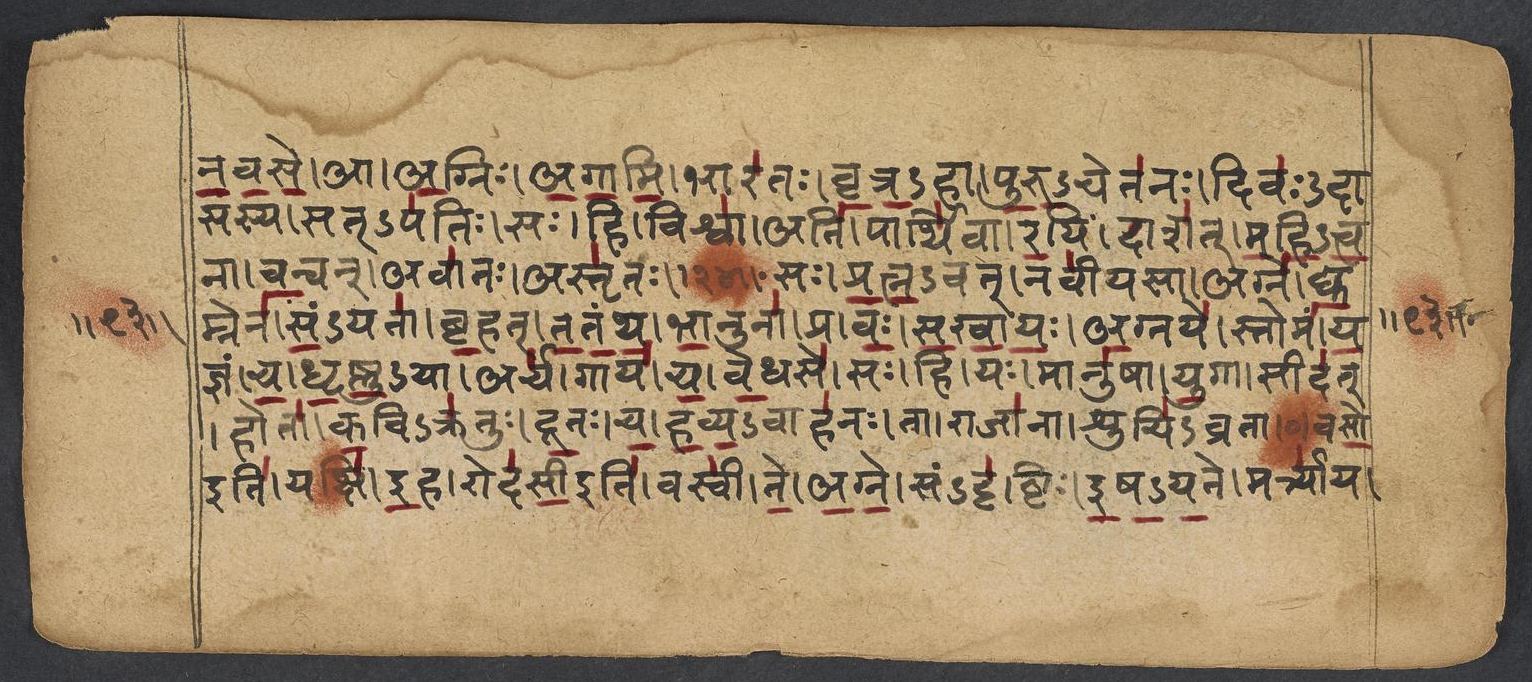
Where on the image
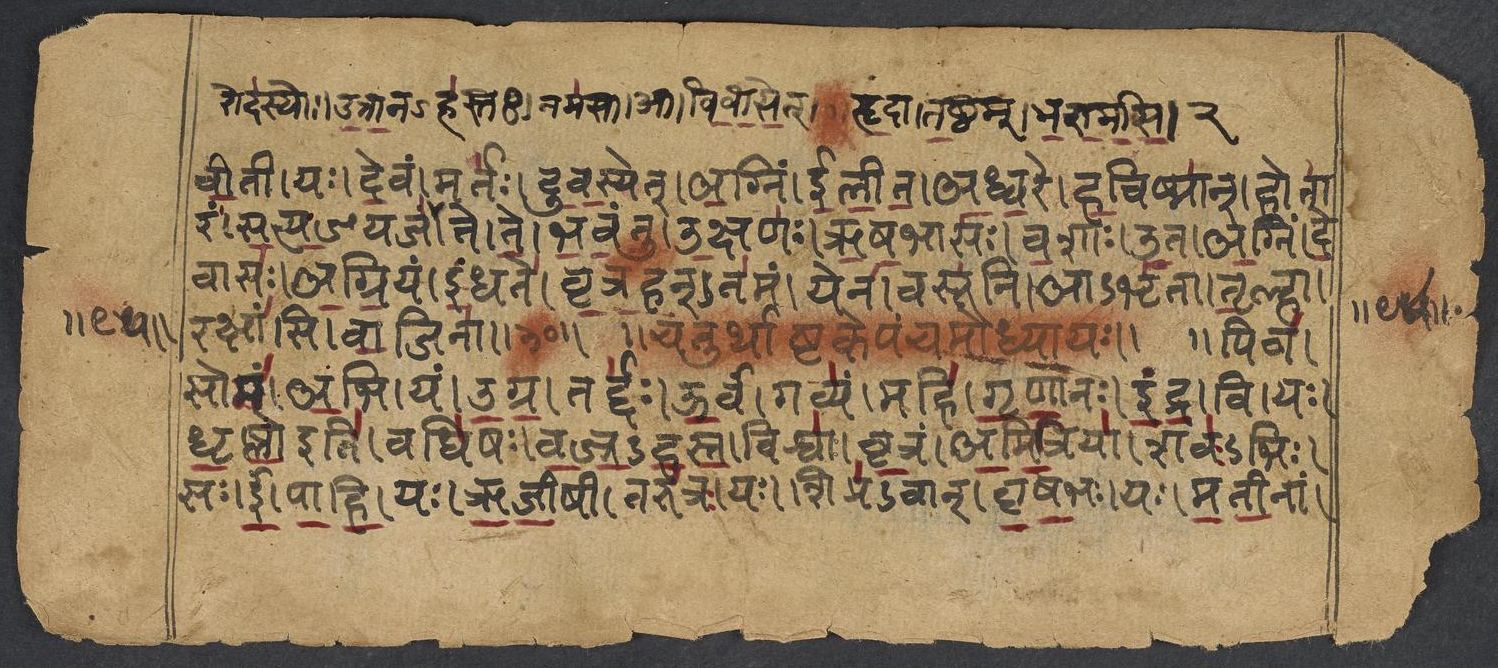
Penn Ms. Coll. 390 Item 41, fol. 420v (numbered 93v by the scribe) (OPenn image 421, upper leaf). Checked on the image: the Rigveda text on this page begins in RV 6.16.18 ‹-vanavase›. The next page with Rigveda text, fol. 421r (numbered 94r by the scribe), begins in RV 6.16.25 ‹ūrjaḥ napāt amṛtasya›. Verses 6.16.18-24 end on this page; 6.16.18 begins on fol. 420r (numbered 93r by the scribe).
18na̱hi te̍ pū̱rtam a̍kṣi̱pad bhuva̍n nemānāṁ vaso | athā̱ duvo̍ vanavase ||
19āgnir a̍gāmi̱ bhāra̍to vṛtra̱hā pu̍ru̱ceta̍naḥ | divo̍dāsasya̱ satpa̍tiḥ ||
20sa hi viśvāti̱ pārthi̍vā ra̱yiṁ dāśa̍n mahitva̱nā | va̱nvann avā̍to̱ astṛ̍taḥ ||
21sa pra̍tna̱van navī̍ya̱sāgne̍ dyu̱mnena̍ sa̱ṁyatā̍ | bṛ̱hat ta̍tantha bhā̱nunā̍ ||
22pra va̍ḥ sakhāyo a̱gnaye̱ stoma̍ṁ ya̱jñaṁ ca̍ dhṛṣṇu̱yā | arca̱ gāya̍ ca ve̱dhase̍ ||
23sa hi yo mānu̍ṣā yu̱gā sīda̱d dhotā̍ ka̱vikra̍tuḥ | dū̱taś ca̍ havya̱vāha̍naḥ ||
24tā rājā̍nā̱ śuci̍vratādi̱tyān māru̍taṁ ga̱ṇam | vaso̱ yakṣī̱ha roda̍sī ||
Compare: Padapāṭha (word-by-word text written in the manuscript; Sansknet e-text via GRETIL)
18nahi | te | pūram | akṣi-pat | bhuvat | nemānām | vaso iti | atha | duvaḥ | vanavase
19ā | agniḥ | agāmi | bhārataḥ | vṛtra-hā | puru-cetanaḥ | divaḥ-dāsasya | sat-patiḥ
20saḥ | hi | viśvā | ati | pārthivā | rayim | dāśat | mahi-tvanā | vanvan | avātaḥ | astṛtaḥ
21saḥ | pratna-vat | navīyasā | agne | dyumnena | sam-yatā | bṛhat | tatantha | bhānunā
22pra | vaḥ | sakhāyaḥ | agnaye | stomam | yajñam | ca | dhṛṣṇu-yā | arca | gāya | ca | vedhase
23saḥ | hi | yaḥ | mānuṣā | yugā | sīdat | hotā | kavi-kratuḥ | dūtaḥ | ca | havya-vāhanaḥ
24tā | rājānā | śuci-vratā | ādityān | mārutam | gaṇam | vaso iti | yakṣi | iha | rodasī iti
18Not for a moment only lasts thy bounty, good to many a one! Our service therefore shalt thou gain.
19Agni, the Bharata, hath been sought, the Vr̥itra-slayer, marked of all, Yea, Divodâsa's Hero Lord.
20For he gave riches that surpass in greatness all the things of earth, Fighting untroubled, unsubdued.
21Thou, Agni, as in days of old, with recent glory, gathered light, Hast overspread the lofty heaven.
22Bring to your Agni, O my friends, boldly your laud and sacrifice: Give the Disposer praise and song.
23For as sagacious Herald he hath sat through every age of man, Oblation-bearing messenger.
24Bring those Two Kings whose ways are pure, Âdityas, and the Marut host, Excellent God! and Heaven and Earth.
Where on the image
Penn Ms. Coll. 390 Item 41, fol. 421r (numbered 94r by the scribe) (OPenn image 421, lower leaf). Checked on the image: the Rigveda text on this page begins in RV 6.16.25 ‹ūrjaḥ napāt amṛtasya›. The next page with Rigveda text, fol. 421v (numbered 94v by the scribe), begins in RV 6.16.32 ‹deva jihvayā pari bādhasva›. Verses 6.16.25-31 end on this page; 6.16.25 begins on fol. 420v (numbered 93v by the scribe).
25vasvī̍ te agne̱ saṁdṛ̍ṣṭir iṣaya̱te martyā̍ya | ūrjo̍ napād a̱mṛta̍sya ||
26kratvā̱ dā a̍stu̱ śreṣṭho̱ 'dya tvā̍ va̱nvan su̱rekṇā̍ḥ | marta̍ ānāśa suvṛ̱ktim ||
27te te̍ agne̱ tvotā̍ i̱ṣaya̍nto̱ viśva̱m āyu̍ḥ | tara̍nto a̱ryo arā̍tīr va̱nvanto̍ a̱ryo arā̍tīḥ ||
28a̱gnis ti̱gmena̍ śo̱ciṣā̱ yāsa̱d viśva̱ṁ ny a1̱̍triṇa̍m | a̱gnir no̍ vanate ra̱yim ||
29su̱vīra̍ṁ ra̱yim ā bha̍ra̱ jāta̍vedo̱ vica̍rṣaṇe | ja̱hi rakṣā̍ṁsi sukrato ||
30tvaṁ na̍ḥ pā̱hy aṁha̍so̱ jāta̍vedo aghāya̱taḥ | rakṣā̍ ṇo brahmaṇas kave ||
31yo no̍ agne du̱reva̱ ā marto̍ va̱dhāya̱ dāśa̍ti | tasmā̍n naḥ pā̱hy aṁha̍saḥ ||
Compare: Padapāṭha (word-by-word text written in the manuscript; Sansknet e-text via GRETIL)
25vasvī | te | agne | sam-dṛṣṭiḥ | iṣa-yate | martyāya | ūrjaḥ | napāt | amṛtasya
26kratvā | dāḥ | astu | śreṣṭhaḥ | adya | tvā | vanvan | su-rekṇāḥ | martaḥ | ānāśa | su-vṛktim
27te | te | agne | tvāūtāḥ | iṣayantaḥ | viśvam | āyuḥ | tarantaḥ | aryaḥ | arātīḥ | vanvantaḥ | aryaḥ | arātīḥ
28agniḥ | tigmena | śociṣā | yāsat | viśvam | ni | atriṇam | agniḥ | naḥ | vanate | rayim
29su-vīram | rayim | ā | bhara | jāta-vedaḥ | vi-carṣaṇe | jahi | rakṣāṃsi | su-krato itisu-krato
30tvam | naḥ | pāhi | aṃhasaḥ | jāta-vedaḥ | agha-yataḥ | / rakṣa | naḥ | brahmaṇaḥ | kave
31yaḥ | naḥ | agne | duḥ-evaḥ | ā | martaḥ | vadhāya | dāśati | tasmāt | naḥ | pāhi | aṃhasaḥ
25For strong and active mortal man, excellent, Agni, is the look Of thee Immortal, Son of Strength
26Rich through his wisdom, noblest be the giver serving thee to-day: The man hath brought his hymn of praise.
27These, Agni, these are helped by thee, who strong and active all their lives, O'ercome the malice of the foe, fight down the malice ofthe foe.
28May Agni with his pointed blaze cast down each fierce devouring fiend May Agni win us wealth by war.
29O active Jâtavedas, bring riches with store of hero sons: Slay thou the demons, O Most Wise.
30Keep us, O Jâtavedas, from the troubling of the man of sin: Guard us thou Sage who knowest prayer.
31Whatever sinner, Agni, brings oblations to procure our death, Save us from woe that he would work.
Where on the image
Penn Ms. Coll. 390 Item 41, fol. 421v (numbered 94v by the scribe) (OPenn image 422, upper leaf). Checked on the image: the Rigveda text on this page begins in RV 6.16.32 ‹deva jihvayā pari bādhasva›. The next page with Rigveda text, fol. 422r (numbered 95r by the scribe), begins in RV 6.16.39 ‹yaḥ ugraḥ-iva śarya-hā tigma-śṛṅgaḥ›. Verses 6.16.32-38 end on this page; 6.16.32 begins on fol. 421r (numbered 94r by the scribe).
32tvaṁ taṁ de̍va ji̱hvayā̱ pari̍ bādhasva du̱ṣkṛta̍m | marto̱ yo no̱ jighā̍ṁsati ||
33bha̱radvā̍jāya sa̱pratha̱ḥ śarma̍ yaccha sahantya | agne̱ vare̍ṇya̱ṁ vasu̍ ||
34a̱gnir vṛ̱trāṇi̍ jaṅghanad draviṇa̱syur vi̍pa̱nyayā̍ | sami̍ddhaḥ śu̱kra āhu̍taḥ ||
35garbhe̍ mā̱tuḥ pi̱tuṣ pi̱tā vi̍didyutā̱no a̱kṣare̍ | sīda̍nn ṛ̱tasya̱ yoni̱m ā ||
36brahma̍ pra̱jāva̱d ā bha̍ra̱ jāta̍vedo̱ vica̍rṣaṇe | agne̱ yad dī̱daya̍d di̱vi ||
37upa̍ tvā ra̱ṇvasa̍ṁdṛśa̱m praya̍svantaḥ sahaskṛta | agne̍ sasṛ̱jmahe̱ gira̍ḥ ||
38upa̍ cchā̱yām i̍va̱ ghṛṇe̱r aga̍nma̱ śarma̍ te va̱yam | agne̱ hira̍ṇyasaṁdṛśaḥ ||
Compare: Padapāṭha (word-by-word text written in the manuscript; Sansknet e-text via GRETIL)
32tvam | tam | deva | jihvayā | pari | bādhasva | duḥ-krtam | martaḥ | yaḥ | naḥ | jighāṃsati
33bharat-vājāya | sa-prathaḥ | śarma | yaccha | sahantya | agne | vareṇyam | vasu
34agniḥ | vṛtrāṇi | jaṅghanat | draviṇasyuḥ | vipanyayā | sam-iddhaḥ | śukraḥ | āhutaḥ
35garbhe | mātuḥ | pituḥ | pitā | vi-didyutānaḥ | akṣare | sīdan | ṛtasya | yonim | ā
36brahma | prajāvat | ā | bhara | jāta-vedaḥ | vi-carṣaṇe | agne | yat | dīdayat | d ivi
37upa | tvā | raṇva-sandṛśam | prayasvantaḥ | sahaḥ-kṛta | agne | sasṛjmahe | giraḥ
38upa | chāyām-iva | ghṛṇeḥ | aganma | śarma | te | vayam | agne | hiraṇya-sandṛśaḥ
32Drive from us with thy tongue, O God, the man who doeth evil deeds, The mortal who would strike us dead.
33Give shelter reaching far and wide to Bharadvâja, conquering Lord! Agni, send wealth most excellent.
34May Agni slay the Vr̥itras,– fain for riches, through the lord of song, Served with oblation, kindled, bright.
35His Father's Father, shining in his Mother's everlasting side, Set on the seat of holy Law.
36O active Jâtavedas, bring devotion that wins progeny, Agni, that it may shine to heaven.
37O Child of Strength, to thee whose look is lovely we with dainty food, O Agni, have poured forth our songs.
38To thee for shelter are we come, as to the shade from fervent heat Agni, who glitterest like gold.
Where on the image
Penn Ms. Coll. 390 Item 41, fol. 422r (numbered 95r by the scribe) (OPenn image 422, lower leaf). Checked on the image: the Rigveda text on this page begins in RV 6.16.39 ‹yaḥ ugraḥ-iva śarya-hā tigma-śṛṅgaḥ›. The next page with Rigveda text, fol. 422v (numbered 95v by the scribe), begins in RV 6.16.46 ‹vītī yaḥ devam martaḥ›. Verses 6.16.39-45 end on this page.
39ya u̱gra i̍va śarya̱hā ti̱gmaśṛ̍ṅgo̱ na vaṁsa̍gaḥ | agne̱ puro̍ ru̱roji̍tha ||
40ā yaṁ haste̱ na khā̱dina̱ṁ śiśu̍ṁ jā̱taṁ na bibhra̍ti | vi̱śām a̱gniṁ sva̍dhva̱ram ||
41pra de̱vaṁ de̱vavī̍taye̱ bhara̍tā vasu̱vitta̍mam | ā sve yonau̱ ni ṣī̍datu ||
42ā jā̱taṁ jā̱tave̍dasi pri̱yaṁ śi̍śī̱tāti̍thim | syo̱na ā gṛ̱hapa̍tim ||
43agne̍ yu̱kṣvā hi ye tavāśvā̍so deva sā̱dhava̍ḥ | ara̱ṁ vaha̍nti ma̱nyave̍ ||
44acchā̍ no yā̱hy ā va̍hā̱bhi prayā̍ṁsi vī̱taye̍ | ā de̱vān soma̍pītaye ||
45ud a̍gne bhārata dyu̱mad aja̍sreṇa̱ davi̍dyutat | śocā̱ vi bhā̍hy ajara ||
Compare: Padapāṭha (word-by-word text written in the manuscript; Sansknet e-text via GRETIL)
39yaḥ | ugraḥ-iva | śarya-hā | tigma-śṛṅgaḥ | na | vaṃsa-gaḥ | agne | puraḥ | rurojitha
40ā | yam | haste | na | khādinam | śiśum | jātam | na | bibhrati | viśām | agnim | su-adhvaram
41pra | devam | deva-vītaye | bharata | vasuvit-tamam | ā | sve | yonau | ni | sīdatu
42ā | jātam | jāta-vedasi | priyam | śiśīta | atithim | syone | ā | gṛha-patim
43agne | yukṣva | hi | ye | tava | aśvāsaḥ | deva | sādhavaḥ | aram | vahanti | manyave
44accha | naḥ | yāhi | ā | vaha | abhi | prayāṃsi | vītaye | ā | devān | soma-pītaye
45uu | agne | bhārata | dyu-mat | ajasreṇa | davidyutat | śoca | vi | bhāhi | ajara
39Mighty as one who slays with shafts, or like a bull with sharpened horn, Agni, thou breakest down the forts.
40Whom, like an infant newly born, devourer, in their arms they bear, Men's Agni, skilled in holy rites.
41Bear to the banquet of the Gods the God best finder-out of wealth, Let him he seated in his place.
42In Jâtavedas kindle ye the dear guest who hath now appeared In a soft place, the homestead's Lord.
43Harness, O Agni, O thou God, thy steeds which are most excellent: They bear thee as thy spirit wills.
44Come hither, bring the Gods to us to taste the sacrificial feast, To drink the draught of Soma juice.
45O Agni of the Bharatas, blaze high with everlasting might, Shine forth and gleam, Eternal One.
Where on the image
Penn Ms. Coll. 390 Item 41, fol. 422v (numbered 95v by the scribe) (OPenn image 423, upper leaf). Checked on the image: the Rigveda text on this page begins in RV 6.16.46 ‹vītī yaḥ devam martaḥ›. The next page with Rigveda text, fol. 423r (numbered 96r by the scribe), begins in RV 6.17.2 ‹yaḥ gotra-bhit vajra-bhṛt yaḥ›. Verses 6.16.46-48 end on this page.
46vī̱tī yo de̱vam marto̍ duva̱syed a̱gnim ī̍ḻītādhva̱re ha̱viṣmā̍n | hotā̍raṁ satya̱yaja̱ṁ roda̍syor uttā̱naha̍sto̱ nama̱sā vi̍vāset ||
47ā te̍ agna ṛ̱cā ha̱vir hṛ̱dā ta̱ṣṭam bha̍rāmasi | te te̍ bhavantū̱kṣaṇa̍ ṛṣa̱bhāso̍ va̱śā u̱ta ||
48a̱gniṁ de̱vāso̍ agri̱yam i̱ndhate̍ vṛtra̱hanta̍mam | yenā̱ vasū̱ny ābhṛ̍tā tṛ̱ḻhā rakṣā̍ṁsi vā̱jinā̍ ||
Compare: Padapāṭha (word-by-word text written in the manuscript; Sansknet e-text via GRETIL)
46vītī | yaḥ | devam | martaḥ | duvasyet | agnim | īḷīta | adhvare | haviṣmān | hotāram | satya-yajam | rodasyoḥ | uttāna-hastaḥ | namasā | vivāset
47ā | te | agne | ṛcā | haviḥ | hṛdā | taṣṭam | bharāmasi | te | te | bhavantu | ukṣaṇaḥ | ṛṣabhāsaḥ | vaśāḥ | uta
48agnim | devāsaḥ | agriyam | indhate | vṛtrahan-tamam | yena | vasūni | ābhṛtā | tṛḷhā | rakṣāṃsi | vājinā
46The mortal man who serves the God with banquet, and, bringing gifts at sacrifice, lauds Agni, May well attract, with prayer and hands uplifted, the Priest of Heaven and Earth, true Sacrificer.
47Agni, we bring thee, with our hymn, oblation fashioned in the heart. Let these be oxen unto thee, let these be bulls and kine to thee.
48The Gods enkindle Agni, best slayer of Vr̥itra, first in rank, The Mighty, One who brings us wealth and crushes down the Raksasas.
Notes
- Sanskrit: Aufrecht's edition (1877) with the Vedic accents, as entered by van Nooten and Holland (GRETIL).
- English: Ralph T. H. Griffith, The Hymns of the Rigveda (1889-1892; 2nd ed. 1896-1897), from the VedaWeb digital text; OCR slips in that text were corrected against the printed 2nd edition (data/sources/rigveda/griffith_errata.json).
- Padapāṭha (edition text): Sansknet e-text via GRETIL (CC BY-NC-SA 4.0).
Cite
Sources
- Source: Penn Ms. Coll. 390 Item 41 (undated (catalogued with Penn's 18th-19th c. Vedic manuscripts)), OPenn, Public Domain Mark + Aufrecht's accented text (GRETIL) + Griffith's English (VedaWeb) (holding institution)
- Critical edition: Aufrecht (1877), accented e-text via GRETIL
← previous · → next · v cycle view · l back to library