Rigveda 6.45: To Indra
Introduction
Rigveda 6.45 is a hymn of 33 verses addressed to Indra. It stands in book (maṇḍala) 6, the family book of Bharadvāja. The Rigveda is the oldest collection of Sanskrit hymns, composed in the second half of the second millennium BCE and handed down orally for many centuries before it was written down.
The manuscript shown is Penn Ms. Coll. 390 Item 41 (University of Pennsylvania), an undated paper manuscript of the padapāṭha (the word-by-word recitation text, in which every word is written separately and compounds are split) of the whole Ṛgveda in Devanāgarī, 884 leaves in fascicles, 7-9 lines to the page, accents in red; this hymn stands on fol. 453r-455v. Each section below gives the verses that end on one page; the page boundaries were read on the images (the opening words of every page), not counted out. Where the manuscript is a padapāṭha (the word-by-word recitation text), the section shows Aufrecht's continuous (saṃhitā) text first and, as the edition text, the padapāṭha of the same verses, which is the form written on the page.
How was this verified? (Provenance)
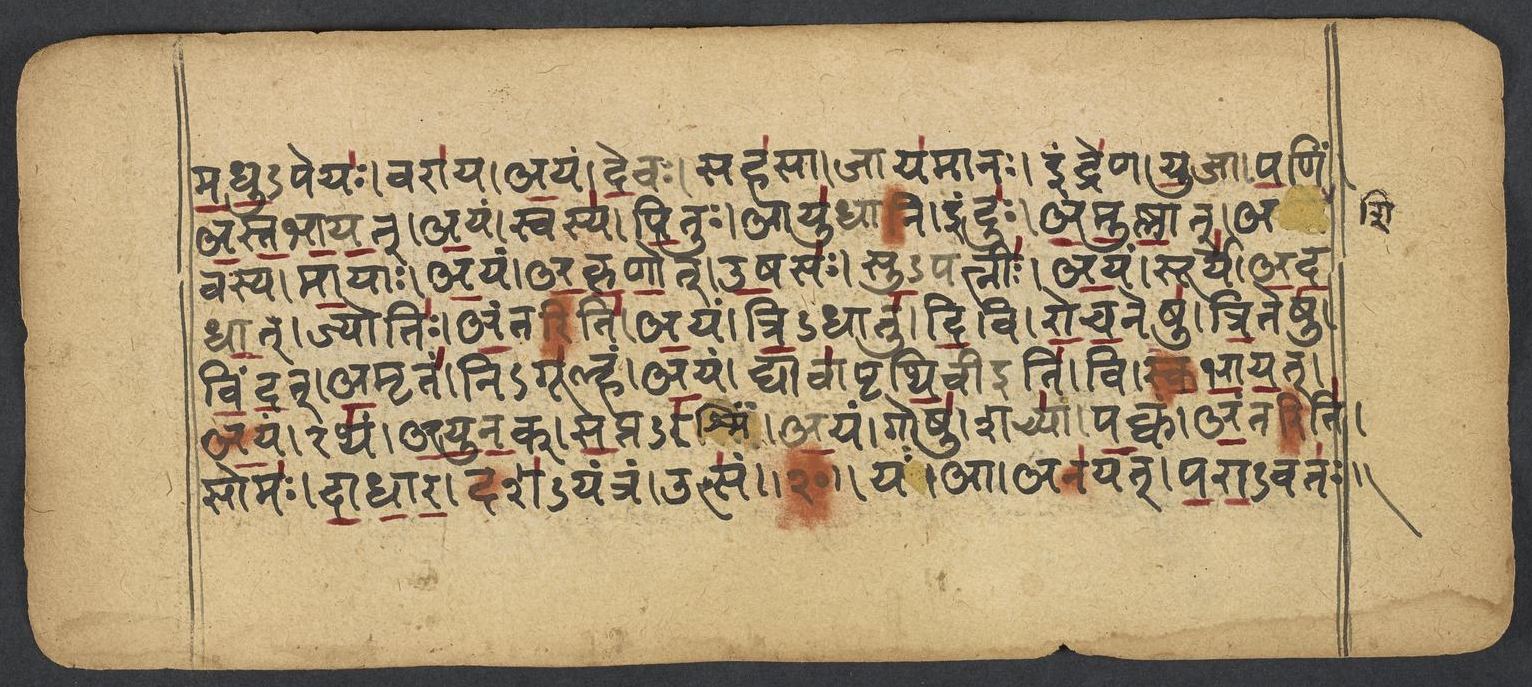
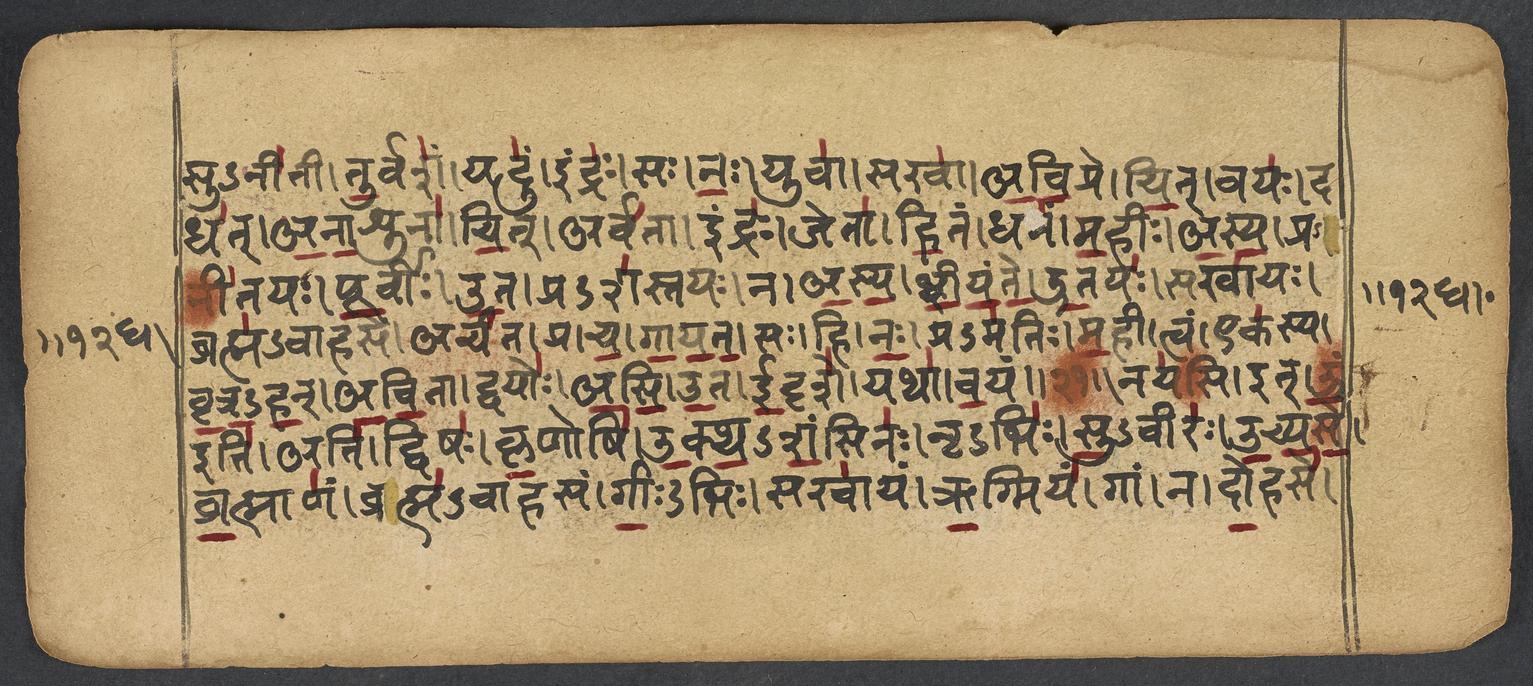
Where on the image
Penn Ms. Coll. 390 Item 41, fol. 453v (numbered 126v by the scribe) (OPenn image 454, upper leaf). Checked on the image: the Rigveda text on this page begins in RV 6.45.1 ‹su-nītī turvaśam yadum indraḥ›. The next page with Rigveda text, fol. 454r (numbered 127r by the scribe), begins in RV 6.45.7 ‹huve›. Verses 6.45.1-6 end on this page; 6.45.1 begins on fol. 453r (numbered 126r by the scribe).
1ya āna̍yat parā̱vata̱ḥ sunī̍tī tu̱rvaśa̱ṁ yadu̍m | indra̱ḥ sa no̱ yuvā̱ sakhā̍ ||
2a̱vi̱pre ci̱d vayo̱ dadha̍d anā̱śunā̍ ci̱d arva̍tā | indro̱ jetā̍ hi̱taṁ dhana̍m ||
3ma̱hīr a̍sya̱ praṇī̍tayaḥ pū̱rvīr u̱ta praśa̍stayaḥ | nāsya̍ kṣīyanta ū̱taya̍ḥ ||
4sakhā̍yo̱ brahma̍vāha̱se 'rca̍ta̱ pra ca̍ gāyata | sa hi na̱ḥ prama̍tir ma̱hī ||
5tvam eka̍sya vṛtrahann avi̱tā dvayo̍r asi | u̱tedṛśe̱ yathā̍ va̱yam ||
6naya̱sīd v ati̱ dviṣa̍ḥ kṛ̱ṇoṣy u̍kthaśa̱ṁsina̍ḥ | nṛbhi̍ḥ su̱vīra̍ ucyase ||
Compare: Padapāṭha (word-by-word text written in the manuscript; Sansknet e-text via GRETIL)
1yaḥ | ā | anayat | parāvataḥ | su-nītī | turvaśam | yadum | indraḥ | saḥ | naḥ | yuvā | sakhā
2avipre | cit | vayaḥ | dadhat | anāśunā | cit | arvatā | indraḥ | jetā | hitam | dhanam
3mahīḥ | asya | pra-nītayaḥ | pūrvīḥ | uta | pra-śastayaḥ | na | asya | kṣīyante | ūtayaḥ
4sakhāyaḥ | brahma-vāhase | arcata | pra | ca | gāyata | saḥ | hi | naḥ | pra-matiḥ | mahī
5tvam | ekasya | vṛtra-han | avitā | dvayoḥ | asi | uta | īdṛśe | yathā | vayam
6nayasi | it | oṃ iti | ati | dviṣaḥ | kṛṇoṣi | uktha-śaṃsinaḥ | nṛ-bhiḥ | su-vīraḥ | ucyase
1THAT Indra is our youthful Friend, who with his trusty guidance led Turvaṣa, Yadu from afar.
2Even to the dull and uninspired Indra, gives vital power, and wins Even with slow steed the offered prize.
3Great are his ways of guiding us, and!nanilbld are his eulogies: His kind protections never fail.
4Friends, sing your psalm and offer praise to him to whom the prayer is brought: For our great Providence is he.
5Thou, Slaughterer of Vr̥itra, art Guardian and Friend of one and two, Yea, of a man like one of us.
6Beyond men's hate thou leadest us, and givest cause to sing thy praise: Good hero art thou called by men.
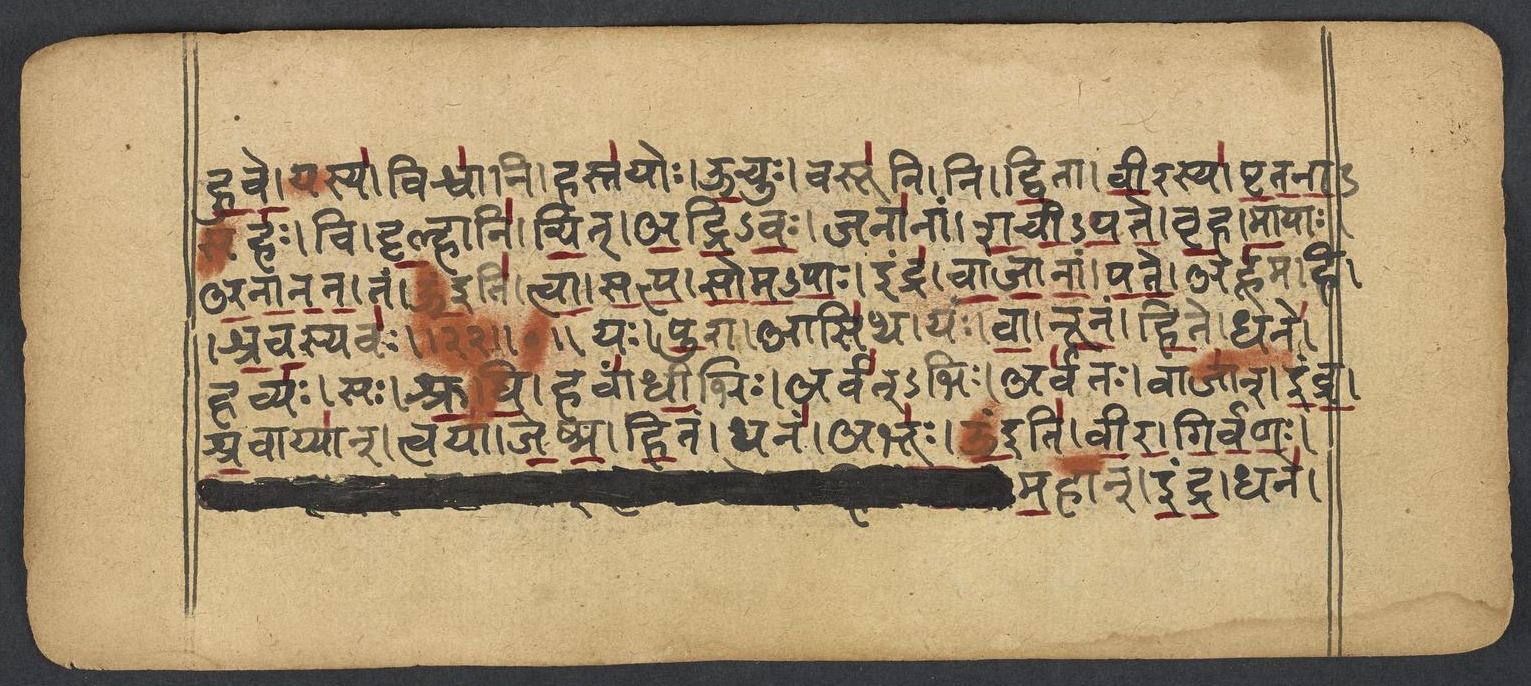
Where on the image
Penn Ms. Coll. 390 Item 41, fol. 454r (numbered 127r by the scribe) (OPenn image 454, lower leaf). Checked on the image: the Rigveda text on this page begins in RV 6.45.7 ‹huve›. The next page with Rigveda text, fol. 454v (numbered 127v by the scribe), begins in RV 6.45.13 ‹hite bhare vitantasāyyaḥ›. Verses 6.45.7-12 end on this page; 6.45.7 begins on fol. 453v (numbered 126v by the scribe).
7bra̱hmāṇa̱m brahma̍vāhasaṁ gī̱rbhiḥ sakhā̍yam ṛ̱gmiya̍m | gāṁ na do̱hase̍ huve ||
8yasya̱ viśvā̍ni̱ hasta̍yor ū̱cur vasū̍ni̱ ni dvi̱tā | vī̱rasya̍ pṛtanā̱ṣaha̍ḥ ||
9vi dṛ̱ḻhāni̍ cid adrivo̱ janā̍nāṁ śacīpate | vṛ̱ha mā̱yā a̍nānata ||
10tam u̍ tvā satya somapā̱ indra̍ vājānām pate | ahū̍mahi śrava̱syava̍ḥ ||
11tam u̍ tvā̱ yaḥ pu̱rāsi̍tha̱ yo vā̍ nū̱naṁ hi̱te dhane̍ | havya̱ḥ sa śru̍dhī̱ hava̍m ||
12dhī̱bhir arva̍dbhi̱r arva̍to̱ vājā̍m̐ indra śra̱vāyyā̍n | tvayā̍ jeṣma hi̱taṁ dhana̍m ||
Compare: Padapāṭha (word-by-word text written in the manuscript; Sansknet e-text via GRETIL)
7brahmāṇam | brahma-vāhasam | gīḥ-bhiḥ | sakhāyam | ṛgmiyam | gām | na | dohase | huve
8yasya | viśvāni | hastayoḥ | ūcuḥ | vasūni | ni | dvitā | vīrasya | pṛtanāsahaḥ
9vi | dṛḷhāni | cit | adri-vaḥ | janānām | sacī-pate | vṛha | māyāḥ | anānata
10tam | oṃ iti | tvā | satya | soma-pāḥ | indra | vājānām | pate | ahūmahi | śravasyavaḥ
11tam | oṃ iti | tvā | yaḥ | purā | āsitha | yaḥ | vā | nūnam | hite | dhane | havyaḥ | saḥ | śrudh i | havam
12dhībhiḥ | arvat-bhiḥ | arvataḥ | vājān | indra | śravāyyān | tvayā | jeṣma | hitam | dhanam
7I call with hymns, as 'twere a cow to milk, the Friend who merits praise, The Brahman who accepts the prayer.
8Him in whose hands they say are stored all treasures from the days of old, The Hero, conquering in the fight.
9Lord of Strength, Caster of the Stone, destroy the firm forts built by men, And foil their arts, unbending God!
10Thee, thee as such, O Lord of Power, O Indra, Soma-drinker, true, We, fain for glory, have invoked.
11Such as thou wast of old, and art now to be called on when the prize lies ready, listen to our call.
12With hymns and coursers we will gain, Indra, through thee, both steeds and spoil Most glorious, and the proffered prize.
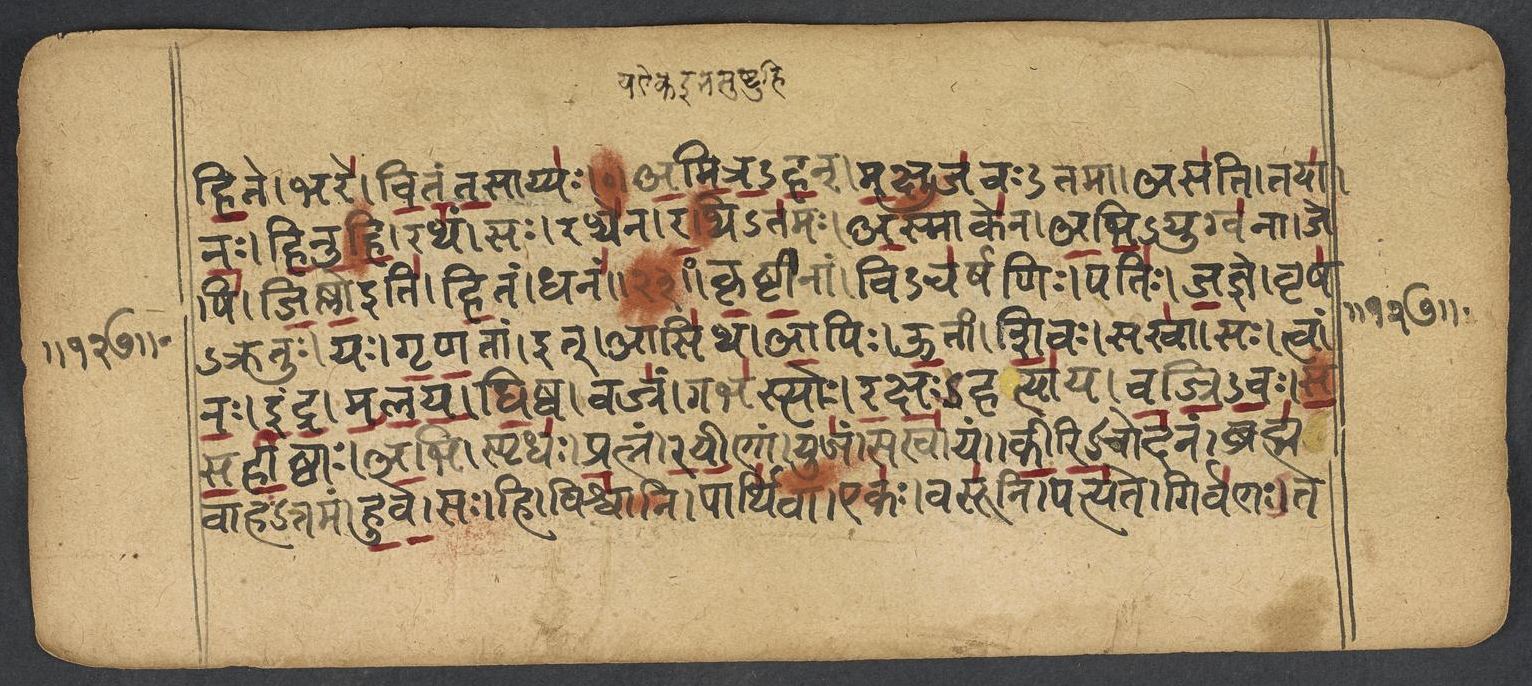
Where on the image
Penn Ms. Coll. 390 Item 41, fol. 454v (numbered 127v by the scribe) (OPenn image 455, upper leaf). Checked on the image: the Rigveda text on this page begins in RV 6.45.13 ‹hite bhare vitantasāyyaḥ›. The next page with Rigveda text, fol. 455r (numbered 128r by the scribe), begins in RV 6.45.20 ‹-girvaṇaḥ-tamaḥ adhri-guḥ›. Verses 6.45.13-19 end on this page; 6.45.13 begins on fol. 454r (numbered 127r by the scribe).
13abhū̍r u vīra girvaṇo ma̱hām̐ i̍ndra̱ dhane̍ hi̱te | bhare̍ vitanta̱sāyya̍ḥ ||
14yā ta̍ ū̱tir a̍mitrahan ma̱kṣūja̍vasta̱māsa̍ti | tayā̍ no hinuhī̱ ratha̍m ||
15sa rathe̍na ra̱thīta̍mo̱ 'smāke̍nābhi̱yugva̍nā | jeṣi̍ jiṣṇo hi̱taṁ dhana̍m ||
16ya eka̱ it tam u̍ ṣṭuhi kṛṣṭī̱nāṁ vica̍rṣaṇiḥ | pati̍r ja̱jñe vṛṣa̍kratuḥ ||
17yo gṛ̍ṇa̱tām id āsi̍thā̱pir ū̱tī śi̱vaḥ sakhā̍ | sa tvaṁ na̍ indra mṛḻaya ||
18dhi̱ṣva vajra̱ṁ gabha̍styo rakṣo̱hatyā̍ya vajrivaḥ | sā̱sa̱hī̱ṣṭhā a̱bhi spṛdha̍ḥ ||
19pra̱tnaṁ ra̍yī̱ṇāṁ yuja̱ṁ sakhā̍yaṁ kīri̱coda̍nam | brahma̍vāhastamaṁ huve ||
Compare: Padapāṭha (word-by-word text written in the manuscript; Sansknet e-text via GRETIL)
13abhūḥ | oṃ iti | vīra | girvaṇaḥ | mahān | indra | dhane | hite | bhare | vitantasāyyaḥ
14yā | te | ūtiḥ | amitra-han | makṣujavaḥ-tamā | asati | tayā | naḥ | hinuhi | ratham
15saḥ | rathena | rathi-tamaḥ | asmākena | abhi-yugvanā | jeṣi | jiṣṇo iti | hitam | dhanam
16yaḥ | ekaḥ | it | tam | oṃ iti | stuhi | kṛṣṭīnām | vi-carṣaṇiḥ | patiḥ | jajñe | vṛṣa-kratuḥ
17yaḥ | gṛṇatām | it | āsitha | āpiḥ | ūtī | śivaḥ | sakhā | saḥ | tvam | naḥ | indra | mṛḷaya
18dhiṣva | vajram | gabhastyoḥ | rakṣaḥ-hatyāya | vajri-vaḥ | sasahīṣṭhāḥ | abhi | spṛdhaḥ
19pratnam | rayīṇām | yujam | sakhāyam | kīri-codanam | brahma-vāhaḥ-tamam | huve
13Thou, Indra, Lover of the Song, whom men must stir to help, hast been Great in the contest for the prize.
14Slayer of foes, whatever aid of thine imparts the swiftest course, With that impel our car to speed.
15As skilfullest of those who drive the chariot, with our art and aim, O Conqueror, win the proffered prize.
16Praise him who, Matchless and Alone, was born the Lord of living men, Most active, with heroic soul.
17Thou who hast been the singers' Friend, a Friend auspicious with thine aid, As such, O Indra, favour us.
18Grasp in thine arms the thunderbolt, O Thunder-armed, to slay the fiends: Mayst thou subdue the foemen's host.
19I call the ancient Friend, allied with wealth, who speeds the lowly man, Him to whom chiefly prayer is brought.
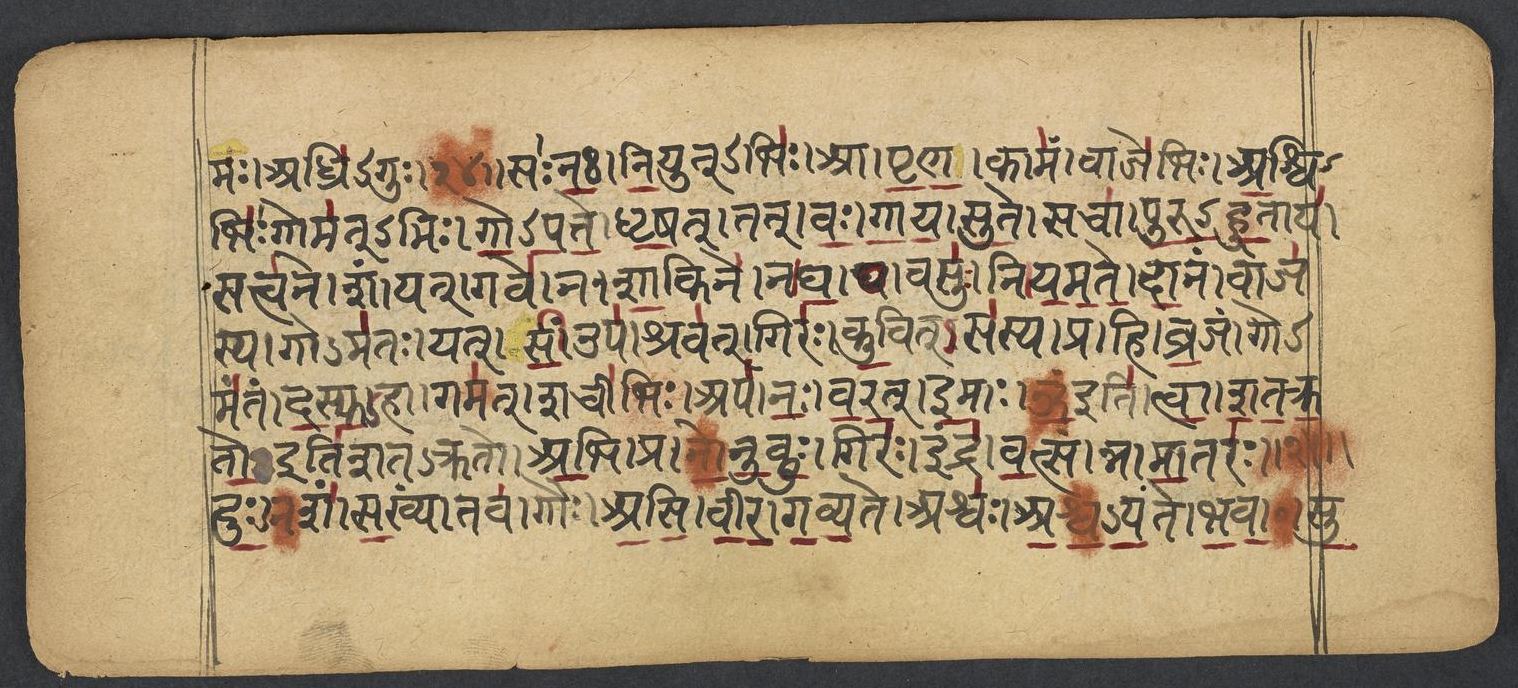
Where on the image
Penn Ms. Coll. 390 Item 41, fol. 455r (numbered 128r by the scribe) (OPenn image 455, lower leaf). Checked on the image: the Rigveda text on this page begins in RV 6.45.20 ‹-girvaṇaḥ-tamaḥ adhri-guḥ›. The next page with Rigveda text, fol. 455v (numbered 128v by the scribe), begins in RV 6.45.28 ‹-sute--sute nakṣante girvaṇaḥ giraḥ›. Verses 6.45.20-27 end on this page; 6.45.20 begins on fol. 454v (numbered 127v by the scribe).
20sa hi viśvā̍ni̱ pārthi̍vā̱m̐ eko̱ vasū̍ni̱ patya̍te | girva̍ṇastamo̱ adhri̍guḥ ||
21sa no̍ ni̱yudbhi̱r ā pṛ̍ṇa̱ kāma̱ṁ vāje̍bhir a̱śvibhi̍ḥ | goma̍dbhir gopate dhṛ̱ṣat ||
22tad vo̍ gāya su̱te sacā̍ puruhū̱tāya̱ satva̍ne | śaṁ yad gave̱ na śā̱kine̍ ||
23na ghā̱ vasu̱r ni ya̍mate dā̱naṁ vāja̍sya̱ goma̍taḥ | yat sī̱m upa̱ śrava̱d gira̍ḥ ||
24ku̱vitsa̍sya̱ pra hi vra̱jaṁ goma̍ntaṁ dasyu̱hā gama̍t | śacī̍bhi̱r apa̍ no varat ||
25i̱mā u̍ tvā śatakrato̱ 'bhi pra ṇo̍nuvu̱r gira̍ḥ | indra̍ va̱tsaṁ na mā̱tara̍ḥ ||
26dū̱ṇāśa̍ṁ sa̱khyaṁ tava̱ gaur a̍si vīra gavya̱te | aśvo̍ aśvāya̱te bha̍va ||
27sa ma̍ndasvā̱ hy andha̍so̱ rādha̍se ta̱nvā̍ ma̱he | na sto̱tāra̍ṁ ni̱de ka̍raḥ ||
Compare: Padapāṭha (word-by-word text written in the manuscript; Sansknet e-text via GRETIL)
20saḥ | hi | viśvāni | pārthivā | ekaḥ | vasūni | patyate | girvaṇaḥ-tamaḥ | adhri-guḥ
21saḥ | naḥ | niyut-bhiḥ | ā | pṛṇa | kāmam | vāje--bhiḥ | aśvi-bhiḥ | gomat-bhiḥ | go--pate | dhṛṣat
22tat | vaḥ | gāya | sute | sacā | puru-hūtāya | satvane | śam | yat | gave | na | śākine
23na | gha | vasuḥ | ni | yamate | dānam | vājasya | go--mataḥ | yat | sīm | upa | śravat | giraḥ
24kuvit-sasya | pra | hi | vrajam | go--mantam | dasyu-hā | gamat | śacībhiḥ | apa | naḥ | varat
25imāḥ | oṃ iti | tvā | śatakrato itiśata-krato | abhi | pra | nonuvuḥ | giraḥ | indra | vatsam | na | mātaraḥ
26duḥ-naśam | sakhyam | tava | gauḥ | asi | vīra | gavyate | aśvaḥ | aśva-yate | bhava
27saḥ | mandasva | hi | andhasaḥ | rādhase | tanvā | mahe | na | stotāram | nide | karaḥ
20For he alone is Lord of all the treasures of the earth: he speeds Hither, chief Lover of the Song.
21So with thy yoked teams satisfy our wish with power and wealth in steeds And cattle, boldly, Lord of kine!
22Sing this, what time the ' juice is pressed, to him your Hero, Much-invoked, To please him as a mighty Steer.
23He, Excellent, withholdeth not his gift of power and wealth in kine, When he hath listened to our songs.
24May he with might unclose for us the cow's stall, whosesoe'er it be, To which the Dasyu-slayer goes.
25O Indra Ṣatakratu, these our songs have called aloud to thee, Like mother cows to meet their calves.
26Hard is thy love to win: thou art a Steer to him who longs for steers: Be to one craving steeds a Steed.
27Delight thee with the juice we pour for thine own great munificence: Yield not thy singer to reproach.
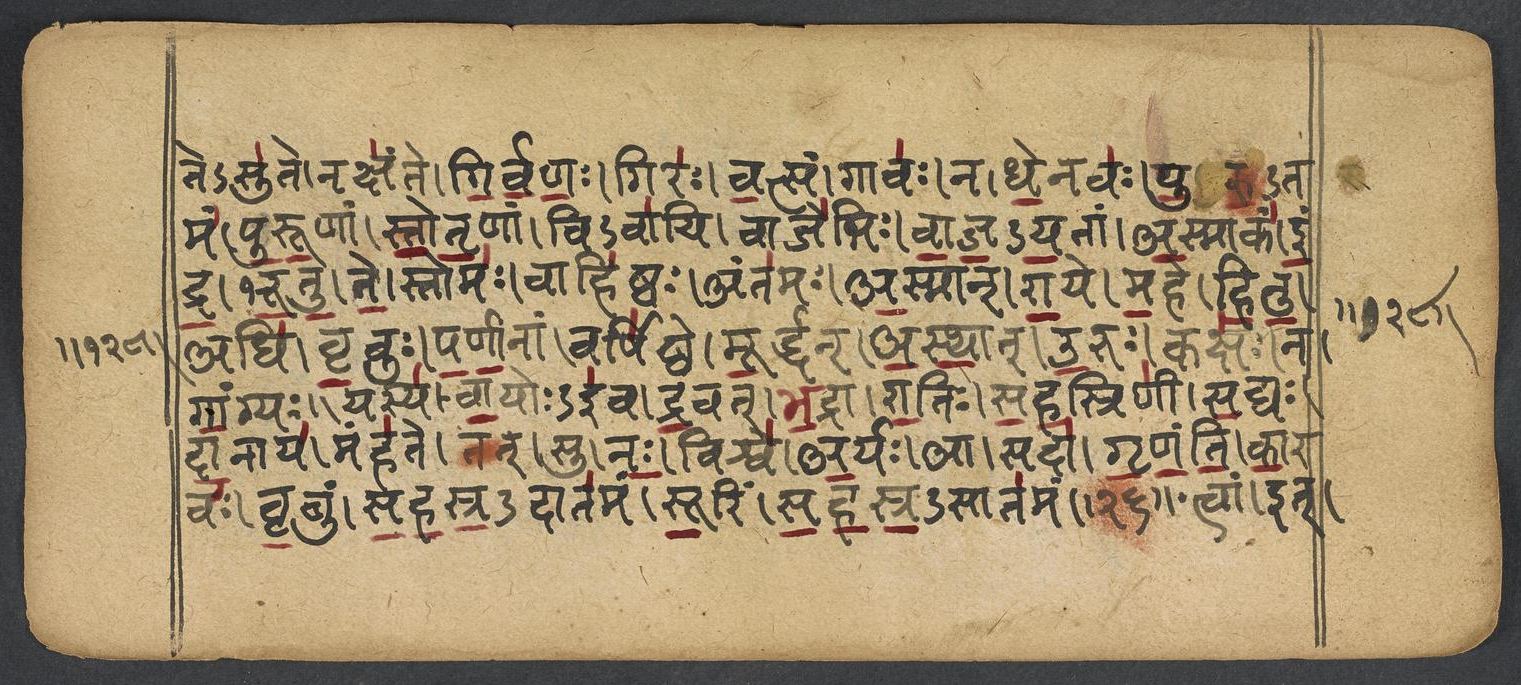
Where on the image
Penn Ms. Coll. 390 Item 41, fol. 455v (numbered 128v by the scribe) (OPenn image 456, upper leaf). Checked on the image: the Rigveda text on this page begins in RV 6.45.28 ‹-sute--sute nakṣante girvaṇaḥ giraḥ›. The next page with Rigveda text, fol. 456r (numbered 129r by the scribe), begins in RV 6.46.1 ‹hi havāmahe sātā vājasya›. Verses 6.45.28-33 end on this page; 6.45.28 begins on fol. 455r (numbered 128r by the scribe).
28i̱mā u̍ tvā su̱te-su̍te̱ nakṣa̍nte girvaṇo̱ gira̍ḥ | va̱tsaṁ gāvo̱ na dhe̱nava̍ḥ ||
29pu̱rū̱tama̍m purū̱ṇāṁ sto̍tṝ̱ṇāṁ vivā̍ci | vāje̍bhir vājaya̱tām ||
30a̱smāka̍m indra bhūtu te̱ stomo̱ vāhi̍ṣṭho̱ anta̍maḥ | a̱smān rā̱ye ma̱he hi̍nu ||
31adhi̍ bṛ̱buḥ pa̍ṇī̱nāṁ varṣi̍ṣṭhe mū̱rdhann a̍sthāt | u̱ruḥ kakṣo̱ na gā̱ṅgyaḥ ||
32yasya̍ vā̱yor i̍va dra̱vad bha̱drā rā̱tiḥ sa̍ha̱sriṇī̍ | sa̱dyo dā̱nāya̱ maṁha̍te ||
33tat su no̱ viśve̍ a̱rya ā sadā̍ gṛṇanti kā̱rava̍ḥ | bṛ̱buṁ sa̍hasra̱dāta̍maṁ sū̱riṁ sa̍hasra̱sāta̍mam ||
Compare: Padapāṭha (word-by-word text written in the manuscript; Sansknet e-text via GRETIL)
28imāḥ | oṃ iti | tvā | sute--sute | nakṣante | girvaṇaḥ | giraḥ | vatsam | gāvaḥ | na | dhenavaḥ
29puru-tamam | purūṇām | stotṝṇām | vi-vāci | vājebhiḥ | vāja-yatām
30asmākam | indra | bhūtu | te | stomaḥ | vāhiṣṭhaḥ | antamaḥ | asmān | rāye | mahe | h inu
31adhi | bṛbuḥ | paṇīnām | varṣiṣṭhe | mūrdhan | asthāt | uruḥ | kakṣaḥ | na | gāṅgyaḥ
32yasya | vāyoḥ-iva | dravat | bhadrā | rātiḥ | sahasriṇī | sadyaḥ | dānāya | maṃhate
33tat | su | naḥ | viśve | aryaḥ | ā | sadā | gṛṇanti | kāravaḥ | bṛbum | sahasra-dātamam | sūrim | sahasra-sātamam
28These songs with every draught we pour come, Lover of the Song, to thee, As milch-kine hasten to their young
29To thee most oft invoked, amid the many singers' rivalry Who beg with all their might for wealth.
30Nearest and most attractive may our laud, O Indra come to thee. Urge thou us on to ample wealth.
31Br̥ibu hath set himself above the Paṇis, o'er their highest head, Like the wide bush on Gangâ's bank.
32He whose good bounty, thousandfold, swift as the rushing of the wind, Suddenly offers as a gift.
33So all our singers ever praise the pious Br̥ibu's noble deed, Chief, best to give his thousands, best to give a thousand liberal gifts.
Notes
- Sanskrit: Aufrecht's edition (1877) with the Vedic accents, as entered by van Nooten and Holland (GRETIL).
- English: Ralph T. H. Griffith, The Hymns of the Rigveda (1889-1892; 2nd ed. 1896-1897), from the VedaWeb digital text; OCR slips in that text were corrected against the printed 2nd edition (data/sources/rigveda/griffith_errata.json).
- Padapāṭha (edition text): Sansknet e-text via GRETIL (CC BY-NC-SA 4.0).
Cite
Sources
- Source: Penn Ms. Coll. 390 Item 41 (undated (catalogued with Penn's 18th-19th c. Vedic manuscripts)), OPenn, Public Domain Mark + Aufrecht's accented text (GRETIL) + Griffith's English (VedaWeb) (holding institution)
- Critical edition: Aufrecht (1877), accented e-text via GRETIL
← previous · → next · v cycle view · l back to library