Rigveda 6.46: To Indra
Introduction
Rigveda 6.46 is a hymn of 14 verses addressed to Indra. It stands in book (maṇḍala) 6, the family book of Bharadvāja. The Rigveda is the oldest collection of Sanskrit hymns, composed in the second half of the second millennium BCE and handed down orally for many centuries before it was written down.
The manuscript shown is Penn Ms. Coll. 390 Item 41 (University of Pennsylvania), an undated paper manuscript of the padapāṭha (the word-by-word recitation text, in which every word is written separately and compounds are split) of the whole Ṛgveda in Devanāgarī, 884 leaves in fascicles, 7-9 lines to the page, accents in red; this hymn stands on fol. 455v-457v. Each section below gives the verses that end on one page; the page boundaries were read on the images (the opening words of every page), not counted out. Where the manuscript is a padapāṭha (the word-by-word recitation text), the section shows Aufrecht's continuous (saṃhitā) text first and, as the edition text, the padapāṭha of the same verses, which is the form written on the page.
How was this verified? (Provenance)
Where on the image
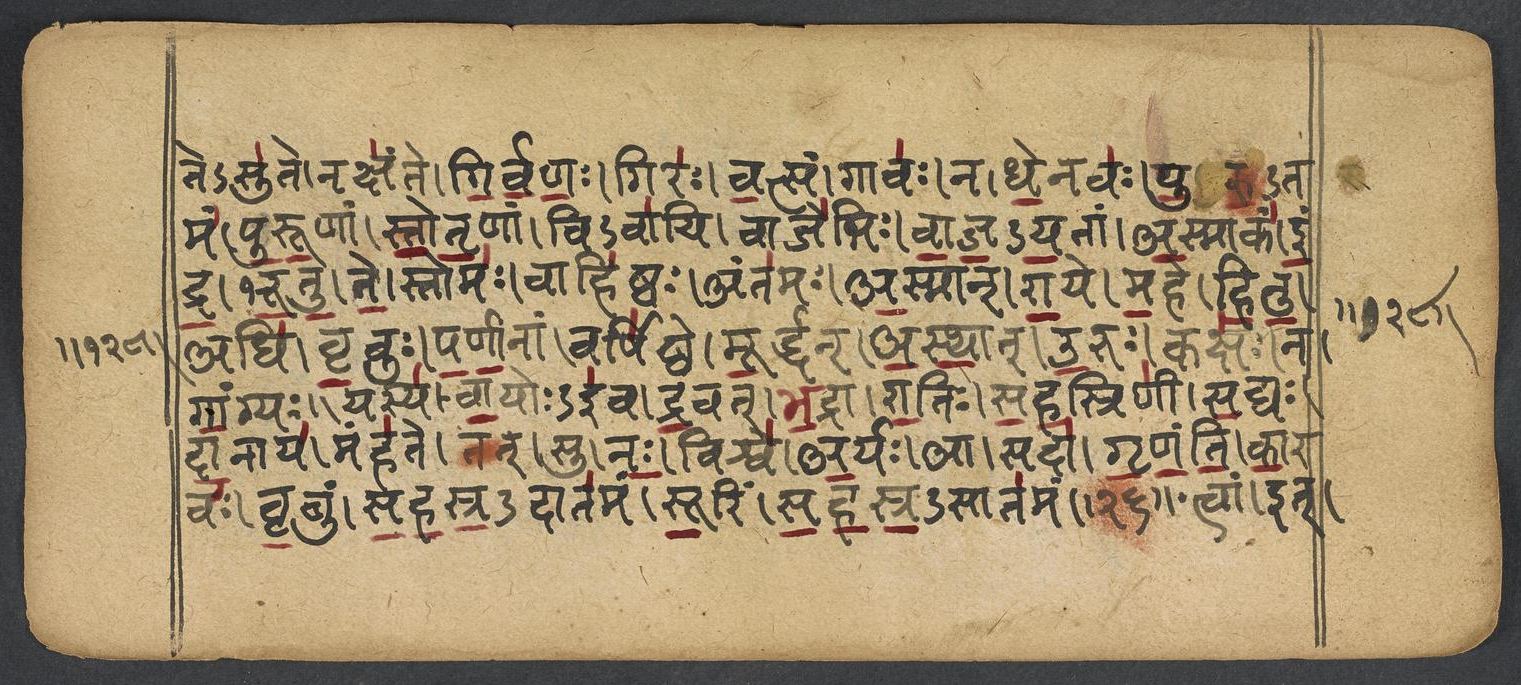
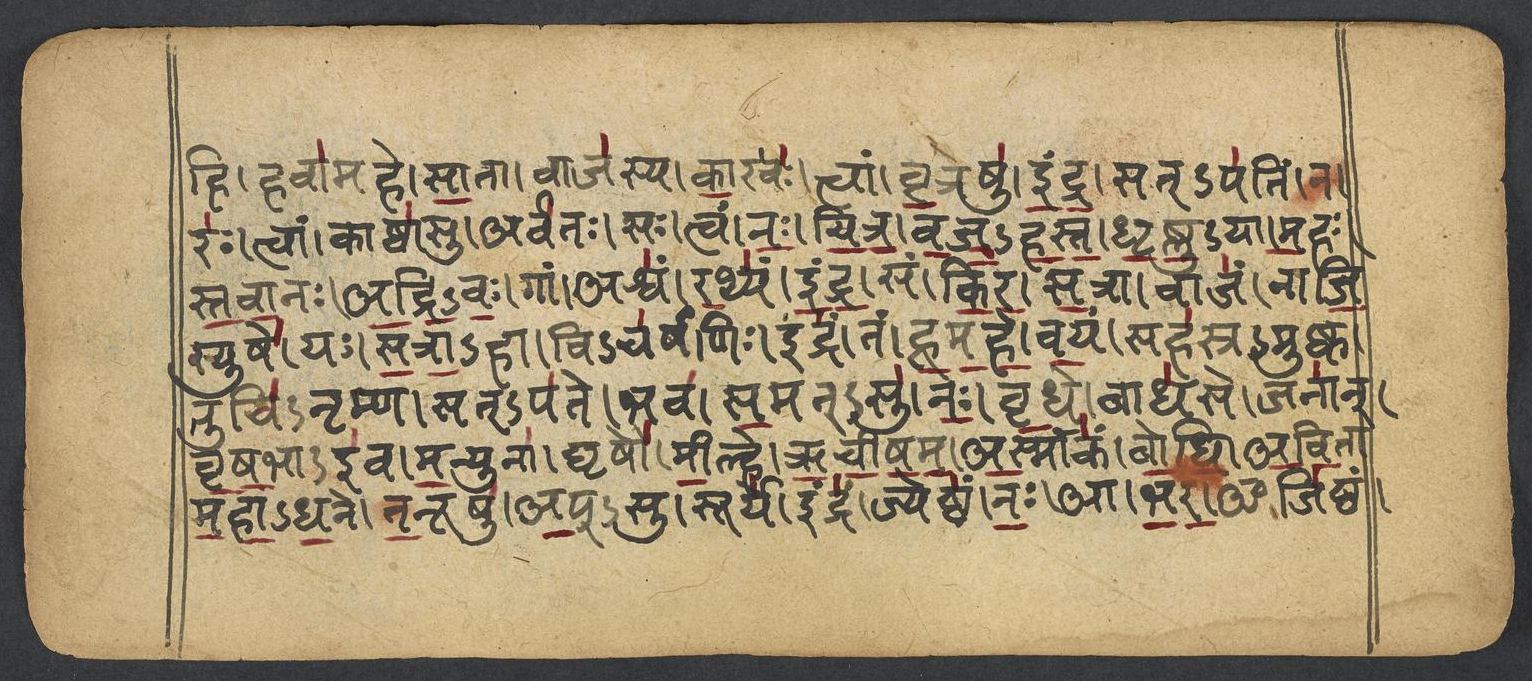
Penn Ms. Coll. 390 Item 41, fol. 456r (numbered 129r by the scribe) (OPenn image 456, lower leaf). Checked on the image: the Rigveda text on this page begins in RV 6.46.1 ‹hi havāmahe sātā vājasya›. The next page with Rigveda text, fol. 456v (numbered 129v by the scribe), begins in RV 6.46.5 ‹papuri śravaḥ yena ime›. Verses 6.46.1-4 end on this page; 6.46.1 begins on fol. 455v (numbered 128v by the scribe).
1tvām id dhi havā̍mahe sā̱tā vāja̍sya kā̱rava̍ḥ | tvāṁ vṛ̱treṣv i̍ndra̱ satpa̍ti̱ṁ nara̱s tvāṁ kāṣṭhā̱sv arva̍taḥ ||
2sa tvaṁ na̍ś citra vajrahasta dhṛṣṇu̱yā ma̱haḥ sta̍vā̱no a̍drivaḥ | gām aśva̍ṁ ra̱thya̍m indra̱ saṁ ki̍ra sa̱trā vāja̱ṁ na ji̱gyuṣe̍ ||
3yaḥ sa̍trā̱hā vica̍rṣaṇi̱r indra̱ṁ taṁ hū̍mahe va̱yam | saha̍sramuṣka̱ tuvi̍nṛmṇa̱ satpa̍te̱ bhavā̍ sa̱matsu̍ no vṛ̱dhe ||
4bādha̍se̱ janā̍n vṛṣa̱bheva̍ ma̱nyunā̱ ghṛṣau̍ mī̱ḻha ṛ̍cīṣama | a̱smāka̍m bodhy avi̱tā ma̍hādha̱ne ta̱nūṣv a̱psu sūrye̍ ||
Compare: Padapāṭha (word-by-word text written in the manuscript; Sansknet e-text via GRETIL)
1tvām | it | hi | havāmahe | sātā | vājasya | kāravaḥ | tvām | vṛtreṣu | indra | sat-patim | naraḥ | tvām | kāṣṭhāsu | arvataḥ
2saḥ | tvam | naḥ | citra | vajra-hasta | dhṛṣṇu-yā | mahaḥ | stavānaḥ | adri-vaḥ | gām | aśvam | rathyam | indra | sam | kira | satrā | vājam | na | jigyuṣe
3yaḥ | satrāhā | vi-carṣaṇiḥ | indram | tam | hūmahe | vayam | sahasra-muṣka | tuvi-nṛmṇa | sat-pate | bhava | samat-su | naḥ | vṛdhe
4bādhase | janān | vṛṣabhāiva | manyunā | ghṛṣau | mīḷhe | ṛcīṣama | asmākam | bodhi | avitā | mahādhane | tanūṣu | ap-su | sūrye
1THAT we may win us wealth and power we poets, verily, call on thee: In war men call on thee, Indra, the hero's Lord, in the steed's race-course call on thee.
2As such, O Wonderful, whose hand holds thunder, praised as mighty, Caster of the Stone! Pour on us boldly, Indra, kine and chariotsteeds, ever to be the conqueror's strength.
3We call upon that Indra, who, most active, ever slays the foe: Lord of the brave, Most Manly, with a thousand powers, help thou and prosper us in fight.
4Rcisama, thou forcest men as with a bull, with anger, in the furious fray. Be thou our Helper in the mighty battle fought for sunlight, water, and for life.
Where on the image
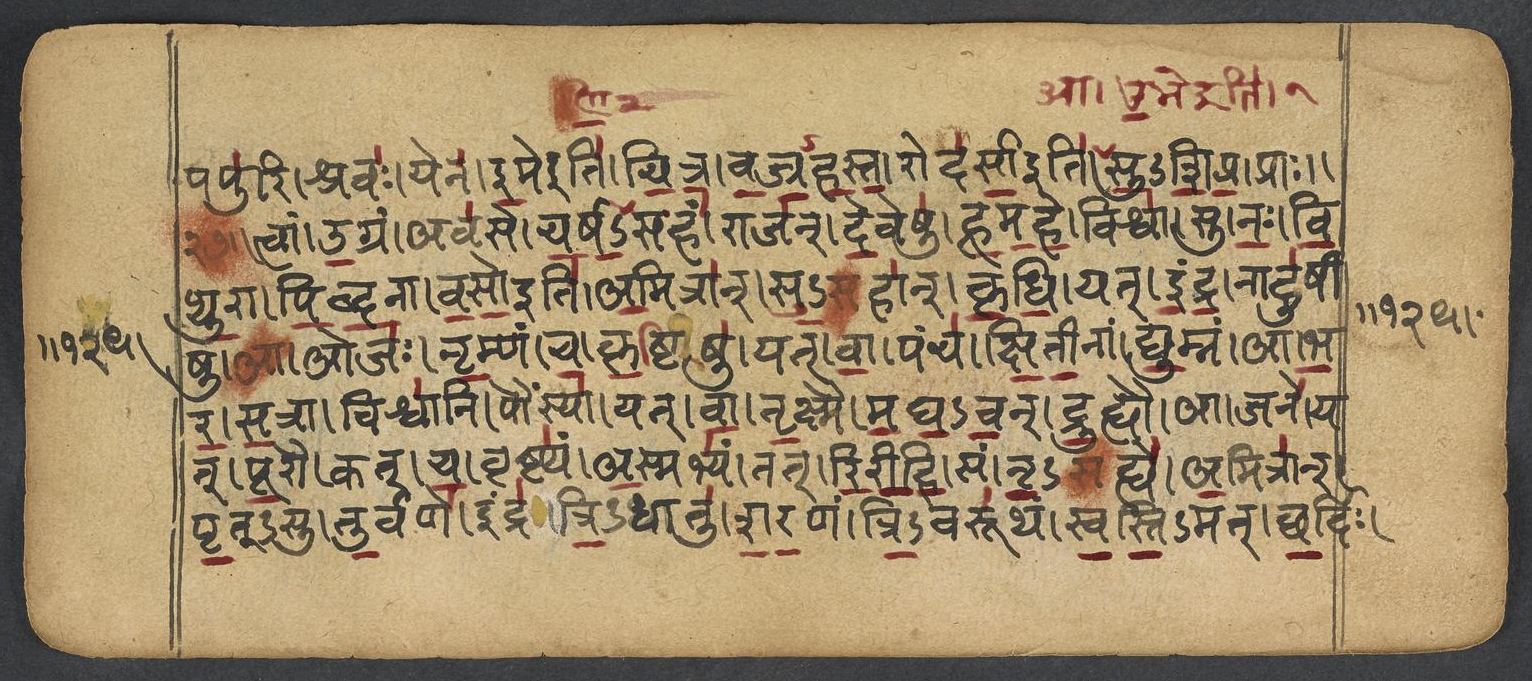
Penn Ms. Coll. 390 Item 41, fol. 456v (numbered 129v by the scribe) (OPenn image 457, upper leaf). Checked on the image: the Rigveda text on this page begins in RV 6.46.5 ‹papuri śravaḥ yena ime›. The next page with Rigveda text, fol. 457r (numbered 130r by the scribe), begins in RV 6.46.9 ‹yaccha maghavat-bhyaḥ ca mahyam›. Verses 6.46.5-8 end on this page; 6.46.5 begins on fol. 456r (numbered 129r by the scribe).
5indra̱ jyeṣṭha̍ṁ na̱ ā bha̍ra̱m̐ oji̍ṣṭha̱m papu̍ri̱ śrava̍ḥ | yene̱me ci̍tra vajrahasta̱ roda̍sī̱ obhe su̍śipra̱ prāḥ ||
6tvām u̱gram ava̍se carṣaṇī̱saha̱ṁ rāja̍n de̱veṣu̍ hūmahe | viśvā̱ su no̍ vithu̱rā pi̍bda̱nā va̍so̱ 'mitrā̍n su̱ṣahā̍n kṛdhi ||
7yad i̍ndra̱ nāhu̍ṣī̱ṣv ām̐ ojo̍ nṛ̱mṇaṁ ca̍ kṛ̱ṣṭiṣu̍ | yad vā̱ pañca̍ kṣitī̱nāṁ dyu̱mnam ā bha̍ra sa̱trā viśvā̍ni̱ pauṁsyā̍ ||
8yad vā̍ tṛ̱kṣau ma̍ghavan dru̱hyāv ā jane̱ yat pū̱rau kac ca̱ vṛṣṇya̍m | a̱smabhya̱ṁ tad ri̍rīhi̱ saṁ nṛ̱ṣāhye̱ 'mitrā̍n pṛ̱tsu tu̱rvaṇe̍ ||
Compare: Padapāṭha (word-by-word text written in the manuscript; Sansknet e-text via GRETIL)
5indra | jyeṣṭham | naḥ | ā | bhara | ojiṣṭham | papuri | śravaḥ | yena | ime iti | citra | vajra-hasta | rodasī iti | ā | ubhe iti | suśipra | prāḥ
6tvām | ugram | avase | carṣaṇi-saham | rājan | deveṣu | hūmahe | viśvā | su | naḥ | vithurā | pibdanā | vaso iti | amitrān | su-sahān | kṛdhi
7yat | indra | nāhuṣīṣu | ā | ojaḥ | nṛmṇam | ca | kṛṣṭiṣu | yat | vā | pañca | kṣitīnām | dyumnam | ā | bhara | satrā | viśvāni | paiṃsyā
8yat | vā | tṛkṣau | magha-van | druhyau | ā | jane | yat | pūrau | kat | ca | vṛṣṇyam | asmabhyam | tat | rirīhi | sam | nṛ-sahye | amitrān | pṛt-su | turvaṇe
5O Indra, bring us name and fame, enriching, mightiest, excellent, Wherewith, O Wondrous God, fair-visored, thunder-armed, thou hast filled full this earth and heaven.
6We call on thee, O King, Mighty amid the Gods, Ruler of men, to succour us. All that is weak in us, Excellent God, make firm: make our foes easy to subdue.
7All strength and valour that is found, Indra, in tribes of Nahushas, and all the splendid fame that the Five Tribes enjoy Bring, yea, all manly powers at once.
8Or, Maghavan, what vigorous strength in Tr̥ikshi lay, in Druhyus or in Pûru's folk, Fully bestow on us, that, in the conquering fray, we may subdue our foes in fight.
Where on the image
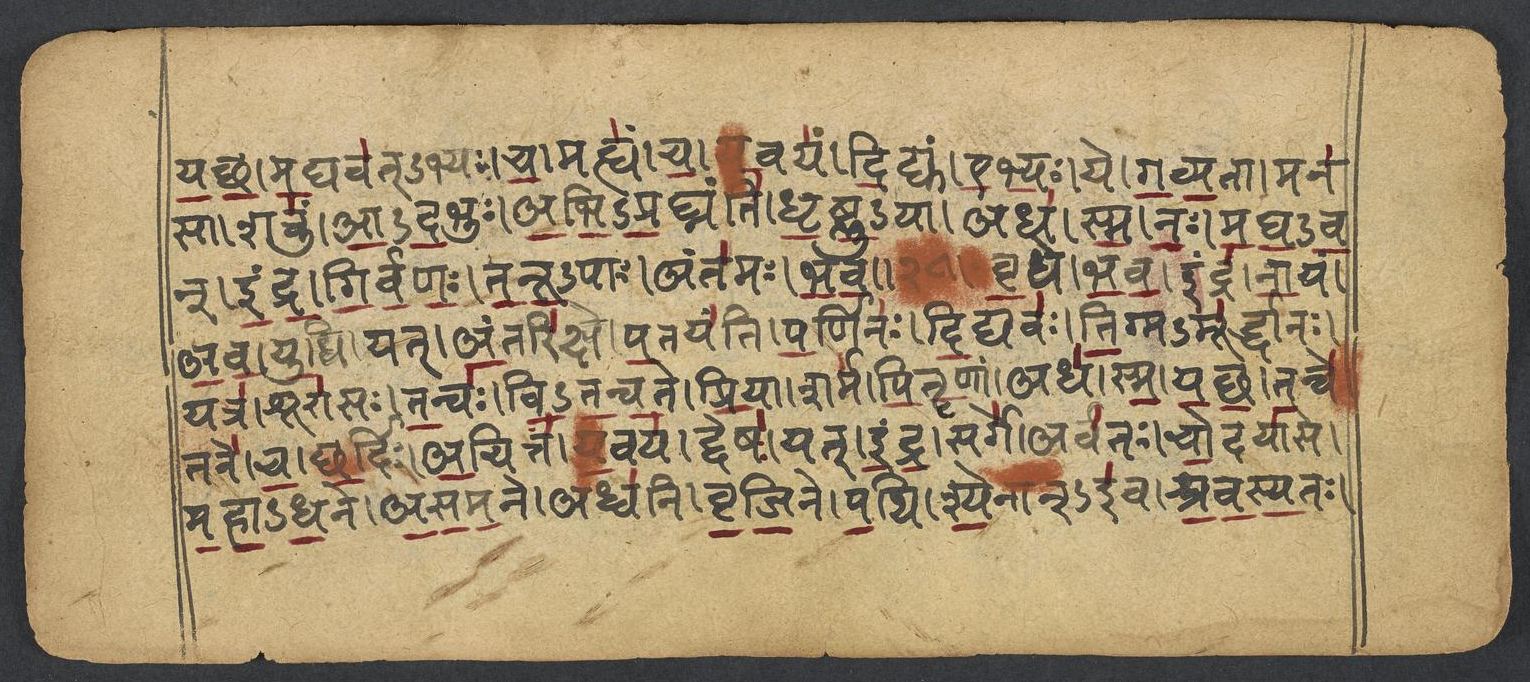
Penn Ms. Coll. 390 Item 41, fol. 457r (numbered 130r by the scribe) (OPenn image 457, lower leaf). Checked on the image: the Rigveda text on this page begins in RV 6.46.9 ‹yaccha maghavat-bhyaḥ ca mahyam›. The next page with Rigveda text, fol. 457v (numbered 130v by the scribe), begins in RV 6.46.14 ‹sindhūn-iva pravaṇe āśu-yā yataḥ›. Verses 6.46.9-13 end on this page; 6.46.9 begins on fol. 456v (numbered 129v by the scribe).
9indra̍ tri̱dhātu̍ śara̱ṇaṁ tri̱varū̍thaṁ svasti̱mat | cha̱rdir ya̍ccha ma̱ghava̍dbhyaś ca̱ mahya̍ṁ ca yā̱vayā̍ di̱dyum e̍bhyaḥ ||
10ye ga̍vya̱tā mana̍sā̱ śatru̍m āda̱bhur a̍bhipra̱ghnanti̍ dhṛṣṇu̱yā | adha̍ smā no maghavann indra girvaṇas tanū̱pā anta̍mo bhava ||
11adha̍ smā no vṛ̱dhe bha̱vendra̍ nā̱yam a̍vā yu̱dhi | yad a̱ntari̍kṣe pa̱taya̍nti pa̱rṇino̍ di̱dyava̍s ti̱gmamū̍rdhānaḥ ||
12yatra̱ śūrā̍sas ta̱nvo̍ vitanva̱te pri̱yā śarma̍ pitṝ̱ṇām | adha̍ smā yaccha ta̱nve̱3̱̍ tane̍ ca cha̱rdir a̱citta̍ṁ yā̱vaya̱ dveṣa̍ḥ ||
13yad i̍ndra̱ sarge̱ arva̍taś co̱dayā̍se mahādha̱ne | a̱sa̱ma̱ne adhva̍ni vṛji̱ne pa̱thi śye̱nām̐ i̍va śravasya̱taḥ ||
Compare: Padapāṭha (word-by-word text written in the manuscript; Sansknet e-text via GRETIL)
9indra | tri-dhātu | śaraṇam | tri-varūtham | svasti-mat | chardiḥ | yaccha | maghavat-bhyaḥ | ca | mahyam | ca | yavaya | didyum | ebhyaḥ
10ye | gavyatā | manasā | śatrum | ādabhuḥ | abhi-praghnanti | dhṛṣṇu-yā | adha | sma | naḥ | magha-van | indra | girvaṇaḥ | tanū-pāḥ | antamaḥ | bhava
11adha | sma | naḥ | vṛdhe | bhava | indra | na | ayam | ava | yudhi | yat | antarikṣe | patayanti | parṇinaḥ | didyavaḥ | tigma-mūrdhānaḥ
12yatra | śūrāsaḥ | tanvaḥ | vi-tanvate | priyā | śarma | pitṝṇām | adha | sma | yaccha | tanve | tane | ca | chardhiḥ | acittam | yavaya | dveṣaḥ
13yat | indra | sarge | arvataḥ | codayāse | mahādhane | asamane | adhvani | vṛj ine | pathi | śyenān-iva | śravasyataḥ
9O Indra, grant a happy home, a triple refuge triply strong. Bestow a dwelling-place on the rich lords and me, and keep thy dart afar from these.
10They who with minds intent on spoil subdue the foe, boldly attack and smite him down,– From these, O Indra Maghavan who lovest song, be closest guardian of our lives.
11And now, O Indra, strengthen us: come near and aid us in the fight, What time the feathered shafts are flying in the air, the arrows with their sharpened points.
12Give us, where heroes strain their bodies in the fight, the shelter that our fathers loved. To us and to our sons give refuge: keep afar all unobserved hostility.
13When, Indra, in the mighty fray thou urgest chargers to their speed, On the uneven road and on a toilsome path, like falcons, eager for renown,
Where on the image
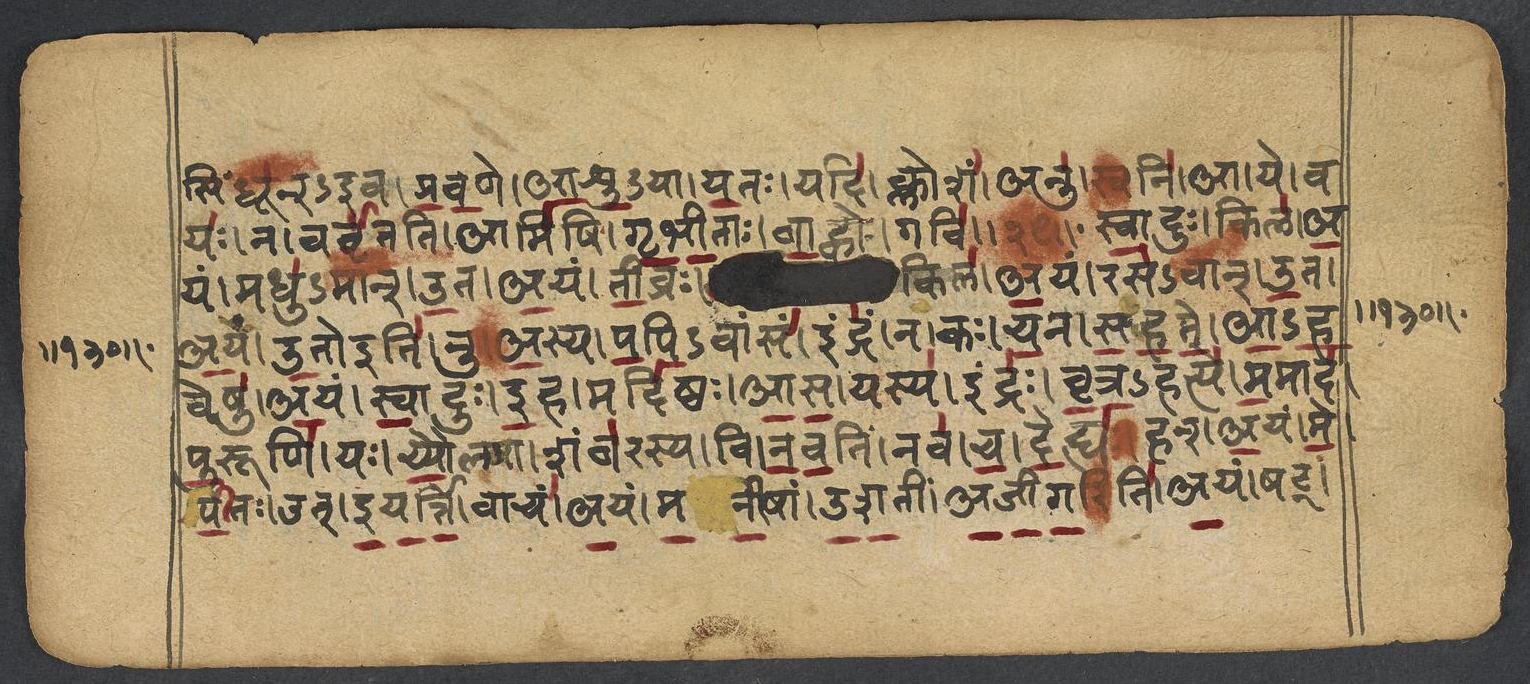
Penn Ms. Coll. 390 Item 41, fol. 457v (numbered 130v by the scribe) (OPenn image 458, upper leaf). Checked on the image: the Rigveda text on this page begins in RV 6.46.14 ‹sindhūn-iva pravaṇe āśu-yā yataḥ›. The next page with Rigveda text, fol. 458r (numbered 131r by the scribe), begins in RV 6.47.3 ‹urvīḥ amimīta dhīraḥ na›. Verse 6.46.14 ends on this page.
14sindhū̍m̐r iva prava̱ṇa ā̍śu̱yā ya̱to yadi̱ klośa̱m anu̱ ṣvaṇi̍ | ā ye vayo̱ na varvṛ̍ta̱ty āmi̍ṣi gṛbhī̱tā bā̱hvor gavi̍ ||
Compare: Padapāṭha (word-by-word text written in the manuscript; Sansknet e-text via GRETIL)
14sindhūn-iva | pravaṇe | āśu-yā | yataḥ | yadi | kleśam | anu | svani | ā | ye | vayaḥ | na | varvṛtati | āmiṣi | gṛbhītāḥ | bāhvoḥ | gavi
14Speeding like rivers rushing down a steep descent, responsive to the urging call, That come like birds attracted to the bait, held in by reins in both the driver's hands.
Notes
- Sanskrit: Aufrecht's edition (1877) with the Vedic accents, as entered by van Nooten and Holland (GRETIL).
- English: Ralph T. H. Griffith, The Hymns of the Rigveda (1889-1892; 2nd ed. 1896-1897), from the VedaWeb digital text; OCR slips in that text were corrected against the printed 2nd edition (data/sources/rigveda/griffith_errata.json).
- Padapāṭha (edition text): Sansknet e-text via GRETIL (CC BY-NC-SA 4.0).
Cite
Sources
- Source: Penn Ms. Coll. 390 Item 41 (undated (catalogued with Penn's 18th-19th c. Vedic manuscripts)), OPenn, Public Domain Mark + Aufrecht's accented text (GRETIL) + Griffith's English (VedaWeb) (holding institution)
- Critical edition: Aufrecht (1877), accented e-text via GRETIL
← previous · → next · v cycle view · l back to library