Rigveda 6.50: To all the gods
Introduction
Rigveda 6.50 is a hymn of 15 verses addressed to all the gods. It stands in book (maṇḍala) 6, the family book of Bharadvāja. The Rigveda is the oldest collection of Sanskrit hymns, composed in the second half of the second millennium BCE and handed down orally for many centuries before it was written down.
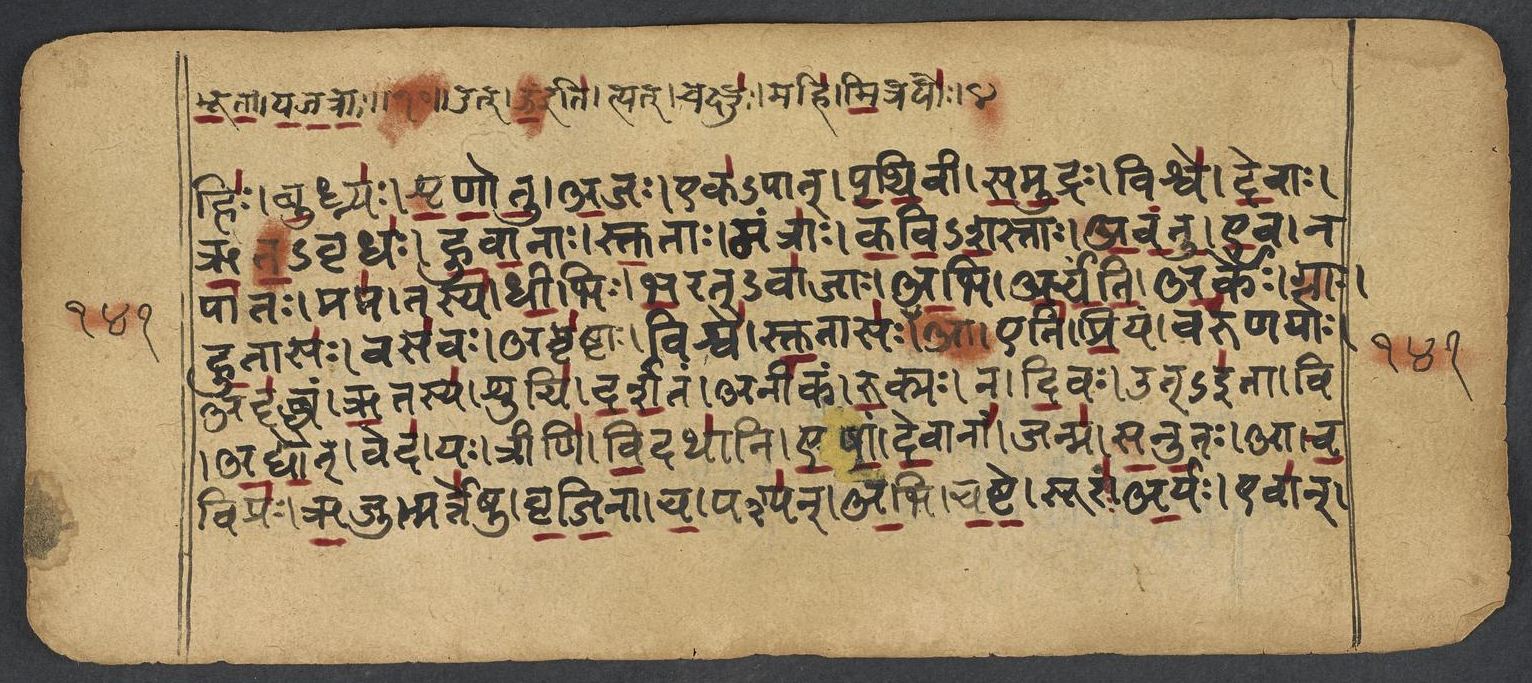
The manuscript shown is Penn Ms. Coll. 390 Item 41 (University of Pennsylvania), an undated paper manuscript of the padapāṭha (the word-by-word recitation text, in which every word is written separately and compounds are split) of the whole Ṛgveda in Devanāgarī, 884 leaves in fascicles, 7-9 lines to the page, accents in red; this hymn stands on fol. 466v-468v. Each section below gives the verses that end on one page; the page boundaries were read on the images (the opening words of every page), not counted out. Where the manuscript is a padapāṭha (the word-by-word recitation text), the section shows Aufrecht's continuous (saṃhitā) text first and, as the edition text, the padapāṭha of the same verses, which is the form written on the page.
How was this verified? (Provenance)
Where on the image
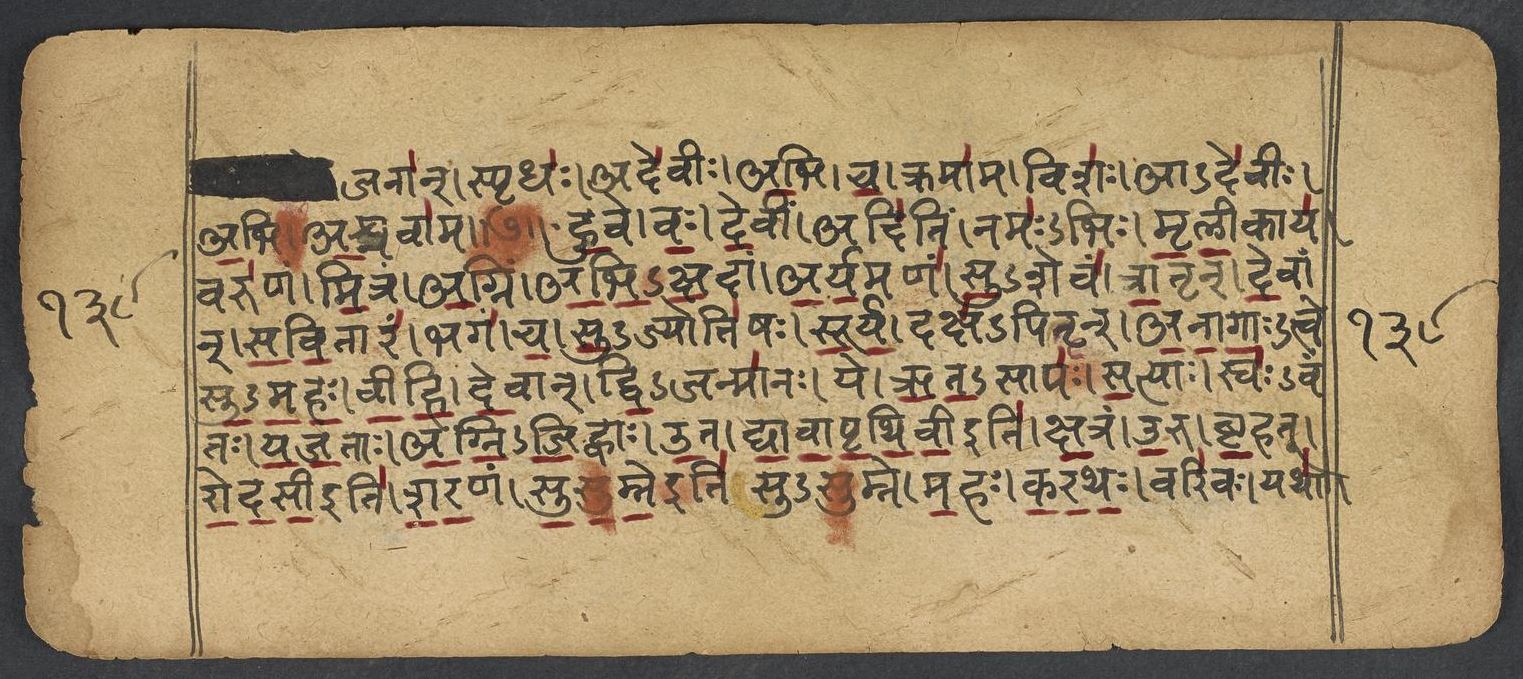
Penn Ms. Coll. 390 Item 41, fol. 466v (numbered 139v by the scribe) (OPenn image 467, upper leaf). Checked on the image: the Rigveda text on this page begins in RV 6.49.15 ‹janān spṛdhaḥ adevīḥ abhi›. The next page with Rigveda text, fol. 467r (numbered 140r by the scribe), begins in RV 6.50.3 ‹naḥ asme iti kṣayāya›. Verses 6.50.1-2 end on this page.
1hu̱ve vo̍ de̱vīm adi̍ti̱ṁ namo̍bhir mṛḻī̱kāya̱ varu̍ṇam mi̱tram a̱gnim | a̱bhi̱kṣa̱dām a̍rya̱maṇa̍ṁ su̱śeva̍ṁ trā̱tṝn de̱vān sa̍vi̱tāra̱m bhaga̍ṁ ca ||
2su̱jyoti̍ṣaḥ sūrya̱ dakṣa̍pitṝn anāgā̱stve su̍maho vīhi de̱vān | dvi̱janmā̍no̱ ya ṛ̍ta̱sāpa̍ḥ sa̱tyāḥ sva̍rvanto yaja̱tā a̍gniji̱hvāḥ ||
Compare: Padapāṭha (word-by-word text written in the manuscript; Sansknet e-text via GRETIL)
1huve | vaḥ | devīm | aditim | namaḥ-bhiḥ | mṛḷīkāya | varuṇam | mitram | agnim | abhi kṣa-dām | aryamaṇam | su-śevam | trātṝn | devān | savitāram | bhagam | ca
2su-jyotiṣaḥ | sūrya | dakṣa-pitṝn | anāgāḥ-tve | su-mahaḥ | vīhi | devān | dvi-janmānaḥ | ye | ṛta-sāpaḥ | satyāḥ | svaḥ-vantaḥ | yajatāḥ | agni-jihvāḥ
1I CALL with prayers on Aditi your Goddess, on Agni, Mitra, Varuṇa for favour, On Aryaman who gives unasked, the gracious, on Gods who save, on Savitar and Bhaga.
2Visit, to prove us free from sin, O Sûrya Lord of great might, the bright Gods sprung from Daksha, Twice-born and true, observing sacred duties, Holy and full of light, whose tongue is Agni.
Where on the image
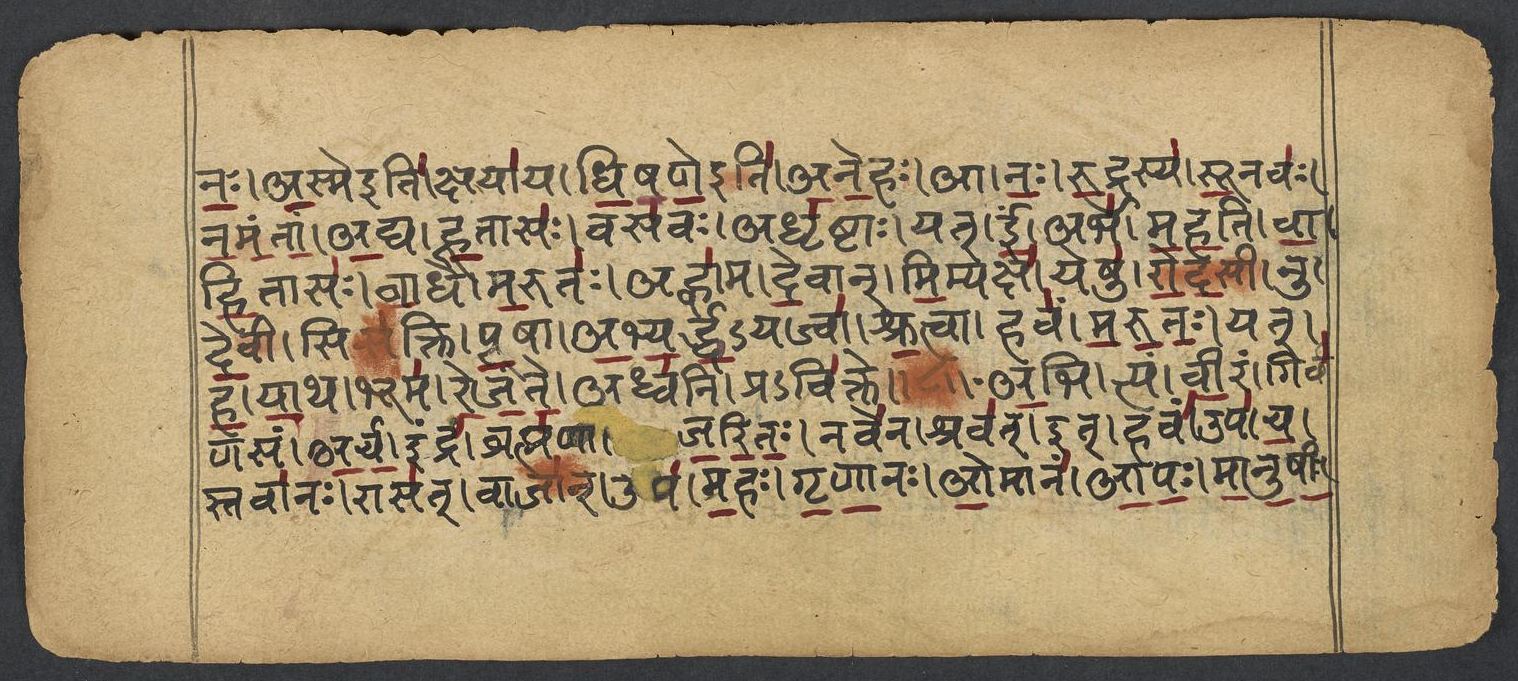
Penn Ms. Coll. 390 Item 41, fol. 467r (numbered 140r by the scribe) (OPenn image 467, lower leaf). Checked on the image: the Rigveda text on this page begins in RV 6.50.3 ‹naḥ asme iti kṣayāya›. The next page with Rigveda text, fol. 467v (numbered 140v by the scribe), begins in RV 6.50.7 ‹amṛktam dhāta tokāya tanayāya›. Verses 6.50.3-6 end on this page; 6.50.3 begins on fol. 466v (numbered 139v by the scribe).
3u̱ta dyā̍vāpṛthivī kṣa̱tram u̱ru bṛ̱had ro̍dasī śara̱ṇaṁ su̍ṣumne | ma̱has ka̍ratho̱ vari̍vo̱ yathā̍ no̱ 'sme kṣayā̍ya dhiṣaṇe ane̱haḥ ||
4ā no̍ ru̱drasya̍ sū̱navo̍ namantām a̱dyā hū̱tāso̱ vasa̱vo 'dhṛ̍ṣṭāḥ | yad ī̱m arbhe̍ maha̱ti vā̍ hi̱tāso̍ bā̱dhe ma̱ruto̱ ahvā̍ma de̱vān ||
5mi̱myakṣa̱ yeṣu̍ roda̱sī nu de̱vī siṣa̍kti pū̱ṣā a̍bhyardha̱yajvā̍ | śru̱tvā hava̍m maruto̱ yad dha̍ yā̱tha bhūmā̍ rejante̱ adhva̍ni̱ pravi̍kte ||
6a̱bhi tyaṁ vī̱raṁ girva̍ṇasam a̱rcendra̱m brahma̍ṇā jarita̱r nave̍na | śrava̱d id dhava̱m upa̍ ca̱ stavā̍no̱ rāsa̱d vājā̱m̐ upa̍ ma̱ho gṛ̍ṇā̱naḥ ||
Compare: Padapāṭha (word-by-word text written in the manuscript; Sansknet e-text via GRETIL)
3uta | dyāvāpṛthivī iti | kṣatram | uru | bṛhat | rodasī iti | śaraṇam | susumneitisu-sumne | mahaḥ | karathaḥ | varivaḥ | yathā | naḥ | asme iti | kṣayāya | dhiṣaṇeiti | anehaḥ
4ā | naḥ | rudrasya | sūnavaḥ | namantām | adya | hūtāsaḥ | vasavaḥ | adhṛṣṭāḥ | yat | īm | arbhe | mahati | vā | hitāsaḥ | bādhe | marutaḥ | ahvāma | devān
5mimyakṣa | yeṣu | rodasī | nu | devī | sisakti | pūṣā | abhyardha-yajvā | śrutvā | havam | marutaḥ | yat | ha | yātha | bhūma | rejante | adhvani | pra-vikte
6abhi | tyam | vīram | girvaṇasam | arca | indram | brahmaṇā | jaritaḥ | navena | śravat | it | havam | upa | ca | stavānaḥ | rāsat | vājān | upa | mahaḥ | gṛṇānaḥ
3And, O ye Heaven and Earth, a wide dominion, O ye most blissful Worlds, our lofty shelter, Give ample room and freedom for our dwelling, a home, ye Hemispheres, which none may rival.
4This day invited may the Sons of Rudra, resistless, excellent, stoop down to meet us; For, when beset with slight or sore affliction, we ever call upon the Gods, the Maruts;
5To whom the Goddess Rodasî clings closely, whom Pûshan follows bringing ample bounty. What time ye hear our call and come, O Maruts, upon your separate path all creatures tremble.
6With a new hymn extol, O thou who singest, the Lover of the Song, the Hero Indra. May he, exalted, hear our invocation, and grant us mighty wealth and strength when lauded.
Where on the image
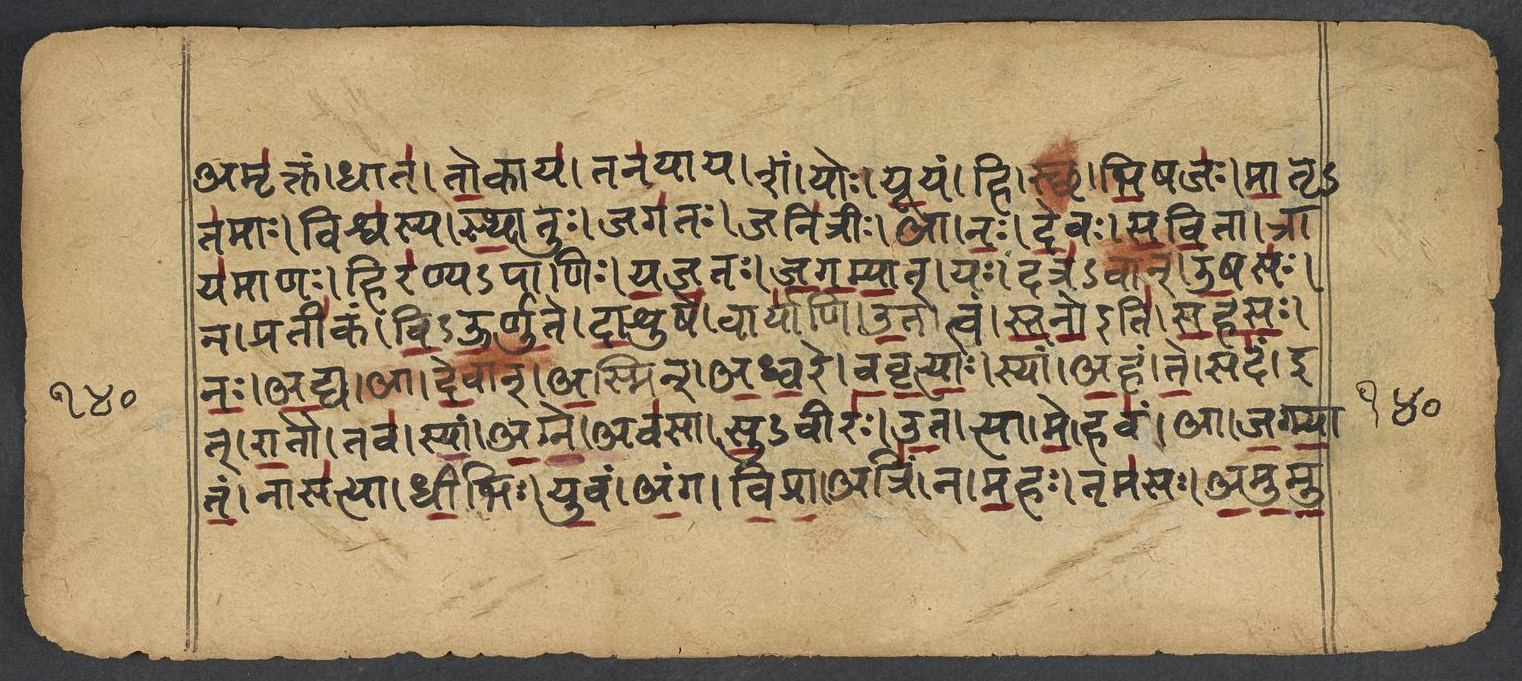
Penn Ms. Coll. 390 Item 41, fol. 467v (numbered 140v by the scribe) (OPenn image 468, upper leaf). Checked on the image: the Rigveda text on this page begins in RV 6.50.7 ‹amṛktam dhāta tokāya tanayāya›. The next page with Rigveda text, fol. 468r (numbered 141r by the scribe), begins in RV 6.50.10 ‹-amumuktam tūrvatam narā duḥ-itāt›. Verses 6.50.7-9 end on this page; 6.50.7 begins on fol. 467r (numbered 140r by the scribe).
7o̱māna̍m āpo mānuṣī̱r amṛ̍kta̱ṁ dhāta̍ to̱kāya̱ tana̍yāya̱ śaṁ yoḥ | yū̱yaṁ hi ṣṭhā bhi̱ṣajo̍ mā̱tṛta̍mā̱ viśva̍sya sthā̱tur jaga̍to̱ jani̍trīḥ ||
8ā no̍ de̱vaḥ sa̍vi̱tā trāya̍māṇo̱ hira̍ṇyapāṇir yaja̱to ja̍gamyāt | yo datra̍vām̐ u̱ṣaso̱ na pratī̍kaṁ vyūrṇu̱te dā̱śuṣe̱ vāryā̍ṇi ||
9u̱ta tvaṁ sū̍no sahaso no a̱dyā de̱vām̐ a̱sminn a̍dhva̱re va̍vṛtyāḥ | syām a̱haṁ te̱ sada̱m id rā̱tau tava̍ syām a̱gne 'va̍sā su̱vīra̍ḥ ||
Compare: Padapāṭha (word-by-word text written in the manuscript; Sansknet e-text via GRETIL)
7omānam | āpaḥ | mānuṣīḥ | amṛktam | dhāta | tokāya | tanayāya | śam | yoḥ | yūyam | hi | stha | bhiṣajaḥ | mātṛ-tamāḥ | viśvasya | sthātuḥ | jagataḥ | janitrīḥ
8ā | naḥ | devaḥ | savitā | trāyamāṇaḥ | hiraṇya-pāṇiḥ | yajataḥ | jagamyāt | yaḥ | datra-vān | uṣasaḥ | na | pratīkam | vi-ūrṇute | dāśuṣe | vāryāṇi
9uta | tvam | sūno iti | sahasaḥ | naḥ | adya | devān | asmin | adhvare | vavṛtyāḥ | syām | aham | te | sadam | it | rātau | tava | syām | agne | avasā | su-vīraḥ
7Give full protection, Friends of man, ye Waters, in peace and trouble, to our sons and grandsons. For ye are our most motherly physicians, parents of all that standeth, all that moveth.
8May Savitar come hither and approach us, the God who rescues, Holy, goldenhanded, The God who, bounteous as the face of Morning, discloses precious gifts for him who worships.
9And thou, O Son of Strength, do thou turn hither the Gods to-day to this our holy service. May I for evermore enjoy thy bounty and, Agni, by thy grace be rich in heroes.
Where on the image
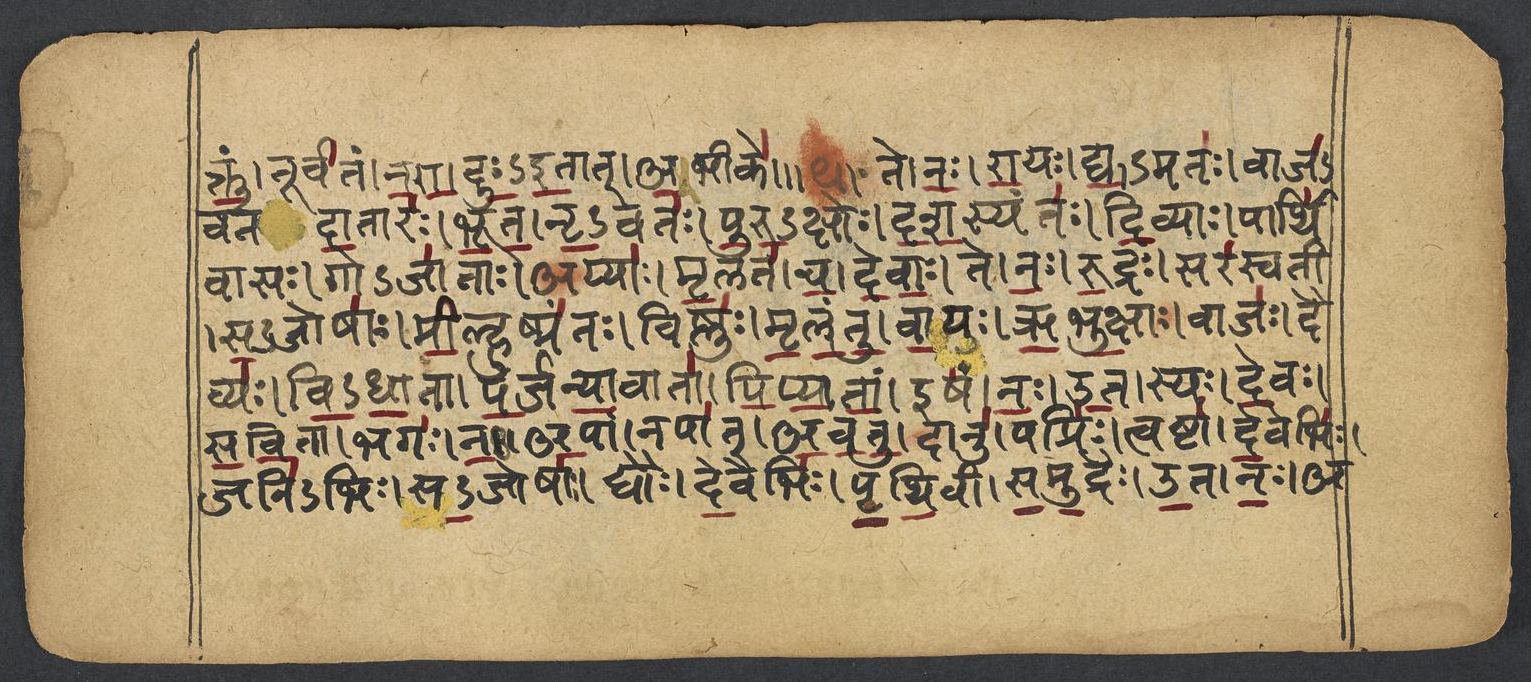
Penn Ms. Coll. 390 Item 41, fol. 468r (numbered 141r by the scribe) (OPenn image 468, lower leaf). Checked on the image: the Rigveda text on this page begins in RV 6.50.10 ‹-amumuktam tūrvatam narā duḥ-itāt›. The next page with Rigveda text, fol. 468v (numbered 141v by the scribe), begins in RV 6.50.14 ‹-ahiḥ budhnyaḥ śṛṇotu ajaḥ›. Verses 6.50.10-13 end on this page; 6.50.10 begins on fol. 467v (numbered 140v by the scribe).
10u̱ta tyā me̱ hava̱m ā ja̍gmyāta̱ṁ nāsa̍tyā dhī̱bhir yu̱vam a̱ṅga vi̍prā | atri̱ṁ na ma̱has tama̍so 'mumukta̱ṁ tūrva̍taṁ narā duri̱tād a̱bhīke̍ ||
11te no̍ rā̱yo dyu̱mato̱ vāja̍vato dā̱tāro̍ bhūta nṛ̱vata̍ḥ puru̱kṣoḥ | da̱śa̱syanto̍ di̱vyāḥ pārthi̍vāso̱ gojā̍tā̱ apyā̍ mṛ̱ḻatā̍ ca devāḥ ||
12te no̍ ru̱draḥ sara̍svatī sa̱joṣā̍ mī̱ḻhuṣma̍nto̱ viṣṇu̍r mṛḻantu vā̱yuḥ | ṛ̱bhu̱kṣā vājo̱ daivyo̍ vidhā̱tā pa̱rjanyā̱vātā̍ pipyatā̱m iṣa̍ṁ naḥ ||
13u̱ta sya de̱vaḥ sa̍vi̱tā bhago̍ no̱ 'pāṁ napā̍d avatu̱ dānu̱ papri̍ḥ | tvaṣṭā̍ de̱vebhi̱r jani̍bhiḥ sa̱joṣā̱ dyaur de̱vebhi̍ḥ pṛthi̱vī sa̍mu̱draiḥ ||
Compare: Padapāṭha (word-by-word text written in the manuscript; Sansknet e-text via GRETIL)
10uta | tyā | me | havam | ā | jagmyātam | nāsatyā | dhībhiḥ | yuvam | aṅga | viprā | atrim | na | mahaḥ | tamasaḥ | amumuktam | tūrvatam | narā | duḥ-itāt | abhīke
11te | naḥ | rāyaḥ | dyu-mataḥ | vāja-vataḥ | dātāraḥ | bhūta | nṛ-vataḥ | puru-kṣoḥ | daśasyantaḥ | divyāḥ | pārthivāsaḥ | go--jātāḥ | apyāḥ | mṛḷata | ca | devāḥ
12te | naḥ | rudraḥ | sarasvatī | sa-joṣāḥ | mīḷhuṣmantaḥ | viṣṇuḥ | mṛḷantu | vāyuḥ | ṛbhukṣāḥ | vājaḥ | daivyaḥ | vi-dhātā | parjanyāvātā | pipyatām | iṣam | naḥ
13uta | syaḥ | devaḥ | savitā | bhagaḥ | naḥ | apām | napāt | avatu | dānu | papriḥ | tvaṣṭā | devebhiḥ | jani-bhiḥ | sa-joṣāḥ | dyauḥ | devebhiḥ | pṛthivī | samudraiḥ
10Come also to my call, O ye Nâsatyas, yea, verily, through my prayers, ye Holy Sages. As from great darkness ye delivered Atri, protect us, Chiefs, from danger in the conflict.
11O Gods, bestow upon us riches, splendid with strength and heroes, bringing food in plenty. Be gracious, helpful Gods of earth, of heaven, born of the Cow, and dwellers in the waters.
12May Rudra and Sarasvatî, accordant, Vishṇu and Vâyu, pour down gifts and bless us; R̥ibhukshan, Vâja, and divine Vidhâtar, Parjanya, Vâta make our food abundant.
13May this God Savitar, the Lord, the Offspring of Waters, pouring down his dew be gracious, And, with the Gods and Dames accordant, Tvashṭar; Dyaus with the Gods and Pr̥ithivî with oceans.
Where on the image
Penn Ms. Coll. 390 Item 41, fol. 468v (numbered 141v by the scribe) (OPenn image 469, upper leaf). Checked on the image: the Rigveda text on this page begins in RV 6.50.14 ‹-ahiḥ budhnyaḥ śṛṇotu ajaḥ›. The next page with Rigveda text, fol. 469r (numbered 142r by the scribe), begins in RV 6.51.3 ‹stuṣe oṃ iti vaḥ›. Verses 6.50.14-15 end on this page; 6.50.14 begins on fol. 468r (numbered 141r by the scribe).
14u̱ta no 'hi̍r bu̱dhnya̍ḥ śṛṇotv a̱ja eka̍pāt pṛthi̱vī sa̍mu̱draḥ | viśve̍ de̱vā ṛ̍tā̱vṛdho̍ huvā̱nāḥ stu̱tā mantrā̍ḥ kaviśa̱stā a̍vantu ||
15e̱vā napā̍to̱ mama̱ tasya̍ dhī̱bhir bha̱radvā̍jā a̱bhy a̍rcanty a̱rkaiḥ | gnā hu̱tāso̱ vasa̱vo 'dhṛ̍ṣṭā̱ viśve̍ stu̱tāso̍ bhūtā yajatrāḥ ||
Compare: Padapāṭha (word-by-word text written in the manuscript; Sansknet e-text via GRETIL)
14uta | naḥ | ahiḥ | budhnyaḥ | śṛṇotu | ajaḥ | eka-pāt | pṛthivī | samudraḥ | viśve | devāḥ | ṛta-vṛdhaḥ | huvānāḥ | stutāḥ | mantrāḥ | kavi-śastāḥ | avantu
15eva | napātaḥ | mama | tasya | dhībhiḥ | bharat-vājāḥ | abhi | arcanti | arkaiḥ | gnāḥ | hutāsaḥ | vasavaḥ | adhṛṣṭāḥ | viśve | stutāsaḥ | bhūta | yajatrāḥ
14May Aja-Ekapad and Ahibudhnya, and Earth and Ocean hear our invocation; All Gods who strengthen Law, invoked and lauded, and holy texts uttered by sages, help us.
15So with my thoughts and hymns of praise the children of Bharadvâja sing aloud to please you. The Dames invoked, and the resistless Vasus, and all ye Holy Ones have been exalted.
Notes
- Sanskrit: Aufrecht's edition (1877) with the Vedic accents, as entered by van Nooten and Holland (GRETIL).
- English: Ralph T. H. Griffith, The Hymns of the Rigveda (1889-1892; 2nd ed. 1896-1897), from the VedaWeb digital text; OCR slips in that text were corrected against the printed 2nd edition (data/sources/rigveda/griffith_errata.json).
- Padapāṭha (edition text): Sansknet e-text via GRETIL (CC BY-NC-SA 4.0).
Cite
Sources
- Source: Penn Ms. Coll. 390 Item 41 (undated (catalogued with Penn's 18th-19th c. Vedic manuscripts)), OPenn, Public Domain Mark + Aufrecht's accented text (GRETIL) + Griffith's English (VedaWeb) (holding institution)
- Critical edition: Aufrecht (1877), accented e-text via GRETIL
← previous · → next · v cycle view · l back to library