Rigveda 6.49: To all the gods
Introduction
Rigveda 6.49 is a hymn of 15 verses addressed to all the gods. It stands in book (maṇḍala) 6, the family book of Bharadvāja. The Rigveda is the oldest collection of Sanskrit hymns, composed in the second half of the second millennium BCE and handed down orally for many centuries before it was written down.
The manuscript shown is Penn Ms. Coll. 390 Item 41 (University of Pennsylvania), an undated paper manuscript of the padapāṭha (the word-by-word recitation text, in which every word is written separately and compounds are split) of the whole Ṛgveda in Devanāgarī, 884 leaves in fascicles, 7-9 lines to the page, accents in red; this hymn stands on fol. 464v-466v. Each section below gives the verses that end on one page; the page boundaries were read on the images (the opening words of every page), not counted out. Where the manuscript is a padapāṭha (the word-by-word recitation text), the section shows Aufrecht's continuous (saṃhitā) text first and, as the edition text, the padapāṭha of the same verses, which is the form written on the page.
How was this verified? (Provenance)
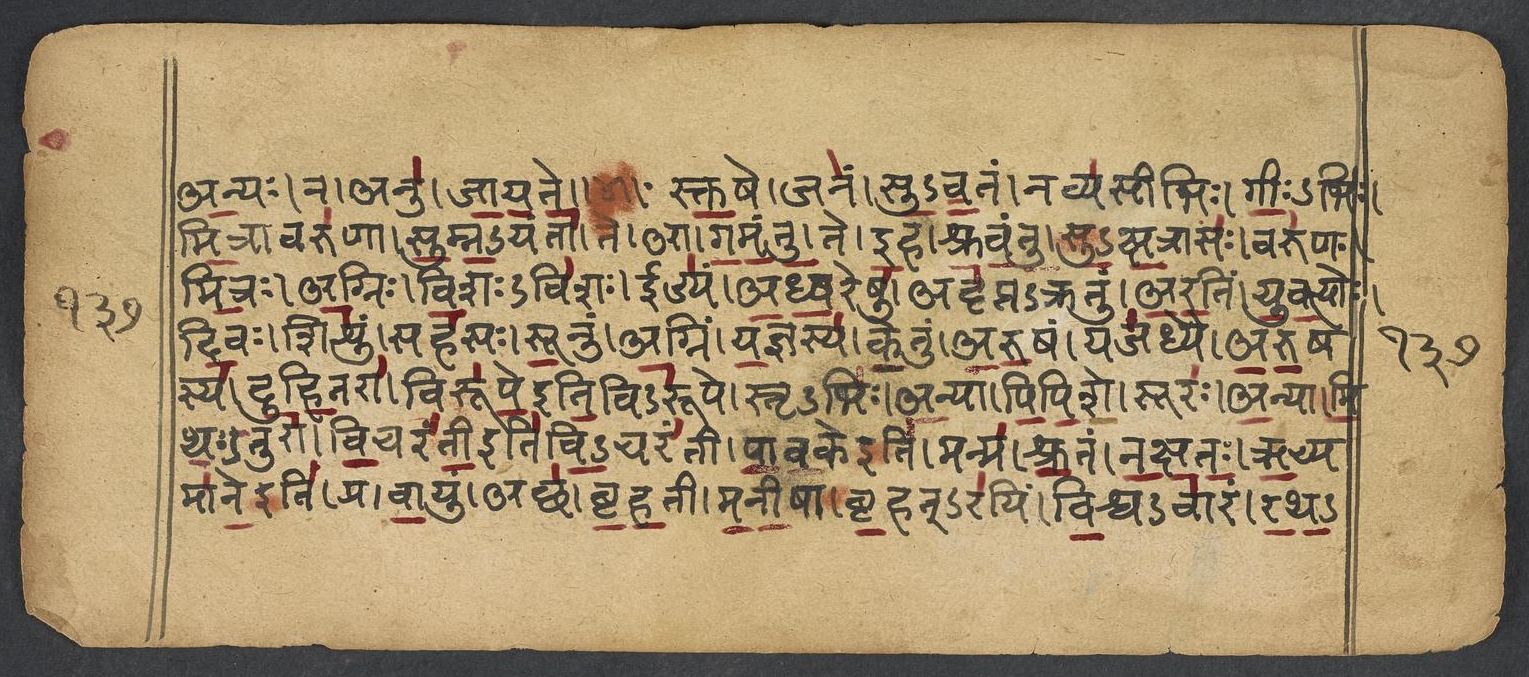
Where on the image
Penn Ms. Coll. 390 Item 41, fol. 464v (numbered 137v by the scribe) (OPenn image 465, upper leaf). Checked on the image: the Rigveda text on this page begins in RV 6.48.22 ‹anyaḥ na anu jāyate›. The next page with Rigveda text, fol. 465r (numbered 138r by the scribe), begins in RV 6.49.4 ‹-ratha-prām dyutad-yāmā ni-yutaḥ patyamānaḥ›. Verses 6.49.1-3 end on this page.
1stu̱ṣe jana̍ṁ suvra̱taṁ navya̍sībhir gī̱rbhir mi̱trāvaru̍ṇā sumna̱yantā̍ | ta ā ga̍mantu̱ ta i̱ha śru̍vantu sukṣa̱trāso̱ varu̍ṇo mi̱tro a̱gniḥ ||
2vi̱śo-vi̍śa̱ īḍya̍m adhva̱reṣv adṛ̍ptakratum ara̱tiṁ yu̍va̱tyoḥ | di̱vaḥ śiśu̱ṁ saha̍saḥ sū̱num a̱gniṁ ya̱jñasya̍ ke̱tum a̍ru̱ṣaṁ yaja̍dhyai ||
3a̱ru̱ṣasya̍ duhi̱tarā̱ virū̍pe̱ stṛbhi̍r a̱nyā pi̍pi̱śe sūro̍ a̱nyā | mi̱tha̱sturā̍ vi̱cara̍ntī pāva̱ke manma̍ śru̱taṁ na̍kṣata ṛ̱cyamā̍ne ||
Compare: Padapāṭha (word-by-word text written in the manuscript; Sansknet e-text via GRETIL)
1stuṣe | janam | su-vratam | navyasībhiḥ | gīḥ-bhiḥ | mitrāvaruṇā | sumna-yantā | te | ā | gamantu | te | iha | śruvantu | su-kṣatrāsaḥ | varuṇaḥ | mitraḥ | agniḥ
2viśaḥ-viśaḥ | īḍyam | adhvareṣu | adṛpta-kratum | aratim | yuvatyoḥ | divaḥ | śiśum | sahasaḥ | śūnum | agnim | yajñasya | ketum | aruṣam | yajadhyai
3aruṣasya | duhitarā | virūpeitivi-rūpe | stṛ-bhiḥ | anyā pipiśe | sūraḥ | anyā | mithaḥ-turā | vicarantī itivi-carantī | pāvake iti | manma | śrutam | nakṣata | ṛcyamāneiti
1I LAUD with newest songs the Righteous People, Mitra and Varuṇa who make us happy. Let them approach, here let them listen,Agni, Varuṇa, Mitra, Lords of fair dominion.
2Him, to be praised at each tribe's sacrifices, the Two young Matrons' sober-minded Herald, The Son of Strength, the Child of Heaven, the signal of sacrifice, red Agni will I worship.
3Unlike in form are the Red God's two Daughters: one is the Sun's, and stars bedeck the other. Apart, the Sanctifiers, in succession, come to the famed hymn, praised in holy verses.
Where on the image
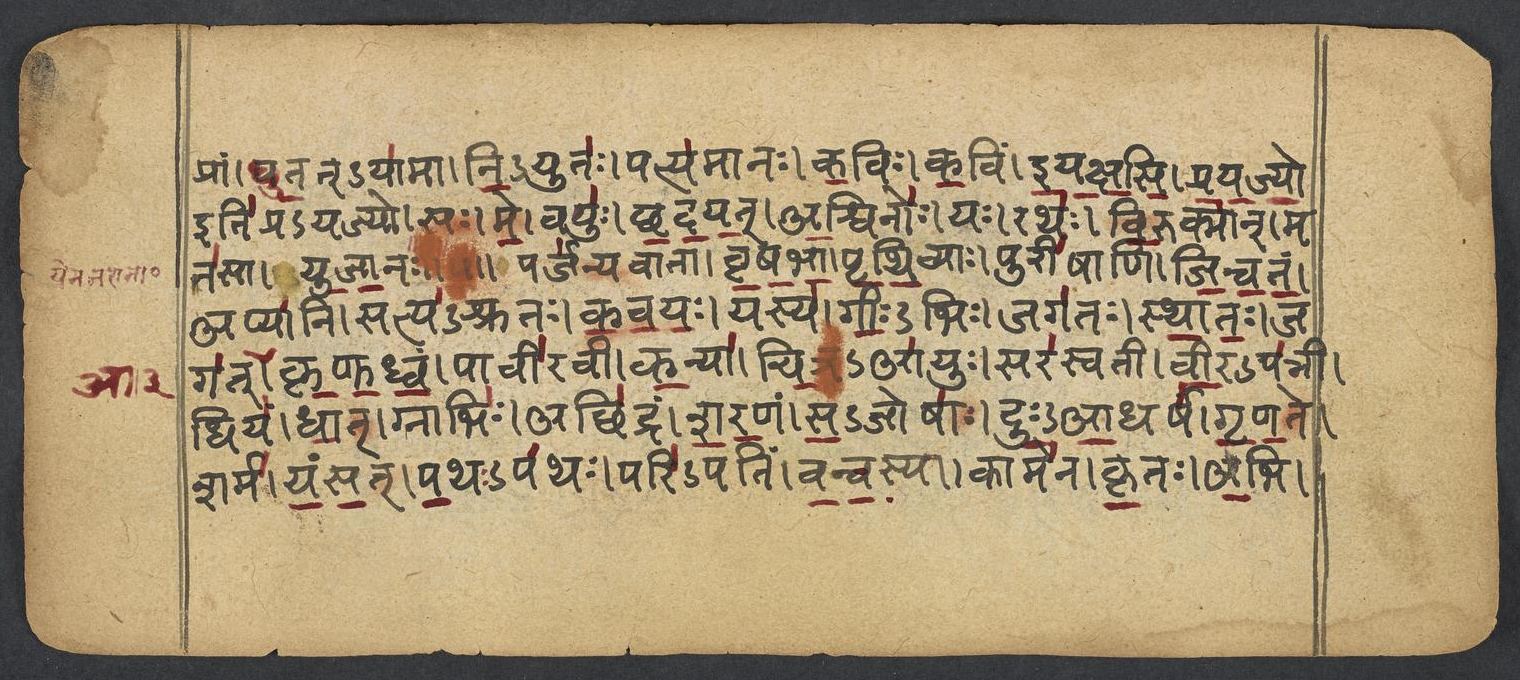
Penn Ms. Coll. 390 Item 41, fol. 465r (numbered 138r by the scribe) (OPenn image 465, lower leaf). Checked on the image: the Rigveda text on this page begins in RV 6.49.4 ‹-ratha-prām dyutad-yāmā ni-yutaḥ patyamānaḥ›. The next page with Rigveda text, fol. 465v (numbered 138v by the scribe), begins in RV 6.49.8 ‹ānaṭ arkam saḥ naḥ›. Verses 6.49.4-7 end on this page; 6.49.4 begins on fol. 464v (numbered 137v by the scribe).
4pra vā̱yum acchā̍ bṛha̱tī ma̍nī̱ṣā bṛ̱hadra̍yiṁ vi̱śvavā̍raṁ ratha̱prām | dyu̱tadyā̍mā ni̱yuta̱ḥ patya̍mānaḥ ka̱viḥ ka̱vim i̍yakṣasi prayajyo ||
5sa me̱ vapu̍ś chadayad a̱śvino̱r yo ratho̍ vi̱rukmā̱n mana̍sā yujā̱naḥ | yena̍ narā nāsatyeṣa̱yadhyai̍ va̱rtir yā̱thas tana̍yāya̱ tmane̍ ca ||
6parja̍nyavātā vṛṣabhā pṛthi̱vyāḥ purī̍ṣāṇi jinvata̱m apyā̍ni | satya̍śrutaḥ kavayo̱ yasya̍ gī̱rbhir jaga̍taḥ sthāta̱r jaga̱d ā kṛ̍ṇudhvam ||
7pāvī̍ravī ka̱nyā̍ ci̱trāyu̱ḥ sara̍svatī vī̱rapa̍tnī̱ dhiya̍ṁ dhāt | gnābhi̱r acchi̍draṁ śara̱ṇaṁ sa̱joṣā̍ durā̱dharṣa̍ṁ gṛṇa̱te śarma̍ yaṁsat ||
Compare: Padapāṭha (word-by-word text written in the manuscript; Sansknet e-text via GRETIL)
4pra | vāyum | accha | bṛhatī | manīṣā | bṛhat-rayim | viśva-vāram | ratha-prām | dyutad-yāmā | ni-yutaḥ | patyamānaḥ | kaviḥ | kavim | iyakṣasi | prayajyo itipra-yajyo
5saḥ | me | vapuḥ | chadayat | aśvinoḥ | yaḥ | rathaḥ | virukmān | manasā | yujānaḥ | yena | narā | nāsatyā | iṣayadhyai | vartiḥ | yāthaḥ | tanayāya | tmane | ca
6parjanyavātā | vṛṣabhā | pṛthivyāḥ | purīṣāṇi | jinvatam | apyāni | satya-śrutaḥ | kavayaḥ | yasya | gīḥ-bhiḥ | jagataḥ | sthātaḥ | jagat | ā | kṛṇudhvam
7pāvīravī | kanyā | citra-āyuḥ | sarasvatī | vīra-patnī | dhiyam | dhāt | gnābhiḥ | acchidram | śaraṇam | sa-joṣāḥ | duḥ-ādharṣam | gṛṇate | śarma | yaṃsat
4I with a lofty song call hither Vâyu, all-bounteous, filler of his car, most wealthy. Thou, Sage, with bright path, Lord of harnessed horses, impetuous, promptly honourest the prudent.
5That chariot of the Aṣvins, fair to look on, pleaseth me well, yoked with a thought, refulgent, Wherewith, Nâsatyas, Chiefs, ye seek our dwelling, to give new strength to us and to our children.
6Bulls of the Earth, O Vâta and Parjanya, stir up for us the regions of the water. Hearers of truth, ye, Sages, World-Supporters, increase his living wealth whose songs delight you.
7So may Sarasvatî, the Hero's Consort, brisk with rare life, the lightning's Child, inspire us, And, with the Dames accordant, give the singer a refuge unassailable and flawless.
Where on the image
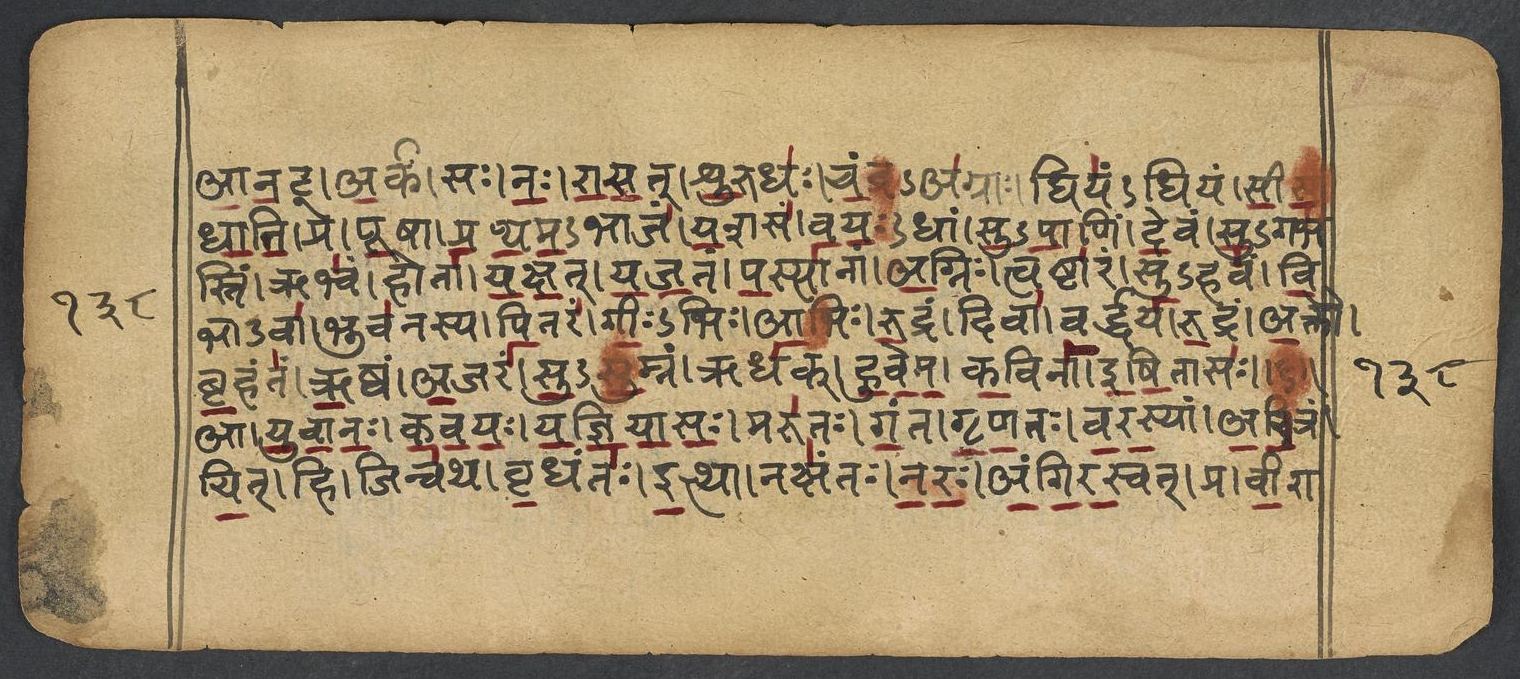
Penn Ms. Coll. 390 Item 41, fol. 465v (numbered 138v by the scribe) (OPenn image 466, upper leaf). Checked on the image: the Rigveda text on this page begins in RV 6.49.8 ‹ānaṭ arkam saḥ naḥ›. The next page with Rigveda text, fol. 466r (numbered 139r by the scribe), begins in RV 6.49.12 ‹-vīrāya pra tavase turāya›. Verses 6.49.8-11 end on this page; 6.49.8 begins on fol. 465r (numbered 138r by the scribe).
8pa̱thas-pa̍tha̱ḥ pari̍patiṁ vaca̱syā kāme̍na kṛ̱to a̱bhy ā̍naḻ a̱rkam | sa no̍ rāsac chu̱rudha̍ś ca̱ndrāgrā̱ dhiya̍ṁ-dhiyaṁ sīṣadhāti̱ pra pū̱ṣā ||
9pra̱tha̱ma̱bhāja̍ṁ ya̱śasa̍ṁ vayo̱dhāṁ su̍pā̱ṇiṁ de̱vaṁ su̱gabha̍sti̱m ṛbhva̍m | hotā̍ yakṣad yaja̱tam pa̱styā̍nām a̱gnis tvaṣṭā̍raṁ su̱hava̍ṁ vi̱bhāvā̍ ||
10bhuva̍nasya pi̱tara̍ṁ gī̱rbhir ā̱bhī ru̱draṁ divā̍ va̱rdhayā̍ ru̱dram a̱ktau | bṛ̱hanta̍m ṛ̱ṣvam a̱jara̍ṁ suṣu̱mnam ṛdha̍g ghuvema ka̱vine̍ṣi̱tāsa̍ḥ ||
11ā yu̍vānaḥ kavayo yajñiyāso̱ maru̍to ga̱nta gṛ̍ṇa̱to va̍ra̱syām | a̱ci̱traṁ ci̱d dhi jinva̍thā vṛ̱dhanta̍ i̱tthā nakṣa̍nto naro aṅgira̱svat ||
Compare: Padapāṭha (word-by-word text written in the manuscript; Sansknet e-text via GRETIL)
8pathaḥ-pathaḥ | pari-patim | vacasyā | kāmena | kṛtaḥ | abhi | ānaṭ | arkam | saḥ | naḥ | rāsat | śurudhaḥ | candra-agrāḥ | dhiyam-dhiyam | sīsadhāti | pra | pūṣā
9prathama-bhājam | yaśasam | vayaḥ-dhām | su-pāṇim | devam | su-gabhastim | ṛbhvam | hotā | yakṣat | yajatam | pastyānām | agniḥ | tvaṣṭāram | su-havam | vibhāvā
10bhuvanasya | pitaram | gīḥ-bhiḥ | ābhiḥ | rudram | divā | vardhaya | rudram | aktau | bṛhantam | ṛṣvam | ajaram | su-sumnam | ṛdhak | huvema | kavinā | iṣitāsaḥ
11ā | yuvānaḥ | kavayaḥ | yajñiyāsaḥ | marutaḥ | ganta | gṛṇataḥ | varasyām | ac itram | cit | hi | jinvatha | vṛdhantaḥ | itthā | nakṣantaḥ | naraḥ | aṅgirasvat
8I praise with eloquence him who guards all pathways. He, when his love impelled him, went to Arka. May he vouchsafe us gear with gold to grace it: may Pûshan make each prayer of ours efective.
9May Herald Agni, fulgent, bring for worship Tvashṭar adored, in homes and swift to listen, Glorious, first to share, the life-bestower, the ever active God, fair-armed, fair-handed.
10Rudra by day, Rudra at night we honour with these our songs, the Universe's Father. Him great and lofty, blissful, undecaying let us call specially as the Sage impels us.
11Ye who are youthful, wise, and meet for worship, come, Martits, to the longing of the singer. Coming, as erst to Angiras, O Heroes, ye animate and quicken e'en the desert.
Where on the image
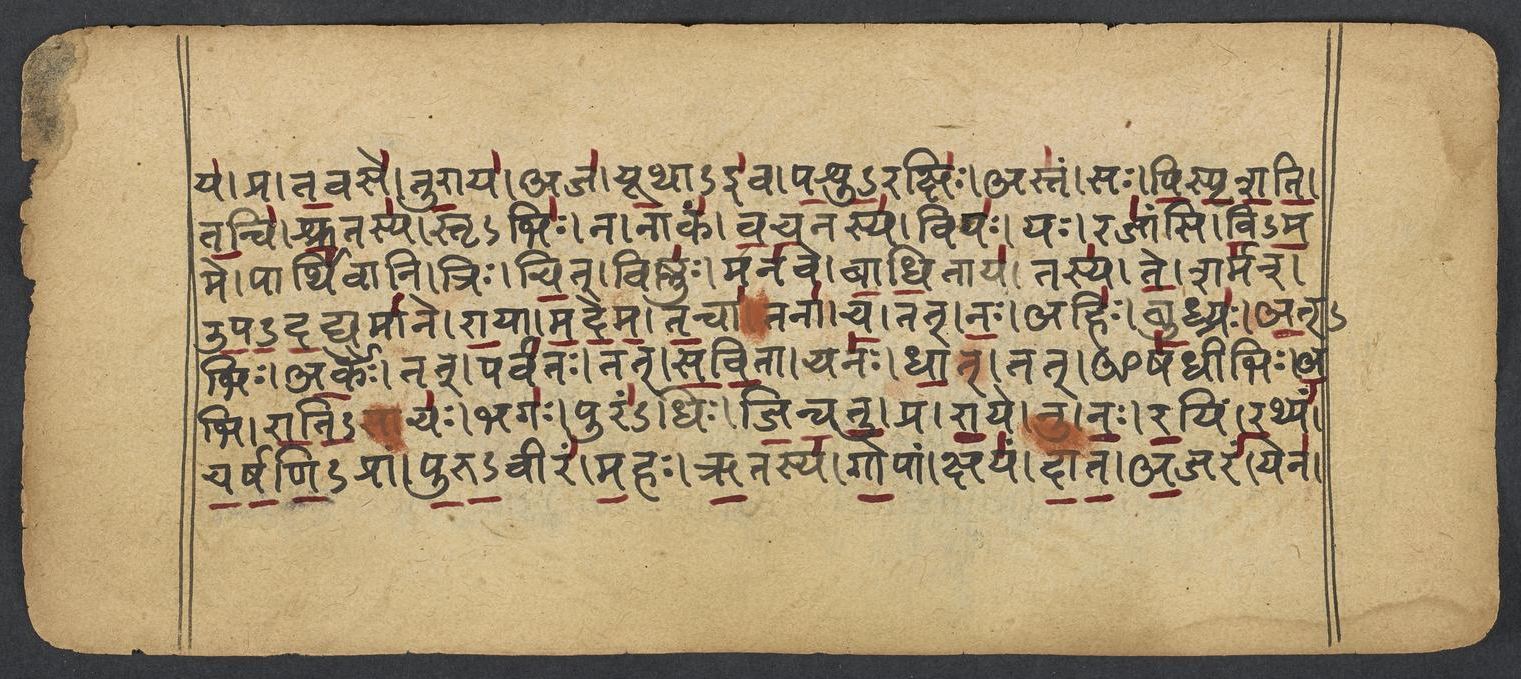
Penn Ms. Coll. 390 Item 41, fol. 466r (numbered 139r by the scribe) (OPenn image 466, lower leaf). Checked on the image: the Rigveda text on this page begins in RV 6.49.12 ‹-vīrāya pra tavase turāya›. The next page with Rigveda text, fol. 466v (numbered 139v by the scribe), begins in RV 6.49.15 ‹janān spṛdhaḥ adevīḥ abhi›. Verses 6.49.12-14 end on this page; 6.49.12 begins on fol. 465v (numbered 138v by the scribe).
12pra vī̱rāya̱ pra ta̱vase̍ tu̱rāyājā̍ yū̱theva̍ paśu̱rakṣi̱r asta̍m | sa pi̍spṛśati ta̱nvi̍ śru̱tasya̱ stṛbhi̱r na nāka̍ṁ vaca̱nasya̱ vipa̍ḥ ||
13yo rajā̍ṁsi vima̱me pārthi̍vāni̱ triś ci̱d viṣṇu̱r mana̍ve bādhi̱tāya̍ | tasya̍ te̱ śarma̍nn upada̱dyamā̍ne rā̱yā ma̍dema ta̱nvā̱3̱̍ tanā̍ ca ||
14tan no 'hi̍r bu̱dhnyo̍ a̱dbhir a̱rkais tat parva̍ta̱s tat sa̍vi̱tā cano̍ dhāt | tad oṣa̍dhībhir a̱bhi rā̍ti̱ṣāco̱ bhaga̱ḥ pura̍ṁdhir jinvatu̱ pra rā̱ye ||
Compare: Padapāṭha (word-by-word text written in the manuscript; Sansknet e-text via GRETIL)
12pra | vīrāya | pra | tavase | turāya | aja | yūthāiva | paśu-rakṣiḥ | astam | saḥ | pispṛśati | tanvi | śrutasya | stṛ-bhiḥ | na | nākam | vacanasya | vipaḥ
13yaḥ | rajāṃsi | vi-mame | pārthivāni | triḥ | cit | viṣṇuḥ | manave | bādhitāya | tasya | te | śarman | upa-dadyamāne | rāyā | madema | tanvā | tanā | ca
14tat | naḥ | ahiḥ | budhnyaḥ | at-bhiḥ | arkaiḥ | tat | parvataḥ | tat | savitā | canaḥ | dhāt | tat | oṣadhībhiḥ | abhi | rāti-sācaḥ | bhagaḥ | puram-dhiḥ | jinvatu | pra | rāye
12Even as the herdsman driveth home his cattle, I urge my songs to him the strong swift Hero May he, the glorious, lay upon his body the singer's hymns, as stars bedeck the heaven.
13He who for man's behoof in his affliction thrice measured out the earthly regions, Vishṇu- When one so great as thou affordeth shelter, may we with wealth and with ourselves be happy.
14Sweet be this song of mine to Ahibudhnya, Parvata, Savitar, with Floods and Lightnings; Sweet, with the Plants, to Gods who seek oblations. May liberal Bhaga speed us on to riches.
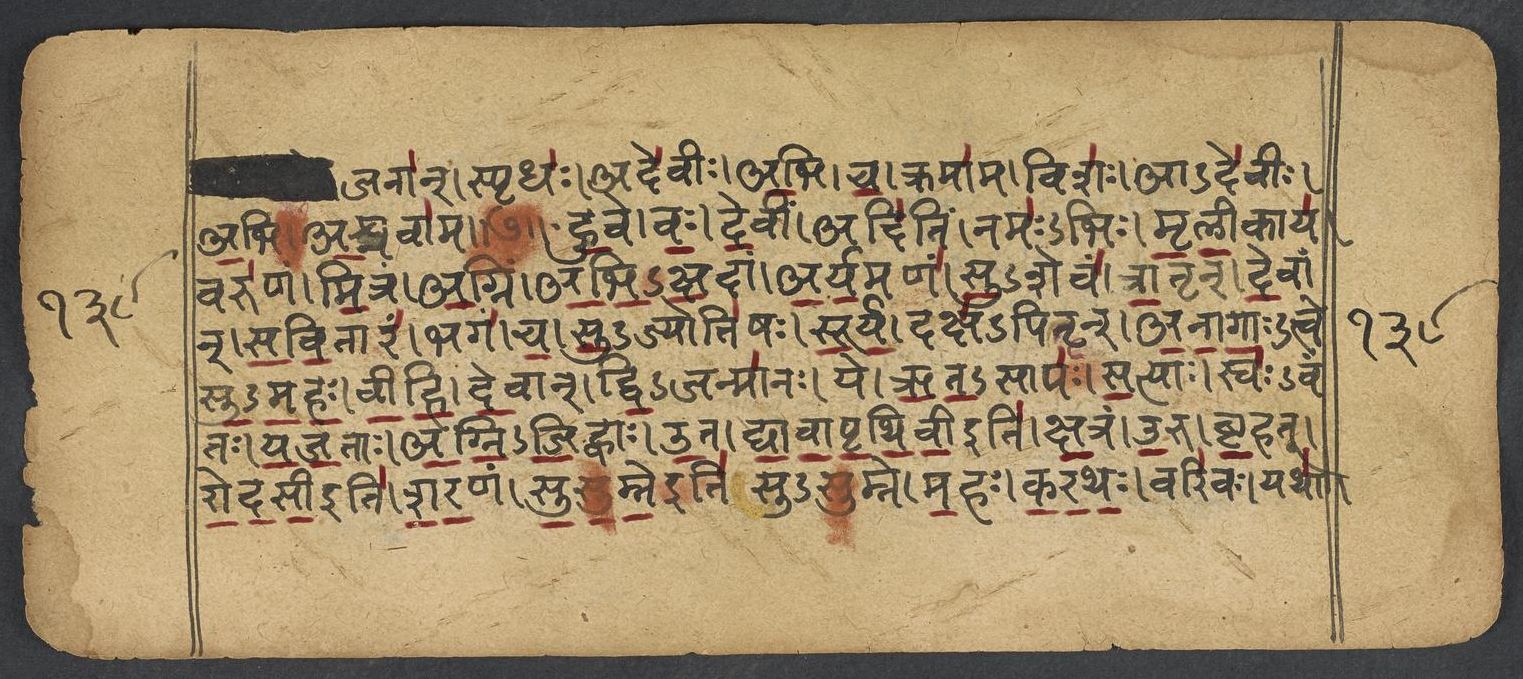
Where on the image
Penn Ms. Coll. 390 Item 41, fol. 466v (numbered 139v by the scribe) (OPenn image 467, upper leaf). Checked on the image: the Rigveda text on this page begins in RV 6.49.15 ‹janān spṛdhaḥ adevīḥ abhi›. The next page with Rigveda text, fol. 467r (numbered 140r by the scribe), begins in RV 6.50.3 ‹naḥ asme iti kṣayāya›. Verse 6.49.15 ends on this page; 6.49.15 begins on fol. 466r (numbered 139r by the scribe).
15nu no̍ ra̱yiṁ ra̱thya̍ṁ carṣaṇi̱prām pu̍ru̱vīra̍m ma̱ha ṛ̱tasya̍ go̱pām | kṣaya̍ṁ dātā̱jara̱ṁ yena̱ janā̱n spṛdho̱ ade̍vīr a̱bhi ca̱ kramā̍ma̱ viśa̱ āde̍vīr a̱bhy a1̱̍śnavā̍ma ||
Compare: Padapāṭha (word-by-word text written in the manuscript; Sansknet e-text via GRETIL)
15nu | naḥ | rayim | rathyam | carṣaṇi-prām | puru-vīram | mahaḥ | ṛtasya | gopām | kṣayam | dāta | ajaram | yena | janān | spṛdhaḥ | adevīḥ | abhi | ca | kramāma | vi śaḥ | ādevīḥ abhi | aśnavāma
15Give riches borne on cars, with many heroes, contenting men, the guard of mighty Order. Give us a lasting home that we may battle with godless bands of men who fight against us, and meet with tribes to whom the Gods are gracious.
Notes
- Sanskrit: Aufrecht's edition (1877) with the Vedic accents, as entered by van Nooten and Holland (GRETIL).
- English: Ralph T. H. Griffith, The Hymns of the Rigveda (1889-1892; 2nd ed. 1896-1897), from the VedaWeb digital text; OCR slips in that text were corrected against the printed 2nd edition (data/sources/rigveda/griffith_errata.json).
- Padapāṭha (edition text): Sansknet e-text via GRETIL (CC BY-NC-SA 4.0).
Cite
Sources
- Source: Penn Ms. Coll. 390 Item 41 (undated (catalogued with Penn's 18th-19th c. Vedic manuscripts)), OPenn, Public Domain Mark + Aufrecht's accented text (GRETIL) + Griffith's English (VedaWeb) (holding institution)
- Critical edition: Aufrecht (1877), accented e-text via GRETIL
← previous · → next · v cycle view · l back to library