Rigveda 6.52: To all the gods
Introduction
Rigveda 6.52 is a hymn of 17 verses addressed to all the gods. It stands in book (maṇḍala) 6, the family book of Bharadvāja. The Rigveda is the oldest collection of Sanskrit hymns, composed in the second half of the second millennium BCE and handed down orally for many centuries before it was written down.
The manuscript shown is Penn Ms. Coll. 390 Item 41 (University of Pennsylvania), an undated paper manuscript of the padapāṭha (the word-by-word recitation text, in which every word is written separately and compounds are split) of the whole Ṛgveda in Devanāgarī, 884 leaves in fascicles, 7-9 lines to the page, accents in red; this hymn stands on fol. 470v-472v. Each section below gives the verses that end on one page; the page boundaries were read on the images (the opening words of every page), not counted out. Where the manuscript is a padapāṭha (the word-by-word recitation text), the section shows Aufrecht's continuous (saṃhitā) text first and, as the edition text, the padapāṭha of the same verses, which is the form written on the page.
How was this verified? (Provenance)
Where on the image
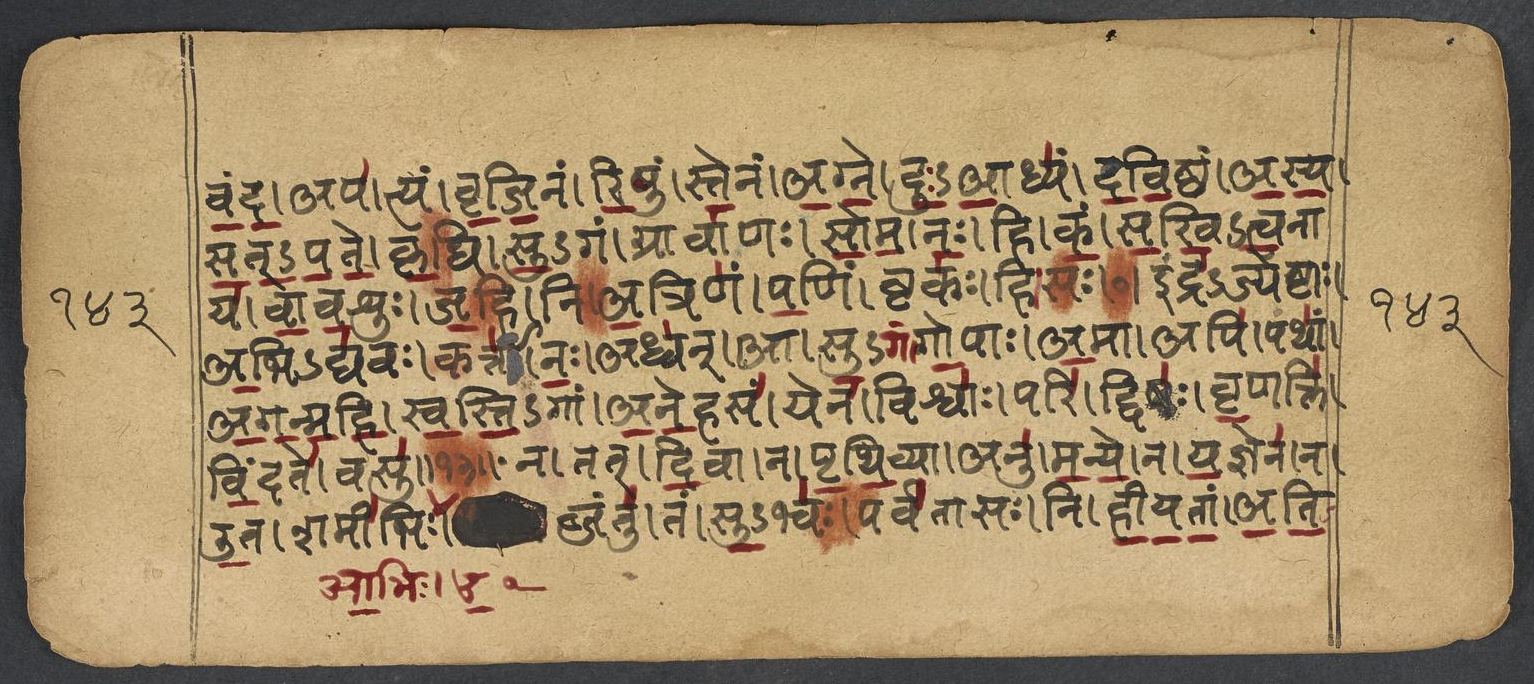
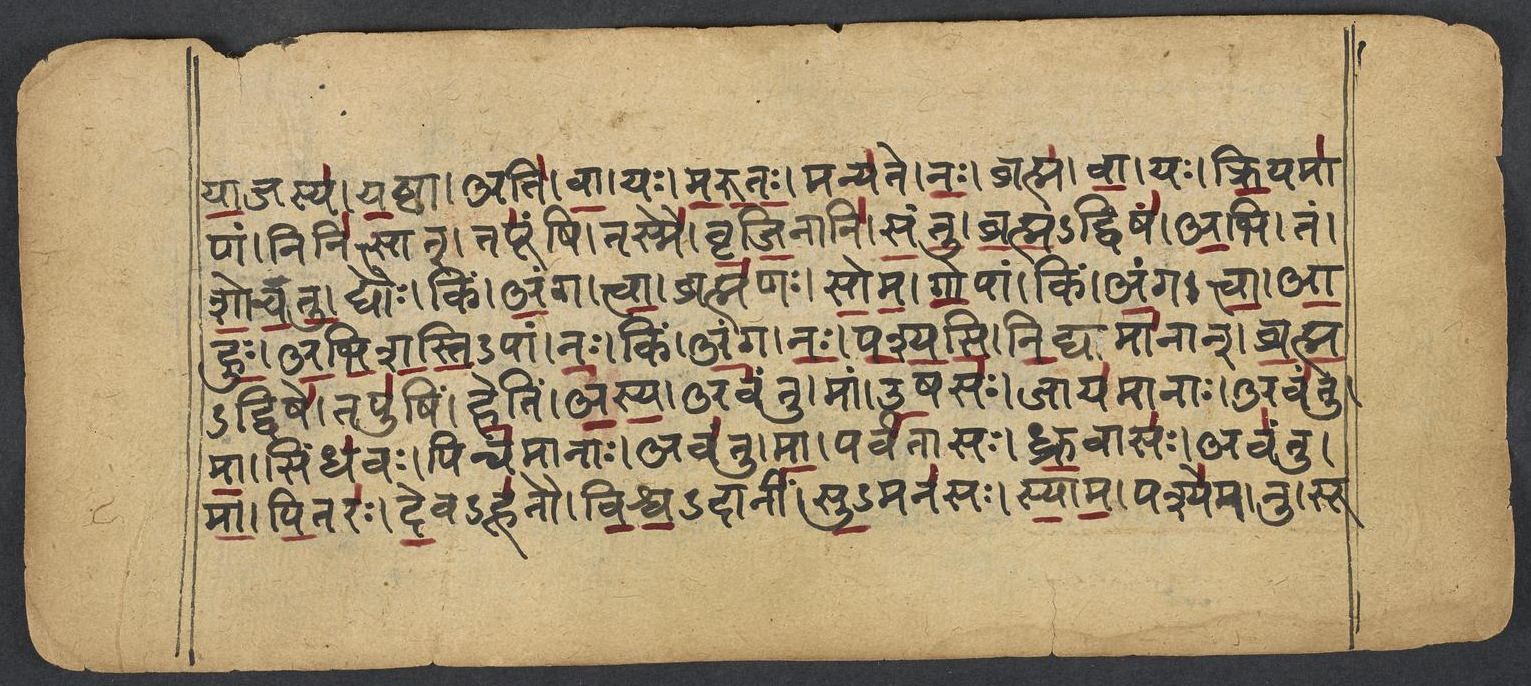
Penn Ms. Coll. 390 Item 41, fol. 471r (numbered 144r by the scribe) (OPenn image 471, lower leaf). Checked on the image: the Rigveda text on this page begins in RV 6.52.1 ‹-ati-yājasya yaṣṭā›. The next page with Rigveda text, fol. 471v (numbered 144v by the scribe), begins in RV 6.52.5 ‹-sūryam uccarantam tathā karat›. Verses 6.52.1-4 end on this page; 6.52.1 begins on fol. 470v (numbered 143v by the scribe).
1na tad di̱vā na pṛ̍thi̱vyānu̍ manye̱ na ya̱jñena̱ nota śamī̍bhir ā̱bhiḥ | u̱bjantu̱ taṁ su̱bhva1̱̍ḥ parva̍tāso̱ ni hī̍yatām atiyā̱jasya̍ ya̱ṣṭā ||
2ati̍ vā̱ yo ma̍ruto̱ manya̍te no̱ brahma̍ vā̱ yaḥ kri̱yamā̍ṇa̱ṁ nini̍tsāt | tapū̍ṁṣi̱ tasmai̍ vṛji̱nāni̍ santu brahma̱dviṣa̍m a̱bhi taṁ śo̍catu̱ dyauḥ ||
3kim a̱ṅga tvā̱ brahma̍ṇaḥ soma go̱pāṁ kim a̱ṅga tvā̍hur abhiśasti̱pāṁ na̍ḥ | kim a̱ṅga na̍ḥ paśyasi ni̱dyamā̍nān brahma̱dviṣe̱ tapu̍ṣiṁ he̱tim a̍sya ||
4ava̍ntu̱ mām u̱ṣaso̱ jāya̍mānā̱ ava̍ntu mā̱ sindha̍va̱ḥ pinva̍mānāḥ | ava̍ntu mā̱ parva̍tāso dhru̱vāso 'va̍ntu mā pi̱taro̍ de̱vahū̍tau ||
Compare: Padapāṭha (word-by-word text written in the manuscript; Sansknet e-text via GRETIL)
1na | tat | divā | na | pṛthivyā | anu | manye | na | yajñena | na | uta | śamībhiḥ | ābhiḥ | ubjantu | tam | su-bhvaḥ | parvatāsaḥ | ni | hīyatām | ati-yājasya | yaṣṭā
2ati | vā | yaḥ | marutaḥ | manyate | naḥ | brahma | vā | yaḥ | kriyamāṇam | ninitsāt | tapāūṃṣi | tasmai | vṛjināni | santu | brahma-dviṣam | abhi | tam | śocatu | dyauḥ
3kim | aṅga | tvā | brahmaṇaḥ | soma | gopām | kim | aṅga | tvā | āhuḥ | abhiśasti-pām | naḥ | kim | aṅga | naḥ | paśyasi | nidyamānān | brahma-dviṣe | tapuṣim | hetim | asya
4avantu | mām | uṣasaḥ | jāyamānāḥ | avantu | mā | sindhavaḥ | pinvamānāḥ | avantu | mā | parvatāsaḥ | dhruvāsaḥ | avantu | mā | pitaraḥ | deva-hūtau
1THIS I allow not in the earth or heaven, at sacrifice or in these holy duties. May the huge mountains crush him down: degraded be Atiyaja's sacrificing patron.
2Or he who holds us in contempt, O Maruts, or seeks to blame the prayer that we are making, May agonies of burning be his portion. May the sky scorch the man who hates devotion.
3Why then, O Soma, do they call thee keeper of prayer? Why then our guardian from reproaches? Why then beholdest thou how men revile us? Cast thy hot dart at him who hates devotion.
4May Mornings as they spring to life, protect me, and may the Rivers as they swell preserve me. My guardians be the firmly-seated mountains: the Fathers, when I call on Gods, defend me!
Where on the image
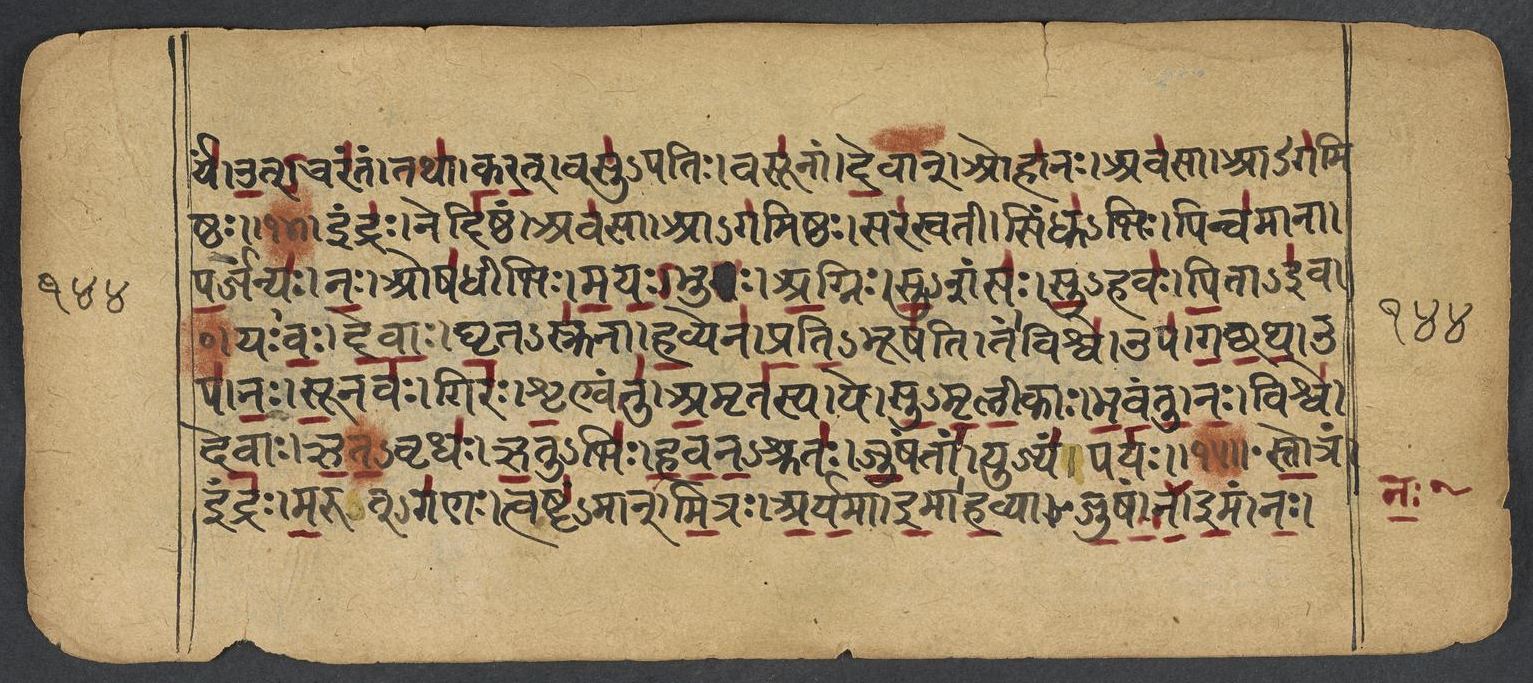
Penn Ms. Coll. 390 Item 41, fol. 471v (numbered 144v by the scribe) (OPenn image 472, upper leaf). Checked on the image: the Rigveda text on this page begins in RV 6.52.5 ‹-sūryam uccarantam tathā karat›. The next page with Rigveda text, fol. 472r (numbered 145r by the scribe), begins in RV 6.52.12 ‹agne adhvaram hotaḥ vayuna-śaḥ›. Verses 6.52.5-11 end on this page; 6.52.5 begins on fol. 471r (numbered 144r by the scribe).
5vi̱śva̱dānī̍ṁ su̱mana̍saḥ syāma̱ paśye̍ma̱ nu sūrya̍m u̱ccara̍ntam | tathā̍ kara̱d vasu̍pati̱r vasū̍nāṁ de̱vām̐ ohā̱no 'va̱sāga̍miṣṭhaḥ ||
6indro̱ nedi̍ṣṭha̱m ava̱sāga̍miṣṭha̱ḥ sara̍svatī̱ sindhu̍bhi̱ḥ pinva̍mānā | pa̱rjanyo̍ na̱ oṣa̍dhībhir mayo̱bhur a̱gniḥ su̱śaṁsa̍ḥ su̱hava̍ḥ pi̱teva̍ ||
7viśve̍ devāsa̱ ā ga̍ta śṛṇu̱tā ma̍ i̱maṁ hava̍m | edam ba̱rhir ni ṣī̍data ||
8yo vo̍ devā ghṛ̱tasnu̍nā ha̱vyena̍ prati̱bhūṣa̍ti | taṁ viśva̱ upa̍ gacchatha ||
9upa̍ naḥ sū̱navo̱ gira̍ḥ śṛ̱ṇvantv a̱mṛta̍sya̱ ye | su̱mṛ̱ḻī̱kā bha̍vantu naḥ ||
10viśve̍ de̱vā ṛ̍tā̱vṛdha̍ ṛ̱tubhi̍r havana̱śruta̍ḥ | ju̱ṣantā̱ṁ yujya̱m paya̍ḥ ||
11sto̱tram indro̍ ma̱rudga̍ṇa̱s tvaṣṭṛ̍mān mi̱tro a̍rya̱mā | i̱mā ha̱vyā ju̍ṣanta naḥ ||
Compare: Padapāṭha (word-by-word text written in the manuscript; Sansknet e-text via GRETIL)
5viśva-dānīm | su-manasaḥ | syāma | paśyema | nu | sūryam | uccarantam | tathā | karat | vasu-patiḥ | vasūnām | devān | ohānaḥ | avasā | āgamiṣṭhaḥ
6indraḥ | nediṣṭham | avasā | āgamiṣṭhaḥ | sarasvatī | sindhu-bhiḥ | pinvamānā | parjanyaḥ | naḥ | oṣadhībhiḥ | mayaḥ-bhuḥ | agniḥ | su-śaṃsaḥ | su-havaḥ | pitāiva
7viśve | devāsaḥ | ā | gata | śṛṇuta | me | imam | havam | ā | idam | barhiḥ | ni | sīdata
8yaḥ | vaḥ | devāḥ | ghṛta-snunā | havyena | prati-bhūṣati | tam | viśve | upa | gacchatha
9upa | naḥ | sūnavaḥ | giraḥ | śṛṇvantu | amṛtasya | ye | su-mṛḷīkāḥ | bhavantu | naḥ
10viśve | devāḥ | ṛta-vṛdhaḥ | ṛtu-bhiḥ | havana-śrutaḥ | juṣantām | yujyam | payaḥ
11stotram | indraḥ | marut-gaṇaḥ | tvaṣṭṛ-mān | mitraḥ | aryamā | imā | havyā | juṣanta | naḥ
5Through all our days may we be healthy. minded, and look upon the Sun when he arises. Grant this the Treasure-Lord of treasures, coming, observant, oftenest of Gods, with succour!
6Most near, most oft comes Indra with protection, and she Sarasvatî, who swells with rivers – Parjanya, bringing health with herbs, and Agni, well lauded swift to listen, like a father.
7Hear this mine invocation; come hither, O Universal Gods, Be seated on this holy grass.
8To him who comes to meet you, Gods, with offerings bathed in holy oil- Approach ye, one and all, to him.
9All Sons of Immortality shall listen to the songs we sing, And be exceeding good to us.
10May all the Gods who strengthen Law, with Rtus, listening to our call, Be pleased with their appropriate draught.
11May Indra, with the Marut host, with Tvashṭar, Mitra, Aryaman, Accept the laud and these our gifts.
Where on the image
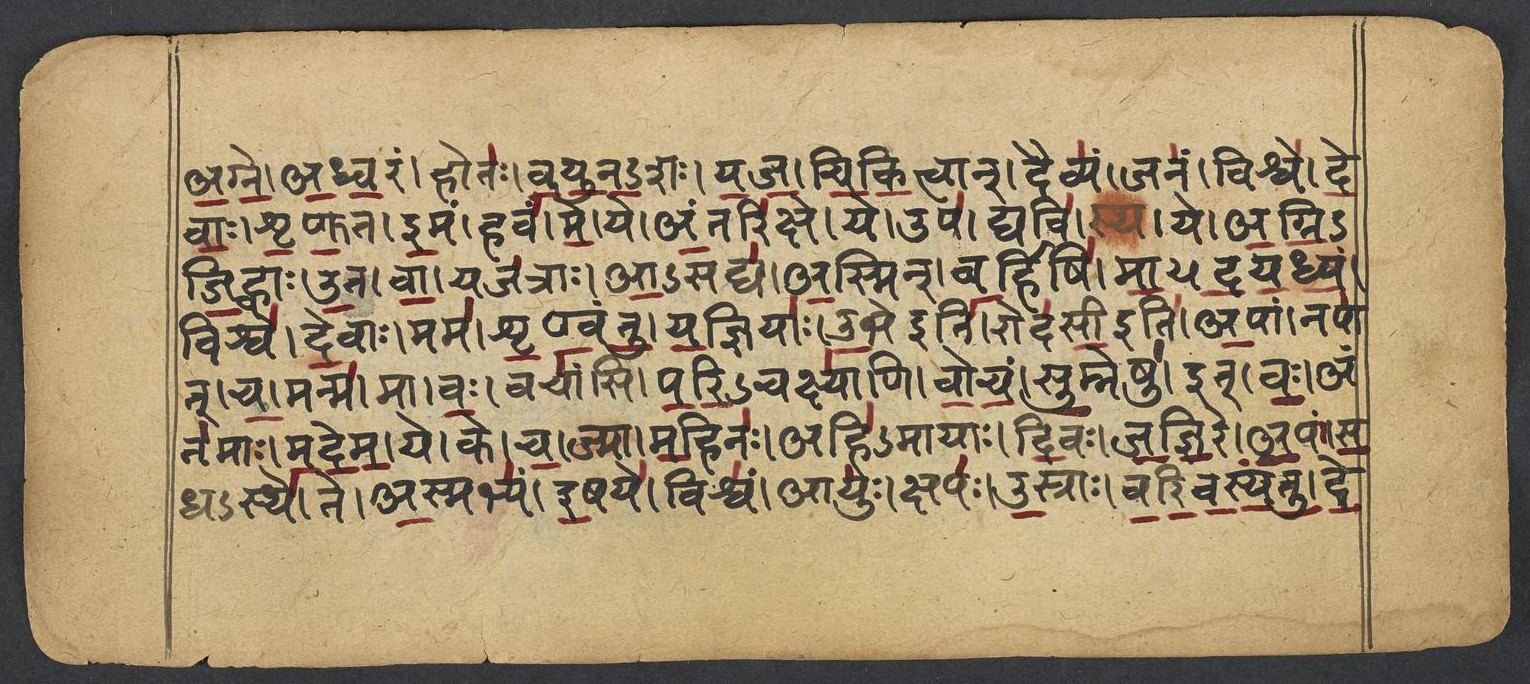
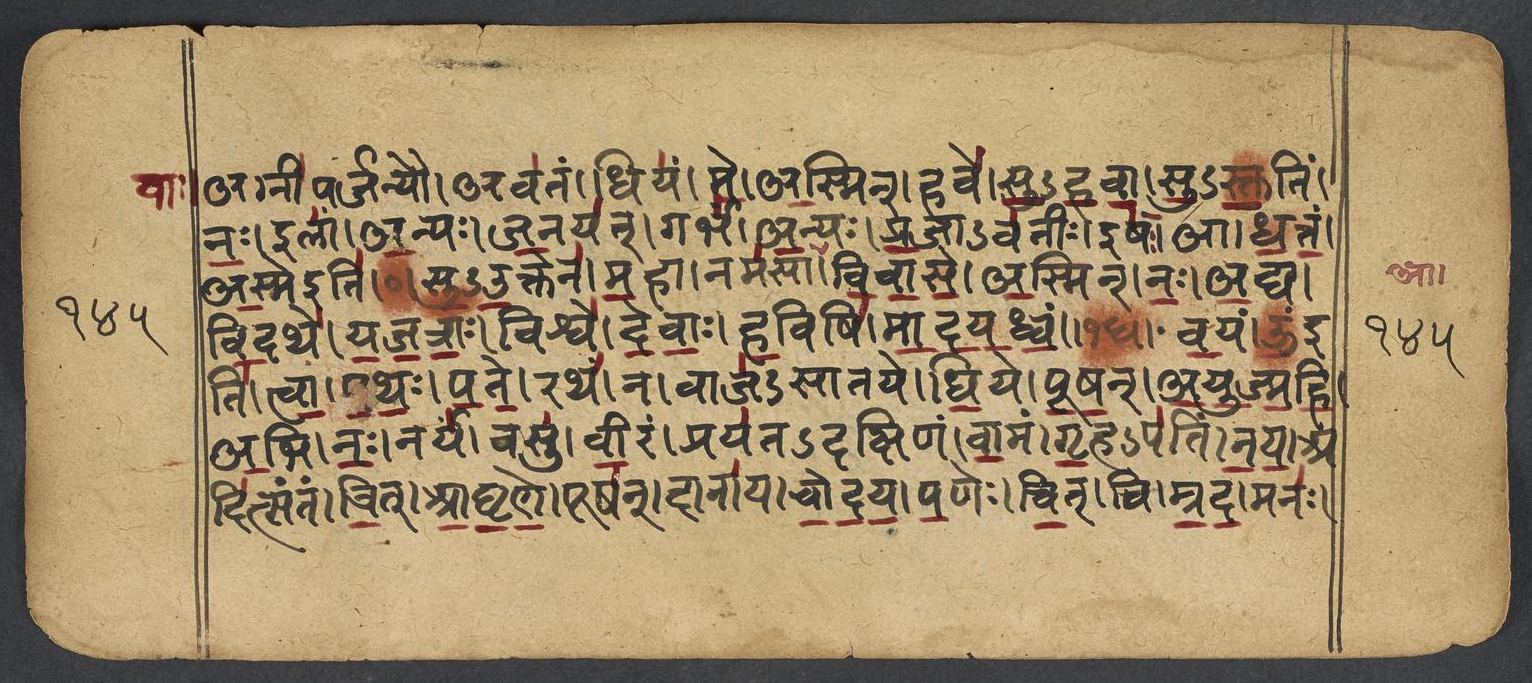
Penn Ms. Coll. 390 Item 41, fol. 472r (numbered 145r by the scribe) (OPenn image 472, lower leaf). Checked on the image: the Rigveda text on this page begins in RV 6.52.12 ‹agne adhvaram hotaḥ vayuna-śaḥ›. The next page with Rigveda text, fol. 472v (numbered 145v by the scribe), begins in RV 6.52.16 ‹agnīparjanyau avatam dhiyam me›. Verses 6.52.12-15 end on this page; 6.52.12 begins on fol. 471v (numbered 144v by the scribe).
12i̱maṁ no̍ agne adhva̱raṁ hota̍r vayuna̱śo ya̍ja | ci̱ki̱tvān daivya̱ṁ jana̍m ||
13viśve̍ devāḥ śṛṇu̱temaṁ hava̍m me̱ ye a̱ntari̍kṣe̱ ya upa̱ dyavi̱ ṣṭha | ye a̍gniji̱hvā u̱ta vā̱ yaja̍trā ā̱sadyā̱smin ba̱rhiṣi̍ mādayadhvam ||
14viśve̍ de̱vā mama̍ śṛṇvantu ya̱jñiyā̍ u̱bhe roda̍sī a̱pāṁ napā̍c ca̱ manma̍ | mā vo̱ vacā̍ṁsi pari̱cakṣyā̍ṇi vocaṁ su̱mneṣv id vo̱ anta̍mā madema ||
15ye ke ca̱ jmā ma̱hino̱ ahi̍māyā di̱vo ja̍jñi̱re a̱pāṁ sa̱dhasthe̍ | te a̱smabhya̍m i̱ṣaye̱ viśva̱m āyu̱ḥ kṣapa̍ u̱srā va̍rivasyantu de̱vāḥ ||
Compare: Padapāṭha (word-by-word text written in the manuscript; Sansknet e-text via GRETIL)
12imam | naḥ | agne | adhvaram | hotaḥ | vayuna-śaḥ | yaja | cikitvān | daivyam | janam
13viśve | devāḥ | śṛṇuta | imam | havam | me | ye | antarikṣe | ye | upa | dyavi | stha | ye | agni-jihvāḥ | uta | vā | yajatrāḥ | āsadya | asmin | barhiṣi | mādayadhvam
14viśve | devāḥ | mama | śṛṇvantu | yajñiyāḥ | ubhe iti | rodasī iti | apām | napāt | ca | manma | mā | vaḥ | vacāṃsi | pari-cakṣyāṇi | vocam | sumneṣu | it | vaḥ | antamāḥ | madema
15ye | ke | ca | jmā | mahinaḥ | ahi-māyāḥ | divaḥ | jajñire | apām | sadha-sthe | te | asmabhyam | iṣaye | viśvam | āyuḥ | kṣapaḥ | usrāḥ | varivasyantu | devāḥ
12O Agni, Priest, as rules ordain, offer this sacrifice of ours, Remembering the Heavenly Folk.
13Listen, All-Gods, to this mine invocation, Ye who inhabit heaven, and air's midregions, All ye, O Holy Ones, whose tongue is Agni, seated upon this sacred grass, be joyful.
14May the All-Gods who claim our worship hear my thought; may the two World-halves hear it, and the Waters' Child. Let me not utter words that ye may disregard. Closely allied with you may we rejoice in bliss.
15And those who, Mighty, with the wiles of serpents, were born on earth, in heaven, where waters gather- May they vouchsafe us life of full duration. May the Gods kindly give us nights and mornings.
Where on the image
Penn Ms. Coll. 390 Item 41, fol. 472v (numbered 145v by the scribe) (OPenn image 473, upper leaf). Checked on the image: the Rigveda text on this page begins in RV 6.52.16 ‹agnīparjanyau avatam dhiyam me›. The next page with Rigveda text, fol. 473r (numbered 146r by the scribe), begins in RV 6.53.4 ‹vi pathaḥ vāja-sātaye cinuhi›. Verses 6.52.16-17 end on this page.
16agnī̍parjanyā̱v ava̍ta̱ṁ dhiya̍m me̱ 'smin have̍ suhavā suṣṭu̱tiṁ na̍ḥ | iḻā̍m a̱nyo ja̱naya̱d garbha̍m a̱nyaḥ pra̱jāva̍tī̱r iṣa̱ ā dha̍ttam a̱sme ||
17stī̱rṇe ba̱rhiṣi̍ samidhā̱ne a̱gnau sū̱ktena̍ ma̱hā nama̱sā vi̍vāse | a̱smin no̍ a̱dya vi̱dathe̍ yajatrā̱ viśve̍ devā ha̱viṣi̍ mādayadhvam ||
Compare: Padapāṭha (word-by-word text written in the manuscript; Sansknet e-text via GRETIL)
16agnīparjanyau | avatam | dhiyam | me | asmin | have | su-havā | su-stutim | naḥ | iḷām | anyaḥ | janayat | garbham | anyaḥ | prajāvatīḥ | iṣaḥ | ā | dhattam | asme iti
17stīrṇe | barhiṣi | sam-idhāne | agnau | su-uktena | mahā | namasā | vivāse | asmin | naḥ | adya | vidathe | yajatrāḥ | / viśve | devāḥ | haviṣi | mādayadhvam
16At this my call, O Agni and Parjanya, help, swift to hear, my thought and our laudation. One generates holy food, the other offspring, so grant us food enough with store of children.
17When holy grass is strewn and fire enkindled, with hymn and lowly homage I invite you. All-Gods, to day in this our great assembly rejoice, ye Holy, in the gifts we offer.
Notes
- Sanskrit: Aufrecht's edition (1877) with the Vedic accents, as entered by van Nooten and Holland (GRETIL).
- English: Ralph T. H. Griffith, The Hymns of the Rigveda (1889-1892; 2nd ed. 1896-1897), from the VedaWeb digital text; OCR slips in that text were corrected against the printed 2nd edition (data/sources/rigveda/griffith_errata.json).
- Padapāṭha (edition text): Sansknet e-text via GRETIL (CC BY-NC-SA 4.0).
Cite
Sources
- Source: Penn Ms. Coll. 390 Item 41 (undated (catalogued with Penn's 18th-19th c. Vedic manuscripts)), OPenn, Public Domain Mark + Aufrecht's accented text (GRETIL) + Griffith's English (VedaWeb) (holding institution)
- Critical edition: Aufrecht (1877), accented e-text via GRETIL
← previous · → next · v cycle view · l back to library