Rigveda 6.69: To Indra and Vishnu
Introduction
Rigveda 6.69 is a hymn of 8 verses addressed to Indra and Vishnu. It stands in book (maṇḍala) 6, the family book of Bharadvāja. The Rigveda is the oldest collection of Sanskrit hymns, composed in the second half of the second millennium BCE and handed down orally for many centuries before it was written down.
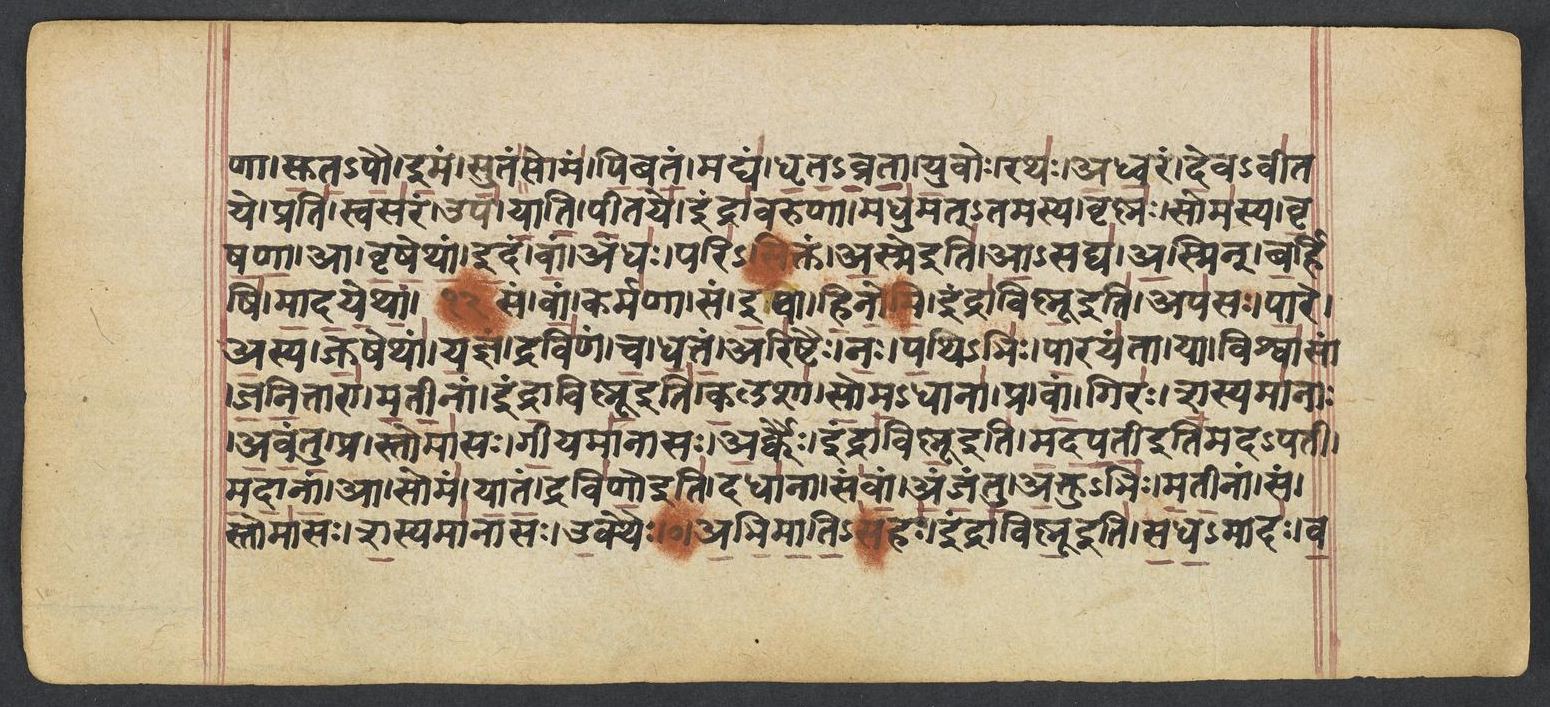
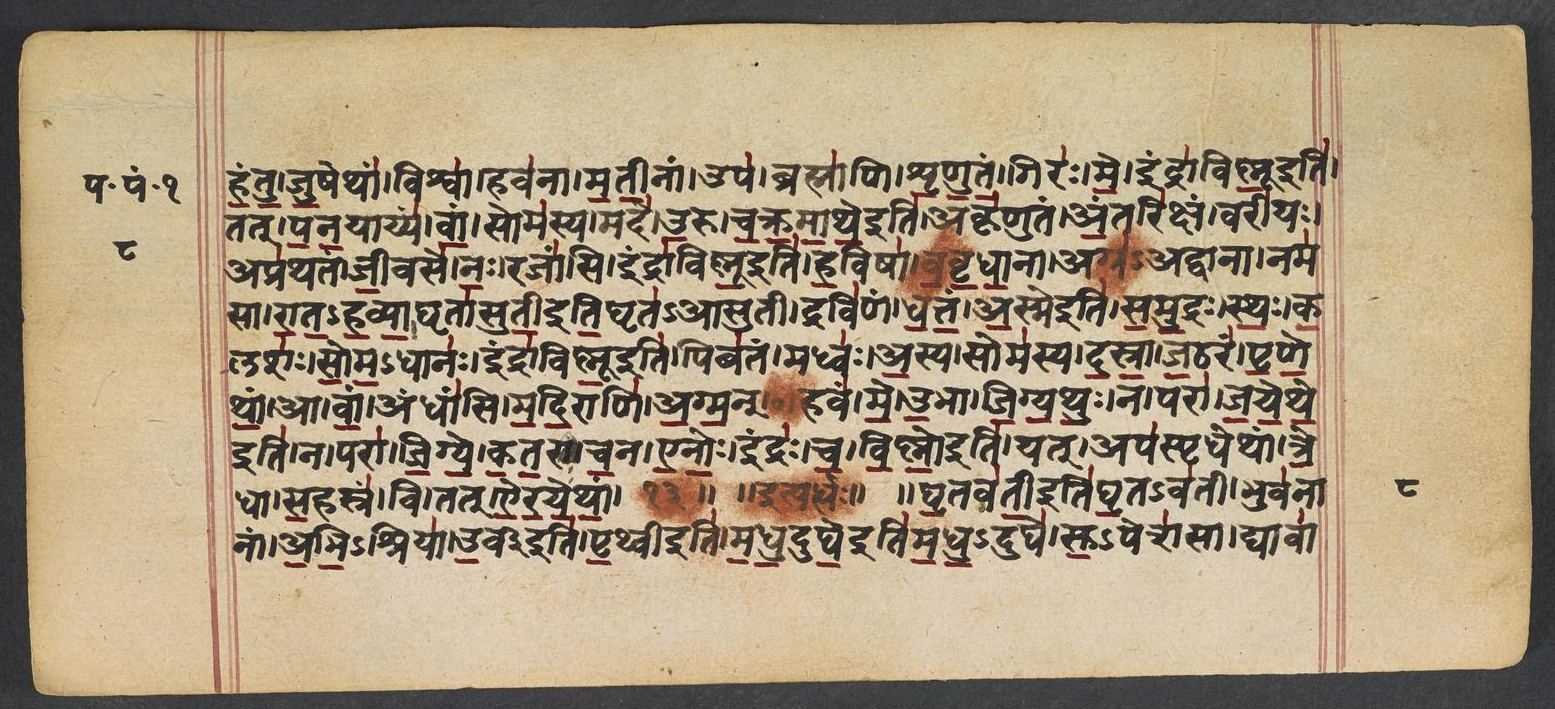
The manuscript shown is Penn Ms. Coll. 390 Item 41 (University of Pennsylvania), an undated paper manuscript of the padapāṭha (the word-by-word recitation text, in which every word is written separately and compounds are split) of the whole Ṛgveda in Devanāgarī, 884 leaves in fascicles, 7-9 lines to the page, accents in red; this hymn stands on fol. 487r-487v. Each section below gives the verses that end on one page; the page boundaries were read on the images (the opening words of every page), not counted out. Where the manuscript is a padapāṭha (the word-by-word recitation text), the section shows Aufrecht's continuous (saṃhitā) text first and, as the edition text, the padapāṭha of the same verses, which is the form written on the page.
How was this verified? (Provenance)
Where on the image
Penn Ms. Coll. 390 Item 41, fol. 487r (numbered 8r by the scribe) (OPenn image 487, lower leaf). Checked on the image: the Rigveda text on this page begins in RV 6.68.10 ‹-indrāvaruṇā suta-pau imam sutam›. The next page with Rigveda text, fol. 487v (numbered 8v by the scribe), begins in RV 6.69.4 ‹-vahantu juṣethām viśvā havanā›. Verses 6.69.1-3 end on this page.
1saṁ vā̱ṁ karma̍ṇā̱ sam i̱ṣā hi̍no̱mīndrā̍viṣṇū̱ apa̍sas pā̱re a̱sya | ju̱ṣethā̍ṁ ya̱jñaṁ dravi̍ṇaṁ ca dhatta̱m ari̍ṣṭair naḥ pa̱thibhi̍ḥ pā̱raya̍ntā ||
2yā viśvā̍sāṁ jani̱tārā̍ matī̱nām indrā̱viṣṇū̍ ka̱laśā̍ soma̱dhānā̍ | pra vā̱ṁ gira̍ḥ śa̱syamā̍nā avantu̱ pra stomā̍so gī̱yamā̍nāso a̱rkaiḥ ||
3indrā̍viṣṇū madapatī madānā̱m ā soma̍ṁ yāta̱ṁ dravi̍ṇo̱ dadhā̍nā | saṁ vā̍m añjantv a̱ktubhi̍r matī̱nāṁ saṁ stomā̍saḥ śa̱syamā̍nāsa u̱kthaiḥ ||
Compare: Padapāṭha (word-by-word text written in the manuscript; Sansknet e-text via GRETIL)
1sam | vām | karmaṇā | sam | iṣā | hinomi | indrāviṣṇūiti | apasaḥ | pāre | asya | juṣethām | yajñam | draviṇam | ca | dhattam | ariṣṭaiḥ | naḥ | pathi-bhiḥ | pārayantā
2yā | viśvāsām | janitārā | matīnām | indrāviṣṇūiti | kalaśā | soma-dhānā | pra | vām | giraḥ | śasyamānāḥ | avantu | pra | stomāsaḥ | gīyamānāsaḥ | arkaiḥ
3indrāviṣṇūiti | madapatī itimada-patī | madānām | ā | somam | yātam | draviṇo iti | dadhānā | sam | vām | añjantu | aktu-bhiḥ | matīnām | sam | stomāsaḥ | śasyamānāsaḥ | ukthaiḥ
1INDRA and Vishṇu, at my task's completion I urge you on with food and sacred service. Accept the sacrifice and grant us riches, leading us on by unobstructed pathways.
2Ye who inspire all hymns, Indra and Vishṇu, ye vessels who contain the Soma juices, May hymns of praise that now are sung address you, the lauds that are recited by the singers.
3Lords of joy-giving draughts, Indra and Vishṇu, come, giving gifts of treasure, to the Soma. With brilliant rays of hymns let chanted praises, repeated with the lauds, adorn and deck you.
Where on the image
Penn Ms. Coll. 390 Item 41, fol. 487v (numbered 8v by the scribe) (OPenn image 488, upper leaf). Checked on the image: the Rigveda text on this page begins in RV 6.69.4 ‹-vahantu juṣethām viśvā havanā›. The next page with Rigveda text, fol. 488r (numbered 9r by the scribe), begins in RV 6.70.1 ‹-dyāvāpṛthivī iti varuṇasya dharmaṇā›. Verses 6.69.4-8 end on this page; 6.69.4 begins on fol. 487r (numbered 8r by the scribe).
4ā vā̱m aśvā̍so abhimāti̱ṣāha̱ indrā̍viṣṇū sadha̱mādo̍ vahantu | ju̱ṣethā̱ṁ viśvā̱ hava̍nā matī̱nām upa̱ brahmā̍ṇi śṛṇuta̱ṁ giro̍ me ||
5indrā̍viṣṇū̱ tat pa̍na̱yāyya̍ṁ vā̱ṁ soma̍sya̱ mada̍ u̱ru ca̍kramāthe | akṛ̍ṇutam a̱ntari̍kṣa̱ṁ varī̱yo 'pra̍thataṁ jī̱vase̍ no̱ rajā̍ṁsi ||
6indrā̍viṣṇū ha̱viṣā̍ vāvṛdhā̱nāgrā̍dvānā̱ nama̍sā rātahavyā | ghṛtā̍sutī̱ dravi̍ṇaṁ dhattam a̱sme sa̍mu̱draḥ stha̍ḥ ka̱laśa̍ḥ soma̱dhāna̍ḥ ||
7indrā̍viṣṇū̱ piba̍ta̱m madhvo̍ a̱sya soma̍sya dasrā ja̱ṭhara̍m pṛṇethām | ā vā̱m andhā̍ṁsi madi̱rāṇy a̍gma̱nn upa̱ brahmā̍ṇi śṛṇuta̱ṁ hava̍m me ||
8u̱bhā ji̍gyathu̱r na parā̍ jayethe̱ na parā̍ jigye kata̱raś ca̱naino̍ḥ | indra̍ś ca viṣṇo̱ yad apa̍spṛdhethāṁ tre̱dhā sa̱hasra̱ṁ vi tad ai̍rayethām ||
Compare: Padapāṭha (word-by-word text written in the manuscript; Sansknet e-text via GRETIL)
4ā | vām | aśvāsaḥ | abhimāti-sahaḥ | indrāviṣṇūiti | sadha-mādaḥ | vahantu | juṣethām | viśvā | havanā | matīnām | upa | brahmāṇi | śṛṇutam | giraḥ | me
5indrāviṣṇūiti | tat | panayāyyam | vām | somasya | made | uru | cakramātheiti | akṛṇutam | antarikṣam | varīyaḥ | aprathatam | jīvase | naḥ | rajāṃsi
6indrāviṣṇūiti | haviṣā | vavṛdhānā | agra-advānā | namasā | rāta-havyā | ghṛtāsutī itighṛta-āsutī | draviṇam | dhattam | asme iti | samudraḥ | sthaḥ | kalaśaḥ | soma-dhānaḥ
7indrāviṣṇūiti | pibatam | madhvaḥ | asya | somasya | dasrā | jaṭharam | pṛṇethām | ā | vām | andhāṃsi | madirāṇi | agman | upa | brahmāṇi | śṛṇutam | havam | me
8ubhā | jigyathuḥ | na | parā | jayetheiti | na | parā | jigye | kataraḥ | cana | enoḥ | indraḥ | ca | viṣṇo iti | yat | apasṛdhethām | tredhā | sahasram | vi | tat | airayethām
4May your foe-conquering horses bring you hither, Indra and Vishṇu, sharers of the banquet. Of all our hymns accept the invocations list to my prayers and hear the songs I sing you.
5This your deed, Indra-Vishṇu, must be lauded: widely ye strode in the wild joy of Soma. Ye made the firmament of larger compass, and made the regions broad for our existence.
6Strengthened with sacred offerings, IndraVishṇu, first eaters, served with worship and oblation, Fed with the holy oil, vouchsafe us riches ye are the lake, the vat that holds the Soma.
7Drink of this meath, O Indra, thou, and Vishṇu; drink ye your fill of Soma, Wonder-Workers. The sweet exhilarating juice hath reached you. Hear ye my prayers, give ear unto my calling.
8Ye Twain have conquered, ne'er have yc been conquered: never hath either of the Twain been vanquished. Ye, Indra-Vishṇu, when ye fought the battle, produced this infinite with three divisions.
Notes
- Sanskrit: Aufrecht's edition (1877) with the Vedic accents, as entered by van Nooten and Holland (GRETIL).
- English: Ralph T. H. Griffith, The Hymns of the Rigveda (1889-1892; 2nd ed. 1896-1897), from the VedaWeb digital text; OCR slips in that text were corrected against the printed 2nd edition (data/sources/rigveda/griffith_errata.json).
- Padapāṭha (edition text): Sansknet e-text via GRETIL (CC BY-NC-SA 4.0).
Cite
Sources
- Source: Penn Ms. Coll. 390 Item 41 (undated (catalogued with Penn's 18th-19th c. Vedic manuscripts)), OPenn, Public Domain Mark + Aufrecht's accented text (GRETIL) + Griffith's English (VedaWeb) (holding institution)
- Critical edition: Aufrecht (1877), accented e-text via GRETIL
← previous · → next · v cycle view · l back to library