Rigveda 6.68: To Indra and Varuna
Introduction
Rigveda 6.68 is a hymn of 11 verses addressed to Indra and Varuna. It stands in book (maṇḍala) 6, the family book of Bharadvāja. The Rigveda is the oldest collection of Sanskrit hymns, composed in the second half of the second millennium BCE and handed down orally for many centuries before it was written down.
The manuscript shown is Penn Ms. Coll. 390 Item 41 (University of Pennsylvania), an undated paper manuscript of the padapāṭha (the word-by-word recitation text, in which every word is written separately and compounds are split) of the whole Ṛgveda in Devanāgarī, 884 leaves in fascicles, 7-9 lines to the page, accents in red; this hymn stands on fol. 486r-487r. Each section below gives the verses that end on one page; the page boundaries were read on the images (the opening words of every page), not counted out. Where the manuscript is a padapāṭha (the word-by-word recitation text), the section shows Aufrecht's continuous (saṃhitā) text first and, as the edition text, the padapāṭha of the same verses, which is the form written on the page.
How was this verified? (Provenance)
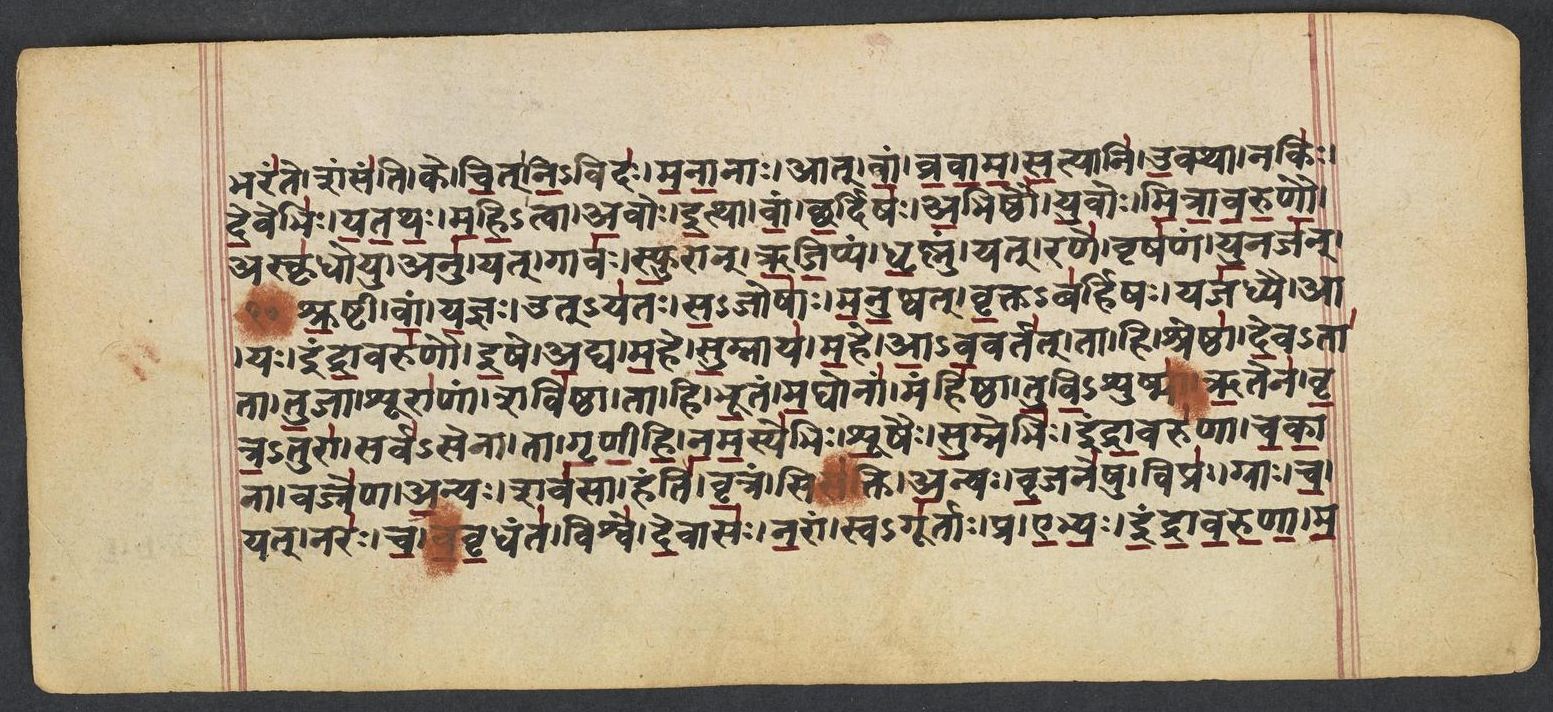
Where on the image
Penn Ms. Coll. 390 Item 41, fol. 486r (numbered 7r by the scribe) (OPenn image 486, lower leaf). Checked on the image: the Rigveda text on this page begins in RV 6.67.10 ‹bharante śaṃsanti ke cit›. The next page with Rigveda text, fol. 486v (numbered 7v by the scribe), begins in RV 6.68.4 ‹-mahi-tvā dyauḥ ca pṛthivi›. Verses 6.68.1-3 end on this page.
1śru̱ṣṭī vā̍ṁ ya̱jña udya̍taḥ sa̱joṣā̍ manu̱ṣvad vṛ̱ktaba̍rhiṣo̱ yaja̍dhyai | ā ya indrā̱varu̍ṇāv i̱ṣe a̱dya ma̱he su̱mnāya̍ ma̱ha ā̍va̱varta̍t ||
2tā hi śreṣṭhā̍ de̱vatā̍tā tu̱jā śūrā̍ṇā̱ṁ śavi̍ṣṭhā̱ tā hi bhū̱tam | ma̱ghonā̱m maṁhi̍ṣṭhā tuvi̱śuṣma̍ ṛ̱tena̍ vṛtra̱turā̱ sarva̍senā ||
3tā gṛ̍ṇīhi nama̱sye̍bhiḥ śū̱ṣaiḥ su̱mnebhi̱r indrā̱varu̍ṇā cakā̱nā | vajre̍ṇā̱nyaḥ śava̍sā̱ hanti̍ vṛ̱traṁ siṣa̍kty a̱nyo vṛ̱jane̍ṣu̱ vipra̍ḥ ||
Compare: Padapāṭha (word-by-word text written in the manuscript; Sansknet e-text via GRETIL)
1śruṣṭī | vām | yajñaḥ | ut-yataḥ | sa-joṣāḥ | manuṣvat | vṛkta-barhiṣaḥ | yajadhyai | ā | yaḥ | indrāvaruṇau | iṣe | adya | mahe | sumnāya | mahe | āvavartat
2tā | hi | śreṣṭhā | deva-tātā | tujā | śūrāṇām | śaviṣṭhā | tā | hi | bhūtam | maghonām | maṃhiṣṭhā | tuvi-śuṣmā | ṛtena | vṛtra-turā | sarva-senā
3tā | gṛṇīhi | namasyebhiḥ | śūṣaiḥ | sumnebhiḥ | indrāvaruṇā | cakānā | vajreṇa | anyaḥ | śavasā | hanti | vṛtram | sisakti | anyaḥ | vṛjaneṣu | vipraḥ
1HIS honouring rite whose grass is trimmed is offered swiftly to you, in Manu's wise, accordant, The rite which Indra-Varuṇa shall carry this day to high success and glorious issue.
2For at Gods' worship they are best through vigour; they have become the strongest of the Heroes; With mighty strength, most liberal of the Princes, Chiefs of the host, by Law made Vr̥itra's slayers.
3Praise those Twain Gods for powers that merit worship, Indra and Varuṇa, for bliss, the joyous. One with his might and thunderbolt slays Vr̥itra; the other as a Sage stands near in troubles.
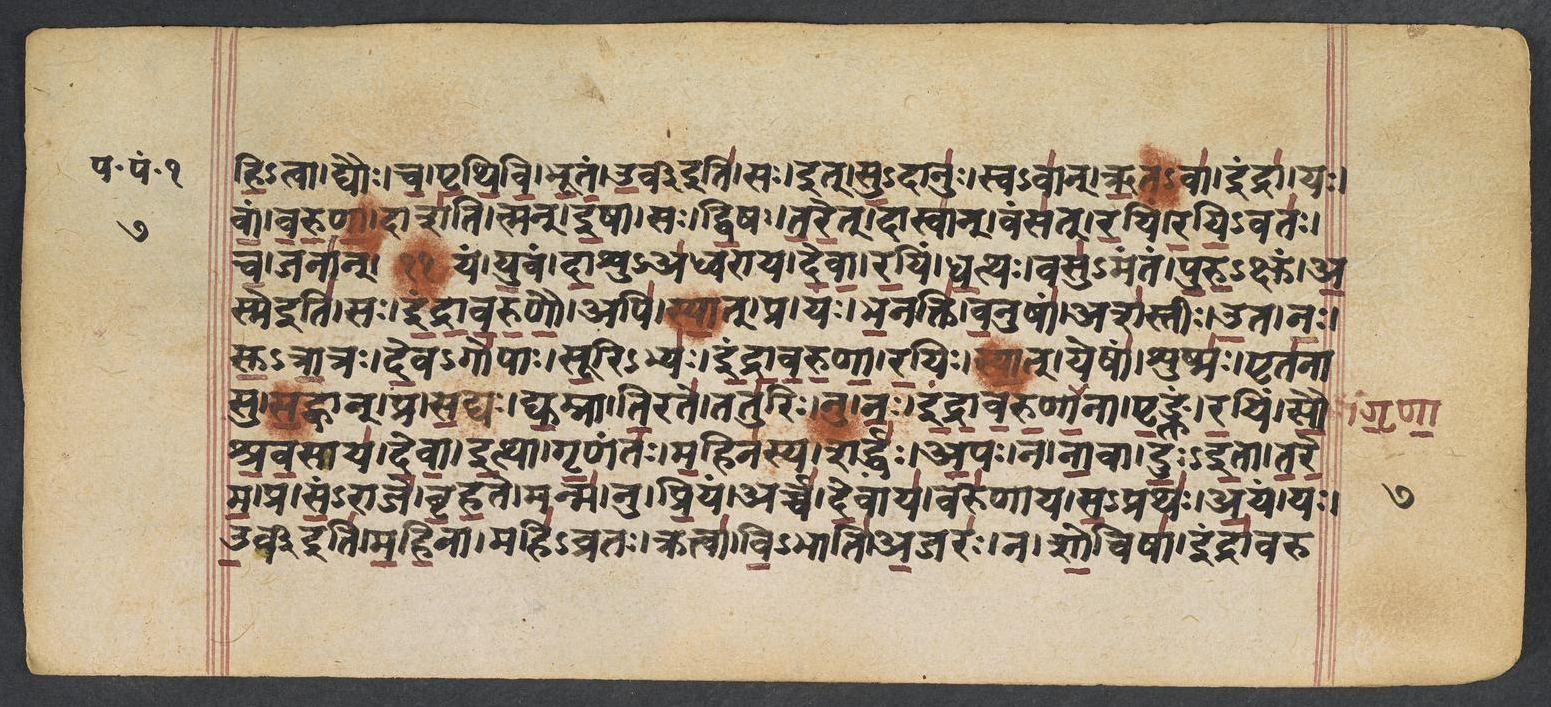
Where on the image
Penn Ms. Coll. 390 Item 41, fol. 486v (numbered 7v by the scribe) (OPenn image 487, upper leaf). Checked on the image: the Rigveda text on this page begins in RV 6.68.4 ‹-mahi-tvā dyauḥ ca pṛthivi›. The next page with Rigveda text, fol. 487r (numbered 8r by the scribe), begins in RV 6.68.10 ‹-indrāvaruṇā suta-pau imam sutam›. Verses 6.68.4-9 end on this page; 6.68.4 begins on fol. 486r (numbered 7r by the scribe).
4gnāś ca̱ yan nara̍ś ca vāvṛ̱dhanta̱ viśve̍ de̱vāso̍ na̱rāṁ svagū̍rtāḥ | praibhya̍ indrāvaruṇā mahi̱tvā dyauś ca̍ pṛthivi bhūtam u̱rvī ||
5sa it su̱dānu̱ḥ svavā̍m̐ ṛ̱tāvendrā̱ yo vā̍ṁ varuṇa̱ dāśa̍ti̱ tman | i̱ṣā sa dvi̱ṣas ta̍re̱d dāsvā̱n vaṁsa̍d ra̱yiṁ ra̍yi̱vata̍ś ca̱ janā̍n ||
6yaṁ yu̱vaṁ dā̱śva̍dhvarāya devā ra̱yiṁ dha̱ttho vasu̍mantam puru̱kṣum | a̱sme sa i̍ndrāvaruṇā̱v api̍ ṣyā̱t pra yo bha̱nakti̍ va̱nuṣā̱m aśa̍stīḥ ||
7u̱ta na̍ḥ sutrā̱tro de̱vago̍pāḥ sū̱ribhya̍ indrāvaruṇā ra̱yiḥ ṣyā̍t | yeṣā̱ṁ śuṣma̱ḥ pṛta̍nāsu sā̱hvān pra sa̱dyo dyu̱mnā ti̱rate̱ tatu̍riḥ ||
8nū na̍ indrāvaruṇā gṛṇā̱nā pṛ̱ṅktaṁ ra̱yiṁ sau̍śrava̱sāya̍ devā | i̱tthā gṛ̱ṇanto̍ ma̱hina̍sya̱ śardho̱ 'po na nā̱vā du̍ri̱tā ta̍rema ||
9pra sa̱mrāje̍ bṛha̱te manma̱ nu pri̱yam arca̍ de̱vāya̱ varu̍ṇāya sa̱pratha̍ḥ | a̱yaṁ ya u̱rvī ma̍hi̱nā mahi̍vrata̱ḥ kratvā̍ vi̱bhāty a̱jaro̱ na śo̱ciṣā̍ ||
Compare: Padapāṭha (word-by-word text written in the manuscript; Sansknet e-text via GRETIL)
4gnāḥ | ca | yat | naraḥ | ca | vavṛdhanta | viśve | devāsaḥ | narām | sva-gūrtāḥ | pra | ebhyaḥ | indrāvaruṇā | mahi-tvā | dyauḥ | ca | pṛthivi | bhūtam | urvī iti
5saḥ | it | su-dānuḥ | sva-vān | ṛta-vā | indrā | yaḥ | vām | varuṇā dāśati | tman | iṣā | saḥ | dviṣaḥ | taret | dāsvān | vaṃsat | rayim | rayi-vataḥ | ca | janān
6yam | yuvam | dāśu-adhvarāya | devā | rayim | dhatthaḥ | vasu-mantam | puru-kṣum | asme iti | saḥ | indrāvaruṇau | api | syāt | pra | yaḥ | bhanakti | vanuṣām | aśastīḥ
7uta | naḥ | su-trātaḥ | deva-gopāḥ | sūri-bhyaḥ | indrāvaruṇā | rayiḥ | syāt | yeṣām | śuṣmaḥ | pṛtanāsu | sāhvān | pra | sadyaḥ | dyumnā | tirate | taturiḥ
8nu | naḥ | indrāvaruṇā | gṛṇānā | pṛṅktam | rayim | sauśravasāya | devā | itthā | gṛṇantaḥ | mahinasya | śardhaḥ | apaḥ | na | nāvā | duḥ-itā | tarema
9pra | sam-rāje | bṛhate | manma | nu | priyam | arca | devāya | varuṇāya | sa-prathaḥ | ayam | yaḥ | urvī iti | mahinā | mahi-vrataḥ | kratvā | vi-bhāti | ajaraḥ | na | śociṣā
4Though dames and men have waxen strong and mighty, and all the Gods selfpraised among the Heroes, Ye, Indra-Varuṇa, have in might surpassed them, and thus were ye spread wide, O Earth and Heaven.
5Righteous is he, and liberal and helpful who, Indra-Varuṇa, brings you gifts with gladness. That bounteous man through food shall conquer foemen, and win him opulence and wealthy people.
6May wealth which ye bestow in food and treasure on him who brings you gifts and sacrifices, Wealth, Gods! which breaks the curse of those who vex us, be, Indra-Varuṇa, e'en our own possession.
7So also, Indra-Varuṇa, may our princes have riches swift to save, with Gods to guard them- They whose great might gives victory in battles, and their triumphant glory spreads with swiftness.
8Indra. and Varuṇa, Gods whom we are lauding, mingle ye wealth with our heroic glory. May we, who praise the strength of what is mighty, pass dangers, as with boats we cross the waters.
9Now will I sing a dear and far-extending hymn to Varuṇa the God, sublime, imperial Lord, Who, mighty Governor, Eternal, as with flame, illumines both wide worlds with majesty and power.
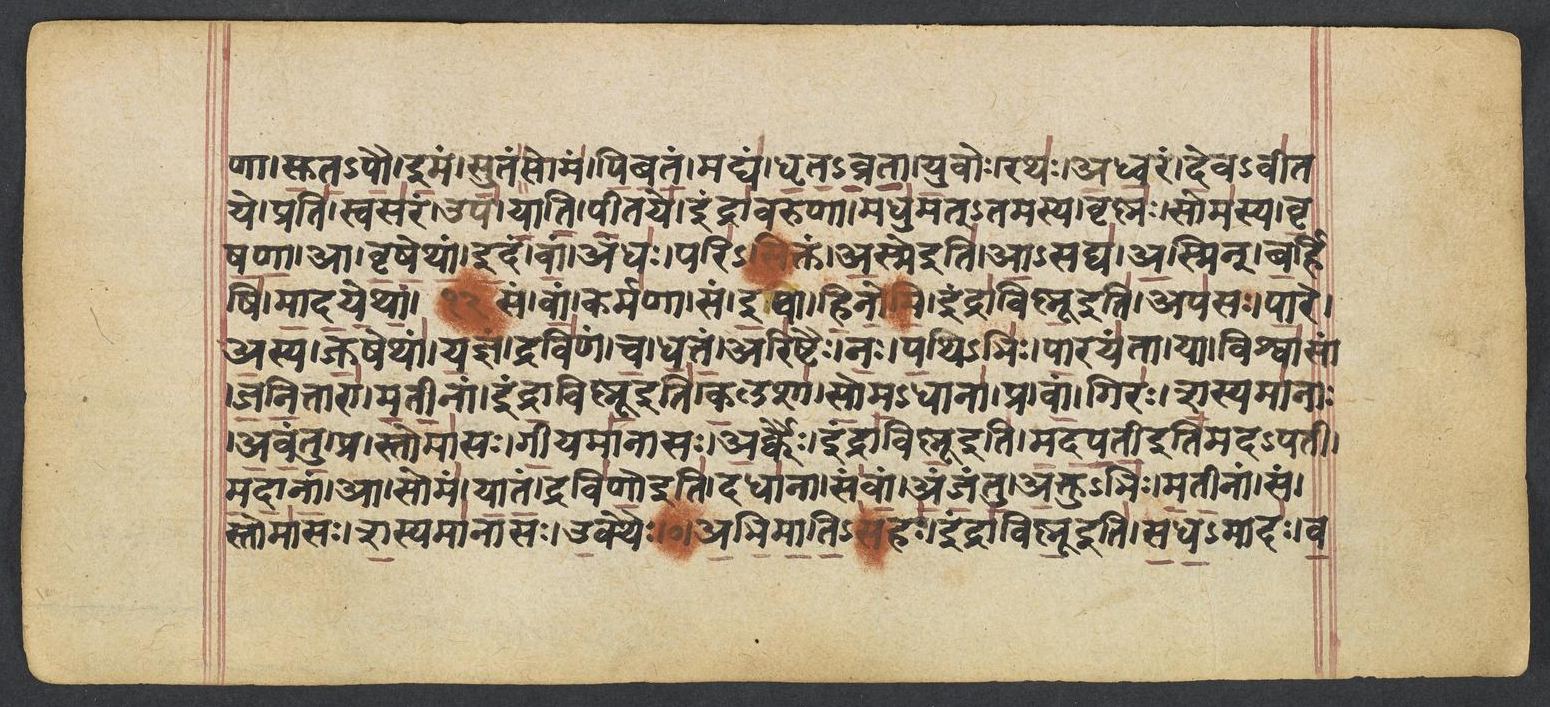
Where on the image
Penn Ms. Coll. 390 Item 41, fol. 487r (numbered 8r by the scribe) (OPenn image 487, lower leaf). Checked on the image: the Rigveda text on this page begins in RV 6.68.10 ‹-indrāvaruṇā suta-pau imam sutam›. The next page with Rigveda text, fol. 487v (numbered 8v by the scribe), begins in RV 6.69.4 ‹-vahantu juṣethām viśvā havanā›. Verses 6.68.10-11 end on this page; 6.68.10 begins on fol. 486v (numbered 7v by the scribe).
10indrā̍varuṇā sutapāv i̱maṁ su̱taṁ soma̍m pibata̱m madya̍ṁ dhṛtavratā | yu̱vo ratho̍ adhva̱raṁ de̱vavī̍taye̱ prati̱ svasa̍ra̱m upa̍ yāti pī̱taye̍ ||
11indrā̍varuṇā̱ madhu̍mattamasya̱ vṛṣṇa̱ḥ soma̍sya vṛṣa̱ṇā vṛ̍ṣethām | i̱daṁ vā̱m andha̱ḥ pari̍ṣiktam a̱sme ā̱sadyā̱smin ba̱rhiṣi̍ mādayethām ||
Compare: Padapāṭha (word-by-word text written in the manuscript; Sansknet e-text via GRETIL)
10indrāvaruṇā | suta-pau | imam | sutam | somam | pibatam | madyam | dhṛta-vratā | yuvoḥ | rathaḥ | adhvaram | deva-vītaye | prati | svasaram | upa | yāti | pītaye
11indrāvaruṇā | madhumat-tamasya | vṛṣṇaḥ | somasya | vṛṣaṇā | ā | vṛṣethām | idam | vām | andhaḥ | pari-siktam | asme iti | āsadya | asmin | barhiṣi | mādayethām
10True to Law, Indra-Varuṇa, drinkers of the juice, drink this pressed Soma which shall give you rapturous joy. Your chariot cometh to the banquet of the Gods, to sacrifice, as it were home, that ye may drink.
11Indra and Varuṇa, drink your fill, ye Heroes, of this invigorating sweetest Soma. This juice is shed by us that ye may quaff it: on this trimmed grass be seated, and rejoice you
Notes
- Sanskrit: Aufrecht's edition (1877) with the Vedic accents, as entered by van Nooten and Holland (GRETIL).
- English: Ralph T. H. Griffith, The Hymns of the Rigveda (1889-1892; 2nd ed. 1896-1897), from the VedaWeb digital text; OCR slips in that text were corrected against the printed 2nd edition (data/sources/rigveda/griffith_errata.json).
- Padapāṭha (edition text): Sansknet e-text via GRETIL (CC BY-NC-SA 4.0).
Cite
Sources
- Source: Penn Ms. Coll. 390 Item 41 (undated (catalogued with Penn's 18th-19th c. Vedic manuscripts)), OPenn, Public Domain Mark + Aufrecht's accented text (GRETIL) + Griffith's English (VedaWeb) (holding institution)
- Critical edition: Aufrecht (1877), accented e-text via GRETIL
← previous · → next · v cycle view · l back to library