Rigveda 6.75: Blessing of weapons
Introduction
Rigveda 6.75 is a hymn of 19 verses addressed to blessing of weapons. It stands in book (maṇḍala) 6, the family book of Bharadvāja. The Rigveda is the oldest collection of Sanskrit hymns, composed in the second half of the second millennium BCE and handed down orally for many centuries before it was written down.
The manuscript shown is Penn Ms. Coll. 390 Item 41 (University of Pennsylvania), an undated paper manuscript of the padapāṭha (the word-by-word recitation text, in which every word is written separately and compounds are split) of the whole Ṛgveda in Devanāgarī, 884 leaves in fascicles, 7-9 lines to the page, accents in red; this hymn stands on fol. 490r-491v. Each section below gives the verses that end on one page; the page boundaries were read on the images (the opening words of every page), not counted out. Where the manuscript is a padapāṭha (the word-by-word recitation text), the section shows Aufrecht's continuous (saṃhitā) text first and, as the edition text, the padapāṭha of the same verses, which is the form written on the page.
How was this verified? (Provenance)
Where on the image
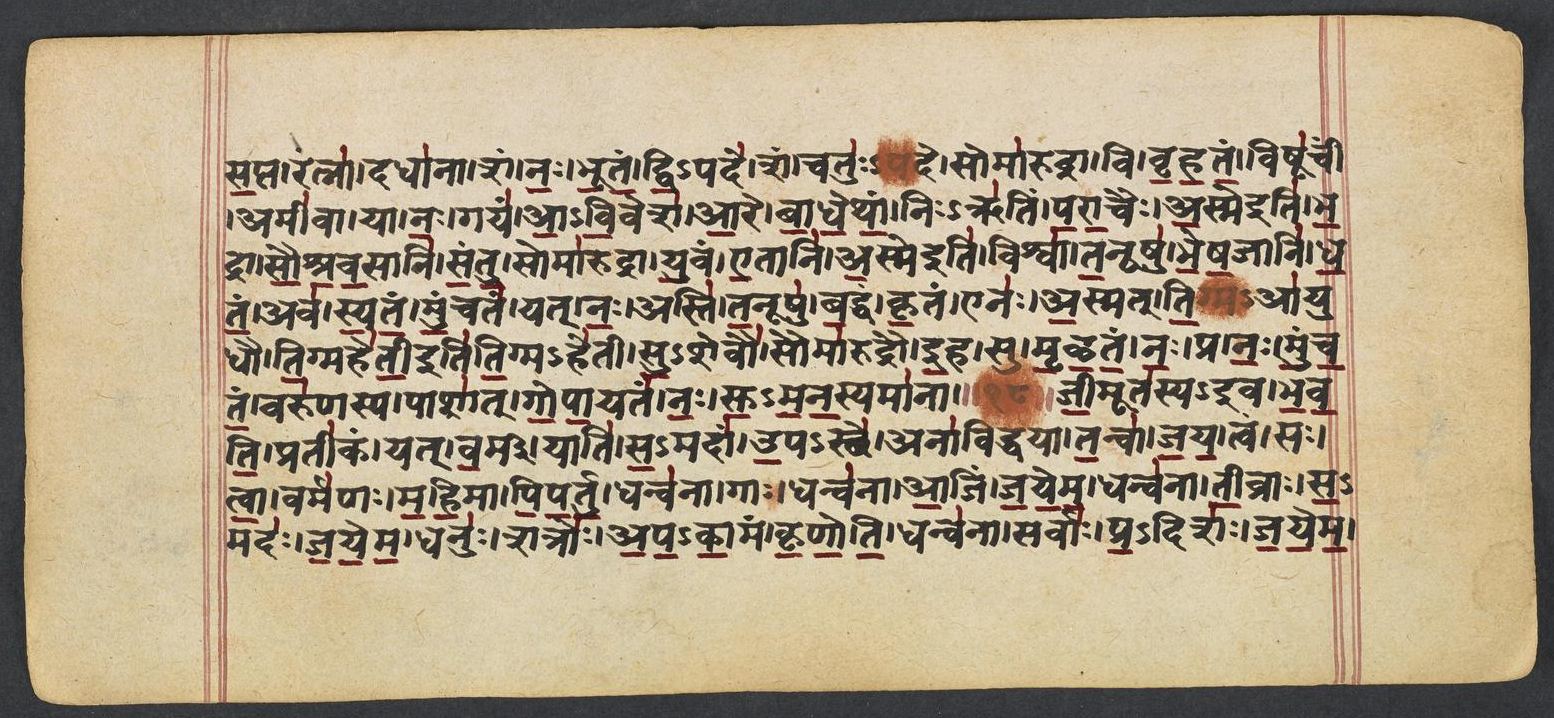
Penn Ms. Coll. 390 Item 41, fol. 490r (numbered 11r by the scribe) (OPenn image 490, lower leaf). Checked on the image: the Rigveda text on this page begins in RV 6.74.1 ‹sapta ratnā dadhānā śam›. The next page with Rigveda text, fol. 490v (numbered 11v by the scribe), begins in RV 6.75.3 ‹vakṣyantī-iva it ā ganīganti›. Verses 6.75.1-2 end on this page.
1jī̱mūta̍syeva bhavati̱ pratī̍ka̱ṁ yad va̱rmī yāti̍ sa̱madā̍m u̱pasthe̍ | anā̍viddhayā ta̱nvā̍ jaya̱ tvaṁ sa tvā̱ varma̍ṇo mahi̱mā pi̍partu ||
2dhanva̍nā̱ gā dhanva̍nā̱jiṁ ja̍yema̱ dhanva̍nā tī̱vrāḥ sa̱mado̍ jayema | dhanu̱ḥ śatro̍r apakā̱maṁ kṛ̍ṇoti̱ dhanva̍nā̱ sarvā̍ḥ pra̱diśo̍ jayema ||
Compare: Padapāṭha (word-by-word text written in the manuscript; Sansknet e-text via GRETIL)
1jīmūtasya-iva | bhavati | pratīkam | yat | varmī | yāti | sa-madām | upa-sthe | anāviddhayā | tanvā | jaya | tvam | saḥ | tvā | varmaṇaḥ | mahimā | pipartu
2dhanvanā | gāḥ | dhanvanā | ājim | jayema | dhanvanā | tīvrāḥ | sa-madaḥ | jayema | dhanuḥ | śatroḥ | apa-kāmam | kṛṇoti | dhanvanā | sarvāḥ | pra-diśaḥ | jayema
1THE warrior's look is like a thunderous rain-cloud's, when, armed with mail, he seeks the lap of battle. Be thou victorious with unwounded body: so let the thickness of thy mail protect thee.
2With Bow let us win kine, with Bow the battle, with Bow be victors in our hot encounters. The Bow brings grief and sorrow to the foeman: armed with the Bow may we subdue all regions.
Where on the image
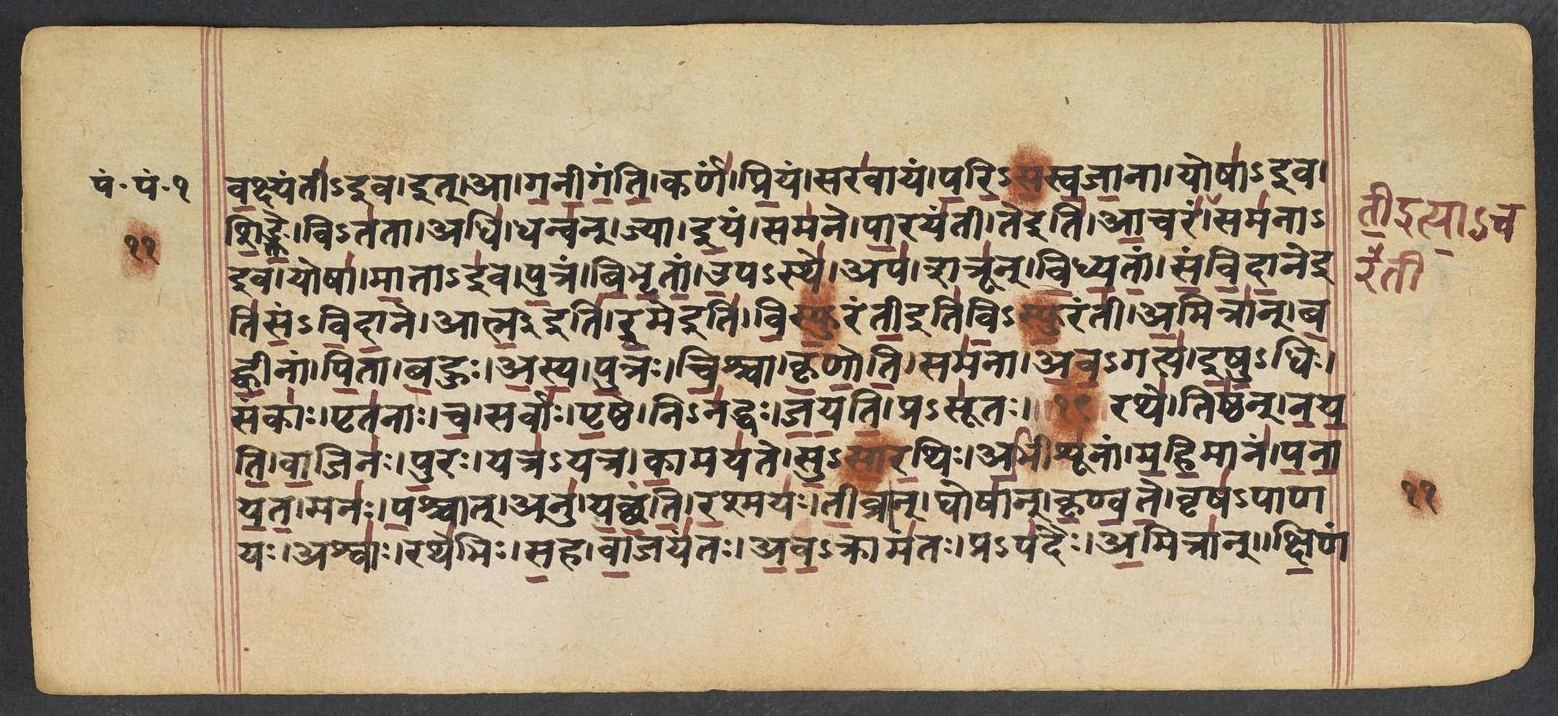
Penn Ms. Coll. 390 Item 41, fol. 490v (numbered 11v by the scribe) (OPenn image 491, upper leaf). Checked on the image: the Rigveda text on this page begins in RV 6.75.3 ‹vakṣyantī-iva it ā ganīganti›. The next page with Rigveda text, fol. 491r (numbered 12r by the scribe), begins in RV 6.75.7 ‹-kṣiṇanti śatrūn anapa-vyayantaḥ›. Verses 6.75.3-6 end on this page.
3va̱kṣyantī̱ved ā ga̍nīganti̱ karṇa̍m pri̱yaṁ sakhā̍yam pariṣasvajā̱nā | yoṣe̍va śiṅkte̱ vita̱tādhi̱ dhanva̱ñ jyā i̱yaṁ sama̍ne pā̱raya̍ntī ||
4te ā̱cara̍ntī̱ sama̍neva̱ yoṣā̍ mā̱teva̍ pu̱tram bi̍bhṛtām u̱pasthe̍ | apa̱ śatrū̍n vidhyatāṁ saṁvidā̱ne ārtnī̍ i̱me vi̍ṣphu̱rantī̍ a̱mitrā̍n ||
5ba̱hvī̱nām pi̱tā ba̱hur a̍sya pu̱traś ci̱ścā kṛ̍ṇoti̱ sama̍nāva̱gatya̍ | i̱ṣu̱dhiḥ saṅkā̱ḥ pṛta̍nāś ca̱ sarvā̍ḥ pṛ̱ṣṭhe nina̍ddho jayati̱ prasū̍taḥ ||
6rathe̱ tiṣṭha̍n nayati vā̱jina̍ḥ pu̱ro yatra̍-yatra kā̱maya̍te suṣāra̱thiḥ | a̱bhīśū̍nām mahi̱māna̍m panāyata̱ mana̍ḥ pa̱ścād anu̍ yacchanti ra̱śmaya̍ḥ ||
Compare: Padapāṭha (word-by-word text written in the manuscript; Sansknet e-text via GRETIL)
3vakṣyantī-iva | it | ā | ganīganti | karṇam | priyam | sakhāyam | pari-sasvajānā | yoṣāiva | śiṅkte | vi-tatā | adhi | dhanvan | jyā | iyam | samane | pārayantī
4te iti | ācarantī ity ācarantī | samanāiva | yoṣā | mātāiva | putram | bibhṛtām | upa-sthe | apa | śatrūn | vidhyatām | saṃvidāne itisam-vidāne | ātnīriti | ime iti | visphurantī itivi-sphurantī | amitrān
5bahvīnām | pitā | bahurasya | putraḥ | ciścā | kṛṇoti | samanā | ava-gatya | iṣu-dhiḥ | saṅkāḥ | pṛtanāḥ | ca | sarvāḥ | pṛṣṭhe | ni-naddhaḥ | jayati | pra-sūtaḥ
6rathe | tiṣṭhan | nayati | vājinaḥ | puraḥ | yatra-yatra | kāmayate | su-sārathiḥ | abhīśūnām | mahimānam | panāyata | manaḥ | paścāt | anu | yacchanti | raśmayaḥ
3Close to his ear, as fain to speak, She presses, holding her well-loved Friend in her embraces. Strained on the Bow, She whispers like a woman-this Bowstring that preserves us in the combat.
4These, meeting like a woman and her lover, bear, mother-like, their child upon their bosom. May the two Bow-ends, starting swift asunder, scatter, in unison, the foes who hate us.
5With many a son, father of many daughters, He clangs and clashes as he goes to battle. Slung on the back, pouring his brood, the Quiver vanquishes all opposing bands and armies.
6Upstanding in the Car the skilful Charioteer guides his strong Horses on whithersoe'er he will. See and admire the strength of those controlling Reins which from behind declare the will of him who drives.
Where on the image
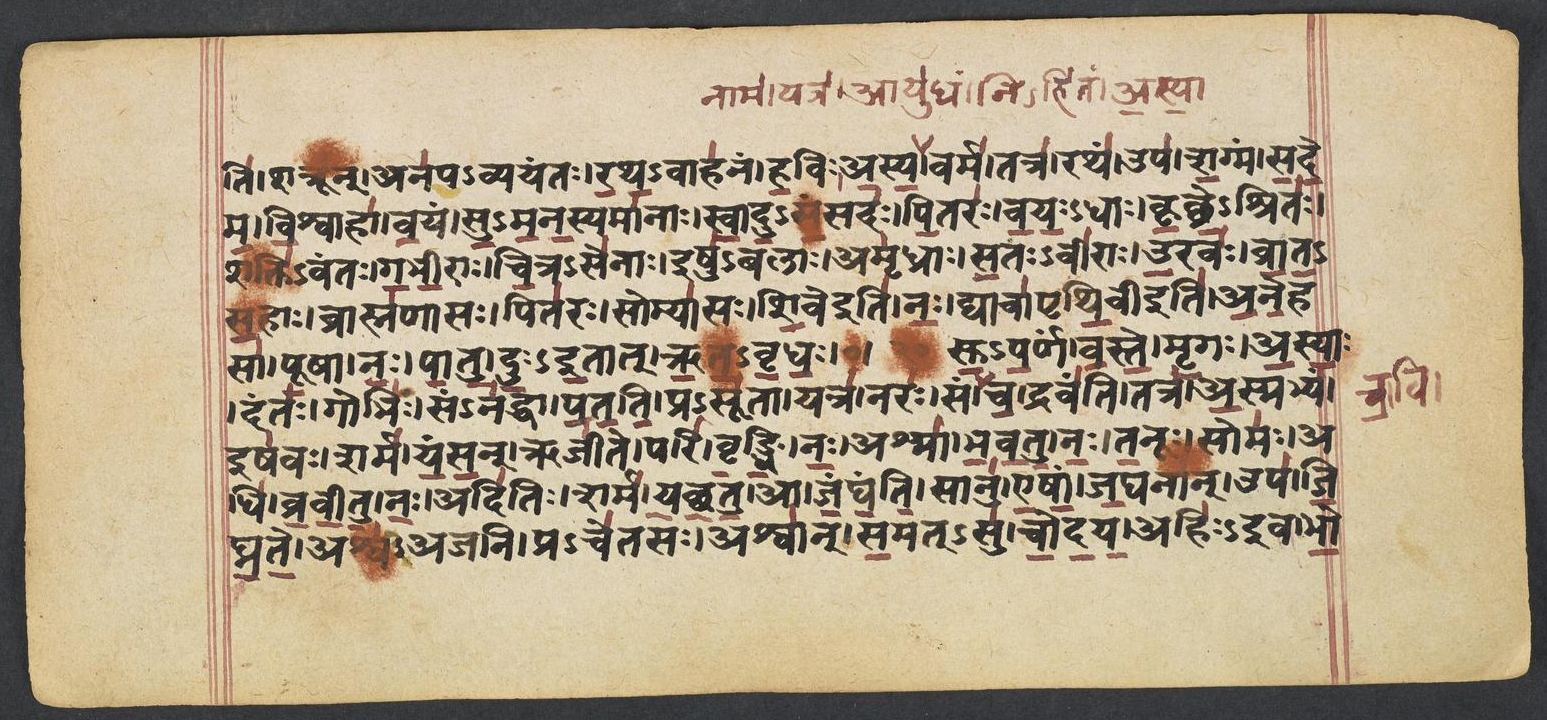
Penn Ms. Coll. 390 Item 41, fol. 491r (numbered 12r by the scribe) (OPenn image 491, lower leaf). Checked on the image: the Rigveda text on this page begins in RV 6.75.7 ‹-kṣiṇanti śatrūn anapa-vyayantaḥ›. The next page with Rigveda text, fol. 491v (numbered 12v by the scribe), begins in RV 6.75.14 ‹-bhogaiḥ pari eti bāhum›. Verses 6.75.7-13 end on this page; 6.75.7 begins on fol. 490v (numbered 11v by the scribe).
7tī̱vrān ghoṣā̍n kṛṇvate̱ vṛṣa̍pāṇa̱yo 'śvā̱ rathe̍bhiḥ sa̱ha vā̱jaya̍ntaḥ | a̱va̱krāma̍nta̱ḥ prapa̍dair a̱mitrā̍n kṣi̱ṇanti̱ śatrū̱m̐r ana̍pavyayantaḥ ||
8ra̱tha̱vāha̍naṁ ha̱vir a̍sya̱ nāma̱ yatrāyu̍dha̱ṁ nihi̍tam asya̱ varma̍ | tatrā̱ ratha̱m upa̍ śa̱gmaṁ sa̍dema vi̱śvāhā̍ va̱yaṁ su̍mana̱syamā̍nāḥ ||
9svā̱du̱ṣa̱ṁsada̍ḥ pi̱taro̍ vayo̱dhāḥ kṛ̍cchre̱śrita̱ḥ śaktī̍vanto gabhī̱rāḥ | ci̱trase̍nā̱ iṣu̍balā̱ amṛ̍dhrāḥ sa̱tovī̍rā u̱ravo̍ vrātasā̱hāḥ ||
10brāhma̍ṇāsa̱ḥ pita̍ra̱ḥ somyā̍saḥ śi̱ve no̱ dyāvā̍pṛthi̱vī a̍ne̱hasā̍ | pū̱ṣā na̍ḥ pātu duri̱tād ṛ̍tāvṛdho̱ rakṣā̱ māki̍r no a̱ghaśa̍ṁsa īśata ||
11su̱pa̱rṇaṁ va̍ste mṛ̱go a̍syā̱ danto̱ gobhi̱ḥ saṁna̍ddhā patati̱ prasū̍tā | yatrā̱ nara̱ḥ saṁ ca̱ vi ca̱ drava̍nti̱ tatrā̱smabhya̱m iṣa̍va̱ḥ śarma̍ yaṁsan ||
12ṛjī̍te̱ pari̍ vṛṅdhi̱ no 'śmā̍ bhavatu nas ta̱nūḥ | somo̱ adhi̍ bravītu̱ no 'di̍ti̱ḥ śarma̍ yacchatu ||
13ā ja̍ṅghanti̱ sānv e̍ṣāṁ ja̱ghanā̱m̐ upa̍ jighnate | aśvā̍jani̱ prace̍ta̱so 'śvā̍n sa̱matsu̍ codaya ||
Compare: Padapāṭha (word-by-word text written in the manuscript; Sansknet e-text via GRETIL)
7tīvrān | ghoṣān | kṛṇvate | vṛṣa-pāṇayaḥ | aśvāḥ | rathebhiḥ | saha | vājayantaḥ | ava-krāmantaḥ | pra-padaiḥ | amitrān | kṣiṇanti | śatrūn | anapa-vyayantaḥ
8ratha-vāhanam | haviḥ | asya | nāma | yatra | āyudham | ni-hitam | asya | varma | tatra | ratham | upa | śagmam | sadema | viśvāhā | vayam | su-manasyamānāḥ
9svādu-saṃsadaḥ | pitaraḥ | vayaḥ-dhāḥ | kṛcchra-śritaḥ | śakti-vantaḥ | gabhīrāḥ | citra-senāḥ | iṣu-balāḥ | amṛdhrāḥ | sataḥ-vīrāḥ | uravaḥ | vrāta-sahāḥ
10brāhmaṇāsaḥ | pitaraḥ | somyāsaḥ | śive iti | naḥ | dyāvāpṛthivī iti | anehasā | pūṣā | naḥ | pātu | duḥ-itāt | ṛta-vṛdhaḥ | rakṣa | mākiḥ | naḥ | agha-śaṃsaḥ | īśata
11su-parṇam | vaste | mṛgaḥ | asyāḥ | dantaḥ | gobhiḥ | sam-naddhā | patati | pra-sūtā | yatra | naraḥ | sam | ca | vi | ca | dravanti | tatra | asmabhyam | iṣavaḥ | śarma | yaṃsan
12ṛjīte | pari | vṛṅdhi | naḥ | aśmā | bhavatu | naḥ | tanūḥ | somaḥ | adhi | bravītu | naḥ | aditiḥ | śarma | yacchatu
13ā | jaṅghanti | sānu | eṣām | jaghanān | upa | jighnate | aśva-ajani | pra-cetasaḥ | aśvān | samat-su | codaya
7Horses whose hoofs rain dust are neighing loudly, yoked to the Chariots, showing forth their vigour, With their forefeet descending on the foemen, they, never flinching, trample and destroy them.
8Car-bearer is the name of his oblation, whereon are laid his Weapons and his Armour. So let us here, each day that passes, honour the helpful Car with hearts exceeding joyful.
9In sweet association lived the fathers who gave us life, profound and strong in trouble, Unwearied, armed with shafts and wondrous weapons, free, real heroes, conquerors of armies.
10The Brahmans, and the Fathers meet for Soma-draughts, and, graciously inclined, unequalled Heaven and Earth. Guard us from evil, Pûshan, guard us strengtheners of Law: let not the evil-wisher master us.
11Her tooth a deer, dressed in an eagle's feathers, bound with cow-hide, launched forth, She flieth onward. There where the heroes speed hither and thither, there may the Arrows shelter and protect us.
12Avoid us thou whose flight is straight, and let our bodies be as stone. May Soma kindly speak to us, and Aditi protect us well.
13He lays his blows upon their backs, he deals his blows upon their thighs. Thou, Whip, who urgest horses, drive sagacious horses in the fray.
Where on the image
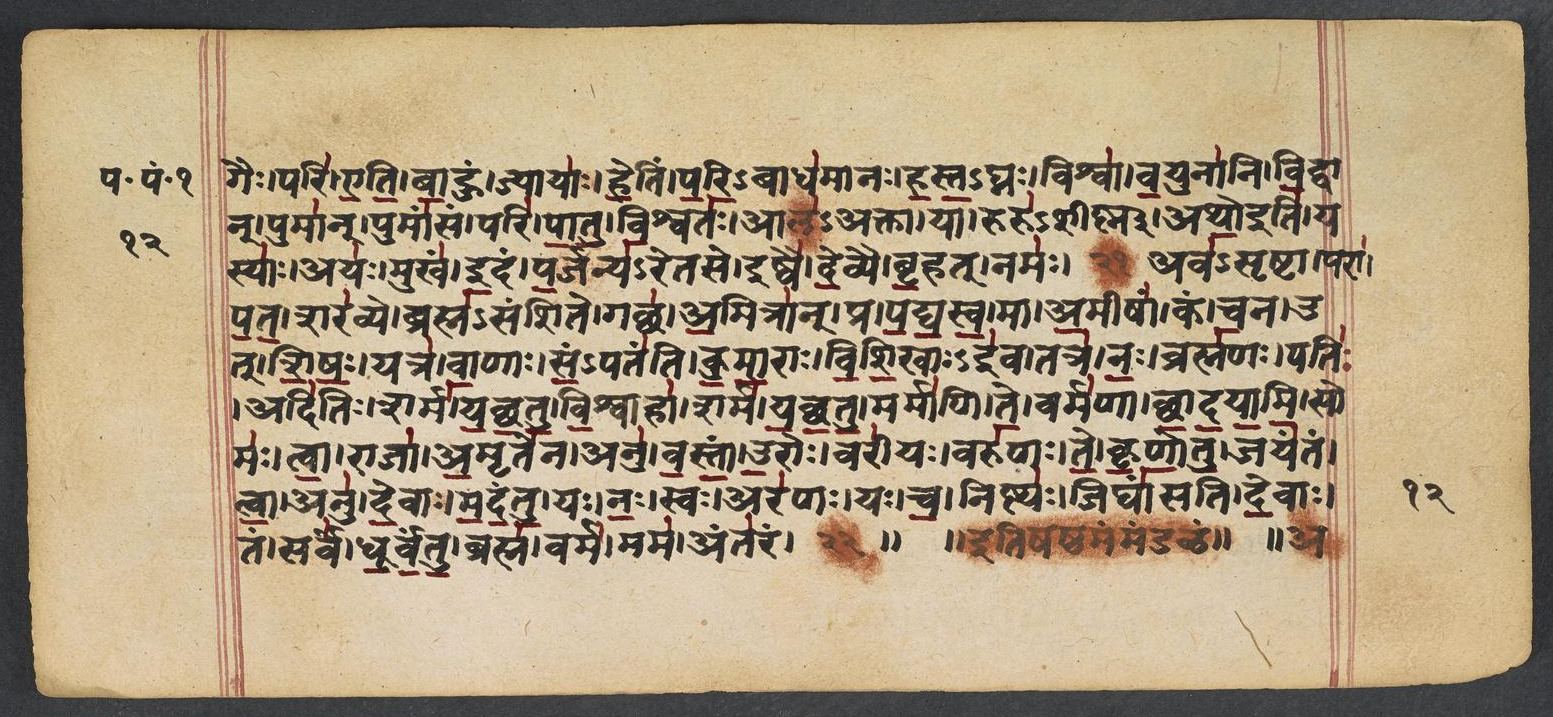
Penn Ms. Coll. 390 Item 41, fol. 491v (numbered 12v by the scribe) (OPenn image 492, upper leaf). Checked on the image: the Rigveda text on this page begins in RV 6.75.14 ‹-bhogaiḥ pari eti bāhum›. The next page with Rigveda text, fol. 492r (numbered 13r by the scribe), begins in RV 7.1.1 ‹agnim naraḥ dīdhiti-bhiḥ araṇyoḥ›. Verses 6.75.14-19 end on this page; 6.75.14 begins on fol. 491r (numbered 12r by the scribe).
14ahi̍r iva bho̱gaiḥ pary e̍ti bā̱huṁ jyāyā̍ he̱tim pa̍ri̱bādha̍mānaḥ | ha̱sta̱ghno viśvā̍ va̱yunā̍ni vi̱dvān pumā̱n pumā̍ṁsa̱m pari̍ pātu vi̱śvata̍ḥ ||
15ālā̍ktā̱ yā ruru̍śī̱rṣṇy atho̱ yasyā̱ ayo̱ mukha̍m | i̱dam pa̱rjanya̍retasa̱ iṣvai̍ de̱vyai bṛ̱han nama̍ḥ ||
16ava̍sṛṣṭā̱ parā̍ pata̱ śara̍vye̱ brahma̍saṁśite | gacchā̱mitrā̱n pra pa̍dyasva̱ māmīṣā̱ṁ kaṁ ca̱noc chi̍ṣaḥ ||
17yatra̍ bā̱ṇāḥ sa̱mpata̍nti kumā̱rā vi̍śi̱khā i̍va | tatrā̍ no̱ brahma̍ṇa̱s pati̱r adi̍ti̱ḥ śarma̍ yacchatu vi̱śvāhā̱ śarma̍ yacchatu ||
18marmā̍ṇi te̱ varma̍ṇā chādayāmi̱ soma̍s tvā̱ rājā̱mṛte̱nānu̍ vastām | u̱ror varī̍yo̱ varu̍ṇas te kṛṇotu̱ jaya̍nta̱ṁ tvānu̍ de̱vā ma̍dantu ||
19yo na̱ḥ svo ara̍ṇo̱ yaś ca̱ niṣṭyo̱ jighā̍ṁsati | de̱vās taṁ sarve̍ dhūrvantu̱ brahma̱ varma̱ mamānta̍ram ||
Compare: Padapāṭha (word-by-word text written in the manuscript; Sansknet e-text via GRETIL)
14ahiḥ-iva | bhogaiḥ | pari | eti | bāhum | jyāyāḥ | hetim | pari-bādhamānaḥ | hasta-ghnaḥ | viśvā | vayunāni | vidvān | pumān | pumāṃsam | pari | pātu | viśvataḥ
15āla-aktā | yā | ruru-śīrṣṇī | atho iti | yasyāḥ | ayaḥ | mukham | idam | parjanya-retase | iṣvai | devyai | bṛhat | namaḥ
16ava-sṛṣṭā | parā | pata | śaravye | brahma-saṃśite | gaccha | amitrān | pra | padyasva | mā | amīṣām | kam | cana | ut | śiṣaḥ
17yatra | bāṇāḥ | sam-patanti | kumārāḥ | viśikhāḥ-iva | tatra | naḥ | brahmaṇaḥ | patiḥ | aditiḥ | śarma | yacchatu | viśvāhā | śarma | yacchatu
18marmāṇi | te | varmaṇā | chādayāmi | somaḥ | tvā | rājā | amṛtena | anu | vastām | uroḥ | varīyaḥ | varuṇaḥ | te | kṛṇotu | jayantam | tvā | anu | devāḥ | madantu
19yaḥ | naḥ | svaḥ | araṇaḥ | yaḥ | ca | niṣṭyaḥ | jighāṃsati | devāḥ | tam | sarve | dhūrvantu | brahma | varma | mama | antaram
14It compasses the arm with serpent windings, fending away the friction of the bowstring: So may the Brace, well-skilled in all its duties, guard manfully the man from every quarter.
15Now to the Shaft with venom smeared, tipped with deer-horn, with iron mouth, Celestial, of Parjanya's seed, be this great adoration paid.
16Loosed from the Bowstring fly away, thou Arrow, sharpened by our prayer. Go to the foemen, strike them home, and let not one be left alive.
17There where the flights of Arrows fall like boys whose locks are yet unshorn. Even there may Brahmaṇaspati, and Aditi protect us well, protect us well through all our days.
18Thy vital parts I cover with thine Armour: with immortality King Soma clothe thee. Varuṇa give thee what is more than ample, and in thy triumph may the Gods be joyful.
19Whoso would kill us, whether he be a strange foe or one of us, May all the Gods discomfit him. My nearest, closest Mail is prayer.
Notes
- Sanskrit: Aufrecht's edition (1877) with the Vedic accents, as entered by van Nooten and Holland (GRETIL).
- English: Ralph T. H. Griffith, The Hymns of the Rigveda (1889-1892; 2nd ed. 1896-1897), from the VedaWeb digital text; OCR slips in that text were corrected against the printed 2nd edition (data/sources/rigveda/griffith_errata.json).
- Padapāṭha (edition text): Sansknet e-text via GRETIL (CC BY-NC-SA 4.0).
Cite
Sources
- Source: Penn Ms. Coll. 390 Item 41 (undated (catalogued with Penn's 18th-19th c. Vedic manuscripts)), OPenn, Public Domain Mark + Aufrecht's accented text (GRETIL) + Griffith's English (VedaWeb) (holding institution)
- Critical edition: Aufrecht (1877), accented e-text via GRETIL
← previous · → next · v cycle view · l back to library