Rigveda 7.1: To Agni
Introduction
Rigveda 7.1 is a hymn of 25 verses addressed to Agni. It stands in book (maṇḍala) 7, the family book of Vasiṣṭha. The Rigveda is the oldest collection of Sanskrit hymns, composed in the second half of the second millennium BCE and handed down orally for many centuries before it was written down.
The manuscript shown is Penn Ms. Coll. 390 Item 41 (University of Pennsylvania), an undated paper manuscript of the padapāṭha (the word-by-word recitation text, in which every word is written separately and compounds are split) of the whole Ṛgveda in Devanāgarī, 884 leaves in fascicles, 7-9 lines to the page, accents in red; this hymn stands on fol. 492r-493v. Each section below gives the verses that end on one page; the page boundaries were read on the images (the opening words of every page), not counted out. Where the manuscript is a padapāṭha (the word-by-word recitation text), the section shows Aufrecht's continuous (saṃhitā) text first and, as the edition text, the padapāṭha of the same verses, which is the form written on the page.
How was this verified? (Provenance)
Where on the image
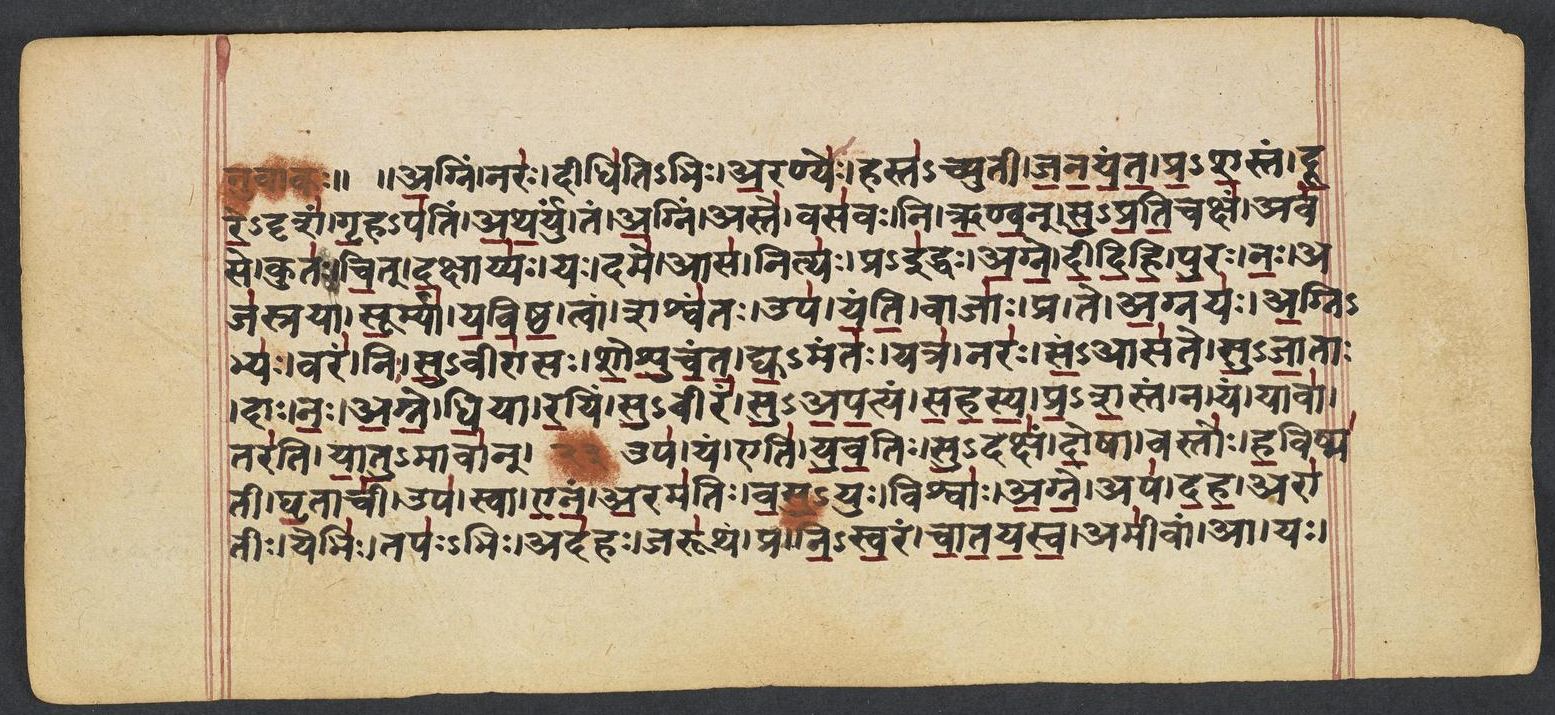
Penn Ms. Coll. 390 Item 41, fol. 492r (numbered 13r by the scribe) (OPenn image 492, lower leaf). Checked on the image: the Rigveda text on this page begins in RV 7.1.1 ‹agnim naraḥ dīdhiti-bhiḥ araṇyoḥ›. Line 1 opens with the end of the colophon of book 6 (iti ṣaṣṭhaṃ maṇḍalam, anuvākaḥ), then 7.1.1 (agnim naraḥ dīdhitibhiḥ araṇyoḥ). The next page with Rigveda text, fol. 492v (numbered 13v by the scribe), begins in RV 7.1.8 ‹te agne idhate anīkam›. Verses 7.1.1-7 end on this page.
1a̱gniṁ naro̱ dīdhi̍tibhir a̱raṇyo̱r hasta̍cyutī janayanta praśa̱stam | dū̱re̱dṛśa̍ṁ gṛ̱hapa̍tim atha̱ryum ||
2tam a̱gnim aste̱ vasa̍vo̱ ny ṛ̍ṇvan suprati̱cakṣa̱m ava̍se̱ kuta̍ś cit | da̱kṣāyyo̱ yo dama̱ āsa̱ nitya̍ḥ ||
3preddho̍ agne dīdihi pu̱ro no 'ja̍srayā sū̱rmyā̍ yaviṣṭha | tvāṁ śaśva̍nta̱ upa̍ yanti̱ vājā̍ḥ ||
4pra te a̱gnayo̱ 'gnibhyo̱ vara̱ṁ niḥ su̱vīrā̍saḥ śośucanta dyu̱manta̍ḥ | yatrā̱ nara̍ḥ sa̱māsa̍te sujā̱tāḥ ||
5dā no̍ agne dhi̱yā ra̱yiṁ su̱vīra̍ṁ svapa̱tyaṁ sa̍hasya praśa̱stam | na yaṁ yāvā̱ tara̍ti yātu̱māvā̍n ||
6upa̱ yam eti̍ yuva̱tiḥ su̱dakṣa̍ṁ do̱ṣā vasto̍r ha̱viṣma̍tī ghṛ̱tācī̍ | upa̱ svaina̍m a̱rama̍tir vasū̱yuḥ ||
7viśvā̍ a̱gne 'pa̍ da̱hārā̍tī̱r yebhi̱s tapo̍bhi̱r ada̍ho̱ jarū̍tham | pra ni̍sva̱raṁ cā̍taya̱svāmī̍vām ||
Compare: Padapāṭha (word-by-word text written in the manuscript; Sansknet e-text via GRETIL)
1agnim | naraḥ | dīdhiti-bhiḥ | araṇyoḥ | hasta-cyutī | janayanta | pra-śastam | dūre--dṛśam | gṛha-patim | atharyum
2tam | agnim | aste | vasavaḥ | ni | ṛṇvan | su-praticakṣam | avase | kutaḥ | cit | dakṣāyyaḥ | yaḥ | dame | āsa | nityaḥ
3pra-iddhaḥ | agne | dīdihi | puraḥ | naḥ | ajasrayā | sūrmyā | yaviṣṭha | tvām | śaśvantaḥ | upa | yanti | vājāḥ
4pra | te | agnayaḥ | agni-bhyaḥ | varam | niḥ | su-vīrāsaḥ | śośucanta | dyu-mantaḥ | yatra | naraḥ | sam-āsate | su-jātāḥ
5dāḥ | naḥ | agne | dhiyā | rayim | su-vīram | su-apatyam | sahasya | pra-śastam | na | yam | yāvā | tarati | yātu-māvān
6upa | yam | eti | yuvatiḥ | su-dakṣam | doṣā | vastoḥ | haviṣmatī | ghṛtācī | upa | svā | enam | aramatiḥ | vasu-yuḥ
7viśvāḥ | agne | apa | daha | arātīḥ | yebhiḥ | tapaḥ-bhiḥ | adahaḥ | jarūtham | pra | ni-svaram | cātayasva | amīvām
1THE men from fire-sticks, with their hands' swift movement, have, in deep thought, engendered glorious Agni, Far-seen, with pointed flame, Lord of the homestead.
2The Vasus set that Agni in the dwelling, fair to behold, for help from every quarter: Who, in the home for ever, must be honoured.
3Shine thou before us, Agni, well-enkindled, with flame, Most Youthful God, that never fadeth. To thee come all our sacrificial viands.
4Among all fires these fires have shone most brightly, splendid with light, begirt by noble heroes, Where men of lofty birth sit down together.
5Victorious Agni, grant us wealth with wisdom, wealth with brave sons, famous and independent, Which not a foe who deals in magic conquers.
6To whom, the Strong, at morn and eve comes, maid-like, the ladle dropping oil, with its oblation. Wealth-seeking comes to him his own devotion.
7Burn up all malice with those flames, O Agni, wherewith of old thou burntest up Jarûtha, And drive away in silence pain and sickness.
Where on the image
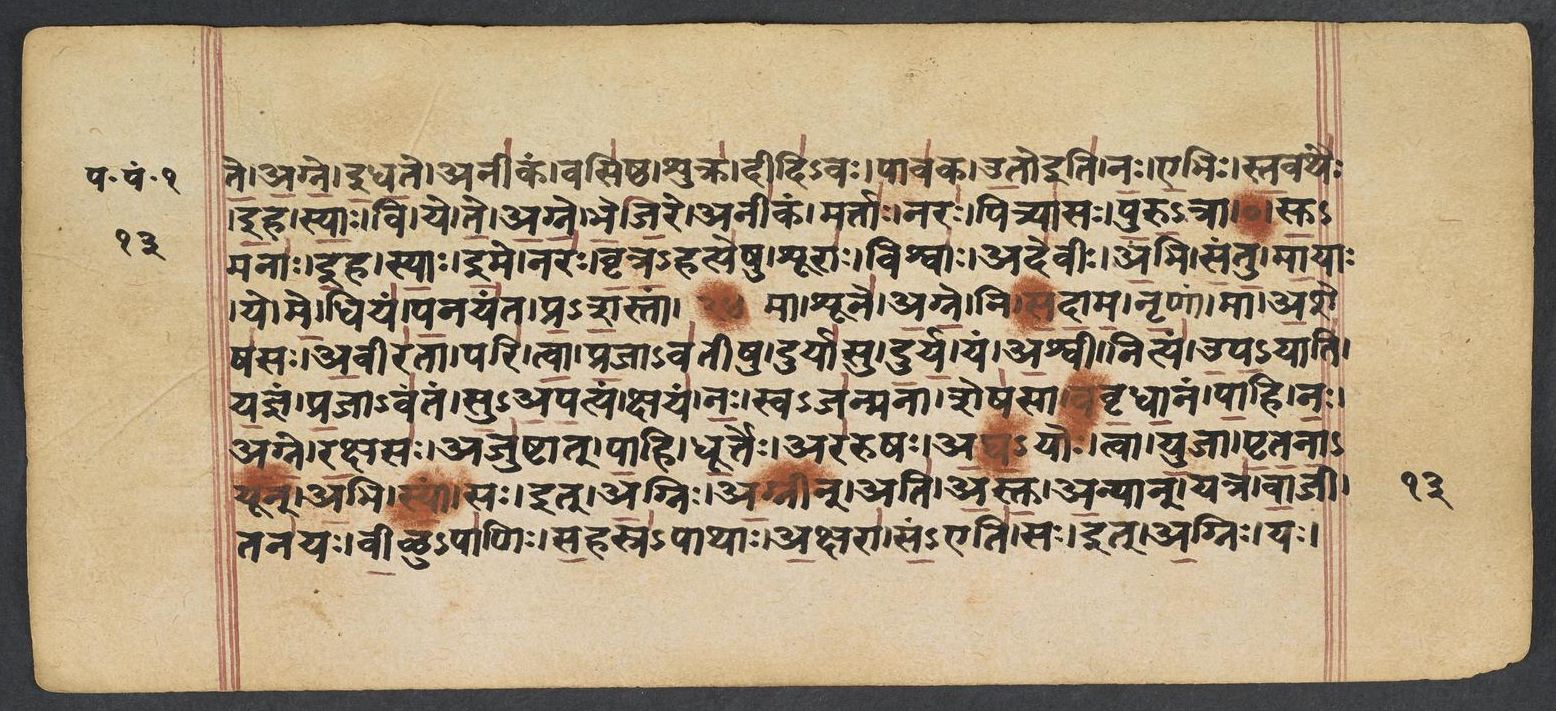
Penn Ms. Coll. 390 Item 41, fol. 492v (numbered 13v by the scribe) (OPenn image 493, upper leaf). Checked on the image: the Rigveda text on this page begins in RV 7.1.8 ‹te agne idhate anīkam›. The next page with Rigveda text, fol. 493r (numbered 14r by the scribe), begins in RV 7.1.15 ‹vanuṣyataḥ ni-pāti sam-eddhāram aṃhasaḥ›. Verses 7.1.8-14 end on this page; 7.1.8 begins on fol. 492r (numbered 13r by the scribe).
8ā yas te̍ agna idha̱te anī̍ka̱ṁ vasi̍ṣṭha̱ śukra̱ dīdi̍va̱ḥ pāva̍ka | u̱to na̍ e̱bhiḥ sta̱vathai̍r i̱ha syā̍ḥ ||
9vi ye te̍ agne bheji̱re anī̍ka̱m martā̱ nara̱ḥ pitryā̍saḥ puru̱trā | u̱to na̍ e̱bhiḥ su̱manā̍ i̱ha syā̍ḥ ||
10i̱me naro̍ vṛtra̱hatye̍ṣu̱ śūrā̱ viśvā̱ ade̍vīr a̱bhi sa̍ntu mā̱yāḥ | ye me̱ dhiya̍m pa̱naya̍nta praśa̱stām ||
11mā śūne̍ agne̱ ni ṣa̍dāma nṛ̱ṇām māśeṣa̍so̱ 'vīra̍tā̱ pari̍ tvā | pra̱jāva̍tīṣu̱ duryā̍su durya ||
12yam a̱śvī nitya̍m upa̱yāti̍ ya̱jñam pra̱jāva̍ntaṁ svapa̱tyaṁ kṣaya̍ṁ naḥ | svaja̍nmanā̱ śeṣa̍sā vāvṛdhā̱nam ||
13pā̱hi no̍ agne ra̱kṣaso̱ aju̍ṣṭāt pā̱hi dhū̱rter ara̍ruṣo aghā̱yoḥ | tvā yu̱jā pṛ̍tanā̱yūm̐r a̱bhi ṣyā̍m ||
14sed a̱gnir a̱gnīm̐r aty a̍stv a̱nyān yatra̍ vā̱jī tana̍yo vī̱ḻupā̍ṇiḥ | sa̱hasra̍pāthā a̱kṣarā̍ sa̱meti̍ ||
Compare: Padapāṭha (word-by-word text written in the manuscript; Sansknet e-text via GRETIL)
8ā | yaḥ | te | agne | idhate | anīkam | vasiṣṭha | śukra | dīdi-vaḥ | pāvaka | uto iti | naḥ | ebhiḥ | stavathaiḥ | iha | syāḥ
9vi | ye | te | agne | bhejire | anīkam | martāḥ | naraḥ | pitryāsaḥ | puru-trā | uto iti | naḥ | ebhiḥ | su-manāḥ | iha | syāḥ
10ime | naraḥ | vṛtra-hatyeṣu | śūrāḥ | viśvāḥ | adevīḥ | abhi | santu | māyāḥ | ye | me | dhiyam | panayanta | pra-śastām
11mā | śūne | agne | ni | sadāma | nṛṇām | mā | aśeṣasaḥ | avīratā | pari | tvā | prajāvatīṣu | duryāsu | durya
12yam | aśvī | nityam | upa-yāti | yajñam | prajāvantam | su-apatyam | kṣayam | naḥ | sva-janmanā | śeṣasā | vavṛdhānam
13pāhi | naḥ | agne | rakṣasaḥ | ajuṣṭāt | pāhi | dhūrteḥ | araruṣaḥ | agha-yoḥ | tvā | yujā | pṛtanāyūn | abhi | syām
14saḥ | it | agniḥ | agnīn | ati | astu | anyān | yatra | vājī | tanayaḥ | vīḷu-pāṇiḥ | sahasra-pāthāḥ | akṣarā | sam-eti
8With him who lighteth up thy splendour, Agni, excellent, pure, refulgent, Purifier, Be present, and with us through these our praises.
9Agni, the patriarchal men, the mortals who have in many places spread thy lustre,– Be gracious to us here for their sake also.
10Let these men, heroes in the fight with foemen, prevail against all godless arts of 4magic,– These who approve the noble song I sing thee.
11Let us not sit in want of men, O Agni, without descendants, heroleu, about thee: But, O House-Friend, in houses full of children.
12By sacrifice which the Steeds' Lord ever visits, there make our dwelling rich in seed and offspring, Increasing still with lineal successors.
13Guard us, O Agni, from the hated demon, guard us from malice of the churlish sinner: Allied with thee may I subdue assailants.
14May this same fire of mine surpass all others, this fire where offspring, vigorous and firm-handed, Wins, on a thousand paths, what ne'er shall perish.
Where on the image
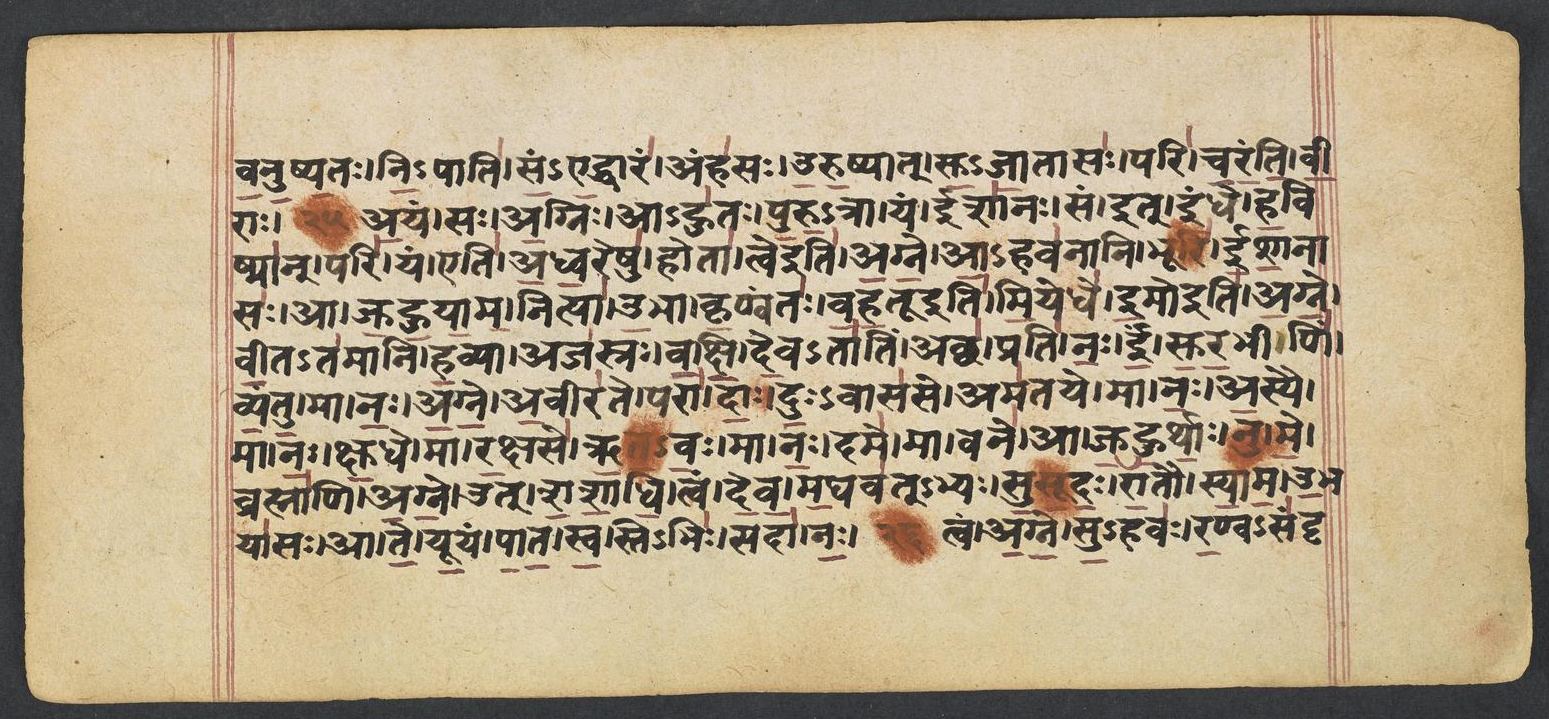
Penn Ms. Coll. 390 Item 41, fol. 493r (numbered 14r by the scribe) (OPenn image 493, lower leaf). Checked on the image: the Rigveda text on this page begins in RV 7.1.15 ‹vanuṣyataḥ ni-pāti sam-eddhāram aṃhasaḥ›. The next page with Rigveda text, fol. 493v (numbered 14v by the scribe), begins in RV 7.1.21 ‹-raṇva-sandṛk su-dītī sūno iti›. Verses 7.1.15-20 end on this page; 7.1.15 begins on fol. 492v (numbered 13v by the scribe).
15sed a̱gnir yo va̍nuṣya̱to ni̱pāti̍ same̱ddhāra̱m aṁha̍sa uru̱ṣyāt | su̱jā̱tāsa̱ḥ pari̍ caranti vī̱rāḥ ||
16a̱yaṁ so a̱gnir āhu̍taḥ puru̱trā yam īśā̍na̱ḥ sam id i̱ndhe ha̱viṣmā̍n | pari̱ yam ety a̍dhva̱reṣu̱ hotā̍ ||
17tve a̍gna ā̱hava̍nāni̱ bhūrī̍śā̱nāsa̱ ā ju̍huyāma̱ nityā̍ | u̱bhā kṛ̱ṇvanto̍ vaha̱tū mi̱yedhe̍ ||
18i̱mo a̍gne vī̱tata̍māni ha̱vyāja̍sro vakṣi de̱vatā̍ti̱m accha̍ | prati̍ na īṁ sura̱bhīṇi̍ vyantu ||
19mā no̍ agne̱ 'vīra̍te̱ parā̍ dā du̱rvāsa̱se 'ma̍taye̱ mā no̍ a̱syai | mā na̍ḥ kṣu̱dhe mā ra̱kṣasa̍ ṛtāvo̱ mā no̱ dame̱ mā vana̱ ā ju̍hūrthāḥ ||
20nū me̱ brahmā̍ṇy agna̱ uc cha̍śādhi̱ tvaṁ de̍va ma̱ghava̍dbhyaḥ suṣūdaḥ | rā̱tau syā̍mo̱bhayā̍sa̱ ā te̍ yū̱yam pā̍ta sva̱stibhi̱ḥ sadā̍ naḥ ||
Compare: Padapāṭha (word-by-word text written in the manuscript; Sansknet e-text via GRETIL)
15saḥ | it | agniḥ | yaḥ | vanuṣyataḥ | ni-pāti | sam-eddhāram | aṃhasaḥ | uruṣyāt | su-jātāsaḥ | pari | caranti | vīrāḥ
16ayam | saḥ | agniḥ | āhutaḥ | puru-trā | yam | īśānaḥ | sam | it | indhe | haviṣmān | pari | yam | eti | adhvareṣu | hotā
17tve iti | agne | āhavanāni | bhūri | īśānāsaḥ | ā | juhuyāma | nityā | ubhā | kṛṇvantaḥ | vahatū iti | miyedhe
18imo iti | agne | vīta-tamāni | havyā | ajasraḥ | vakṣi | deva-tātim | iccha | prati | naḥ | īm | surabhīṇi | vyantu
19mā | naḥ | agne | avīrate | parā | dā | duḥ-vāsase | amataye | mā | naḥ | asyai | mā | naḥ | kṣudhe | mā | rakṣase | ṛta-vaḥ | mā | naḥ | dame | mā | vane | ā | juhūrthāḥ
20nu | me | brahmāṇi | agne | ut | śaśādhi | tvam | deva | maghavat-bhyaḥ | susūdaḥ | rātau | syāma | ubhayāsaḥ | ā | te | yūyam | pāta | svasti-bhiḥ | sadā | naḥ
15This is that Agni, saviour from the foeman, who guards the kindler of the flame from sorrow: Heroes of noble lineage serve and tend him.
16This is that Agni, served in many places, whom the rich lord who brings oblation kindles, And round him goes the priest at sacrifices.
17Agni, may we with riches in possession bring thee continual offerings in abundance, Using both means to draw thee to our worship.
18Agni, bear thou, Eternal, these most welcome oblations to the Deities' assembly: Let them enjoy our very fragrant presents.
19Give us not up, Agni, to want of heroes, to wretched clothes, to need, to destitution. Yield us not, Holy One, to fiend or hunger; injure us not at home or in the forest.
20Give strength and power to these my prayers, O Agni; O God, pour blessings on our chiefs and nobles. Grant that both we and they may share thy bounty. Ye Gods, protect us evermore with blessings.
Where on the image
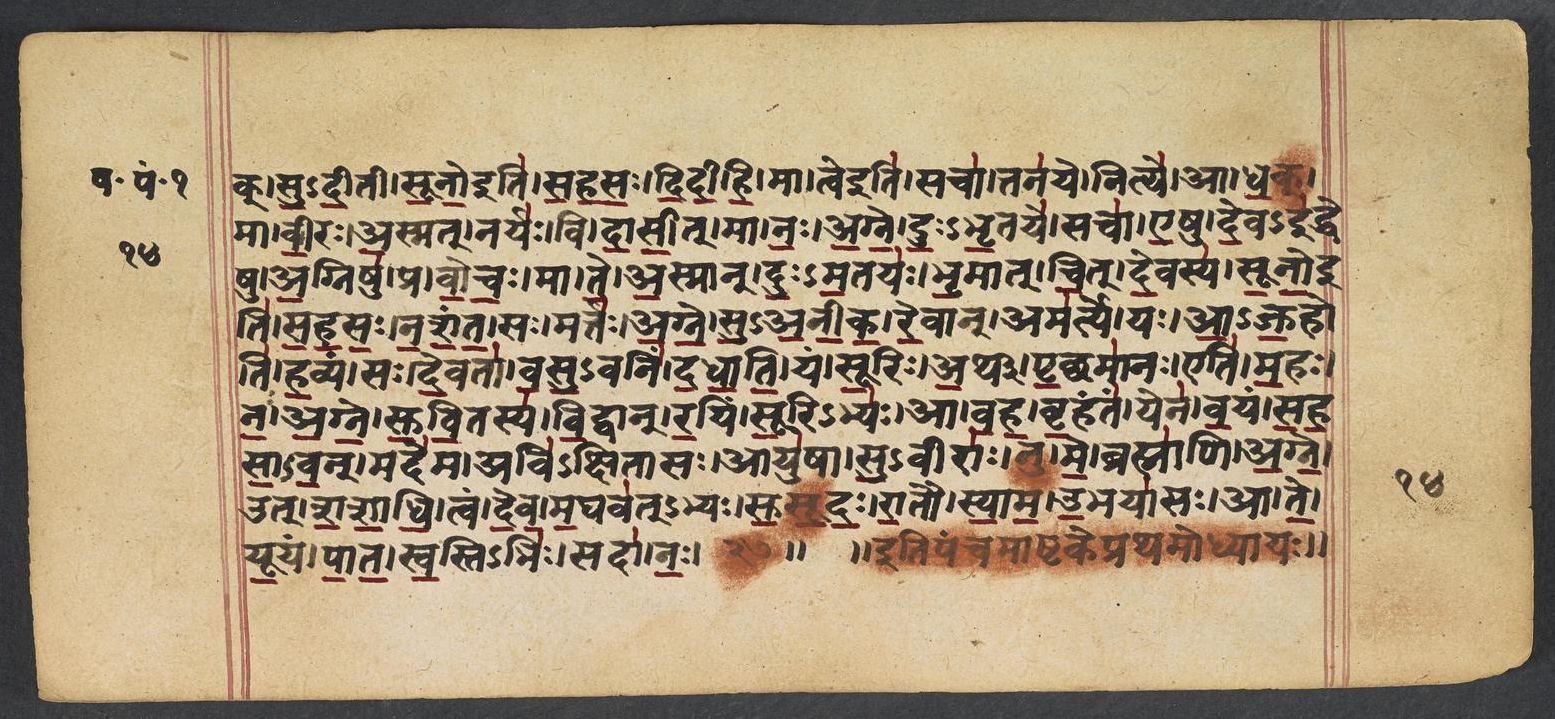
Penn Ms. Coll. 390 Item 41, fol. 493v (numbered 14v by the scribe) (OPenn image 494, upper leaf). Checked on the image: the Rigveda text on this page begins in RV 7.1.21 ‹-raṇva-sandṛk su-dītī sūno iti›. The next page with Rigveda text, fol. 494r (numbered 15r by the scribe), begins in RV 7.2.1 ‹juṣasva naḥ sam-idham agne›. Verses 7.1.21-25 end on this page; 7.1.21 begins on fol. 493r (numbered 14r by the scribe).
21tvam a̍gne su̱havo̍ ra̱ṇvasa̍ṁdṛk sudī̱tī sū̍no sahaso didīhi | mā tve sacā̱ tana̍ye̱ nitya̱ ā dha̱ṅ mā vī̱ro a̱sman naryo̱ vi dā̍sīt ||
22mā no̍ agne durbhṛ̱taye̱ sacai̱ṣu de̱veddhe̍ṣv a̱gniṣu̱ pra vo̍caḥ | mā te̍ a̱smān du̍rma̱tayo̍ bhṛ̱māc ci̍d de̱vasya̍ sūno sahaso naśanta ||
23sa marto̍ agne svanīka re̱vān ama̍rtye̱ ya ā̍ju̱hoti̍ ha̱vyam | sa de̱vatā̍ vasu̱vani̍ṁ dadhāti̱ yaṁ sū̱rir a̱rthī pṛ̱cchamā̍na̱ eti̍ ||
24ma̱ho no̍ agne suvi̱tasya̍ vi̱dvān ra̱yiṁ sū̱ribhya̱ ā va̍hā bṛ̱hanta̍m | yena̍ va̱yaṁ sa̍hasāva̱n made̱māvi̍kṣitāsa̱ āyu̍ṣā su̱vīrā̍ḥ ||
25nū me̱ brahmā̍ṇy agna̱ uc cha̍śādhi̱ tvaṁ de̍va ma̱ghava̍dbhyaḥ suṣūdaḥ | rā̱tau syā̍mo̱bhayā̍sa̱ ā te̍ yū̱yam pā̍ta sva̱stibhi̱ḥ sadā̍ naḥ ||
Compare: Padapāṭha (word-by-word text written in the manuscript; Sansknet e-text via GRETIL)
21tvam | agne | su-havaḥ | raṇva-sandṛk | su-dītī | sūno iti | sahasaḥ | didīhi | mā | tve iti | sacā | tanaye | nitye | ā | dhak | mā | vīraḥ | asmat | naryaḥ | vi | dāsīt
22mā | naḥ | agne | duḥ-bhṛtaye | sacā | eṣu | deva-iddheṣu | agniṣu | pra | vocaḥ | mā | te | asmān | duḥ-matayaḥ | bhṛmāt | cit | devasya | sūno iti | sahasaḥ | naśanta
23saḥ | martaḥ | agne | su-anīka | revān | amartye | yaḥ | ājuhoti | havyam | saḥ | devatā | vasu-vanim | dadhāti | yam | sūriḥ | arthī | pṛcchamānaḥ | eti
24mahaḥ | naḥ | agne | suvitasya | vidvān | rayim | sūri-bhyaḥ | ā | vaha | bṛhantam | yena | vayam | sahasāvan | madema | avi-kṣitāsaḥ | āyuṣā | su-vīrāḥ
25nu | me | brahmāṇi | agne | ut | śaśādhi | tvam | deva | maghavat-bhyaḥ | susūdaḥ | rātau | syāma | ubhayāsaḥ | ā | te | yūyam | pāta | svasti-bhiḥ | sadā | naḥ
21Thou Agni, swift to hear, art fair of aspect: beam forth, O Son of Strength, in full effulgence. Let me not want, with thee, a son for ever: let not a manly hero ever fail us.
22Condemn us not to indigence, O Agni, beside these flaming fires which Gods have kindled; Nor, even after fault, let thy displeasure, thine as a God, O Son of Strength, o'ertake us.
23O Agni, fair of face, the wealthy mortal who to the Immortal offers his oblation. Hath him who wins him treasure by his Godhead, to whom the prince, in need, goes supplicating.
24Knowing our chief felicity, O Agni, bring hither ample riches to our nobles, Wherewith we may enjoy ourselves, O Victor, with undiminished life and hero children.
25Give strength and power to these my prayers, O Agni; O God, pour blessings on our chiefs and nobles. Grant that both we and they may share thy bounty. Ye Gods, protect us evermore with blessings.
Notes
- Sanskrit: Aufrecht's edition (1877) with the Vedic accents, as entered by van Nooten and Holland (GRETIL).
- English: Ralph T. H. Griffith, The Hymns of the Rigveda (1889-1892; 2nd ed. 1896-1897), from the VedaWeb digital text; OCR slips in that text were corrected against the printed 2nd edition (data/sources/rigveda/griffith_errata.json).
- Padapāṭha (edition text): Sansknet e-text via GRETIL (CC BY-NC-SA 4.0).
Cite
Sources
- Source: Penn Ms. Coll. 390 Item 41 (undated (catalogued with Penn's 18th-19th c. Vedic manuscripts)), OPenn, Public Domain Mark + Aufrecht's accented text (GRETIL) + Griffith's English (VedaWeb) (holding institution)
- Critical edition: Aufrecht (1877), accented e-text via GRETIL
← previous · → next · v cycle view · l back to library