Rigveda 6.9: To Agni Vaisvanara
Introduction
Rigveda 6.9 is a hymn of 7 verses addressed to Agni Vaisvanara. It stands in book (maṇḍala) 6, the family book of Bharadvāja. The Rigveda is the oldest collection of Sanskrit hymns, composed in the second half of the second millennium BCE and handed down orally for many centuries before it was written down.
The manuscript shown is Penn Ms. Coll. 390 Item 41 (University of Pennsylvania), an undated paper manuscript of the padapāṭha (the word-by-word recitation text, in which every word is written separately and compounds are split) of the whole Ṛgveda in Devanāgarī, 884 leaves in fascicles, 7-9 lines to the page, accents in red; this hymn stands on fol. 411r-412r. Each section below gives the verses that end on one page; the page boundaries were read on the images (the opening words of every page), not counted out. Where the manuscript is a padapāṭha (the word-by-word recitation text), the section shows Aufrecht's continuous (saṃhitā) text first and, as the edition text, the padapāṭha of the same verses, which is the form written on the page.
How was this verified? (Provenance)
Where on the image
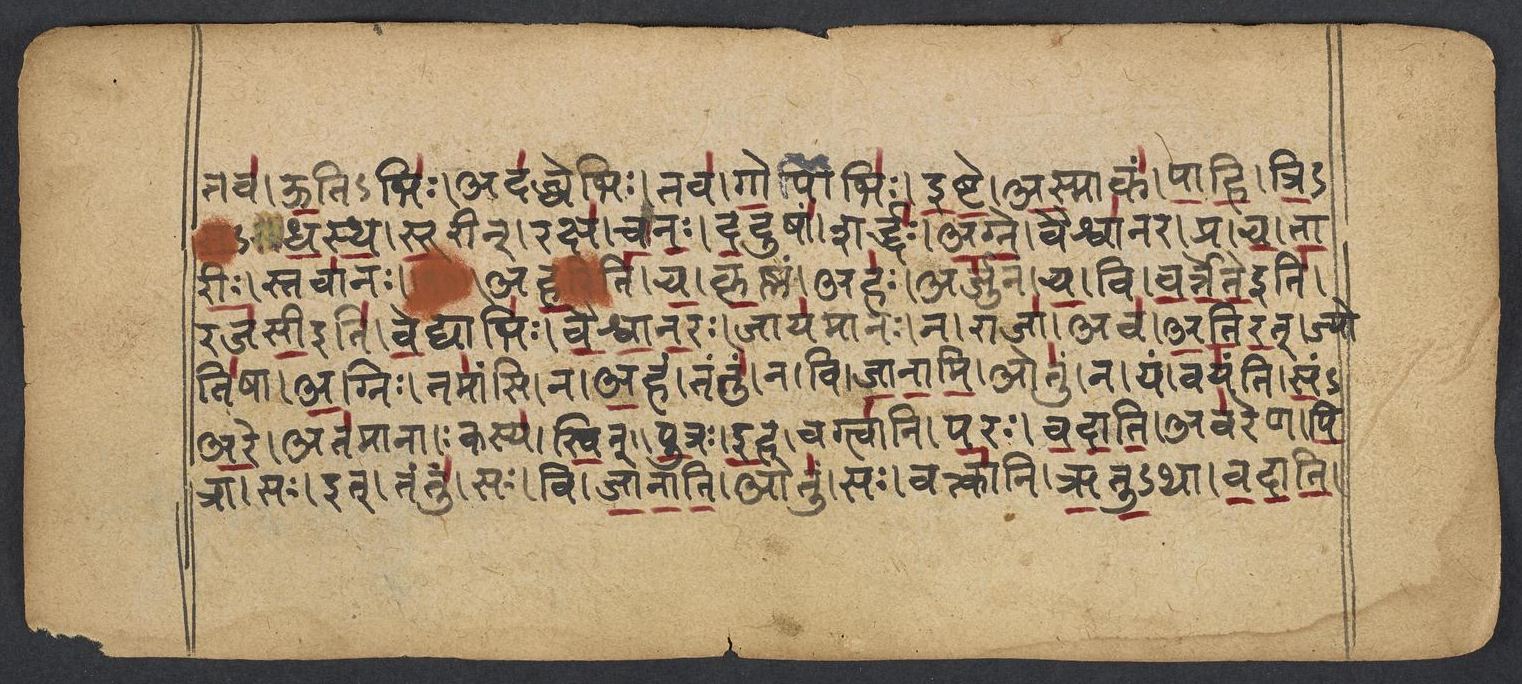
Penn Ms. Coll. 390 Item 41, fol. 411r (numbered 84r by the scribe) (OPenn image 411, lower leaf). Checked on the image: the Rigveda text on this page begins in RV 6.8.6 ‹tava ūti-bhiḥ›. The next page with Rigveda text, fol. 411v (numbered 84v by the scribe), begins in RV 6.9.3 ‹-vadāti yaḥ īm ciketat›. Verses 6.9.1-2 end on this page.
1aha̍ś ca kṛ̱ṣṇam aha̱r arju̍naṁ ca̱ vi va̍rtete̱ raja̍sī ve̱dyābhi̍ḥ | vai̱śvā̱na̱ro jāya̍māno̱ na rājāvā̍tira̱j jyoti̍ṣā̱gnis tamā̍ṁsi ||
2nāhaṁ tantu̱ṁ na vi jā̍nā̱my otu̱ṁ na yaṁ vaya̍nti sama̱re 'ta̍mānāḥ | kasya̍ svit pu̱tra i̱ha vaktvā̍ni pa̱ro va̍dā̱ty ava̍reṇa pi̱trā ||
Compare: Padapāṭha (word-by-word text written in the manuscript; Sansknet e-text via GRETIL)
1ahaḥ | ca | kṛṣṇam | ahaḥ | arjunam | ca | vi | varteteiti | rajasī iti | vedyābhiḥ | vaiśvānaraḥ | jāyamānaḥ | na | rājā | ava | atirat | jyotiṣā | agniḥ | tamāṃsi
2na | aham | tantum | na | vi | jānāmi | otum | na | yam | vayanti | sam-are | atamānāḥ | kasya | svit | putraḥ | iha | vaktvāni | paraḥ | vadāti | avareṇa | pitrā
1ONE half of day is dark, and bright the other: both atmospheres move on by sage devices. Agni Vaiṣvânara, when born as Sovran, hath with his lustre overcome the darkness.
2I know not either warp or woof, I know not the web they weave when moving to the contest. Whose son shall here speak words that must be spoken without assistance from the Father near him?
Where on the image
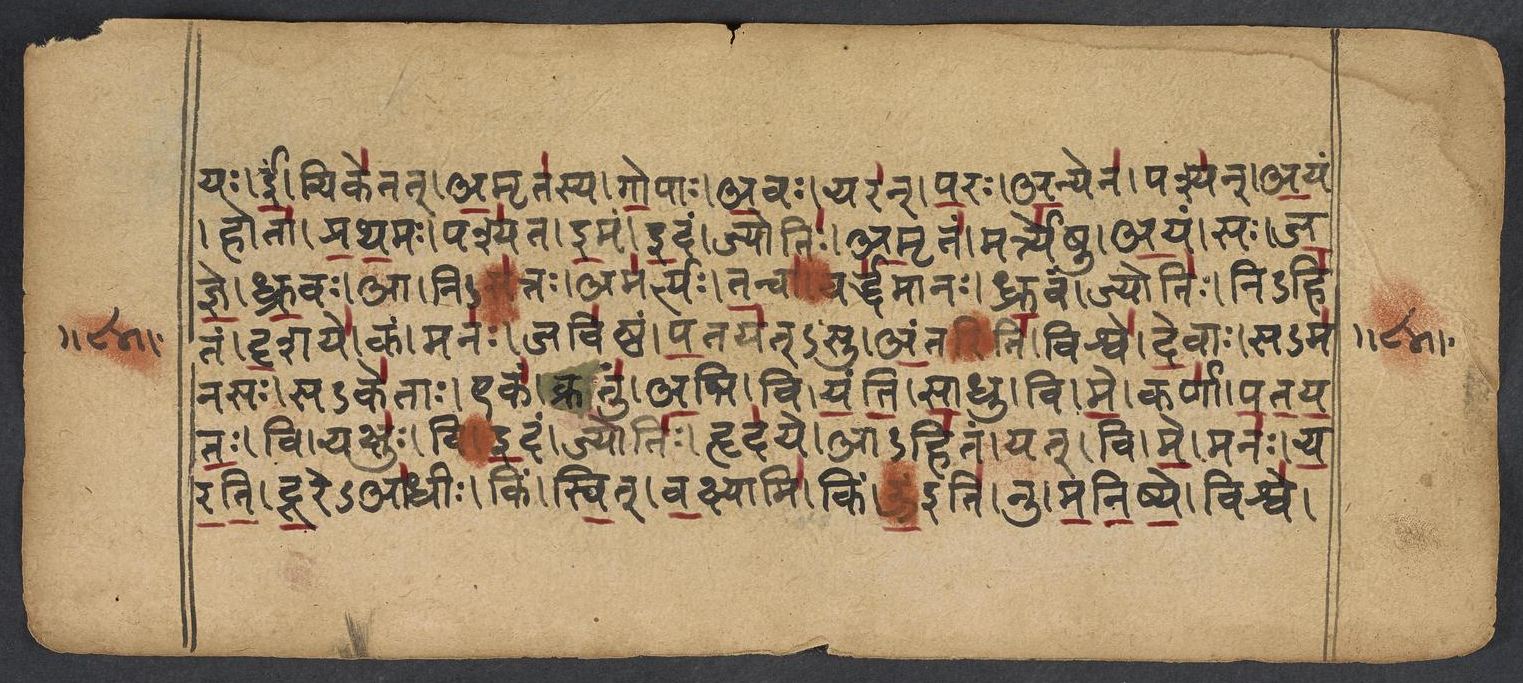
Penn Ms. Coll. 390 Item 41, fol. 411v (numbered 84v by the scribe) (OPenn image 412, upper leaf). Checked on the image: the Rigveda text on this page begins in RV 6.9.3 ‹-vadāti yaḥ īm ciketat›. The next page with Rigveda text, fol. 412r (numbered 85r by the scribe), begins in RV 6.9.7 ‹devāḥ anamasyan bhiyānāḥ tvām›. Verses 6.9.3-6 end on this page; 6.9.3 begins on fol. 411r (numbered 84r by the scribe).
3sa it tantu̱ṁ sa vi jā̍nā̱ty otu̱ṁ sa vaktvā̍ny ṛtu̱thā va̍dāti | ya ī̱ṁ cike̍tad a̱mṛta̍sya go̱pā a̱vaś cara̍n pa̱ro a̱nyena̱ paśya̍n ||
4a̱yaṁ hotā̍ pratha̱maḥ paśya̍te̱mam i̱daṁ jyoti̍r a̱mṛta̱m martye̍ṣu | a̱yaṁ sa ja̍jñe dhru̱va ā niṣa̱tto 'ma̍rtyas ta̱nvā̱3̱̍ vardha̍mānaḥ ||
5dhru̱vaṁ jyoti̱r nihi̍taṁ dṛ̱śaye̱ kam mano̱ javi̍ṣṭham pa̱taya̍tsv a̱ntaḥ | viśve̍ de̱vāḥ sama̍nasa̱ḥ sake̍tā̱ eka̱ṁ kratu̍m a̱bhi vi ya̍nti sā̱dhu ||
6vi me̱ karṇā̍ patayato̱ vi cakṣu̱r vī̱3̱̍daṁ jyoti̱r hṛda̍ya̱ āhi̍ta̱ṁ yat | vi me̱ mana̍ś carati dū̱raā̍dhī̱ḥ kiṁ svi̍d va̱kṣyāmi̱ kim u̱ nū ma̍niṣye ||
Compare: Padapāṭha (word-by-word text written in the manuscript; Sansknet e-text via GRETIL)
3saḥ | it | tantum | saḥ | vi | jānāti | otum | saḥ | vaktvāni | ṛtu-thā | vadāti | yaḥ | īm | ciketat | amṛtasya | gopāḥ | avaḥ | caran | paraḥ | anyena | paśyan
4ayam | hotā | prathamaḥ | paśyata | imam | idam | jyotiḥ | amṛtam | martyeṣu | ayam | saḥ | jajñe | dhruvaḥ | ā | ni-sattaḥ | amartyaḥ | tanvā | vardhamānaḥ
5dhruvam | jyotiḥ | ni-hitam | dṛśaye | kam | manaḥ | javiṣṭham | patayat-su | antariti | viśve | devāḥ | sa-manasaḥ | sa-ketāḥ | ekam | kratum | abhi | vi | yānti | sādhu
6vi | me | karṇā | patayataḥ | vi | cakṣuḥ | vi | idam | jyotiḥ | hṛdaye | āhitam | yat | vi | me | manaḥ | carati | dūre--ādhīḥ | kim | svit | vakṣyāmi | kim | oṃ iti | nu | maniṣye
3For both the warp and woof he understandeth, and in due time shall speak what should be spoken, Who knoweth as the immortal world's Protector, descending, seeing with no aid from other.
4He is the Priest, the first of all: behold him. Mid mortal men he is the light immortal. Here was he born, firm-seated in his station Immortal, ever waxing in his body.
5A firm light hath been set for men to look on: among all things that fly the mind is swiftest. All Gods of one accord, with one intention, move unobstructed to a single purpose.
6Mine ears unclose to hear, mine eye to see him; the light that harbours in my spirit broadens. Far roams my mind whose thoughts are in the distance. What shall I speak, what shall I now imagine?
Where on the image
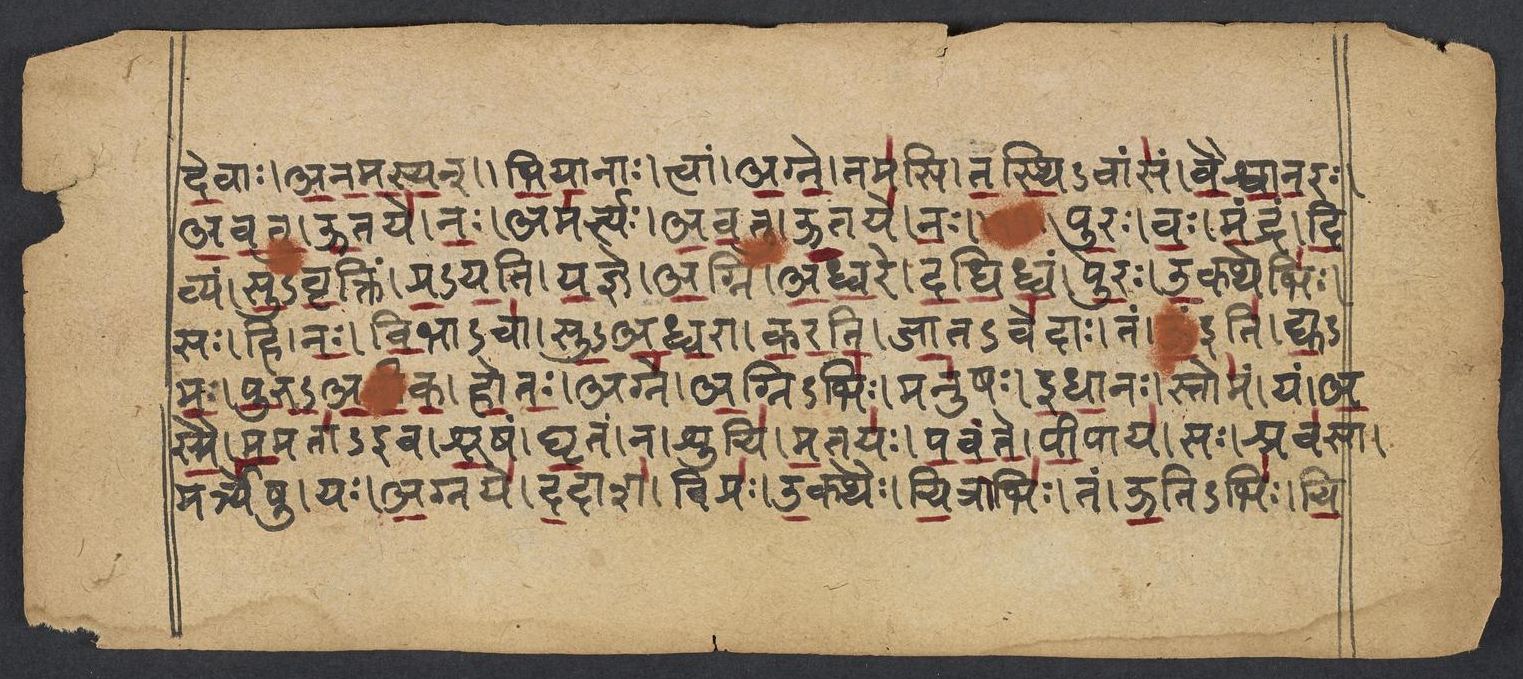
Penn Ms. Coll. 390 Item 41, fol. 412r (numbered 85r by the scribe) (OPenn image 412, lower leaf). Checked on the image: the Rigveda text on this page begins in RV 6.9.7 ‹devāḥ anamasyan bhiyānāḥ tvām›. The next page with Rigveda text, fol. 412v (numbered 85v by the scribe), begins in RV 6.10.3 ‹-citra-śociḥ vrajasya sātā go--mataḥ›. Verse 6.9.7 ends on this page; 6.9.7 begins on fol. 411v (numbered 84v by the scribe).
7viśve̍ de̱vā a̍namasyan bhiyā̱nās tvām a̍gne̱ tama̍si tasthi̱vāṁsa̍m | vai̱śvā̱na̱ro̍ 'vatū̱taye̱ no 'ma̍rtyo 'vatū̱taye̍ naḥ ||
Compare: Padapāṭha (word-by-word text written in the manuscript; Sansknet e-text via GRETIL)
7viśve | devāḥ | anamasyan | bhiyānāḥ | tvām | agne | tamasi | tasthi-vāṃsam | vaiśvānaraḥ | avatu | ūtaye | naḥ | amartyaḥ | avatu | ūtaye | naḥ
7All the Gods bowed them down in fear before thee, Agni, when thou wast dwelling in the darkness. Vaiṣvânara be gracious to assist us, may the Immortal favour us and help us.
Notes
- Sanskrit: Aufrecht's edition (1877) with the Vedic accents, as entered by van Nooten and Holland (GRETIL).
- English: Ralph T. H. Griffith, The Hymns of the Rigveda (1889-1892; 2nd ed. 1896-1897), from the VedaWeb digital text; OCR slips in that text were corrected against the printed 2nd edition (data/sources/rigveda/griffith_errata.json).
- Padapāṭha (edition text): Sansknet e-text via GRETIL (CC BY-NC-SA 4.0).
Cite
Sources
- Source: Penn Ms. Coll. 390 Item 41 (undated (catalogued with Penn's 18th-19th c. Vedic manuscripts)), OPenn, Public Domain Mark + Aufrecht's accented text (GRETIL) + Griffith's English (VedaWeb) (holding institution)
- Critical edition: Aufrecht (1877), accented e-text via GRETIL
← previous · → next · v cycle view · l back to library