Rigveda 7.11: To Agni
Introduction
Rigveda 7.11 is a hymn of 5 verses addressed to Agni. It stands in book (maṇḍala) 7, the family book of Vasiṣṭha. The Rigveda is the oldest collection of Sanskrit hymns, composed in the second half of the second millennium BCE and handed down orally for many centuries before it was written down.
The manuscript shown is Penn Ms. Coll. 390 Item 41 (University of Pennsylvania), an undated paper manuscript of the padapāṭha (the word-by-word recitation text, in which every word is written separately and compounds are split) of the whole Ṛgveda in Devanāgarī, 884 leaves in fascicles, 7-9 lines to the page, accents in red; this hymn stands on fol. 499v-500r. Each section below gives the verses that end on one page; the page boundaries were read on the images (the opening words of every page), not counted out. Where the manuscript is a padapāṭha (the word-by-word recitation text), the section shows Aufrecht's continuous (saṃhitā) text first and, as the edition text, the padapāṭha of the same verses, which is the form written on the page.
How was this verified? (Provenance)
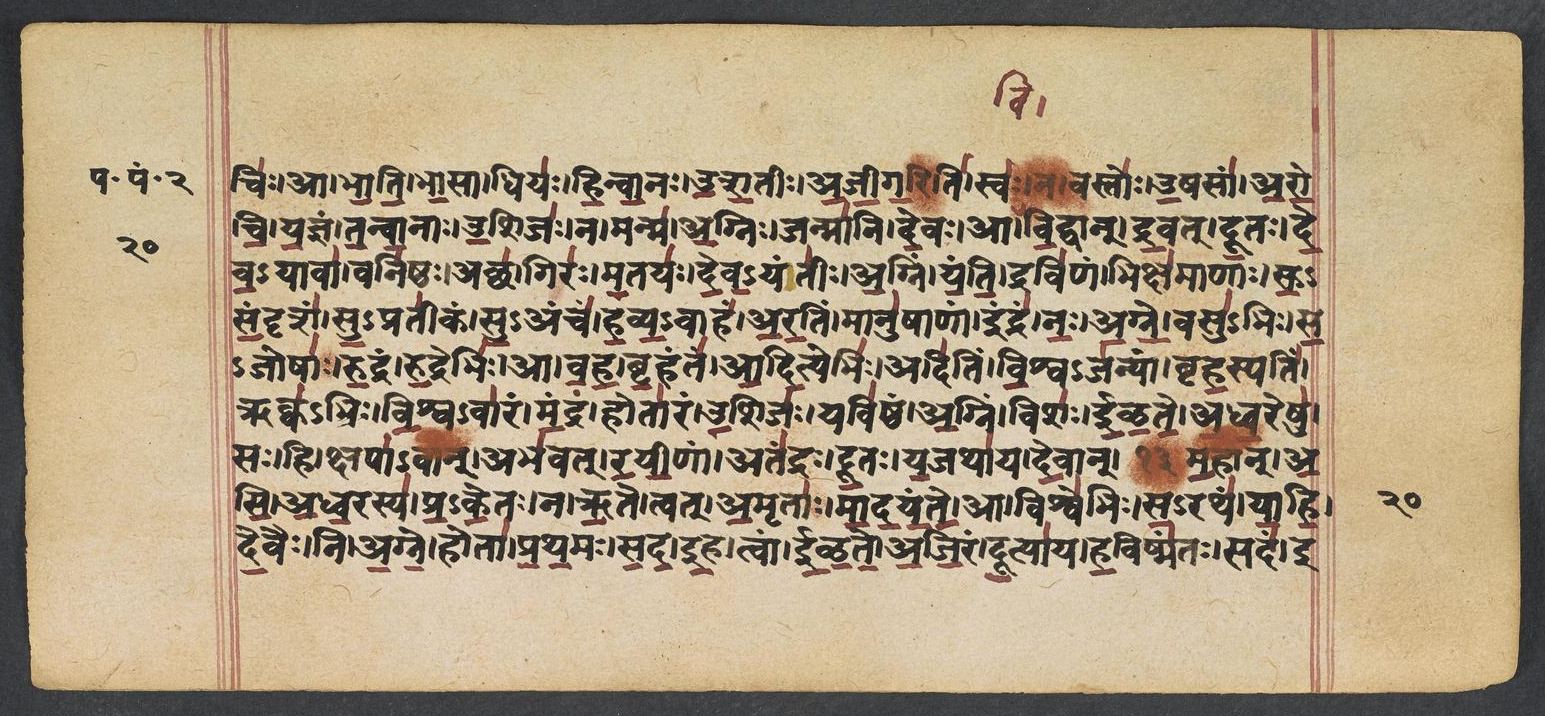
Where on the image
Penn Ms. Coll. 390 Item 41, fol. 499v (numbered 20v by the scribe) (OPenn image 500, upper leaf). Checked on the image: the Rigveda text on this page begins in RV 7.10.1 ‹-śuciḥ ā bhāti bhāsā›. The next page with Rigveda text, fol. 500r (numbered 21r by the scribe), begins in RV 7.11.2 ‹-it mānuṣāsaḥ yasya devaiḥ›. Verse 7.11.1 ends on this page.
1ma̱hām̐ a̍sy adhva̱rasya̍ prake̱to na ṛ̱te tvad a̱mṛtā̍ mādayante | ā viśve̍bhiḥ sa̱ratha̍ṁ yāhi de̱vair ny a̍gne̱ hotā̍ pratha̱maḥ sa̍de̱ha ||
Compare: Padapāṭha (word-by-word text written in the manuscript; Sansknet e-text via GRETIL)
1mahān | asi | adhvarasya | pra-ketaḥ | na | ṛte | tvat | amṛtāḥ | mādayante | ā | v iśvebhiḥ | saratham | yāhi | devaiḥ | ni | agne | hotā | prathamaḥ | sada | iha
1GREAT art thou, Agni, sacrifice's Herald: not without thee are deathless Gods made joyful. Come hither with all Deities about thee here take thy seat, the first, as Priest, O Agni.
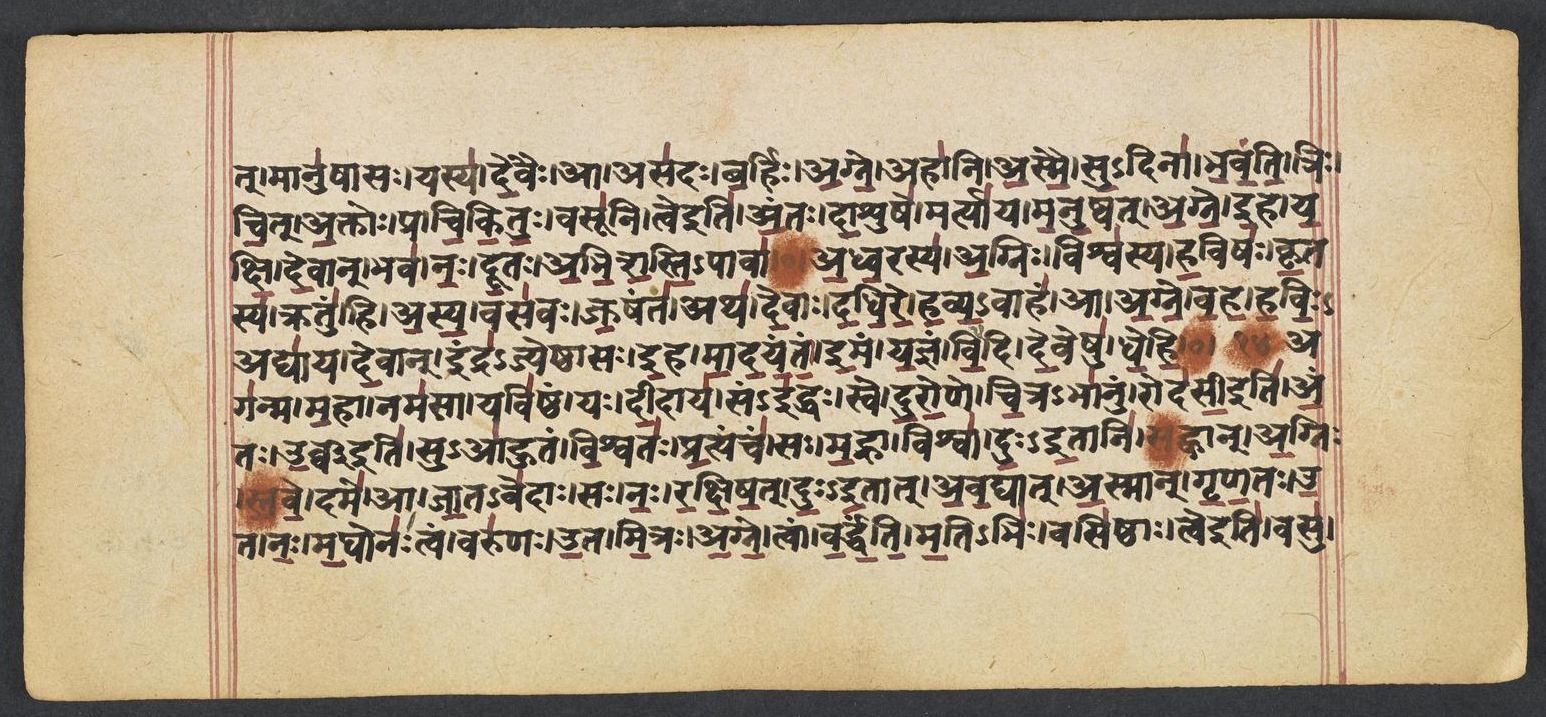
Where on the image
Penn Ms. Coll. 390 Item 41, fol. 500r (numbered 21r by the scribe) (OPenn image 500, lower leaf). Checked on the image: the Rigveda text on this page begins in RV 7.11.2 ‹-it mānuṣāsaḥ yasya devaiḥ›. The next page with Rigveda text, fol. 500v (numbered 21v by the scribe), begins in RV 7.12.3 ‹su-saṇanāni santu yūyam pāta›. Verses 7.11.2-5 end on this page; 7.11.2 begins on fol. 499v (numbered 20v by the scribe).
2tvām ī̍ḻate aji̱raṁ dū̱tyā̍ya ha̱viṣma̍nta̱ḥ sada̱m in mānu̍ṣāsaḥ | yasya̍ de̱vair āsa̍do ba̱rhir a̱gne 'hā̍ny asmai su̱dinā̍ bhavanti ||
3triś ci̍d a̱ktoḥ pra ci̍kitu̱r vasū̍ni̱ tve a̱ntar dā̱śuṣe̱ martyā̍ya | ma̱nu̱ṣvad a̍gna i̱ha ya̍kṣi de̱vān bhavā̍ no dū̱to a̍bhiśasti̱pāvā̍ ||
4a̱gnir ī̍śe bṛha̱to a̍dhva̱rasyā̱gnir viśva̍sya ha̱viṣa̍ḥ kṛ̱tasya̍ | kratu̱ṁ hy a̍sya̱ vasa̍vo ju̱ṣantāthā̍ de̱vā da̍dhire havya̱vāha̍m ||
5āgne̍ vaha havi̱radyā̍ya de̱vān indra̍jyeṣṭhāsa i̱ha mā̍dayantām | i̱maṁ ya̱jñaṁ di̱vi de̱veṣu̍ dhehi yū̱yam pā̍ta sva̱stibhi̱ḥ sadā̍ naḥ ||
Compare: Padapāṭha (word-by-word text written in the manuscript; Sansknet e-text via GRETIL)
2tvām | īḷate | ajiram | dūtyāya | haviṣmantaḥ | sadam | it | mānuṣāsaḥ | yasya | devaiḥ | ā | asadaḥ | barhiḥ | agne | ahāni | asmai | su-dinā | bhavanti
3triḥ | cit | aktoḥ | pra | cikituḥ | vasūni | tve iti | antaḥ | dāśuṣe | martyāya | manuṣvat | agne | iha | yakṣi | devān | bhava | naḥ | dūtaḥ | abhiśasti-pāvā
4agniḥ | īśe | bṛhataḥ | adhvarasya | agniḥ | viśvasya | haviṣaḥ | kṛtasya | kratum | hi | asya | vasavaḥ | juṣanta | atha | devāḥ | dadhire | havya-vāham
5ā | agne | vaha | haviḥ-adyāya | devān | indra-jyeṣṭhāsaḥ | iha | mādayantām | imam | yajñam | divi | deveṣu | dhehi | yūyam | pāta | svasti-bhiḥ | sadā | naḥ
2Men with oblations evermore entreat thee, the swift, to undertake an envoy's duty. He on whose sacred grass with Gods thou sittest, to him, O Agni, are the days propitious.
3Three times a day in thee are shown the treasures sent for the mortal who presents oblation. Bring the Gods hither like a man, O Agni: be thou our envoy, guarding us from curses.
4Lord of the lofty sacrifice is Agni, Agni is Lord of every gift presented. The Vasus were contented with his wisdom, so the Gods made him their oblationbearer.
5O Agni, bring the Gods to taste our presents: with Indra leading, here let them be joyful. Convey this sacrifice to Gods in heaven. Ye Gods, preserve us evermore with blessings.
Notes
- Sanskrit: Aufrecht's edition (1877) with the Vedic accents, as entered by van Nooten and Holland (GRETIL).
- English: Ralph T. H. Griffith, The Hymns of the Rigveda (1889-1892; 2nd ed. 1896-1897), from the VedaWeb digital text; OCR slips in that text were corrected against the printed 2nd edition (data/sources/rigveda/griffith_errata.json).
- Padapāṭha (edition text): Sansknet e-text via GRETIL (CC BY-NC-SA 4.0).
Cite
Sources
- Source: Penn Ms. Coll. 390 Item 41 (undated (catalogued with Penn's 18th-19th c. Vedic manuscripts)), OPenn, Public Domain Mark + Aufrecht's accented text (GRETIL) + Griffith's English (VedaWeb) (holding institution)
- Critical edition: Aufrecht (1877), accented e-text via GRETIL
← previous · → next · v cycle view · l back to library