Rigveda 7.34: To all the gods
Introduction
Rigveda 7.34 is a hymn of 25 verses addressed to all the gods. It stands in book (maṇḍala) 7, the family book of Vasiṣṭha. The Rigveda is the oldest collection of Sanskrit hymns, composed in the second half of the second millennium BCE and handed down orally for many centuries before it was written down.
The manuscript shown is Penn Ms. Coll. 390 Item 41 (University of Pennsylvania), an undated paper manuscript of the padapāṭha (the word-by-word recitation text, in which every word is written separately and compounds are split) of the whole Ṛgveda in Devanāgarī, 884 leaves in fascicles, 7-9 lines to the page, accents in red; this hymn stands on fol. 515v-516v. Each section below gives the verses that end on one page; the page boundaries were read on the images (the opening words of every page), not counted out. Where the manuscript is a padapāṭha (the word-by-word recitation text), the section shows Aufrecht's continuous (saṃhitā) text first and, as the edition text, the padapāṭha of the same verses, which is the form written on the page.
How was this verified? (Provenance)
Where on the image
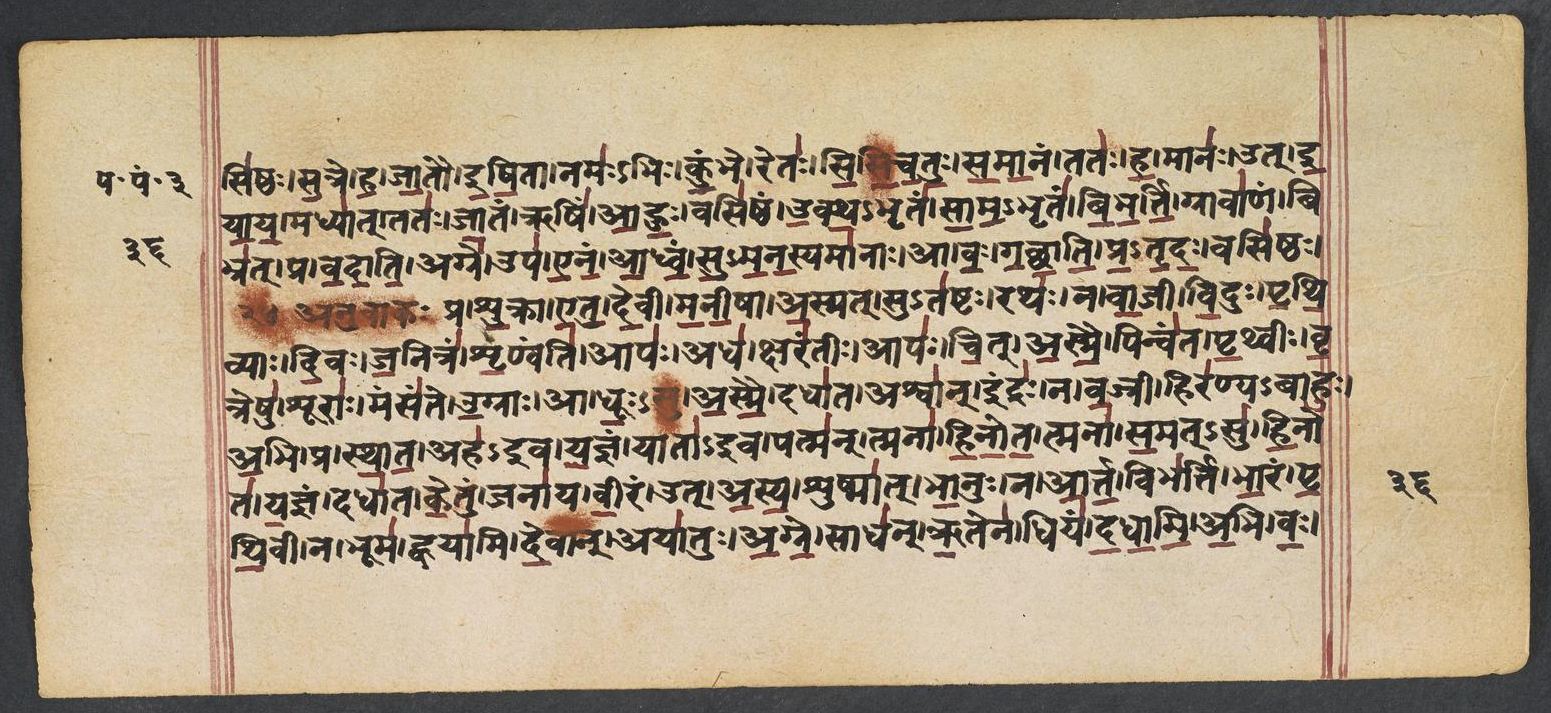
Penn Ms. Coll. 390 Item 41, fol. 515v (numbered 36v by the scribe) (OPenn image 516, upper leaf). Checked on the image: the Rigveda text on this page begins in RV 7.33.12 ‹-vasiṣṭhaḥ›. The next page with Rigveda text, fol. 516r (numbered 37r by the scribe), begins in RV 7.34.9 ‹devīm dhiyam dadhidhvam pra›. Verses 7.34.1-8 end on this page.
1pra śu̱kraitu̍ de̱vī ma̍nī̱ṣā a̱smat suta̍ṣṭo̱ ratho̱ na vā̱jī ||
2vi̱duḥ pṛ̍thi̱vyā di̱vo ja̱nitra̍ṁ śṛ̱ṇvanty āpo̱ adha̱ kṣara̍ntīḥ ||
3āpa̍ś cid asmai̱ pinva̍nta pṛ̱thvīr vṛ̱treṣu̱ śūrā̱ maṁsa̍nta u̱grāḥ ||
4ā dhū̱rṣv a̍smai̱ dadhā̱tāśvā̱n indro̱ na va̱jrī hira̍ṇyabāhuḥ ||
5a̱bhi pra sthā̱tāhe̍va ya̱jñaṁ yāte̍va̱ patma̱n tmanā̍ hinota ||
6tmanā̍ sa̱matsu̍ hi̱nota̍ ya̱jñaṁ dadhā̍ta ke̱tuṁ janā̍ya vī̱ram ||
7ud a̍sya̱ śuṣmā̍d bhā̱nur nārta̱ bibha̍rti bhā̱ram pṛ̍thi̱vī na bhūma̍ ||
8hvayā̍mi de̱vām̐ ayā̍tur agne̱ sādha̍nn ṛ̱tena̱ dhiya̍ṁ dadhāmi ||
Compare: Padapāṭha (word-by-word text written in the manuscript; Sansknet e-text via GRETIL)
1pra | śukrā | etu | devī | manīṣā | asmat | su-taṣṭaḥ | rathaḥ | na | vājī
2viduḥ | pṛthivyāḥ | divaḥ | janitram | śṛṇvanti | āpaḥ | adha | kṣarantīḥ
3āpaḥ | cit | asmai | pinvanta | pṛthvīḥ | vṛtreṣu | śūrāḥ | maṃsante | ugrāḥ
4ā | dhūrṣu | asmai | dadhāta | aśvān | indraḥ | na | vajrī | hiraṇya-bāhuḥ
5abhi | pra | sthāta | aha-iva | yajñam | yātāiva | patman | tmanā | hinota
6tmanā | samat-su | hinota | yajñam | dadhāta | ketum | janāya | vīram
7ut | asya | śuṣmāt | bhānuḥ | na | ārta | bibharti | bhāram | pṛthivī | na | bhūma
8hvayāmi | devān | ayātuḥ | agne | sādhan | ṛtena | dhiyam | dadhāmi
1MAY our divine and brilliant hymn go forth, like a swift chariot wrought and fashioned well.
2The waters listen as they flow along: they know the origin of heaven and earth.
3Yea, the broad waters swell their flood for him: of him strong heroes think amid their foes.
4Set ye for him the coursers to the pole: like Indra Thunderer is the Golden-armed.
5Arouse you, like the days, to sacrifice speed gladly like a traveller on the way.
6Go swift to battles, to the sacrifice: set up a flag, a hero for the folk.
7Up from his strength hath risen as 'twere a light: it bears the load as earth bears living things.
8Agni, no demon I invoke the Gods: by law completing it, I form a hymn.
Where on the image
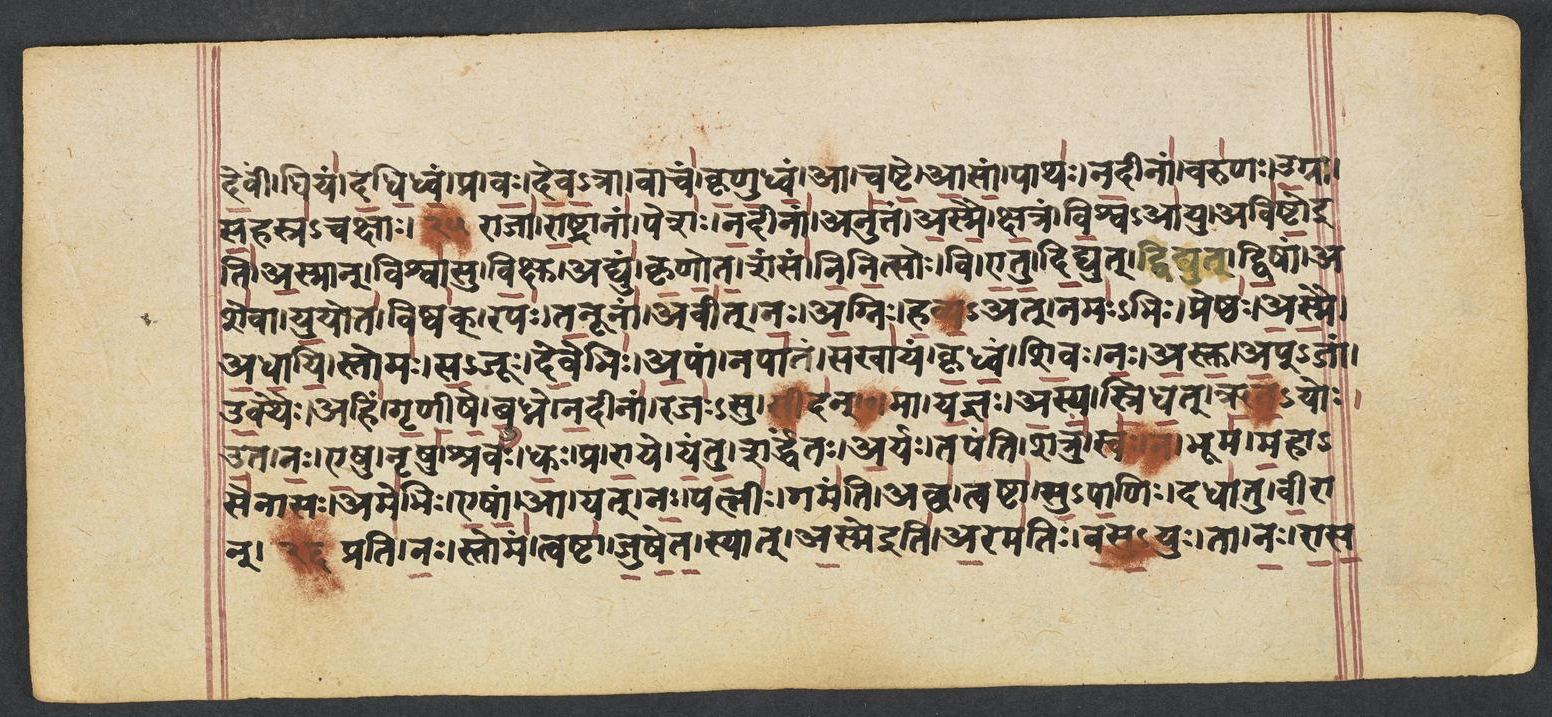
Penn Ms. Coll. 390 Item 41, fol. 516r (numbered 37r by the scribe) (OPenn image 516, lower leaf). Checked on the image: the Rigveda text on this page begins in RV 7.34.9 ‹devīm dhiyam dadhidhvam pra›. The next page with Rigveda text, fol. 516v (numbered 37v by the scribe), begins in RV 7.34.22 ‹-rāsan rāti-sācaḥ vasūni ā›. Verses 7.34.9-21 end on this page; 7.34.9 begins on fol. 515v (numbered 36v by the scribe).
9a̱bhi vo̍ de̱vīṁ dhiya̍ṁ dadhidhva̱m pra vo̍ deva̱trā vāca̍ṁ kṛṇudhvam ||
10ā ca̍ṣṭa āsā̱m pātho̍ na̱dīnā̱ṁ varu̍ṇa u̱graḥ sa̱hasra̍cakṣāḥ ||
11rājā̍ rā̱ṣṭrānā̱m peśo̍ na̱dīnā̱m anu̍ttam asmai kṣa̱traṁ vi̱śvāyu̍ ||
12avi̍ṣṭo a̱smān viśvā̍su vi̱kṣv adyu̍ṁ kṛṇota̱ śaṁsa̍ṁ nini̱tsoḥ ||
13vy e̍tu di̱dyud dvi̱ṣām aśe̍vā yu̱yota̱ viṣva̱g rapa̍s ta̱nūnā̍m ||
14avī̍n no a̱gnir ha̱vyān namo̍bhi̱ḥ preṣṭho̍ asmā adhāyi̱ stoma̍ḥ ||
15sa̱jūr de̱vebhi̍r a̱pāṁ napā̍ta̱ṁ sakhā̍yaṁ kṛdhvaṁ śi̱vo no̍ astu ||
16a̱bjām u̱kthair ahi̍ṁ gṛṇīṣe bu̱dhne na̱dīnā̱ṁ raja̍ḥsu̱ ṣīda̍n ||
17mā no 'hi̍r bu̱dhnyo̍ ri̱ṣe dhā̱n mā ya̱jño a̍sya sridhad ṛtā̱yoḥ ||
18u̱ta na̍ e̱ṣu nṛṣu̱ śravo̍ dhu̱ḥ pra rā̱ye ya̍ntu̱ śardha̍nto a̱ryaḥ ||
19tapa̍nti̱ śatru̱ṁ sva1̱̍r ṇa bhūmā̍ ma̱hāse̍nāso̱ ame̍bhir eṣām ||
20ā yan na̱ḥ patnī̱r gama̱nty acchā̱ tvaṣṭā̍ supā̱ṇir dadhā̍tu vī̱rān ||
21prati̍ na̱ḥ stoma̱ṁ tvaṣṭā̍ juṣeta̱ syād a̱sme a̱rama̍tir vasū̱yuḥ ||
Compare: Padapāṭha (word-by-word text written in the manuscript; Sansknet e-text via GRETIL)
9abhi | vaḥ | devīm | dhiyam | dadhidhvam | pra | vaḥ | deva-trā | vācam | kṛṇudhvam
10ā | caṣṭe | āsām | pāthaḥ | nadīnām | varuṇaḥ | ugraḥ | sahasra-cakṣāḥ
11rājā | rāṣṭrānām | peśaḥ | nadīnām | anuttam | asmai | kṣatram | viśva-āyu
12aviṣṭo iti asmān | viśvāsu | vikṣu | adyum | kṛṇota | śaṃsam | ninitsoḥ
13vi | etu | didyut | dviṣām | aśevā | yuyota | viṣvak | rapaḥ | tanūnām
14avīt | naḥ | agniḥ | havya-at | namaḥ-bhiḥ | preṣṭhaḥ | asmai | adhāyi | stomaḥ
15sa-jūḥ | devebhiḥ | apām | napātam | sakhāyam | kṛdhvam | śivaḥ | naḥ | astu
16ap-jām | ukthaiḥ | ahim | gṛṇīṣe | budhne | nadīnām | rajaḥ-su | sīdan
17mā | naḥ | ahiḥ | budhnyaḥ | riṣe | dhāt | mā | yajñaḥ | asya | sridhat | ṛta-yoḥ
18uta | naḥ | eṣu | nṛṣu | śravaḥ | dhuḥ | pra | rāye | yantu | śardhantaḥ | aryaḥ
19tapanti | śatrum | svaḥ | na | bhūma | mahāsenāsaḥ | amebhiḥ | eṣām
20ā | yat | naḥ | patnīḥ | gamanti | accha | tvaṣṭā | su-pāṇiḥ | dadhātu | vīrān
21prati | naḥ | stomam | tvaṣṭā | juṣeta | syāt | asme iti | aramatiḥ | vasu-yuḥ
9Closely about you lay your heavenly song, and send your voice to where the Gods abide.
10Varuṇa, Mighty, with a thousand eyes, beholds the paths wherein these rivers run.
11He, King of kings, the glory of the floods, o'er all that liveth hath resistless sway.
12May he assist us among all the tribes, and make the envier's praise devoid of light.
13May the foes' threatening arrow pass us by: may he put far from us our bodies' sin.
14Agni, oblation-cater, through our prayers aid us: to him our dearest laud is brought.
15Accordant with the Gods choose for our Friend the Waters' Child: may he be good to us.
16With lauds I sing the Dragon born of floods: he sits beneath the streams in middle air.
17Ne'er may the Dragon of the Deep harm us: ne'er fail this faithful servant's sacrifice.
18To these our heroes may they grant renown: may pious men march boldly on to wealth.
19Leading great hosts, with fierce attacks of these, they burn their foes as the Sun burns the earth.
20What time our wives draw near to us, may he, deft-handed Tvashṭar, give us hero sons.
21May Tvashṭar find our hymn acceptable, and may Aramati, seeking wealth, be ours.
Where on the image
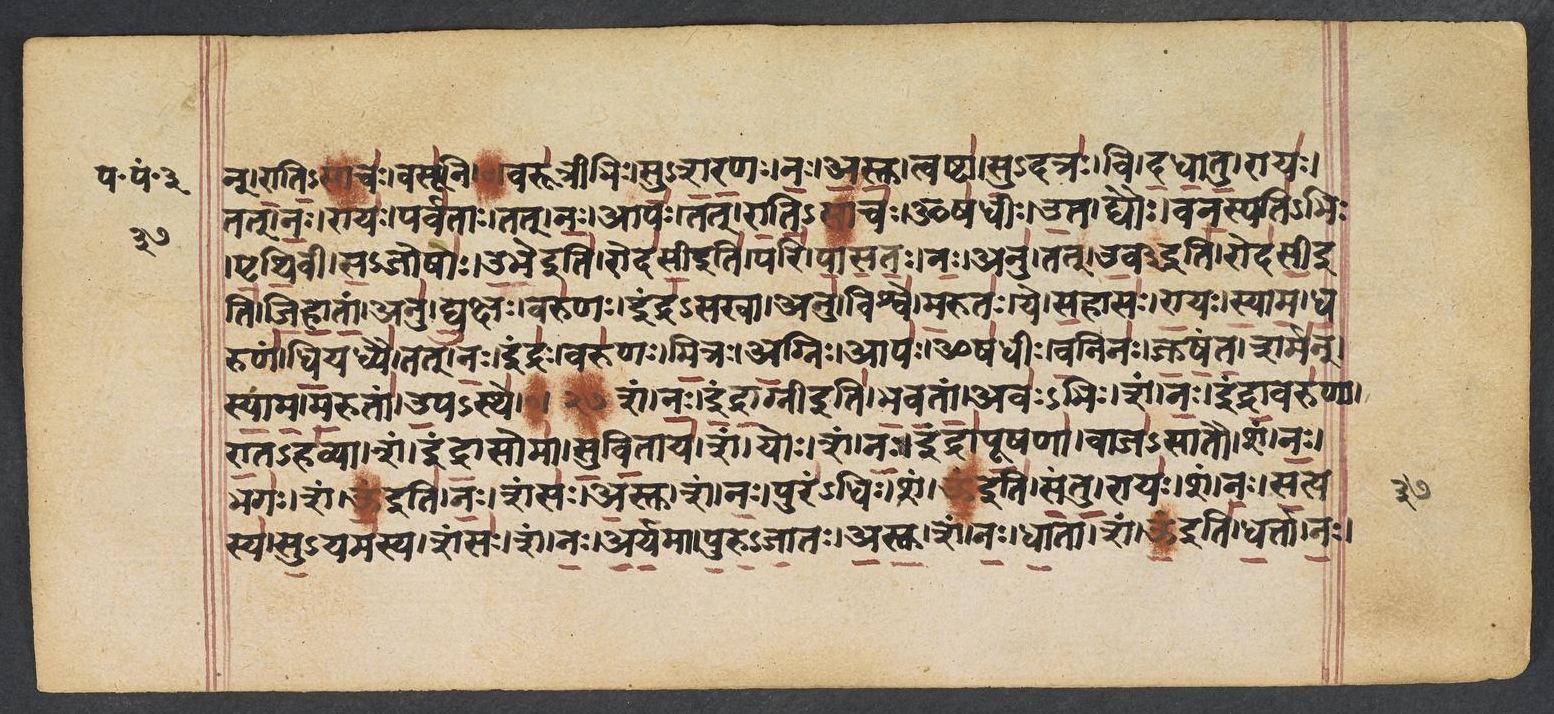
Penn Ms. Coll. 390 Item 41, fol. 516v (numbered 37v by the scribe) (OPenn image 517, upper leaf). Checked on the image: the Rigveda text on this page begins in RV 7.34.22 ‹-rāsan rāti-sācaḥ vasūni ā›. The next page with Rigveda text, fol. 517r (numbered 38r by the scribe), begins in RV 7.35.3 ‹astu śam naḥ urūcī›. Verses 7.34.22-25 end on this page; 7.34.22 begins on fol. 516r (numbered 37r by the scribe).
22tā no̍ rāsan rāti̱ṣāco̱ vasū̱ny ā roda̍sī varuṇā̱nī śṛ̍ṇotu | varū̍trībhiḥ suśara̱ṇo no̍ astu̱ tvaṣṭā̍ su̱datro̱ vi da̍dhātu̱ rāya̍ḥ ||
23tan no̱ rāya̱ḥ parva̍tā̱s tan na̱ āpa̱s tad rā̍ti̱ṣāca̱ oṣa̍dhīr u̱ta dyauḥ | vana̱spati̍bhiḥ pṛthi̱vī sa̱joṣā̍ u̱bhe roda̍sī̱ pari̍ pāsato naḥ ||
24anu̱ tad u̱rvī roda̍sī jihātā̱m anu̍ dyu̱kṣo varu̍ṇa̱ indra̍sakhā | anu̱ viśve̍ ma̱ruto̱ ye sa̱hāso̍ rā̱yaḥ syā̍ma dha̱ruṇa̍ṁ dhi̱yadhyai̍ ||
25tan na̱ indro̱ varu̍ṇo mi̱tro a̱gnir āpa̱ oṣa̍dhīr va̱nino̍ juṣanta | śarma̍n syāma ma̱rutā̍m u̱pasthe̍ yū̱yam pā̍ta sva̱stibhi̱ḥ sadā̍ naḥ ||
Compare: Padapāṭha (word-by-word text written in the manuscript; Sansknet e-text via GRETIL)
22tā | naḥ | rāsan | rāti-sācaḥ | vasūni | ā | rodasī iti | varuṇānī | śṛṇotu | varāūtrībhiḥ | su-śaraṇaḥ | naḥ | astu | tvaṣṭā | su-datraḥ | vi | dadhātu | rāyaḥ
23tat | naḥ | rāyaḥ | parvatāḥ | tat | naḥ | āpaḥ | tat | rāti-sācaḥ | oṣadhīḥ | uta | dyauḥ | vanaspati-bhiḥ | pṛthivī | sa-joṣāḥ | ubhe iti | rodasī iti | pari | pāsataḥ | naḥ
24anu | tat | urvī iti | rodasī iti | jihātām | anu | dyukṣaḥ | varuṇaḥ | indra-sakhā | anu | viśve | marutaḥ | ye | sahāsaḥ | rāyaḥ | syāma | dharuṇam | dhiyadhyai
25tat | naḥ | indraḥ | varuṇaḥ | mitraḥ | agniḥ | āpaḥ | oṣadhīḥ | vaninaḥ | juṣanta | śarman | syāma | marutām | upa-sthe | yūyam | pāta | svasti-bhiḥ | sadā | naḥ
22May they who lavish gifts bestow those treasures: may Rodasî and Varuṇânî listen. May he, with the Varûtrîs, be our refuge, may bountiful Tvashṭar give us store of riches.
23So may rich Mountains and the liberal Waters, so may all Herbs that grow on ground, and Heaven, And Earth accordant with the Forest-Sovrans, and both the World-halves round about protect us.
24To this may both the wide Worlds lend approval, and Varuṇa in heaven, whose Friend is Indra. May all the Maruts give consent, the Victors, that we may hold great wealth in firm possession.
25May Indra, Varuṇa, Mitra, and Agni, Waters, Herbs, Trees accept the praise we offer. May we find refuge in the Marut's bosom. Protect us evermore, ye Gods, with blessings.
Notes
- Sanskrit: Aufrecht's edition (1877) with the Vedic accents, as entered by van Nooten and Holland (GRETIL).
- English: Ralph T. H. Griffith, The Hymns of the Rigveda (1889-1892; 2nd ed. 1896-1897), from the VedaWeb digital text; OCR slips in that text were corrected against the printed 2nd edition (data/sources/rigveda/griffith_errata.json).
- Padapāṭha (edition text): Sansknet e-text via GRETIL (CC BY-NC-SA 4.0).
Cite
Sources
- Source: Penn Ms. Coll. 390 Item 41 (undated (catalogued with Penn's 18th-19th c. Vedic manuscripts)), OPenn, Public Domain Mark + Aufrecht's accented text (GRETIL) + Griffith's English (VedaWeb) (holding institution)
- Critical edition: Aufrecht (1877), accented e-text via GRETIL
← previous · → next · v cycle view · l back to library