Rigveda 7.33: To Vasistha
Introduction
Rigveda 7.33 is a hymn of 14 verses addressed to Vasistha. It stands in book (maṇḍala) 7, the family book of Vasiṣṭha. The Rigveda is the oldest collection of Sanskrit hymns, composed in the second half of the second millennium BCE and handed down orally for many centuries before it was written down.
The manuscript shown is Penn Ms. Coll. 390 Item 41 (University of Pennsylvania), an undated paper manuscript of the padapāṭha (the word-by-word recitation text, in which every word is written separately and compounds are split) of the whole Ṛgveda in Devanāgarī, 884 leaves in fascicles, 7-9 lines to the page, accents in red; this hymn stands on fol. 514r-515v. Each section below gives the verses that end on one page; the page boundaries were read on the images (the opening words of every page), not counted out. Where the manuscript is a padapāṭha (the word-by-word recitation text), the section shows Aufrecht's continuous (saṃhitā) text first and, as the edition text, the padapāṭha of the same verses, which is the form written on the page.
How was this verified? (Provenance)
Where on the image
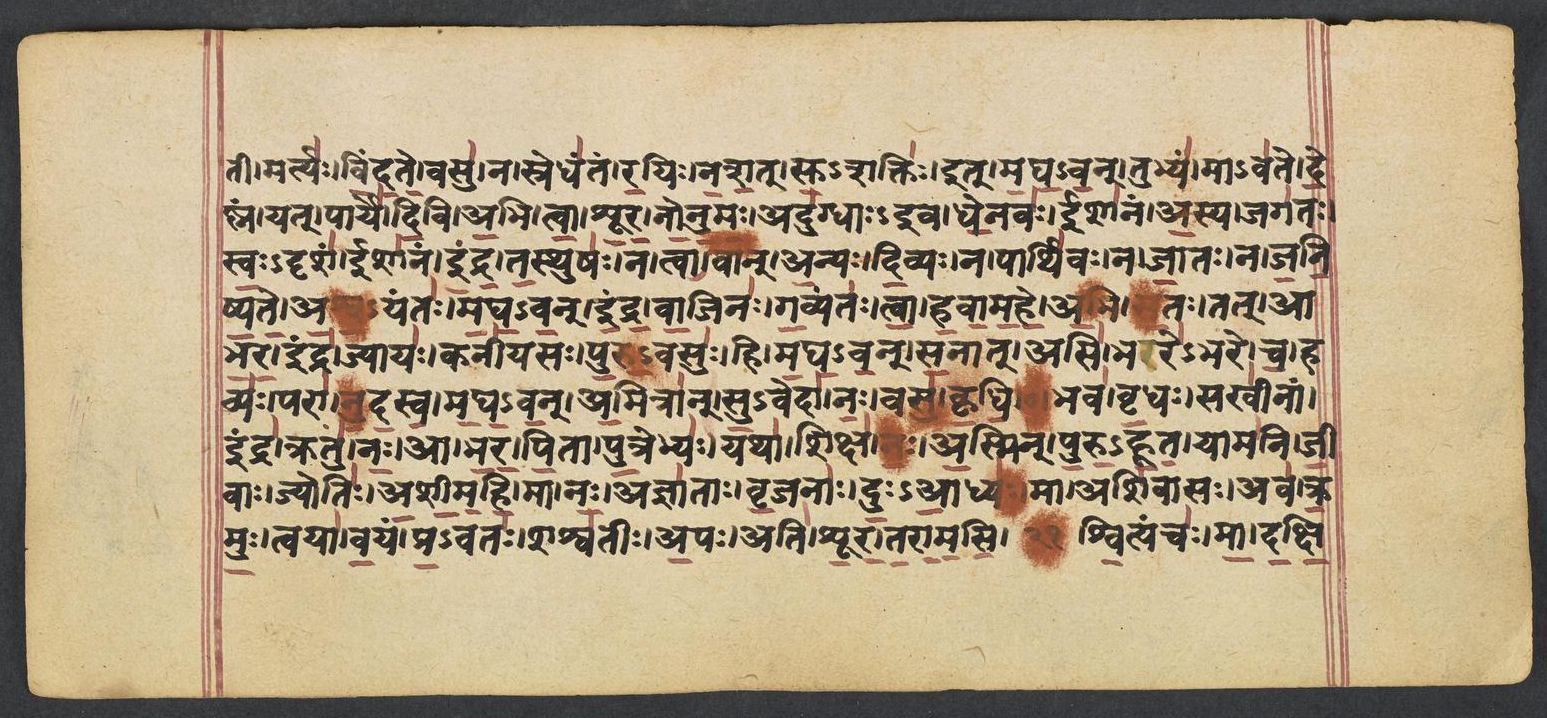
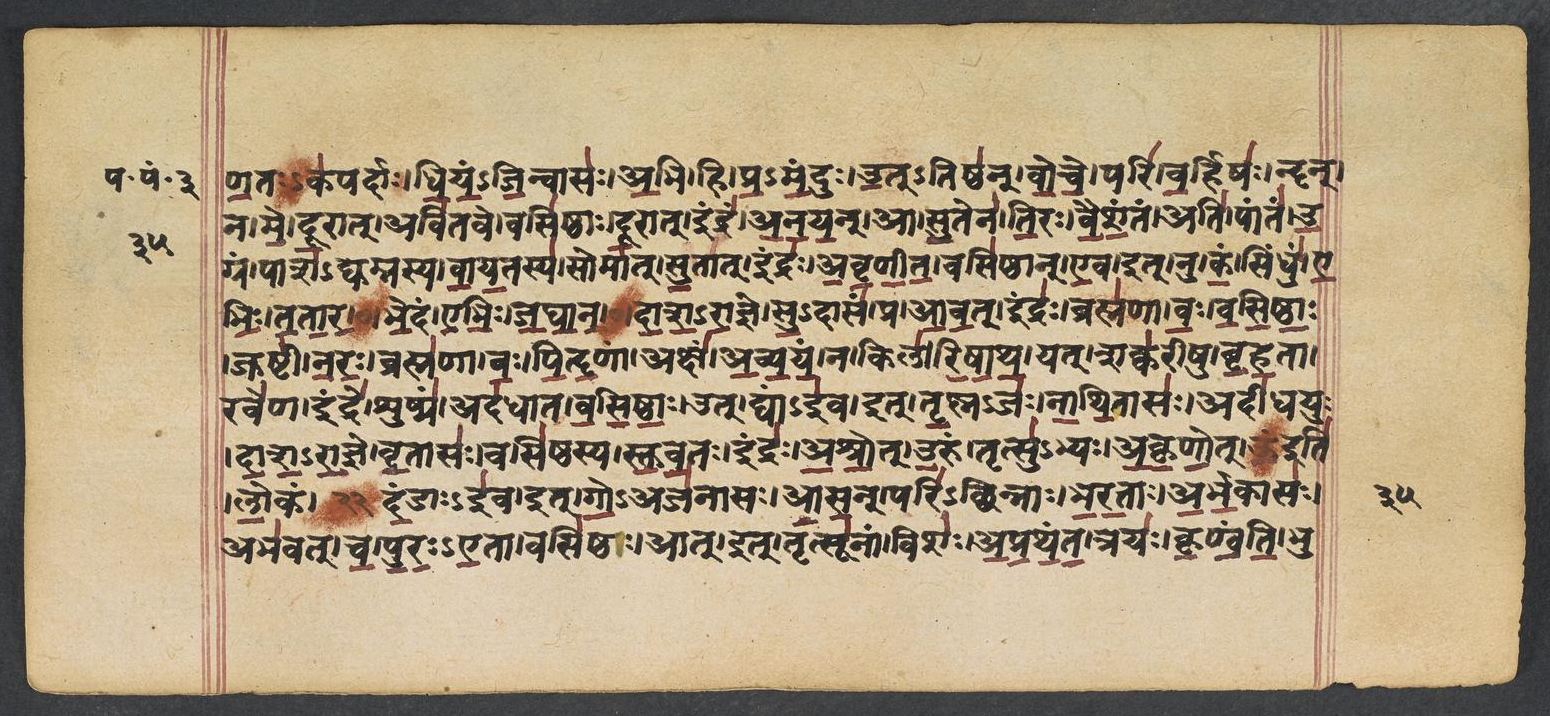
Penn Ms. Coll. 390 Item 41, fol. 514v (numbered 35v by the scribe) (OPenn image 515, upper leaf). Checked on the image: the Rigveda text on this page begins in RV 7.33.1 ‹-dakṣiṇataḥ-kapardāḥ dhiyam-jinvāsaḥ abhi hi›. The next page with Rigveda text, fol. 515r (numbered 36r by the scribe), begins in RV 7.33.7 ‹-bhuvaneṣu retaḥ tisraḥ pra-jāḥ›. Verses 7.33.1-6 end on this page; 7.33.1 begins on fol. 514r (numbered 35r by the scribe).
1śvi̱tyañco̍ mā dakṣiṇa̱taska̍pardā dhiyaṁji̱nvāso̍ a̱bhi hi pra̍ma̱nduḥ | u̱ttiṣṭha̍n voce̱ pari̍ ba̱rhiṣo̱ nṝn na me̍ dū̱rād avi̍tave̱ vasi̍ṣṭhāḥ ||
2dū̱rād indra̍m anaya̱nn ā su̱tena̍ ti̱ro vai̍śa̱ntam ati̱ pānta̍m u̱gram | pāśa̍dyumnasya vāya̱tasya̱ somā̍t su̱tād indro̍ 'vṛṇītā̱ vasi̍ṣṭhān ||
3e̱ven nu ka̱ṁ sindhu̍m ebhis tatāre̱ven nu ka̍m bhe̱dam e̍bhir jaghāna | e̱ven nu ka̍ṁ dāśarā̱jñe su̱dāsa̱m prāva̱d indro̱ brahma̍ṇā vo vasiṣṭhāḥ ||
4juṣṭī̍ naro̱ brahma̍ṇā vaḥ pitṝ̱ṇām akṣa̍m avyaya̱ṁ na kilā̍ riṣātha | yac chakva̍rīṣu bṛha̱tā rave̱ṇendre̱ śuṣma̱m ada̍dhātā vasiṣṭhāḥ ||
5ud dyām i̱vet tṛ̱ṣṇajo̍ nāthi̱tāso 'dī̍dhayur dāśarā̱jñe vṛ̱tāsa̍ḥ | vasi̍ṣṭhasya stuva̱ta indro̍ aśrod u̱ruṁ tṛtsu̍bhyo akṛṇod u lo̱kam ||
6da̱ṇḍā i̱ved go̱aja̍nāsa āsa̱n pari̍cchinnā bhara̱tā a̍rbha̱kāsa̍ḥ | abha̍vac ca purae̱tā vasi̍ṣṭha̱ ād it tṛtsū̍nā̱ṁ viśo̍ aprathanta ||
Compare: Padapāṭha (word-by-word text written in the manuscript; Sansknet e-text via GRETIL)
1śvityañcaḥ | mā | dakṣiṇataḥ-kapardāḥ | dhiyam-jinvāsaḥ | abhi | hi | pra-manduḥ | ut-tiṣṭhan | voce | pari | barhiṣaḥ | nṝn | na | me | dūrāt | avitave | vasiṣṭhāḥ
2dūrāt | indram | anayan | ā | sutena | tiraḥ | vaiśantam | ati | pāntam | ugram | pāśa-dyumnasya | vāyatasya | somāt | sutāt | indraḥ | avṛṇīta | vasiṣṭhān
3eva | it | nu | kam | sindhum ebhiḥ | tatāra | eva | it | nu | kam | bhedam | ebhiḥ | jaghāna | eva | it | nu | kam | dāśa-rājñe | su-dāsam | pra | āvat | indraḥ | brahmaṇā | vaḥ | vasiṣṭhāḥ
4juṣṭī | naraḥ | brahmaṇā | vaḥ | pitṝṇām | akṣam | avyayam | na | kila | riṣātha | yat | śakvarīṣu | bṛhatā | raveṇa | indre | śuṣmam | adadhāta | vasiṣṭhāḥ
5ut | dyām-iva | it | tṛṣṇa-jaḥ | nāthitāsaḥ | adīdhayuḥ | dāśa-rājñe | vṛtāsaḥ | vas iṣṭhasya | stuvataḥ | indraḥ | aśrot | urum | tṛtsu-bhyaḥ | akṛṇot | oṃ iti | lokam
6daṇḍāiva | it | go--ajanāsaḥ | āsan | pari-cchinnāḥ | bharatāḥ | arbhakāsaḥ | abhavat | ca | puraḥ-etā | vasiṣṭhaḥ | āt | it | tṛtsūnām | viśaḥ | aprathanta
1THESE who wear hair-knots on the right, the movers of holy thought, white-robed, have won me over. I warned the men, when from the grass I raised me, Not from afar can my Vasishṭhas help you.
2With soma they brought Indra from a distance, Over Vaiṣanta, from the strong libation. Indra preferred Vasishṭhas to the Soma pressed by the son of Vâyata, Pâṣadyumna.
3So, verily, with these he crossed the river, in company with these he slaughtered Bheda. So in the fight with the Ten Kings, Vasishṭhas! did Indra help Sudâs through your devotions.
4I gladly, men I with prayer prayed by our fathers have fixed your axle: ye shall not be injured: Since, when ye sang aloud the Ṣakvarî verses, Vasishṭhas! ye invigorated Indra.
5Like thirsty men they looked to heaven, in battle with the Ten Kings, surrounded and imploring. Then Indra heard Vasishṭha as he praised him, and gave the Tr̥itsus ample room and freedom.
6Like sticks and staves wherewith they drive the cattle, Stripped bare, the Bharatas were found defenceless: Vasishṭha then became their chief and leader: then widely. were the Tr̥itsus' clans extended.
Where on the image
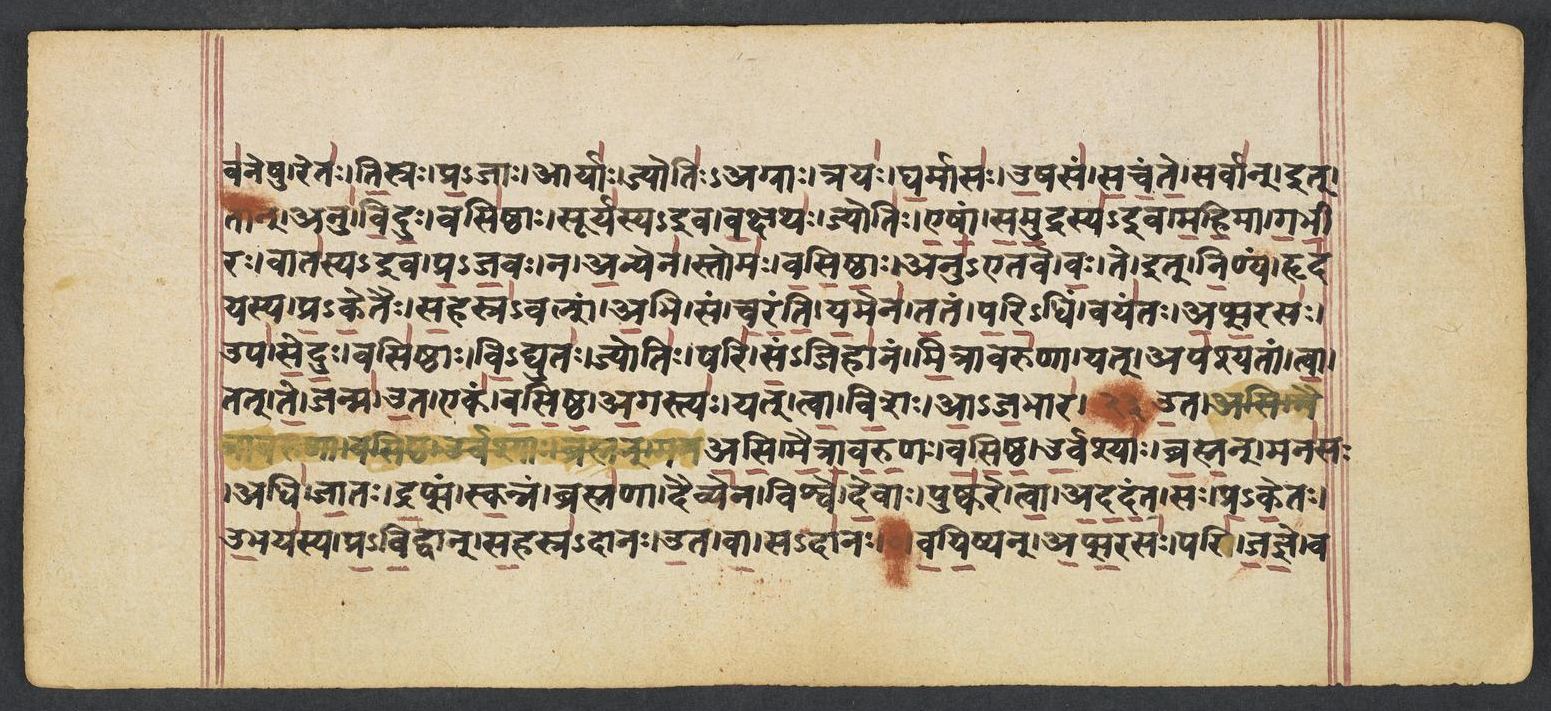
Penn Ms. Coll. 390 Item 41, fol. 515r (numbered 36r by the scribe) (OPenn image 515, lower leaf). Checked on the image: the Rigveda text on this page begins in RV 7.33.7 ‹-bhuvaneṣu retaḥ tisraḥ pra-jāḥ›. The next page with Rigveda text, fol. 515v (numbered 36v by the scribe), begins in RV 7.33.12 ‹-vasiṣṭhaḥ›. Verses 7.33.7-11 end on this page; 7.33.7 begins on fol. 514v (numbered 35v by the scribe).
7traya̍ḥ kṛṇvanti̱ bhuva̍neṣu̱ reta̍s ti̱sraḥ pra̱jā āryā̱ jyoti̍ragrāḥ | trayo̍ gha̱rmāsa̍ u̱ṣasa̍ṁ sacante̱ sarvā̱m̐ it tām̐ anu̍ vidu̱r vasi̍ṣṭhāḥ ||
8sūrya̍syeva va̱kṣatho̱ jyoti̍r eṣāṁ samu̱drasye̍va mahi̱mā ga̍bhī̱raḥ | vāta̍syeva praja̱vo nānyena̱ stomo̍ vasiṣṭhā̱ anve̍tave vaḥ ||
9ta in ni̱ṇyaṁ hṛda̍yasya prake̱taiḥ sa̱hasra̍valśam a̱bhi saṁ ca̍ranti | ya̱mena̍ ta̱tam pa̍ri̱dhiṁ vaya̍nto 'psa̱rasa̱ upa̍ sedu̱r vasi̍ṣṭhāḥ ||
10vi̱dyuto̱ jyoti̱ḥ pari̍ sa̱ṁjihā̍nam mi̱trāvaru̍ṇā̱ yad apa̍śyatāṁ tvā | tat te̱ janmo̱taika̍ṁ vasiṣṭhā̱gastyo̱ yat tvā̍ vi̱śa ā̍ja̱bhāra̍ ||
11u̱tāsi̍ maitrāvaru̱ṇo va̍siṣṭho̱rvaśyā̍ brahma̱n mana̱so 'dhi̍ jā̱taḥ | dra̱psaṁ ska̱nnam brahma̍ṇā̱ daivye̍na̱ viśve̍ de̱vāḥ puṣka̍re tvādadanta ||
Compare: Padapāṭha (word-by-word text written in the manuscript; Sansknet e-text via GRETIL)
7trayaḥ | kṛṇvanti | bhuvaneṣu | retaḥ | tisraḥ | pra-jāḥ | āryāḥ | jyotiḥ-agrāḥ | trayaḥ | gharmāsaḥ | uṣasam | sacante | sarvān | it | tān | anu | viduḥ | vasiṣṭhāḥ
8sūryasya-iva | vakṣathaḥ | jyotiḥ | eṣām | samudrasya-iva | mahimā | gabhīraḥ | vātasya-iva | pra-javaḥ | na | anyena | stomaḥ | vasiṣṭhāḥ | anu-etave | vaḥ
9te | it | niṇyam | hṛdayasya | pra-ketaiḥ | sahasra-valśam | abhi | sam | carant i | yamena | tatam | pari-dhim | vayantaḥ | apsarasaḥ | upa | seduḥ | vasiṣṭhāḥ
10vi-dyutaḥ | jyotiḥ | pari | sam-jihānam | mitrāvaruṇā | yat | apaśyatām | tvā | tat | te | janma | uta | ekam | vasiṣṭha | agastyaḥ | yat | tvā | viśaḥ | ājabhāra
11uta | asi | maitrāvaruṇaḥ | vasiṣṭha | urvaśyā | brahman | manasaḥ | adhi | jātaḥ | drapsam | skannam | brahmaṇā | daivyena | viśve | devāḥ | puṣkare | tvā | adadanta
7Three fertilize the worlds with genial moisture: three noble Creatures cast a light before them. Three that give warmth to all attend the morning. All these have they discovered, these Vasishṭhas.
8Like the Sun's growing glory is their splendour, and like the sea's is their unfathomed greatness. Their course is like the wind's. Your laud, Vasishṭhas, can never be attained by any other.
9They with perceptions of the heart in secret resort to that which spreads a thousand branches. The Apsaras brought hither the Vasishṭhas wearing the vesture spun for them by Yama.
10A form of lustre springing from the lightning wast thou, when Varuṇa and Mitra saw thee. Tliy one and only birth was then, Vasishṭha, when from thy stock Agastya brought thee hither.
11Born of their love for Urvaṣî, Vasishṭha thou, priest, art son of Varuṇa and Mitra; And as a fallen drop, in heavenly fervour, all the Gods laid thee on a lotus-blossorn.
Where on the image
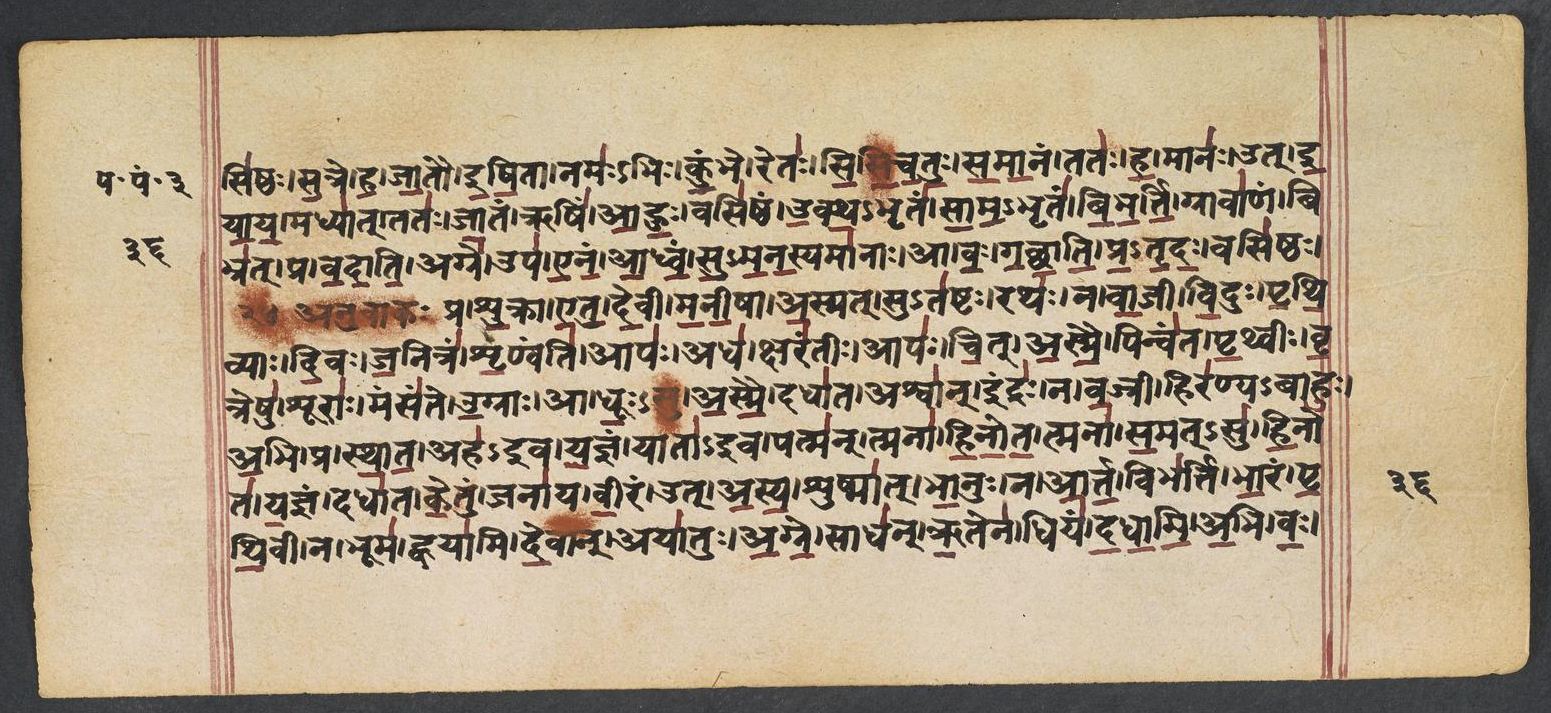
Penn Ms. Coll. 390 Item 41, fol. 515v (numbered 36v by the scribe) (OPenn image 516, upper leaf). Checked on the image: the Rigveda text on this page begins in RV 7.33.12 ‹-vasiṣṭhaḥ›. The next page with Rigveda text, fol. 516r (numbered 37r by the scribe), begins in RV 7.34.9 ‹devīm dhiyam dadhidhvam pra›. Verses 7.33.12-14 end on this page; 7.33.12 begins on fol. 515r (numbered 36r by the scribe).
12sa pra̍ke̱ta u̱bhaya̍sya pravi̱dvān sa̱hasra̍dāna u̱ta vā̱ sadā̍naḥ | ya̱mena̍ ta̱tam pa̍ri̱dhiṁ va̍yi̱ṣyann a̍psa̱rasa̱ḥ pari̍ jajñe̱ vasi̍ṣṭhaḥ ||
13sa̱tre ha̍ jā̱tāv i̍ṣi̱tā namo̍bhiḥ ku̱mbhe reta̍ḥ siṣicatuḥ samā̱nam | tato̍ ha̱ māna̱ ud i̍yāya̱ madhyā̱t tato̍ jā̱tam ṛṣi̍m āhu̱r vasi̍ṣṭham ||
14u̱ktha̱bhṛta̍ṁ sāma̱bhṛta̍m bibharti̱ grāvā̍ṇa̱m bibhra̱t pra va̍dā̱ty agre̍ | upai̍nam ādhvaṁ sumana̱syamā̍nā̱ ā vo̍ gacchāti pratṛdo̱ vasi̍ṣṭhaḥ ||
Compare: Padapāṭha (word-by-word text written in the manuscript; Sansknet e-text via GRETIL)
12saḥ | pra-ketaḥ | ubhayasya | pra-vidvān | sahasra-dānaḥ | uta | vā | sa-dānaḥ | yamena | tatam | pari-dhim | vayiṣyan | apsarasaḥ | pari | jajñe | vasiṣṭhaḥ
13satre | ha | jātau | iṣitā | namaḥ-bhiḥ | kumbhe | retaḥ | sisicatuḥ | samānam | tataḥ | ha | mānaḥ | ut | iyāya | madyāt | tataḥ | jātam | ṛṣim | āhuḥ | vasiṣṭham
14uktha-bhṛtam | sāma-bhṛtam | bibharti | grāvāṇam | bibhrat | pra | vadāti | agre | upa | enam | ādhvam | su-manasyamānāḥ | ā | vaḥ | gacchāti | pra-tṛdaḥ | vasiṣṭhaḥ
12He thinker, knower both of earth and heaven, endowed with many a gift, bestowing thousands, Destined to wear the vesture spun by Yama, sprang from the Apsaras to life, Vasishṭha.
13Born at the sacrifice, urged by adorations, both with a common flow bedewed the pitcher. Then from the midst thereof there rose up Mâna, and thence they say was born the sage Vasishṭha.
14He brings the bearer of the laud and Sâman: first shall he speak bringing the stone for pressing. With grateful hearts in reverence approach him: to you, O Pratr̥idas, Vasishṭha cometh.
Notes
- Sanskrit: Aufrecht's edition (1877) with the Vedic accents, as entered by van Nooten and Holland (GRETIL).
- English: Ralph T. H. Griffith, The Hymns of the Rigveda (1889-1892; 2nd ed. 1896-1897), from the VedaWeb digital text; OCR slips in that text were corrected against the printed 2nd edition (data/sources/rigveda/griffith_errata.json).
- Padapāṭha (edition text): Sansknet e-text via GRETIL (CC BY-NC-SA 4.0).
Cite
Sources
- Source: Penn Ms. Coll. 390 Item 41 (undated (catalogued with Penn's 18th-19th c. Vedic manuscripts)), OPenn, Public Domain Mark + Aufrecht's accented text (GRETIL) + Griffith's English (VedaWeb) (holding institution)
- Critical edition: Aufrecht (1877), accented e-text via GRETIL
← previous · → next · v cycle view · l back to library