Rigveda 7.37: To all the gods
Introduction
Rigveda 7.37 is a hymn of 8 verses addressed to all the gods. It stands in book (maṇḍala) 7, the family book of Vasiṣṭha. The Rigveda is the oldest collection of Sanskrit hymns, composed in the second half of the second millennium BCE and handed down orally for many centuries before it was written down.
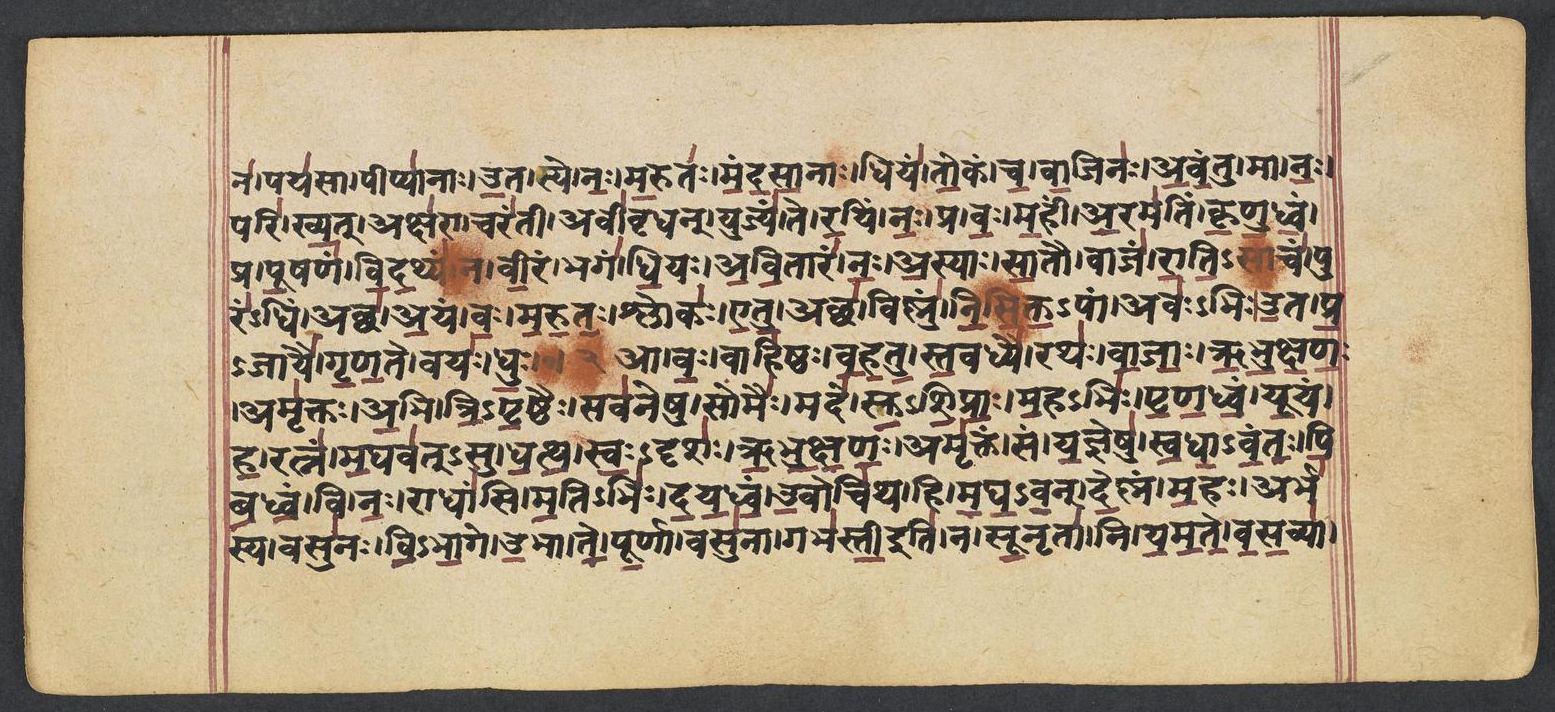
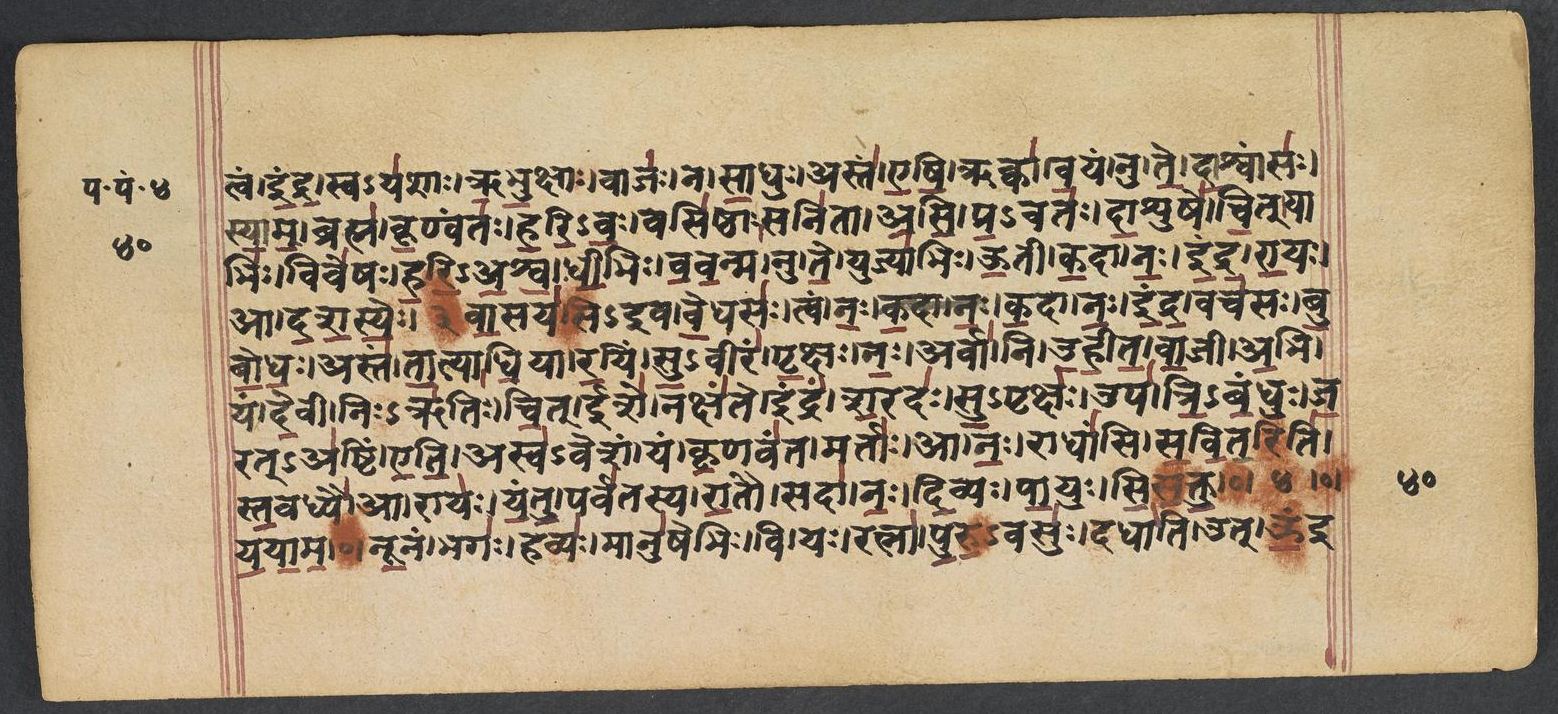
The manuscript shown is Penn Ms. Coll. 390 Item 41 (University of Pennsylvania), an undated paper manuscript of the padapāṭha (the word-by-word recitation text, in which every word is written separately and compounds are split) of the whole Ṛgveda in Devanāgarī, 884 leaves in fascicles, 7-9 lines to the page, accents in red; this hymn stands on fol. 519r-519v. Each section below gives the verses that end on one page; the page boundaries were read on the images (the opening words of every page), not counted out. Where the manuscript is a padapāṭha (the word-by-word recitation text), the section shows Aufrecht's continuous (saṃhitā) text first and, as the edition text, the padapāṭha of the same verses, which is the form written on the page.
How was this verified? (Provenance)
Where on the image
Penn Ms. Coll. 390 Item 41, fol. 519r (numbered 40r by the scribe) (OPenn image 519, lower leaf). Checked on the image: the Rigveda text on this page begins in RV 7.36.6 ‹-svena payasā pīpyānāḥ›. The next page with Rigveda text, fol. 519v (numbered 40v by the scribe), begins in RV 7.37.4 ‹tvam indra sva-yaśāḥ ṛbhukṣāḥ›. Verses 7.37.1-3 end on this page.
1ā vo̱ vāhi̍ṣṭho vahatu sta̱vadhyai̱ ratho̍ vājā ṛbhukṣaṇo̱ amṛ̍ktaḥ | a̱bhi tri̍pṛ̱ṣṭhaiḥ sava̍neṣu̱ somai̱r made̍ suśiprā ma̱habhi̍ḥ pṛṇadhvam ||
2yū̱yaṁ ha̱ ratna̍m ma̱ghava̍tsu dhattha sva̱rdṛśa̍ ṛbhukṣaṇo̱ amṛ̍ktam | saṁ ya̱jñeṣu̍ svadhāvantaḥ pibadhva̱ṁ vi no̱ rādhā̍ṁsi ma̱tibhi̍r dayadhvam ||
3u̱voci̍tha̱ hi ma̍ghavan de̱ṣṇam ma̱ho arbha̍sya̱ vasu̍no vibhā̱ge | u̱bhā te̍ pū̱rṇā vasu̍nā̱ gabha̍stī̱ na sū̱nṛtā̱ ni ya̍mate vasa̱vyā̍ ||
Compare: Padapāṭha (word-by-word text written in the manuscript; Sansknet e-text via GRETIL)
1ā | vaḥ | vāhiṣṭhaḥ | vahatu | stavadhyai | rathaḥ | vājāḥ | ṛbhukṣaṇaḥ | amṛktaḥ | abhi | tri-pṛṣṭhaiḥ | savaneṣu | somaiḥ | made | su-śiprāḥ | maha-bhiḥ | pṛṇadhvam
2yūyam | ha | ratnam | maghavat-su | dhattha | svaḥ-dṛśaḥ | ṛbhukṣaṇaḥ | amṛktam | sam | yajñeṣu | svadhāvantaḥ | pibadhvam | vi | naḥ | rādhāṃsi | mati-bhiḥ | dayadhvam
3uvocitha | hi | magha-van | deṣṇam | mahaḥ | arbhasya | vasunaḥ | vi-bhāge | ubhā | te | pūrṇā | vasunā | gabhastī iti | na | sūnṛtā | ni | yamate | vasavyā
1LET your best-bearing car that must be lauded, ne'er injured, bring you Vâjas and R̥ibhukshans. Fill you, fair-helmeted! with mighty Soma, thrice-mixed, at our libations to delight you.
2Ye who behold the light of heaven, R̥ibhukshans, give our rich patrons unmolested riches. Drink, heavenly-natured. at our sacrifices, and give us bounties for the hymns we sing you.
3For thou, O Bounteous One, art used to giving, at parting treasure whether small or ample. Filled full are both thine arms with great possessions: thy goodness keeps thee not from granting riches.
Where on the image
Penn Ms. Coll. 390 Item 41, fol. 519v (numbered 40v by the scribe) (OPenn image 520, upper leaf). Checked on the image: the Rigveda text on this page begins in RV 7.37.4 ‹tvam indra sva-yaśāḥ ṛbhukṣāḥ›. The next page with Rigveda text, fol. 520r (numbered 41r by the scribe), begins in RV 7.38.2 ‹-iti tiṣṭha savitariti śrudhi›. Verses 7.37.4-8 end on this page.
4tvam i̍ndra̱ svaya̍śā ṛbhu̱kṣā vājo̱ na sā̱dhur asta̍m e̱ṣy ṛkvā̍ | va̱yaṁ nu te̍ dā̱śvāṁsa̍ḥ syāma̱ brahma̍ kṛ̱ṇvanto̍ harivo̱ vasi̍ṣṭhāḥ ||
5sani̍tāsi pra̱vato̍ dā̱śuṣe̍ ci̱d yābhi̱r vive̍ṣo haryaśva dhī̱bhiḥ | va̱va̱nmā nu te̱ yujyā̍bhir ū̱tī ka̱dā na̍ indra rā̱ya ā da̍śasyeḥ ||
6vā̱saya̍sīva ve̱dhasa̱s tvaṁ na̍ḥ ka̱dā na̍ indra̱ vaca̍so bubodhaḥ | asta̍ṁ tā̱tyā dhi̱yā ra̱yiṁ su̱vīra̍m pṛ̱kṣo no̱ arvā̱ ny u̍hīta vā̱jī ||
7a̱bhi yaṁ de̱vī nirṛ̍tiś ci̱d īśe̱ nakṣa̍nta̱ indra̍ṁ śa̱rada̍ḥ su̱pṛkṣa̍ḥ | upa̍ triba̱ndhur ja̱rada̍ṣṭim e̱ty asva̍veśa̱ṁ yaṁ kṛ̱ṇava̍nta̱ martā̍ḥ ||
8ā no̱ rādhā̍ṁsi savitaḥ sta̱vadhyā̱ ā rāyo̍ yantu̱ parva̍tasya rā̱tau | sadā̍ no di̱vyaḥ pā̱yuḥ si̍ṣaktu yū̱yam pā̍ta sva̱stibhi̱ḥ sadā̍ naḥ ||
Compare: Padapāṭha (word-by-word text written in the manuscript; Sansknet e-text via GRETIL)
4tvam | indra | sva-yaśāḥ | ṛbhukṣāḥ | vājaḥ | na | sādhuḥ | astam | eṣi | ṛkvā | vayam | nu | te | dāśvāṃsaḥ | syāma | brahma | kṛṇvantaḥ | hari-vaḥ | vasiṣṭhāḥ
5sanitā | asi | pra-vataḥ | dāśuṣe | cit | yābhiḥ | viveṣaḥ | hari-aśva | dhībhiḥ | vavanma | nu | te | yujyābhiḥ | ūtī | kadā | naḥ | indra | rāyaḥ | ā | daśasyeḥ
6vāsayasi-iva | vedhasaḥ | tvam | naḥ | kadā | naḥ | indra | vacasaḥ | bubodhaḥ | astam | tātyā | dhiyā | rayim | su-vīram | pṛkṣaḥ | naḥ | arvā | ni | uhīta | vājī
7abhi | yam | devī | niḥ-ṛtiḥ | cit | īśe | nakṣante | indram | śaradaḥ | su-pṛkṣaḥ | upa | tri-bandhuḥ | jarat-aṣṭim | eti | asvaveśam | yam | kṛṇavanta | martāḥ
8ā | naḥ | rādhāṃsi | savitariti | stavadhyai | ā | rāyaḥ | yantu | parvatasya | rātau | sadā | naḥ | divyaḥ | pāyuḥ | sisaktu | yūyam | pāta | svasti-bhiḥ | sadā | naḥ
4Indra, high-famed, as Vâja and R̥ibhukshans, thou goest working, singing to the dwelling. Lord of Bay Steeds, this day may we Vasishṭhas offer our prayers to thee and bring oblations.
5Thou winnest swift advancement for thy servant, through hymns, Lord of Bay Steeds, which thou hast favoured. For thee with friendly succour have we battled, and when, O Indra, wilt thou grant us riches?
6To us thy priests a home, as 'twere, thou givest: when, Indra wilt thou recognize our praises? May thy strong Steed, through our ancestral worship, bring food and wealth with heroes to our dwelling.
7Though Nirr̥iti the Goddess reigneth round him, Autumns with food in plenty come to Indra. With three close Friends to length of days he cometh, he whom men let not rest at home in quiet.
8Promise us gifts, O Savitar: may riches come unto us in Parvata's full bounty. May the Celestial Guardian still attend us. Preserve us evermore, ye Gods, with blessings.
Notes
- Sanskrit: Aufrecht's edition (1877) with the Vedic accents, as entered by van Nooten and Holland (GRETIL).
- English: Ralph T. H. Griffith, The Hymns of the Rigveda (1889-1892; 2nd ed. 1896-1897), from the VedaWeb digital text; OCR slips in that text were corrected against the printed 2nd edition (data/sources/rigveda/griffith_errata.json).
- Padapāṭha (edition text): Sansknet e-text via GRETIL (CC BY-NC-SA 4.0).
Cite
Sources
- Source: Penn Ms. Coll. 390 Item 41 (undated (catalogued with Penn's 18th-19th c. Vedic manuscripts)), OPenn, Public Domain Mark + Aufrecht's accented text (GRETIL) + Griffith's English (VedaWeb) (holding institution)
- Critical edition: Aufrecht (1877), accented e-text via GRETIL
← previous · → next · v cycle view · l back to library