Rigveda 7.38: To Savitri and other gods
Introduction
Rigveda 7.38 is a hymn of 8 verses addressed to Savitri and other gods. It stands in book (maṇḍala) 7, the family book of Vasiṣṭha. The Rigveda is the oldest collection of Sanskrit hymns, composed in the second half of the second millennium BCE and handed down orally for many centuries before it was written down.
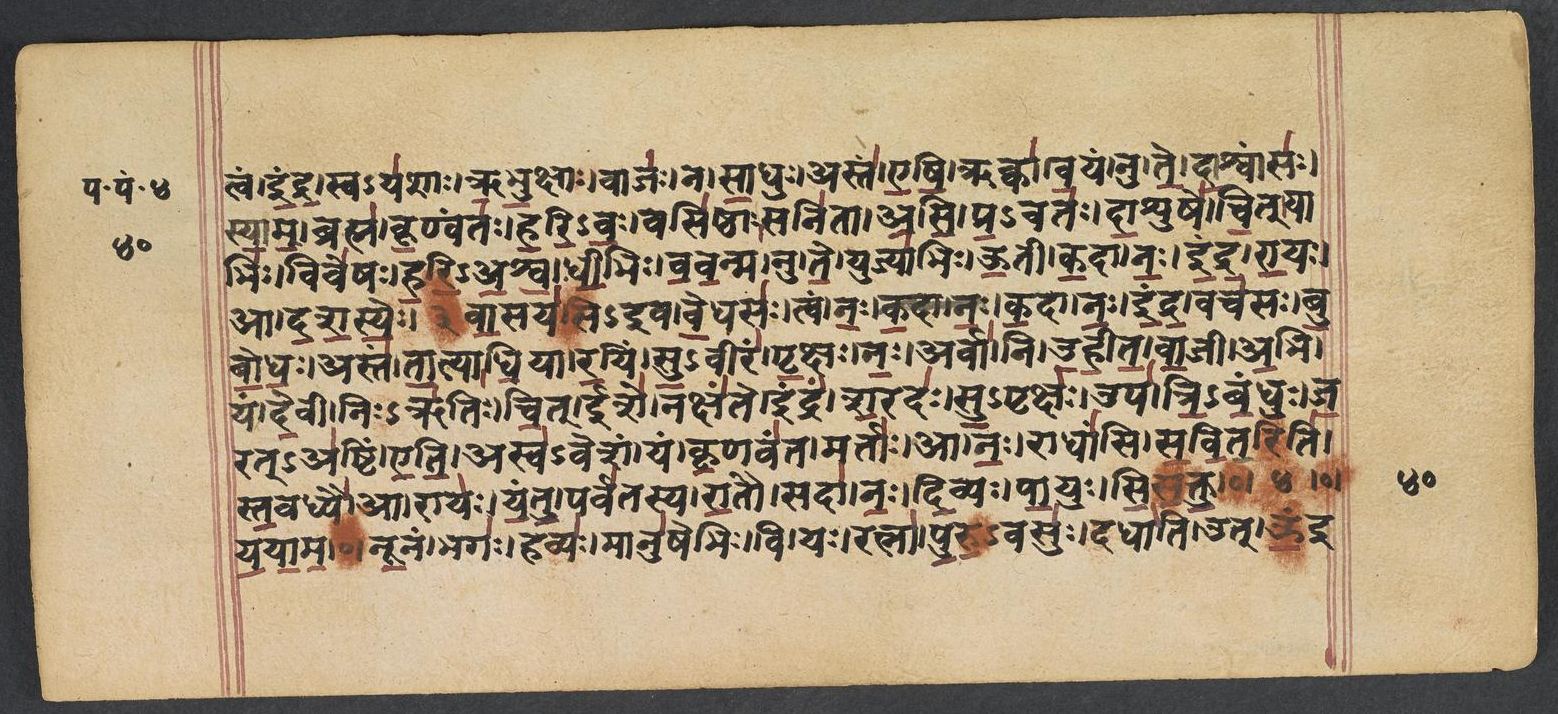
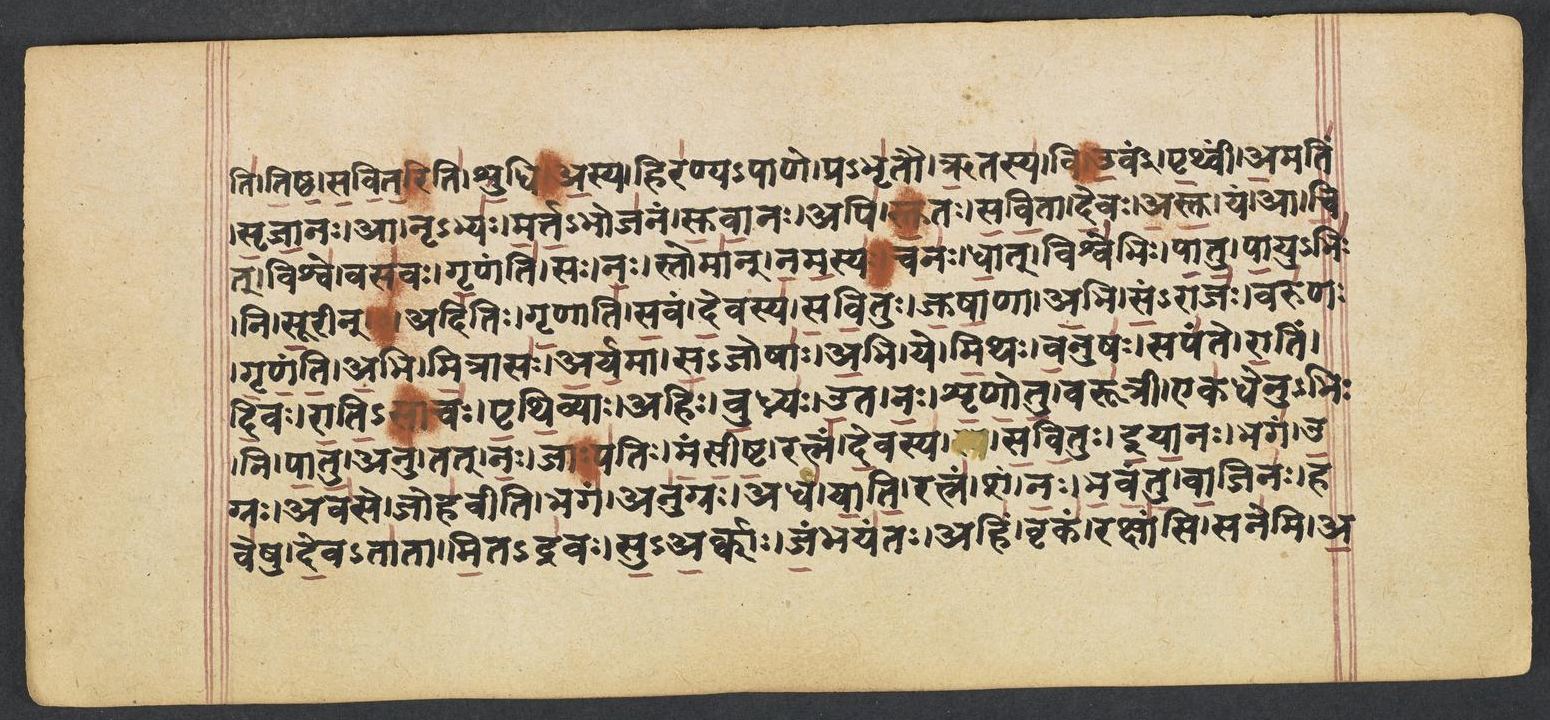
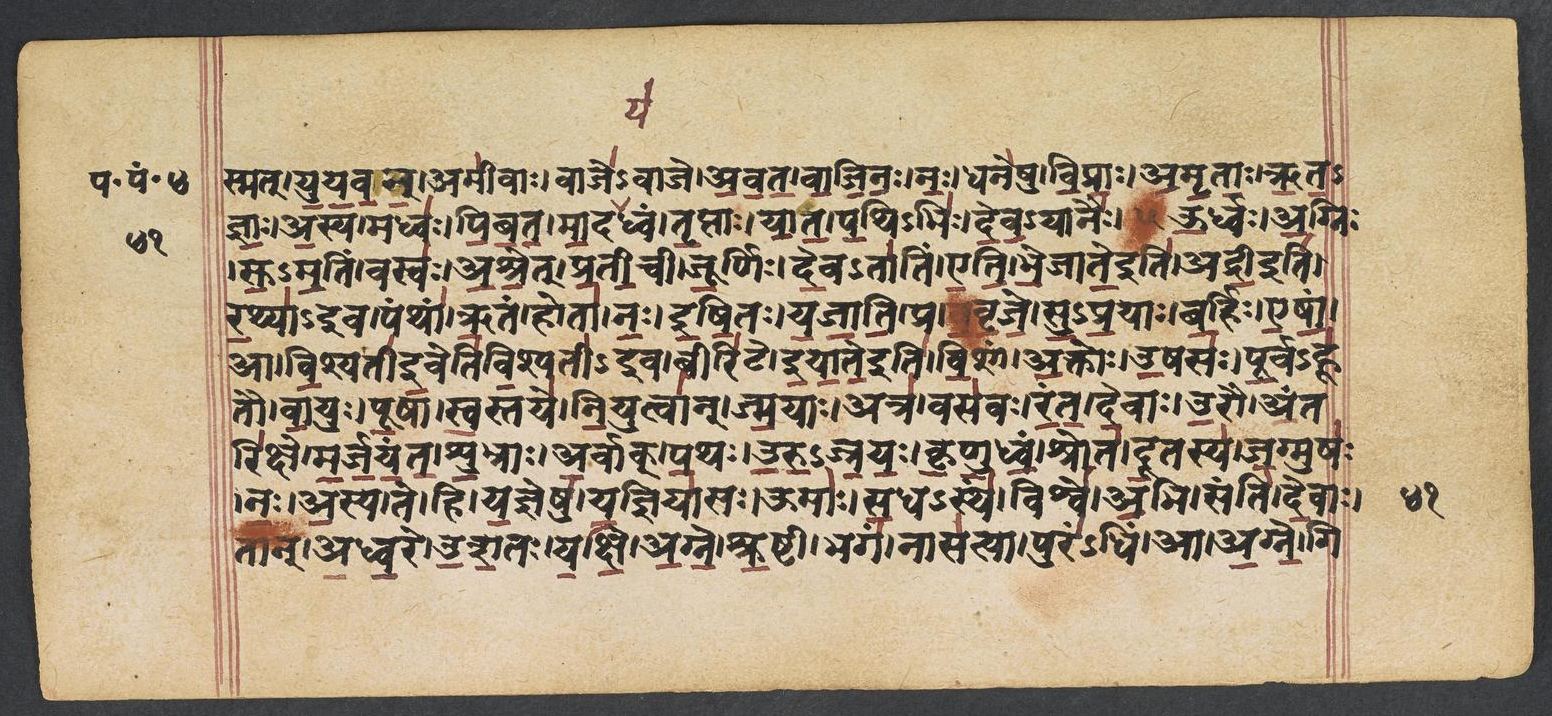
The manuscript shown is Penn Ms. Coll. 390 Item 41 (University of Pennsylvania), an undated paper manuscript of the padapāṭha (the word-by-word recitation text, in which every word is written separately and compounds are split) of the whole Ṛgveda in Devanāgarī, 884 leaves in fascicles, 7-9 lines to the page, accents in red; this hymn stands on fol. 519v-520v. Each section below gives the verses that end on one page; the page boundaries were read on the images (the opening words of every page), not counted out. Where the manuscript is a padapāṭha (the word-by-word recitation text), the section shows Aufrecht's continuous (saṃhitā) text first and, as the edition text, the padapāṭha of the same verses, which is the form written on the page.
How was this verified? (Provenance)
Where on the image
Penn Ms. Coll. 390 Item 41, fol. 519v (numbered 40v by the scribe) (OPenn image 520, upper leaf). Checked on the image: the Rigveda text on this page begins in RV 7.37.4 ‹tvam indra sva-yaśāḥ ṛbhukṣāḥ›. The next page with Rigveda text, fol. 520r (numbered 41r by the scribe), begins in RV 7.38.2 ‹-iti tiṣṭha savitariti śrudhi›. Verse 7.38.1 ends on this page.
1ud u̱ ṣya de̱vaḥ sa̍vi̱tā ya̍yāma hira̱ṇyayī̍m a̱mati̱ṁ yām aśi̍śret | nū̱nam bhago̱ havyo̱ mānu̍ṣebhi̱r vi yo ratnā̍ purū̱vasu̱r dadhā̍ti ||
Compare: Padapāṭha (word-by-word text written in the manuscript; Sansknet e-text via GRETIL)
1ut | oṃ iti | syaḥ | devaḥ | savitā | yayāma | hiraṇyayīm | amatim | yām | aśiśret | nūnam | bhagaḥ | havyaḥ | mānuṣebhiḥ | vi | yaḥ | ratnā | puru-vasuḥ | dadhāti
1ON high hath Savitar, this God, extended the golden lustre which he spreads around him. Now, now must Bhaga be invoked by mortals, Lord of great riches who distributes treasures.
Where on the image
Penn Ms. Coll. 390 Item 41, fol. 520r (numbered 41r by the scribe) (OPenn image 520, lower leaf). Checked on the image: the Rigveda text on this page begins in RV 7.38.2 ‹-iti tiṣṭha savitariti śrudhi›. The next page with Rigveda text, fol. 520v (numbered 41v by the scribe), begins in RV 7.38.7 ‹-asmat yuyavan amīvāḥ›. Verses 7.38.2-6 end on this page; 7.38.2 begins on fol. 519v (numbered 40v by the scribe).
2ud u̍ tiṣṭha savitaḥ śru̱dhy a1̱̍sya hira̍ṇyapāṇe̱ prabhṛ̍tāv ṛ̱tasya̍ | vy u1̱̍rvīm pṛ̱thvīm a̱mati̍ṁ sṛjā̱na ā nṛbhyo̍ marta̱bhoja̍naṁ suvā̱naḥ ||
3api̍ ṣṭu̱taḥ sa̍vi̱tā de̱vo a̍stu̱ yam ā ci̱d viśve̱ vasa̍vo gṛ̱ṇanti̍ | sa na̱ḥ stomā̍n nama̱sya1̱̍ś cano̍ dhā̱d viśve̍bhiḥ pātu pā̱yubhi̱r ni sū̱rīn ||
4a̱bhi yaṁ de̱vy adi̍tir gṛ̱ṇāti̍ sa̱vaṁ de̱vasya̍ savi̱tur ju̍ṣā̱ṇā | a̱bhi sa̱mrājo̱ varu̍ṇo gṛṇanty a̱bhi mi̱trāso̍ arya̱mā sa̱joṣā̍ḥ ||
5a̱bhi ye mi̱tho va̱nuṣa̱ḥ sapa̍nte rā̱tiṁ di̱vo rā̍ti̱ṣāca̍ḥ pṛthi̱vyāḥ | ahi̍r bu̱dhnya̍ u̱ta na̍ḥ śṛṇotu̱ varū̱try eka̍dhenubhi̱r ni pā̍tu ||
6anu̱ tan no̱ jāspati̍r maṁsīṣṭa̱ ratna̍ṁ de̱vasya̍ savi̱tur i̍yā̱naḥ | bhaga̍m u̱gro 'va̍se̱ joha̍vīti̱ bhaga̱m anu̍gro̱ adha̍ yāti̱ ratna̍m ||
Compare: Padapāṭha (word-by-word text written in the manuscript; Sansknet e-text via GRETIL)
2ut | oṃ iti | tiṣṭha | savitariti | śrudhi | asya | hiraṇya-pāṇe | pra-bhṛtau | ṛtasya | vi | urvīm | pṛthvīm | amatim | sṛjānaḥ | ā | nṛ-bhyaḥ | marta-bhojanam | suvānaḥ
3api | stutaḥ | savitā | devaḥ | astu | yam | ā | cit | viśve | vasavaḥ | gṛṇanti | saḥ | naḥ | stomān | namasyaḥ | canaḥ | dhāt | viśvebhiḥ | pātu | pāyu-bhiḥ | ni | sūrīn
4abhi | yam | devī | aditiḥ | gṛṇāti | savam | devasya | savituḥ | juṣāṇā | abhi | sam-rājaḥ | varuṇaḥ | gṛṇanti | abhi | mitrāsaḥ | aryamā | sa-joṣāḥ
5abhi | ye | mithaḥ | vanuṣaḥ | sapante | rātim divaḥ | rāti-sācaḥ | pṛthivyāḥ | ahiḥ | budhnyaḥ | uta | naḥ | śṛṇotu | varūtrī | ekadhenu-bhiḥ | ni | pātu
6anu | tat | naḥ | jāḥ-patiḥ | maṃsīṣṭa | ratnam | devasya | savituḥ | iyānaḥ | bhagam | ugraḥ | avase | johavīti | bhagam | anugraḥ | adha | yāti | ratnam
2Rise up, O Savitar whose hands are golden, and hear this man while sacrifice is offered, Spreading afar thy broad and wide effulgence, and bringing mortal men the food that feeds them.
3Let Savitar the God he hymned with praises, to whom the Vasus, even, all sing glory. Sweet be our lauds to him whose due is worship: may he with all protection guard our princes.
4Even he whom Aditi the Goddess praises, rejoicing in God Savitar's incitement: Even he who praise the high imperial Rulers, Varuṇa, Mitra, Aryaman, sing in concert.
5They who come emulous to our oblation, dispensing bounty, from the earth and heaven. May they and Ahibudhnya hear our calling: guard us Varûtrî with the Ekadhenus.
6This may the Lord of Life, entreated, grant us,– the wealth which Savitar the God possesses. The mighty calls on Bhaga for protection, on Bhaga calls the weak to give him riches.
Where on the image
Penn Ms. Coll. 390 Item 41, fol. 520v (numbered 41v by the scribe) (OPenn image 521, upper leaf). Checked on the image: the Rigveda text on this page begins in RV 7.38.7 ‹-asmat yuyavan amīvāḥ›. The next page with Rigveda text, fol. 521r (numbered 42r by the scribe), begins in RV 7.39.5 ‹-giraḥ divaḥ ā pṛthivyāḥ›. Verses 7.38.7-8 end on this page; 7.38.7 begins on fol. 520r (numbered 41r by the scribe).
7śaṁ no̍ bhavantu vā̱jino̱ have̍ṣu de̱vatā̍tā mi̱tadra̍vaḥ sva̱rkāḥ | ja̱mbhaya̱nto 'hi̱ṁ vṛka̱ṁ rakṣā̍ṁsi̱ sane̍my a̱smad yu̍yava̱nn amī̍vāḥ ||
8vāje̍-vāje 'vata vājino no̱ dhane̍ṣu viprā amṛtā ṛtajñāḥ | a̱sya madhva̍ḥ pibata mā̱daya̍dhvaṁ tṛ̱ptā yā̍ta pa̱thibhi̍r deva̱yānai̍ḥ ||
Compare: Padapāṭha (word-by-word text written in the manuscript; Sansknet e-text via GRETIL)
7śam | naḥ | bhavantu | vājinaḥ | haveṣu | deva-tātā | mita-dravaḥ | su-arkāḥ | jambhayantaḥ | ahim | vṛkam | rakṣāṃsi | sa-nemi | asmat | yuyavan | amīvāḥ
8vāje--vāje | avata | vājinaḥ | naḥ | dhaneṣu | viprāḥ | amṛtāḥ | ṛta-jñāḥ | asya | madhvaḥ | pibata | mādayadhvam | tṛptāḥ | yāta | pathi-bhiḥ | deva-yānaiḥ
7Bless us the Vajins when we call, while slowly they move, strong Singers, to the Gods' assembly. Crushing the wolf, the serpent, and the demons, may they completely banish all affliction.
8Deep-skilled in Law eternal, deathless, Singers, O Vajins, help us in each fray for booty. Drink of this meath, he satisfied, be joyful: then go on paths which Gods are wont to travel.
Notes
- Sanskrit: Aufrecht's edition (1877) with the Vedic accents, as entered by van Nooten and Holland (GRETIL).
- English: Ralph T. H. Griffith, The Hymns of the Rigveda (1889-1892; 2nd ed. 1896-1897), from the VedaWeb digital text; OCR slips in that text were corrected against the printed 2nd edition (data/sources/rigveda/griffith_errata.json).
- Padapāṭha (edition text): Sansknet e-text via GRETIL (CC BY-NC-SA 4.0).
Cite
Sources
- Source: Penn Ms. Coll. 390 Item 41 (undated (catalogued with Penn's 18th-19th c. Vedic manuscripts)), OPenn, Public Domain Mark + Aufrecht's accented text (GRETIL) + Griffith's English (VedaWeb) (holding institution)
- Critical edition: Aufrecht (1877), accented e-text via GRETIL
← previous · → next · v cycle view · l back to library