Rigveda 7.40: To all the gods
Introduction
Rigveda 7.40 is a hymn of 7 verses addressed to all the gods. It stands in book (maṇḍala) 7, the family book of Vasiṣṭha. The Rigveda is the oldest collection of Sanskrit hymns, composed in the second half of the second millennium BCE and handed down orally for many centuries before it was written down.
The manuscript shown is Penn Ms. Coll. 390 Item 41 (University of Pennsylvania), an undated paper manuscript of the padapāṭha (the word-by-word recitation text, in which every word is written separately and compounds are split) of the whole Ṛgveda in Devanāgarī, 884 leaves in fascicles, 7-9 lines to the page, accents in red; this hymn stands on fol. 521r-521v. Each section below gives the verses that end on one page; the page boundaries were read on the images (the opening words of every page), not counted out. Where the manuscript is a padapāṭha (the word-by-word recitation text), the section shows Aufrecht's continuous (saṃhitā) text first and, as the edition text, the padapāṭha of the same verses, which is the form written on the page.
How was this verified? (Provenance)
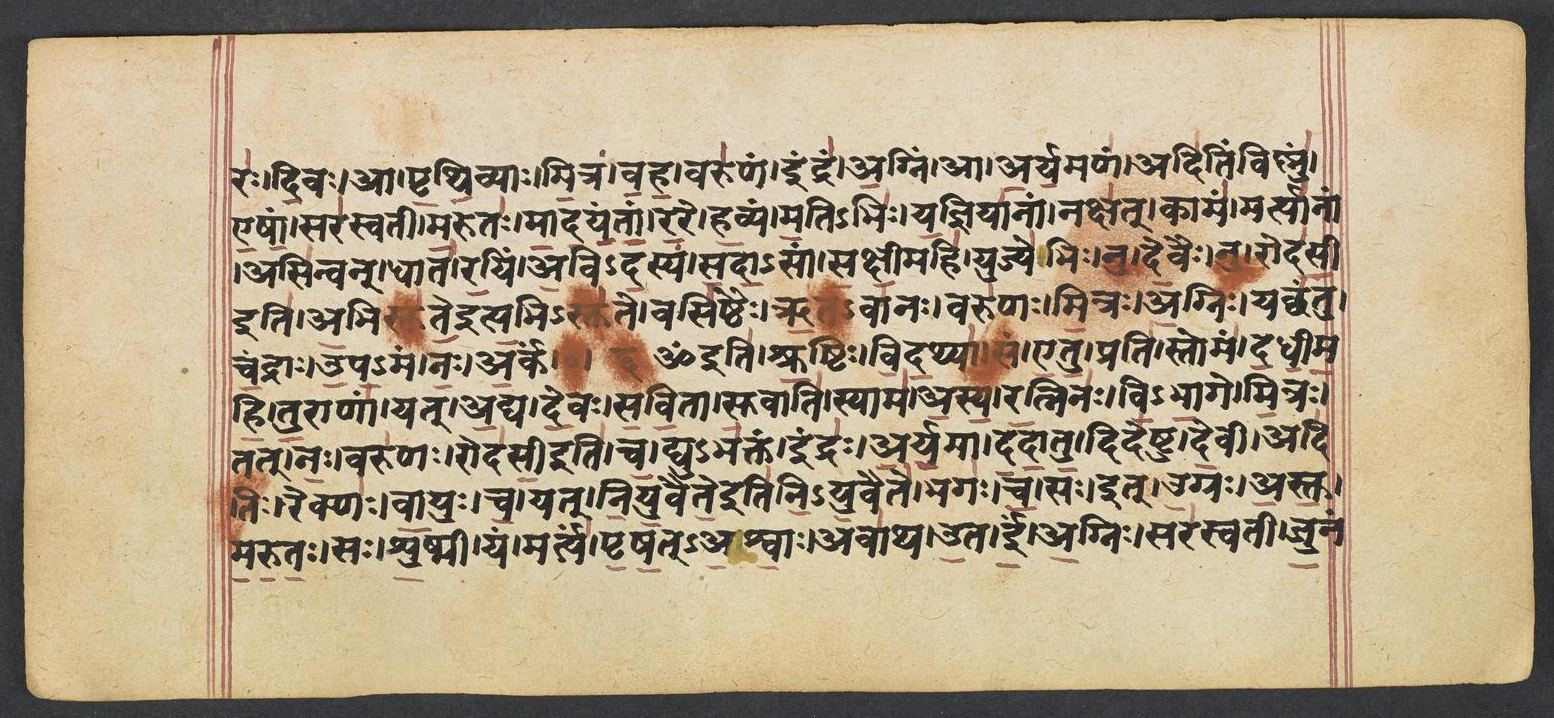
Where on the image
Penn Ms. Coll. 390 Item 41, fol. 521r (numbered 42r by the scribe) (OPenn image 521, lower leaf). Checked on the image: the Rigveda text on this page begins in RV 7.39.5 ‹-giraḥ divaḥ ā pṛthivyāḥ›. The next page with Rigveda text, fol. 521v (numbered 42v by the scribe), begins in RV 7.40.3 ‹-junanti na tasya rāyaḥ›. Verses 7.40.1-2 end on this page.
1o śru̱ṣṭir vi̍da̱thyā̱3̱̍ sam e̍tu̱ prati̱ stoma̍ṁ dadhīmahi tu̱rāṇā̍m | yad a̱dya de̱vaḥ sa̍vi̱tā su̱vāti̱ syāmā̍sya ra̱tnino̍ vibhā̱ge ||
2mi̱tras tan no̱ varu̍ṇo̱ roda̍sī ca̱ dyubha̍kta̱m indro̍ arya̱mā da̍dātu | dide̍ṣṭu de̱vy adi̍tī̱ rekṇo̍ vā̱yuś ca̱ yan ni̍yu̱vaite̱ bhaga̍ś ca ||
Compare: Padapāṭha (word-by-word text written in the manuscript; Sansknet e-text via GRETIL)
1o iti | śruṣṭiḥ | vidathyā | sam | etu | prati | stomam | dadhīmahi | turāṇām | yat | adya | devaḥ | savitā | suvāti | syāma | asya | ratninaḥ | vi-bhāge
2mitraḥ | tat | naḥ | varuṇaḥ | rodasī iti | ca | dyu-bhaktam | indraḥ | aryamā | dadātu | dideṣṭu | devī | aditiḥ | rekṇaḥ | vāyuḥ | ca | yat | niyuvaiteitini-yuvaite | bhagaḥ | ca
1BE gathered all the audience of the synod: let us begin their praise whose course is rapid. Whate'er God Savitar this day produces, may we be where the Wealthy One distributes.
2This, dealt from heaven ' may both the Worlds vouchsafe us, and Varuṇa, Indra, Aryaman, and Mitra. May Goddess Aditi assign us riches, Vâyu and Bhaga make them ours for ever.
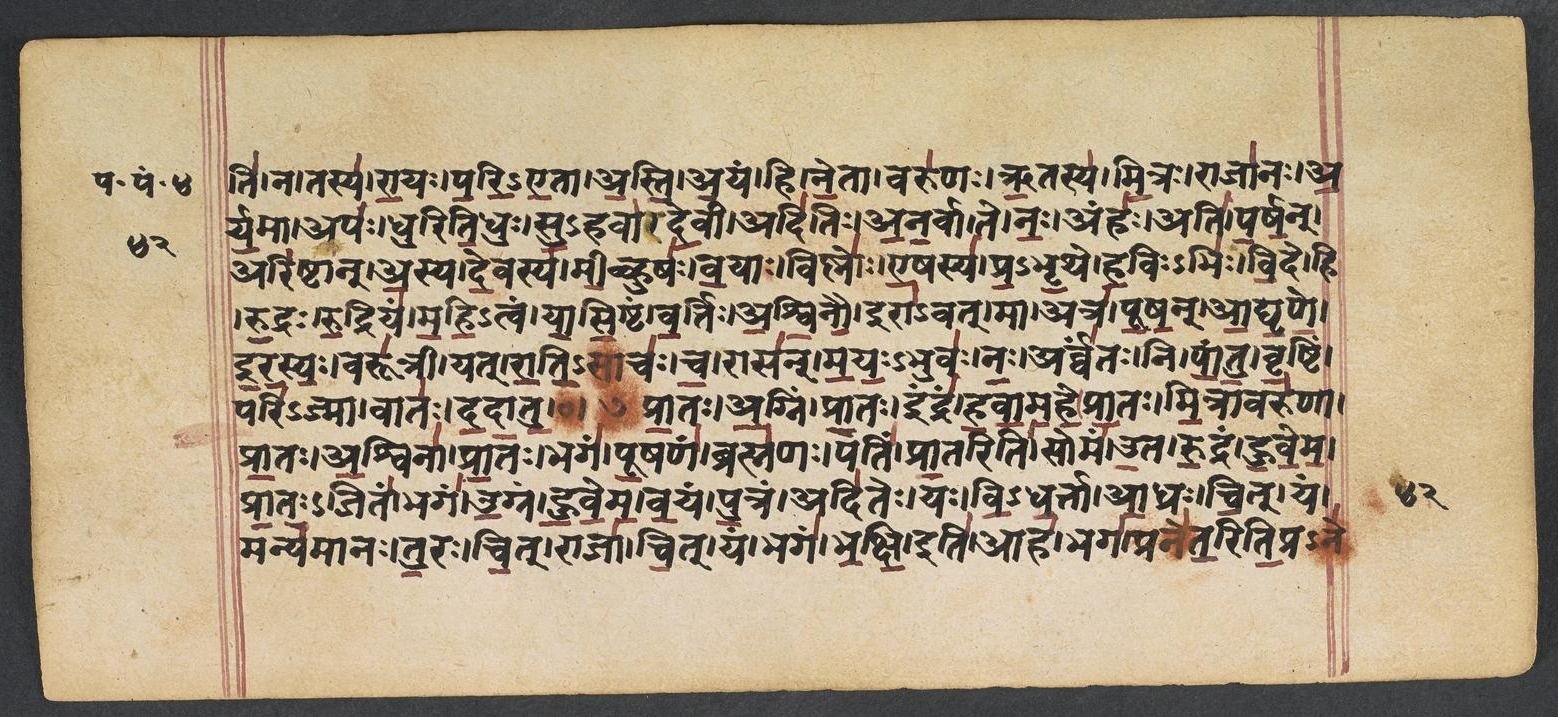
Where on the image
Penn Ms. Coll. 390 Item 41, fol. 521v (numbered 42v by the scribe) (OPenn image 522, upper leaf). Checked on the image: the Rigveda text on this page begins in RV 7.40.3 ‹-junanti na tasya rāyaḥ›. The next page with Rigveda text, fol. 522r (numbered 43r by the scribe), begins in RV 7.41.3 ‹-pra-netaritipra-netaḥ bhaga satya-rādhaḥ bhaga›. Verses 7.40.3-7 end on this page; 7.40.3 begins on fol. 521r (numbered 42r by the scribe).
3sed u̱gro a̍stu maruta̱ḥ sa śu̱ṣmī yam martya̍m pṛṣadaśvā̱ avā̍tha | u̱tem a̱gniḥ sara̍svatī ju̱nanti̱ na tasya̍ rā̱yaḥ pa̍rye̱tāsti̍ ||
4a̱yaṁ hi ne̱tā varu̍ṇa ṛ̱tasya̍ mi̱tro rājā̍no arya̱māpo̱ dhuḥ | su̱havā̍ de̱vy adi̍tir ana̱rvā te no̱ aṁho̱ ati̍ parṣa̱nn ari̍ṣṭān ||
5a̱sya de̱vasya̍ mī̱ḻhuṣo̍ va̱yā viṣṇo̍r e̱ṣasya̍ prabhṛ̱the ha̱virbhi̍ḥ | vi̱de hi ru̱dro ru̱driya̍m mahi̱tvaṁ yā̍si̱ṣṭaṁ va̱rtir a̍śvinā̱v irā̍vat ||
6mātra̍ pūṣann āghṛṇa irasyo̱ varū̍trī̱ yad rā̍ti̱ṣāca̍ś ca̱ rāsa̍n | ma̱yo̱bhuvo̍ no̱ arva̍nto̱ ni pā̍ntu vṛ̱ṣṭim pari̍jmā̱ vāto̍ dadātu ||
7nū roda̍sī a̱bhiṣṭu̍te̱ vasi̍ṣṭhair ṛ̱tāvā̍no̱ varu̍ṇo mi̱tro a̱gniḥ | yaccha̍ntu ca̱ndrā u̍pa̱maṁ no̍ a̱rkaṁ yū̱yam pā̍ta sva̱stibhi̱ḥ sadā̍ naḥ ||
Compare: Padapāṭha (word-by-word text written in the manuscript; Sansknet e-text via GRETIL)
3saḥ | it | ugraḥ | astu | marutaḥ | saḥ | śuṣmī | yam | martyam | pṛṣat-aśvāḥ | avātha | uta | īm | agniḥ | sarasvatī | junanti | na | tasya | rāyaḥ | pari-etā | ast i
4ayam | hi | netā | varuṇaḥ | ṛtasya | mitraḥ | rājānaḥ | aryamā | apaḥ | dhuritidhuḥ | su-havā | devī | aditiḥ | anarvā | te | naḥ | aṃhaḥ | ati | parṣan | ariṣṭān
5asya | devasya | mīḷhuṣaḥ | vayāḥ | viṣṇoḥ | eṣasya | pra-bhṛthe | haviḥ-bhiḥ | vide | hi | rudraḥ | rudriyam | mahi-tvam | yāsiṣṭam | vartiḥ | aśvinau | irāvat
6mā | atra | pūṣan | āghṛṇe | irasyaḥ | varūtrī | yat | rāti-sācaḥ | ca | rāsan | mayaḥ-bhuvaḥ | naḥ | arvantaḥ | ni | pāntu | vṛṣṭim | pari-jmā | vātaḥ | dadātu
7nu | rodasī iti | abhistuteity abhi-stute | vasiṣṭhaiḥ | ṛta-vānaḥ | varuṇaḥ | mitraḥ | agniḥ | yacchantu | candrāḥ | upa-mam | naḥ | arkam | yūyam | pāta | svasti-bhiḥ | sadā | naḥ
3Strong be the man and full of power, O Maruts, whom ye, borne on by spotted coursers, favour. Him, too, Sarasvatî and Agni further, and there is none to rob him of his riches.
4This Varuṇa is guide of Law, he, Mitra, and Aryaman, the Kings, our work have finished. Divine and foeless Aditi quickly listens. May these deliver us unharmed from trouble.
5With offerings I propitiate the branches of this swift-moving God, the bounteous Vishṇu. Hence Rudra gained his Rudra-strength: O Aṣvins, ye sought the house that hath celestial viands.
6Be not thou angry here, O glowing Pûshan, for what Varûtrî and the Bounteous gave us. May the swift-moving Gods protect and bless us, and Vâta send us rain, who wanders round us.
7Now have both worlds been praised by the Vasishṭhas, and holy Mitra, Varuṇa, and Agni. May they, bright Deities, make our song supremest. Preserve us evermore, ye Gods, with blessings.
Notes
- Sanskrit: Aufrecht's edition (1877) with the Vedic accents, as entered by van Nooten and Holland (GRETIL).
- English: Ralph T. H. Griffith, The Hymns of the Rigveda (1889-1892; 2nd ed. 1896-1897), from the VedaWeb digital text; OCR slips in that text were corrected against the printed 2nd edition (data/sources/rigveda/griffith_errata.json).
- Padapāṭha (edition text): Sansknet e-text via GRETIL (CC BY-NC-SA 4.0).
Cite
Sources
- Source: Penn Ms. Coll. 390 Item 41 (undated (catalogued with Penn's 18th-19th c. Vedic manuscripts)), OPenn, Public Domain Mark + Aufrecht's accented text (GRETIL) + Griffith's English (VedaWeb) (holding institution)
- Critical edition: Aufrecht (1877), accented e-text via GRETIL
← previous · → next · v cycle view · l back to library