Rigveda 7.56: To the Maruts
Introduction
Rigveda 7.56 is a hymn of 25 verses addressed to the Maruts. It stands in book (maṇḍala) 7, the family book of Vasiṣṭha. The Rigveda is the oldest collection of Sanskrit hymns, composed in the second half of the second millennium BCE and handed down orally for many centuries before it was written down.
The manuscript shown is Penn Ms. Coll. 390 Item 41 (University of Pennsylvania), an undated paper manuscript of the padapāṭha (the word-by-word recitation text, in which every word is written separately and compounds are split) of the whole Ṛgveda in Devanāgarī, 884 leaves in fascicles, 7-9 lines to the page, accents in red; this hymn stands on fol. 527r-529r. Each section below gives the verses that end on one page; the page boundaries were read on the images (the opening words of every page), not counted out. Where the manuscript is a padapāṭha (the word-by-word recitation text), the section shows Aufrecht's continuous (saṃhitā) text first and, as the edition text, the padapāṭha of the same verses, which is the form written on the page.
How was this verified? (Provenance)
Where on the image
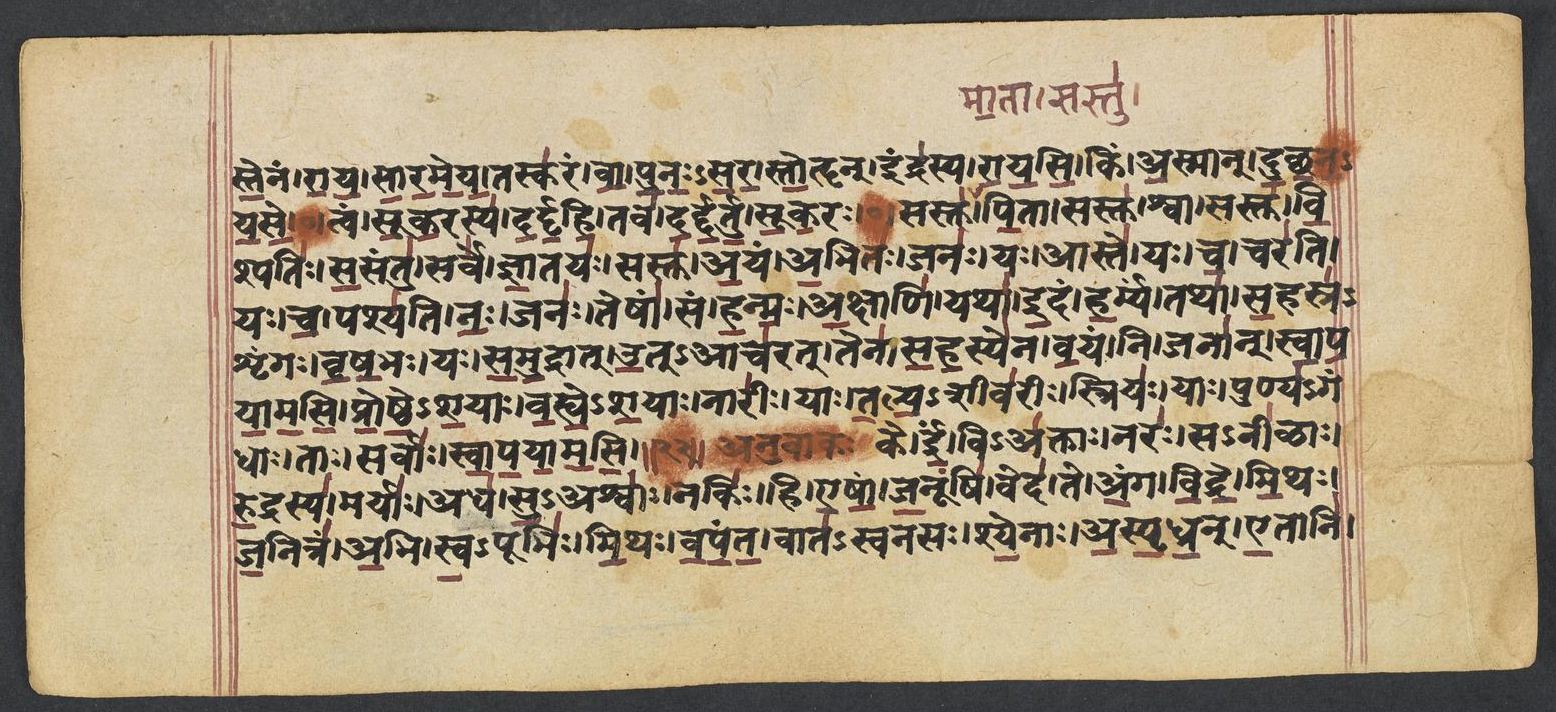
Penn Ms. Coll. 390 Item 41, fol. 527r (numbered 48r by the scribe) (OPenn image 527, lower leaf). Checked on the image: the Rigveda text on this page begins in RV 7.55.3 ‹stenam rāya sārameya taskaram›. The next page with Rigveda text, fol. 527v (numbered 48v by the scribe), begins in RV 7.56.4 ‹dhīraḥ niṇyā ciketa pṛśniḥ›. Verses 7.56.1-3 end on this page.
1ka ī̱ṁ vya̍ktā̱ nara̱ḥ sanī̍ḻā ru̱drasya̱ maryā̱ adha̱ svaśvā̍ḥ ||
2naki̱r hy e̍ṣāṁ ja̱nūṁṣi̱ veda̱ te a̱ṅga vi̍dre mi̱tho ja̱nitra̍m ||
3a̱bhi sva̱pūbhi̍r mi̱tho va̍panta̱ vāta̍svanasaḥ śye̱nā a̍spṛdhran ||
Compare: Padapāṭha (word-by-word text written in the manuscript; Sansknet e-text via GRETIL)
1ke | īm | vi-aktāḥ | naraḥ | sa-nīḷāḥ | rudrasya | maryāḥ | adha | su-aśvāḥ
2nakiḥ | hi | eṣām | janūṃṣi | vede | te | aṅga | vidre | mithaḥ | janitram
3abhi | sva-pūbhiḥ | mithaḥ | vapanta | vāta-svanasaḥ | śyenāḥ | aspṛdhran
1Wno are these radiant men in serried rank, Rudra's young heroes borne by noble steeds?
2Verily no one knoweth whence they sprang: they, and they only, know each other's birth.
3They strew each other with their blasts, these Hawks: they strove together, roaring like the wind.
Where on the image
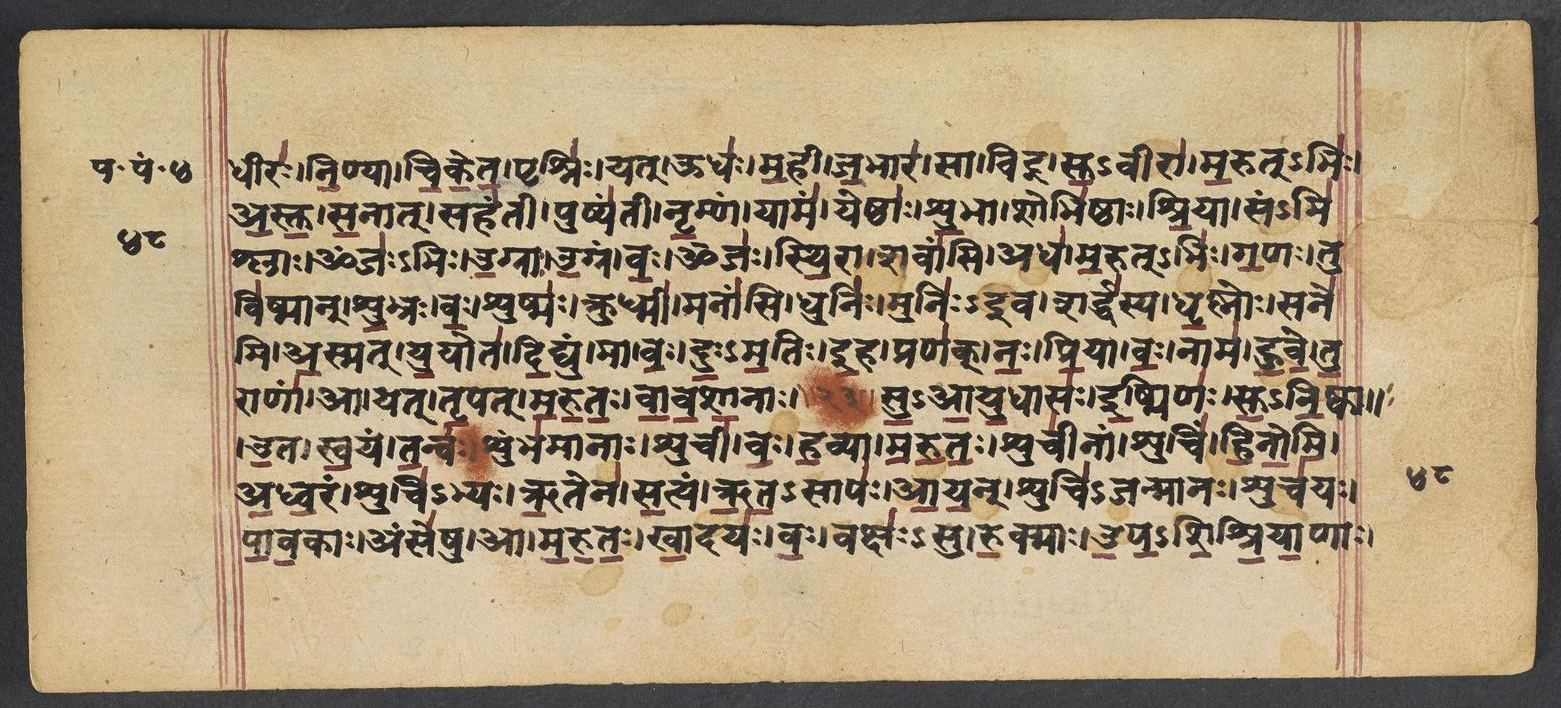
Penn Ms. Coll. 390 Item 41, fol. 527v (numbered 48v by the scribe) (OPenn image 528, upper leaf). Checked on the image: the Rigveda text on this page begins in RV 7.56.4 ‹dhīraḥ niṇyā ciketa pṛśniḥ›. The next page with Rigveda text, fol. 528r (numbered 49r by the scribe), begins in RV 7.56.13 ‹vi vidyutaḥ na vṛṣṭi-bhiḥ›. Verses 7.56.4-12 end on this page; 7.56.4 begins on fol. 527r (numbered 48r by the scribe).
4e̱tāni̱ dhīro̍ ni̱ṇyā ci̍keta̱ pṛśni̱r yad ūdho̍ ma̱hī ja̱bhāra̍ ||
5sā viṭ su̱vīrā̍ ma̱rudbhi̍r astu sa̱nāt saha̍ntī̱ puṣya̍ntī nṛ̱mṇam ||
6yāma̱ṁ yeṣṭhā̍ḥ śu̱bhā śobhi̍ṣṭhāḥ śri̱yā sammi̍ślā̱ ojo̍bhir u̱grāḥ ||
7u̱graṁ va̱ oja̍ḥ sthi̱rā śavā̱ṁsy adhā̍ ma̱rudbhi̍r ga̱ṇas tuvi̍ṣmān ||
8śu̱bhro va̱ḥ śuṣma̱ḥ krudhmī̱ manā̍ṁsi̱ dhuni̱r muni̍r iva̱ śardha̍sya dhṛ̱ṣṇoḥ ||
9sane̍my a̱smad yu̱yota̍ di̱dyum mā vo̍ durma̱tir i̱ha praṇa̍ṅ naḥ ||
10pri̱yā vo̱ nāma̍ huve tu̱rāṇā̱m ā yat tṛ̱pan ma̍ruto vāvaśā̱nāḥ ||
11svā̱yu̱dhāsa̍ i̱ṣmiṇa̍ḥ suni̱ṣkā u̱ta sva̱yaṁ ta̱nva1̱̍ḥ śumbha̍mānāḥ ||
12śucī̍ vo ha̱vyā ma̍ruta̱ḥ śucī̍nā̱ṁ śuci̍ṁ hinomy adhva̱raṁ śuci̍bhyaḥ | ṛ̱tena̍ sa̱tyam ṛ̍ta̱sāpa̍ āya̱ñ chuci̍janmāna̱ḥ śuca̍yaḥ pāva̱kāḥ ||
Compare: Padapāṭha (word-by-word text written in the manuscript; Sansknet e-text via GRETIL)
4etāni | dhīraḥ | niṇyā | ciketa | pṛśniḥ | yat | ūdhaḥ | mahī | jabhāra
5sā | viṭ | su-vīrā | marut-bhiḥ | astu | sanāt | sahantī | puṣyantī | nṛmṇam
6yāmam | yeṣṭhāḥ | śubhā | śobhiṣṭhāḥ | śriyā | sam-miślāḥ | ojaḥ-bhiḥ | ugrāḥ
7ugram | vaḥ | ojaḥ | sthirā | śavāṃsi | adha | marut-bhiḥ | gaṇaḥ | tuviṣmān
8śubhraḥ | vaḥ | śuṣmaḥ | krudhmī | manāṃsi | dhuniḥ | muniḥ-iva | śardhasya | dhṛṣṇoḥ
9sanemi | asmat | yuyota | didyum | mā | vaḥ | duḥ-matiḥ | iha | praṇak | naḥ
10priyā | vaḥ | nāma | huve | turāṇām | ā | yat | tṛpat | marutaḥ | vāvaśānāḥ
11su-āyudhāsaḥ | iṣmiṇaḥ | su-niṣkāḥ | uta | svayam | tanvaḥ | śumbhamānāḥ
12śucī | vaḥ | havyā | marutaḥ | śucīnām | śucim | hinomi | adhvaram | śuci-bhyaḥ | ṛtena | satyam | ṛta-sāpaḥ | āyan | śuci-janmānaḥ | śucayaḥ | pāvakāḥ
4A sage was he who knew these mysteries, what in her udder mighty Pr̥iṣni bore.
5Ever victorious, through the Maruts, be this band of Heroes, nursing manly strength,
6Most bright in splendour, flectest on their way, close-knit to glory, strong with varied power.
7Yea, mighty is your power and firm your strength: so, potent, with the Maruts, be the band.
8Bright is your spirit, wrathful are your minds: your bold troop's minstrel is like one inspired.
9Ever avert your blazing shaft from us, and let not your displeasure reach us here
10Your dear names, conquering Maruts, we invoke, calling aloud till we are satisfied.
11Well-armed, impetuous in their haste, they deck themselves, their forms, with oblations: to you, the pure, ornaments made of gold.
12Pure, Maruts, pure yourselves, are your oblations: to you, the pure, pure sacrifice I offer. By Law they came to truth, the Law's observers, bright by their birth, and pure, and sanctifying.
Where on the image
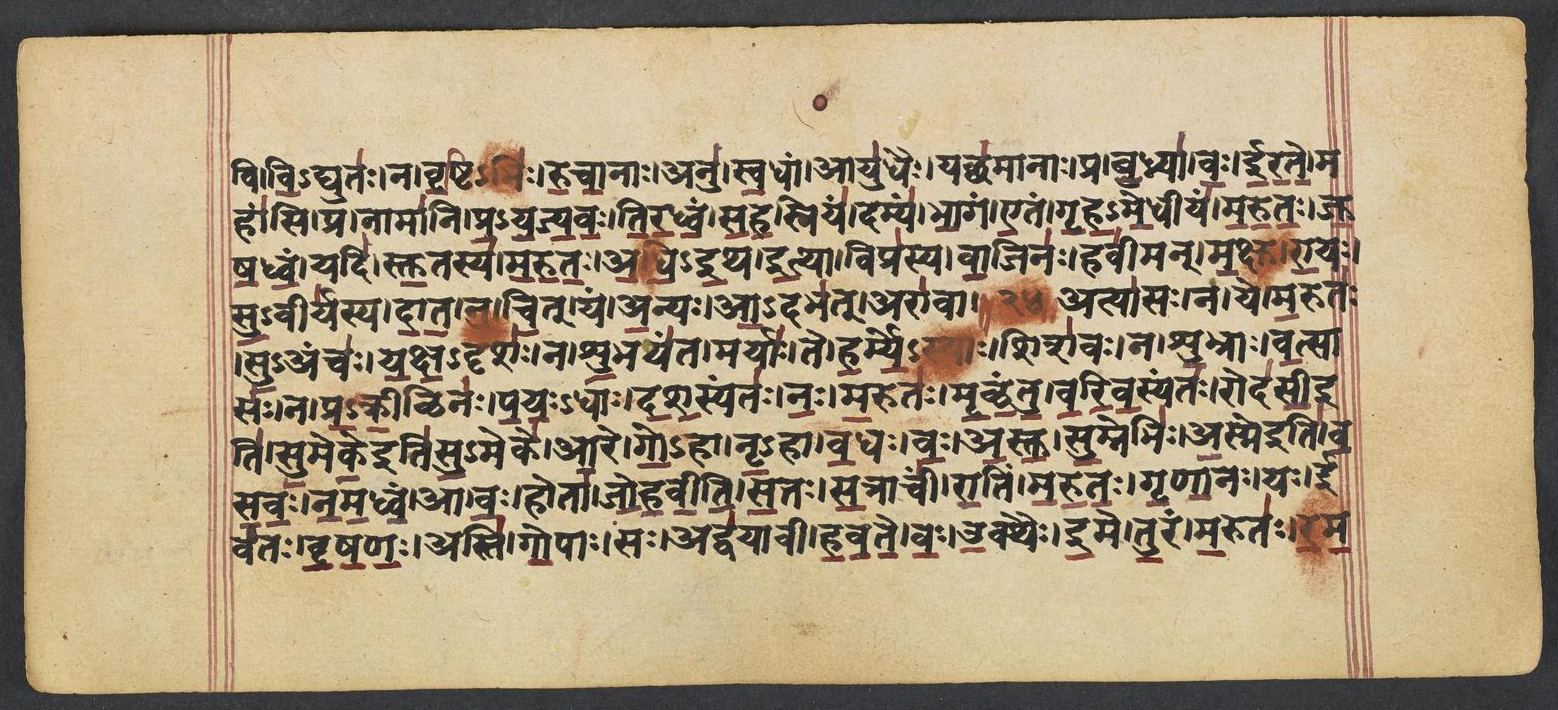
Penn Ms. Coll. 390 Item 41, fol. 528r (numbered 49r by the scribe) (OPenn image 528, lower leaf). Checked on the image: the Rigveda text on this page begins in RV 7.56.13 ‹vi vidyutaḥ na vṛṣṭi-bhiḥ›. The next page with Rigveda text, fol. 528v (numbered 49v by the scribe), begins in RV 7.56.19 ‹-ramayanti ime sahaḥ sahasaḥ›. Verses 7.56.13-18 end on this page; 7.56.13 begins on fol. 527v (numbered 48v by the scribe).
13aṁse̱ṣv ā ma̍rutaḥ khā̱dayo̍ vo̱ vakṣa̍ḥsu ru̱kmā u̍paśiśriyā̱ṇāḥ | vi vi̱dyuto̱ na vṛ̱ṣṭibhī̍ rucā̱nā anu̍ sva̱dhām āyu̍dhai̱r yaccha̍mānāḥ ||
14pra bu̱dhnyā̍ va īrate̱ mahā̍ṁsi̱ pra nāmā̍ni prayajyavas tiradhvam | sa̱ha̱sriya̱ṁ damya̍m bhā̱gam e̱taṁ gṛ̍hame̱dhīya̍m maruto juṣadhvam ||
15yadi̍ stu̱tasya̍ maruto adhī̱thetthā vipra̍sya vā̱jino̱ havī̍man | ma̱kṣū rā̱yaḥ su̱vīrya̍sya dāta̱ nū ci̱d yam a̱nya ā̱dabha̱d arā̍vā ||
16atyā̍so̱ na ye ma̱ruta̱ḥ svañco̍ yakṣa̱dṛśo̱ na śu̱bhaya̍nta̱ maryā̍ḥ | te ha̍rmye̱ṣṭhāḥ śiśa̍vo̱ na śu̱bhrā va̱tsāso̱ na pra̍krī̱ḻina̍ḥ payo̱dhāḥ ||
17da̱śa̱syanto̍ no ma̱ruto̍ mṛḻantu variva̱syanto̱ roda̍sī su̱meke̍ | ā̱re go̱hā nṛ̱hā va̱dho vo̍ astu su̱mnebhi̍r a̱sme va̍savo namadhvam ||
18ā vo̱ hotā̍ johavīti sa̱ttaḥ sa̱trācī̍ṁ rā̱tim ma̍ruto gṛṇā̱naḥ | ya īva̍to vṛṣaṇo̱ asti̍ go̱pāḥ so adva̍yāvī havate va u̱kthaiḥ ||
Compare: Padapāṭha (word-by-word text written in the manuscript; Sansknet e-text via GRETIL)
13aṃseṣu | ā | marutaḥ | khādayaḥ | vaḥ | vakṣaḥ-su | rukmāḥ | upa-śiśriyāṇāḥ | vi | vidyutaḥ | na | vṛṣṭi-bhiḥ | rucānāḥ | anu | svadhām āyudhair yacchamānāḥ
14pra | budhnyā | vaḥ | īrate | mahāṃsi | pra | nāmāni | pra-yajyavaḥ | tiradhvam | sahasriyam | damyam | bhāgam | etam | gṛha-medhīyam | marutaḥ | juṣadhvam
15yadi | stutasya | marutaḥ | adhitha | itthā | viprasya | vājinaḥ | havīman | makṣu | rāyaḥ | su-vīryasya | dāta | nu | cit | yam | anyaḥ | ādabhat | arāvā
16atyāsaḥ | na | ye | marutaḥ | su-añcaḥ | yakṣa-dṛśaḥ | na | śubhayanta | mayārḥ | te | harmye--sthāḥ | śiśavaḥ | na | śubhrāḥ | vatsāsaḥ | na | pra-kīḷinaḥ | payaḥ-dhāḥ
17daśasyantaḥ | naḥ | marutaḥ | mṛḷantu | varivasyantaḥ | rodasī iti | sumeke itisu-meke | āre | go--hā | nṛ-hā | vadhaḥ | vaḥ | astu | sumrebhiḥ | asme iti | vasavaḥ | namadhvam
18ā | vaḥ | hotā | johavīti | sattaḥ | satrācī | rātim | marutaḥ | gṛṇānaḥ | yaḥ | īvataḥ | vṛṣaṇaḥ | asti | gopāḥ | saḥ | advayāvī | havate | vaḥ | ukthaiḥ
13Your rings, O Maruts, rest upon your shoulders, and chains of gold are twined upon your bosoms. Gleaming with drops of rain, like lightning-flashes, after your wont ye whirl about your weapons.
14Wide in the depth of air spread forth your glories, far, most adorable, ye bear your titles. Maruts, accept this thousandfold allotment of household sacrifice and household treasure.
15If, Maruts, ye regard the praise recited here at this mighty singer invocation, Vouchsafe us quickly wealth with noble heroes, wealth which no man who hateth us may injure.
16The Maruts, fleet as coursers, while they deck them like youths spectators of a festal meeting, Linger, like beauteous colts, about the dwelling, like frisking calves, these who pour down the water.
17So may the Maruts help us and be gracious, bringing free room to lovely Earth and Heaven. Far be your bolt that slayeth men and cattle. Ye Vasus, turn yourselves to us with blessings.
18The priest, when seated, loudly calls you, Maruts, praising in song your universal bounty. He, Bulls! who hath so much in his possession, free from duplicity, with hymns invokes you.
Where on the image
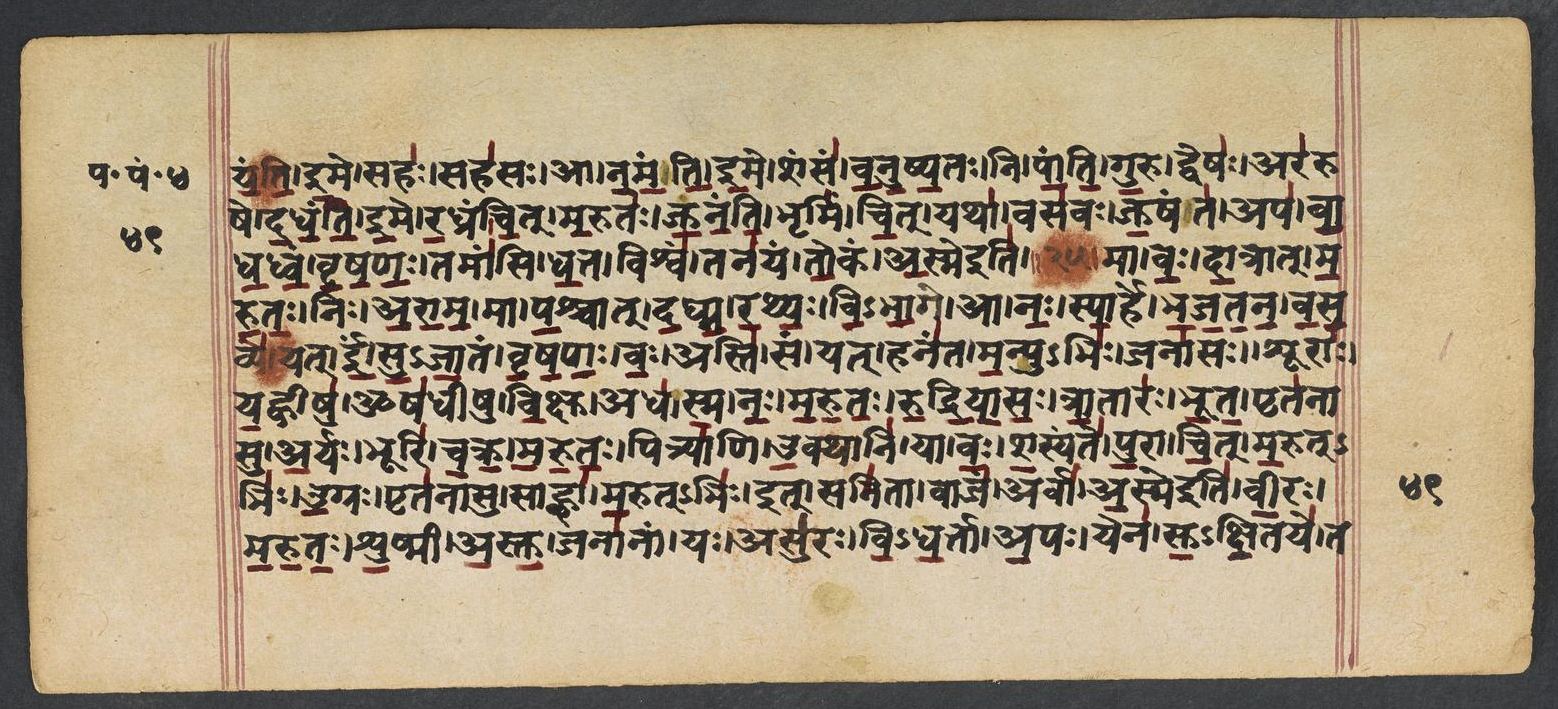
Penn Ms. Coll. 390 Item 41, fol. 528v (numbered 49v by the scribe) (OPenn image 529, upper leaf). Checked on the image: the Rigveda text on this page begins in RV 7.56.19 ‹-ramayanti ime sahaḥ sahasaḥ›. The next page with Rigveda text, fol. 529r (numbered 50r by the scribe), begins in RV 7.56.24 ‹-tarema adha svam okaḥ›. Verses 7.56.19-23 end on this page; 7.56.19 begins on fol. 528r (numbered 49r by the scribe).
19i̱me tu̱ram ma̱ruto̍ rāmayantī̱me saha̱ḥ saha̍sa̱ ā na̍manti | i̱me śaṁsa̍ṁ vanuṣya̱to ni pā̍nti gu̱ru dveṣo̱ ara̍ruṣe dadhanti ||
20i̱me ra̱dhraṁ ci̍n ma̱ruto̍ junanti̱ bhṛmi̍ṁ ci̱d yathā̱ vasa̍vo ju̱ṣanta̍ | apa̍ bādhadhvaṁ vṛṣaṇa̱s tamā̍ṁsi dha̱tta viśva̱ṁ tana̍yaṁ to̱kam a̱sme ||
21mā vo̍ dā̱trān ma̍ruto̱ nir a̍rāma̱ mā pa̱ścād da̍ghma rathyo vibhā̱ge | ā na̍ḥ spā̱rhe bha̍jatanā vasa̱vye̱3̱̍ yad ī̍ṁ sujā̱taṁ vṛ̍ṣaṇo vo̱ asti̍ ||
22saṁ yad dhana̍nta ma̱nyubhi̱r janā̍sa̱ḥ śūrā̍ ya̱hvīṣv oṣa̍dhīṣu vi̱kṣu | adha̍ smā no maruto rudriyāsas trā̱tāro̍ bhūta̱ pṛta̍nāsv a̱ryaḥ ||
23bhūri̍ cakra maruta̱ḥ pitryā̍ṇy u̱kthāni̱ yā va̍ḥ śa̱syante̍ pu̱rā ci̍t | ma̱rudbhi̍r u̱graḥ pṛta̍nāsu̱ sāḻhā̍ ma̱rudbhi̱r it sani̍tā̱ vāja̱m arvā̍ ||
Compare: Padapāṭha (word-by-word text written in the manuscript; Sansknet e-text via GRETIL)
19ime | turam | marutaḥ | ramayanti | ime | sahaḥ | sahasaḥ | ā | namanti | ime | śaṃsam | vanuṣyataḥ | ni | pānti | guru | dveṣaḥ | araruṣe | dadhanti
20ime | radhram | cit | marutaḥ | junanti | bhṛmim | cit | yathā | vasavaḥ | juṣanta | apa | bādhadhvam | vṛṣaṇaḥ | tamāṃsi | dhatta | viśvam | tanayam | tokam | asme iti
21mā | vaḥ | dātrāt | marutaḥ | niḥ | arāma | mā | paścāt | dadhma | rathyaḥ | vi-bhāge | ā | naḥ | spārhe | bhajatana | vasavye | yat | īm | su-jātam | vṛṣaṇaḥ | vaḥ | asti
22sam | yat | hananta | manyu-bhiḥ | janāsaḥ | śūrāḥ | yahvīṣu | oṣadhīṣu | vikṣu | adha | sma | naḥ | marutaḥ | rudriyāsaḥ | trātāraḥ | bhūta | pṛtanāsu | aryaḥ
23bhūri | cakra | marutaḥ | pitryāṇi | ukthāni | yā | vaḥ | śasyante | purā | cit | marut-bhi ḥ | ugraḥ | pṛtanāsu | sāḷhā | marut-bhiḥ | it | sanitā | vājam | arvā
19These Maruts bring the swift man to a stand-still, and strength with mightier strength they break and humble These guard the singer from the man who hates him and lay their sore displeasure on the wicked.
20These Maruts rouse even the poor and needy: the Vasus love him as an active champion. Drive to a distance, O ye Bulls, the darkness: give us full store of children and descendants.
21Never, O Maruts, may we lose your bounty, nor, car-borne Lords! be hindmost when ye deal it. Give us a share in that delightful treasure, the genuine wealth that, Bulls! is your possession.
22What time the men in fury rush together for running streams, for pastures, and for houses. Then, O ye Maruts, ye who spring from Rudra, be our protectors in the strife with foemen.
23Full many a deed ye did for our forefathers worthy of lauds which, even of old, they sang you. lle strong man, with the Maruts, wins in battle, the charger, with the Maruts, gains the booty.
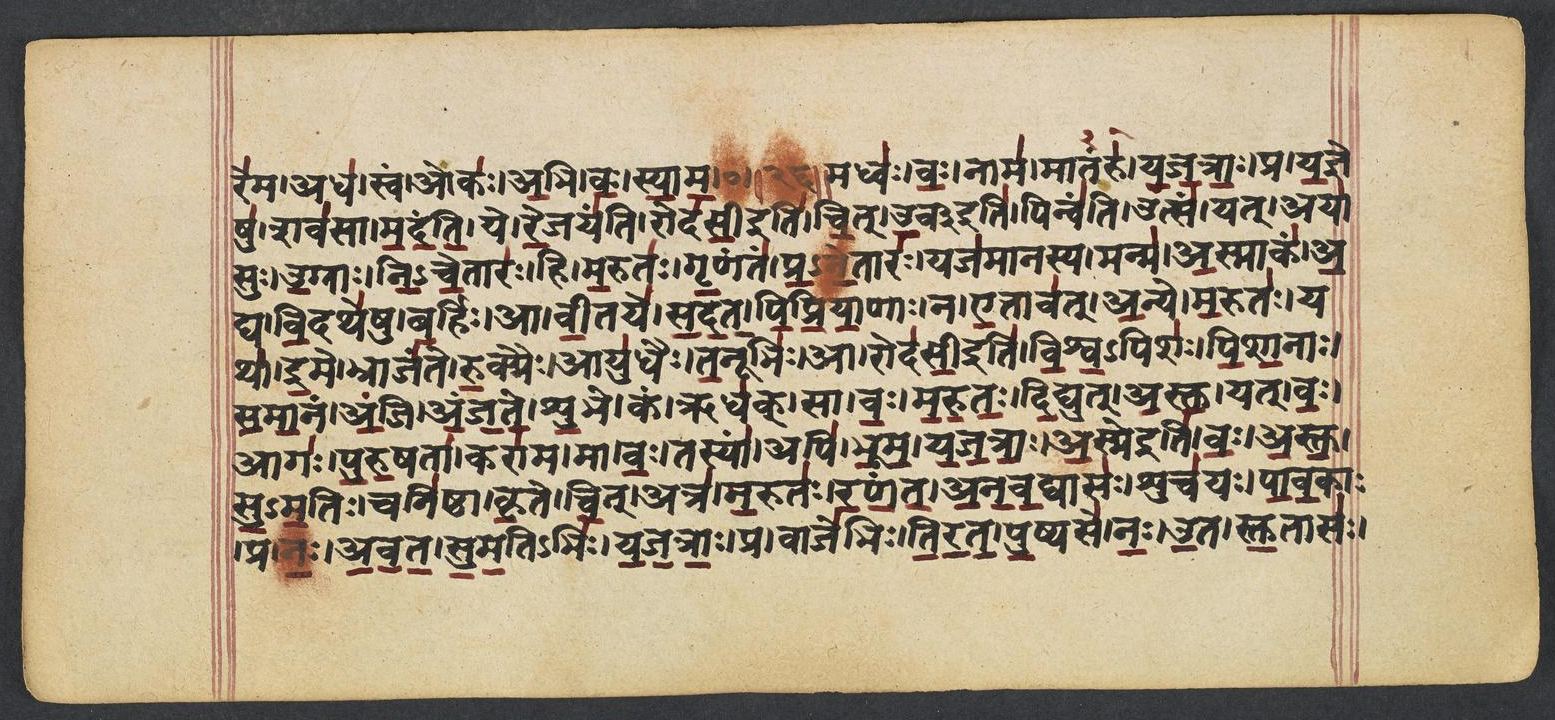
Where on the image
Penn Ms. Coll. 390 Item 41, fol. 529r (numbered 50r by the scribe) (OPenn image 529, lower leaf). Checked on the image: the Rigveda text on this page begins in RV 7.56.24 ‹-tarema adha svam okaḥ›. The next page with Rigveda text, fol. 529v (numbered 50v by the scribe), begins in RV 7.57.6 ‹marutaḥ vyantu viśvebhiḥ nāma-bhiḥ›. Verses 7.56.24-25 end on this page; 7.56.24 begins on fol. 528v (numbered 49v by the scribe).
24a̱sme vī̱ro ma̍rutaḥ śu̱ṣmy a̍stu̱ janā̍nā̱ṁ yo asu̍ro vidha̱rtā | a̱po yena̍ sukṣi̱taye̱ tare̱mādha̱ svam oko̍ a̱bhi va̍ḥ syāma ||
25tan na̱ indro̱ varu̍ṇo mi̱tro a̱gnir āpa̱ oṣa̍dhīr va̱nino̍ juṣanta | śarma̍n syāma ma̱rutā̍m u̱pasthe̍ yū̱yam pā̍ta sva̱stibhi̱ḥ sadā̍ naḥ ||
Compare: Padapāṭha (word-by-word text written in the manuscript; Sansknet e-text via GRETIL)
24asme iti | vīraḥ | marutaḥ | śuṣmī | astu | janānām | yaḥ | asuraḥ | vi-dhartā | apaḥ | yena | su-kṣitaye | tarema | adha | svam | okaḥ | abhi | vaḥ | syāma
25tat | naḥ | indraḥ | varuṇaḥ | mitraḥ | agniḥ | āpaḥ | oṣadhīḥ | vaninaḥ | juṣanta | śarman | syāma | marutām | upa-sthe | yūyam | pāta | svasti-bhiḥ | sadā | naḥ
24Ours, O ye Maruts, be the vigorous Hero, the Lord Divine of men, the strong Sustainer, With whom to fair lands we may cross the waters, and dwell in our own home with you beside us.
25May Indra, Mitra, Varuṇa and Agni, Waters, and Plants, and Trees accept our praises. May we find shelter in the Marut's bosom. Preserve us evermore, ye Gods, with blessings.
Notes
- Sanskrit: Aufrecht's edition (1877) with the Vedic accents, as entered by van Nooten and Holland (GRETIL).
- English: Ralph T. H. Griffith, The Hymns of the Rigveda (1889-1892; 2nd ed. 1896-1897), from the VedaWeb digital text; OCR slips in that text were corrected against the printed 2nd edition (data/sources/rigveda/griffith_errata.json).
- Padapāṭha (edition text): Sansknet e-text via GRETIL (CC BY-NC-SA 4.0).
Cite
Sources
- Source: Penn Ms. Coll. 390 Item 41 (undated (catalogued with Penn's 18th-19th c. Vedic manuscripts)), OPenn, Public Domain Mark + Aufrecht's accented text (GRETIL) + Griffith's English (VedaWeb) (holding institution)
- Critical edition: Aufrecht (1877), accented e-text via GRETIL
← previous · → next · v cycle view · l back to library