Rigveda 7.67: To Asvins
Introduction
Rigveda 7.67 is a hymn of 10 verses addressed to Asvins. It stands in book (maṇḍala) 7, the family book of Vasiṣṭha. The Rigveda is the oldest collection of Sanskrit hymns, composed in the second half of the second millennium BCE and handed down orally for many centuries before it was written down.
The manuscript shown is Penn Ms. Coll. 390 Item 41 (University of Pennsylvania), an undated paper manuscript of the padapāṭha (the word-by-word recitation text, in which every word is written separately and compounds are split) of the whole Ṛgveda in Devanāgarī, 884 leaves in fascicles, 7-9 lines to the page, accents in red; this hymn stands on fol. 535v-536v. Each section below gives the verses that end on one page; the page boundaries were read on the images (the opening words of every page), not counted out. Where the manuscript is a padapāṭha (the word-by-word recitation text), the section shows Aufrecht's continuous (saṃhitā) text first and, as the edition text, the padapāṭha of the same verses, which is the form written on the page.
How was this verified? (Provenance)
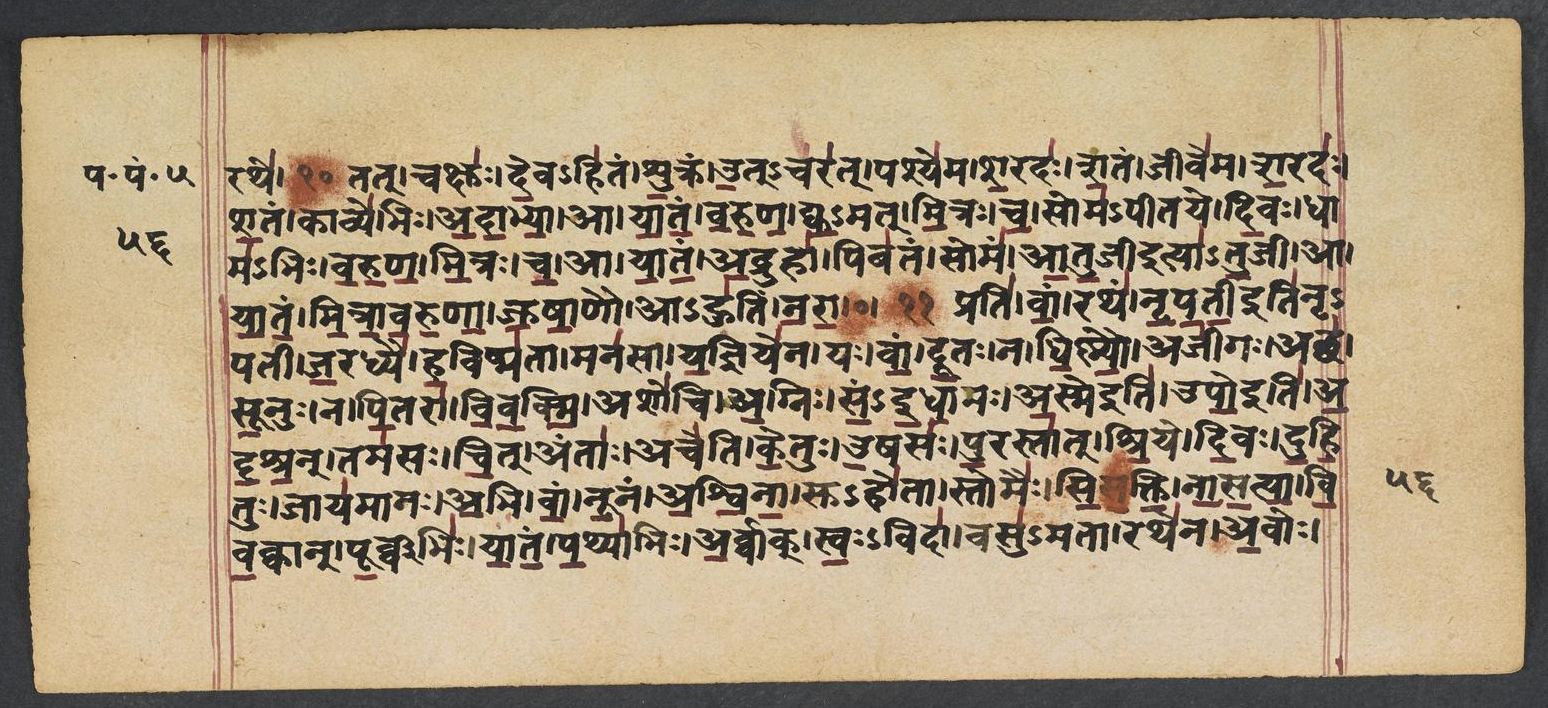
Where on the image
Penn Ms. Coll. 390 Item 41, fol. 535v (numbered 56v by the scribe) (OPenn image 536, upper leaf). Checked on the image: the Rigveda text on this page begins in RV 7.66.15 ‹rathe›. The next page with Rigveda text, fol. 536r (numbered 57r by the scribe), begins in RV 7.67.4 ‹vām nūnam aśvinā yuvākuḥ›. Verses 7.67.1-3 end on this page.
1prati̍ vā̱ṁ ratha̍ṁ nṛpatī ja̱radhyai̍ ha̱viṣma̍tā̱ mana̍sā ya̱jñiye̍na | yo vā̍ṁ dū̱to na dhi̍ṣṇyā̱v ajī̍ga̱r acchā̍ sū̱nur na pi̱tarā̍ vivakmi ||
2aśo̍cy a̱gniḥ sa̍midhā̱no a̱sme upo̍ adṛśra̱n tama̍saś ci̱d antā̍ḥ | ace̍ti ke̱tur u̱ṣasa̍ḥ pu̱rastā̍c chri̱ye di̱vo du̍hi̱tur jāya̍mānaḥ ||
3a̱bhi vā̍ṁ nū̱nam a̍śvinā̱ suho̍tā̱ stomai̍ḥ siṣakti nāsatyā viva̱kvān | pū̱rvībhi̍r yātam pa̱thyā̍bhir a̱rvāk sva̱rvidā̱ vasu̍matā̱ rathe̍na ||
Compare: Padapāṭha (word-by-word text written in the manuscript; Sansknet e-text via GRETIL)
1prati | vām | ratham | nṛpatī- itinṛ-patī | jaradhyai | haviṣmatā | manasā | yajñiyena | yah | vām | dūtaḥ | na | dhiṣṇyau | ajīgaḥ | accha | sūnuḥ | na | pitarā | vivakmi
2aśoci | agniḥ | sam-idhānaḥ | asme iti | upo iti | adṛśran | tamasaḥ | cit | antāḥ | aceti | ketuḥ | uṣasaḥ | purastāt | śriye | d ivaḥ | duhituḥ | jāyamānaḥ
3abhi | vām | nūnam | aśvinā | su-hotā | stomaiḥ | sisakti | nāsatyā | vivakvān | pūrvībhiḥ | yātam | pathyābhiḥ | arvāk | svaḥ-vidā | vasu-matā | rathena
1I WITH a holy heart that brings oblation will sing forth praise to meet your car, ye Princes, Which, Much-desired! hath wakened as your envoy. I call you hither as a son his parents.
2Brightly hath Agni shone by us enkindled: the limits even of darkness were apparent. Eastward is seen the Banner of the Morning, the Banner born to give Heaven's Daughter glory.
3With hymns the deft priest is about you, Aṣvins, the eloquent priest attends you now, Nâsatyas. Come by the paths that ye are wont to travel, on car that finds the light, laden with treasure.
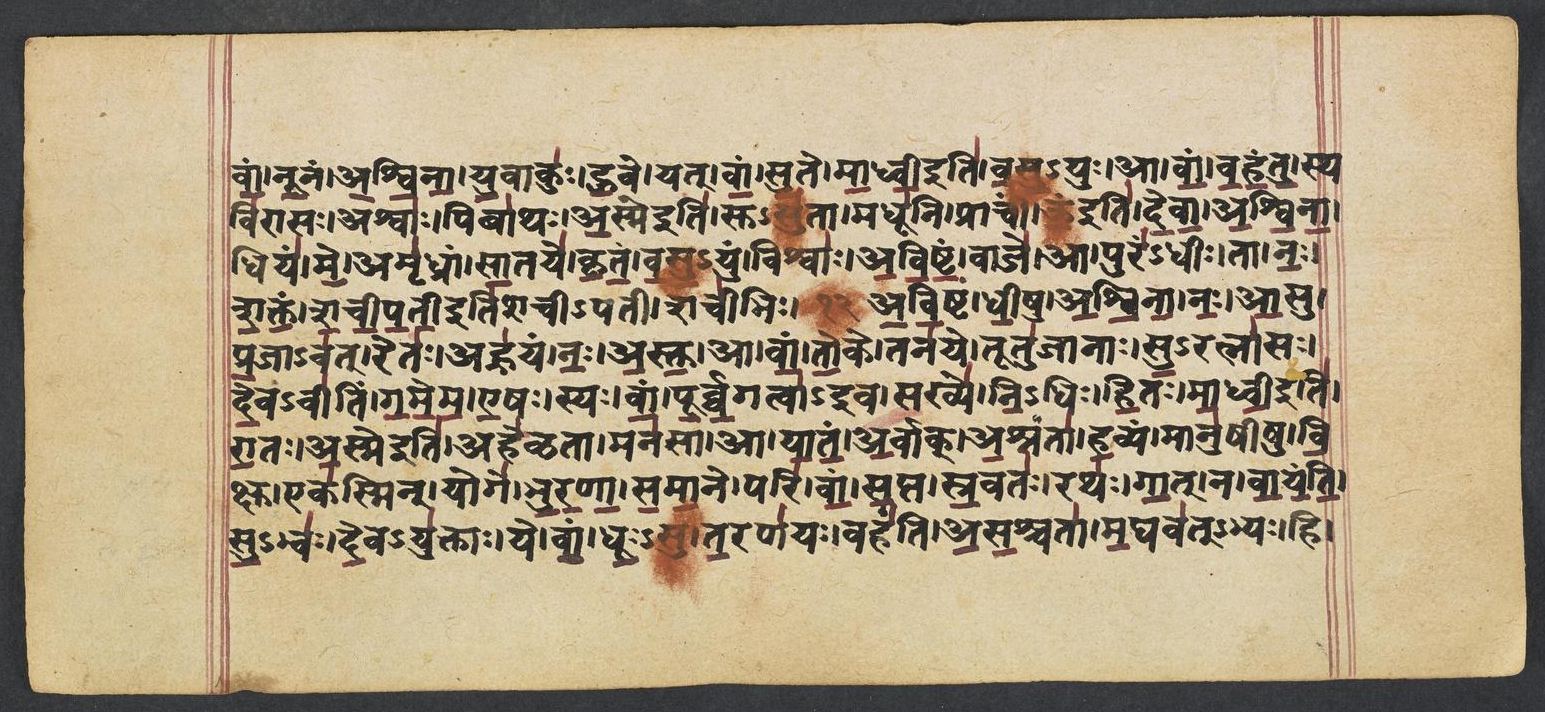
Where on the image
Penn Ms. Coll. 390 Item 41, fol. 536r (numbered 57r by the scribe) (OPenn image 536, lower leaf). Checked on the image: the Rigveda text on this page begins in RV 7.67.4 ‹vām nūnam aśvinā yuvākuḥ›. The next page with Rigveda text, fol. 536v (numbered 57v by the scribe), begins in RV 7.67.9 ‹bhūtam ye rāyā magha-deyam›. Verses 7.67.4-8 end on this page; 7.67.4 begins on fol. 535v (numbered 56v by the scribe).
4a̱vor vā̍ṁ nū̱nam a̍śvinā yu̱vāku̍r hu̱ve yad vā̍ṁ su̱te mā̍dhvī vasū̱yuḥ | ā vā̍ṁ vahantu̱ sthavi̍rāso̱ aśvā̱ḥ pibā̍tho a̱sme suṣu̍tā̱ madhū̍ni ||
5prācī̍m u devāśvinā̱ dhiya̱m me 'mṛ̍dhrāṁ sā̱taye̍ kṛtaṁ vasū̱yum | viśvā̍ aviṣṭa̱ṁ vāja̱ ā pura̍ṁdhī̱s tā na̍ḥ śaktaṁ śacīpatī̱ śacī̍bhiḥ ||
6a̱vi̱ṣṭaṁ dhī̱ṣv a̍śvinā na ā̱su pra̱jāva̱d reto̱ ahra̍yaṁ no astu | ā vā̍ṁ to̱ke tana̍ye̱ tūtu̍jānāḥ su̱ratnā̍so de̱vavī̍tiṁ gamema ||
7e̱ṣa sya vā̍m pūrva̱gatve̍va̱ sakhye̍ ni̱dhir hi̱to mā̍dhvī rā̱to a̱sme | ahe̍ḻatā̱ mana̱sā yā̍tam a̱rvāg a̱śnantā̍ ha̱vyam mānu̍ṣīṣu vi̱kṣu ||
8eka̍smi̱n yoge̍ bhuraṇā samā̱ne pari̍ vāṁ sa̱pta sra̱vato̱ ratho̍ gāt | na vā̍yanti su̱bhvo̍ de̱vayu̍ktā̱ ye vā̍ṁ dhū̱rṣu ta̱raṇa̍yo̱ vaha̍nti ||
Compare: Padapāṭha (word-by-word text written in the manuscript; Sansknet e-text via GRETIL)
4avoḥ | vām | nūnam | aśvinā | yuvākuḥ | huve | yat | vām | sute | mādhvī iti | vasu-yuḥ | ā | vām | vahantu | sthavirāsaḥ | aśvāḥ | pibāthaḥ | asme iti | su-sutā | madhūni
5prācīm | oṃ iti | devā | aśvinā | dhiyam | me | amṛdhrām | sātaye | kṛtam | vasu-yum | viśvāḥ | aviṣṭam | vāje | ā | puram-dhīḥ | tā | naḥ | śaktam | śacīpatī itiśacī-patī | śacībhiḥ
6aviṣṭam | dhīṣu | aśvinā | naḥ | āsu | prajāvat | retaḥ | ahrayam | naḥ | astu | ā | vām | toke | tanaye | tūtujānāḥ | su-ratnāsaḥ | deva-vītim | gamema
7eṣaḥ | syaḥ | vām | pūrvagatvāiva | sakhye | ni-dhiḥ | hitaḥ | mādhvī iti | rātaḥ | asme iti | aheḷatā | manasā | yātam | arvāk | aśnantā | havyam | mānuṣīṣu | vikṣu
8ekasmin | yoge | bhuraṇā | samāne | pari | vām | sapta | sravataḥ | rathaḥ | gāt | na | vāyanti | su-bhvaḥ | deva-yuktāḥ | ye | vām | dhūḥ-su | taraṇayaḥ | vahanti
4When, suppliant for your help, Lovers of Sweetness! I seeking wealth call you to our libation, Hitherward let your vigorous horses bear you: drink ye with us the well-pressed Soma juices.
5Bring forward, Aṣvins, Gods, to its fulfilment my never-wearied prayer that asks for riches. Vouchsafe us all high spirit in the combat, and with your powers, O Lords of Power, assist us.
6Favour us in these prayers of ours, O Aṣvins. May we have genial vigour, ne'er to fail us. So may we, strong in children and descendants, go, wealthy, to the banquet that awaits you.
7Lovers of Sweetness, we have brought this treasure to you as 'twere an envoy sent for friendship. Come unto us with spirits free from anger, in homes of men enjoying our oblation.
8With one, the same, intention, ye swift movers, o'er the Seven Rivers hath your chariot travelled. Yoked by the Gods, your strong steeds never weary while speeding forward at the pole they bear you.
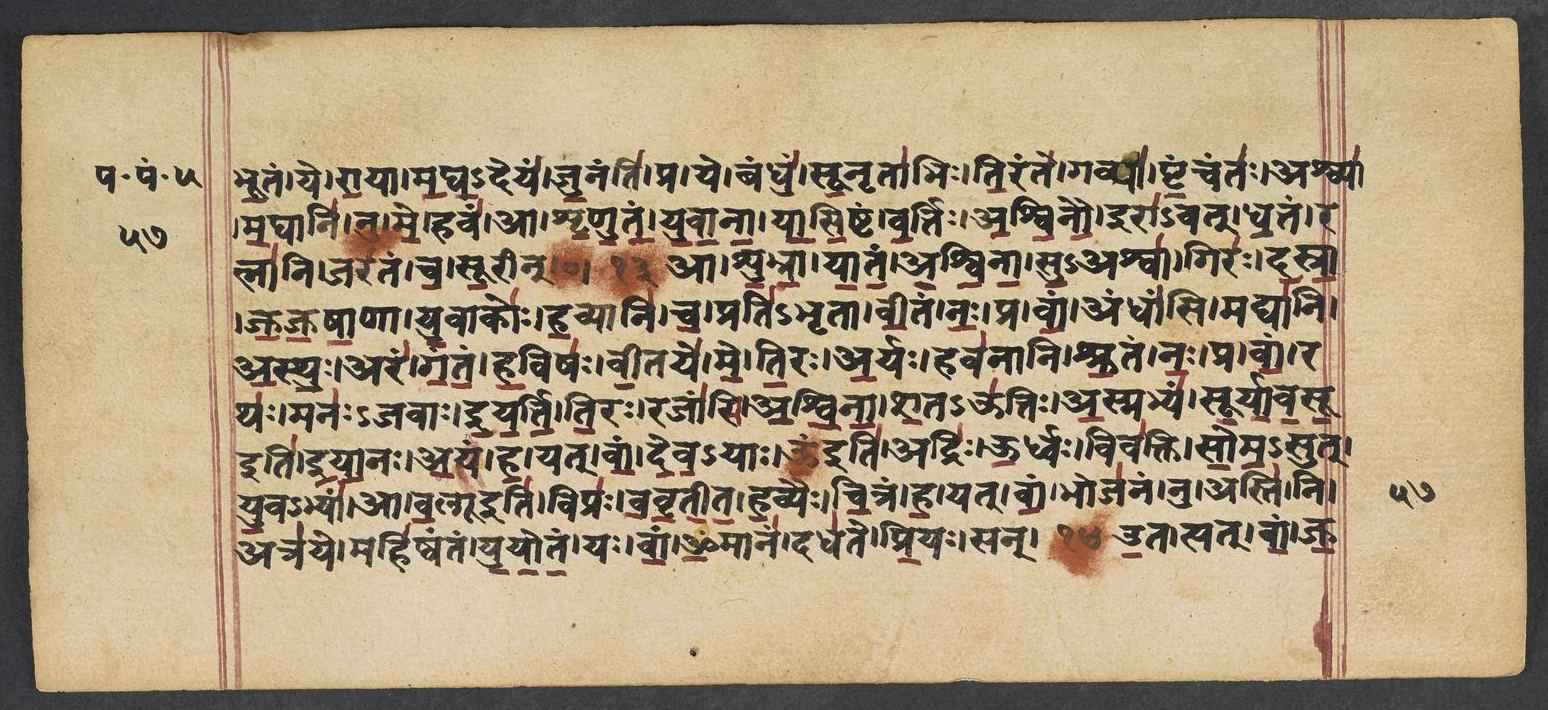
Where on the image
Penn Ms. Coll. 390 Item 41, fol. 536v (numbered 57v by the scribe) (OPenn image 537, upper leaf). Checked on the image: the Rigveda text on this page begins in RV 7.67.9 ‹bhūtam ye rāyā magha-deyam›. The next page with Rigveda text, fol. 537r (numbered 58r by the scribe), begins in RV 7.68.6 ‹-jurate āśvinā bhūt cyavānāya›. Verses 7.67.9-10 end on this page; 7.67.9 begins on fol. 536r (numbered 57r by the scribe).
9a̱sa̱ścatā̍ ma̱ghava̍dbhyo̱ hi bhū̱taṁ ye rā̱yā ma̍gha̱deya̍ṁ ju̱nanti̍ | pra ye bandhu̍ṁ sū̱nṛtā̍bhis ti̱rante̱ gavyā̍ pṛ̱ñcanto̱ aśvyā̍ ma̱ghāni̍ ||
10nū me̱ hava̱m ā śṛ̍ṇutaṁ yuvānā yāsi̱ṣṭaṁ va̱rtir a̍śvinā̱v irā̍vat | dha̱ttaṁ ratnā̍ni̱ jara̍taṁ ca sū̱rīn yū̱yam pā̍ta sva̱stibhi̱ḥ sadā̍ naḥ ||
Compare: Padapāṭha (word-by-word text written in the manuscript; Sansknet e-text via GRETIL)
9asaścatā | maghavat-bhyaḥ | hi | bhūtam | ye | rāyā | magha-deyam | junanti | pra | ye | bandhum | sūnṛtābhiḥ | tirante | gavyā | pṛñcantaḥ | aśvyā | maghāni
10nu | me | havam | ā | śṛṇutam | yuvānā | yāsiṣṭam | vartiḥ | aśvinau | irāvat | dhattam | ratnāni | jaratam | ca | sūrīn | yūyam | pāta | svasti-bhiḥ | sadā | naḥ
9Exhaustless be your bounty to our princes who with their wealth incite the gift of riches, Who further friendship with their noble natures, combining wealth in kine with wealth in herses.
10Now hear, O Youthful Twain, mine invocation: come, Aṣvins, to the home where food aboundeth. Vouchsafe us wealth, do honour to our nobles. Preserve us evermore, ye Gods, with blessings.
Notes
- Sanskrit: Aufrecht's edition (1877) with the Vedic accents, as entered by van Nooten and Holland (GRETIL).
- English: Ralph T. H. Griffith, The Hymns of the Rigveda (1889-1892; 2nd ed. 1896-1897), from the VedaWeb digital text; OCR slips in that text were corrected against the printed 2nd edition (data/sources/rigveda/griffith_errata.json).
- Padapāṭha (edition text): Sansknet e-text via GRETIL (CC BY-NC-SA 4.0).
Cite
Sources
- Source: Penn Ms. Coll. 390 Item 41 (undated (catalogued with Penn's 18th-19th c. Vedic manuscripts)), OPenn, Public Domain Mark + Aufrecht's accented text (GRETIL) + Griffith's English (VedaWeb) (holding institution)
- Critical edition: Aufrecht (1877), accented e-text via GRETIL
← previous · → next · v cycle view · l back to library