Rigveda 7.70: To Asvins
Introduction
Rigveda 7.70 is a hymn of 7 verses addressed to Asvins. It stands in book (maṇḍala) 7, the family book of Vasiṣṭha. The Rigveda is the oldest collection of Sanskrit hymns, composed in the second half of the second millennium BCE and handed down orally for many centuries before it was written down.
The manuscript shown is Penn Ms. Coll. 390 Item 41 (University of Pennsylvania), an undated paper manuscript of the padapāṭha (the word-by-word recitation text, in which every word is written separately and compounds are split) of the whole Ṛgveda in Devanāgarī, 884 leaves in fascicles, 7-9 lines to the page, accents in red; this hymn stands on fol. 537v-538v. Each section below gives the verses that end on one page; the page boundaries were read on the images (the opening words of every page), not counted out. Where the manuscript is a padapāṭha (the word-by-word recitation text), the section shows Aufrecht's continuous (saṃhitā) text first and, as the edition text, the padapāṭha of the same verses, which is the form written on the page.
How was this verified? (Provenance)
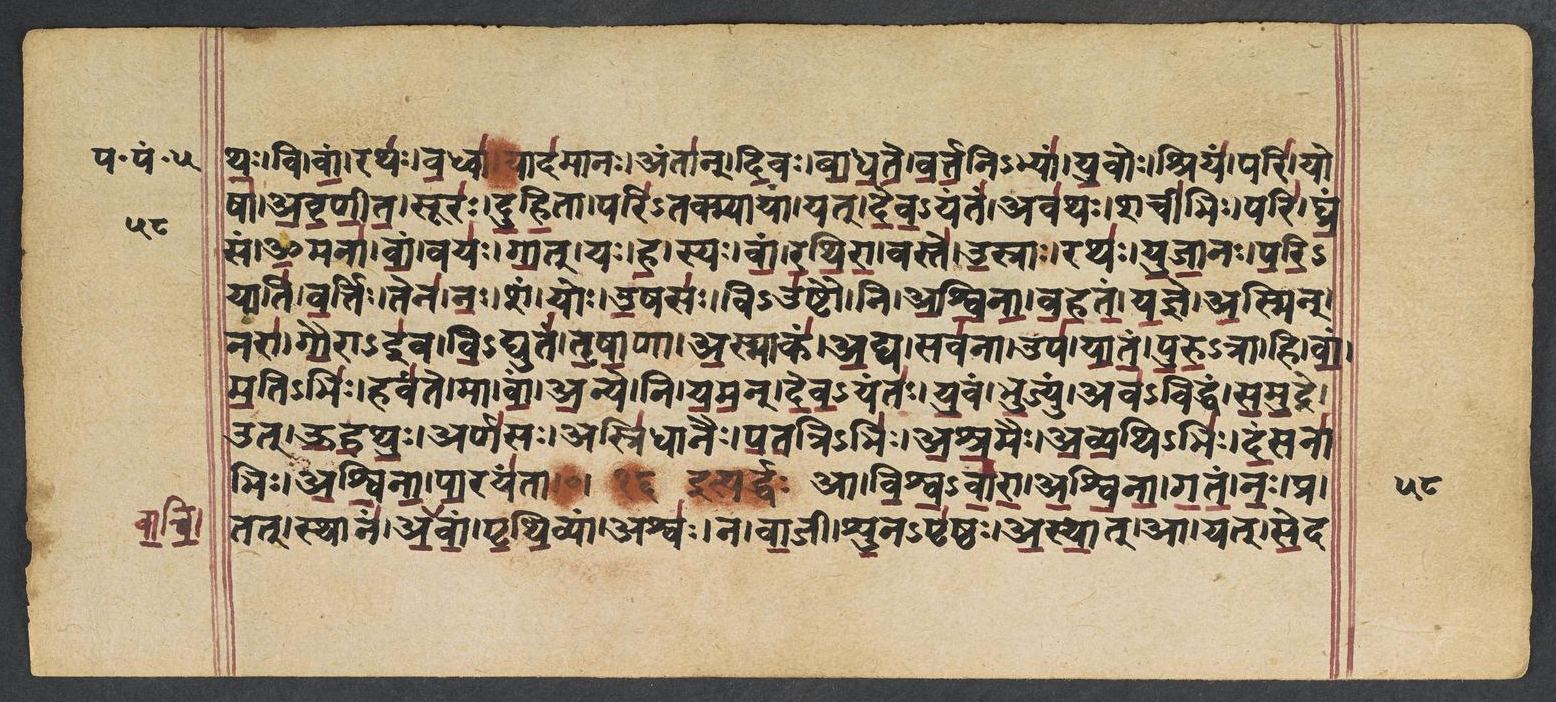
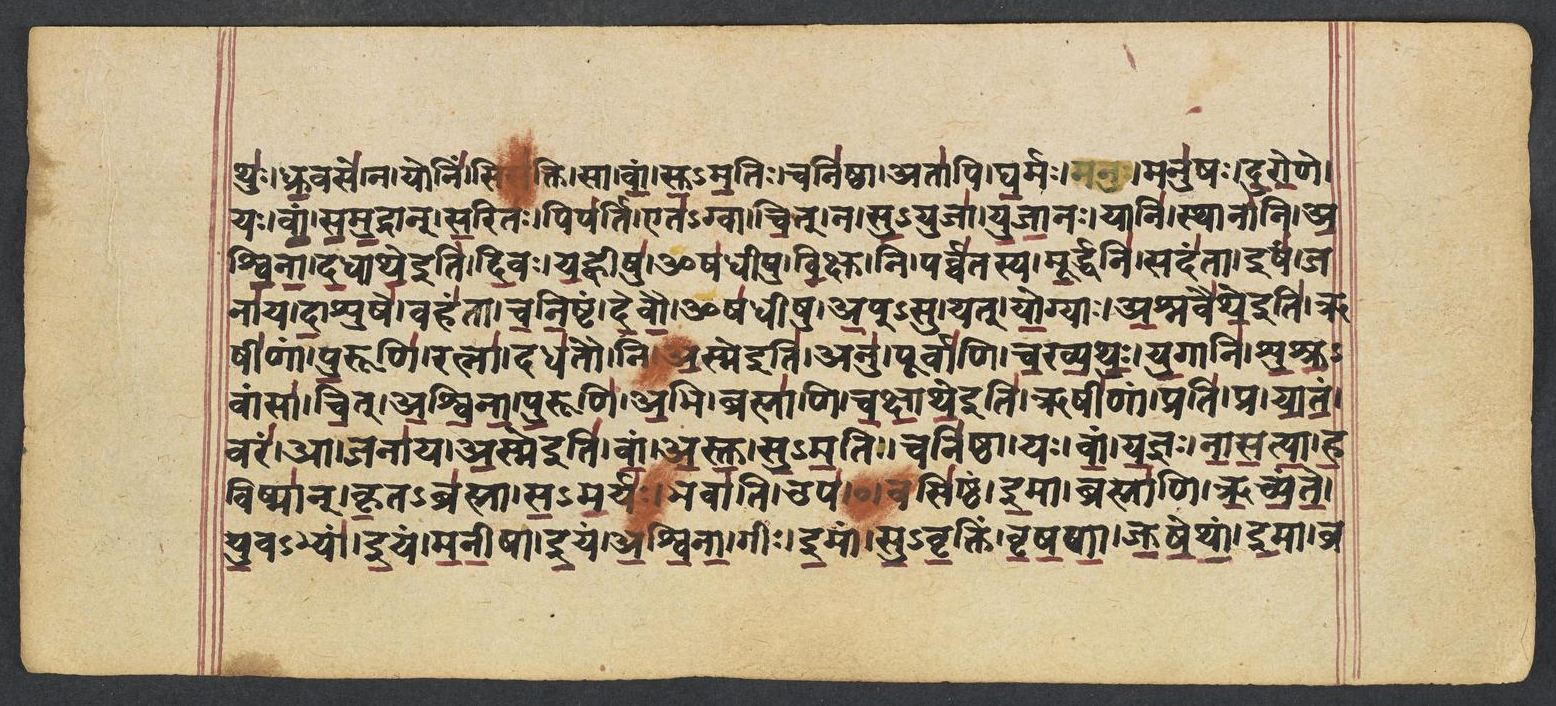
Where on the image
Penn Ms. Coll. 390 Item 41, fol. 538r (numbered 59r by the scribe) (OPenn image 538, lower leaf). Checked on the image: the Rigveda text on this page begins in RV 7.70.1 ‹-sedathuḥ dhruvase na yonim›. The next page with Rigveda text, fol. 538v (numbered 59v by the scribe), begins in RV 7.70.7 ‹-brahmāṇi yuva-yūni agman yūyam›. Verses 7.70.1-6 end on this page; 7.70.1 begins on fol. 537v (numbered 58v by the scribe).
1ā vi̍śvavārāśvinā gataṁ na̱ḥ pra tat sthāna̍m avāci vām pṛthi̱vyām | aśvo̱ na vā̱jī śu̱napṛ̍ṣṭho asthā̱d ā yat se̱dathu̍r dhru̱vase̱ na yoni̍m ||
2siṣa̍kti̱ sā vā̍ṁ suma̱tiś cani̱ṣṭhātā̍pi gha̱rmo manu̍ṣo duro̱ṇe | yo vā̍ṁ samu̱drān sa̱rita̱ḥ pipa̱rty eta̍gvā ci̱n na su̱yujā̍ yujā̱naḥ ||
3yāni̱ sthānā̍ny aśvinā da̱dhāthe̍ di̱vo ya̱hvīṣv oṣa̍dhīṣu vi̱kṣu | ni parva̍tasya mū̱rdhani̱ sada̱nteṣa̱ṁ janā̍ya dā̱śuṣe̱ vaha̍ntā ||
4ca̱ni̱ṣṭaṁ de̍vā̱ oṣa̍dhīṣv a̱psu yad yo̱gyā a̱śnavai̍the̱ ṛṣī̍ṇām | pu̱rūṇi̱ ratnā̱ dadha̍tau̱ ny a1̱̍sme anu̱ pūrvā̍ṇi cakhyathur yu̱gāni̍ ||
5śu̱śru̱vāṁsā̍ cid aśvinā pu̱rūṇy a̱bhi brahmā̍ṇi cakṣāthe̱ ṛṣī̍ṇām | prati̱ pra yā̍ta̱ṁ vara̱m ā janā̍yā̱sme vā̍m astu suma̱tiś cani̍ṣṭhā ||
6yo vā̍ṁ ya̱jño nā̍satyā ha̱viṣmā̍n kṛ̱tabra̍hmā sama̱ryo̱3̱̍ bhavā̍ti | upa̱ pra yā̍ta̱ṁ vara̱m ā vasi̍ṣṭham i̱mā brahmā̍ṇy ṛcyante yu̱vabhyā̍m ||
Compare: Padapāṭha (word-by-word text written in the manuscript; Sansknet e-text via GRETIL)
1ā | viśva-vārā | aśvinā | gatam | naḥ | pra | tat | sthānam | avāci | vām | pṛthivyām | aśvaḥ | na | vājī | śuna-pṛṣṭhaḥ | asthāt | ā | yat | sedathuḥ | dhruvase | na | yonim
2sisakti | sā | vām | su-matiḥ | caniṣṭhā | atāpi | gharmaḥ | manuṣaḥ | duroṇe | yaḥ | vām | samudrān | saritaḥ | piparti | eta-gvā | cit | na | su-yujā | yujānaḥ
3yāni | sthānāni | aśvinā | dadhātheiti | divaḥ | yahvīṣu | oṣadhīṣu | vikṣu | ni | parvatasya | mūrdhani | sadantā | iṣam | janāya | dāśuṣe | vahantā
4caniṣṭam | devau | oṣadhīṣu | ap-su | yat | yogyāḥ | aśnavaitheiti | ṛṣīṇām | purūṇi | ratnā | dadhatau | ni | asme iti | anu | pūrvāṇi | cakhyathuḥ | yugāni
5śuśruvāṃsā | cit | aśvinā | purūṇi | abhi | brahmāṇi | cakṣātheiti | ṛṣīṇām | prati | pra | yātam | varam | ā | janāya | asme iti | vām | astu | su-matiḥ | caniṣṭhā
6yaḥ | vām | yajñaḥ | nāsatyā | haviṣmān | kṛta-brahmā | sa-maryaḥ | bhavāti | upa | pra | yātam | varam | ā | vasiṣṭham | imā | brahmāṇi | ṛcyante | yuva-bhyām
1RICH in all blessings, Aṣvins come ye hither: this place on earth is called your own possession, Like a strong horse with a fair back it standeth, whereon, as in a lap, ye seat you firmly.
2This most delightful eulogy awaits you in the man's house drink-offering hath been heated, Which bringeth you over the seas and rivers, yoking as'twere two well-matched shining horses.
3Whatever dwellings ye possess, O Aṣvins, in fields of men or in the streams of heaven, Resting upon the summit of the mountain, or bringing food to him who gives oblation,
4Delight yourselves, ye Gods, in plants and waters when R̥ishis give them and ye find they suit You. Enriching us with treasures in abundance ye have looked back to former generations.
5Aṣvins, though ye have heard them oft aforetime, regard the many prayers which R̥ishis offer. Come to the man even as his heart desireth: may we enjoy your most delightful favour.
6Come to the sacrifice offered you, Nâsatyas, with men, oblations, and prayer duly uttered. Come to Vasishṭha as his heart desireth, for unto you these holy hymns are chanted.
Where on the image
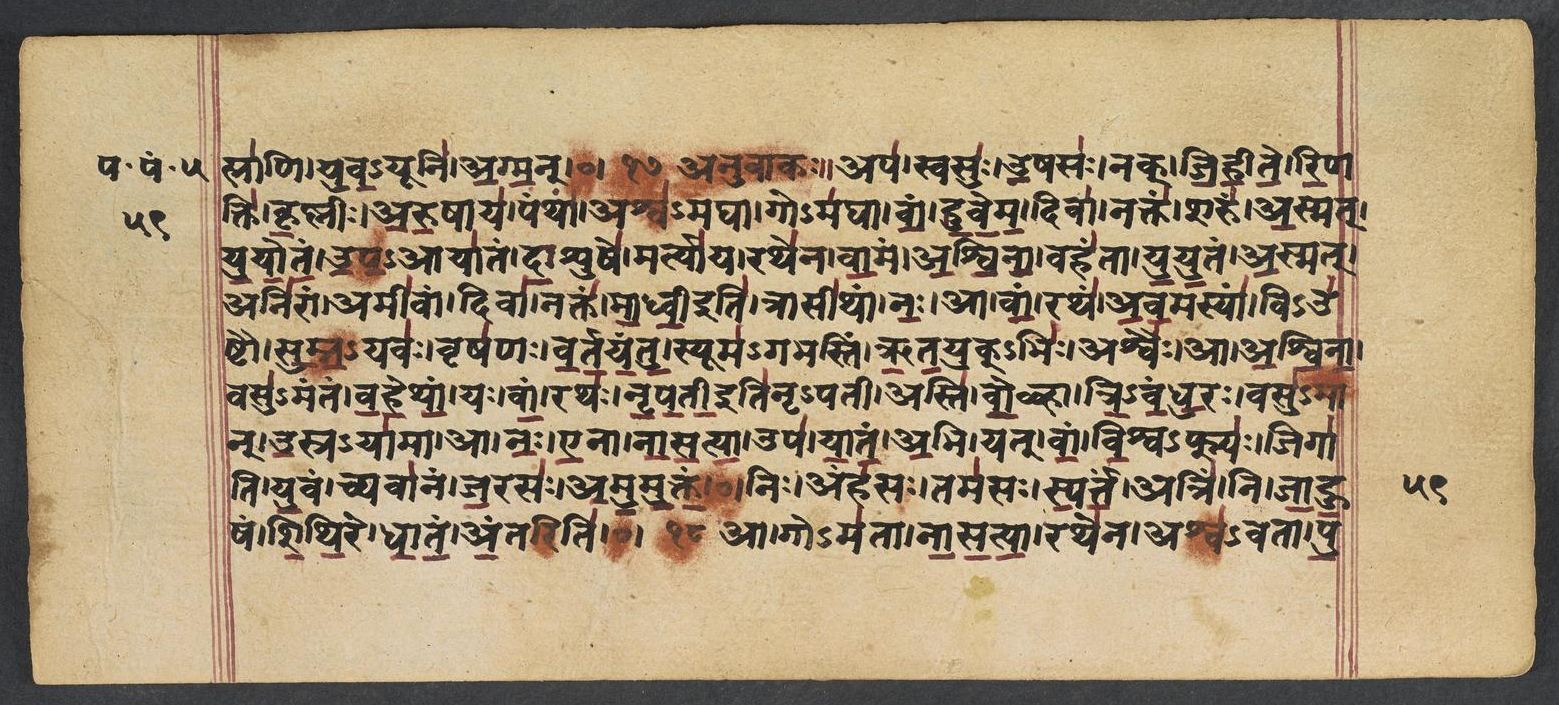
Penn Ms. Coll. 390 Item 41, fol. 538v (numbered 59v by the scribe) (OPenn image 539, upper leaf). Checked on the image: the Rigveda text on this page begins in RV 7.70.7 ‹-brahmāṇi yuva-yūni agman yūyam›. The next page with Rigveda text, fol. 539r (numbered 60r by the scribe), begins in RV 7.72.1 ‹-puru-candreṇa yātam abhi vām›. Verse 7.70.7 ends on this page; 7.70.7 begins on fol. 538r (numbered 59r by the scribe).
7i̱yam ma̍nī̱ṣā i̱yam a̍śvinā̱ gīr i̱māṁ su̍vṛ̱ktiṁ vṛ̍ṣaṇā juṣethām | i̱mā brahmā̍ṇi yuva̱yūny a̍gman yū̱yam pā̍ta sva̱stibhi̱ḥ sadā̍ naḥ ||
Compare: Padapāṭha (word-by-word text written in the manuscript; Sansknet e-text via GRETIL)
7iyam | manīṣā | iyam | aśvinā | gīḥ | imām | su-vṛktim | vṛṣaṇā | juṣethām | imā | brahmāṇi | yuva-yūni | agman | yūyam | pāta | svasti-bhiḥ | sadā | naḥ
7This is the thought, this is the song, O Aṣvins: accept this hymn of ours, ye Steers, with favour. May these our prayers addressed to you come nigh you. Preserve us evermore, ye Gods, with blessings.
Notes
- Sanskrit: Aufrecht's edition (1877) with the Vedic accents, as entered by van Nooten and Holland (GRETIL).
- English: Ralph T. H. Griffith, The Hymns of the Rigveda (1889-1892; 2nd ed. 1896-1897), from the VedaWeb digital text; OCR slips in that text were corrected against the printed 2nd edition (data/sources/rigveda/griffith_errata.json).
- Padapāṭha (edition text): Sansknet e-text via GRETIL (CC BY-NC-SA 4.0).
Cite
Sources
- Source: Penn Ms. Coll. 390 Item 41 (undated (catalogued with Penn's 18th-19th c. Vedic manuscripts)), OPenn, Public Domain Mark + Aufrecht's accented text (GRETIL) + Griffith's English (VedaWeb) (holding institution)
- Critical edition: Aufrecht (1877), accented e-text via GRETIL
← previous · → next · v cycle view · l back to library