Rigveda 7.71: To Asvins
Introduction
Rigveda 7.71 is a hymn of 6 verses addressed to Asvins. It stands in book (maṇḍala) 7, the family book of Vasiṣṭha. The Rigveda is the oldest collection of Sanskrit hymns, composed in the second half of the second millennium BCE and handed down orally for many centuries before it was written down.
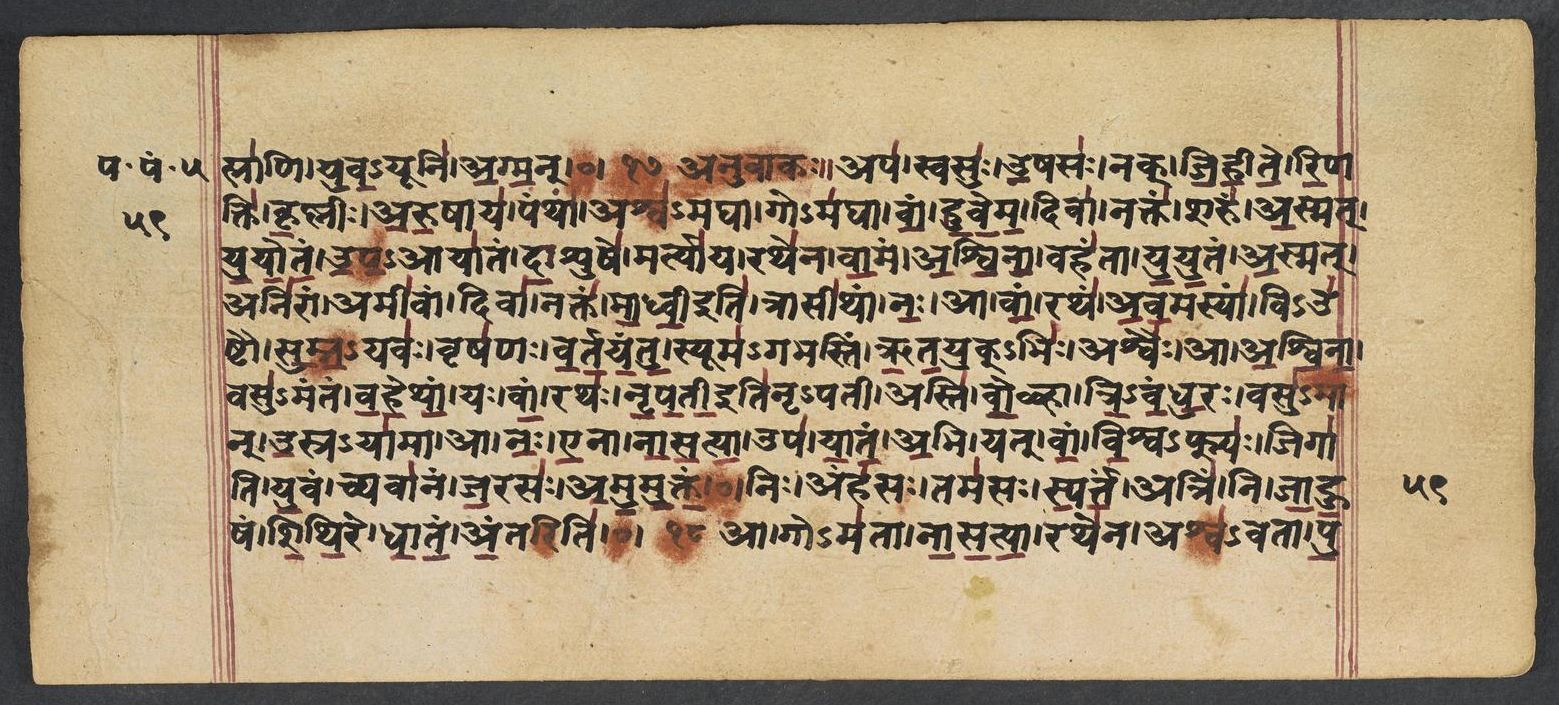
The manuscript shown is Penn Ms. Coll. 390 Item 41 (University of Pennsylvania), an undated paper manuscript of the padapāṭha (the word-by-word recitation text, in which every word is written separately and compounds are split) of the whole Ṛgveda in Devanāgarī, 884 leaves in fascicles, 7-9 lines to the page, accents in red; this hymn stands on fol. 538v. Each section below gives the verses that end on one page; the page boundaries were read on the images (the opening words of every page), not counted out. Where the manuscript is a padapāṭha (the word-by-word recitation text), the section shows Aufrecht's continuous (saṃhitā) text first and, as the edition text, the padapāṭha of the same verses, which is the form written on the page.
How was this verified? (Provenance)
Where on the image
Penn Ms. Coll. 390 Item 41, fol. 538v (numbered 59v by the scribe) (OPenn image 539, upper leaf). Checked on the image: the Rigveda text on this page begins in RV 7.70.7 ‹-brahmāṇi yuva-yūni agman yūyam›. The next page with Rigveda text, fol. 539r (numbered 60r by the scribe), begins in RV 7.72.1 ‹-puru-candreṇa yātam abhi vām›. Verses 7.71.1-6 end on this page.
1apa̱ svasu̍r u̱ṣaso̱ nag ji̍hīte ri̱ṇakti̍ kṛ̱ṣṇīr a̍ru̱ṣāya̱ panthā̍m | aśvā̍maghā̱ goma̍ghā vāṁ huvema̱ divā̱ nakta̱ṁ śaru̍m a̱smad yu̍yotam ||
2u̱pāyā̍taṁ dā̱śuṣe̱ martyā̍ya̱ rathe̍na vā̱mam a̍śvinā̱ vaha̍ntā | yu̱yu̱tam a̱smad ani̍rā̱m amī̍vā̱ṁ divā̱ nakta̍m mādhvī̱ trāsī̍thāṁ naḥ ||
3ā vā̱ṁ ratha̍m ava̱masyā̱ṁ vyu̍ṣṭau sumnā̱yavo̱ vṛṣa̍ṇo vartayantu | syūma̍gabhastim ṛta̱yugbhi̱r aśvai̱r āśvi̍nā̱ vasu̍mantaṁ vahethām ||
4yo vā̱ṁ ratho̍ nṛpatī̱ asti̍ vo̱ḻhā tri̍vandhu̱ro vasu̍mām̐ u̱srayā̍mā | ā na̍ e̱nā nā̍sa̱tyopa̍ yātam a̱bhi yad vā̍ṁ vi̱śvapsnyo̱ jigā̍ti ||
5yu̱vaṁ cyavā̍naṁ ja̱raso̍ 'mumukta̱ṁ ni pe̱dava̍ ūhathur ā̱śum aśva̍m | nir aṁha̍sa̱s tama̍saḥ sparta̱m atri̱ṁ ni jā̍hu̱ṣaṁ śi̍thi̱re dhā̍tam a̱ntaḥ ||
6i̱yam ma̍nī̱ṣā i̱yam a̍śvinā̱ gīr i̱māṁ su̍vṛ̱ktiṁ vṛ̍ṣaṇā juṣethām | i̱mā brahmā̍ṇi yuva̱yūny a̍gman yū̱yam pā̍ta sva̱stibhi̱ḥ sadā̍ naḥ ||
Compare: Padapāṭha (word-by-word text written in the manuscript; Sansknet e-text via GRETIL)
1apa | svasuḥ | uṣasaḥ | nak | jihīte | riṇakti | kṛṣṇīḥ | aruṣāya | panthām | aśva-maghā | go--maghā | vām | huvema | divā | naktam | śarum | asmat | yuyotam
2upa-āyātam | dāśuṣe | martyāya | rathena | vāmam | aśvinā | vahantā | yuyutam | asmat | anirām | amīvām | divā | naktam | mādhvī iti | trāsīthām | naḥ
3ā | vām | ratham | avamasyām | vi-uṣṭau | sumna-yavaḥ | vṛṣaṇaḥ | vartayantu | syūma-gabhastim | ṛtayuk-bhiḥ | aśvaiḥ | ā | aśvinā | vasu-mantam | vahethām
4yaḥ | vām | rathaḥ | nṛpatī itinṛ-patī | asti | voḷhā | tri-vandhuraḥ | vasu-mān | usra-yāmā | ā | naḥ | enā | nāsatyā | upa | yātam | abhi | yat | vām | viśva-psnyaḥ | jigāti
5yuvam | cyavānam | jarasaḥ | amumuktam | ni | pedave | ūhathuḥ | āśum | aśvam | ni ḥ | aṃhasaḥ | tamasaḥ | spartam | atrim | ni | jāhuṣam | śithire | dhātam | antari ti
6iyam | manīṣā | iyam | aśvinā | gīḥ | imām | su-vṛktim | vṛṣaṇā | juṣethām | imā | brahmāṇi | yuva-yūni | agman | yūyam | pāta | svasti-bhiḥ | sadā | naḥ
1THE Night retireth from the Dawn her Sister; the Dark one yieldeth to the Red her pathway. Let us invoke you rich in steeds and cattle – by day and night keep far from us the arrow.
2Bearing rich treasure in your car, O Aṣvins, come to the mortal who presents oblation. Keep at a distance penury and sickness; Lovers of Sweetness, day and night preserve us.
3May your strong horses, seeking bliss, bring hither your chariot at the earliest flush of morning. With coursers yoked by Law drive hither, Aṣvins, your car whose reins are light, laden with treasure.
4The chariot, Princes, that conveys you, moving at daylight, triple-seated, fraught with riches, Even with this come unto us, Nâsatyas, that laden with all food it may approach us.
5Ye freed Chyavâna from old age and weakness: ye brought the courser fleet of foot to Pedu. Ye rescued Atri from distress and darkness, and loosed for Jâhusha the bonds that bound him.
6This is the thought, this is the song, O Aṣvins: accept this hymn of ours, ye Steers, With favour. May these our prayers addressed to you come nigh you. Preserve us evermore, ye Gods, with blessings.
Notes
- Sanskrit: Aufrecht's edition (1877) with the Vedic accents, as entered by van Nooten and Holland (GRETIL).
- English: Ralph T. H. Griffith, The Hymns of the Rigveda (1889-1892; 2nd ed. 1896-1897), from the VedaWeb digital text; OCR slips in that text were corrected against the printed 2nd edition (data/sources/rigveda/griffith_errata.json).
- Padapāṭha (edition text): Sansknet e-text via GRETIL (CC BY-NC-SA 4.0).
Cite
Sources
- Source: Penn Ms. Coll. 390 Item 41 (undated (catalogued with Penn's 18th-19th c. Vedic manuscripts)), OPenn, Public Domain Mark + Aufrecht's accented text (GRETIL) + Griffith's English (VedaWeb) (holding institution)
- Critical edition: Aufrecht (1877), accented e-text via GRETIL
← previous · → next · v cycle view · l back to library