Rigveda 7.79: To Usas
Introduction
Rigveda 7.79 is a hymn of 5 verses addressed to Usas. It stands in book (maṇḍala) 7, the family book of Vasiṣṭha. The Rigveda is the oldest collection of Sanskrit hymns, composed in the second half of the second millennium BCE and handed down orally for many centuries before it was written down.
The manuscript shown is Penn Ms. Coll. 390 Item 41 (University of Pennsylvania), an undated paper manuscript of the padapāṭha (the word-by-word recitation text, in which every word is written separately and compounds are split) of the whole Ṛgveda in Devanāgarī, 884 leaves in fascicles, 7-9 lines to the page, accents in red; this hymn stands on fol. 542r-542v. Each section below gives the verses that end on one page; the page boundaries were read on the images (the opening words of every page), not counted out. Where the manuscript is a padapāṭha (the word-by-word recitation text), the section shows Aufrecht's continuous (saṃhitā) text first and, as the edition text, the padapāṭha of the same verses, which is the form written on the page.
How was this verified? (Provenance)
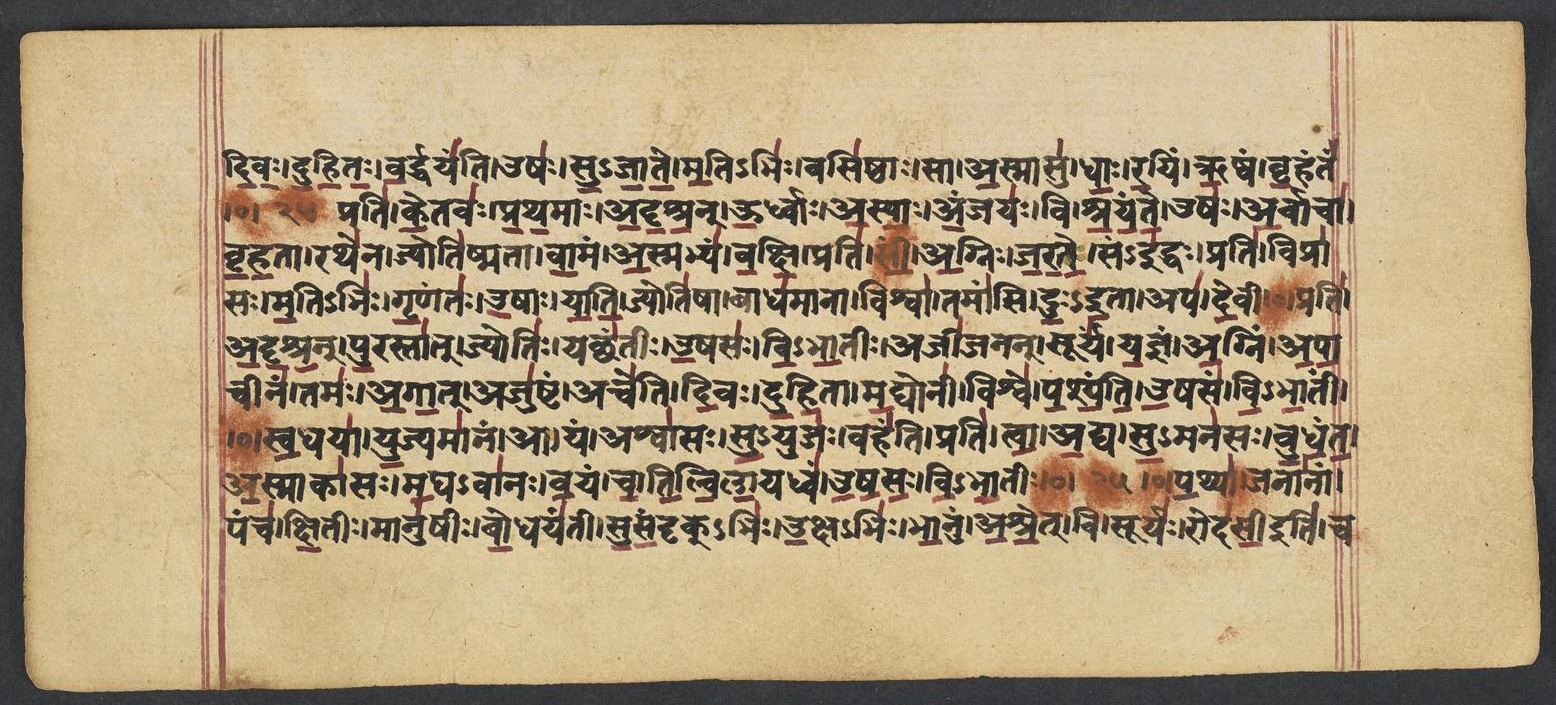
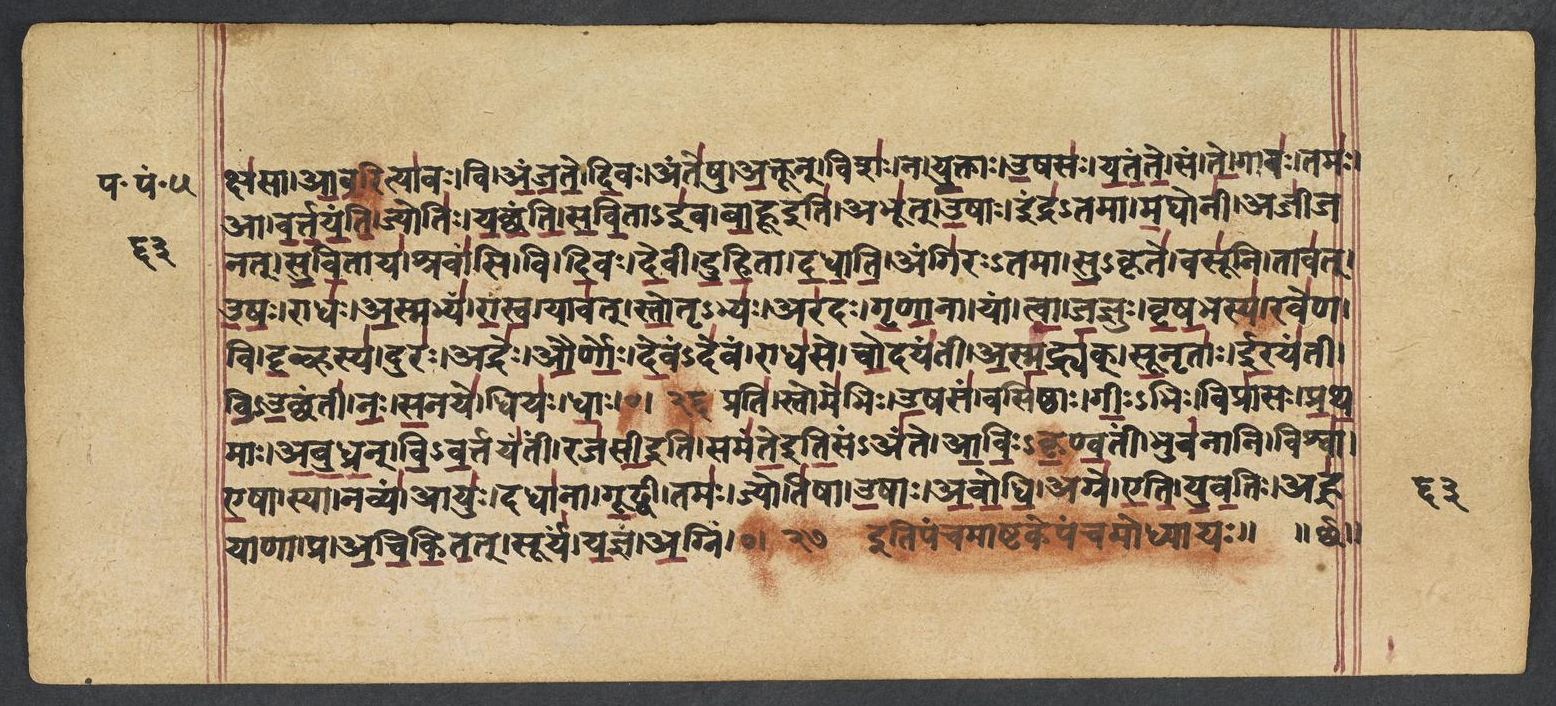
Where on the image
Penn Ms. Coll. 390 Item 41, fol. 542v (numbered 63v by the scribe) (OPenn image 543, upper leaf). Checked on the image: the Rigveda text on this page begins in RV 7.79.1 ‹-cakṣasā āvar ity āvaḥ›. The next page with Rigveda text, fol. 543r (numbered 64r by the scribe), begins in RV 7.81.1 ‹prati oṃ iti adarśi›. Verses 7.79.1-5 end on this page; 7.79.1 begins on fol. 542r (numbered 63r by the scribe).
1vy u1̱̍ṣā ā̍vaḥ pa̱thyā̱3̱̍ janā̍nā̱m pañca̍ kṣi̱tīr mānu̍ṣīr bo̱dhaya̍ntī | su̱sa̱ṁdṛgbhi̍r u̱kṣabhi̍r bhā̱num a̍śre̱d vi sūryo̱ roda̍sī̱ cakṣa̍sāvaḥ ||
2vy a̍ñjate di̱vo ante̍ṣv a̱ktūn viśo̱ na yu̱ktā u̱ṣaso̍ yatante | saṁ te̱ gāva̱s tama̱ ā va̍rtayanti̱ jyoti̍r yacchanti savi̱teva̍ bā̱hū ||
3abhū̍d u̱ṣā indra̍tamā ma̱ghony ajī̍janat suvi̱tāya̱ śravā̍ṁsi | vi di̱vo de̱vī du̍hi̱tā da̍dhā̱ty aṅgi̍rastamā su̱kṛte̱ vasū̍ni ||
4tāva̍d uṣo̱ rādho̍ a̱smabhya̍ṁ rāsva̱ yāva̍t sto̱tṛbhyo̱ ara̍do gṛṇā̱nā | yāṁ tvā̍ ja̱jñur vṛ̍ṣa̱bhasyā̱ rave̍ṇa̱ vi dṛ̱ḻhasya̱ duro̱ adre̍r aurṇoḥ ||
5de̱vaṁ-de̍va̱ṁ rādha̍se co̱daya̍nty asma̱drya̍k sū̱nṛtā̍ ī̱raya̍ntī | vyu̱cchantī̍ naḥ sa̱naye̱ dhiyo̍ dhā yū̱yam pā̍ta sva̱stibhi̱ḥ sadā̍ naḥ ||
Compare: Padapāṭha (word-by-word text written in the manuscript; Sansknet e-text via GRETIL)
1vi | uṣāḥ | āvaḥ | pathyā | janānām | pañca | kṣitīḥ | mānuṣīḥ | bodhayantī | susandṛk-bhiḥ | ukṣa-bhiḥ | bhānum | aśret | vi | sūryaḥ | rodasī iti | cakṣasā | āvar ity āvaḥ
2vi | añjate | divaḥ | anteṣu | aktūn | viśaḥ | na | yuktāḥ | uṣasaḥ | yatante | sam | te | gāvaḥ | tamaḥ | ā | vartayanti | jyotiḥ | yacchanti | savitāiva | bāhū iti
3abhūt | uṣāḥ | indra-tamā | maghonī | ajījanat | suvitāya | śravāṃsi | vi | divaḥ | devī | duhitā | dadhāti | aṅgiraḥ-tamā | su-kṛte | vasūni
4tāvat | uṣaḥ | rādhaḥ | asmabhyam | rāsva | yāvat | stotṛ-bhyaḥ | aradaḥ | gṛṇānā | yām | tvā | jajñuḥ | vṛṣabhasya | raveṇa | vi | dṛḷhasya | duraḥ | adreḥ | aurṇoḥ
5devam-devam | rādhase | codayantī | asmadryak | sūnṛtāḥ | īrayantī | vi-ucchantī | naḥ | sanaye | dhiyaḥ | dhāḥ | yūyam | pāta | svasti-bhiḥ | sadā | naḥ
1ROUSING the lands where men's Five Tribes are settled, Dawn hath disclosed the pathways of the people. She hath sent out her sheen with beauteous oxen. The Sun with light hath opened earth and heaven.
2They paint their bright rays on the sky's far limits. the Dawns come on like tribes arrayed for battle. Thy cattle, closely shutting up the darkness, as Savitar spreads his arms, give forth their lustre.
3Wealthy, most like to Indra, Dawn hath risen, and brought forth lauds that shall promote our welfare. Daughter of Heaven, a Goddess, she distributes, best of Angirases, treasures to the pious.
4Bestow on us, O Dawn, that ample bounty which thou didst send to those who sang thy praises; Thou whom with bellowings of a bull they quickened: thou didst unbar the firm-set mountain's portals.
5Impelling every God to grant his bounty sending to us the charm of pleasant voices, Vouchsafe us thoughts, for profit, as thou breakest. Preserve us evermore, ye Gods, with blessings.
Notes
- Sanskrit: Aufrecht's edition (1877) with the Vedic accents, as entered by van Nooten and Holland (GRETIL).
- English: Ralph T. H. Griffith, The Hymns of the Rigveda (1889-1892; 2nd ed. 1896-1897), from the VedaWeb digital text; OCR slips in that text were corrected against the printed 2nd edition (data/sources/rigveda/griffith_errata.json).
- Padapāṭha (edition text): Sansknet e-text via GRETIL (CC BY-NC-SA 4.0).
Cite
Sources
- Source: Penn Ms. Coll. 390 Item 41 (undated (catalogued with Penn's 18th-19th c. Vedic manuscripts)), OPenn, Public Domain Mark + Aufrecht's accented text (GRETIL) + Griffith's English (VedaWeb) (holding institution)
- Critical edition: Aufrecht (1877), accented e-text via GRETIL
← previous · → next · v cycle view · l back to library