Rigveda 7.82: To Indra and Varuna
Introduction
Rigveda 7.82 is a hymn of 10 verses addressed to Indra and Varuna. It stands in book (maṇḍala) 7, the family book of Vasiṣṭha. The Rigveda is the oldest collection of Sanskrit hymns, composed in the second half of the second millennium BCE and handed down orally for many centuries before it was written down.
The manuscript shown is Penn Ms. Coll. 390 Item 41 (University of Pennsylvania), an undated paper manuscript of the padapāṭha (the word-by-word recitation text, in which every word is written separately and compounds are split) of the whole Ṛgveda in Devanāgarī, 884 leaves in fascicles, 7-9 lines to the page, accents in red; this hymn stands on fol. 543v-544v. Each section below gives the verses that end on one page; the page boundaries were read on the images (the opening words of every page), not counted out. Where the manuscript is a padapāṭha (the word-by-word recitation text), the section shows Aufrecht's continuous (saṃhitā) text first and, as the edition text, the padapāṭha of the same verses, which is the form written on the page.
How was this verified? (Provenance)
Where on the image
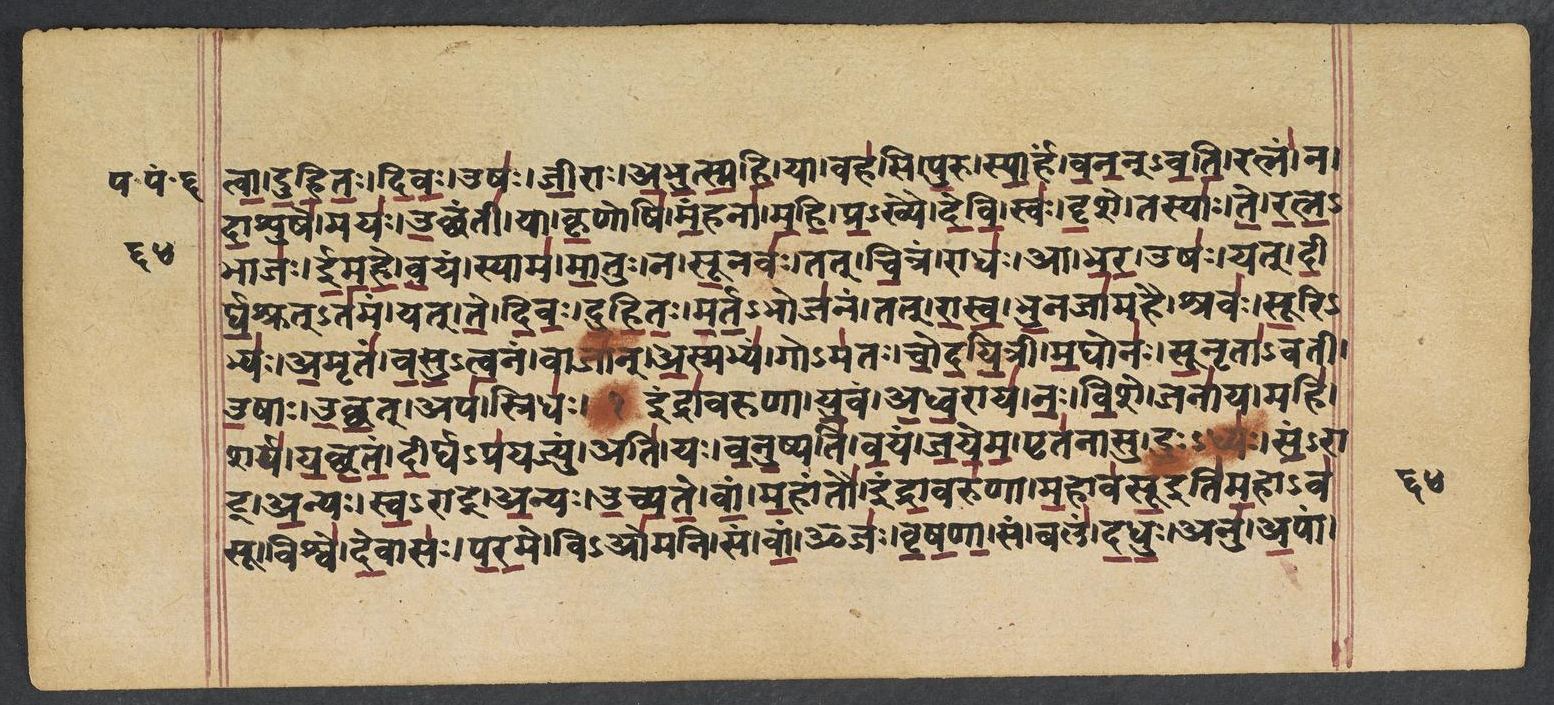
Penn Ms. Coll. 390 Item 41, fol. 543v (numbered 64v by the scribe) (OPenn image 544, upper leaf). Checked on the image: the Rigveda text on this page begins in RV 7.81.3 ‹tvā duhitaḥ divaḥ uṣaḥ›. The next page with Rigveda text, fol. 544r (numbered 65r by the scribe), begins in RV 7.82.3 ‹khāni atṛntam ojasā sūryam›. Verses 7.82.1-2 end on this page.
1indrā̍varuṇā yu̱vam a̍dhva̱rāya̍ no vi̱śe janā̍ya̱ mahi̱ śarma̍ yacchatam | dī̱rghapra̍yajyu̱m ati̱ yo va̍nu̱ṣyati̍ va̱yaṁ ja̍yema̱ pṛta̍nāsu dū̱ḍhya̍ḥ ||
2sa̱mrāḻ a̱nyaḥ sva̱rāḻ a̱nya u̍cyate vām ma̱hāntā̱v indrā̱varu̍ṇā ma̱hāva̍sū | viśve̍ de̱vāsa̍ḥ para̱me vyo̍mani̱ saṁ vā̱m ojo̍ vṛṣaṇā̱ sam bala̍ṁ dadhuḥ ||
Compare: Padapāṭha (word-by-word text written in the manuscript; Sansknet e-text via GRETIL)
1indrāvaruṇā | yuvam | adhvarāya | naḥ | viśe | janāya | mahi | śarma | yacchatam | dīrgha-prayajyum | ati | yaḥ | vanuṣyati | vayam | jayema | pṛtanāsu | duḥ-dhyaḥ
2sam-rāṭ | anyaḥ | sva-rāṭ | anyaḥ | ucyate | vām | mahāntau | indrāvaruṇā | mahāvasūitimahāvasū | / viśve | devāsaḥ | parame | vi-omani | sam | vām | ojaḥ | vṛṣaṇā | sam | balam | dadhuḥ
1GRANT us your strong protection, IndraVaruṇa, our people, and our family, for sacrifice. May we subdue in fight our evil-hearted foes, him who attacks the man steadfast in lengthened rites.
2O Indra-Varuṇa, mighty and very rich One of you is called Monarch and One Autocrat. All Gods in the most lofty region of the air have, O ye Steers, combined all power and might in you.
Where on the image
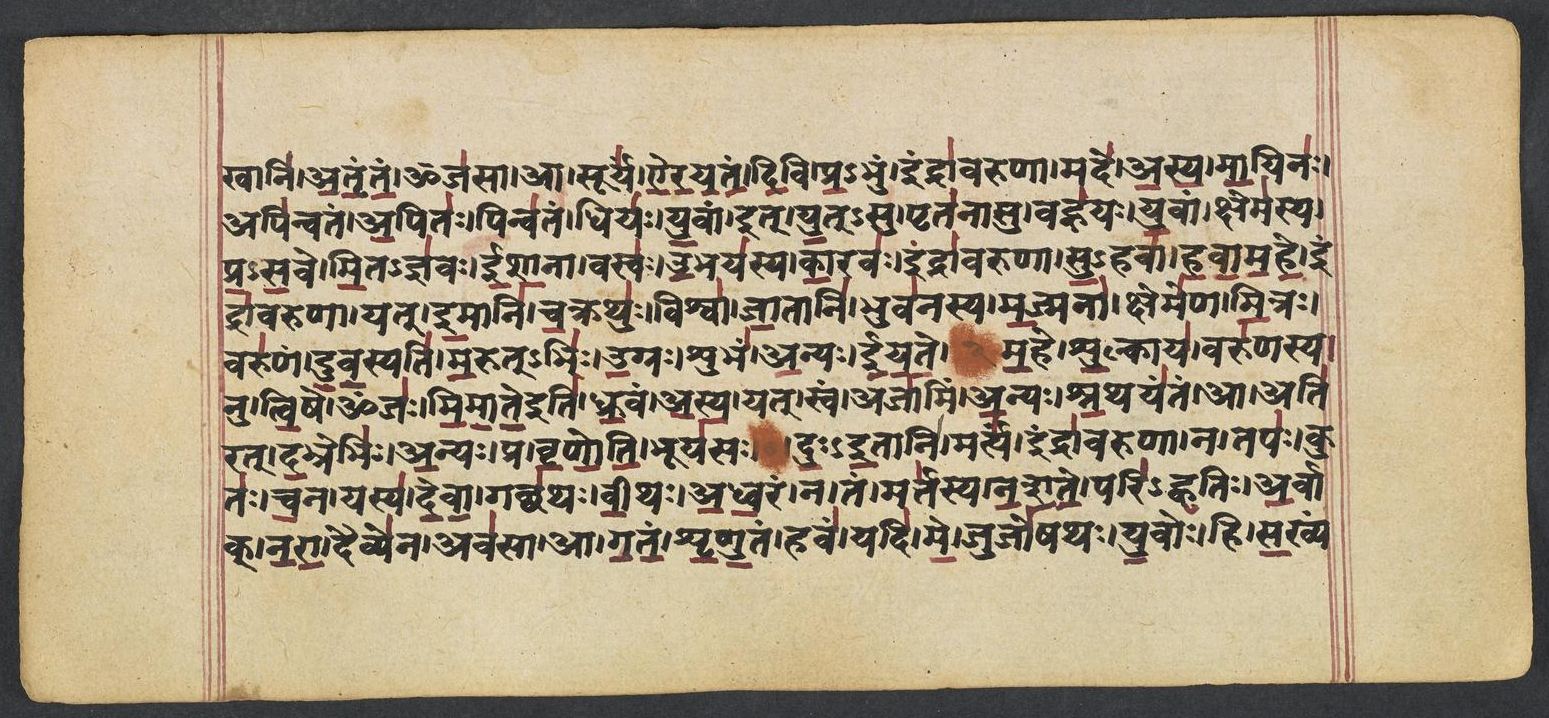
Penn Ms. Coll. 390 Item 41, fol. 544r (numbered 65r by the scribe) (OPenn image 544, lower leaf). Checked on the image: the Rigveda text on this page begins in RV 7.82.3 ‹khāni atṛntam ojasā sūryam›. The next page with Rigveda text, fol. 544v (numbered 65v by the scribe), begins in RV 7.82.8 ‹uta vā yat āpyam›. Verses 7.82.3-7 end on this page; 7.82.3 begins on fol. 543v (numbered 64v by the scribe).
3anv a̱pāṁ khāny a̍tṛnta̱m oja̱sā sūrya̍m airayataṁ di̱vi pra̱bhum | indrā̍varuṇā̱ made̍ asya mā̱yino 'pi̍nvatam a̱pita̱ḥ pinva̍ta̱ṁ dhiya̍ḥ ||
4yu̱vām id yu̱tsu pṛta̍nāsu̱ vahna̍yo yu̱vāṁ kṣema̍sya prasa̱ve mi̱tajña̍vaḥ | ī̱śā̱nā vasva̍ u̱bhaya̍sya kā̱rava̱ indrā̍varuṇā su̱havā̍ havāmahe ||
5indrā̍varuṇā̱ yad i̱māni̍ ca̱krathu̱r viśvā̍ jā̱tāni̱ bhuva̍nasya ma̱jmanā̍ | kṣeme̍ṇa mi̱tro varu̍ṇaṁ duva̱syati̍ ma̱rudbhi̍r u̱graḥ śubha̍m a̱nya ī̍yate ||
6ma̱he śu̱lkāya̱ varu̍ṇasya̱ nu tvi̱ṣa ojo̍ mimāte dhru̱vam a̍sya̱ yat svam | ajā̍mim a̱nyaḥ śna̱thaya̍nta̱m āti̍rad da̱bhrebhi̍r a̱nyaḥ pra vṛ̍ṇoti̱ bhūya̍saḥ ||
7na tam aṁho̱ na du̍ri̱tāni̱ martya̱m indrā̍varuṇā̱ na tapa̱ḥ kuta̍ś ca̱na | yasya̍ devā̱ gaccha̍tho vī̱tho a̍dhva̱raṁ na tam marta̍sya naśate̱ pari̍hvṛtiḥ ||
Compare: Padapāṭha (word-by-word text written in the manuscript; Sansknet e-text via GRETIL)
3anu | apām | khāni | atṛntam | ojasā | sūryam | airayatam | divi | pra-bhum | indrāvaruṇā | made | asya | māyinaḥ | apinvatam | apitaḥ | pinvatam | dhiyaḥ
4yuvām | it | yut-su | pṛtanāsu | vahnayaḥ | yuvām | kṣemasya | pra-save | mita-jñavaḥ | īśānā | vasvaḥ | ubhayasya | kāravaḥ | indrāvaruṇā | su-havā | havāmahe
5indrāvaruṇā | yat | imāni | cakrathuḥ | viśvā | jātāni | bhuvanasya | majmanā | kṣemeṇa | mitraḥ | varuṇam | duvasyati | marut-bhiḥ | ugraḥ | śubham | anyaḥ | īyate
6mahe | śulkāya | varuṇasya | nu | tviṣe | ojaḥ | mimāteiti | dhruvam | asya | yat | svam | ajāmim | anyaḥ | śnathayantam | ā | atirat | dabhrebhiḥ | anyaḥ | pra | vṛṇot i | bhūyasaḥ
7na | tam | aṃhaḥ | na | duḥ-itāni | martyam | indrāvaruṇā | na | tapaḥ | kutaḥ | cana | yasya | devā | gacchathaḥ | vīthaḥ | adhvaram | na | tam | martasya | naśate | pari-hvṛtiḥ
3Ye with your strength have pierced the fountains of the floods: the Sun have ye brought forward as the Lord in heaven. Cheered by this magic draught ye, Indra-Varuṇa, made the dry places stream, made songs of praise flow forth.
4In battles and in frays we ministering priests, kneeling upon our knees for furtherance of our weal, Invoke you, only you, the Lords of twofold wealth, you prompt to hear, we bards, O Indra-Varuṇa.
5O Indra-Varuṇa, as ye created all these creatures of the world by your surpassing might, In peace and quiet Mitra waits on Varuṇa, the Other, awful, with the Maruts seeks renown.
6That Varuṇa's high worth may shine preeminent, these Twain have measured each his proper power and might. The One subdueth the destructive enemy; the Other with a few furthereth many a man.
7No trouble, no misfortune, Indra-Varuṇa, no woe from any side assails the mortal man Whose sacrifice, O Gods, ye visit and enjoy: ne'er doth the crafty guile of mortal injure him.
Where on the image
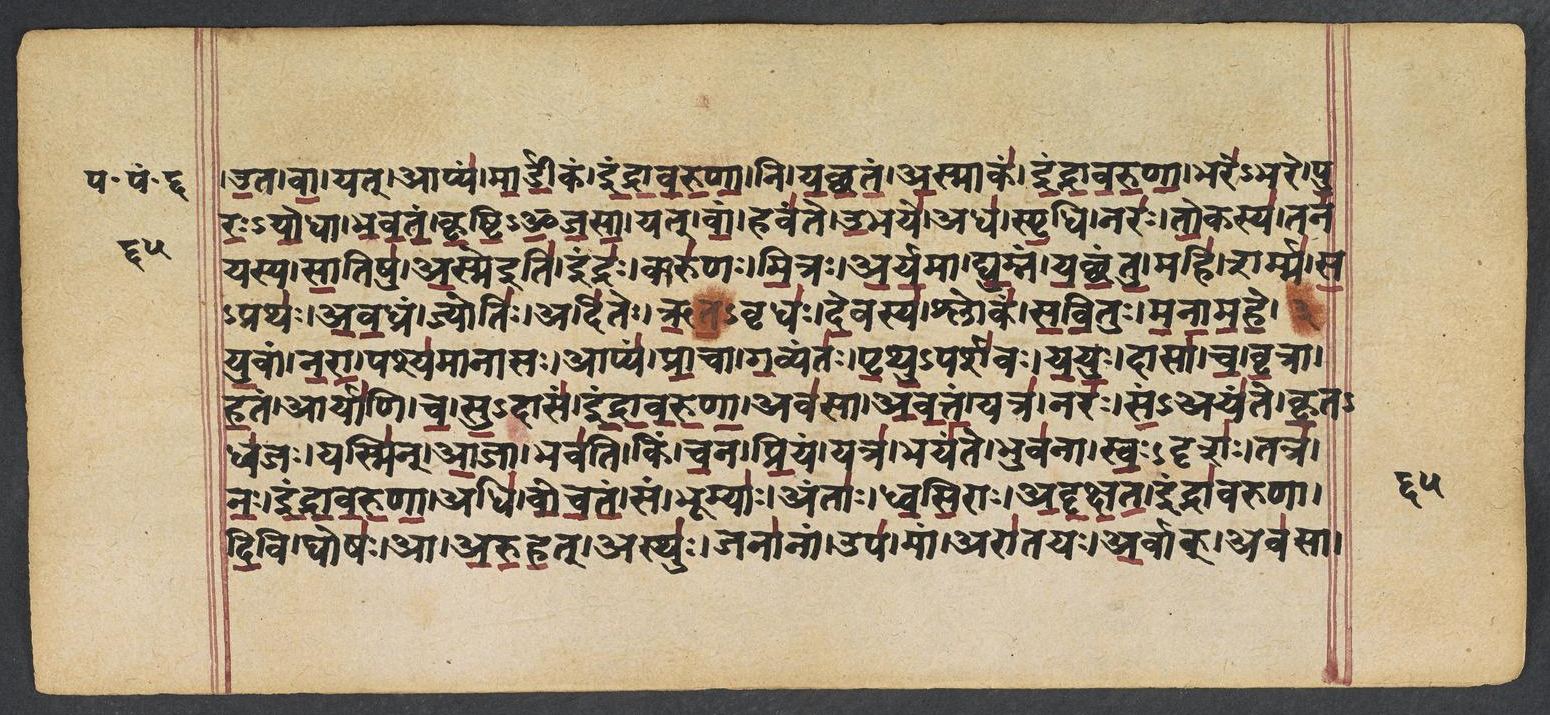
Penn Ms. Coll. 390 Item 41, fol. 544v (numbered 65v by the scribe) (OPenn image 545, upper leaf). Checked on the image: the Rigveda text on this page begins in RV 7.82.8 ‹uta vā yat āpyam›. The next page with Rigveda text, fol. 545r (numbered 66r by the scribe), begins in RV 7.83.3 ‹havana-śrutā ā gatam›. Verses 7.82.8-10 end on this page; 7.82.8 begins on fol. 544r (numbered 65r by the scribe).
8a̱rvāṅ na̍rā̱ daivye̱nāva̱sā ga̍taṁ śṛṇu̱taṁ hava̱ṁ yadi̍ me̱ jujo̍ṣathaḥ | yu̱vor hi sa̱khyam u̱ta vā̱ yad āpya̍m mārḍī̱kam i̍ndrāvaruṇā̱ ni ya̍cchatam ||
9a̱smāka̍m indrāvaruṇā̱ bhare̍-bhare puroyo̱dhā bha̍vataṁ kṛṣṭyojasā | yad vā̱ṁ hava̍nta u̱bhaye̱ adha̍ spṛ̱dhi nara̍s to̱kasya̱ tana̍yasya sā̱tiṣu̍ ||
10a̱sme indro̱ varu̍ṇo mi̱tro a̍rya̱mā dyu̱mnaṁ ya̍cchantu̱ mahi̱ śarma̍ sa̱pratha̍ḥ | a̱va̱dhraṁ jyoti̱r adi̍ter ṛtā̱vṛdho̍ de̱vasya̱ śloka̍ṁ savi̱tur ma̍nāmahe ||
Compare: Padapāṭha (word-by-word text written in the manuscript; Sansknet e-text via GRETIL)
8arvāk | narā | daivyena | avasā | ā | gatam | śṛṇutam | havam | yadi | me | jujoṣathaḥ | yuvoḥ | hi | sakhyam | uta | vā | yat | āpyam | mārḍīkam | indrāvaruṇā | ni | yacchatam
9asmākam | indrāvaruṇā | bhare--bhare | puraḥ-yodhā | bhavatam | kṛṣṭi-ojasā | yat | vām | havante | ubhaye | adha | spṛdhi | naraḥ | tokasya | tanayasya | sātiṣu
10asme iti | indraḥ | varuṇaḥ | mitraḥ | aryamā | dyumnam | yacchantu | mahi | śarma | sa-prathaḥ | avadhram | jyotiḥ | aditeḥ | ṛta-vṛdhaḥ | devasya | ślokam | savituḥ | manāmahe
8With your divine protection, Heroes, come to us: mine invncation hear, if ye be pleased therewith. Bestow ye upon us, O Indra-Varuṇa, your friendship and your kinship and your favouring grace.
9In battle after battle, Indra-Varuṇa, be ye our Champions, ye who are the peoples' strength, When both opposing bands invoke you for the fight, and men that they may gain offspring and progeny.
10May Indra, Varuṇa, Mitra, and Aryaman vouchsafe us glory and great shelter spreading far. We think of the beneficent light of Aditi, and Savitar's song of praise, the God who strengthens Law.
Notes
- Sanskrit: Aufrecht's edition (1877) with the Vedic accents, as entered by van Nooten and Holland (GRETIL).
- English: Ralph T. H. Griffith, The Hymns of the Rigveda (1889-1892; 2nd ed. 1896-1897), from the VedaWeb digital text; OCR slips in that text were corrected against the printed 2nd edition (data/sources/rigveda/griffith_errata.json).
- Padapāṭha (edition text): Sansknet e-text via GRETIL (CC BY-NC-SA 4.0).
Cite
Sources
- Source: Penn Ms. Coll. 390 Item 41 (undated (catalogued with Penn's 18th-19th c. Vedic manuscripts)), OPenn, Public Domain Mark + Aufrecht's accented text (GRETIL) + Griffith's English (VedaWeb) (holding institution)
- Critical edition: Aufrecht (1877), accented e-text via GRETIL
← previous · → next · v cycle view · l back to library