Rigveda 7.86: To Varuna
Introduction
Rigveda 7.86 is a hymn of 8 verses addressed to Varuna. It stands in book (maṇḍala) 7, the family book of Vasiṣṭha. The Rigveda is the oldest collection of Sanskrit hymns, composed in the second half of the second millennium BCE and handed down orally for many centuries before it was written down.
The manuscript shown is Penn Ms. Coll. 390 Item 41 (University of Pennsylvania), an undated paper manuscript of the padapāṭha (the word-by-word recitation text, in which every word is written separately and compounds are split) of the whole Ṛgveda in Devanāgarī, 884 leaves in fascicles, 7-9 lines to the page, accents in red; this hymn stands on fol. 546r-547r. Each section below gives the verses that end on one page; the page boundaries were read on the images (the opening words of every page), not counted out. Where the manuscript is a padapāṭha (the word-by-word recitation text), the section shows Aufrecht's continuous (saṃhitā) text first and, as the edition text, the padapāṭha of the same verses, which is the form written on the page.
How was this verified? (Provenance)
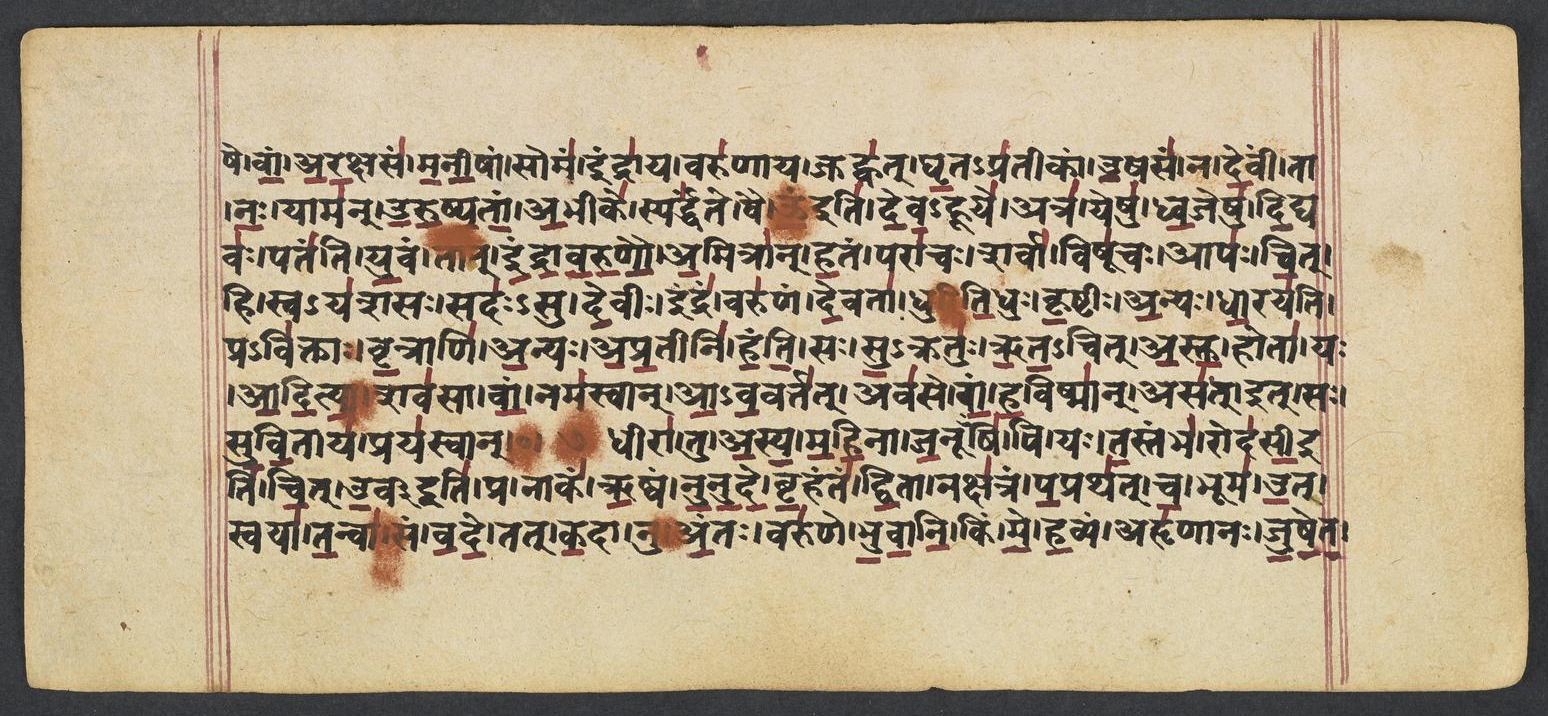
Where on the image
Penn Ms. Coll. 390 Item 41, fol. 546r (numbered 67r by the scribe) (OPenn image 546, lower leaf). Checked on the image: the Rigveda text on this page begins in RV 7.85.1 ‹-punīṣe vām arakṣasam manīṣām›. The next page with Rigveda text, fol. 546v (numbered 67v by the scribe), begins in RV 7.86.2 ‹kadā mṛḷīkam su-manāḥ abhi›. Verse 7.86.1 ends on this page.
1dhīrā̱ tv a̍sya mahi̱nā ja̱nūṁṣi̱ vi yas ta̱stambha̱ roda̍sī cid u̱rvī | pra nāka̍m ṛ̱ṣvaṁ nu̍nude bṛ̱hanta̍ṁ dvi̱tā nakṣa̍tram pa̱pratha̍c ca̱ bhūma̍ ||
Compare: Padapāṭha (word-by-word text written in the manuscript; Sansknet e-text via GRETIL)
1dhīrā | tu | asya | mahinā | janūṃṣi | vi | yaḥ | tastambha | rodasī iti | cit | urvī iti | pra | nākam | ṛṣvam | nunude | bṛhantam | dvitā | nakṣatram | paprathat | ca | bhūma
1WISE, verily, are creatures through his greatness who stayed even, spacious heaven and earth asunder; Who urged the high and mighty sky to motion, the Star of old, and spread the earth before him.
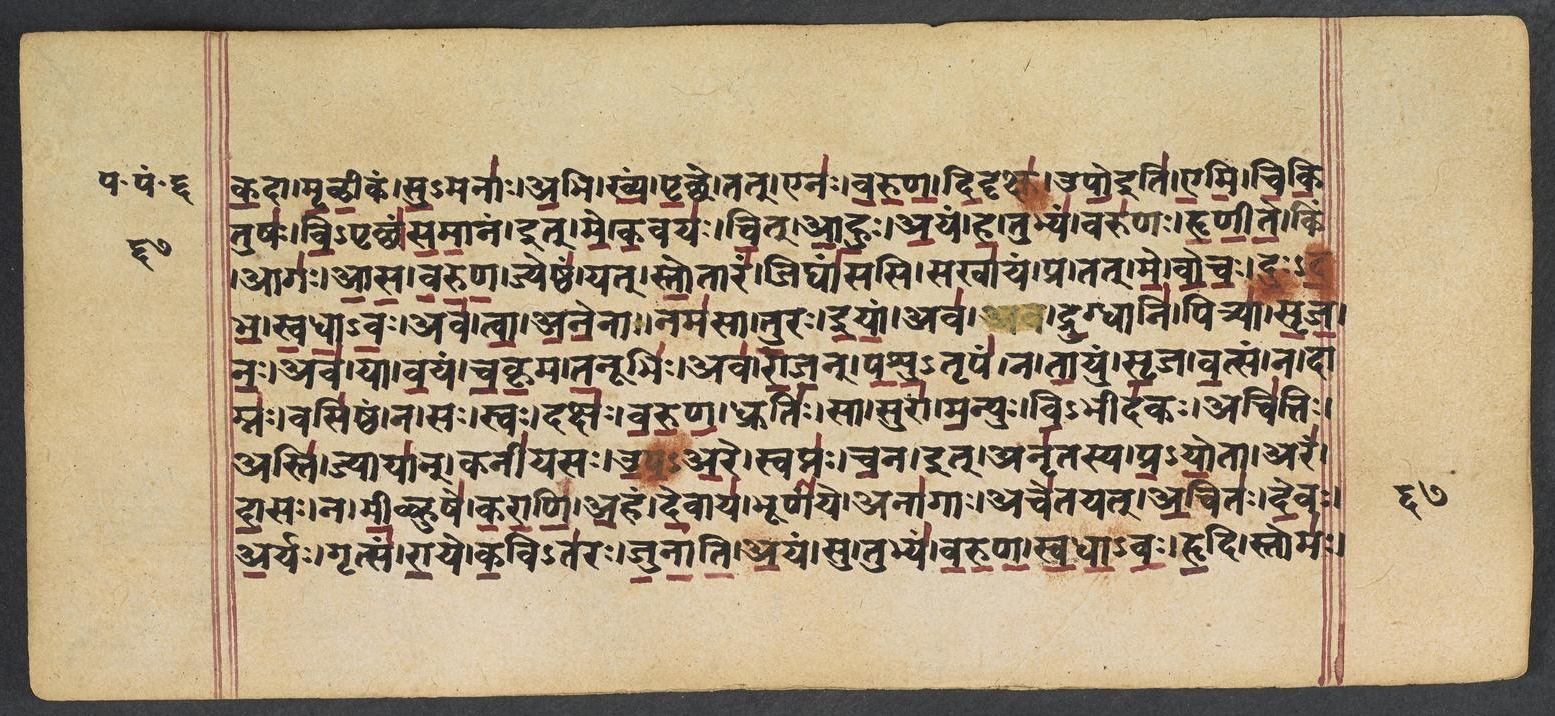
Where on the image
Penn Ms. Coll. 390 Item 41, fol. 546v (numbered 67v by the scribe) (OPenn image 547, upper leaf). Checked on the image: the Rigveda text on this page begins in RV 7.86.2 ‹kadā mṛḷīkam su-manāḥ abhi›. The next page with Rigveda text, fol. 547r (numbered 68r by the scribe), begins in RV 7.86.8 ‹upa-sṛitaḥ cit astu śam›. Verses 7.86.2-7 end on this page; 7.86.2 begins on fol. 546r (numbered 67r by the scribe).
2u̱ta svayā̍ ta̱nvā̱3̱̍ saṁ va̍de̱ tat ka̱dā nv a1̱̍ntar varu̍ṇe bhuvāni | kim me̍ ha̱vyam ahṛ̍ṇāno juṣeta ka̱dā mṛ̍ḻī̱kaṁ su̱manā̍ a̱bhi khya̍m ||
3pṛ̱cche tad eno̍ varuṇa di̱dṛkṣūpo̍ emi ciki̱tuṣo̍ vi̱pṛccha̍m | sa̱mā̱nam in me̍ ka̱vaya̍ś cid āhur a̱yaṁ ha̱ tubhya̱ṁ varu̍ṇo hṛṇīte ||
4kim āga̍ āsa varuṇa̱ jyeṣṭha̱ṁ yat sto̱tāra̱ṁ jighā̍ṁsasi̱ sakhā̍yam | pra tan me̍ voco dūḻabha svadhā̱vo 'va̍ tvāne̱nā nama̍sā tu̱ra i̍yām ||
5ava̍ dru̱gdhāni̱ pitryā̍ sṛjā̱ no 'va̱ yā va̱yaṁ ca̍kṛ̱mā ta̱nūbhi̍ḥ | ava̍ rājan paśu̱tṛpa̱ṁ na tā̱yuṁ sṛ̱jā va̱tsaṁ na dāmno̱ vasi̍ṣṭham ||
6na sa svo dakṣo̍ varuṇa̱ dhruti̱ḥ sā surā̍ ma̱nyur vi̱bhīda̍ko̱ aci̍ttiḥ | asti̱ jyāyā̱n kanī̍yasa upā̱re svapna̍ś ca̱ned anṛ̍tasya prayo̱tā ||
7ara̍ṁ dā̱so na mī̱ḻhuṣe̍ karāṇy a̱haṁ de̱vāya̱ bhūrṇa̱ye 'nā̍gāḥ | ace̍tayad a̱cito̍ de̱vo a̱ryo gṛtsa̍ṁ rā̱ye ka̱vita̍ro junāti ||
Compare: Padapāṭha (word-by-word text written in the manuscript; Sansknet e-text via GRETIL)
2uta | svayā | tanvā | sam | vade | tat | kadā | nu | antaḥ | varuṇe | bhuvāni | kim | me | havyam | ahṛṇānaḥ | juṣeta | kadā | mṛḷīkam | su-manāḥ | abhi | khyam
3pṛcche | tat | enaḥ | varuṇa | didṛkṣu | upo iti | emi | cikituṣaḥ | vi-pṛccham | samānam | it | me | kavayaḥ | cit | āhuḥ | ayam | ha | tubhyam | varuṇaḥ | hṛṇīte
4kim | āgaḥ | āsa | varuṇa | jyeṣṭham | yat | stotāram | jighāṃsasi | sakhāyam | pra | tat | me | vocaḥ | duḥ-dabha | svadhāvaḥ | ava | tvā | anenāḥ | namasā | turaḥ | iyām
5ava | drugdhāni | pitryā | sṛja | naḥ | ava | yā | vayam | cakṛma | tanūbhiḥ | ava | rājan | paśu-tṛpam | na | tāyum | sṛja | vatsam | na | dāmnaḥ | vasiṣṭham
6na | saḥ | svaḥ | dakṣaḥ | varuṇa | dhrutiḥ | sā | surā | manyuḥ | vi-bhīdakaḥ | acittiḥ | asti | jyāyān | kanīyasaḥ | upa-are | svapnaḥ | cana | it | anṛtasya | pra-yotā
7aram | dāsaḥ | na | mīḷhuṣe | karāṇi | aham | devāya | bhūrṇaye | anāgāḥ | acetayat | acitaḥ | devaḥ | aryaḥ | gṛtsam | rāye | kavi-taraḥ | junāti
2With mine own heart I commune on the question how Varuṇa and I may be united. What gift of mine will he accept unangered? When may I calmly look and find him gracious?
3Fain to know this in in I question others: I seek the wise, O Varuṇa, and ask them. This one same answer even the sages gave me, "Surely this Varuṇa is angry with thee."
4What, Varuṇa, hath been my chief transgression, that thou wouldst slay the friend who sings thy praises? Tell me, Unconquerable Lord, and quickly sinless will I approach thee with mine homage.
5Free us from sins committed by our fathers, from those wherein we have ourselves offended. O King, loose, like a thief who feeds the cattle, as from the cord a calf, set free Vasishṭha.
6Not our own will betrayed us, but seduction, thoughtlessness, Varuṇa wine, dice, or anger. The old is near to lead astray the younger: even sleep removeth not all evil-doing.
7Slavelike may I do service to the Bounteous, serve, free from sin, the God inclined to anger. This gentle Lord gives wisdom to the simple: the wiser God leads on the wise to riches.
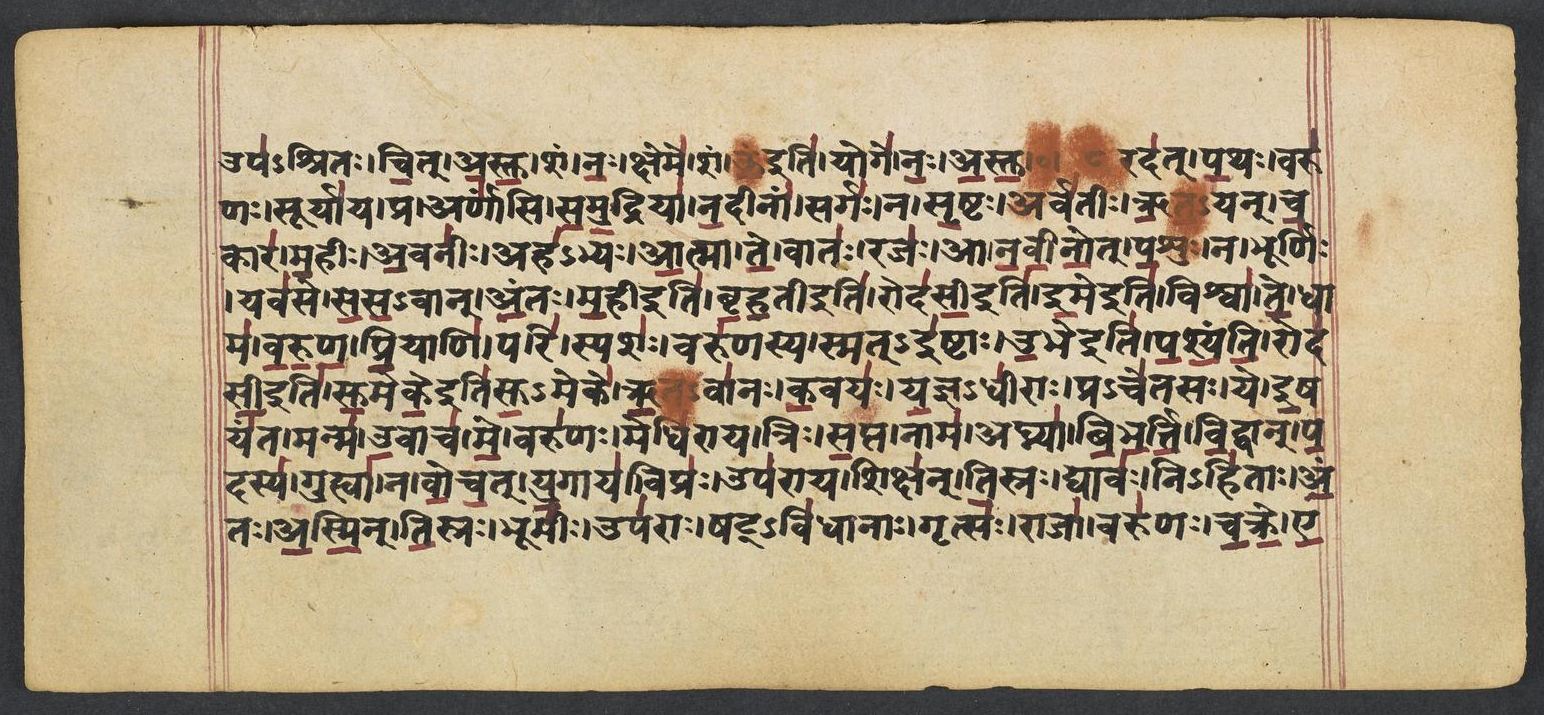
Where on the image
Penn Ms. Coll. 390 Item 41, fol. 547r (numbered 68r by the scribe) (OPenn image 547, lower leaf). Checked on the image: the Rigveda text on this page begins in RV 7.86.8 ‹upa-śritaḥ cit astu śam› (so the leaf, उपऽश्रितः; the padapāṭha text used here misprints upa-sṛitaḥ). The next page with Rigveda text, fol. 547v (numbered 68v by the scribe), begins in RV 7.87.5 ‹-etam divi pra-īṅkham hiraṇyayam›. Verse 7.86.8 ends on this page; 7.86.8 begins on fol. 546v (numbered 67v by the scribe).
8a̱yaṁ su tubhya̍ṁ varuṇa svadhāvo hṛ̱di stoma̱ upa̍śritaś cid astu | śaṁ na̱ḥ kṣeme̱ śam u̱ yoge̍ no astu yū̱yam pā̍ta sva̱stibhi̱ḥ sadā̍ naḥ ||
Compare: Padapāṭha (word-by-word text written in the manuscript; Sansknet e-text via GRETIL)
8ayam | su | tubhyam | varuṇa | svadhāvaḥ | hṛdi | stomaḥ | upa-sṛitaḥ | cit | astu | śam | naḥ | kṣeme | śam | oṃ iti | yoge | naḥ | astu | yūyam | pāta | svasti-bhiḥ | sadā | naḥ
8O Lord, O Varuṇa, may this laudation come close to thee and lie within thy spirit. May it be well with us in rest and labour. Preserve us ever-more, ye Gods, with blessings.
Notes
- Sanskrit: Aufrecht's edition (1877) with the Vedic accents, as entered by van Nooten and Holland (GRETIL).
- English: Ralph T. H. Griffith, The Hymns of the Rigveda (1889-1892; 2nd ed. 1896-1897), from the VedaWeb digital text; OCR slips in that text were corrected against the printed 2nd edition (data/sources/rigveda/griffith_errata.json).
- Padapāṭha (edition text): Sansknet e-text via GRETIL (CC BY-NC-SA 4.0).
Cite
Sources
- Source: Penn Ms. Coll. 390 Item 41 (undated (catalogued with Penn's 18th-19th c. Vedic manuscripts)), OPenn, Public Domain Mark + Aufrecht's accented text (GRETIL) + Griffith's English (VedaWeb) (holding institution)
- Critical edition: Aufrecht (1877), accented e-text via GRETIL
← previous · → next · v cycle view · l back to library