Rigveda 7.87: To Varuna
Introduction
Rigveda 7.87 is a hymn of 7 verses addressed to Varuna. It stands in book (maṇḍala) 7, the family book of Vasiṣṭha. The Rigveda is the oldest collection of Sanskrit hymns, composed in the second half of the second millennium BCE and handed down orally for many centuries before it was written down.
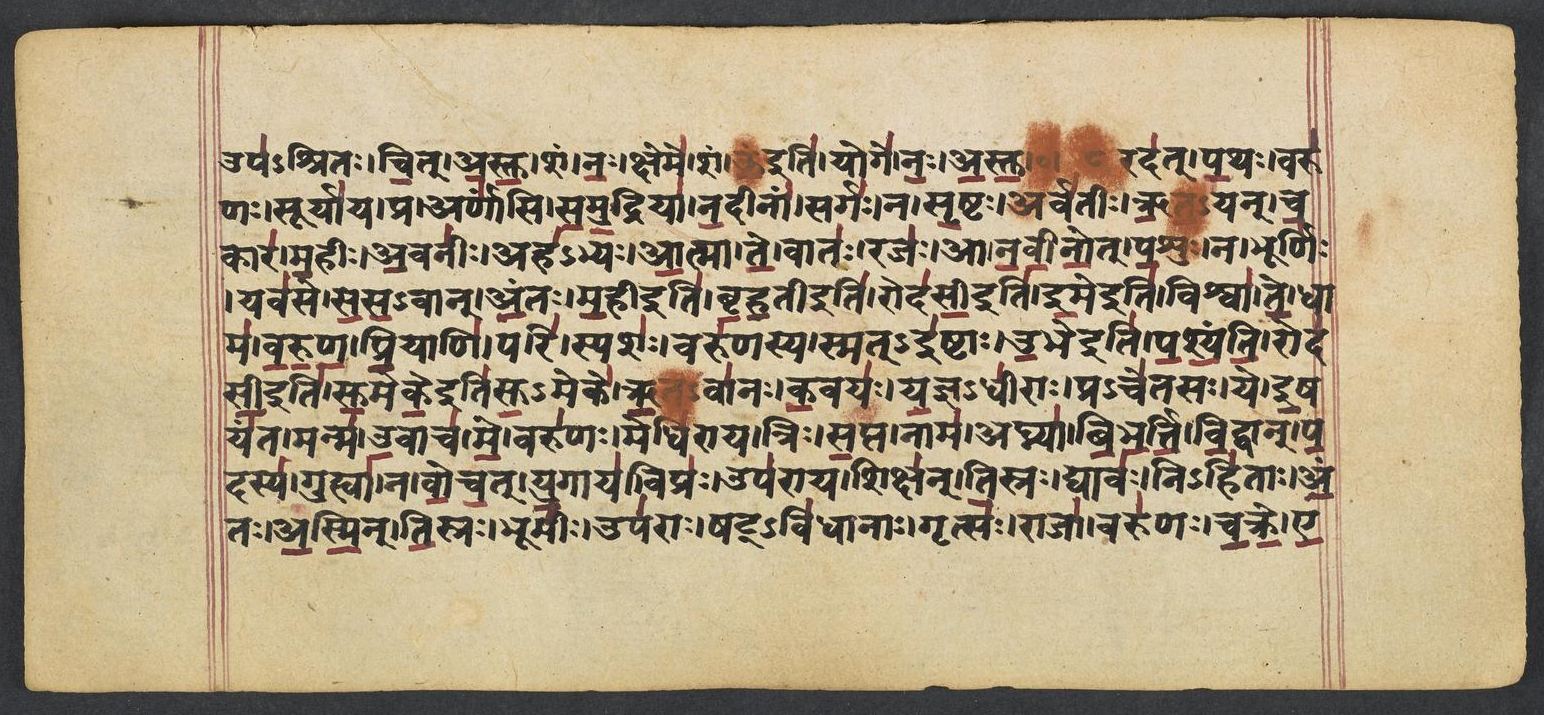
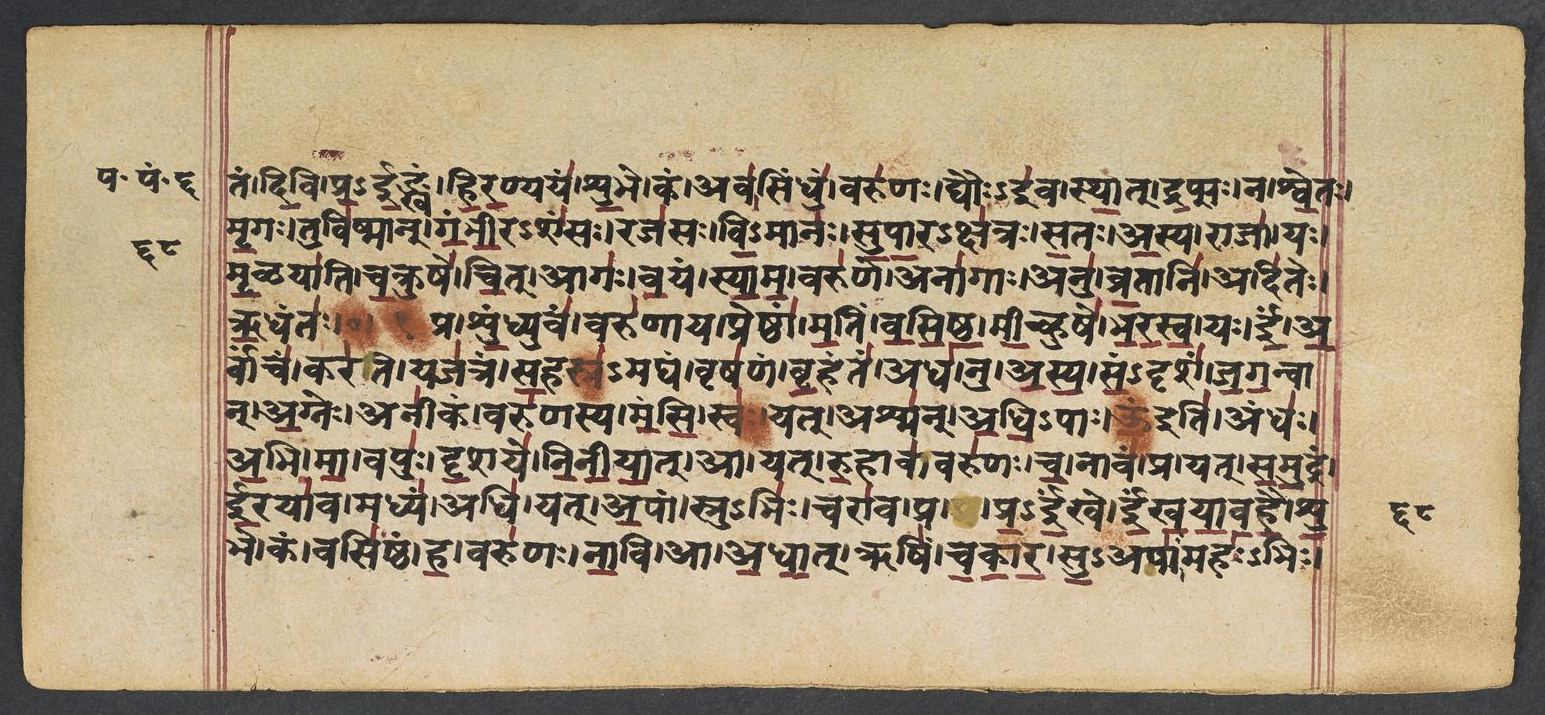
The manuscript shown is Penn Ms. Coll. 390 Item 41 (University of Pennsylvania), an undated paper manuscript of the padapāṭha (the word-by-word recitation text, in which every word is written separately and compounds are split) of the whole Ṛgveda in Devanāgarī, 884 leaves in fascicles, 7-9 lines to the page, accents in red; this hymn stands on fol. 547r-547v. Each section below gives the verses that end on one page; the page boundaries were read on the images (the opening words of every page), not counted out. Where the manuscript is a padapāṭha (the word-by-word recitation text), the section shows Aufrecht's continuous (saṃhitā) text first and, as the edition text, the padapāṭha of the same verses, which is the form written on the page.
How was this verified? (Provenance)
Where on the image
Penn Ms. Coll. 390 Item 41, fol. 547r (numbered 68r by the scribe) (OPenn image 547, lower leaf). Checked on the image: the Rigveda text on this page begins in RV 7.86.8 ‹upa-śritaḥ cit astu śam› (so the leaf, उपऽश्रितः; the padapāṭha text used here misprints upa-sṛitaḥ). The next page with Rigveda text, fol. 547v (numbered 68v by the scribe), begins in RV 7.87.5 ‹-etam divi pra-īṅkham hiraṇyayam›. Verses 7.87.1-4 end on this page.
1rada̍t pa̱tho varu̍ṇa̱ḥ sūryā̍ya̱ prārṇā̍ṁsi samu̱driyā̍ na̱dīnā̍m | sargo̱ na sṛ̱ṣṭo arva̍tīr ṛtā̱yañ ca̱kāra̍ ma̱hīr a̱vanī̱r aha̍bhyaḥ ||
2ā̱tmā te̱ vāto̱ raja̱ ā na̍vīnot pa̱śur na bhūrṇi̱r yava̍se sasa̱vān | a̱ntar ma̱hī bṛ̍ha̱tī roda̍sī̱me viśvā̍ te̱ dhāma̍ varuṇa pri̱yāṇi̍ ||
3pari̱ spaśo̱ varu̍ṇasya̱ smadi̍ṣṭā u̱bhe pa̍śyanti̱ roda̍sī su̱meke̍ | ṛ̱tāvā̍naḥ ka̱vayo̍ ya̱jñadhī̍rā̱ḥ prace̍taso̱ ya i̱ṣaya̍nta̱ manma̍ ||
4u̱vāca̍ me̱ varu̍ṇo̱ medhi̍rāya̱ triḥ sa̱pta nāmāghnyā̍ bibharti | vi̱dvān pa̱dasya̱ guhyā̱ na vo̍cad yu̱gāya̱ vipra̱ upa̍rāya̱ śikṣa̍n ||
Compare: Padapāṭha (word-by-word text written in the manuscript; Sansknet e-text via GRETIL)
1radat | pathaḥ | varuṇaḥ | sūryāya | pra | arṇāṃsi | samudriyā | nadīnām | sargaḥ | na | sṛṣṭaḥ | arvatīḥ | ṛta-yan | cakāra | mahīḥ | avanīḥ | aha-bhyaḥ
2ātmā | te | vātaḥ | rajaḥ | ā | navīnot | paśuḥ | na | bhūrṇiḥ | yavase | sasa-vān | antaḥ | mahī iti | bṛhatī iti | rodasī iti | ime iti | viśvā | te | dhāma | varuṇa | priyāṇi
3pari | spaśaḥ | varuṇasya | smat-iṣṭāḥ | ubhe iti | paśyanti | rodasī iti | sumeke itisu-meke | ṛta-vānaḥ | kavayaḥ | yajña-dhīrāḥ | pra-cetasaḥ | ye | iṣayanta | manma
4uvāca | me | varuṇaḥ | medhirāya | triḥ | sapta | nāma | aghnyā | bibharti | vidvān | padasya | guhyā | na | vocat | yugāya | vipraḥ | uparāya | śikṣan
1Varuṇa cut a pathway out for Sûrya, and led the watery floods of rivers onward. The Mares, as in a race, speed on in order. He made great channels for the days to follow.
2The wind, thy breath, hath sounded through the region like a wild beast that seeks his food in pastures. Within these two, exalted Earth and Heaven, O Varuṇa, are all the forms thou lovest.
3Varuṇa's spies, sent forth upon their errand, survey the two world-halves well formed and fashioned. Wise are they, holy, skilled in sacrifices, the furtherers of the praise-songs of the prudent.
4To me who understand hath Varuṇa spoken, the names borne by the Cow are three times seven. The sapient God, knowing the place's secret, shall speak as 'twere to teach the race that cometh.
Where on the image
Penn Ms. Coll. 390 Item 41, fol. 547v (numbered 68v by the scribe) (OPenn image 548, upper leaf). Checked on the image: the Rigveda text on this page begins in RV 7.87.5 ‹-etam divi pra-īṅkham hiraṇyayam›. The next page with Rigveda text, fol. 548r (numbered 69r by the scribe), begins in RV 7.88.4 ‹stotāram vipraḥ sudina-tve ahvām›. Verses 7.87.5-7 end on this page; 7.87.5 begins on fol. 547r (numbered 68r by the scribe).
5ti̱sro dyāvo̱ nihi̍tā a̱ntar a̍smin ti̱sro bhūmī̱r upa̍rā̱ḥ ṣaḍvi̍dhānāḥ | gṛtso̱ rājā̱ varu̍ṇaś cakra e̱taṁ di̱vi pre̱ṅkhaṁ hi̍ra̱ṇyaya̍ṁ śu̱bhe kam ||
6ava̱ sindhu̱ṁ varu̍ṇo̱ dyaur i̍va sthād dra̱pso na śve̱to mṛ̱gas tuvi̍ṣmān | ga̱mbhī̱raśa̍ṁso̱ raja̍so vi̱māna̍ḥ supā̱rakṣa̍traḥ sa̱to a̱sya rājā̍ ||
7yo mṛ̱ḻayā̍ti ca̱kruṣe̍ ci̱d āgo̍ va̱yaṁ syā̍ma̱ varu̍ṇe̱ anā̍gāḥ | anu̍ vra̱tāny adi̍ter ṛ̱dhanto̍ yū̱yam pā̍ta sva̱stibhi̱ḥ sadā̍ naḥ ||
Compare: Padapāṭha (word-by-word text written in the manuscript; Sansknet e-text via GRETIL)
5tisraḥ | dyāvaḥ | ni-hitāḥ | antaḥ | asmin | tisraḥ | bhūmiḥ | uparāḥ | ṣaṭ-vidhānāḥ | gṛtsaḥ | rājā | varuṇaḥ | cakre | etam | divi | pra-īṅkham | hiraṇyayam | śubhe | kam
6ava | sindhum | varuṇaḥ | dyauḥ-iva | sthāt | drapsaḥ | na | śvetaḥ | mṛgaḥ | tuviṣmān | gambhīra-saṃsaḥ | rajasaḥ | vi-mānaḥ | supāra-kṣatraḥ | sataḥ | asya | rājā
7yaḥ | mṛḷayāti | cakuṣe | cit | āgaḥ | vayam | syāma | varuṇe | anāgāḥ | anu | vratāni | aditeḥ | ṛdhantaḥ | yūyam | pāta | svasti-bhiḥ | sadā | naḥ
5On him three heavens rest and are supported, and the three earths are there in sixfold order. The wise King Varuṇa hath made in heaven that Golden Swing to cover it with glory.
6Like Varuṇa from heaven he sinks in Sindhu, like a white-shining spark, a strong wild creature. Ruling in depths and meting out the region, great saving power hath he, this world's Controller.
7Before this Varuṇa may we be sinless him who shows mercy even to the sinner- While we are keeping Aditi's ordinances. Preserve us evermore, ye Gods, with blessings.
Notes
- Sanskrit: Aufrecht's edition (1877) with the Vedic accents, as entered by van Nooten and Holland (GRETIL).
- English: Ralph T. H. Griffith, The Hymns of the Rigveda (1889-1892; 2nd ed. 1896-1897), from the VedaWeb digital text; OCR slips in that text were corrected against the printed 2nd edition (data/sources/rigveda/griffith_errata.json).
- Padapāṭha (edition text): Sansknet e-text via GRETIL (CC BY-NC-SA 4.0).
Cite
Sources
- Source: Penn Ms. Coll. 390 Item 41 (undated (catalogued with Penn's 18th-19th c. Vedic manuscripts)), OPenn, Public Domain Mark + Aufrecht's accented text (GRETIL) + Griffith's English (VedaWeb) (holding institution)
- Critical edition: Aufrecht (1877), accented e-text via GRETIL
← previous · → next · v cycle view · l back to library