Rigveda 7.91: To Vayu or Indra and Vayu
Introduction
Rigveda 7.91 is a hymn of 7 verses addressed to Vayu or Indra and Vayu. It stands in book (maṇḍala) 7, the family book of Vasiṣṭha. The Rigveda is the oldest collection of Sanskrit hymns, composed in the second half of the second millennium BCE and handed down orally for many centuries before it was written down.
The manuscript shown is Penn Ms. Coll. 390 Item 41 (University of Pennsylvania), an undated paper manuscript of the padapāṭha (the word-by-word recitation text, in which every word is written separately and compounds are split) of the whole Ṛgveda in Devanāgarī, 884 leaves in fascicles, 7-9 lines to the page, accents in red; this hymn stands on fol. 549r-549v. Each section below gives the verses that end on one page; the page boundaries were read on the images (the opening words of every page), not counted out. Where the manuscript is a padapāṭha (the word-by-word recitation text), the section shows Aufrecht's continuous (saṃhitā) text first and, as the edition text, the padapāṭha of the same verses, which is the form written on the page.
How was this verified? (Provenance)
Where on the image
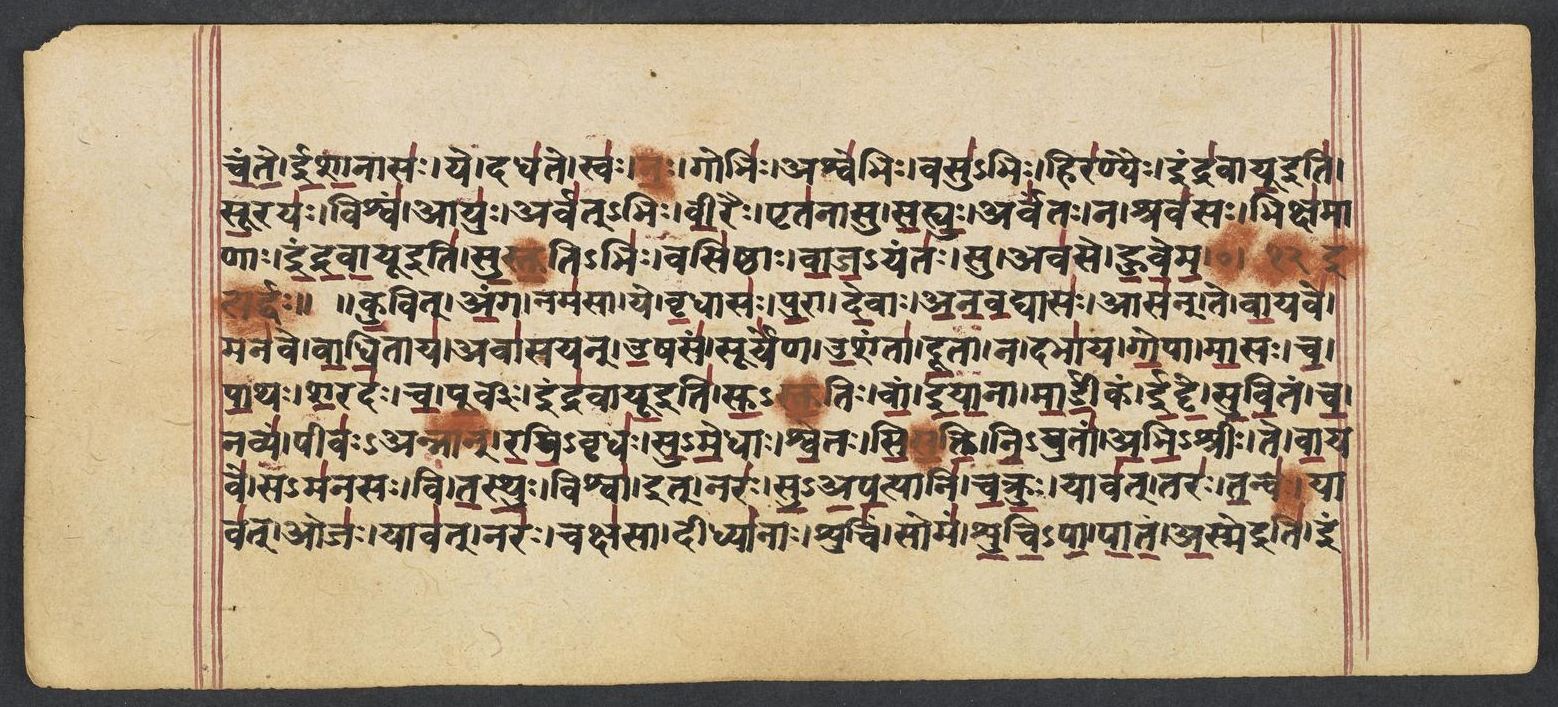
Penn Ms. Coll. 390 Item 41, fol. 549r (numbered 70r by the scribe) (OPenn image 549, lower leaf). Checked on the image: the Rigveda text on this page begins in RV 7.90.5 ‹-sacante›. The next page with Rigveda text, fol. 549v (numbered 70v by the scribe), begins in RV 7.91.4 ‹-indravāyūiti sadatam barhiḥ ā›. Verses 7.91.1-3 end on this page.
1ku̱vid a̱ṅga nama̍sā̱ ye vṛ̱dhāsa̍ḥ pu̱rā de̱vā a̍nava̱dyāsa̱ āsa̍n | te vā̱yave̱ mana̍ve bādhi̱tāyāvā̍sayann u̱ṣasa̱ṁ sūrye̍ṇa ||
2u̱śantā̍ dū̱tā na dabhā̍ya go̱pā mā̱saś ca̍ pā̱thaḥ śa̱rada̍ś ca pū̱rvīḥ | indra̍vāyū suṣṭu̱tir vā̍m iyā̱nā mā̍rḍī̱kam ī̍ṭṭe suvi̱taṁ ca̱ navya̍m ||
3pīvo̍annām̐ rayi̱vṛdha̍ḥ sume̱dhāḥ śve̱taḥ si̍ṣakti ni̱yutā̍m abhi̱śrīḥ | te vā̱yave̱ sama̍naso̱ vi ta̍sthu̱r viśven nara̍ḥ svapa̱tyāni̍ cakruḥ ||
Compare: Padapāṭha (word-by-word text written in the manuscript; Sansknet e-text via GRETIL)
1kuvit | aṅga | namasā | ye | vṛdhāsaḥ | purā | devāḥ | anavadyāsaḥ | āsan | te | vāyave | manave | bādhitāya | avāsayan | uṣasam | sūryeṇa
2uśantā | dūtā | na | dabhāya | gopā | māsaḥ | ca | pāthaḥ | śaradaḥ | ca | pūrvīḥ | indravāyūiti | su-stutiḥ | vām | iyānā | mārḍīkam | īṭe | suvitam | ca | navyam
3pīvaḥ-annān | rayi-vṛdhaḥ | su-medhāḥ | śvetaḥ | siṣakti | ni-yutām | abhi-śrīḥ | te | vāyave | sa-manasaḥ | vi | tasthuḥ | viśvā | it | naraḥ | su-apatyāni | cakruḥ
1WERE not in sooth, the Gods aforetime blameless, whose pleasure was increased by adoration? For Vâyu and for man in his affliction they caused the Morning to arise with Sûrya.
2Guardians infallible, eager as envoys' preserve us safe through many months and autumns. Addressed to you, our fair praise, Indra-Vâyu, implores your favour and renewed well-being.
3Wise, bright, arranger of his teams, he. seeketh men with rich food whose treasures are abundant. They have arranged them of one mind with Vâyu: the men have wrought all noble operations.
Where on the image
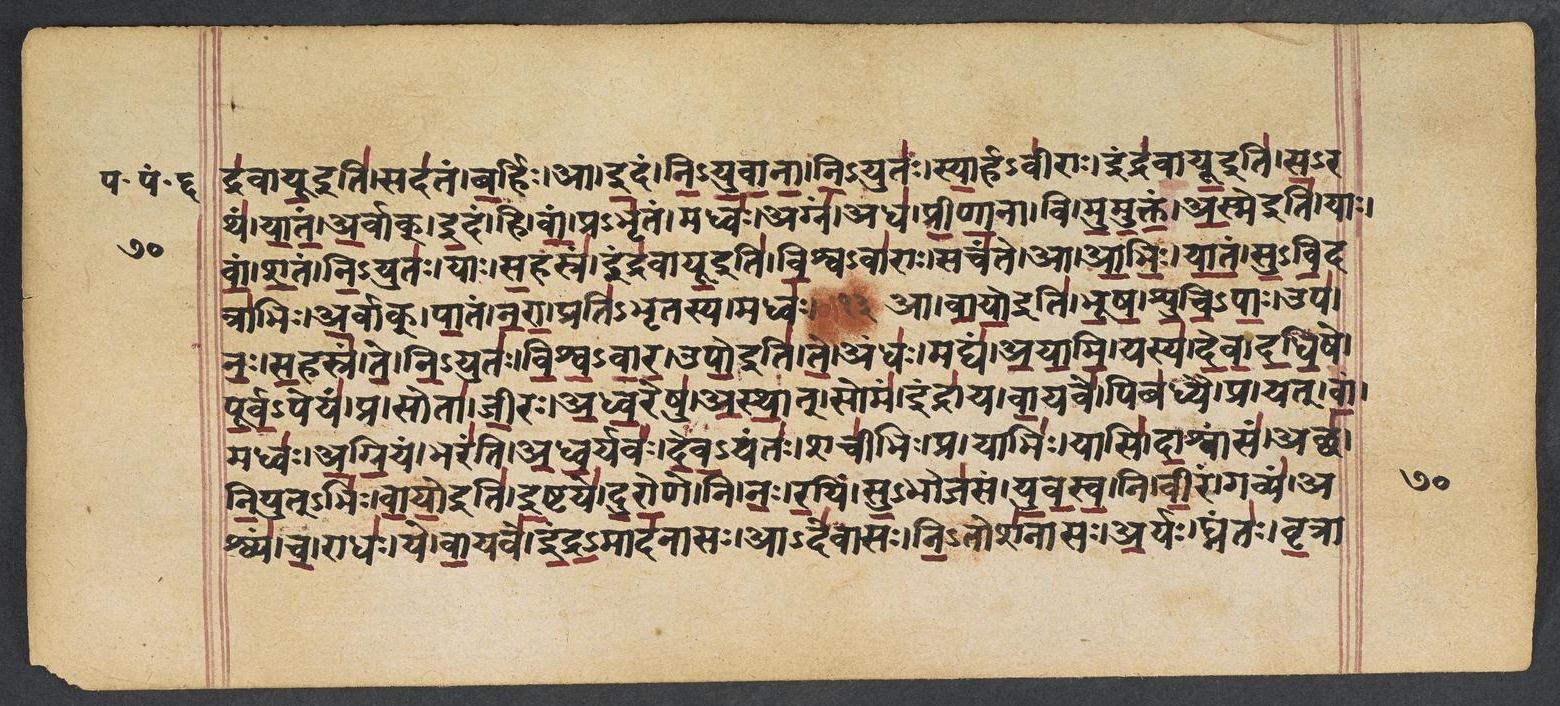
Penn Ms. Coll. 390 Item 41, fol. 549v (numbered 70v by the scribe) (OPenn image 550, upper leaf). Checked on the image: the Rigveda text on this page begins in RV 7.91.4 ‹-indravāyūiti sadatam barhiḥ ā›. The next page with Rigveda text, fol. 550r (numbered 71r by the scribe), begins in RV 7.92.4 ‹-vṛtrāṇi sūri-bhiḥ syāma sasahvāṃsaḥ›. Verses 7.91.4-7 end on this page; 7.91.4 begins on fol. 549r (numbered 70r by the scribe).
4yāva̱t tara̍s ta̱nvo̱3̱̍ yāva̱d ojo̱ yāva̱n nara̱ś cakṣa̍sā̱ dīdhyā̍nāḥ | śuci̱ṁ soma̍ṁ śucipā pātam a̱sme indra̍vāyū̱ sada̍tam ba̱rhir edam ||
5ni̱yu̱vā̱nā ni̱yuta̍ḥ spā̱rhavī̍rā̱ indra̍vāyū sa̱ratha̍ṁ yātam a̱rvāk | i̱daṁ hi vā̱m prabhṛ̍ta̱m madhvo̱ agra̱m adha̍ prīṇā̱nā vi mu̍muktam a̱sme ||
6yā vā̍ṁ śa̱taṁ ni̱yuto̱ yāḥ sa̱hasra̱m indra̍vāyū vi̱śvavā̍rā̱ḥ saca̍nte | ābhi̍r yātaṁ suvi̱datrā̍bhir a̱rvāk pā̱taṁ na̍rā̱ prati̍bhṛtasya̱ madhva̍ḥ ||
7arva̍nto̱ na śrava̍so̱ bhikṣa̍māṇā indravā̱yū su̍ṣṭu̱tibhi̱r vasi̍ṣṭhāḥ | vā̱ja̱yanta̱ḥ sv ava̍se huvema yū̱yam pā̍ta sva̱stibhi̱ḥ sadā̍ naḥ ||
Compare: Padapāṭha (word-by-word text written in the manuscript; Sansknet e-text via GRETIL)
4yāvat | taraḥ | tanvaḥ | yāvat | ojaḥ | yāvat | naraḥ | cakṣasā | dīdhyānāḥ | śuc im | somam | śuci-pā | pātam | asme iti | indravāyūiti | sadatam | barhiḥ | ā | idam
5ni-yuvānā | ni-yutaḥ | spārha-vīrāḥ | indravāyūiti | sa-ratham | yātam | avārk | idam | hi | vām | pra-bhṛtam | madhvaḥ | agram | adha | prīṇānā | vi | mumuktam | asme iti
6yā | vām | śatam | ni-yutaḥ | yāḥ | sahasram | indravāyūiti | viśva-vārāḥ | sacante | ābhiḥ | yātam | su-vidatrābhiḥ | arvāk | pātam | narā | prati-bhṛtasya | madhvaḥ
7arvantaḥ | na | śravasaḥ | bhikṣamāṇāḥ | indravāyū iti | sustuti-bhiḥ | vasiṣṭhāḥ | vāja-yantaḥ | su | avase | huvema | yūyam | pāta | svasti-bhiḥ | sadā | naḥ
4So far as native power and strength permit you, so far as men behold whose eyes have vision, O ye pure-drinkers, drink with us pure Soma: sit on this sacred grass, Indra and Vâyu.
5Driving down teams that bear the lovely Heroes, hitherward, Indra-Vâyu, come together. To you this prime of savoury juice is offered: here loose your horses and be friendly-minded.
6Your hundred and your thousand teams, O Indra and Vâyu, all-munificent, which attend you, With these most gracious-minded come ye hither, and drink, O Heroes of the meath we offer.
7Like coursers seeking fame will we Vasishṭhas, O Indra-Vâyu, with our fair laudations, Exerting all our powe-,, call you to aid us. Preserve us evermore, ye Gods, with blessings.
Notes
- Sanskrit: Aufrecht's edition (1877) with the Vedic accents, as entered by van Nooten and Holland (GRETIL).
- English: Ralph T. H. Griffith, The Hymns of the Rigveda (1889-1892; 2nd ed. 1896-1897), from the VedaWeb digital text; OCR slips in that text were corrected against the printed 2nd edition (data/sources/rigveda/griffith_errata.json).
- Padapāṭha (edition text): Sansknet e-text via GRETIL (CC BY-NC-SA 4.0).
Cite
Sources
- Source: Penn Ms. Coll. 390 Item 41 (undated (catalogued with Penn's 18th-19th c. Vedic manuscripts)), OPenn, Public Domain Mark + Aufrecht's accented text (GRETIL) + Griffith's English (VedaWeb) (holding institution)
- Critical edition: Aufrecht (1877), accented e-text via GRETIL
← previous · → next · v cycle view · l back to library