Rigveda 7.94: To Indra and Agni
Introduction
Rigveda 7.94 is a hymn of 12 verses addressed to Indra and Agni. It stands in book (maṇḍala) 7, the family book of Vasiṣṭha. The Rigveda is the oldest collection of Sanskrit hymns, composed in the second half of the second millennium BCE and handed down orally for many centuries before it was written down.
The manuscript shown is Penn Ms. Coll. 390 Item 41 (University of Pennsylvania), an undated paper manuscript of the padapāṭha (the word-by-word recitation text, in which every word is written separately and compounds are split) of the whole Ṛgveda in Devanāgarī, 884 leaves in fascicles, 7-9 lines to the page, accents in red; this hymn stands on fol. 550v-551r. Each section below gives the verses that end on one page; the page boundaries were read on the images (the opening words of every page), not counted out. Where the manuscript is a padapāṭha (the word-by-word recitation text), the section shows Aufrecht's continuous (saṃhitā) text first and, as the edition text, the padapāṭha of the same verses, which is the form written on the page.
How was this verified? (Provenance)
Where on the image
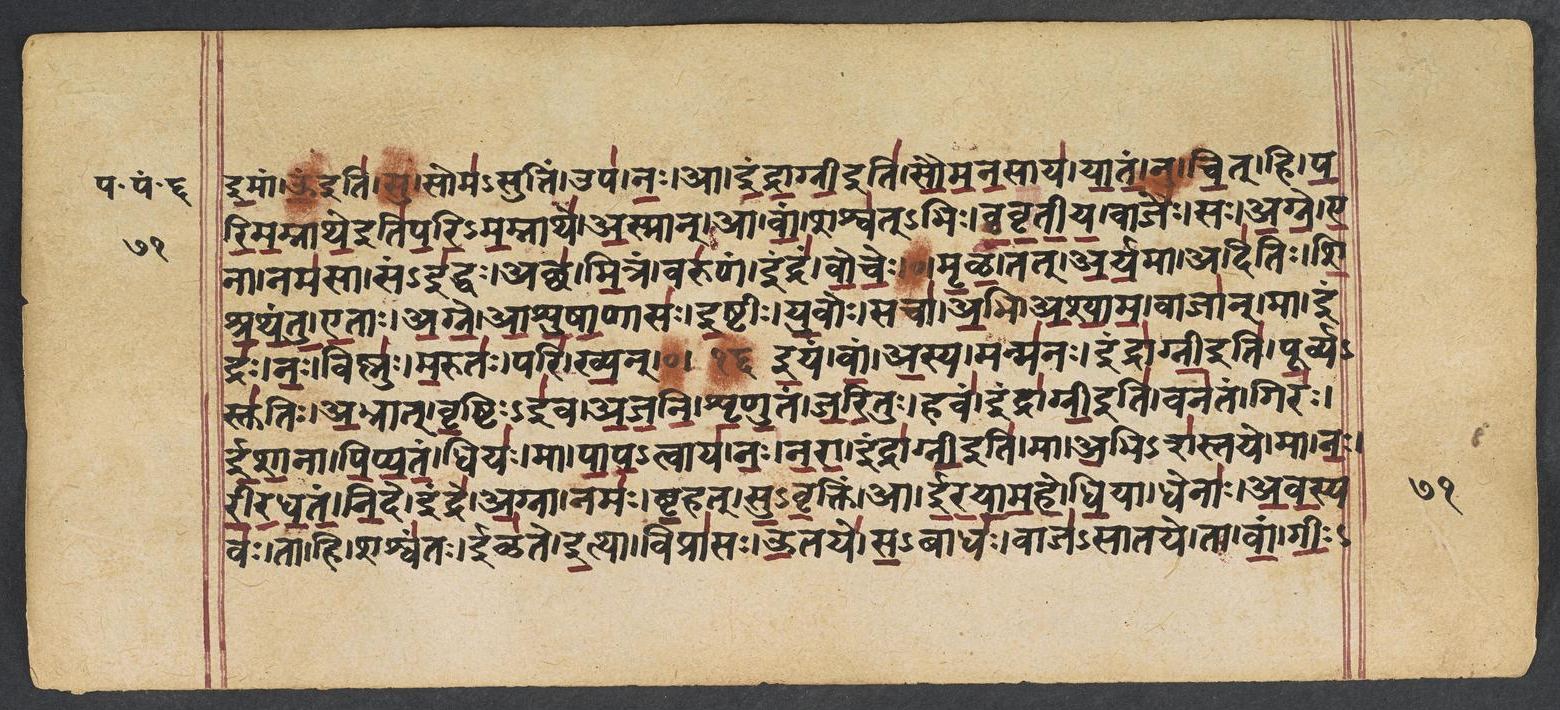
Penn Ms. Coll. 390 Item 41, fol. 550v (numbered 71v by the scribe) (OPenn image 551, upper leaf). Checked on the image: the Rigveda text on this page begins in RV 7.93.6 ‹imām oṃ iti su›. The next page with Rigveda text, fol. 551r (numbered 72r by the scribe), begins in RV 7.94.6 ‹-gīḥ-bhiḥ vipanyavaḥ prayasvantaḥ havāmahe›. Verses 7.94.1-5 end on this page.
1i̱yaṁ vā̍m a̱sya manma̍na̱ indrā̍gnī pū̱rvyastu̍tiḥ | a̱bhrād vṛ̱ṣṭir i̍vājani ||
2śṛ̱ṇu̱taṁ ja̍ri̱tur hava̱m indrā̍gnī̱ vana̍ta̱ṁ gira̍ḥ | ī̱śā̱nā pi̍pyata̱ṁ dhiya̍ḥ ||
3mā pā̍pa̱tvāya̍ no na̱rendrā̍gnī̱ mābhiśa̍staye | mā no̍ rīradhataṁ ni̱de ||
4indre̍ a̱gnā namo̍ bṛ̱hat su̍vṛ̱ktim era̍yāmahe | dhi̱yā dhenā̍ ava̱syava̍ḥ ||
5tā hi śaśva̍nta̱ īḻa̍ta i̱tthā viprā̍sa ū̱taye̍ | sa̱bādho̱ vāja̍sātaye ||
Compare: Padapāṭha (word-by-word text written in the manuscript; Sansknet e-text via GRETIL)
1iyam | vāmasya | manmanaḥ | indrāgnī iti | pūrvya-stutiḥ | abhrāt | vṛṣṭiḥ-iva | ajani
2śṛṇutam | jarituḥ | havam | indrāgnī iti | vanatam | giraḥ | īśānā | pipyatam | dhiyaḥ
3mā | pāpa-tvāya | naḥ | narā | indrāgnī iti | mā | abhi-śastaye | mā | naḥ | rīradhatam | nide
4indre | agnā | namaḥ | bṛhat | su-vṛktim | ā | īrayāmahe | dhiyā | dhenāḥ | avasyavaḥ
5tā | hi | śaśvantaḥ | īḷate | itthā | viprāsaḥ | ūtaye | sa-bādhaḥ | vāja-sātaye
1As rain from out the cloud, for you, Indra and Agni, from my soul This noblest praise hath been produced.
2Do ye, O Indra-Agni, hear the singer's call: accept his songs. Ye Rulers, grant his heart's desire.
3Give us not up to poverty, ye Heroes, Indra-Agni, nor To slander and reproach of men.
4To Indra and to Agni we bring reverence, high and holy hymn, And, craving help, softwords with prayer.
5For all these holy singers here implore these Twain to succour them, And priests that they may win them strength.
Where on the image
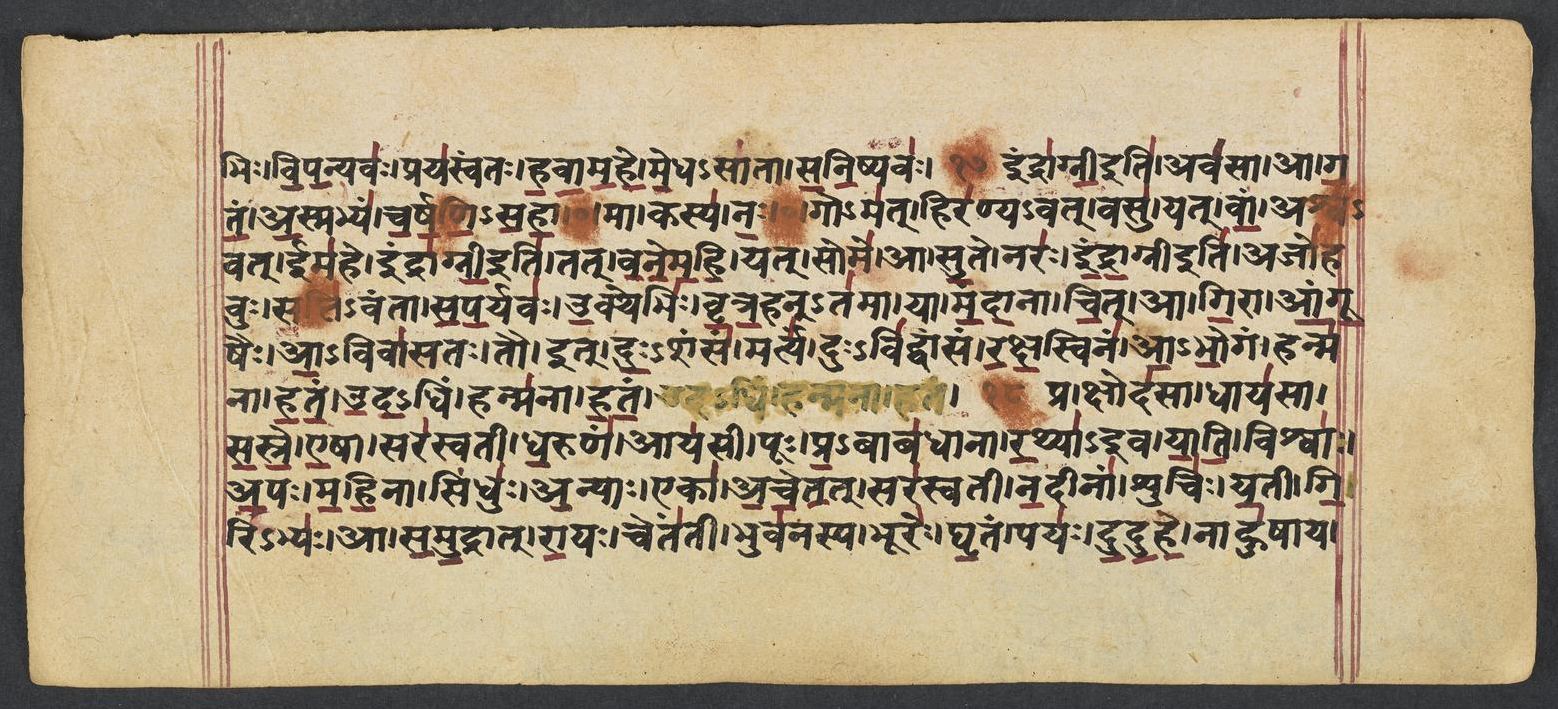
Penn Ms. Coll. 390 Item 41, fol. 551r (numbered 72r by the scribe) (OPenn image 551, lower leaf). Checked on the image: the Rigveda text on this page begins in RV 7.94.6 ‹-gīḥ-bhiḥ vipanyavaḥ prayasvantaḥ havāmahe›. The next page with Rigveda text, fol. 551v (numbered 72v by the scribe), begins in RV 7.95.3 ‹saḥ vavṛdhe naryaḥ yoṣaṇāsu›. Verses 7.94.6-12 end on this page; 7.94.6 begins on fol. 550v (numbered 71v by the scribe).
6tā vā̍ṁ gī̱rbhir vi̍pa̱nyava̱ḥ praya̍svanto havāmahe | me̱dhasā̍tā sani̱ṣyava̍ḥ ||
7indrā̍gnī̱ ava̱sā ga̍tam a̱smabhya̍ṁ carṣaṇīsahā | mā no̍ du̱ḥśaṁsa̍ īśata ||
8mā kasya̍ no̱ ara̍ruṣo dhū̱rtiḥ praṇa̱ṅ martya̍sya | indrā̍gnī̱ śarma̍ yacchatam ||
9goma̱d dhira̍ṇyava̱d vasu̱ yad vā̱m aśvā̍va̱d īma̍he | indrā̍gnī̱ tad va̍nemahi ||
10yat soma̱ ā su̱te nara̍ indrā̱gnī ajo̍havuḥ | saptī̍vantā sapa̱ryava̍ḥ ||
11u̱kthebhi̍r vṛtra̱hanta̍mā̱ yā ma̍ndā̱nā ci̱d ā gi̱rā | ā̱ṅgū̱ṣair ā̱vivā̍sataḥ ||
12tāv id du̱ḥśaṁsa̱m martya̱ṁ durvi̍dvāṁsaṁ rakṣa̱svina̍m | ā̱bho̱gaṁ hanma̍nā hatam uda̱dhiṁ hanma̍nā hatam ||
Compare: Padapāṭha (word-by-word text written in the manuscript; Sansknet e-text via GRETIL)
6tā | vām | gīḥ-bhiḥ | vipanyavaḥ | prayasvantaḥ | havāmahe | medha-sātā | saniṣyavaḥ
7indrāgnī iti | avasā | ā | gatam | asmabhyam | carṣaṇi-sahā | mā | naḥ | duḥ-śaṃsaḥ | īśata
8mā | kasya | naḥ | araruṣaḥ | dhūrtiḥ | praṇak | martyasya | indrāgnī iti | śarma | yacchatam
9go--mat | hiraṇya-vat | vasu | yat | vām | aśva-vat | īmahe | indrāgniiti | tat | vanemahi
10yat | some | ā | sute | naraḥ | indrāgnī iti | ajohavuḥ | sapti-vantā | saparyavaḥ
11ukthebhiḥ | vṛtra-hantamā | yā | mandānā | cit | ā | girā | āṅgūṣaiḥ | āvivāsataḥ
12tau | it | duḥ-śaṃsam | martyam | duḥ-vidvāṃsam | rakṣasvinam | ābhogam | hanmanā | hatam | uda-dhim | hamanā | hatam
6Eager to laudyou, we with songs invoke you, bearing sacred food, Fain for success in sacrifice.
7Indra and Agni, come to us with favour, ye who conquer men: Let not the wicked master us.
8At no time let the injurious blow of hostile mortal fall on us: O Indra-Agni, shelter us.
9Whatever wealth we crave of you, in gold, in cattle, or in steeds, That, Indra-Agni, let us gain;
10When heroes prompt in worship call Indra and Agni, Lords of steeds, Beside the Soma juice effused.
11Call hither with the song and lauds those who best slay the foemen, those Who take delight in hymns of praise.
12Slay ye the wicked man whose thought is evil of the demon kind. Slay him who stays the waters, slay the Serpent with your deadly dart.
Notes
- Sanskrit: Aufrecht's edition (1877) with the Vedic accents, as entered by van Nooten and Holland (GRETIL).
- English: Ralph T. H. Griffith, The Hymns of the Rigveda (1889-1892; 2nd ed. 1896-1897), from the VedaWeb digital text; OCR slips in that text were corrected against the printed 2nd edition (data/sources/rigveda/griffith_errata.json).
- Padapāṭha (edition text): Sansknet e-text via GRETIL (CC BY-NC-SA 4.0).
Cite
Sources
- Source: Penn Ms. Coll. 390 Item 41 (undated (catalogued with Penn's 18th-19th c. Vedic manuscripts)), OPenn, Public Domain Mark + Aufrecht's accented text (GRETIL) + Griffith's English (VedaWeb) (holding institution)
- Critical edition: Aufrecht (1877), accented e-text via GRETIL
← previous · → next · v cycle view · l back to library