Rigveda 7.95: To Sarasvati or Sarasvat
Introduction
Rigveda 7.95 is a hymn of 6 verses addressed to Sarasvati or Sarasvat. It stands in book (maṇḍala) 7, the family book of Vasiṣṭha. The Rigveda is the oldest collection of Sanskrit hymns, composed in the second half of the second millennium BCE and handed down orally for many centuries before it was written down.
The manuscript shown is Penn Ms. Coll. 390 Item 41 (University of Pennsylvania), an undated paper manuscript of the padapāṭha (the word-by-word recitation text, in which every word is written separately and compounds are split) of the whole Ṛgveda in Devanāgarī, 884 leaves in fascicles, 7-9 lines to the page, accents in red; this hymn stands on fol. 551r-551v. Each section below gives the verses that end on one page; the page boundaries were read on the images (the opening words of every page), not counted out. Where the manuscript is a padapāṭha (the word-by-word recitation text), the section shows Aufrecht's continuous (saṃhitā) text first and, as the edition text, the padapāṭha of the same verses, which is the form written on the page.
How was this verified? (Provenance)
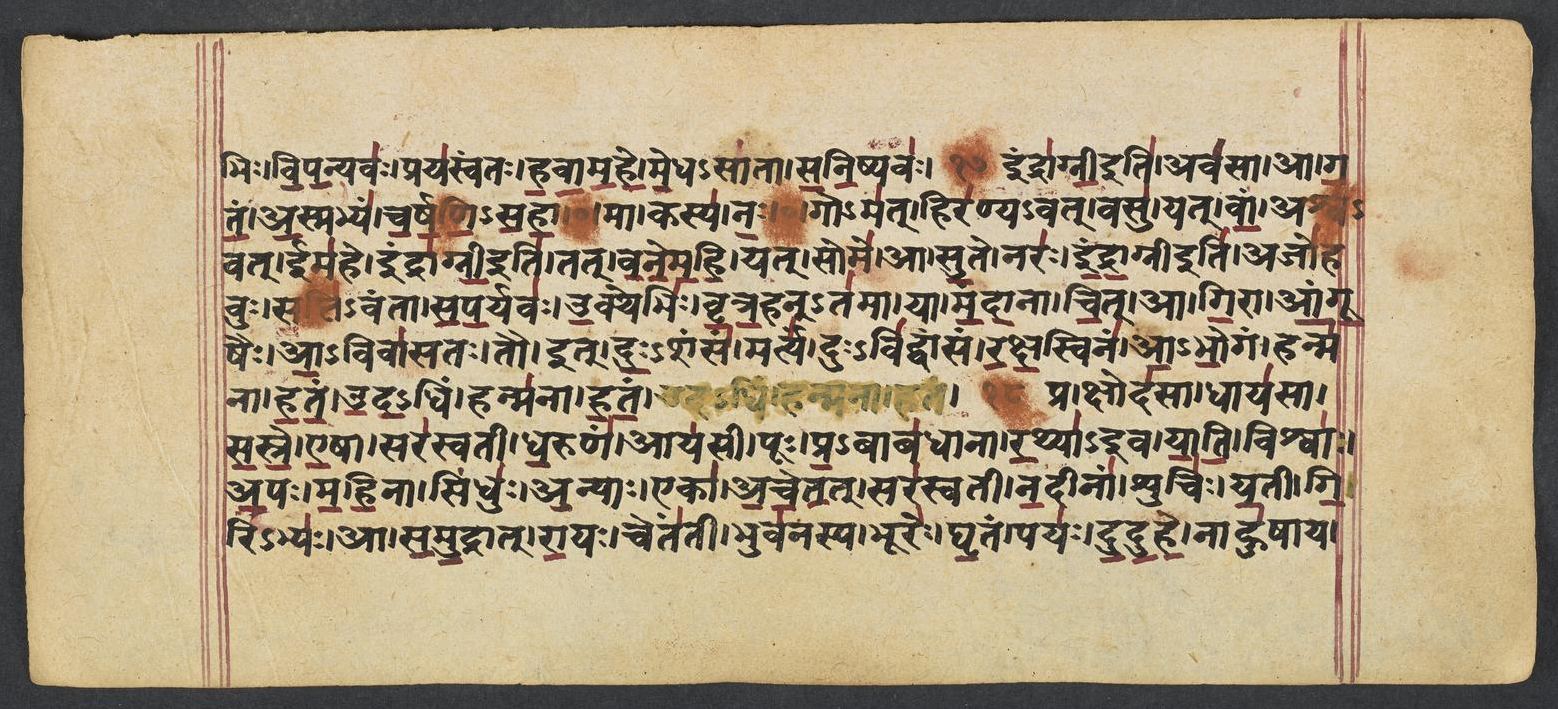
Where on the image
Penn Ms. Coll. 390 Item 41, fol. 551r (numbered 72r by the scribe) (OPenn image 551, lower leaf). Checked on the image: the Rigveda text on this page begins in RV 7.94.6 ‹-gīḥ-bhiḥ vipanyavaḥ prayasvantaḥ havāmahe›. The next page with Rigveda text, fol. 551v (numbered 72v by the scribe), begins in RV 7.95.3 ‹saḥ vavṛdhe naryaḥ yoṣaṇāsu›. Verses 7.95.1-2 end on this page.
1pra kṣoda̍sā̱ dhāya̍sā sasra e̱ṣā sara̍svatī dha̱ruṇa̱m āya̍sī̱ pūḥ | pra̱bāba̍dhānā ra̱thye̍va yāti̱ viśvā̍ a̱po ma̍hi̱nā sindhu̍r a̱nyāḥ ||
2ekā̍ceta̱t sara̍svatī na̱dīnā̱ṁ śuci̍r ya̱tī gi̱ribhya̱ ā sa̍mu̱drāt | rā̱yaś ceta̍ntī̱ bhuva̍nasya̱ bhūre̍r ghṛ̱tam payo̍ duduhe̱ nāhu̍ṣāya ||
Compare: Padapāṭha (word-by-word text written in the manuscript; Sansknet e-text via GRETIL)
1pra | kṣodasā | dhāyasā | sasre | eṣā | sarasvatī | dharuṇam | āyasī | pūḥ | pra-bābadhānā | rathyāiva | yāti | viśvāḥ | apaḥ | mahinā | sindhuḥ | anyāḥ
2ekā | acetat | sarasvatī | nadīnām | śuciḥ | yatī | giri-bhyaḥ | ā | samudrāt | rāyaḥ | cetantī | bhuvanasya | bhūreḥ | ghṛtam | payaḥ | duduhe | nāhuṣāya
1THIS stream Sarasvatî with fostering current comes forth, our sure defence, our fort of iron. As on a car, the flood flows on, surpassing in majesty and might all other waters.
2Pure in her course from mountains to the ocean, alone of streams Sarasvatî hath listened. Thinking of wealth and the great world of creatures, she poured for Nahusha her milk and fatness.
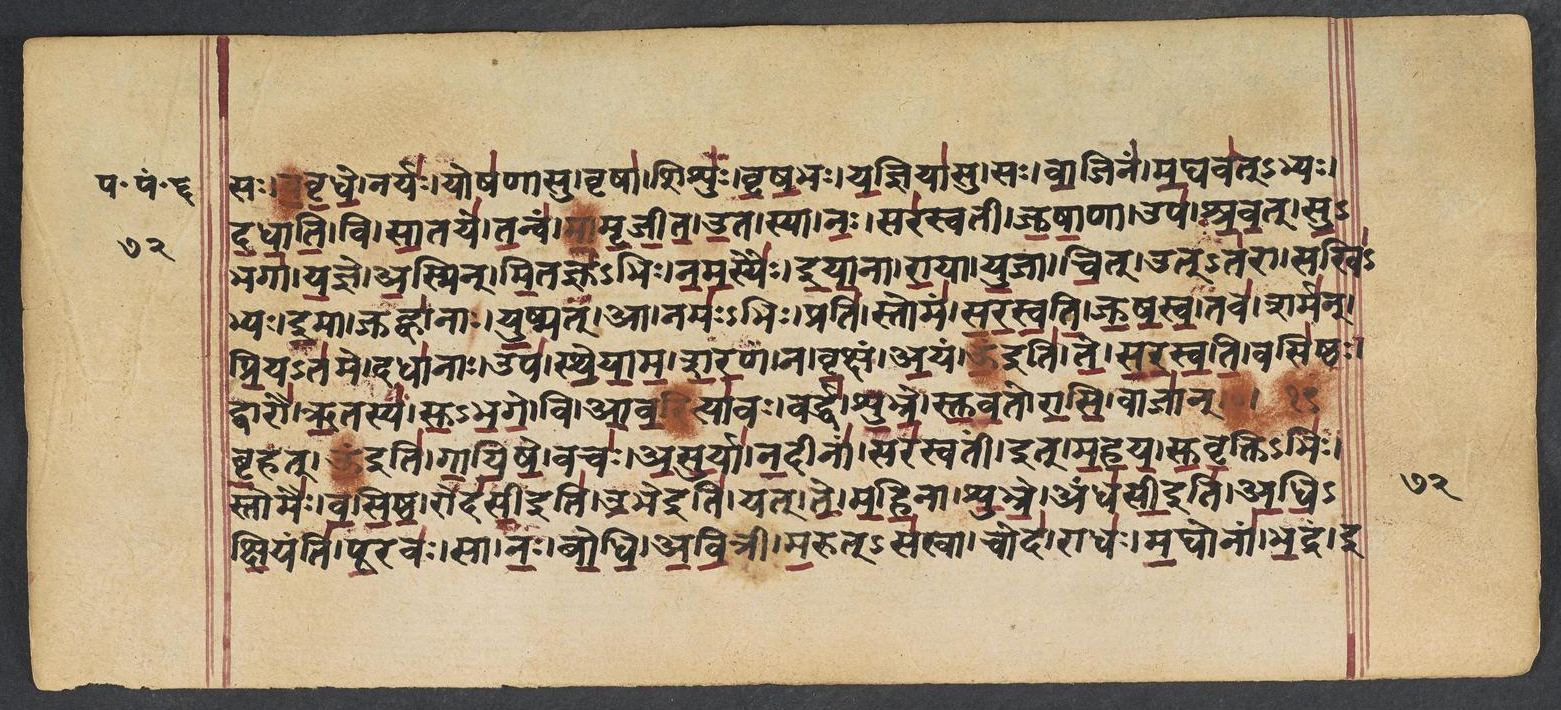
Where on the image
Penn Ms. Coll. 390 Item 41, fol. 551v (numbered 72v by the scribe) (OPenn image 552, upper leaf). Checked on the image: the Rigveda text on this page begins in RV 7.95.3 ‹saḥ vavṛdhe naryaḥ yoṣaṇāsu›. The next page with Rigveda text, fol. 552r (numbered 73r by the scribe), begins in RV 7.96.3 ‹-it bhadrā kṛṇavat sarasvatī›. Verses 7.95.3-6 end on this page.
3sa vā̍vṛdhe̱ naryo̱ yoṣa̍ṇāsu̱ vṛṣā̱ śiśu̍r vṛṣa̱bho ya̱jñiyā̍su | sa vā̱jina̍m ma̱ghava̍dbhyo dadhāti̱ vi sā̱taye̍ ta̱nva̍m māmṛjīta ||
4u̱ta syā na̱ḥ sara̍svatī juṣā̱ṇopa̍ śravat su̱bhagā̍ ya̱jṇe a̱smin | mi̱tajñu̍bhir nama̱syai̍r iyā̱nā rā̱yā yu̱jā ci̱d utta̍rā̱ sakhi̍bhyaḥ ||
5i̱mā juhvā̍nā yu̱ṣmad ā namo̍bhi̱ḥ prati̱ stoma̍ṁ sarasvati juṣasva | tava̱ śarma̍n pri̱yata̍me̱ dadhā̍nā̱ upa̍ stheyāma śara̱ṇaṁ na vṛ̱kṣam ||
6a̱yam u̍ te sarasvati̱ vasi̍ṣṭho̱ dvārā̍v ṛ̱tasya̍ subhage̱ vy ā̍vaḥ | vardha̍ śubhre stuva̱te rā̍si̱ vājā̍n yū̱yam pā̍ta sva̱stibhi̱ḥ sadā̍ naḥ ||
Compare: Padapāṭha (word-by-word text written in the manuscript; Sansknet e-text via GRETIL)
3saḥ | vavṛdhe | naryaḥ | yoṣaṇāsu | vṛṣā | śiśuḥ | vṛṣabhaḥ | yajñiyāsu | saḥ | vājinam | maghavat-bhyaḥ | dadhāti | vi | sātaye | tanvam | mamṛjīta
4uta | syā | naḥ | sarasvatī | juṣāṇā | upa | śravat | su-bhagā | yajñe | asmin | mitajñu-bhiḥ | namasyaiḥ | iyānā | rāyā | yujā | cit | ut-tarā | sakhi-bhyaḥ
5imā | juhvānāḥ | yuṣmat | ā | namaḥ-bhiḥ | prati | stomam | sarasvati | juṣasva | tava | śarman | priya-tame | dadhānāḥ | upa | stheyāma | śaraṇam | na | vṛkṣam
6ayam | oṃ iti | te | sarasvati | vasiṣṭhaḥ | dvārau | ṛtasya | su-bhage | vi | āvar ity āvaḥ | vardha | śubhre | stuvate | rāsi | vājān | yūyam | pāta | svasti-bhiḥ | sadā | naḥ
3Friendly to man he grew among the women, a strong young Steer amid the Holy Ladies. He gives the fleet steed to our wealthy princes, and decks their bodies for success in battle.
4May this Sarasvatî be pleased and listen at this our sacrifice, auspicious Lady, When we with reverence, on our knees, implore her close-knit to wealth, most kind to those she loveth.
5These offerings have ye made with adoration: say this, Sarasvatî, and accept our praises; And, placing us under thy dear protection, may we approach thee, as a tree, for shelter.
6For thee, O Blest Sarasvatî, Vasishṭha hath here unbarred the doors d sacred Order. Wax, Bright One, and give strength to him who lauds thee. Preserve us evermore, ye Gods, with blessings.
Notes
- Sanskrit: Aufrecht's edition (1877) with the Vedic accents, as entered by van Nooten and Holland (GRETIL).
- English: Ralph T. H. Griffith, The Hymns of the Rigveda (1889-1892; 2nd ed. 1896-1897), from the VedaWeb digital text; OCR slips in that text were corrected against the printed 2nd edition (data/sources/rigveda/griffith_errata.json).
- Padapāṭha (edition text): Sansknet e-text via GRETIL (CC BY-NC-SA 4.0).
Cite
Sources
- Source: Penn Ms. Coll. 390 Item 41 (undated (catalogued with Penn's 18th-19th c. Vedic manuscripts)), OPenn, Public Domain Mark + Aufrecht's accented text (GRETIL) + Griffith's English (VedaWeb) (holding institution)
- Critical edition: Aufrecht (1877), accented e-text via GRETIL
← previous · → next · v cycle view · l back to library