Rigveda 7.97: To Indra and Brihaspati
Introduction
Rigveda 7.97 is a hymn of 10 verses addressed to Indra and Brihaspati. It stands in book (maṇḍala) 7, the family book of Vasiṣṭha. The Rigveda is the oldest collection of Sanskrit hymns, composed in the second half of the second millennium BCE and handed down orally for many centuries before it was written down.
The manuscript shown is Penn Ms. Coll. 390 Item 41 (University of Pennsylvania), an undated paper manuscript of the padapāṭha (the word-by-word recitation text, in which every word is written separately and compounds are split) of the whole Ṛgveda in Devanāgarī, 884 leaves in fascicles, 7-9 lines to the page, accents in red; this hymn stands on fol. 552r-553r. Each section below gives the verses that end on one page; the page boundaries were read on the images (the opening words of every page), not counted out. Where the manuscript is a padapāṭha (the word-by-word recitation text), the section shows Aufrecht's continuous (saṃhitā) text first and, as the edition text, the padapāṭha of the same verses, which is the form written on the page.
How was this verified? (Provenance)
Where on the image
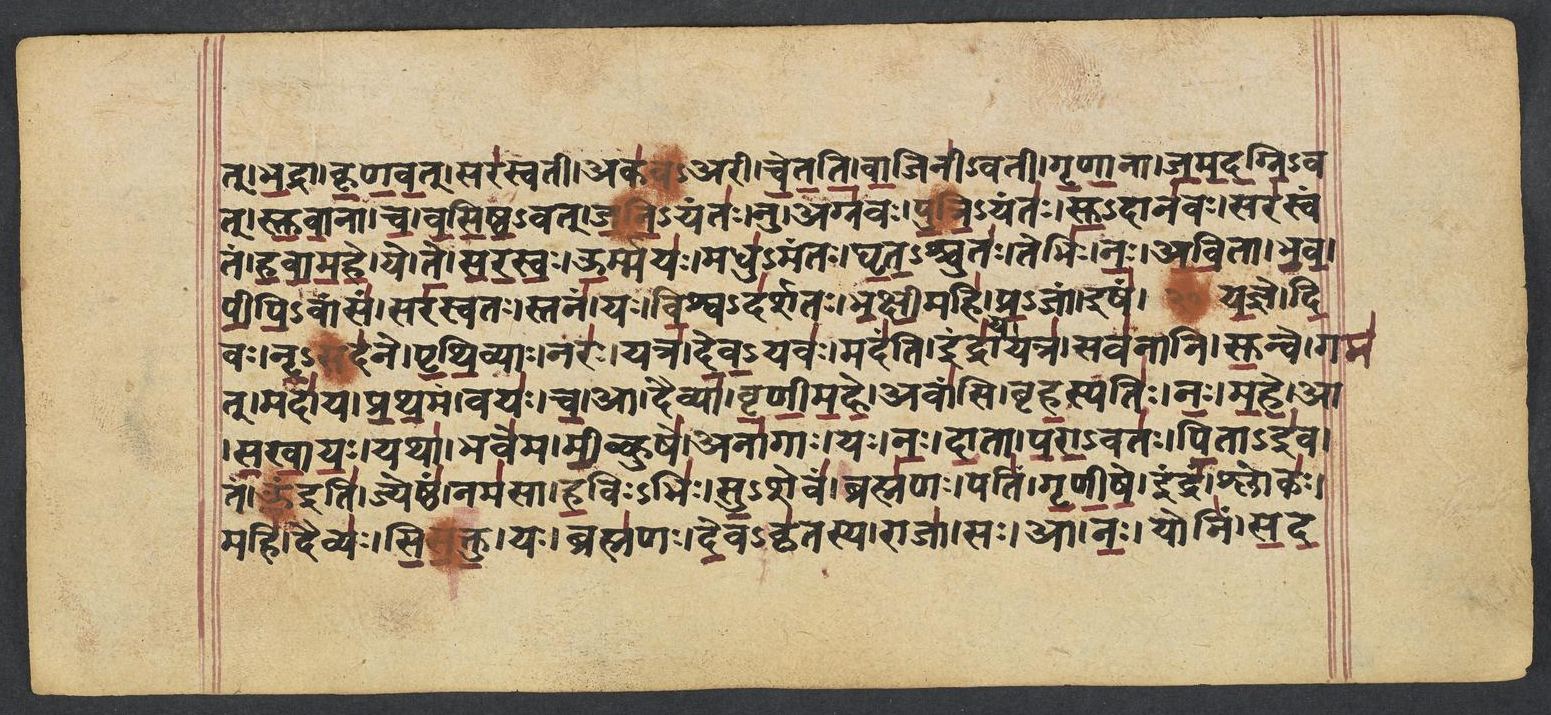
Penn Ms. Coll. 390 Item 41, fol. 552r (numbered 73r by the scribe) (OPenn image 552, lower leaf). Checked on the image: the Rigveda text on this page begins in RV 7.96.3 ‹-it bhadrā kṛṇavat sarasvatī›. The next page with Rigveda text, fol. 552v (numbered 73v by the scribe), begins in RV 7.97.4 ‹-sadatu preṣṭhaḥ bṛhaspatiḥ viśva-vāraḥ›. Verses 7.97.1-3 end on this page.
1ya̱jñe di̱vo nṛ̱ṣada̍ne pṛthi̱vyā naro̱ yatra̍ deva̱yavo̱ mada̍nti | indrā̍ya̱ yatra̱ sava̍nāni su̱nve gama̱n madā̍ya pratha̱maṁ vaya̍ś ca ||
2ā daivyā̍ vṛṇīma̱he 'vā̍ṁsi̱ bṛha̱spati̍r no maha̱ ā sa̍khāyaḥ | yathā̱ bhave̍ma mī̱ḻhuṣe̱ anā̍gā̱ yo no̍ dā̱tā pa̍rā̱vata̍ḥ pi̱teva̍ ||
3tam u̱ jyeṣṭha̱ṁ nama̍sā ha̱virbhi̍ḥ su̱śeva̱m brahma̍ṇa̱s pati̍ṁ gṛṇīṣe | indra̱ṁ śloko̱ mahi̱ daivya̍ḥ siṣaktu̱ yo brahma̍ṇo de̱vakṛ̍tasya̱ rājā̍ ||
Compare: Padapāṭha (word-by-word text written in the manuscript; Sansknet e-text via GRETIL)
1yajñe | divaḥ | nṛ-sadane | pṛthivyāḥ | naraḥ | yatra | deva-yavaḥ | madanti | indrāya | yatra | savanāni | sunve | gamat | madāya | prathamam | vayaḥ | ca
2ā | daivyā | vṛṇīmahe | avāṃsi | bṛhaspatiḥ | naḥ | mahe | ā | sakhāyaḥ | yathā | bhavema | mīḷhuṣe | anāgāḥ | yaḥ | naḥ | dātā | parāvataḥ | pitāiva
3tam | oṃ iti | jyeṣṭham | namasā | haviḥ-bhiḥ | su-śevam | brahmaṇaḥ | patim | gṛṇīṣe | indram | ślokaḥ | mahi | daivyaḥ | sisaktu | yaḥ | brahmaṇaḥ | deva-kṛtasya | rājā
1WHERE Heaven and Earth combine in men's assembly, and those who love the Gods delight in worship, Where the libations are effused for Indra, may he come first to drink and make him stronger.
2We crave the heavenly grace of Gods to guard us-so may Br̥ihaspati, O friends, exalt us- That he, the Bounteous God, may find us sinless, who giveth from a distance like a father.
3That Brahmaṇaspati, most High and Gracious, I glorify with offerings and with homage. May the great song of praise divine, reach Indra who is the King of prayer the Gods' creation.
Where on the image
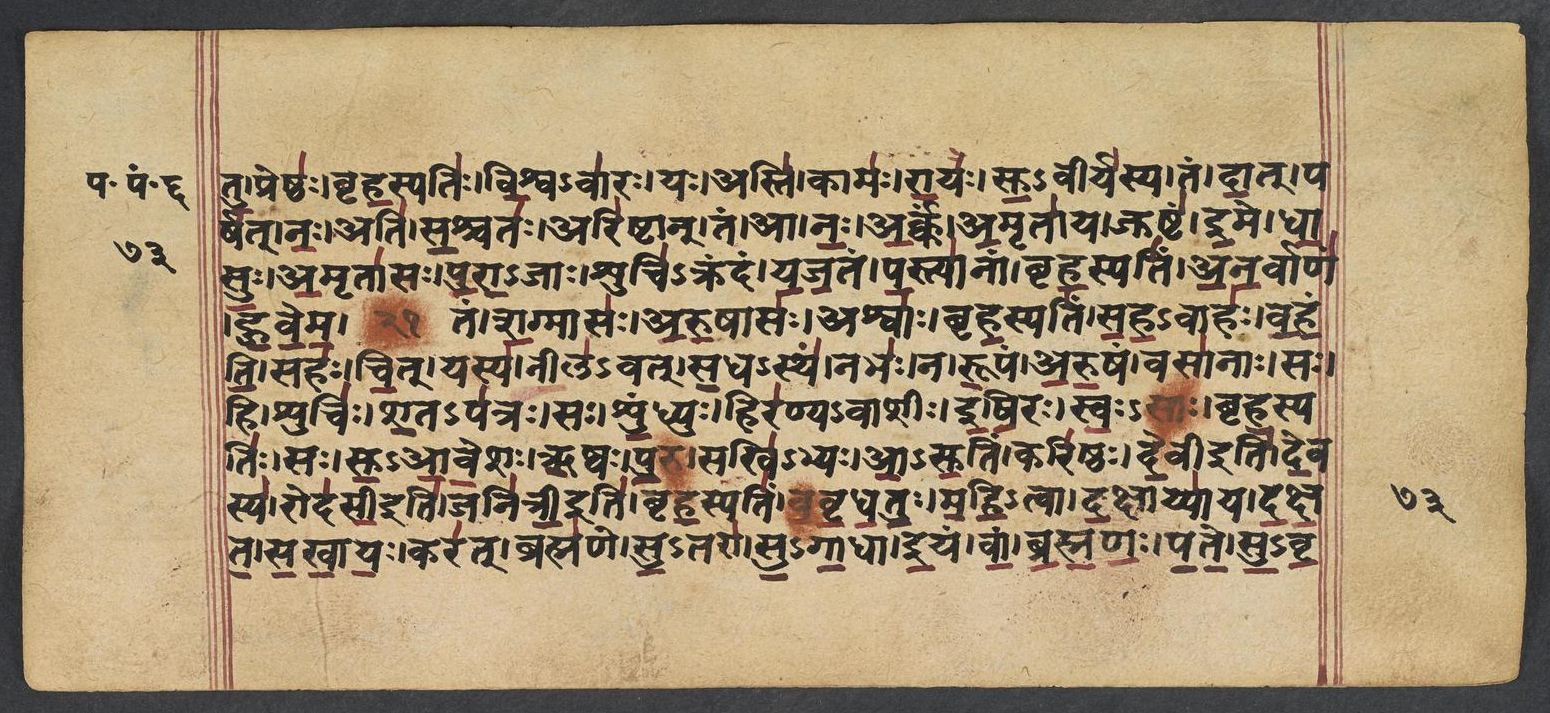
Penn Ms. Coll. 390 Item 41, fol. 552v (numbered 73v by the scribe) (OPenn image 553, upper leaf). Checked on the image: the Rigveda text on this page begins in RV 7.97.4 ‹-sadatu preṣṭhaḥ bṛhaspatiḥ viśva-vāraḥ›. The next page with Rigveda text, fol. 553r (numbered 74r by the scribe), begins in RV 7.97.9 ‹-su-vṛktiḥ brahma indrāya vajriṇe›. Verses 7.97.4-8 end on this page; 7.97.4 begins on fol. 552r (numbered 73r by the scribe).
4sa ā no̱ yoni̍ṁ sadatu̱ preṣṭho̱ bṛha̱spati̍r vi̱śvavā̍ro̱ yo asti̍ | kāmo̍ rā̱yaḥ su̱vīrya̍sya̱ taṁ dā̱t parṣa̍n no̱ ati̍ sa̱ścato̱ ari̍ṣṭān ||
5tam ā no̍ a̱rkam a̱mṛtā̍ya̱ juṣṭa̍m i̱me dhā̍sur a̱mṛtā̍saḥ purā̱jāḥ | śuci̍krandaṁ yaja̱tam pa̱styā̍nā̱m bṛha̱spati̍m ana̱rvāṇa̍ṁ huvema ||
6taṁ śa̱gmāso̍ aru̱ṣāso̱ aśvā̱ bṛha̱spati̍ṁ saha̱vāho̍ vahanti | saha̍ś ci̱d yasya̱ nīla̍vat sa̱dhastha̱ṁ nabho̱ na rū̱pam a̍ru̱ṣaṁ vasā̍nāḥ ||
7sa hi śuci̍ḥ śa̱tapa̍tra̱ḥ sa śu̱ndhyur hira̍ṇyavāśīr iṣi̱raḥ sva̱rṣāḥ | bṛha̱spati̱ḥ sa svā̍ve̱śa ṛ̱ṣvaḥ pu̱rū sakhi̍bhya āsu̱tiṁ kari̍ṣṭhaḥ ||
8de̱vī de̱vasya̱ roda̍sī̱ jani̍trī̱ bṛha̱spati̍ṁ vāvṛdhatur mahi̱tvā | da̱kṣāyyā̍ya dakṣatā sakhāya̱ḥ kara̱d brahma̍ṇe su̱tarā̍ sugā̱dhā ||
Compare: Padapāṭha (word-by-word text written in the manuscript; Sansknet e-text via GRETIL)
4saḥ | ā | naḥ | yonim | sadatu | preṣṭhaḥ | bṛhaspatiḥ | viśva-vāraḥ | yaḥ | asti | kāmaḥ | rāyaḥ | su-vīryasya | tam | dāt | parṣat | naḥ | ati | saścataḥ | ar iṣṭān
5tam | ā | naḥ | arkam | amṛtāya | juṣṭam | ime | dhāsuḥ | amṛtāsaḥ | purājāḥ | śuci-krandam | yajatam | pastyānām | bṛhaspatim | anarvāṇam | huvema
6tam | śagmāsaḥ | aruṣāsaḥ | aśvāḥ | bṛhaspatim | saha-vāhaḥ | vahanti | sahaḥ | cit | yasya | nīla-vat | sadha-stham | nabhaḥ | na | rūpam | aruṣam | vasānāḥ
7saḥ | hi | śuciḥ | śata-patraḥ | saḥ | śundhyuḥ | hiraṇya-vāśīḥ | iṣiraḥ | svaḥ-sāḥ | bṛhaspatiḥ | saḥ | su-āveśaḥ | ṛṣvaḥ | puru | sakhi-bhyaḥ | āsuti m | kariṣṭhaḥ
8devī | devasya | rodasī iti | janitrī iti | bṛhaspatim | vāvṛdhatur mahitvā | dakṣāyyāya dakṣatā sakhāyahk karad brahmaṇe sutarāsugādhā
4May that Br̥ihaspati who brings all blessings, most dearly loved, be seated by our altar. Heroes and wealth we crave; may he bestow them, and bear us safe beyond the men who vex us.
5To us these Deathless Ones, erst born, have granted this laud of ours which gives the Immortal pleasure. Let us invoke Br̥ihaspati, the foeless, the clear-voiced God, the Holy One of households
6Him, this Br̥ihaspati, his red-hued horses, drawing together, full of strength, bring hither. Robed in red colour like the cloud, they carry the Lord of Might whose friendship gives a dwelling.
7For he is pure, with hundred wings, refulgent, with sword of gold, impetuous, winning sunlight. Sublime Br̥ihaspati, easy of access granteth his friends most bountiful refreshment.
8Both Heaven and Earth, divine, the Deity's Parents, have made Br̥ihaspati increase in grandeur. Glorify him, O friends, who merits glory: may he give prayer fair way and easy passage.
Where on the image
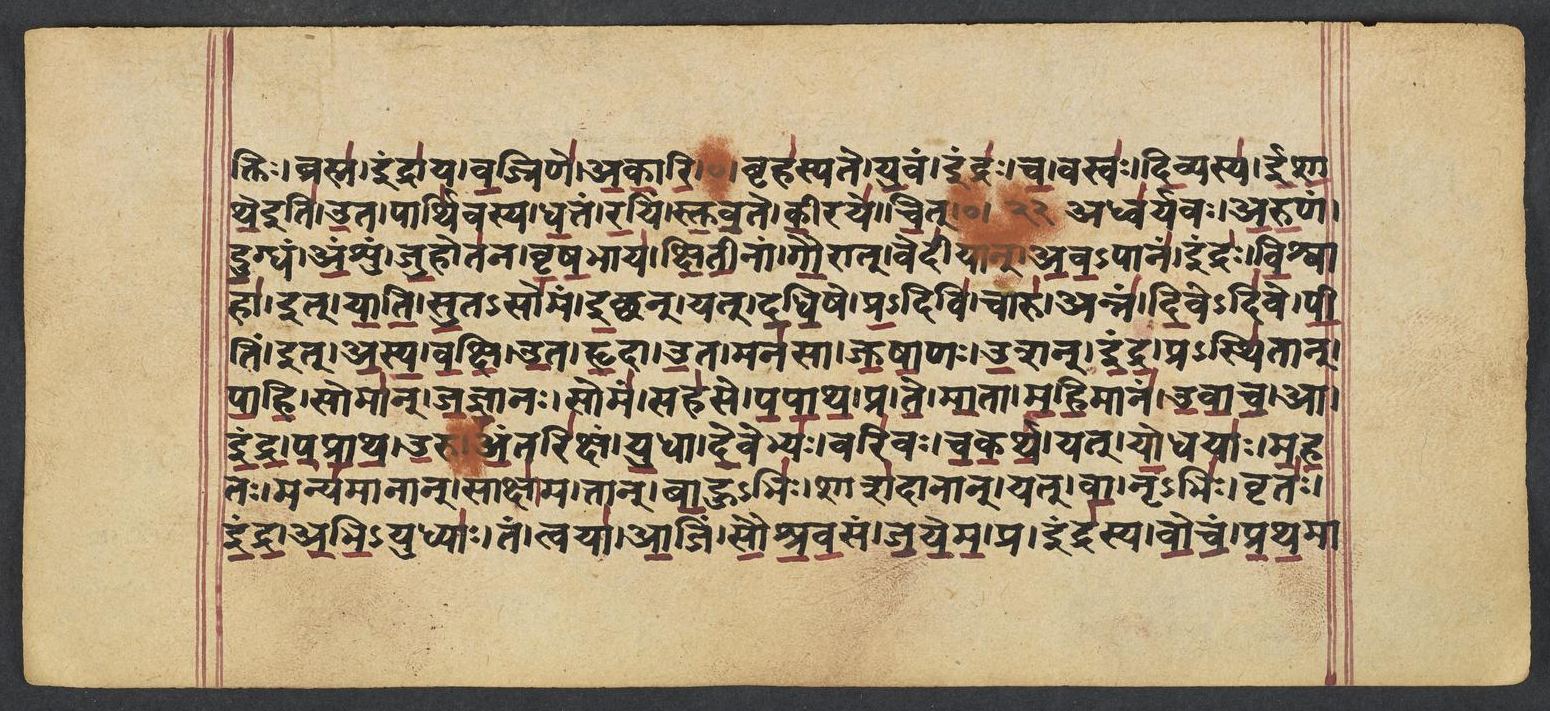
Penn Ms. Coll. 390 Item 41, fol. 553r (numbered 74r by the scribe) (OPenn image 553, lower leaf). Checked on the image: the Rigveda text on this page begins in RV 7.97.9 ‹-su-vṛktiḥ brahma indrāya vajriṇe›. The next page with Rigveda text, fol. 553v (numbered 74v by the scribe), begins in RV 7.98.5 ‹kṛtāni pra nūtanā magha-vā›. Verses 7.97.9-10 end on this page; 7.97.9 begins on fol. 552v (numbered 73v by the scribe).
9i̱yaṁ vā̍m brahmaṇas pate suvṛ̱ktir brahmendrā̍ya va̱jriṇe̍ akāri | a̱vi̱ṣṭaṁ dhiyo̍ jigṛ̱tam pura̍ṁdhīr jaja̱stam a̱ryo va̱nuṣā̱m arā̍tīḥ ||
10bṛha̍spate yu̱vam indra̍ś ca̱ vasvo̍ di̱vyasye̍śāthe u̱ta pārthi̍vasya | dha̱ttaṁ ra̱yiṁ stu̍va̱te kī̱raye̍ cid yū̱yam pā̍ta sva̱stibhi̱ḥ sadā̍ naḥ ||
Compare: Padapāṭha (word-by-word text written in the manuscript; Sansknet e-text via GRETIL)
9iyam | vām | brahmaṇaḥ | pate | su-vṛktiḥ | brahma | indrāya | vajriṇe | akāri | aviṣṭam | dhiyaḥ | jigṛtam | puram-dhīḥ | jajastam | aryaḥ | vanuṣām | arātīḥ
10bṛhaspate | yuvam | indraḥ | ca | vasvaḥ | divyasya | īśātheiti | uta | pārthivasya | dhattam | rayim | stuvate | kīraye | cit | yūyam | pāta | svasti-bhiḥ | sadā | naḥ
9This, Brahmaṇaspati, is your laudation prayer hath been made to thunderwielding Indra. Favour our songs, wake up our thought and spirit: destroy the godless and our foemen's malice.
10Ye Twain are Lords of wealth in earth and heaven, thou, O Br̥ihaspati, and thou, O Indra. Mean though he be, give wealth to him who lauds you. Preserve us evermore, ye Gods, with blessings.
Notes
- Sanskrit: Aufrecht's edition (1877) with the Vedic accents, as entered by van Nooten and Holland (GRETIL).
- English: Ralph T. H. Griffith, The Hymns of the Rigveda (1889-1892; 2nd ed. 1896-1897), from the VedaWeb digital text; OCR slips in that text were corrected against the printed 2nd edition (data/sources/rigveda/griffith_errata.json).
- Padapāṭha (edition text): Sansknet e-text via GRETIL (CC BY-NC-SA 4.0).
Cite
Sources
- Source: Penn Ms. Coll. 390 Item 41 (undated (catalogued with Penn's 18th-19th c. Vedic manuscripts)), OPenn, Public Domain Mark + Aufrecht's accented text (GRETIL) + Griffith's English (VedaWeb) (holding institution)
- Critical edition: Aufrecht (1877), accented e-text via GRETIL
← previous · → next · v cycle view · l back to library