Rigveda 8.13: To Indra
Introduction
Rigveda 8.13 is a hymn of 33 verses addressed to Indra. It stands in book (maṇḍala) 8, the book of the Kaṇva and Aṅgiras poets. The Rigveda is the oldest collection of Sanskrit hymns, composed in the second half of the second millennium BCE and handed down orally for many centuries before it was written down.
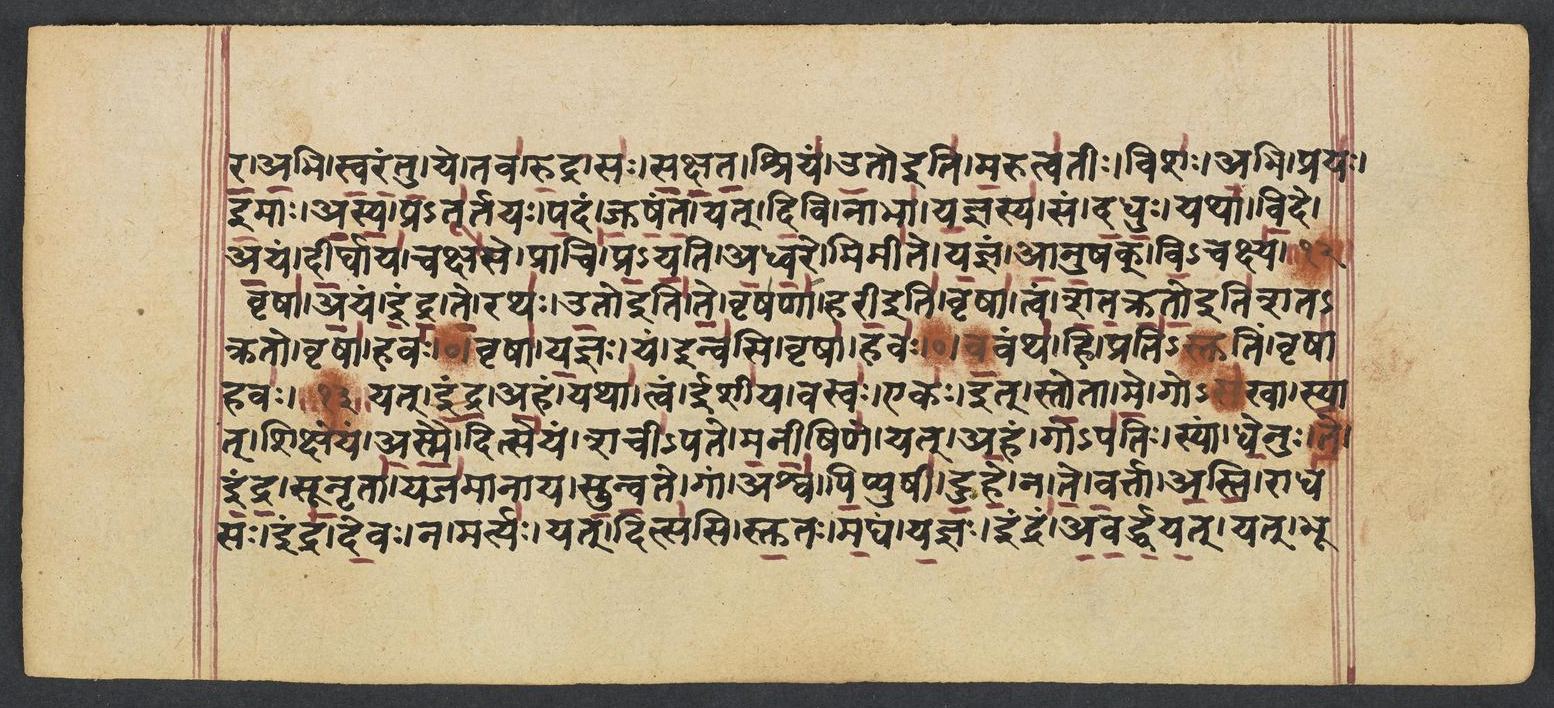
The manuscript shown is Penn Ms. Coll. 390 Item 41 (University of Pennsylvania), an undated paper manuscript of the padapāṭha (the word-by-word recitation text, in which every word is written separately and compounds are split) of the whole Ṛgveda in Devanāgarī, 884 leaves in fascicles, 7-9 lines to the page, accents in red; this hymn stands on fol. 581r-583r. Each section below gives the verses that end on one page; the page boundaries were read on the images (the opening words of every page), not counted out. Where the manuscript is a padapāṭha (the word-by-word recitation text), the section shows Aufrecht's continuous (saṃhitā) text first and, as the edition text, the padapāṭha of the same verses, which is the form written on the page.
How was this verified? (Provenance)
Where on the image
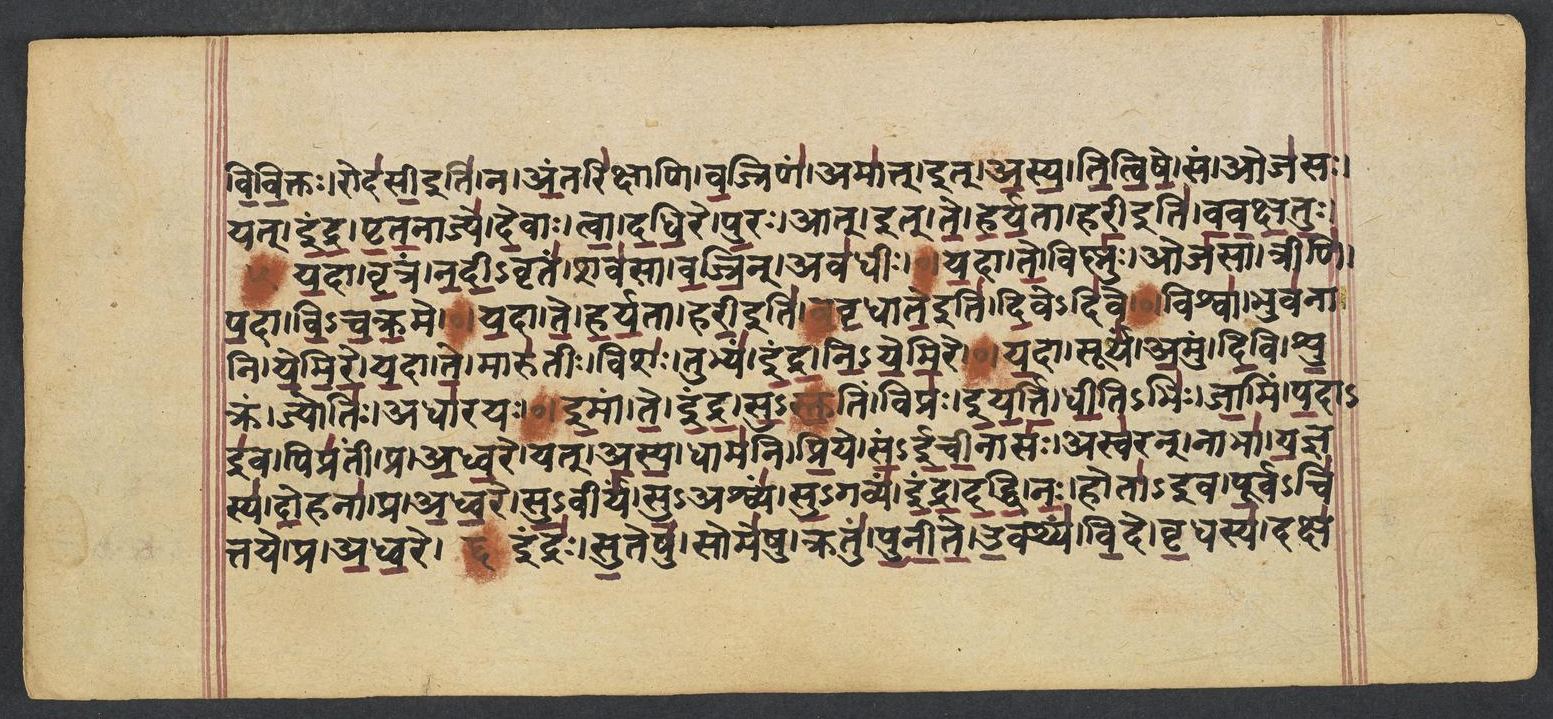
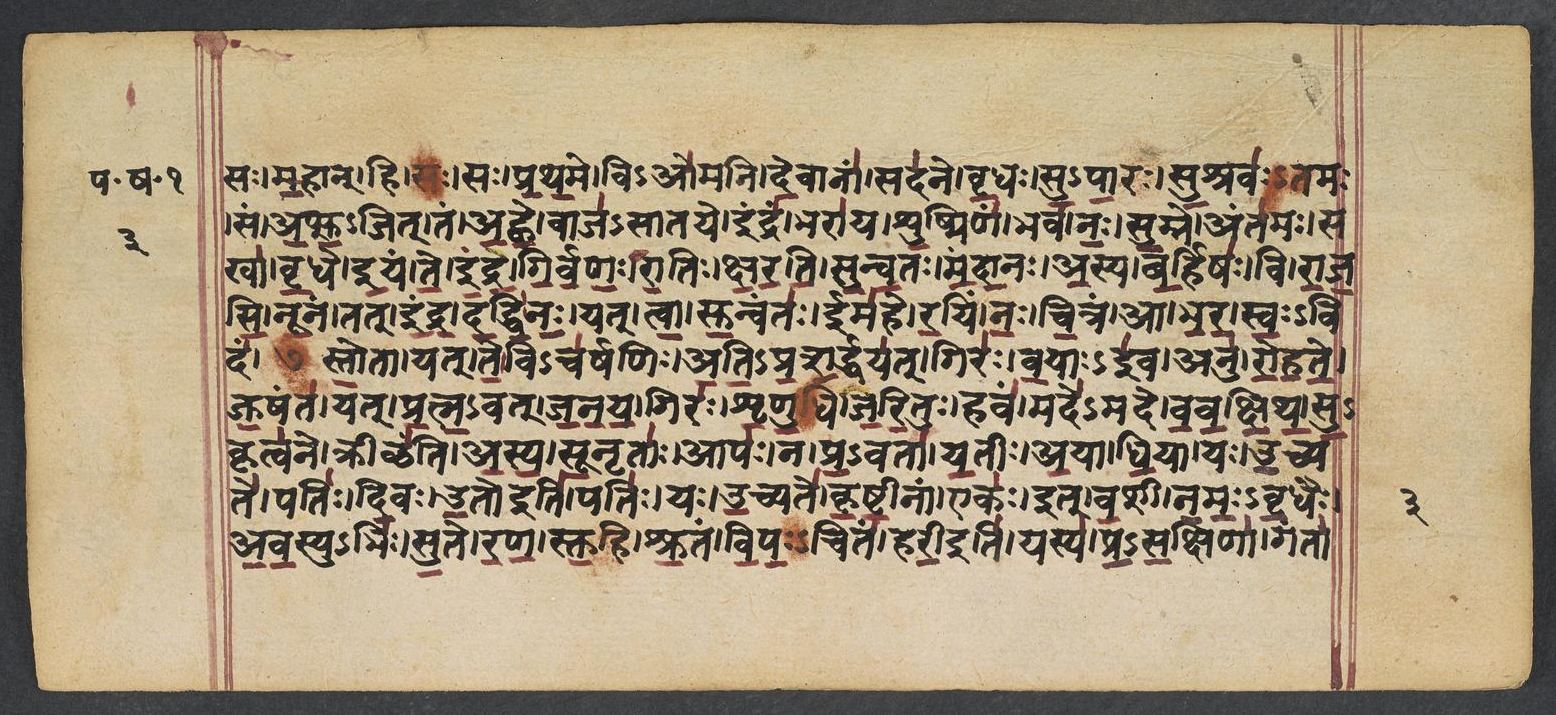
Penn Ms. Coll. 390 Item 41, fol. 581v (numbered 3v by the scribe) (OPenn image 582, upper leaf). Checked on the image: the Rigveda text on this page begins in RV 8.13.1 ‹-dakṣasaḥ mahān hi saḥ›. The next page with Rigveda text, fol. 582r (numbered 4r by the scribe), begins in RV 8.13.10 ‹-gantārā dāśuṣaḥ gṛham namasvinaḥ›. Verses 8.13.1-9 end on this page; 8.13.1 begins on fol. 581r (numbered 3r by the scribe).
1indra̍ḥ su̱teṣu̱ some̍ṣu̱ kratu̍m punīta u̱kthya̍m | vi̱de vṛ̱dhasya̱ dakṣa̍so ma̱hān hi ṣaḥ ||
2sa pra̍tha̱me vyo̍mani de̱vānā̱ṁ sada̍ne vṛ̱dhaḥ | su̱pā̱raḥ su̱śrava̍stama̱ḥ sam a̍psu̱jit ||
3tam a̍hve̱ vāja̍sātaya̱ indra̱m bharā̍ya śu̱ṣmiṇa̍m | bhavā̍ naḥ su̱mne anta̍ma̱ḥ sakhā̍ vṛ̱dhe ||
4i̱yaṁ ta̍ indra girvaṇo rā̱tiḥ kṣa̍rati sunva̱taḥ | ma̱ndā̱no a̱sya ba̱rhiṣo̱ vi rā̍jasi ||
5nū̱naṁ tad i̍ndra daddhi no̱ yat tvā̍ su̱nvanta̱ īma̍he | ra̱yiṁ na̍ś ci̱tram ā bha̍rā sva̱rvida̍m ||
6sto̱tā yat te̱ vica̍rṣaṇir atipraśa̱rdhaya̱d gira̍ḥ | va̱yā i̱vānu̍ rohate ju̱ṣanta̱ yat ||
7pra̱tna̱vaj ja̍nayā̱ gira̍ḥ śṛṇu̱dhī ja̍ri̱tur hava̍m | made̍-made vavakṣithā su̱kṛtva̍ne ||
8krīḻa̍nty asya sū̱nṛtā̱ āpo̱ na pra̱vatā̍ ya̱tīḥ | a̱yā dhi̱yā ya u̱cyate̱ pati̍r di̱vaḥ ||
9u̱to pati̱r ya u̱cyate̍ kṛṣṭī̱nām eka̱ id va̱śī | na̱mo̱vṛ̱dhair a̍va̱syubhi̍ḥ su̱te ra̍ṇa ||
Compare: Padapāṭha (word-by-word text written in the manuscript; Sansknet e-text via GRETIL)
1indraḥ | suteṣu | someṣu | kratum | punīte | ukthyam | vide | vṛdhasya | dakṣasaḥ | mahān | hi | saḥ
2saḥ | prathame | vi-omani | devānām | sadane | vṛdhaḥ | su-pāraḥ | suśravaḥ-tamaḥ | sam | apsu-jit
3tam | ahve | vāja-sātaye | indram | bharāya | śuṣmiṇam | bhava | naḥ | sumne | antamaḥ | sakhā | vṛdhe
4iyam | te | indra | girvaṇaḥ | rātiḥ | kṣarati | sunvataḥ | mandānaḥ | asya | barhiṣaḥ | vi | rājasi
5nūnam | tat | indra | daddhi | naḥ | yat | tvā | sunvantaḥ | īmahe | rayim | naḥ | citram | ā | bhara | svaḥ-vidam
6stotā | yat | te | vi-carṣaṇiḥ | ati-praśardhayat | giraḥ | vayāḥ-iva | anu | rohate | juṣanta | yat
7pratna-vat | janaya | giraḥ | śṛṇudhi | jarituḥ | havam | made--made | vavakṣitha | su-kṛtvane
8krīḷanti | asya | sūnṛtāḥ | āpaḥ | na | pra-vatā | yatīḥ | ayā | dhiyā | yaḥ | ucyate | patiḥ | divaḥ
9uto iti | patiḥ | yaḥ | ucyate | kṛṣṭīnām | ekaḥ | it | vaśī | namaḥ-vṛdhaiḥ | avasyu-bhiḥ | sute | raṇa
1INDRA, when Soma juices flow, makes his mind pure and meet for lauds. He gains the power that brings success, for great is he.
2In heaven's first region, in the seat of Gods, is he who brings success, Most glorious, prompt to save, who wins the water-floods.
3Him, to win strength, have I invoked, even Indra mighty for the fray. Be thou most near to us for bliss, a Friend to aid.
4Indra, Song -lover, here for thee the worshipper's libation flows. Rejoicing in this sacred grass thou shinest forth.
5Even now, O Indra, give us that which, pressing juice, we crave of thee. Bring us wealth manifold which finds the light of heaven.
6What time the zealous worshipper hath boldly sung his songs to thee, Like branches of a tree up-grows what they desire.
7Generate songs even as of old, give ear unto the singer's call. Thou for the pious hast grown great at each carouse.
8Sweet strains that glorify him play like waters speeding down a slope, Yea, him who in this song is called the Lord of Heaven;
9Yea, who alone is called the Lord, the single Ruler of the folk, By worshippers seeking aid: may he joy in the draught.
Where on the image
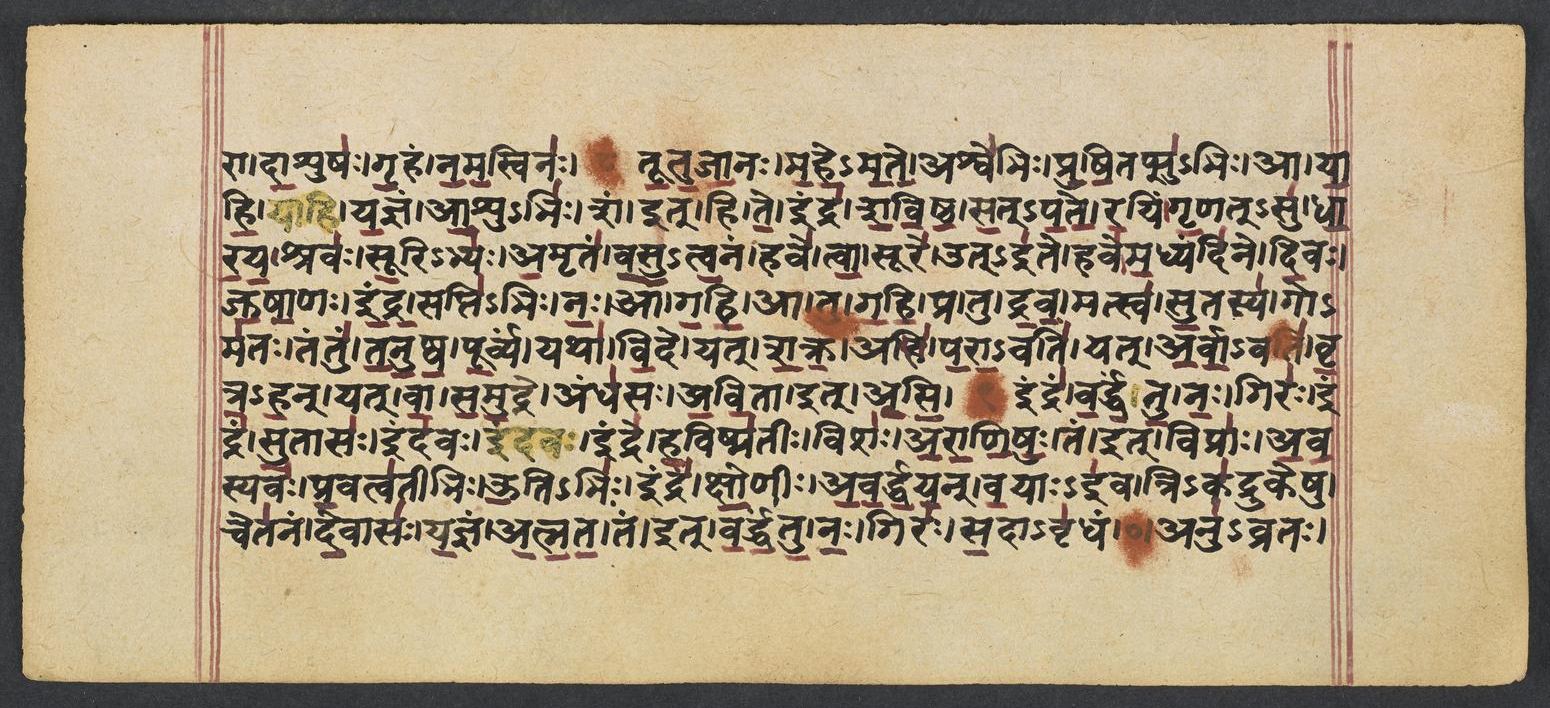
Penn Ms. Coll. 390 Item 41, fol. 582r (numbered 4r by the scribe) (OPenn image 582, lower leaf). Checked on the image: the Rigveda text on this page begins in RV 8.13.10 ‹-gantārā dāśuṣaḥ gṛham namasvinaḥ›. The next page with Rigveda text, fol. 582v (numbered 4v by the scribe), begins in RV 8.13.19 ‹-anu-vrataḥ ukthāni ṛtu-thā dadhe›. Verses 8.13.10-18 end on this page; 8.13.10 begins on fol. 581v (numbered 3v by the scribe).
10stu̱hi śru̱taṁ vi̍pa̱ścita̱ṁ harī̱ yasya̍ prasa̱kṣiṇā̍ | gantā̍rā dā̱śuṣo̍ gṛ̱haṁ na̍ma̱svina̍ḥ ||
11tū̱tu̱jā̱no ma̍hema̱te 'śve̍bhiḥ pruṣi̱tapsu̍bhiḥ | ā yā̍hi ya̱jñam ā̱śubhi̱ḥ śam id dhi te̍ ||
12indra̍ śaviṣṭha satpate ra̱yiṁ gṛ̱ṇatsu̍ dhāraya | śrava̍ḥ sū̱ribhyo̍ a̱mṛta̍ṁ vasutva̱nam ||
13have̍ tvā̱ sūra̱ udi̍te̱ have̍ ma̱dhyaṁdi̍ne di̱vaḥ | ju̱ṣā̱ṇa i̍ndra̱ sapti̍bhir na̱ ā ga̍hi ||
14ā tū ga̍hi̱ pra tu dra̍va̱ matsvā̍ su̱tasya̱ goma̍taḥ | tantu̍ṁ tanuṣva pū̱rvyaṁ yathā̍ vi̱de ||
15yac cha̱krāsi̍ parā̱vati̱ yad a̍rvā̱vati̍ vṛtrahan | yad vā̍ samu̱dre andha̍so 'vi̱ted a̍si ||
16indra̍ṁ vardhantu no̱ gira̱ indra̍ṁ su̱tāsa̱ inda̍vaḥ | indre̍ ha̱viṣma̍tī̱r viśo̍ arāṇiṣuḥ ||
17tam id viprā̍ ava̱syava̍ḥ pra̱vatva̍tībhir ū̱tibhi̍ḥ | indra̍ṁ kṣo̱ṇīr a̍vardhayan va̱yā i̍va ||
18trika̍drukeṣu̱ ceta̍naṁ de̱vāso̍ ya̱jñam a̍tnata | tam id va̍rdhantu no̱ gira̍ḥ sa̱dāvṛ̍dham ||
Compare: Padapāṭha (word-by-word text written in the manuscript; Sansknet e-text via GRETIL)
10stuhi | śrutam | vipaḥ-citam | harī iti | yasya | pra-sakṣiṇā | gantārā | dāśuṣaḥ | gṛham | namasvinaḥ
11tūtujānaḥ | mahe--mate | aśvebhiḥ | pruṣitapsu-bhiḥ | ā | yāhi | yajñam | āśu-bhiḥ | śam | it | hi | te
12indra | śaviṣṭha | sat-pate | rayim | gṛṇat-su | dhāraya | śravaḥ | sūri-bhyaḥ | amṛtam | vasu-tvanam
13have | tvā | sūre | ut-ite | have | madhyandine | divaḥ | juṣāṇaḥ | indra | sapti-bhiḥ | naḥ | ā | gahi
14ā | tu | gahi | pra | tu | drava | matsva | sutasya | go--mataḥ | tantum | tanuṣva | pūrvyam | yathā | vide
15yat | śakra | asi | parāvati | yat | arvāvati | vṛtra-han | yat | vā | samudre | andhasaḥ | avitā | it | asi
16indram | vardhantu | naḥ | giraḥ | indram | sutāsaḥ | indavaḥ | indre | haviṣmatīḥ | viśaḥ | arāṇiṣuḥ
17tam | it | viprāḥ | avasyavaḥ | pravatvatībhiḥ | ūti-bhiḥ | indram | kṣoṇīḥ | avardhayan | vayāḥ-iva
18tri-kadrukeṣu | cetanam | devāsaḥ | yajñam | atnata | tam | it | vardhantu | naḥ | giraḥ | sadāvṛdham
10Praise him, the Glorious, skilled in song, Lord of the two victorious Bays: They seek the worshipper's abode who bows in prayer.
11Put forth thy strength: with dappled Steeds come, thou of mighty intellect, With swift Steeds to the sacrifice, for 'tis thy joy.
12Grant wealth to those who praise thee, Lord of Heroes, Mightiest Indra: give Our princes everlasting fame and opulence.
13I call thee when the Sun is risen, I call thee at the noon of day: With thy car-horses, Indra, come wellpleased to us.
14Speed forward hither, come to us, rejoice thee in the milky draught: Spin out the thread of ancient time, as well is known.
15If, Ṣakra, Vr̥itra-slayer, thou be far away or near to us. Or in the sea, thou art the guard of Soma juice.
16Let songs we sing and Soma-drops expressed by us make Indra strong: The tribes who bring oblations find delight in him.
17Him sages longing for his aid, with offerings brought in eager haste, Him. even as branches, all mankind have made to grow.
18At the Trkadrukas the Gods span sacrifice that stirred the mind: May our songs strengthen him who still hath strengthened us.
Where on the image
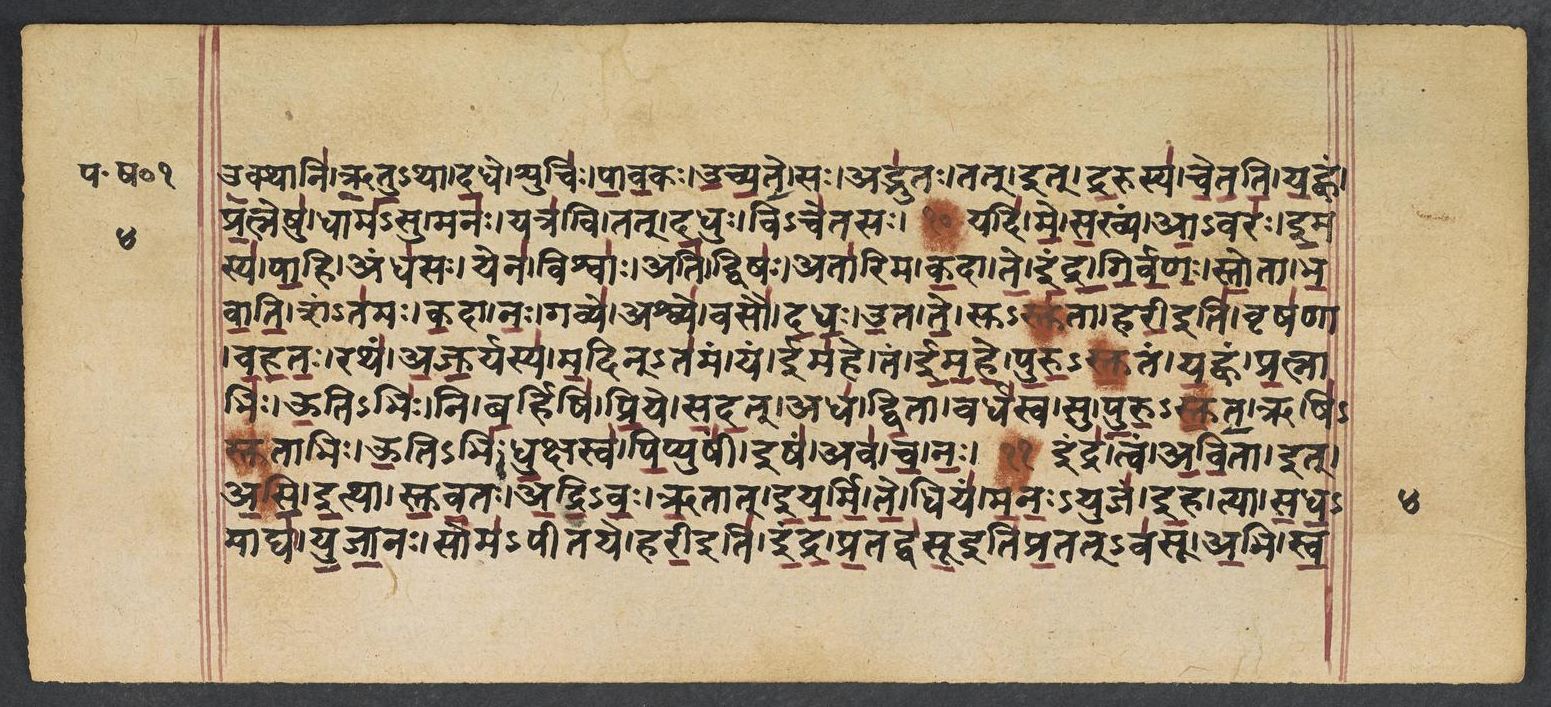
Penn Ms. Coll. 390 Item 41, fol. 582v (numbered 4v by the scribe) (OPenn image 583, upper leaf). Checked on the image: the Rigveda text on this page begins in RV 8.13.19 ‹-anu-vrataḥ ukthāni ṛtu-thā dadhe›. The next page with Rigveda text, fol. 583r (numbered 5r by the scribe), begins in RV 8.13.27 ‹-svara›. Verses 8.13.19-26 end on this page; 8.13.19 begins on fol. 582r (numbered 4r by the scribe).
19sto̱tā yat te̱ anu̍vrata u̱kthāny ṛ̍tu̱thā da̱dhe | śuci̍ḥ pāva̱ka u̍cyate̱ so adbhu̍taḥ ||
20tad id ru̱drasya̍ cetati ya̱hvam pra̱tneṣu̱ dhāma̍su | mano̱ yatrā̱ vi tad da̱dhur vice̍tasaḥ ||
21yadi̍ me sa̱khyam ā̱vara̍ i̱masya̍ pā̱hy andha̍saḥ | yena̱ viśvā̱ ati̱ dviṣo̱ atā̍rima ||
22ka̱dā ta̍ indra girvaṇaḥ sto̱tā bha̍vāti̱ śaṁta̍maḥ | ka̱dā no̱ gavye̱ aśvye̱ vasau̍ dadhaḥ ||
23u̱ta te̱ suṣṭu̍tā̱ harī̱ vṛṣa̍ṇā vahato̱ ratha̍m | a̱ju̱ryasya̍ ma̱dinta̍ma̱ṁ yam īma̍he ||
24tam ī̍mahe puruṣṭu̱taṁ ya̱hvam pra̱tnābhi̍r ū̱tibhi̍ḥ | ni ba̱rhiṣi̍ pri̱ye sa̍da̱d adha̍ dvi̱tā ||
25vardha̍svā̱ su pu̍ruṣṭuta̱ ṛṣi̍ṣṭutābhir ū̱tibhi̍ḥ | dhu̱kṣasva̍ pi̱pyuṣī̱m iṣa̱m avā̍ ca naḥ ||
26indra̱ tvam a̍vi̱ted a̍sī̱tthā stu̍va̱to a̍drivaḥ | ṛ̱tād i̍yarmi te̱ dhiya̍m mano̱yuja̍m ||
Compare: Padapāṭha (word-by-word text written in the manuscript; Sansknet e-text via GRETIL)
19stotā | yat | te | anu-vrataḥ | ukthāni | ṛtu-thā | dadhe | śuciḥ | pāvakaḥ | ucyate | saḥ | adbhutaḥ
20tat | it | rudrasya | cetati | yahvam | pratneṣu | dhāma-su | manaḥ | yatra | vi | tat | dadhuḥ | vi-cetasaḥ
21yadi | me | sakhyam | āvaraḥ | imasya | pāhi | andhasaḥ | yena | viśvāḥ | ati | dviṣaḥ | atārima
22kadā | te | indra | girvaṇaḥ | stotā | bhavāti | śam-tamaḥ | kadā | naḥ | gavye | aśvye | vasau | dadhaḥ
23uta | te | su-stutā | harī iti | vṛṣaṇā | vahataḥ | ratham | ajuryasya | madin-tamam | yam | īmahe
24tam | īmahe | puru-stutam | yahvam | pratnābhiḥ | ūti-bhiḥ | ni | barhiṣi | priye | sadat | adha | dvitā
25vardhasva | su | puru-stuta | ṛṣi-stutābhiḥ | ūti-bhiḥ | dhukṣasva | pipyuṣīm | iṣam | ava | ca | naḥ
26indra | tvam | avitā | it | asi | itthā | stuvataḥ | adri-vaḥ | ṛtāt | iyarmi | te | dhiyam | manaḥ-yujam
19When, true to duty, at due times the worshipper offers lauds to thee, They call him Purifier, Pure, and Wonderful.
20That mind of Rudra, fresh and strong, moves conscious in the ancient ways, With reference whereto the wise have ordered this.
21If thou elect to be my Friend drink of this sacrificial juice, By help whereof we may subdue all enemies.
22O Indra, Lover of the song, when shall thy praiser be most blest? When wilt thou grant us wealth in herds of kine and steeds?
23And thy two highIy-lauded Bays, strong stallions, draw thy car who art Untouched by age, most gladdening car for which we pray.
24With ancient offerings we implore the Young and Strong whom many praise. He from of old hath sat upon dear sacred grass.
25Wax mighty, thou whom many laud for aids which R̥ishis have extolled. Pour down for us abundant food and guard us well.
26O Indra, Caster of the Stone, thou helpest him who praises thee: From sacrifice I send to thee a mindyoked hymn.
Where on the image
Penn Ms. Coll. 390 Item 41, fol. 583r (numbered 5r by the scribe) (OPenn image 583, lower leaf). Checked on the image: the Rigveda text on this page begins in RV 8.13.27 ‹-svara›. The next page with Rigveda text, fol. 583v (numbered 5v by the scribe), begins in RV 8.14.5 ‹-bhūmim vi avartayat cakrāṇaḥ›. Verses 8.13.27-33 end on this page; 8.13.27 begins on fol. 582v (numbered 4v by the scribe).
27i̱ha tyā sa̍dha̱mādyā̍ yujā̱naḥ soma̍pītaye | harī̍ indra pra̱tadva̍sū a̱bhi sva̍ra ||
28a̱bhi sva̍rantu̱ ye tava̍ ru̱drāsa̍ḥ sakṣata̱ śriya̍m | u̱to ma̱rutva̍tī̱r viśo̍ a̱bhi praya̍ḥ ||
29i̱mā a̍sya̱ pratū̍rtayaḥ pa̱daṁ ju̍ṣanta̱ yad di̱vi | nābhā̍ ya̱jñasya̱ saṁ da̍dhu̱r yathā̍ vi̱de ||
30a̱yaṁ dī̱rghāya̱ cakṣa̍se̱ prāci̍ praya̱ty a̍dhva̱re | mimī̍te ya̱jñam ā̍nu̱ṣag vi̱cakṣya̍ ||
31vṛṣā̱yam i̍ndra te̱ ratha̍ u̱to te̱ vṛṣa̍ṇā̱ harī̍ | vṛṣā̱ tvaṁ śa̍takrato̱ vṛṣā̱ hava̍ḥ ||
32vṛṣā̱ grāvā̱ vṛṣā̱ mado̱ vṛṣā̱ somo̍ a̱yaṁ su̱taḥ | vṛṣā̍ ya̱jño yam inva̍si̱ vṛṣā̱ hava̍ḥ ||
33vṛṣā̍ tvā̱ vṛṣa̍ṇaṁ huve̱ vajri̍ñ ci̱trābhi̍r ū̱tibhi̍ḥ | vā̱vantha̱ hi prati̍ṣṭuti̱ṁ vṛṣā̱ hava̍ḥ ||
Compare: Padapāṭha (word-by-word text written in the manuscript; Sansknet e-text via GRETIL)
27iha | tyā | sadha-mādyā | yujānaḥ | soma-pītaye | harī iti | indra | pratadvasūirtipratat-vasū | abhi | svara
28abhi | svarantu | ye | tava | rudrāsaḥ | sakṣata | śriyam | uto iti | marutvatīḥ | viśaḥ | abhi | prayaḥ
29imāḥ | asya | pra-tūrtayaḥ | padam | juṣanta | yat | divi | nābhā | yajñasya | sam | dadhuḥ | yathā | vide
30ayam | dīrghāya | cakṣase | prāci | pra-yati | adhvare | mimīte | yajñam | ānuṣak | v i-cakṣya
31vṛṣā | ayam | indra | te | rathaḥ | uto iti | te | vṛṣaṇā | harī iti | vṛṣā | tvam | śata-krato itiśata-krato | vṛṣā | havaḥ
32vṛṣā | grāvā | vṛṣā | madaḥ | vṛṣā | somaḥ | ayam | sutaḥ | vṛṣā | yajñaḥ | yam | invasi | vṛṣā | havaḥ
33vṛṣā | tvā | vṛṣaṇam | huve | vajrin | citrābhiḥ | ūti-bhiḥ | vavantha | hi | prati-stutim | vṛṣā | havaḥ
27Here, yoking for the Soma-draught these Horses, sharers of thy feast, Thy Bay Steeds, Indra, fraught with wealth, consent to come.
28Attendants on thy glory, let the Rudras roar assent to thee, And all the Marut companies come tothe feast.
29These his victorious followers hold in the heavens the place they love, Leagued in the heart of sacrifice, as well we know.
30That we may long behold the light, what time the ordered rite proceeds, He duly measures, as he views, the sacrifice.
31O Indra, strong is this thy car, and strong are these Bay Steeds of thine: O Ṣatakratu, thou art strong, strong is our call.
32Strong is the press-stone, strong thy joy, strong is the flowing Soma juice: Strong is the rite thou furtherest, strong is our call.
33As strong I call on thee the Strong, O Thunderer with thy thousand aids: For thou hast won the hymn of praise. Strong is our call.
Notes
- Sanskrit: Aufrecht's edition (1877) with the Vedic accents, as entered by van Nooten and Holland (GRETIL).
- English: Ralph T. H. Griffith, The Hymns of the Rigveda (1889-1892; 2nd ed. 1896-1897), from the VedaWeb digital text; OCR slips in that text were corrected against the printed 2nd edition (data/sources/rigveda/griffith_errata.json).
- Padapāṭha (edition text): Sansknet e-text via GRETIL (CC BY-NC-SA 4.0).
Cite
Sources
- Source: Penn Ms. Coll. 390 Item 41 (undated (catalogued with Penn's 18th-19th c. Vedic manuscripts)), OPenn, Public Domain Mark + Aufrecht's accented text (GRETIL) + Griffith's English (VedaWeb) (holding institution)
- Critical edition: Aufrecht (1877), accented e-text via GRETIL
← previous · → next · v cycle view · l back to library