Rigveda 8.12: To Indra
Introduction
Rigveda 8.12 is a hymn of 33 verses addressed to Indra. It stands in book (maṇḍala) 8, the book of the Kaṇva and Aṅgiras poets. The Rigveda is the oldest collection of Sanskrit hymns, composed in the second half of the second millennium BCE and handed down orally for many centuries before it was written down.
The manuscript shown is Penn Ms. Coll. 390 Item 41 (University of Pennsylvania), an undated paper manuscript of the padapāṭha (the word-by-word recitation text, in which every word is written separately and compounds are split) of the whole Ṛgveda in Devanāgarī, 884 leaves in fascicles, 7-9 lines to the page, accents in red; this hymn stands on fol. 579v-581r. Each section below gives the verses that end on one page; the page boundaries were read on the images (the opening words of every page), not counted out. Where the manuscript is a padapāṭha (the word-by-word recitation text), the section shows Aufrecht's continuous (saṃhitā) text first and, as the edition text, the padapāṭha of the same verses, which is the form written on the page.
How was this verified? (Provenance)
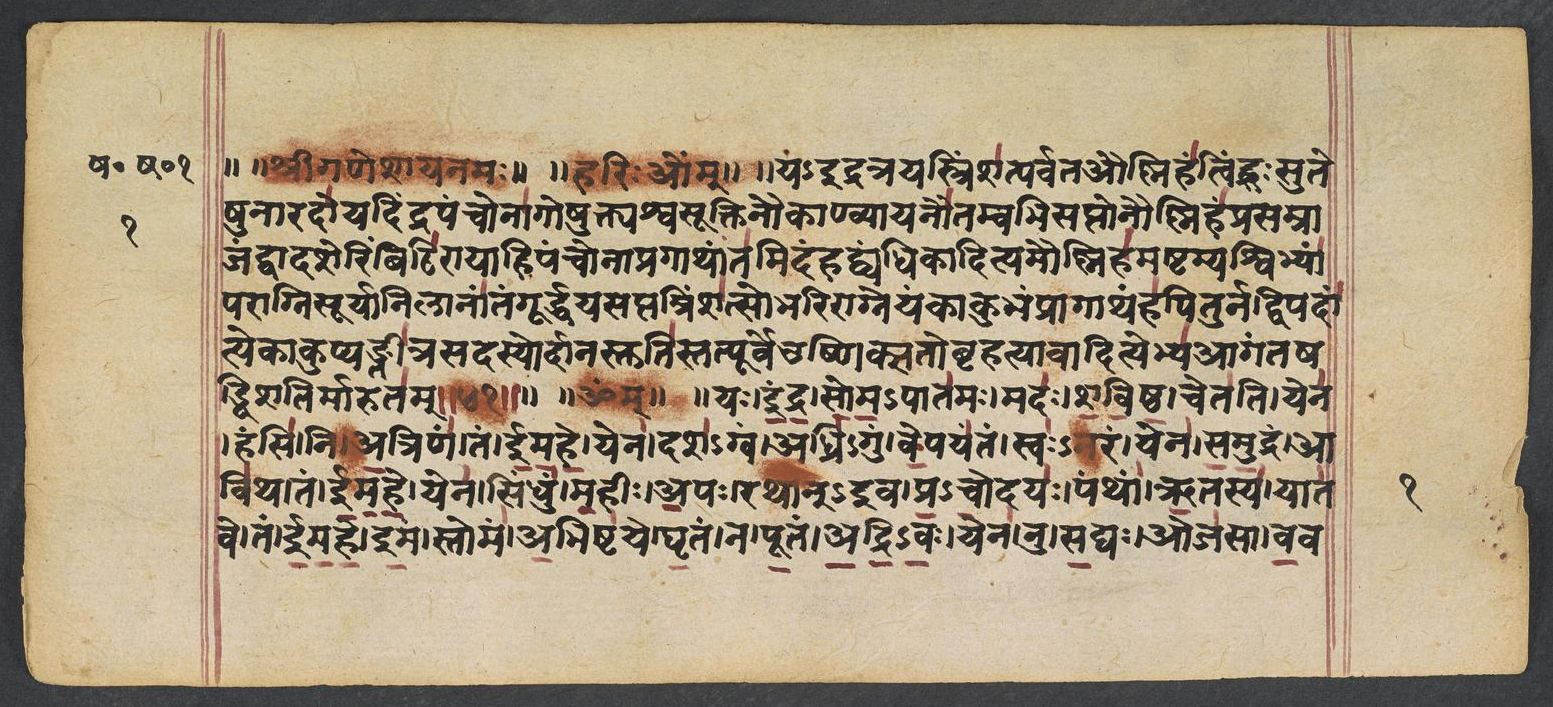
Where on the image
Penn Ms. Coll. 390 Item 41, fol. 579v (numbered 1v by the scribe) (OPenn image 580, upper leaf). Checked on the image: the Rigveda text on this page begins in RV 8.12.1 ‹yaḥ indra soma-pātamaḥ madaḥ›. Invocation (śrīgaṇeśāya namaḥ hariḥ oṃ) and the anukramaṇī for aṣṭaka 6 on lines 1-6; 8.12.1 (yaḥ indra somapātamaḥ) begins in line 6 after oṃ. The next page with Rigveda text, fol. 580r (numbered 2r by the scribe), begins in RV 8.12.4 ‹-vavakṣitha›. Verses 8.12.1-3 end on this page.
1ya i̍ndra soma̱pāta̍mo̱ mada̍ḥ śaviṣṭha̱ ceta̍ti | yenā̱ haṁsi̱ ny a1̱̍triṇa̱ṁ tam ī̍mahe ||
2yenā̱ daśa̍gva̱m adhri̍guṁ ve̱paya̍nta̱ṁ sva̍rṇaram | yenā̍ samu̱dram āvi̍thā̱ tam ī̍mahe ||
3yena̱ sindhu̍m ma̱hīr a̱po rathā̍m̐ iva praco̱daya̍ḥ | panthā̍m ṛ̱tasya̱ yāta̍ve̱ tam ī̍mahe ||
Compare: Padapāṭha (word-by-word text written in the manuscript; Sansknet e-text via GRETIL)
1yaḥ | indra | soma-pātamaḥ | madaḥ | śaviṣṭha | cetati | yena | haṃsi | ni | atriṇam | tam | īmahe
2yena | daśa-gvam | adhri-gum | vepa-yantam | svaḥ-naram | yena | samudram | āvitha | tam | īmahe
3yena | sindhum | mahīḥ | apaḥ | rathān-iva | pra-codayaḥ | panthām | ṛtasya | yātave | tam | īmahe
1JOY, Mightiest Indra, known and marked, sprung most from Soma-draughts, wherewith Thou smitest down the greedy fiend, for that we long.
2Wherewith thou holpest Adhrigu, the great Daṣagva, and the God Who stirs the sunlight, and the sea, for that we long.
3Wherewith thou dravest forth like cars Sindhu and all the mighty floods To go the way ordained by Law, for that we long.
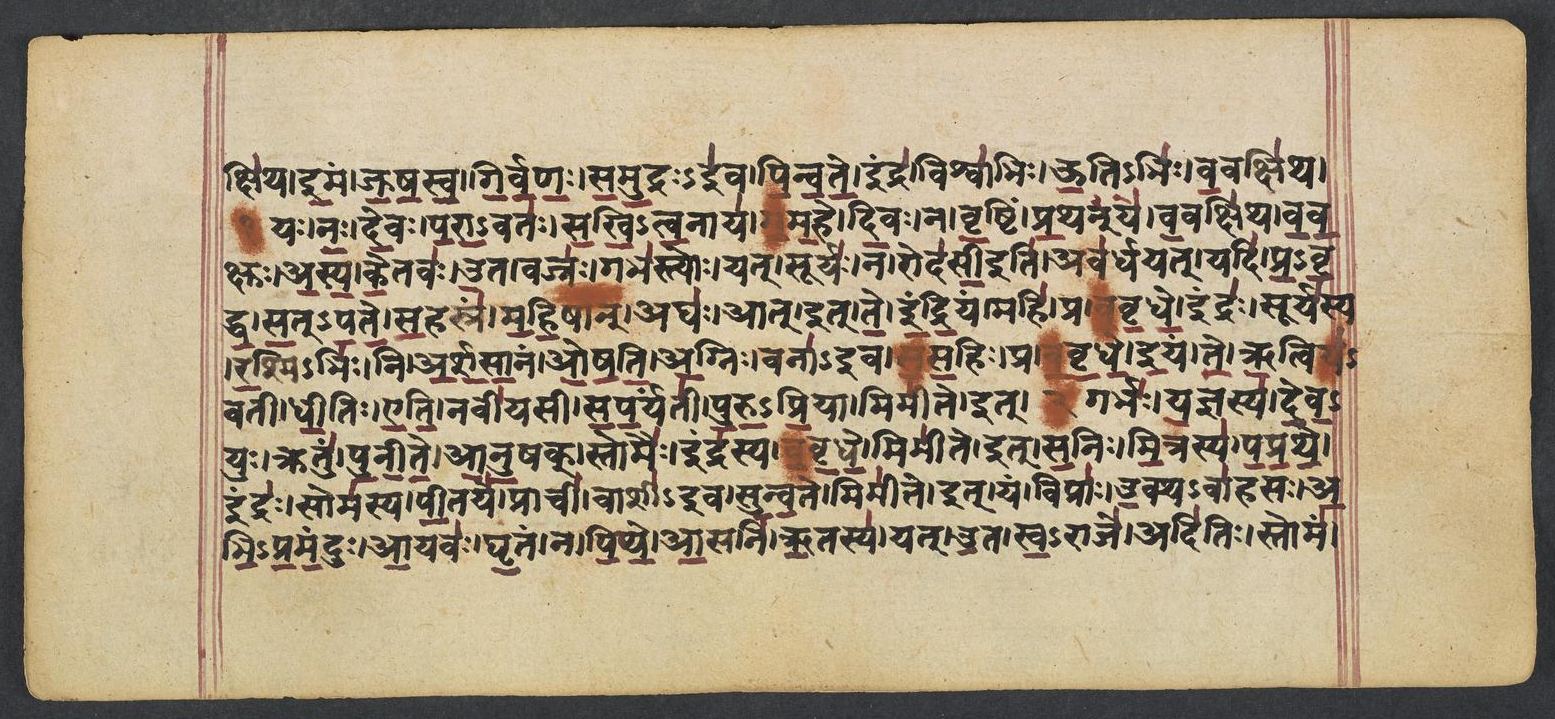
Where on the image
Penn Ms. Coll. 390 Item 41, fol. 580r (numbered 2r by the scribe) (OPenn image 580, lower leaf). Checked on the image: the Rigveda text on this page begins in RV 8.12.4 ‹-vavakṣitha›. The next page with Rigveda text, fol. 580v (numbered 2v by the scribe), begins in RV 8.12.14 ‹indrāya jījanat puru-praśastam ūtaye›. Verses 8.12.4-13 end on this page; 8.12.4 begins on fol. 579v (numbered 1v by the scribe).
4i̱maṁ stoma̍m a̱bhiṣṭa̍ye ghṛ̱taṁ na pū̱tam a̍drivaḥ | yenā̱ nu sa̱dya oja̍sā va̱vakṣi̍tha ||
5i̱maṁ ju̍ṣasva girvaṇaḥ samu̱dra i̍va pinvate | indra̱ viśvā̍bhir ū̱tibhi̍r va̱vakṣi̍tha ||
6yo no̍ de̱vaḥ pa̍rā̱vata̍ḥ sakhitva̱nāya̍ māma̱he | di̱vo na vṛ̱ṣṭim pra̱thaya̍n va̱vakṣi̍tha ||
7va̱va̱kṣur a̍sya ke̱tava̍ u̱ta vajro̱ gabha̍styoḥ | yat sūryo̱ na roda̍sī̱ ava̍rdhayat ||
8yadi̍ pravṛddha satpate sa̱hasra̍m mahi̱ṣām̐ agha̍ḥ | ād it ta̍ indri̱yam mahi̱ pra vā̍vṛdhe ||
9indra̱ḥ sūrya̍sya ra̱śmibhi̱r ny a̍rśasā̱nam o̍ṣati | a̱gnir vane̍va sāsa̱hiḥ pra vā̍vṛdhe ||
10i̱yaṁ ta̍ ṛ̱tviyā̍vatī dhī̱tir e̍ti̱ navī̍yasī | sa̱pa̱ryantī̍ purupri̱yā mimī̍ta̱ it ||
11garbho̍ ya̱jñasya̍ deva̱yuḥ kratu̍m punīta ānu̱ṣak | stomai̱r indra̍sya vāvṛdhe̱ mimī̍ta̱ it ||
12sa̱nir mi̱trasya̍ papratha̱ indra̱ḥ soma̍sya pī̱taye̍ | prācī̱ vāśī̍va sunva̱te mimī̍ta̱ it ||
13yaṁ viprā̍ u̱kthavā̍haso 'bhiprama̱ndur ā̱yava̍ḥ | ghṛ̱taṁ na pi̍pya ā̱sany ṛ̱tasya̱ yat ||
Compare: Padapāṭha (word-by-word text written in the manuscript; Sansknet e-text via GRETIL)
4imam | stomam | abhiṣṭaye | ghṛtam | na | pūtam | adri-vaḥ | yena | nu | sadyaḥ | ojasā | vavakṣitha
5imam | juṣasva | girvaṇaḥ | samudraḥ-iva | pinvate | indra | viśvābhiḥ | ūti--bhiḥ | vavakṣitha
6yaḥ | naḥ | devaḥ | parāvataḥ | sakhi-tvanāya | mamahe | divaḥ | na | vṛṣṭim | prathayan | vavakṣitha
7vavakṣuḥ | asya | ketavaḥ | uta | vajraḥ | gabhastyoḥ | yat | sūryaḥ | na | rodasī iti | avardhayat
8yadi | pra-vṛddha | sat-pate | sahasram | mahiṣān | aghaḥ | āt | it | te | indriyam | mahi | pra | vavṛdhe
9indraḥ | sūryasya | raśmi-bhiḥ | ni | arśasānam | oṣati | agniḥ | vanāiva | sasahiḥ | pra | vavṛdhe
10iyam | te | ṛtviya-vatī | dhītiḥ | eti | navīyasī | saparyantī | puru-priyā | mi mīte | it
11garbhaḥ | yajñasya | deva-yuḥ | kratum | punīte | ānuṣak | stomaiḥ | indrasya | vavṛdhe | mimīte | it
12saniḥ | mitrasya | paprathe | indraḥ | somasya | pītaye | prācī | vāśī-iva | sunvate | mimīte | it
13yam | viprāḥ | uktha-vāhasaḥ | abhi-pramanduḥ | āyavaḥ | ghṛtam | na | pipye | āsani | ṛtasya | yat
4Accept this laud for aid, made pure like oil, thou Caster of the Stone, Whereby even in a moment thou hast waxen great.
5Be pleased, Song-lover, with this song it flows abundant like the sea. Indra, with all thy succours thou hast waxen great.
6The God who from afar hath sent gifts to maintain our friendship's bond, Thou. spreading them like rain from heaven, hast waxen great.
7The beams that mark him have grown strong, the thunder rests between his arms, When, like the Sun, he hath increased both Heaven and Earth.
8When, Mighty Lord of Heroes, thou didst eat a thousand buffaloes, Then grew and waxed exceeding great thine Indra-power.
9Indra consumeth with the rays of Sûrya the malicious man: Like Agni conquering the woods, he hath grown strong.
10This newest thought of ours that suits the time approaches unto thee: Serving, beloved in many a place it metes and marks.
11The pious germ of sacrifice directly purifies the soul. By Indra's lauds it waxes great, it metes and marks.
12Indra who wins the friend hath spread himself to drink the Soma-draught: Like worshipper's dilating praise; it metes and marks.
13He whom the sages, living men, have gladdened, offering up their hymns, Hath swelled like oil of sacrifice in Agni's mouth.
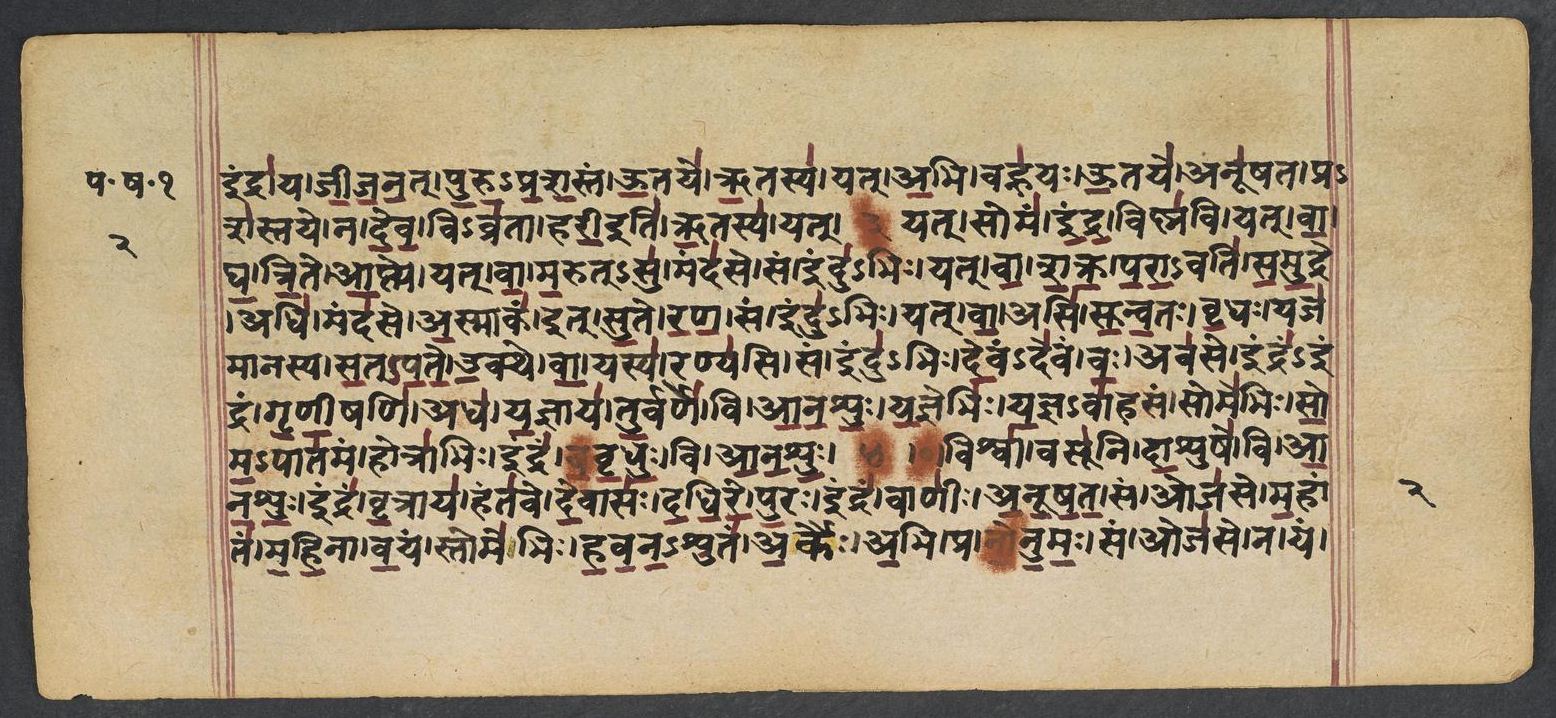
Where on the image
Penn Ms. Coll. 390 Item 41, fol. 580v (numbered 2v by the scribe) (OPenn image 581, upper leaf). Checked on the image: the Rigveda text on this page begins in RV 8.12.14 ‹indrāya jījanat puru-praśastam ūtaye›. The next page with Rigveda text, fol. 581r (numbered 3r by the scribe), begins in RV 8.12.24 ‹viviktaḥ rodasī iti na›. Verses 8.12.14-23 end on this page; 8.12.14 begins on fol. 580r (numbered 2r by the scribe).
14u̱ta sva̱rāje̱ adi̍ti̱ḥ stoma̱m indrā̍ya jījanat | pu̱ru̱pra̱śa̱stam ū̱taya̍ ṛ̱tasya̱ yat ||
15a̱bhi vahna̍ya ū̱taye 'nū̍ṣata̱ praśa̍staye | na de̍va̱ vivra̍tā̱ harī̍ ṛ̱tasya̱ yat ||
16yat soma̍m indra̱ viṣṇa̍vi̱ yad vā̍ gha tri̱ta ā̱ptye | yad vā̍ ma̱rutsu̱ manda̍se̱ sam indu̍bhiḥ ||
17yad vā̍ śakra parā̱vati̍ samu̱dre adhi̱ manda̍se | a̱smāka̱m it su̱te ra̍ṇā̱ sam indu̍bhiḥ ||
18yad vāsi̍ sunva̱to vṛ̱dho yaja̍mānasya satpate | u̱kthe vā̱ yasya̱ raṇya̍si̱ sam indu̍bhiḥ ||
19de̱vaṁ-de̍va̱ṁ vo 'va̍sa̱ indra̍m-indraṁ gṛṇī̱ṣaṇi̍ | adhā̍ ya̱jñāya̍ tu̱rvaṇe̱ vy ā̍naśuḥ ||
20ya̱jñebhi̍r ya̱jñavā̍hasa̱ṁ some̍bhiḥ soma̱pāta̍mam | hotrā̍bhi̱r indra̍ṁ vāvṛdhu̱r vy ā̍naśuḥ ||
21ma̱hīr a̍sya̱ praṇī̍tayaḥ pū̱rvīr u̱ta praśa̍stayaḥ | viśvā̱ vasū̍ni dā̱śuṣe̱ vy ā̍naśuḥ ||
22indra̍ṁ vṛ̱trāya̱ hanta̍ve de̱vāso̍ dadhire pu̱raḥ | indra̱ṁ vāṇī̍r anūṣatā̱ sam oja̍se ||
23ma̱hānta̍m mahi̱nā va̱yaṁ stome̍bhir havana̱śruta̍m | a̱rkair a̱bhi pra ṇo̍numa̱ḥ sam oja̍se ||
Compare: Padapāṭha (word-by-word text written in the manuscript; Sansknet e-text via GRETIL)
14uta | sva-rāje | aditiḥ | stomam | indrāya | jījanat | puru-praśastam | ūtaye | ṛtasya | yat
15abhi | vahnayaḥ | ūtaye | anūṣata | pra-śastaye | na | deva | vi-vratā | harī iti | ṛtasya | yat
16yat | somam | indra | viṣṇavi | yat | vā | gha | trite | āptye | yat | vā | marut-su | mandase | sam | indu-bhiḥ
17yat | vā | śakra | parāvati | samudre | adhi | mandase | asmākam | it | sute | raṇa | sam | indu-bhiḥ
18yat | vā | asi | sunvataḥ | vṛdhaḥ | yajamānasya | sat-pate | ukthe | vā | yasya | raṇyasi | sam | indu-bhiḥ
19devam-devam | vaḥ | avase | indram-indram | gṛṇīṣaṇi | adha | yajñāya | turvaṇe | vi | ānaśuḥ
20yajñebhiḥ | yajña-vāhasam | somebhiḥ | soma-pātamam | hotrābhiḥ | indram | vavṛdhuḥ | vi | ānaśuḥ
21mahīḥ | asya | pra-nītayaḥ | pūrvīḥ | uta | pra-śastayaḥ | viśvā | vasūni | dāśuṣe | vi | ānaśuḥ
22indram | vṛtrāya | hantave | devāsaḥ | dadhire | puraḥ | indram | vāṇīḥ | anūṣata | sam | ojase
23mahāntam | mahinā | vayam | stomebhiḥ | havana-śrutam | arkaiḥ | abhi | pra | nonumaḥ | sam | ojase
14Aditi also hath brought forth a hymn for Indra, Sovran Lord: The work of sacrifice for help is glorified.
15The ministering priests have sung their songs for aid and eulogy: God, thy Bays turn not from the rite which Law ordains.
16If, Indra, thou drink Soma by Vishṇu's or Trita Âptya's side, Or with the Maruts take delight in flowing drops;
17Or, Ṣakra, if thou gladden thee afar or in the sea of air, Rejoice thee in this juice of ours, in flowing drops.
18Or, Lord of Heroes if thou aid the worshipper who shed; the, juice, Or him whose laud delights thee, and his flowing drops.
19To magnify the God, the God, Indra, yea, Indra for your help, And promptly end the sacrifice-this have they gained.
20With worship, him whom men adore, with Soma, him who drinks it most, Indra with lauds have they increasedthis have they gained.
21His leadings are with power and might and his instructions manifold: He gives the worshipper all wealth: this have they gained.
22For slaying Vr̥itra have the Gods set Indra in the foremost place. Indra the choral bands have sung, for vigorous strength.
23We to the Mighty with our might, with lauds to him who hears our call, With holy hymns have sung aloud, for vigorous strength.
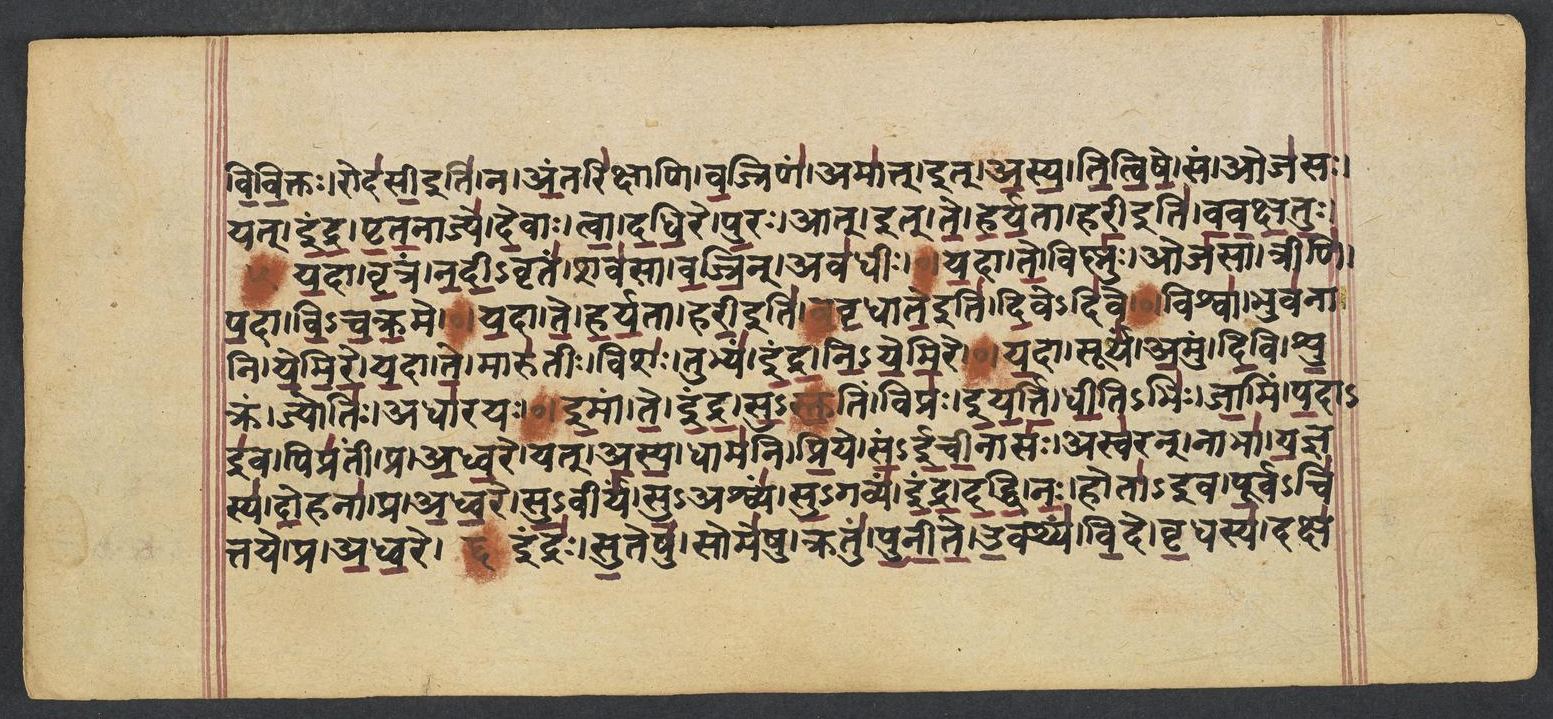
Where on the image
Penn Ms. Coll. 390 Item 41, fol. 581r (numbered 3r by the scribe) (OPenn image 581, lower leaf). Checked on the image: the Rigveda text on this page begins in RV 8.12.24 ‹viviktaḥ rodasī iti na›. The next page with Rigveda text, fol. 581v (numbered 3v by the scribe), begins in RV 8.13.1 ‹-dakṣasaḥ mahān hi saḥ›. Verses 8.12.24-33 end on this page; 8.12.24 begins on fol. 580v (numbered 2v by the scribe).
24na yaṁ vi̍vi̱kto roda̍sī̱ nāntari̍kṣāṇi va̱jriṇa̍m | amā̱d id a̍sya titviṣe̱ sam oja̍saḥ ||
25yad i̍ndra pṛta̱nājye̍ de̱vās tvā̍ dadhi̱re pu̱raḥ | ād it te̍ harya̱tā harī̍ vavakṣatuḥ ||
26ya̱dā vṛ̱traṁ na̍dī̱vṛta̱ṁ śava̍sā vajri̱nn ava̍dhīḥ | ād it te̍ harya̱tā harī̍ vavakṣatuḥ ||
27ya̱dā te̱ viṣṇu̱r oja̍sā̱ trīṇi̍ pa̱dā vi̍cakra̱me | ād it te̍ harya̱tā harī̍ vavakṣatuḥ ||
28ya̱dā te̍ harya̱tā harī̍ vāvṛ̱dhāte̍ di̱ve-di̍ve | ād it te̱ viśvā̱ bhuva̍nāni yemire ||
29ya̱dā te̱ māru̍tī̱r viśa̱s tubhya̍m indra niyemi̱re | ād it te̱ viśvā̱ bhuva̍nāni yemire ||
30ya̱dā sūrya̍m a̱muṁ di̱vi śu̱kraṁ jyoti̱r adhā̍rayaḥ | ād it te̱ viśvā̱ bhuva̍nāni yemire ||
31i̱māṁ ta̍ indra suṣṭu̱tiṁ vipra̍ iyarti dhī̱tibhi̍ḥ | jā̱mim pa̱deva̱ pipra̍tī̱m prādhva̱re ||
32yad a̍sya̱ dhāma̍ni pri̱ye sa̍mīcī̱nāso̱ asva̍ran | nābhā̍ ya̱jñasya̍ do̱hanā̱ prādhva̱re ||
33su̱vīrya̱ṁ svaśvya̍ṁ su̱gavya̍m indra daddhi naḥ | hote̍va pū̱rvaci̍ttaye̱ prādhva̱re ||
Compare: Padapāṭha (word-by-word text written in the manuscript; Sansknet e-text via GRETIL)
24na | yam | viviktaḥ | rodasī iti | na | antarikṣāṇi | vajriṇam | amāt | it | asya | titviṣe | sam | ojasaḥ
25yat | indra | pṛtanājye | devāḥ | tvā | dadhire | puraḥ | āt | it | te | haryatā | harī iti | vavakṣatuḥ
26yadā | vṛtram | nadī-vṛtam | śavasā | vajrin | avadhīḥ | āt | it | te | haryatā | harī iti | vavakṣatuḥ
27yadā | te | viṣṇuḥ | ojasā | trīṇi | padā | vi-cakrame | āt | it | te | haryatā | harī iti | vavakṣatuḥ
28yadā | te | haryatā | harī iti | vavṛdhāteiti | dive--dive | āt | it | te | viśvā | bhuvanāni | yemire
29yadā | te | mārutīḥ | viśaḥ | tubhyam | indra | ni-yemire | āt | it | te | viśvā | bhuvanān i | yemire
30yadā | sūryam | amum | divi | śukram | jyotiḥ | adhārayaḥ | āt | it | te | viśvā | bhuvanāni | yemire
31imām | te | indra | su-stutim | vipraḥ | iyarti | dhīti-bhiḥ | jāmim | padāiva | pipratīm | pra | adhvare
32yat | asya | dhāmani | priye | samīcīnāsaḥ | asvaran | nābhā | yajñasya | dohanā | pra | adhvare
33su-vīryam | su-aśvyam | su-gavyam | indra | daddhi | naḥ | hotāiva | pūrva-cittaye | pra | adhvare
24Not earth, nor heaven, nor firmaments contain the Thunder-wielding God: They shake before his violent rush and vigorous strength.
25What time the Gods, O Indra, set thee foremost in the furious fight, Then thy two beautiful Bay Steeds carried thee on.
26When Vr̥itra, stayer of the floods, thou slewest, Thunderer with might, Then thy two beautiful Bay Steeds carried thee on.
27When Vishṇu, through thine energy, strode wide those three great steps of his, Then thy two beautiful Bay Steeds carried thee on.
28When thy two beautiful Bay Steeds grew great and greater day by day, Even then all creatures that had life bowed down to thee.
29When, Indra, all the Marut folk humbly submitted them to thee, Even then all creatures that had life bowed down to thee.
30When yonder Sun, that brilliant light, thou settest in the heaven above, Even then all creatures that had life bowed down to thee.
31To thee, O Indra, with this thought the sage lifts up this eulogy, Akin and leading as on foot to sacrifice.
32When in thine own dear dwelling all gathered have lifted up the voice Milk-streams at worship's central spot, for sacrifice,
33As Priest, O Indra, give us wealth in brave men and good steeds and kine That we may first remember thee for sacrifice.
Notes
- Sanskrit: Aufrecht's edition (1877) with the Vedic accents, as entered by van Nooten and Holland (GRETIL).
- English: Ralph T. H. Griffith, The Hymns of the Rigveda (1889-1892; 2nd ed. 1896-1897), from the VedaWeb digital text; OCR slips in that text were corrected against the printed 2nd edition (data/sources/rigveda/griffith_errata.json).
- Padapāṭha (edition text): Sansknet e-text via GRETIL (CC BY-NC-SA 4.0).
Cite
Sources
- Source: Penn Ms. Coll. 390 Item 41 (undated (catalogued with Penn's 18th-19th c. Vedic manuscripts)), OPenn, Public Domain Mark + Aufrecht's accented text (GRETIL) + Griffith's English (VedaWeb) (holding institution)
- Critical edition: Aufrecht (1877), accented e-text via GRETIL
← previous · → next · v cycle view · l back to library