Rigveda 8.19: To Agni
Introduction
Rigveda 8.19 is a hymn of 37 verses addressed to Agni. It stands in book (maṇḍala) 8, the book of the Kaṇva and Aṅgiras poets. The Rigveda is the oldest collection of Sanskrit hymns, composed in the second half of the second millennium BCE and handed down orally for many centuries before it was written down.
The manuscript shown is Penn Ms. Coll. 390 Item 41 (University of Pennsylvania), an undated paper manuscript of the padapāṭha (the word-by-word recitation text, in which every word is written separately and compounds are split) of the whole Ṛgveda in Devanāgarī, 884 leaves in fascicles, 7-9 lines to the page, accents in red; this hymn stands on fol. 587r-590r. Each section below gives the verses that end on one page; the page boundaries were read on the images (the opening words of every page), not counted out. Where the manuscript is a padapāṭha (the word-by-word recitation text), the section shows Aufrecht's continuous (saṃhitā) text first and, as the edition text, the padapāṭha of the same verses, which is the form written on the page.
How was this verified? (Provenance)
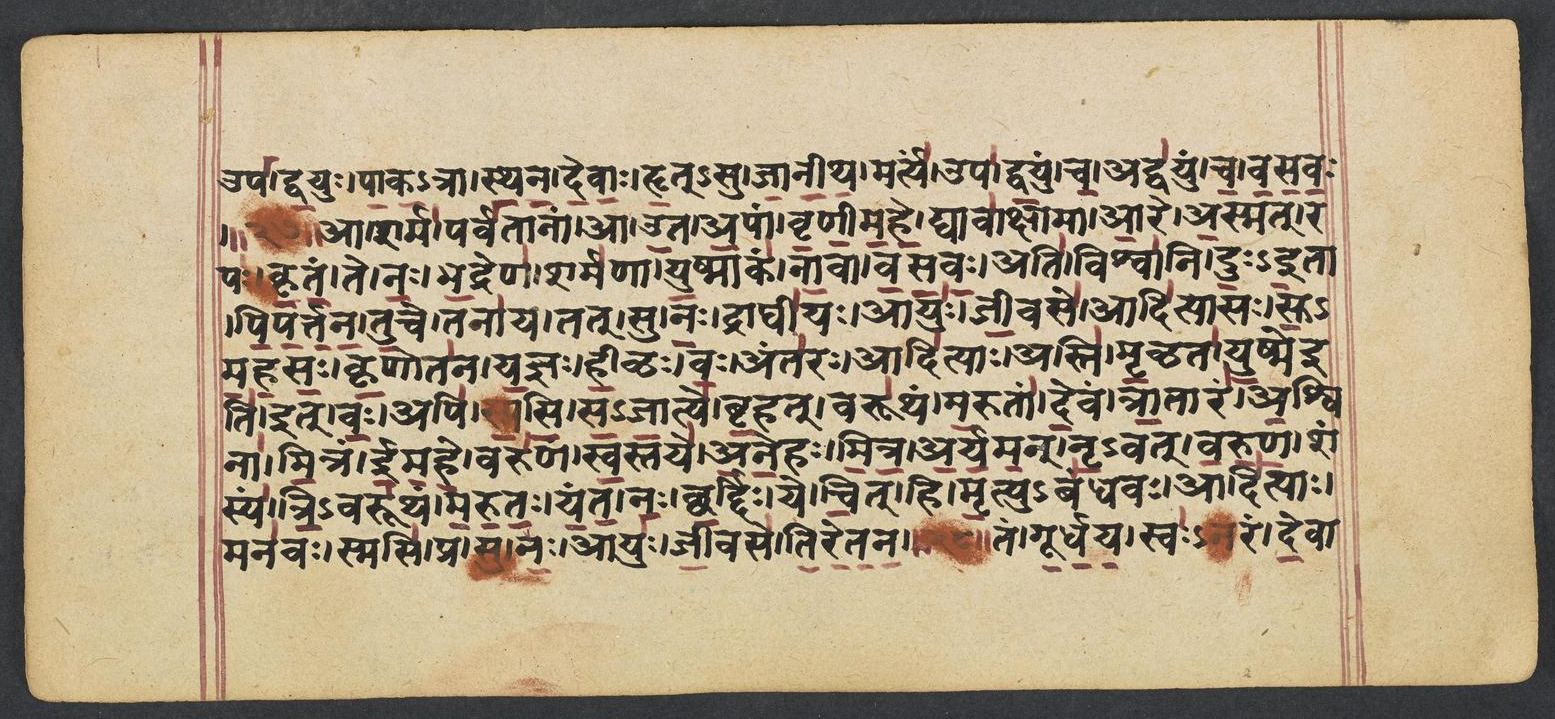
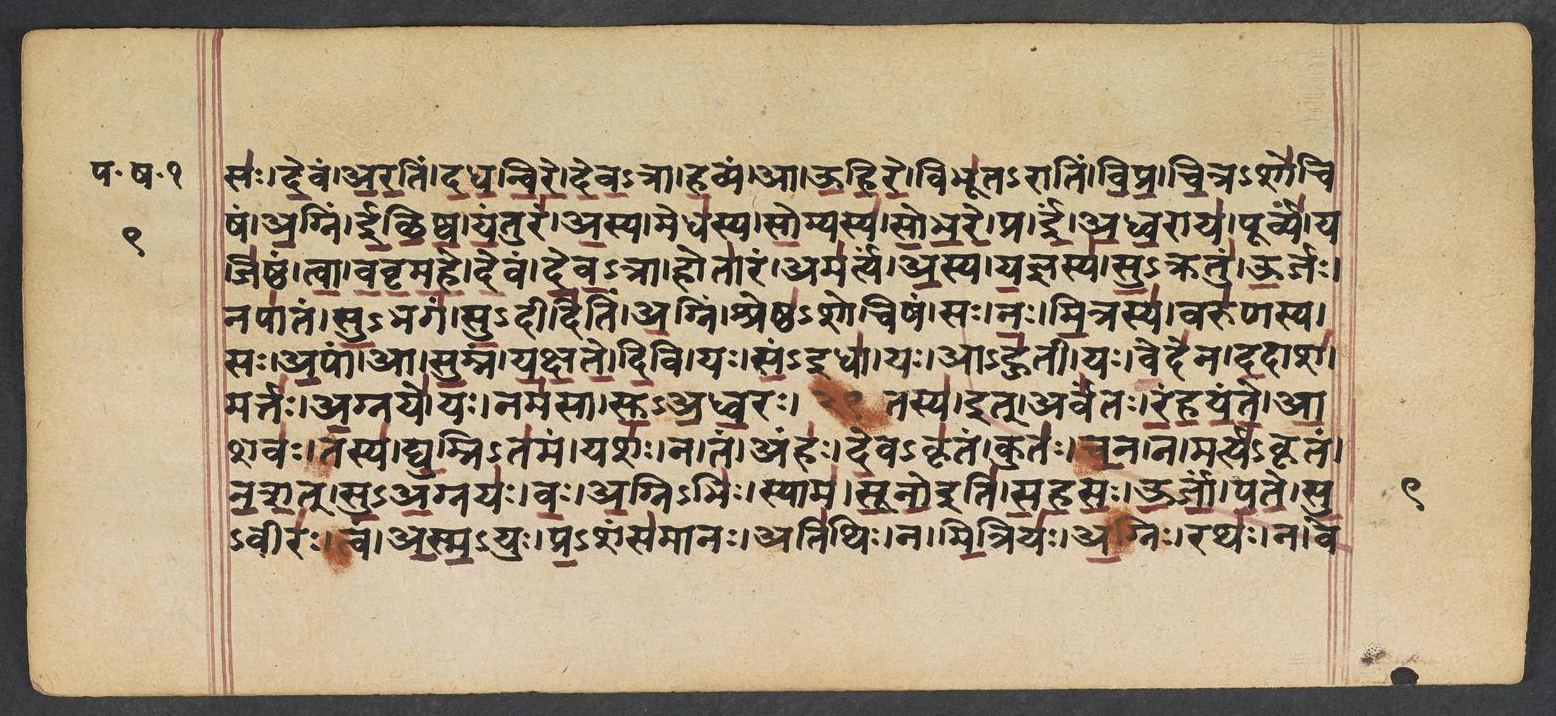
Where on the image
Penn Ms. Coll. 390 Item 41, fol. 587v (numbered 9v by the scribe) (OPenn image 588, upper leaf). Checked on the image: the Rigveda text on this page begins in RV 8.19.1 ‹-devāsaḥ devam aratim dadhanvire›. The next page with Rigveda text, fol. 588r (numbered 10r by the scribe), begins in RV 8.19.8 ‹-vedyaḥ tveit i kṣemāsaḥ›. Verses 8.19.1-7 end on this page; 8.19.1 begins on fol. 587r (numbered 9r by the scribe).
1taṁ gū̍rdhayā̱ sva̍rṇaraṁ de̱vāso̍ de̱vam a̍ra̱tiṁ da̍dhanvire | de̱va̱trā ha̱vyam ohi̍re ||
2vibhū̍tarātiṁ vipra ci̱traśo̍ciṣam a̱gnim ī̍ḻiṣva ya̱ntura̍m | a̱sya medha̍sya so̱myasya̍ sobhare̱ prem a̍dhva̱rāya̱ pūrvya̍m ||
3yaji̍ṣṭhaṁ tvā vavṛmahe de̱vaṁ de̍va̱trā hotā̍ra̱m ama̍rtyam | a̱sya ya̱jñasya̍ su̱kratu̍m ||
4ū̱rjo napā̍taṁ su̱bhaga̍ṁ su̱dīdi̍tim a̱gniṁ śreṣṭha̍śociṣam | sa no̍ mi̱trasya̱ varu̍ṇasya̱ so a̱pām ā su̱mnaṁ ya̍kṣate di̱vi ||
5yaḥ sa̱midhā̱ ya āhu̍tī̱ yo vede̍na da̱dāśa̱ marto̍ a̱gnaye̍ | yo nama̍sā svadhva̱raḥ ||
6tasyed arva̍nto raṁhayanta ā̱śava̱s tasya̍ dyu̱mnita̍ma̱ṁ yaśa̍ḥ | na tam aṁho̍ de̱vakṛ̍ta̱ṁ kuta̍ś ca̱na na martya̍kṛtaṁ naśat ||
7sva̱gnayo̍ vo a̱gnibhi̱ḥ syāma̍ sūno sahasa ūrjām pate | su̱vīra̱s tvam a̍sma̱yuḥ ||
Compare: Padapāṭha (word-by-word text written in the manuscript; Sansknet e-text via GRETIL)
1tam | gūrdhaya | svaḥ-naram | devāsaḥ | devam | aratim | dadhanvire | deva-trā | havyam | ā | ūhire
2vibhūta-rātim | vipra | citra-śociṣam | agnim | īḷiṣva | yanturam | asya | meghasya | somyasya | sobhare | pra | īm | adhvarāya | pūrvyam
3yajiṣṭham | tvā | vavṛmahe | devam | deva-trā | hotāram | amartyam | asya | yajñasya | su-kratum
4ūrjaḥ | napātam | su-bhagam | su-dīditim | agnim | śreṣṭha-śociṣam | saḥ | naḥ | mitrasya | varuṇasya | saḥ | apām | ā | sumnam | yakṣate | divi
5yaḥ | sam-idhā | yaḥ | āhutī | yaḥ | vedena | dadāśa | martaḥ | agnaye | yaḥ | namasā | su-adhvaraḥ
6tasya | it | arvantaḥ | raṃhayante | āśavaḥ | tasya | dyumni-tamam | yaśaḥ | na | tam | aṃhaḥ | deva-kṛtam | kutaḥ | cana | na | martya-kṛtam | naśat
7su-agnayaḥ | vaḥ | agni-bhiḥ | syāma | sūno iti | sahasaḥ | ūrjām | pate | su-vīraḥ | tvam | asma-yuḥ
1SING praise to hiin, the Lord of Light. The Gods have made the God to be their messenger, And sent oblation to Gods.
2Agni, the Bounteous Giver, bright with varied flames, laud thou, O singer Sobhari- Him who controls this sacred food with Soma blent, who hath first claim to sacrifice.
3Thee have we chosen skilftillest in sacrifice, Immortal Priest among the Gods, Wise finisher of this holy rite:
4The Son of Strength, the blessed, brightly shining One, Agni whose light is excellent. May be by sacrifice win us in heaven the grace of Mitra, Varuṇa, and the Floods.
5The mortal who hath ministered to Agni with oblation, fuel, ritual lore, And reverence, skilled in sacrifice.
6Verily swift to run are his fleet-footed steeds, and most resplendent fame is his. No trouble caused by Gods or wrought by mortal man from any side o'ertaketh him.
7May we by thine own fires be well supplied with fire, O Son of Strength, O Lord of Might: Thou as our Friend hast worthy men.
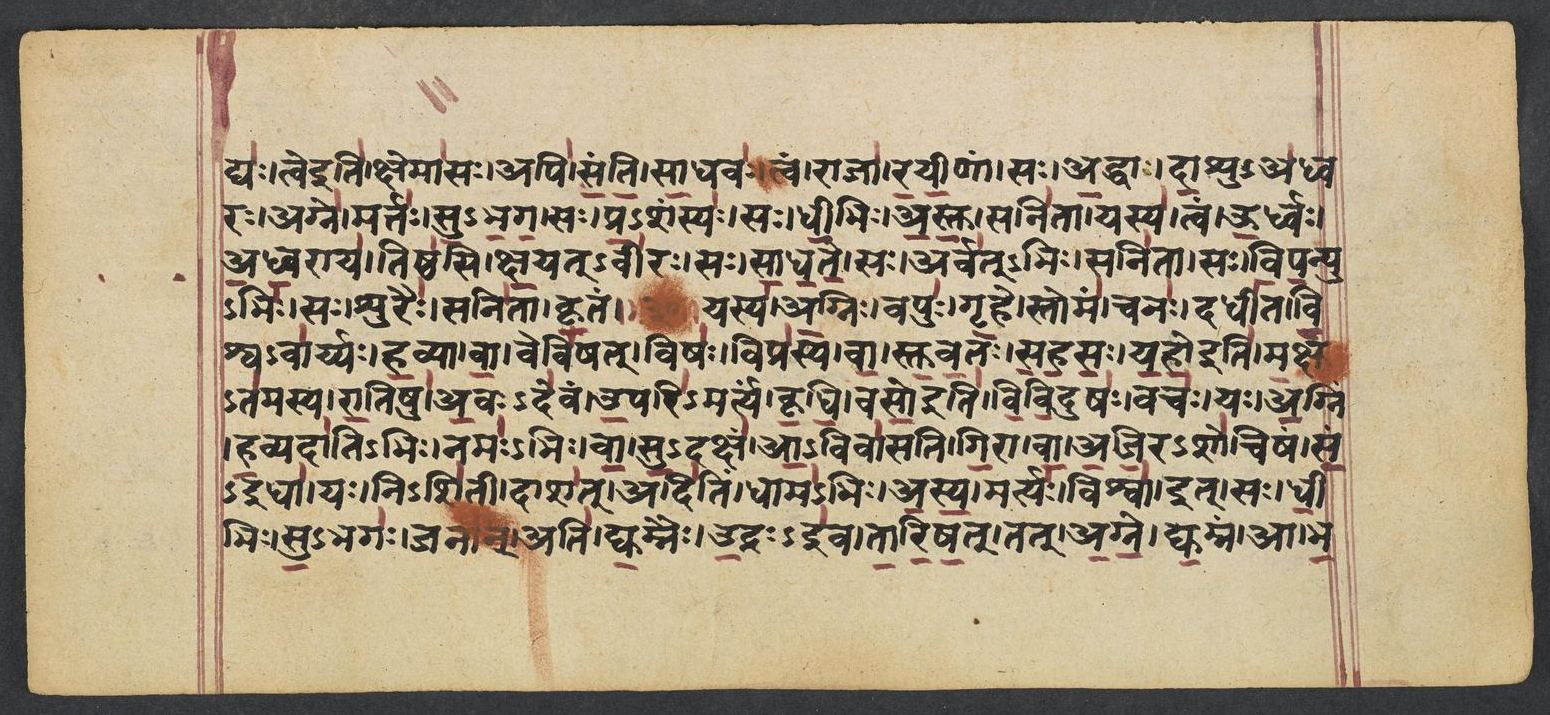
Where on the image
Penn Ms. Coll. 390 Item 41, fol. 588r (numbered 10r by the scribe) (OPenn image 588, lower leaf). Checked on the image: the Rigveda text on this page begins in RV 8.19.8 ‹-vedyaḥ tveit i kṣemāsaḥ›. The next page with Rigveda text, fol. 588v (numbered 10v by the scribe), begins in RV 8.19.15 ‹-bhara yat sasahat sadane›. Verses 8.19.8-14 end on this page; 8.19.8 begins on fol. 587v (numbered 9v by the scribe).
8pra̱śaṁsa̍māno̱ ati̍thi̱r na mi̱triyo̱ 'gnī ratho̱ na vedya̍ḥ | tve kṣemā̍so̱ api̍ santi sā̱dhava̱s tvaṁ rājā̍ rayī̱ṇām ||
9so a̱ddhā dā̱śva̍dhva̱ro 'gne̱ marta̍ḥ subhaga̱ sa pra̱śaṁsya̍ḥ | sa dhī̱bhir a̍stu̱ sani̍tā ||
10yasya̱ tvam ū̱rdhvo a̍dhva̱rāya̱ tiṣṭha̍si kṣa̱yadvī̍ra̱ḥ sa sā̍dhate | so arva̍dbhi̱ḥ sani̍tā̱ sa vi̍pa̱nyubhi̱ḥ sa śūrai̱ḥ sani̍tā kṛ̱tam ||
11yasyā̱gnir vapu̍r gṛ̱he stoma̱ṁ cano̱ dadhī̍ta vi̱śvavā̍ryaḥ | ha̱vyā vā̱ vevi̍ṣa̱d viṣa̍ḥ ||
12vipra̍sya vā stuva̱taḥ sa̍haso yaho ma̱kṣūta̍masya rā̱tiṣu̍ | a̱vode̍vam u̱pari̍martyaṁ kṛdhi̱ vaso̍ vivi̱duṣo̱ vaca̍ḥ ||
13yo a̱gniṁ ha̱vyadā̍tibhi̱r namo̍bhir vā su̱dakṣa̍m ā̱vivā̍sati | gi̱rā vā̍ji̱raśo̍ciṣam ||
14sa̱midhā̱ yo niśi̍tī̱ dāśa̱d adi̍ti̱ṁ dhāma̍bhir asya̱ martya̍ḥ | viśvet sa dhī̱bhiḥ su̱bhago̱ janā̱m̐ ati̍ dyu̱mnair u̱dna i̍va tāriṣat ||
Compare: Padapāṭha (word-by-word text written in the manuscript; Sansknet e-text via GRETIL)
8pra-śaṃsamānaḥ | atithiḥ | na | mitriyaḥ | agniḥ | rathaḥ | na | vedyaḥ | tveit i | kṣemāsaḥ | api | santi | sādhavaḥ | tvam | rājā | rayīṇām
9saḥ | addhā | dāśu-adhvaraḥ | agne | martaḥ | su-bhaga | saḥ | pra-śaṃsyaḥ | saḥ | dhībhiḥ | astu | sanitā
10yasya | tvam | ūrdhvaḥ | adhvarāya | tiṣṭhasi | kṣayat-vīraḥ | saḥ | sādhate | saḥ | arvat-bhiḥ | sanitā | saḥ | vipanyu-bhiḥ | saḥ | śūraiḥ | sanitā | kṛtam
11yasya | agniḥ | vapuḥ | gṛhe | stomam | canaḥ | dadhīta | viśva-vāryaḥ | havyā | vā | veviṣat | viṣaḥ
12viprasya | vā | stuvataḥ | sahasaḥ | yaho iti | makṣu-tamasya | rātiṣu | avaḥ-devam | upari-martyam | kṛdhi | vaso iti | vividuṣaḥ | vacaḥ
13yaḥ | agnim | havyadāti-bhiḥ | namaḥ-bhiḥ | vā | su-dakṣam | āvivāsati | girā | vā | ajira-śociṣam
14sam-idhā | yaḥ | ni-śitī | dāśat | aditim | dhāma-bhiḥ | asya | martyaḥ | viśvā | it | saḥ | dhībhiḥ | su-bhagaḥ | janān | ati | dyumnaiḥ | udgaḥ-iva | tāriṣat
8Agni, who praises like a guest of friendly mind, is as a car that brings us gear. Also in thee is found perfect security thou art the Sovran Lord of wealth.
9That man, moreover, merits praise who brings, auspicious Agni, sacrificial gifts May he win riches by his thoughts.
10He for whose sacrifice thou standest up erect is prosperous and rules o'er men. He wins with coursers and with singers killed in song: with heroes he obtains the prize.
11He in whose dwelling Agni is chief ornament, and, all-desired, loves his laud well, And zealously tends his offerings-
12His, or the lauding sage's word, his, Son of Strength! who Is most prompt with sacred gifts, Set thou beneath the Gods, Vasu, above mankind, the speech of the intelligent.
13He who with sacrificial gifts or homage bringeth very skilful Agni nigh, Or him who flashes fast with song,
14The mortal who with blazing fuel, as his laws command, adores the Perfect God, Blest with his thoughts in splendour shall exceed all men, as though he overpassed the floods.
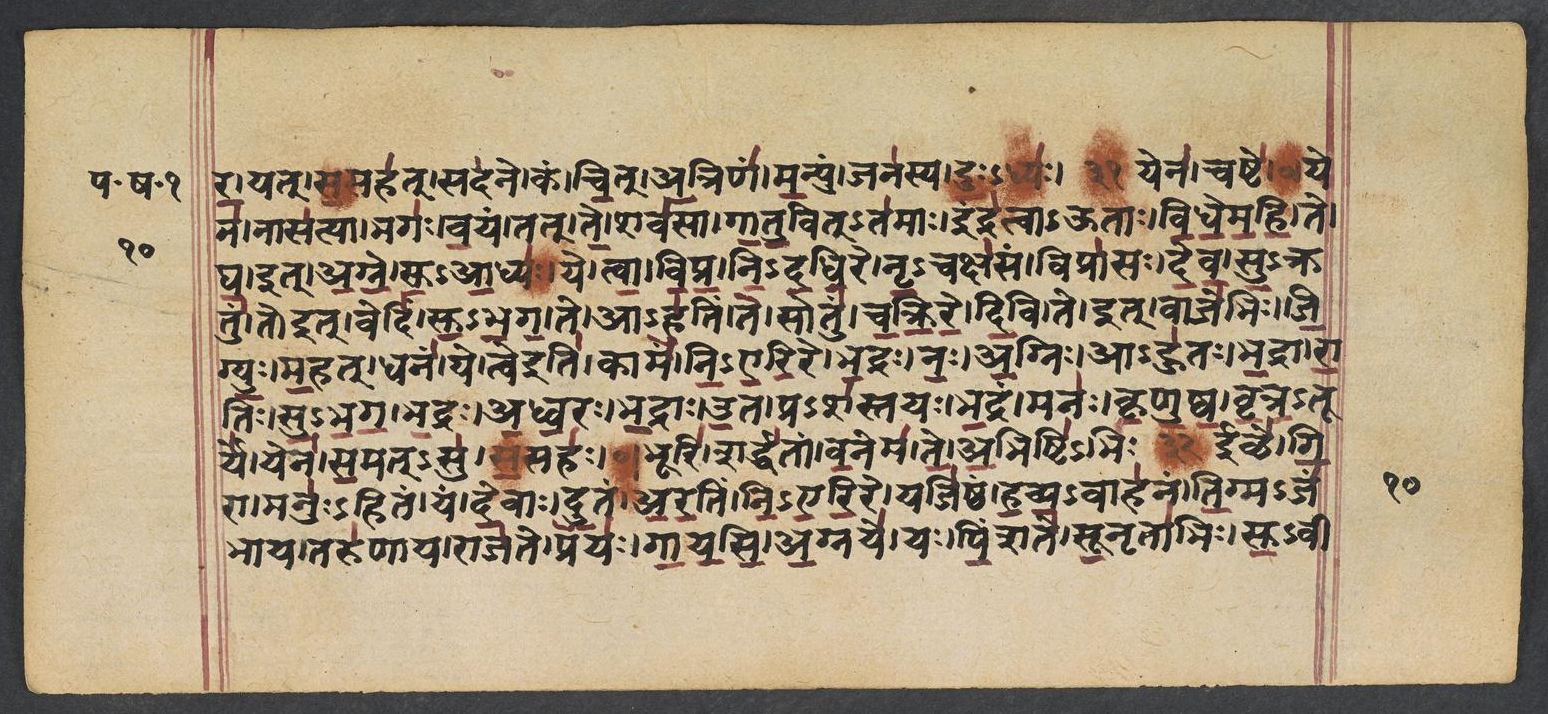
Where on the image
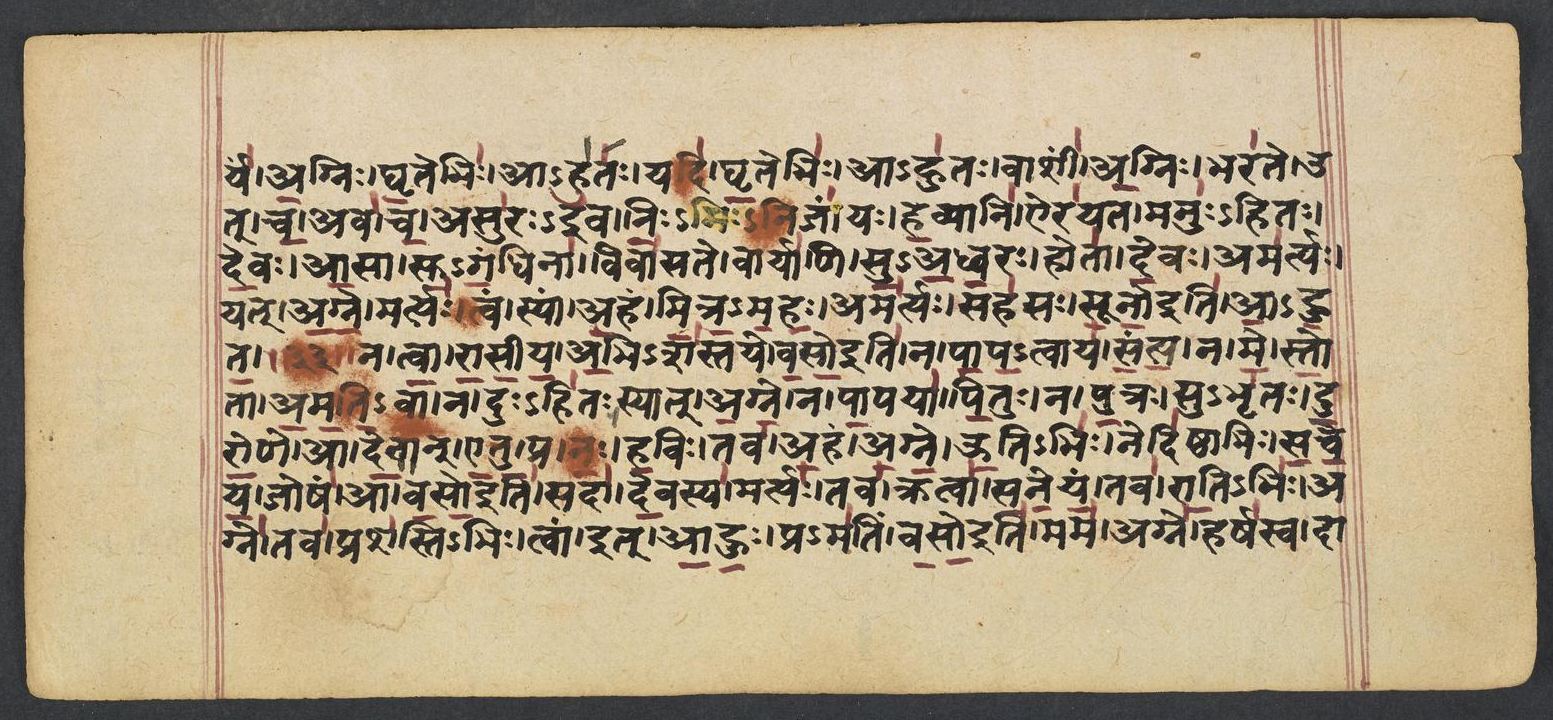
Penn Ms. Coll. 390 Item 41, fol. 588v (numbered 10v by the scribe) (OPenn image 589, upper leaf). Checked on the image: the Rigveda text on this page begins in RV 8.19.15 ‹-bhara yat sasahat sadane›. The next page with Rigveda text, fol. 589r (numbered 11r by the scribe), begins in RV 8.19.22 ‹-su-vīryam agniḥ ghṛtebhiḥ āhutaḥ›. Verses 8.19.15-21 end on this page; 8.19.15 begins on fol. 588r (numbered 10r by the scribe).
15tad a̍gne dyu̱mnam ā bha̍ra̱ yat sā̱saha̱t sada̍ne̱ kaṁ ci̍d a̱triṇa̍m | ma̱nyuṁ jana̍sya dū̱ḍhya̍ḥ ||
16yena̱ caṣṭe̱ varu̍ṇo mi̱tro a̍rya̱mā yena̱ nāsa̍tyā̱ bhaga̍ḥ | va̱yaṁ tat te̱ śava̍sā gātu̱vitta̍mā̱ indra̍tvotā vidhemahi ||
17te ghed a̍gne svā̱dhyo̱3̱̍ ye tvā̍ vipra nidadhi̱re nṛ̱cakṣa̍sam | viprā̍so deva su̱kratu̍m ||
18ta id vedi̍ṁ subhaga̱ ta āhu̍ti̱ṁ te sotu̍ṁ cakrire di̱vi | ta id vāje̍bhir jigyur ma̱had dhana̱ṁ ye tve kāma̍ṁ nyeri̱re ||
19bha̱dro no̍ a̱gnir āhu̍to bha̱drā rā̱tiḥ su̍bhaga bha̱dro a̍dhva̱raḥ | bha̱drā u̱ta praśa̍stayaḥ ||
20bha̱dram mana̍ḥ kṛṇuṣva vṛtra̱tūrye̱ yenā̍ sa̱matsu̍ sā̱saha̍ḥ | ava̍ sthi̱rā ta̍nuhi̱ bhūri̱ śardha̍tāṁ va̱nemā̍ te a̱bhiṣṭi̍bhiḥ ||
21īḻe̍ gi̱rā manu̍rhita̱ṁ yaṁ de̱vā dū̱tam a̍ra̱tiṁ nye̍ri̱re | yaji̍ṣṭhaṁ havya̱vāha̍nam ||
Compare: Padapāṭha (word-by-word text written in the manuscript; Sansknet e-text via GRETIL)
15tat | agne | dyumnam | ā | bhara | yat | sasahat | sadane | kam | cit | atriṇam | manyum | janasya | duḥ-dhyaḥ
16yena | caṣṭe | varuṇaḥ | mitraḥ | aryamā | yena | nāsatyā | bhagaḥ | vayam | tat | te | śavasā | gātuvit-tamāḥ | indratvāūtāḥ | vidhemahi
17te | gha | agne | su-ādhyaḥ | ye | tvā | vipra | ni-dadhire | nṛ-cakṣasam | viprāsaḥ | deva | su-kratum
18te | it | vedim | su-bhaga | te | āhutim | te | sotum | cakrire | divi | t e | it | vājebhiḥ | jigyuḥ | mahat | dhanam | ye | tve iti | kāmam | ni- erire
19bhadraḥ | naḥ | agniḥ | āhutaḥ | bhadrā | rātiḥ | su-bhaga | bhadraḥ | adhvaraḥ | bhadrāḥ | uta | pra-śaśtayaḥ
20bhadram | manaḥ | kṛṇuṣva | vṛtra-tūrye | yena | samat-su | sasahaḥ | ava | sth irā | tanuhi | bhūri | śardhatām | vanema | te | abhiṣṭi-bhiḥ
21iḷe | girā | manuḥ-hitam | yam | devāḥ | dūtam | aratim | ni-erire | yajiṣṭham | havya-vāhanam
15Give us the splendour, Agni, which may overcome each greedy fiend in our abode, The wrath of evil-hearted folk.
16That, wherewith Mitra, Varuṇa, and Aryaman, the Aṣvins, Bhaga give us light, That may we, by thy power finding best furtherance, worship, O Indra, helped by thee.
17O Agni, most devout are they, the sages who have set thee Sage exceeding wise, O God, for men to look upon:
18Who have arranged thine altar Blessed God, at morn brought thine oblation, pressed the juice. They by their deeds of strength have won diem, mighty wealth, who have set all their hope in thee.
19-May Agni worshipped bring us bliss, may the gift, Blessed One, and sacrifice bring bliss; Yea, may our praises bring us bliss.
20Show forth the mind that brings success in war with fiends, wherewith thou conquerest in fight. Bring down the many firm hopes of our enemies, and let us vanquish with thine aid.
21I praise with song the Friend of man, whom Gods sent down to be herald and messenger, Best worshipper, bearer of our gifts.
Where on the image
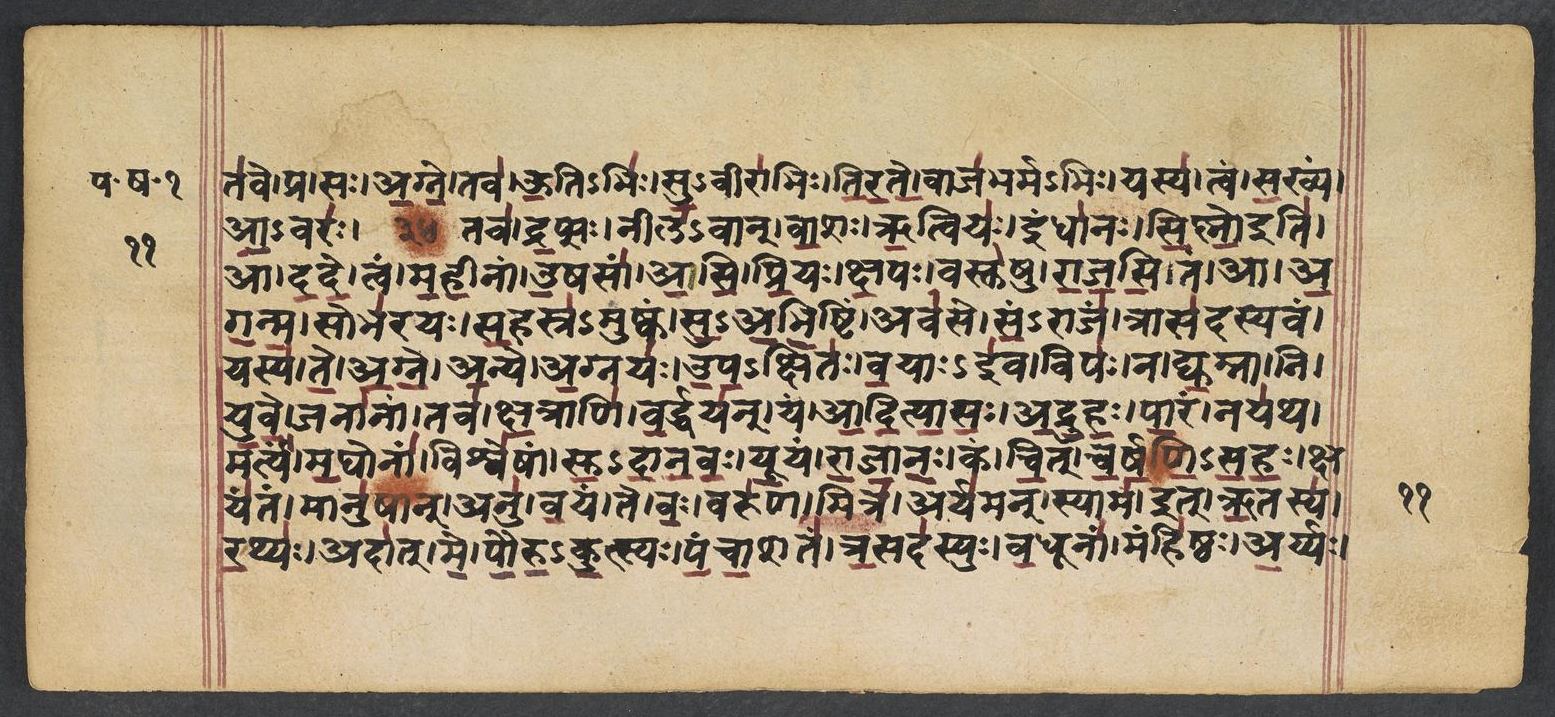
Penn Ms. Coll. 390 Item 41, fol. 589r (numbered 11r by the scribe) (OPenn image 589, lower leaf). Checked on the image: the Rigveda text on this page begins in RV 8.19.22 ‹-su-vīryam agniḥ ghṛtebhiḥ āhutaḥ›. The next page with Rigveda text, fol. 589v (numbered 11v by the scribe), begins in RV 8.19.29 ‹-dātave›. Verses 8.19.22-28 end on this page; 8.19.22 begins on fol. 588v (numbered 10v by the scribe).
22ti̱gmaja̍mbhāya̱ taru̍ṇāya̱ rāja̍te̱ prayo̍ gāyasy a̱gnaye̍ | yaḥ pi̱ṁśate̍ sū̱nṛtā̍bhiḥ su̱vīrya̍m a̱gnir ghṛ̱tebhi̱r āhu̍taḥ ||
23yadī̍ ghṛ̱tebhi̱r āhu̍to̱ vāśī̍m a̱gnir bhara̍ta̱ uc cāva̍ ca | asu̍ra iva ni̱rṇija̍m ||
24yo ha̱vyāny aira̍yatā̱ manu̍rhito de̱va ā̱sā su̍ga̱ndhinā̍ | vivā̍sate̱ vāryā̍ṇi svadhva̱ro hotā̍ de̱vo ama̍rtyaḥ ||
25yad a̍gne̱ martya̱s tvaṁ syām a̱ham mi̍tramaho̱ ama̍rtyaḥ | saha̍saḥ sūnav āhuta ||
26na tvā̍ rāsīyā̱bhiśa̍staye vaso̱ na pā̍pa̱tvāya̍ santya | na me̍ sto̱tāma̍tī̱vā na durhi̍ta̱ḥ syād a̍gne̱ na pā̱payā̍ ||
27pi̱tur na pu̱traḥ subhṛ̍to duro̱ṇa ā de̱vām̐ e̍tu̱ pra ṇo̍ ha̱viḥ ||
28tavā̱ham a̍gna ū̱tibhi̱r nedi̍ṣṭhābhiḥ saceya̱ joṣa̱m ā va̍so | sadā̍ de̱vasya̱ martya̍ḥ ||
Compare: Padapāṭha (word-by-word text written in the manuscript; Sansknet e-text via GRETIL)
22tigma-jambhāya | taruṇāya | rājate | prayaḥ | gāyasi | agnaye | yaḥ | piṃśate | sūnṛtābhiḥ | su-vīryam | agniḥ | ghṛtebhiḥ | āhutaḥ
23yadi | ghṛtebhiḥ | āhutaḥ | vāśīm | agniḥ | bharate | ut | ca | ava | ca | asuraḥ-iva | niḥ-nijam
24yaḥ | havyāni | airayata | manuḥ-hitaḥ | devaḥ | āsā | su-gandhinā | vivāsate | vāryāṇi | su-adhvaraḥ | hotā | devaḥ | amartyaḥ
25yat | agne | martyaḥ | tvam | syām | aham | mitra-mahaḥ | amartyaḥ | sahasaḥ | sūno iti | āhuta
26na | tvā | rāsīya | abhi-śastaye | vaso iti | na | pāpa-tvāya | santya | na | me | stotā | amati-vā | na | duḥ-hitaḥ | syāt | agne | na | pāpayā
27pituḥ | na | putraḥ | su-bhṛtaḥ | duroṇe | ā | devān | etu | pra | naḥ | haviḥ
28tava | aham | agne | ūti-bhiḥ | nediṣṭhābhiḥ | saceya | joṣam | ā | vaso iti | sadā | devasya | martyaḥ
22Thou unto sharp-toothed Agni, Young and Radiant God, proclaimest with thy song the feast- Agni, who for our sweet strains moulds heroic strength when sacred oil is offered him,
23While, served with sacrificial oil, now upward and now downward Agni moves his sword, As doth the Asura his robe.
24The God, the Friend of man, who bears our gifts to heaven, the God with his sweet-smelling mouth, Distributes, skilled in sacrifice, his precious things, Invoking Priest, Immortal God.
25Son of Strength, Agni, if thou wert the mortal, bright as Mitra, I worshipped with our gifts! And I were the Immortal God
26I would not give thee up, Vasu, to calumny, or misery, O Bounteous One. My worshipper should feel no hunger or distress, nor, Agni, should he live in sin.
27Like a son cherished in his father's house, let our oblation rise unto the Gods.
28With thine immediate aid may I, excellent Agni, ever gain my wish A mortal with a God to help.
Where on the image
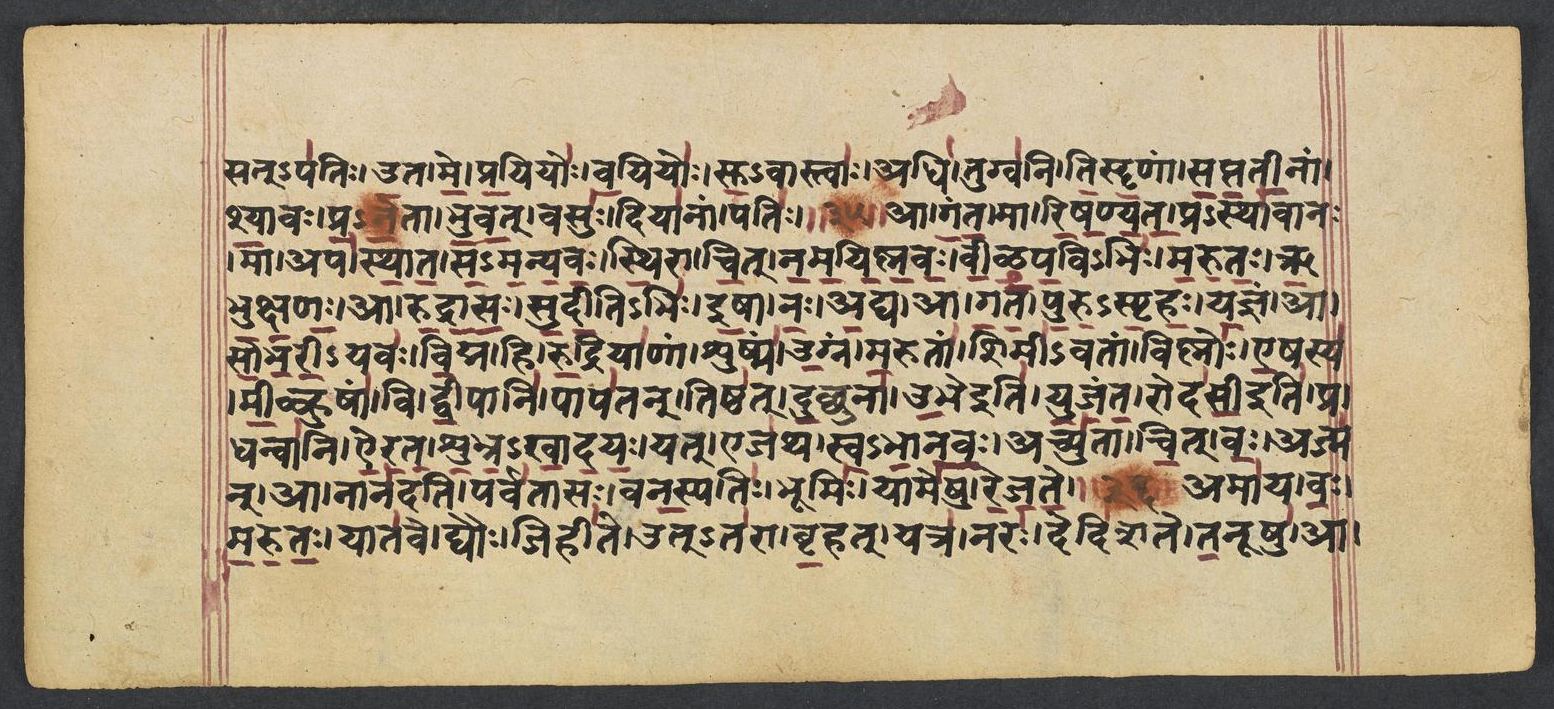
Penn Ms. Coll. 390 Item 41, fol. 589v (numbered 11v by the scribe) (OPenn image 590, upper leaf). Checked on the image: the Rigveda text on this page begins in RV 8.19.29 ‹-dātave›. The next page with Rigveda text, fol. 590r (numbered 12r by the scribe), begins in RV 8.19.36 ‹sat-patiḥ›. Verses 8.19.29-35 end on this page; 8.19.29 begins on fol. 589r (numbered 11r by the scribe).
29tava̱ kratvā̍ saneya̱ṁ tava̍ rā̱tibhi̱r agne̱ tava̱ praśa̍stibhiḥ | tvām id ā̍hu̱ḥ prama̍tiṁ vaso̱ mamāgne̱ harṣa̍sva̱ dāta̍ve ||
30pra so a̍gne̱ tavo̱tibhi̍ḥ su̱vīrā̍bhis tirate̱ vāja̍bharmabhiḥ | yasya̱ tvaṁ sa̱khyam ā̱vara̍ḥ ||
31tava̍ dra̱pso nīla̍vān vā̱śa ṛ̱tviya̱ indhā̍naḥ siṣṇa̱v ā da̍de | tvam ma̍hī̱nām u̱ṣasā̍m asi pri̱yaḥ kṣa̱po vastu̍ṣu rājasi ||
32tam āga̍nma̱ sobha̍rayaḥ sa̱hasra̍muṣkaṁ svabhi̱ṣṭim ava̍se | sa̱mrāja̱ṁ trāsa̍dasyavam ||
33yasya̍ te agne a̱nye a̱gnaya̍ upa̱kṣito̍ va̱yā i̍va | vipo̱ na dyu̱mnā ni yu̍ve̱ janā̍nā̱ṁ tava̍ kṣa̱trāṇi̍ va̱rdhaya̍n ||
34yam ā̍dityāso adruhaḥ pā̱raṁ naya̍tha̱ martya̍m | ma̱ghonā̱ṁ viśve̍ṣāṁ sudānavaḥ ||
35yū̱yaṁ rā̍jāna̱ḥ kaṁ ci̍c carṣaṇīsaha̱ḥ kṣaya̍nta̱m mānu̍ṣā̱m̐ anu̍ | va̱yaṁ te vo̱ varu̍ṇa̱ mitrārya̍ma̱n syāmed ṛ̱tasya̍ ra̱thya̍ḥ ||
Compare: Padapāṭha (word-by-word text written in the manuscript; Sansknet e-text via GRETIL)
29tava | kratvā | saneyam | tava | rāti-bhiḥ | agne | tava | praśaśti-bhiḥ | tvām | it | āhuḥ | pra-matim | vaso iti | mama | agne | harṣasva | dātave
30pra | saḥ | agne | tava | ūti-bhiḥ | su-vīrābhiḥ | tirate | vājabharma-bhiḥ | yasya | tvam | sakhyam | āvaraḥ
31tava | drapsaḥ | nīla-vān | vāśaḥ | ṛtviyaḥ | indhānaḥ | siṣṇo iti | ā | dade | tvam | mahīnām | uṣasām | asi | priyaḥ | kṣapaḥ | vastuṣu | rājasi
32tam | ā | aganma | sobharayaḥ | sahasra-muṣkam | su-abhiṣṭim | avase | sam-rājan | trāsadasyavam
33yasya | te | agne | anye | agnayaḥ | upa-kṣitaḥ | vayāḥ-iva | vipaḥ | na | dyumnā | ni | yuve | janānām | tava | kṣatrāṇi | vardhayan
34yam | ādityāsaḥ | adruhaḥ | pāram | nayatha | martyam | maghonām | viśveṣām | su-dānavaḥ
35yūyam | rājānaḥ | kam | cit | carṣaṇi-sahaḥ | kṣayantam | mānuṣān | anu | vayam | te | vaḥ | varuṇa | mitra | aryaman | syāma | it | ṛtasya | rathyaḥ
29O Agni, by thy wisdom, by thy bounties, by thy leading may I gather wealth. Excellent Agni, thou art called my Providence: delight thou to be liberal.
30Agni, he conquers by thine aid that brings him store of noble heroes and great strength, Whose bond of friendship is thy choice.
31Thy spark is black and crackling, kindled in due time, O Bounteous, it is taken up. Thou art the dear Friend of the mighty Mornings: thou shinest in glimmerings of the night.
32We Sobharis have come to him, for succour, who is good to help with thousand powers, The Sovran, Trasadasyu's Friend.
33O Agni, thou on whom all other fires depend, as branches on the parent stem, I make the treasures of the folk, like songs, mine own, while I exalt thy sovran might.
34The mortal whom, Âdityas, ye, Guileless, lead to the farther bank Of all the princes, Bounteous Ones
35Whoe'er he be, Man-ruling Kings! the Regent of the race of men- May we, O Mitra, Varuṇa, and Aryaman, like him be furtherers of your law.
Where on the image
Penn Ms. Coll. 390 Item 41, fol. 590r (numbered 12r by the scribe) (OPenn image 590, lower leaf). Checked on the image: the Rigveda text on this page begins in RV 8.19.36 ‹sat-patiḥ›. The next page with Rigveda text, fol. 590v (numbered 12v by the scribe), begins in RV 8.20.6 ‹tvakṣāṃsi bahu-ojasaḥ›. Verses 8.19.36-37 end on this page; 8.19.36 begins on fol. 589v (numbered 11v by the scribe).
36adā̍n me pauruku̱tsyaḥ pa̍ñcā̱śata̍ṁ tra̱sada̍syur va̱dhūnā̍m | maṁhi̍ṣṭho a̱ryaḥ satpa̍tiḥ ||
37u̱ta me̍ pra̱yiyo̍r va̱yiyo̍ḥ su̱vāstvā̱ adhi̱ tugva̍ni | ti̱sṝ̱ṇāṁ sa̍ptatī̱nāṁ śyā̱vaḥ pra̍ṇe̱tā bhu̍va̱d vasu̱r diyā̍nā̱m pati̍ḥ ||
Compare: Padapāṭha (word-by-word text written in the manuscript; Sansknet e-text via GRETIL)
36adāt | me | pauru-kutsyaḥ | pañcāśatam | trasadasyuḥ | vadhūnām | maṃhiṣṭhaḥ | aryaḥ | sat-patiḥ
37uta | me | prayiyoḥ | vayiyoḥ | su-vāstvāḥ | adhi | tugvani | tisṝṇām | saptatīnām | śyāvaḥ | pra-netā | bhuvat | vasuḥ | diyānām | patiḥ
36A gift of fifty female slaves hath Trasadasyu given me, Purukutsa's son, Most liberal, kind, lord of the brave.
37And Ṣyâva too for me led forth a strong steed at Suvâstu's ford: A herd of three times seventy kine, good lord of gifts, he gave to me.
Notes
- Sanskrit: Aufrecht's edition (1877) with the Vedic accents, as entered by van Nooten and Holland (GRETIL).
- English: Ralph T. H. Griffith, The Hymns of the Rigveda (1889-1892; 2nd ed. 1896-1897), from the VedaWeb digital text; OCR slips in that text were corrected against the printed 2nd edition (data/sources/rigveda/griffith_errata.json).
- Padapāṭha (edition text): Sansknet e-text via GRETIL (CC BY-NC-SA 4.0).
Cite
Sources
- Source: Penn Ms. Coll. 390 Item 41 (undated (catalogued with Penn's 18th-19th c. Vedic manuscripts)), OPenn, Public Domain Mark + Aufrecht's accented text (GRETIL) + Griffith's English (VedaWeb) (holding institution)
- Critical edition: Aufrecht (1877), accented e-text via GRETIL
← previous · → next · v cycle view · l back to library