Rigveda 8.21: To Indra
Introduction
Rigveda 8.21 is a hymn of 18 verses addressed to Indra. It stands in book (maṇḍala) 8, the book of the Kaṇva and Aṅgiras poets. The Rigveda is the oldest collection of Sanskrit hymns, composed in the second half of the second millennium BCE and handed down orally for many centuries before it was written down.
The manuscript shown is Penn Ms. Coll. 390 Item 41 (University of Pennsylvania), an undated paper manuscript of the padapāṭha (the word-by-word recitation text, in which every word is written separately and compounds are split) of the whole Ṛgveda in Devanāgarī, 884 leaves in fascicles, 7-9 lines to the page, accents in red; this hymn stands on fol. 592r-593v. Each section below gives the verses that end on one page; the page boundaries were read on the images (the opening words of every page), not counted out. Where the manuscript is a padapāṭha (the word-by-word recitation text), the section shows Aufrecht's continuous (saṃhitā) text first and, as the edition text, the padapāṭha of the same verses, which is the form written on the page.
How was this verified? (Provenance)
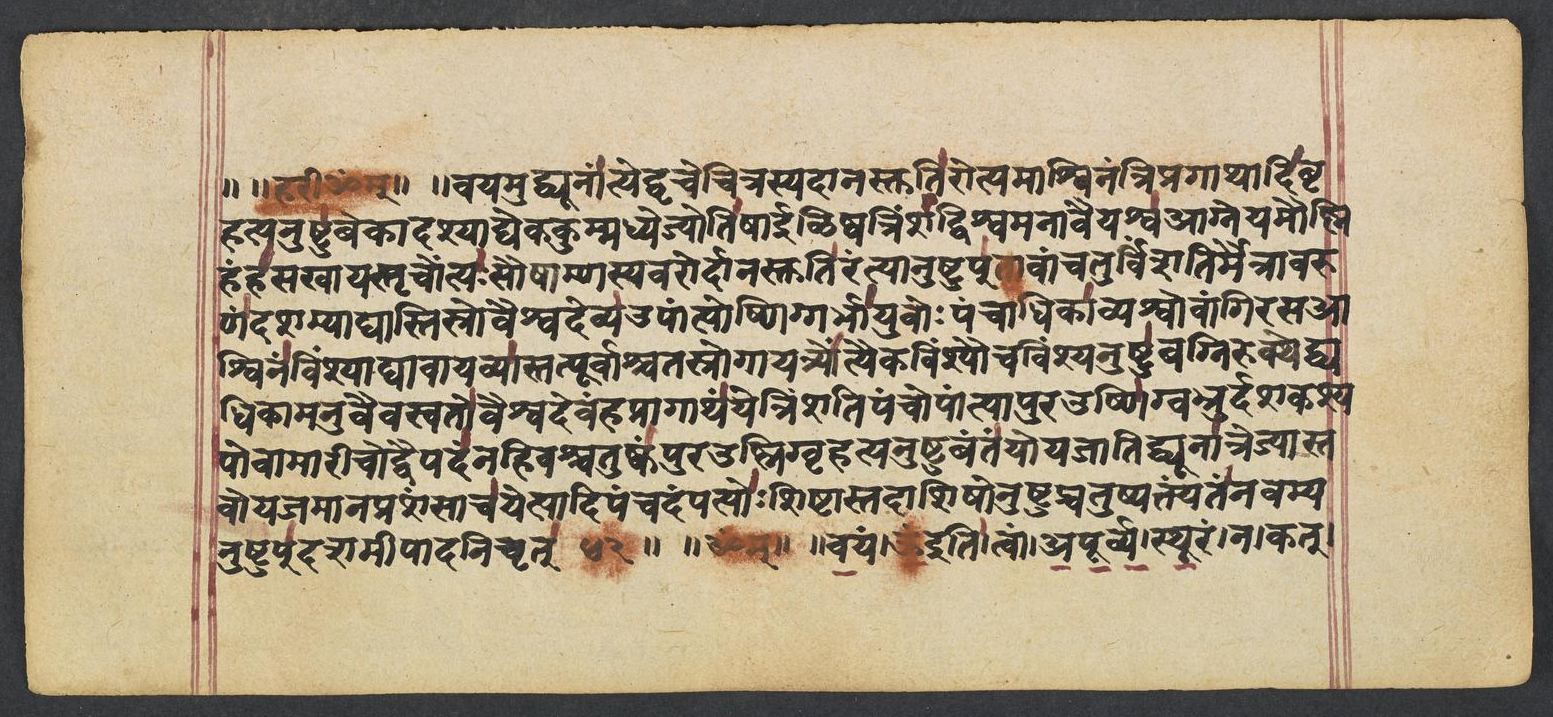
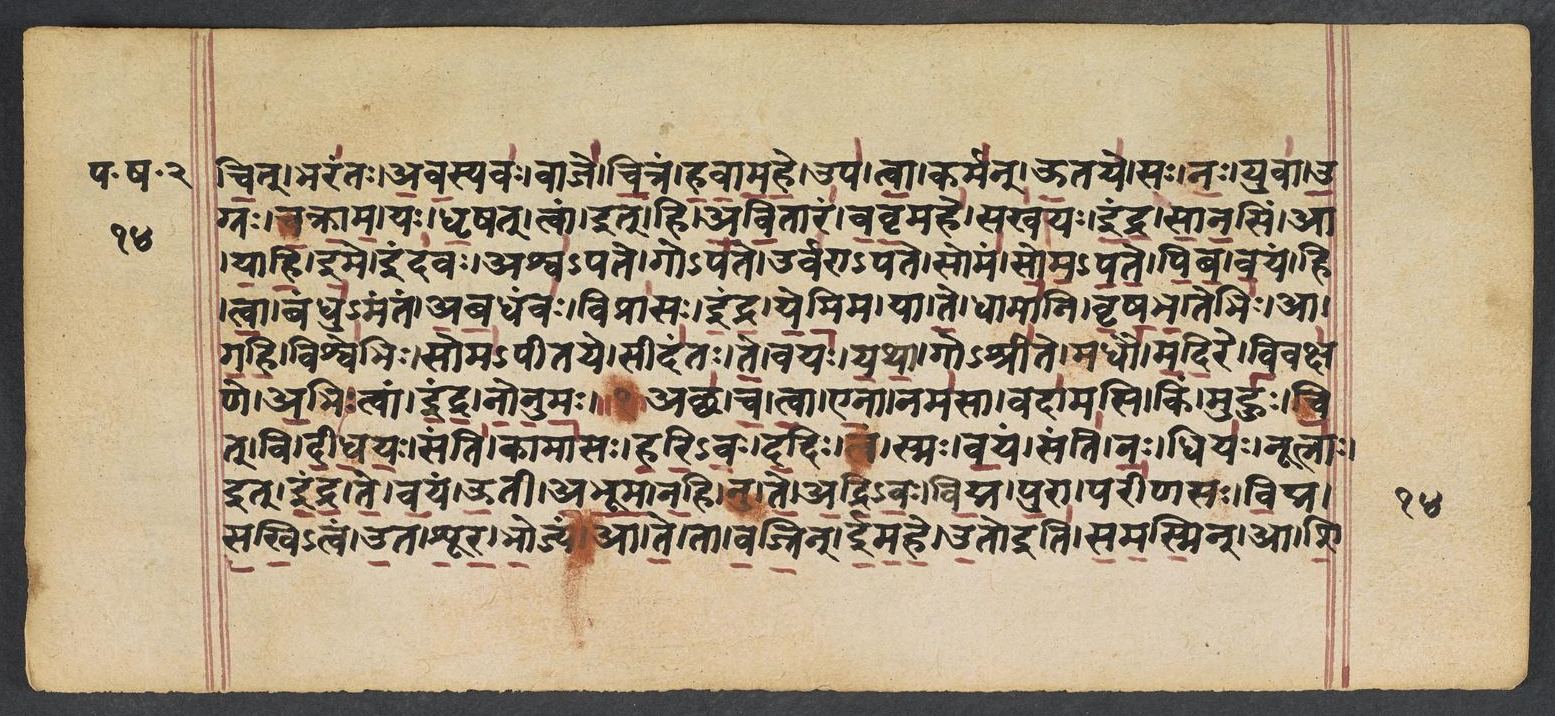
Where on the image
Penn Ms. Coll. 390 Item 41, fol. 592v (numbered 14v by the scribe) (OPenn image 593, upper leaf). Checked on the image: the Rigveda text on this page begins in RV 8.21.1 ‹cit bharantaḥ avasyavaḥ vāje›. The next page with Rigveda text, fol. 593r (numbered 15r by the scribe), begins in RV 8.21.8 ‹-śiśīhi naḥ vaso iti›. Verses 8.21.1-7 end on this page; 8.21.1 begins on fol. 592r (numbered 14r by the scribe).
1va̱yam u̱ tvām a̍pūrvya sthū̱raṁ na kac ci̱d bhara̍nto 'va̱syava̍ḥ | vāje̍ ci̱traṁ ha̍vāmahe ||
2upa̍ tvā̱ karma̍nn ū̱taye̱ sa no̱ yuvo̱graś ca̍krāma̱ yo dhṛ̱ṣat | tvām id dhy a̍vi̱tāra̍ṁ vavṛ̱mahe̱ sakhā̍ya indra sāna̱sim ||
3ā yā̍hī̱ma inda̱vo 'śva̍pate̱ gopa̍ta̱ urva̍rāpate | soma̍ṁ somapate piba ||
4va̱yaṁ hi tvā̱ bandhu̍mantam aba̱ndhavo̱ viprā̍sa indra yemi̱ma | yā te̱ dhāmā̍ni vṛṣabha̱ tebhi̱r ā ga̍hi̱ viśve̍bhi̱ḥ soma̍pītaye ||
5sīda̍ntas te̱ vayo̍ yathā̱ gośrī̍te̱ madhau̍ madi̱re vi̱vakṣa̍ṇe | a̱bhi tvām i̍ndra nonumaḥ ||
6acchā̍ ca tvai̱nā nama̍sā̱ vadā̍masi̱ kim muhu̍ś ci̱d vi dī̍dhayaḥ | santi̱ kāmā̍so harivo da̱diṣ ṭvaṁ smo va̱yaṁ santi̍ no̱ dhiya̍ḥ ||
7nūtnā̱ id i̍ndra te va̱yam ū̱tī a̍bhūma na̱hi nū te̍ adrivaḥ | vi̱dmā pu̱rā parī̍ṇasaḥ ||
Compare: Padapāṭha (word-by-word text written in the manuscript; Sansknet e-text via GRETIL)
1vayam | oṃ iti | tvām | apūrvya | sthūram | na | kat | cit | bharantaḥ | avasyavaḥ | vāje | citram | havāmahe
2upa | tvā | karman | ūtaye | saḥ | naḥ | yuvā | ugraḥ | cakāma | yaḥ | dhṛṣat | tvām | it | hi | avitāram | vavṛmahe | sakhāyaḥ | indra | sānasim
3ā | yāhi | ime | indavaḥ | aśva-pate | go--pate | urvarāpate | somam | soma-pate | piba
4vayam | hi | tvā | bandhu-mantam | abandhavaḥ | viprāsaḥ | indra | yemima | yā | te | dhāmāni | vṛṣabha | tebhiḥ | ā | gahi | viśvebhiḥ | soma-pītaye
5sīdantaḥ | te | vayaḥ | yathā | go--śrīte | madhau | madire | vivakṣaṇe | abhi | tvām | indra | nonumaḥ
6accha | ca | tvā | enā | namasā | vadāmasi | kim | muhuḥ | cit | vi | dīdhayaḥ | santi | kāmāsaḥ | hari-vaḥ | dadiḥ | tvam | smaḥ | vayam | santi | naḥ | dhiyaḥ
7nūtnāḥ | it | indra | te | vayam | ūtī | abhūma | nahi | nu | te | adri-vaḥ | vidma | purā | parīṇasaḥ
1WE call on thee, O Matchless One! We seeking help, possessing nothing firm ourselves, Call on thee wonderful in fight
2On thee for aid in sacrifice. This youth of ours, the bold, the mighty, hath gone forth. We therefore, we thy friends, Indra, have chosen thee, free-giver, as our Guardian God.
3Come hither, for the drops are here, O Lord of corn-lands. Lord of horses, Lord of kine: Drink thou the Soma, Soma's Lord!
4For we the kinless singers have drawn hither thee, O Indra, who hast numerous kin. With all the forms thou hast, comic thou of bull-like strength, come near to drink the Soma juice.
5Sitting like birds beside thy meath., mingled with milk, that gladdeneth and exalteth thee, Indra, to thee we sing aloud.
6We speak to thee with this our reverential prayer. Why art thou pondering yet awhile? Here are our wishes; thou art liberal, Lord of Bays: we and our hymns are present here.
7For not in recent times alone, O Indra, Thunder-armed, have we obtained thine aid. Of old we knew thy plenteous wealth.
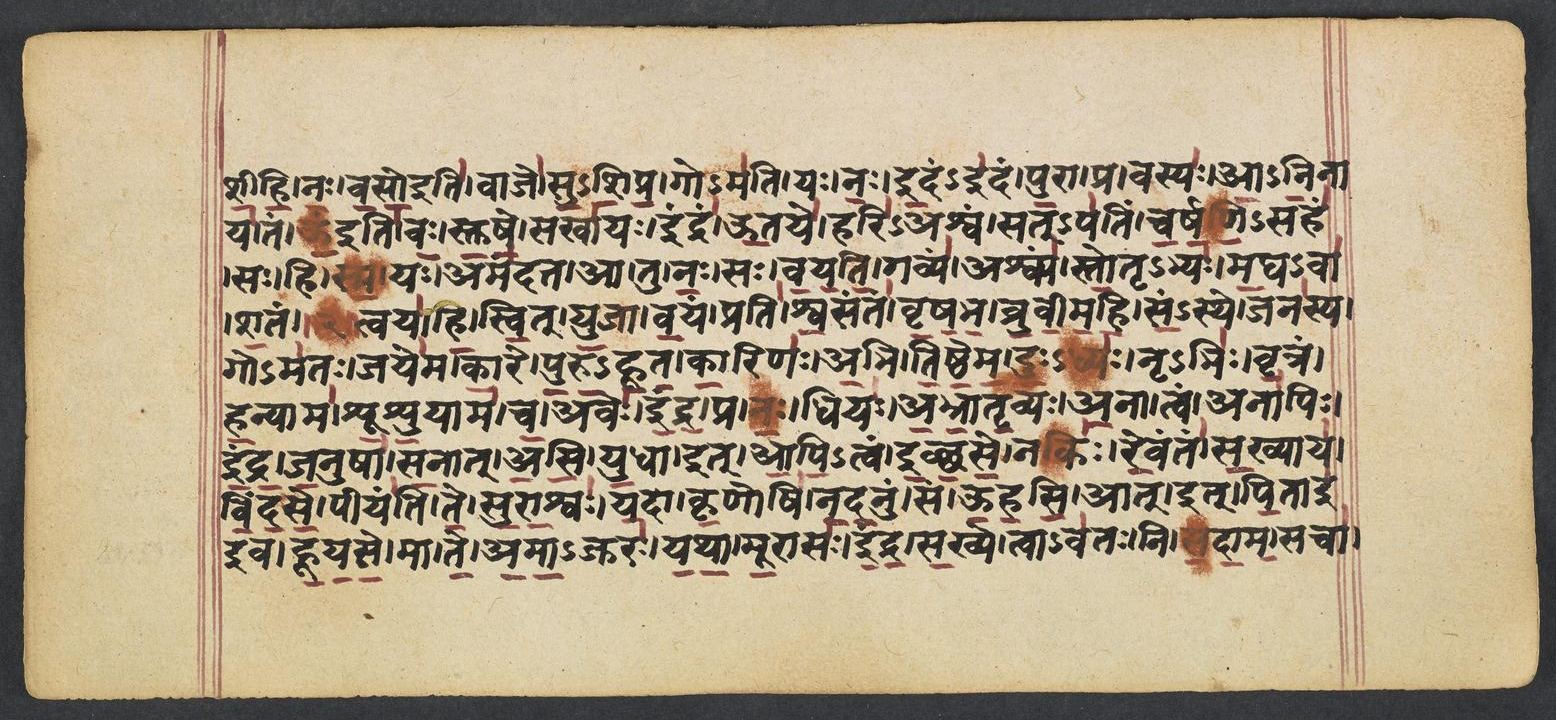
Where on the image
Penn Ms. Coll. 390 Item 41, fol. 593r (numbered 15r by the scribe) (OPenn image 593, lower leaf). Checked on the image: the Rigveda text on this page begins in RV 8.21.8 ‹-śiśīhi naḥ vaso iti›. The next page with Rigveda text, fol. 593v (numbered 15v by the scribe), begins in RV 8.21.15 ‹sute›. Verses 8.21.8-14 end on this page; 8.21.8 begins on fol. 592v (numbered 14v by the scribe).
8vi̱dmā sa̍khi̱tvam u̱ta śū̍ra bho̱jya1̱̍m ā te̱ tā va̍jrinn īmahe | u̱to sa̍masmi̱nn ā śi̍śīhi no vaso̱ vāje̍ suśipra̱ goma̍ti ||
9yo na̍ i̱dam-i̍dam pu̱rā pra vasya̍ āni̱nāya̱ tam u̍ vaḥ stuṣe | sakhā̍ya̱ indra̍m ū̱taye̍ ||
10harya̍śva̱ṁ satpa̍tiṁ carṣaṇī̱saha̱ṁ sa hi ṣmā̱ yo ama̍ndata | ā tu na̱ḥ sa va̍yati̱ gavya̱m aśvya̍ṁ sto̱tṛbhyo̍ ma̱ghavā̍ śa̱tam ||
11tvayā̍ ha svid yu̱jā va̱yam prati̍ śva̱santa̍ṁ vṛṣabha bruvīmahi | sa̱ṁsthe jana̍sya̱ goma̍taḥ ||
12jaye̍ma kā̱re pu̍ruhūta kā̱riṇo̱ 'bhi ti̍ṣṭhema dū̱ḍhya̍ḥ | nṛbhi̍r vṛ̱traṁ ha̱nyāma̍ śūśu̱yāma̱ cāve̍r indra̱ pra ṇo̱ dhiya̍ḥ ||
13a̱bhrā̱tṛ̱vyo a̱nā tvam anā̍pir indra ja̱nuṣā̍ sa̱nād a̍si | yu̱dhed ā̍pi̱tvam i̍cchase ||
14nakī̍ re̱vanta̍ṁ sa̱khyāya̍ vindase̱ pīya̍nti te surā̱śva̍ḥ | ya̱dā kṛ̱ṇoṣi̍ nada̱nuṁ sam ū̍ha̱sy ād it pi̱teva̍ hūyase ||
Compare: Padapāṭha (word-by-word text written in the manuscript; Sansknet e-text via GRETIL)
8vidma | sakhi-tvam | uta | śūra | bhojyam | ā | te | tā | vajrin | īmahe | uto iti | samasmin | ā | śiśīhi | naḥ | vaso iti | vāje | su-śipra | go--mati
9yaḥ | naḥ | idam-idam | purā | pra | vasyaḥ | ānināya | tam | oṃ iti | vaḥ | stuṣe | sakhāyaḥ | indram | ūtaye
10hari-aśvam | sat-patim | carṣaṇi-saham | saḥ | hi | sma | yaḥ | amandata | ā | tu | naḥ | saḥ | vayati | gavyam | aśvyam | stotṛ-bhyaḥ | magha-vā | śatam
11tvayā | ha | svit | yujā | vayam | prati | śvasantam | vṛṣabha | bruvīmahi | saṃsthe | janasya | go--mataḥ
12jayema | kāre | puru-hūta | kāriṇaḥ | abhi | tiṣṭhema | duḥ-dhyaḥ | nṛ-bhiḥ | vṛtram | hanyāma | śūśuyāma | ca | aveḥ | indra | pra | naḥ | dhiyaḥ
13abhrātṛvyaḥ | anā | tvam | anāpiḥ | indra | januṣā | sanāt | asi | yudhā | it | āpi-tvam | icchase
14nakiḥ | revantam | sakhyāya | vindase | pīyanti | te | surāśvaḥ | yadā | kṛṇoṣi | nadanum | sam | ūhasi | āt | it | pitāiva | hūyase
8Hero, we knew thy friendship and thy rich rewards: these, Thunderer, now we crave of thee. O Vasu, for all wealth that cometh of the kine, sharpen our powers, fair-visored God.
9Him who of old hath brought to us this and that blessing, him I magnify for you, Even Indra, O my friends, for help
10Borne by Bay Steeds, the Lord of heroes, ruling men, for it is he who takes; delight. May Maghavan bestow on us his worshippers hundreds of cattle and of steeds.
11Hero, may we, with thee for Friend, withstand the man who pants against us in his wrath, In fight with people rich in kine.
12May we be victors in the singer's battlesong, and meet the wicked, Much invoked! With heroes smite the foeman and show forth our strength. O Indra, further thou our thoughts.
13O Indra, from all ancient time rivalless ever and companionless art thou: Thou seekest comradeship in war.
14Thou findest not the wealthy man to be thy friend: those scorn thee who are flown with wine. What time thou thunderest and gatherest, then thou, even as a Father, art invoked.
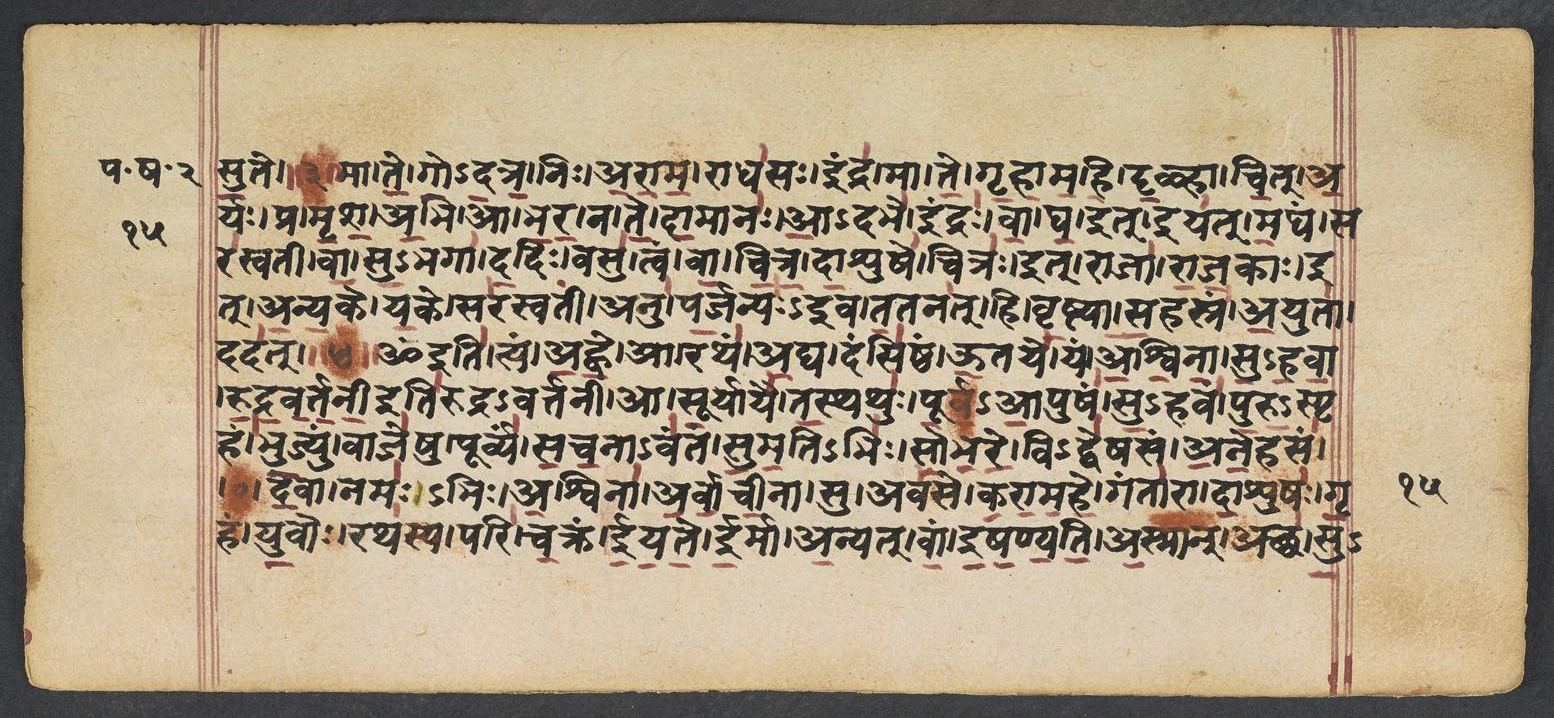
Where on the image
Penn Ms. Coll. 390 Item 41, fol. 593v (numbered 15v by the scribe) (OPenn image 594, upper leaf). Checked on the image: the Rigveda text on this page begins in RV 8.21.15 ‹sute›. The next page with Rigveda text, fol. 594r (numbered 16r by the scribe), begins in RV 8.22.4 ‹vām śubhaḥ patī iti›. Verses 8.21.15-18 end on this page; 8.21.15 begins on fol. 593r (numbered 15r by the scribe).
15mā te̍ amā̱juro̍ yathā mū̱rāsa̍ indra sa̱khye tvāva̍taḥ | ni ṣa̍dāma̱ sacā̍ su̱te ||
16mā te̍ godatra̱ nir a̍rāma̱ rādha̍sa̱ indra̱ mā te̍ gṛhāmahi | dṛ̱ḻhā ci̍d a̱ryaḥ pra mṛ̍śā̱bhy ā bha̍ra̱ na te̍ dā̱māna̍ ā̱dabhe̍ ||
17indro̍ vā̱ ghed iya̍n ma̱ghaṁ sara̍svatī vā su̱bhagā̍ da̱dir vasu̍ | tvaṁ vā̍ citra dā̱śuṣe̍ ||
18citra̱ id rājā̍ rāja̱kā id a̍nya̱ke ya̱ke sara̍svatī̱m anu̍ | pa̱rjanya̍ iva ta̱tana̱d dhi vṛ̱ṣṭyā sa̱hasra̍m a̱yutā̱ dada̍t ||
Compare: Padapāṭha (word-by-word text written in the manuscript; Sansknet e-text via GRETIL)
15mā | te | amājuraḥ | yathā | mūrāsaḥ | indra | sakhye | tvāvataḥ | ni | sadāma | sacā | sute
16mā | te | go--datra | niḥ | arāma | rādhasaḥ | indra | mā | te | gṛhāmahi | dṛḷhā | cit | aryaḥ | pra | mṛśa | abhi | ā | bhara | na | te | dāmānaḥ | ādabhe
17indraḥ | vā | gha | it | iyat | magham | sarasvatī | vā | su-bhagā | dadiḥ | vasu | tvam | vā | citra | dāśuṣe
18citraḥ | it | rājā | rājakāḥ | it | anyake | yake | sarasvatīm | anu | parjanyaḥ-iva | tatanat | hi | vṛṣṭyā | sahasram | ayutā | dadat
15O Indra, let us not, like fools who waste their lives at home, with friendship such as thine Sit idly by the poured-out juice.
16Giver of kine, may we not miss thy gracious gifts: let us not rob thee of thine own. Strip even the strong places of the foe, and bring: thy gifts can never be made vain.
17Indra or blest Sarasvatî alone bestows such wealth, treasure so great, or thou, O Chitra, on the worshipper.
18Chitra is King, and only kinglings are the rest who dwell beside Sarasvatî. He, like Parjanya with his rain, hath spread himself with thousand, yea, with myriad gifts.
Notes
- Sanskrit: Aufrecht's edition (1877) with the Vedic accents, as entered by van Nooten and Holland (GRETIL).
- English: Ralph T. H. Griffith, The Hymns of the Rigveda (1889-1892; 2nd ed. 1896-1897), from the VedaWeb digital text; OCR slips in that text were corrected against the printed 2nd edition (data/sources/rigveda/griffith_errata.json).
- Padapāṭha (edition text): Sansknet e-text via GRETIL (CC BY-NC-SA 4.0).
Cite
Sources
- Source: Penn Ms. Coll. 390 Item 41 (undated (catalogued with Penn's 18th-19th c. Vedic manuscripts)), OPenn, Public Domain Mark + Aufrecht's accented text (GRETIL) + Griffith's English (VedaWeb) (holding institution)
- Critical edition: Aufrecht (1877), accented e-text via GRETIL
← previous · → next · v cycle view · l back to library