Rigveda 8.22: To Asvins
Introduction
Rigveda 8.22 is a hymn of 18 verses addressed to Asvins. It stands in book (maṇḍala) 8, the book of the Kaṇva and Aṅgiras poets. The Rigveda is the oldest collection of Sanskrit hymns, composed in the second half of the second millennium BCE and handed down orally for many centuries before it was written down.
The manuscript shown is Penn Ms. Coll. 390 Item 41 (University of Pennsylvania), an undated paper manuscript of the padapāṭha (the word-by-word recitation text, in which every word is written separately and compounds are split) of the whole Ṛgveda in Devanāgarī, 884 leaves in fascicles, 7-9 lines to the page, accents in red; this hymn stands on fol. 593v-595r. Each section below gives the verses that end on one page; the page boundaries were read on the images (the opening words of every page), not counted out. Where the manuscript is a padapāṭha (the word-by-word recitation text), the section shows Aufrecht's continuous (saṃhitā) text first and, as the edition text, the padapāṭha of the same verses, which is the form written on the page.
How was this verified? (Provenance)
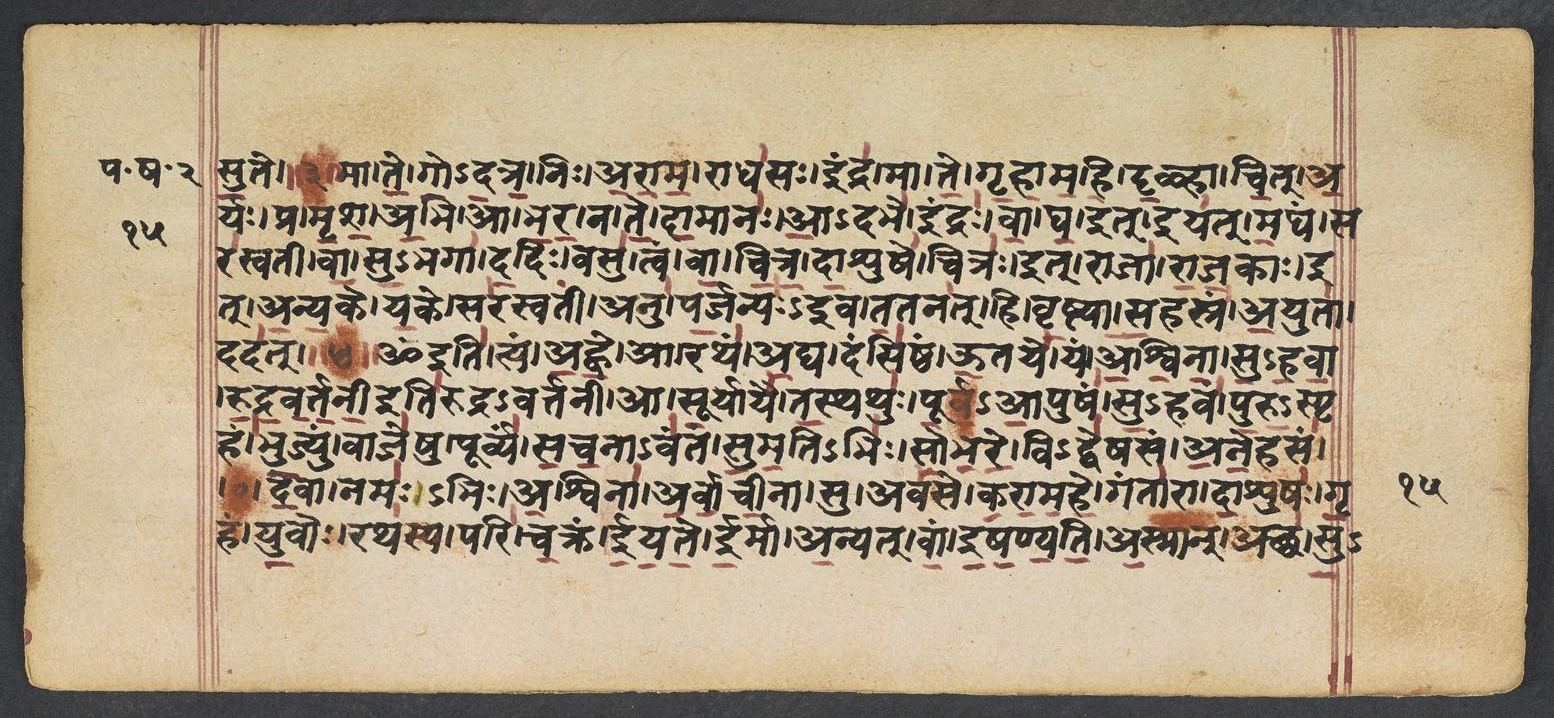
Where on the image
Penn Ms. Coll. 390 Item 41, fol. 593v (numbered 15v by the scribe) (OPenn image 594, upper leaf). Checked on the image: the Rigveda text on this page begins in RV 8.21.15 ‹sute›. The next page with Rigveda text, fol. 594r (numbered 16r by the scribe), begins in RV 8.22.4 ‹vām śubhaḥ patī iti›. Verses 8.22.1-3 end on this page.
1o tyam a̍hva̱ ā ratha̍m a̱dyā daṁsi̍ṣṭham ū̱taye̍ | yam a̍śvinā suhavā rudravartanī̱ ā sū̱ryāyai̍ ta̱sthathu̍ḥ ||
2pū̱rvā̱yuṣa̍ṁ su̱hava̍m puru̱spṛha̍m bhu̱jyuṁ vāje̍ṣu̱ pūrvya̍m | sa̱ca̱nāva̍ntaṁ suma̱tibhi̍ḥ sobhare̱ vidve̍ṣasam ane̱hasa̍m ||
3i̱ha tyā pu̍ru̱bhūta̍mā de̱vā namo̍bhir a̱śvinā̍ | a̱rvā̱cī̱nā sv ava̍se karāmahe̱ gantā̍rā dā̱śuṣo̍ gṛ̱ham ||
Compare: Padapāṭha (word-by-word text written in the manuscript; Sansknet e-text via GRETIL)
1o iti | tyam | ahve | ā | ratham | adya | daṃsiṣṭham | ūtaye | yam | aśvinā | su-havā | rudra-vartanī itirudra-vartanī | ā | sūryāyai | tasthathuḥ
2pūrva-āpuṣam | su-havam | puru-spṛham | bhujyum | vājeṣu | pūrvyam | sacanāvantam | sumati-bhiḥ | sobhare | vi-dveṣasam | anehasam
3iha | tyā | puru-bhūtamā | devā | namaḥ-bhiḥ | aśvinā | arvācīnā | su | avase | karāmahe | gantārā | dāśuṣaḥ | gṛham
1HITHERWARD have I called to-day, for succour, that most wondrous car Which ye ascended, Aṣvins, ye whose paths are red, swift to give Car, for Sûryâ's sake.
2Car ever young, much longed-for, easily invoked, soon guided, first in deeds of might, Which waits and serves, O Sobhari, with benevolence, without a rival or a foe.
3These Aṣvins with our homage, these Two Omnipresent Deities Hitherward will we bring for kind help, these who seek the dwelling of the worshipper.
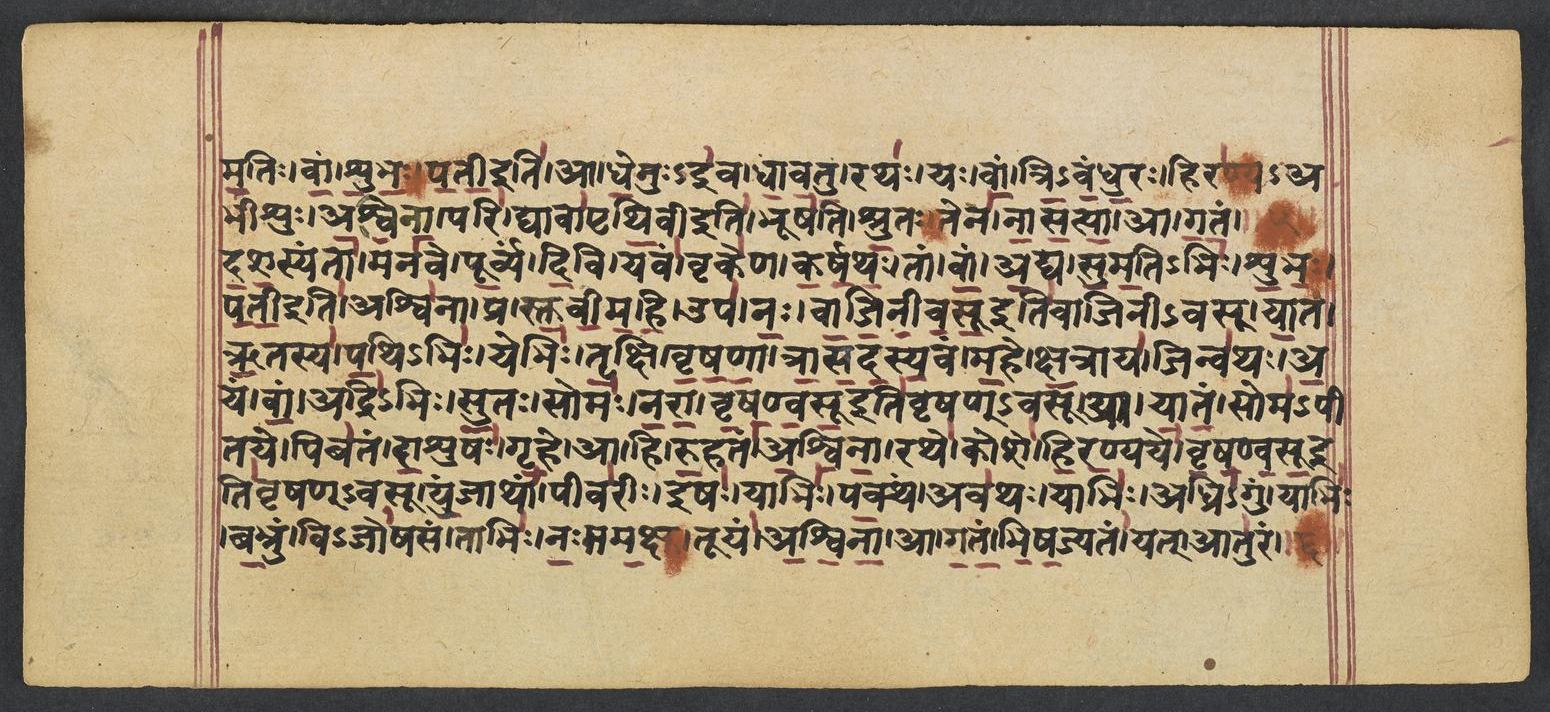
Where on the image
Penn Ms. Coll. 390 Item 41, fol. 594r (numbered 16r by the scribe) (OPenn image 594, lower leaf). Checked on the image: the Rigveda text on this page begins in RV 8.22.4 ‹vām śubhaḥ patī iti›. The next page with Rigveda text, fol. 594v (numbered 16v by the scribe), begins in RV 8.22.11 ‹yat adhri-gāvaḥ adhrigūity adhri-gū›. Verses 8.22.4-10 end on this page; 8.22.4 begins on fol. 593v (numbered 15v by the scribe).
4yu̱vo ratha̍sya̱ pari̍ ca̱kram ī̍yata ī̱rmānyad vā̍m iṣaṇyati | a̱smām̐ acchā̍ suma̱tir vā̍ṁ śubhas patī̱ ā dhe̱nur i̍va dhāvatu ||
5ratho̱ yo vā̍ṁ trivandhu̱ro hira̍ṇyābhīśur aśvinā | pari̱ dyāvā̍pṛthi̱vī bhūṣa̍ti śru̱tas tena̍ nāsa̱tyā ga̍tam ||
6da̱śa̱syantā̱ mana̍ve pū̱rvyaṁ di̱vi yava̱ṁ vṛke̍ṇa karṣathaḥ | tā vā̍m a̱dya su̍ma̱tibhi̍ḥ śubhas patī̱ aśvi̍nā̱ pra stu̍vīmahi ||
7upa̍ no vājinīvasū yā̱tam ṛ̱tasya̍ pa̱thibhi̍ḥ | yebhi̍s tṛ̱kṣiṁ vṛ̍ṣaṇā trāsadasya̱vam ma̱he kṣa̱trāya̱ jinva̍thaḥ ||
8a̱yaṁ vā̱m adri̍bhiḥ su̱taḥ somo̍ narā vṛṣaṇvasū | ā yā̍ta̱ṁ soma̍pītaye̱ piba̍taṁ dā̱śuṣo̍ gṛ̱he ||
9ā hi ru̱hata̍m aśvinā̱ rathe̱ kośe̍ hira̱ṇyaye̍ vṛṣaṇvasū | yu̱ñjāthā̱m pīva̍rī̱r iṣa̍ḥ ||
10yābhi̍ḥ pa̱ktham ava̍tho̱ yābhi̱r adhri̍gu̱ṁ yābhi̍r ba̱bhruṁ vijo̍ṣasam | tābhi̍r no ma̱kṣū tūya̍m aśvi̱nā ga̍tam bhiṣa̱jyata̱ṁ yad ātu̍ram ||
Compare: Padapāṭha (word-by-word text written in the manuscript; Sansknet e-text via GRETIL)
4yuvaḥ | rathasya | pari | cakram | īyate | īrmā | anyat | vām | iṣaṇyati | asmān | accha | su-matiḥ | vām | śubhaḥ | patī iti | ā | dhenuḥ-iva | dhāvatu
5rathaḥ | yaḥ | vām | tri-vandhuraḥ | hiraṇya-abhīśuḥ | aśvinā | pari | dyāvāpṛth ivī iti | bhūṣati | śrutaḥ | tena | nāsatyā | ā | gatam
6daśasyantā | manave | pūrvyam | divi | yavam | vṛkeṇa | karṣathaḥ | tā | vām | adya | sumati-bhiḥ | śubhaḥ | patī iti | aśvinā | pra | stuvīmahi
7upa | naḥ | vājinīvasūitivājinī-vasū | yātam | ṛtasya | pathi-bhiḥ | yebhiḥ | tṛkṣim | vṛṣaṇā | trāsadasyavam | mahe | kṣatrāya | jinvathaḥ
8ayam | vām | adri-bhiḥ | sutaḥ | somaḥ | narā | vṛṣaṇvasūitivṛṣaṇ-vasū | ā | yātam | soma-pītaye | pibatam | dāśuṣaḥ | gṛhe
9ā | hi | ruhatam | aśvinā | rathe | kośe | hiraṇyaye | vṛṣaṇvasūitivṛṣaṇ-vasū | yuñjāthām | pīvarīḥ | iṣaḥ
10yābhiḥ | paktham | avathaḥ | yābhiḥ | adhri-gum | yābhiḥ | babhrum | vi-joṣasam | tābhiḥ | naḥ | makṣu | tūyam | aśvinā | ā | gatam | bhiṣajyatam | yat | āturam
4One of your chariot wheels is moving swiftly round, one speeds for you its onward course. Like a milch-cow, O Lords of splendour, and with haste let your benevolence come to us.
5That chariot of yours which hath a triple seat and reins of gold, The famous car that traverseth the heaven and earth, thereon Nâsatyas, Aṣvins, come.
6Ye with your plough, when favouring Manu with your help, ploughed the first harvest in the sky. As such will we exalt you, Lords of splendour, now, O Aṣvins, with our prayer and praise.
7Come to us, Lords of ample wealth, by paths of everlasting Law, Whereby to high dominion ye with mighty strength raised Tr̥ikshi, Trasadasyu's son.
8This Soma pressed with stones is yours, ye Heroes, Lords of plenteous wealth. Approach to drink the Soma, come, drink in the worshipper's abode.
9O Aṣvins, mount the chariot, mount the golden seat, ye who are Lords of plenteous wealth, And bring to us abundant food.
10The aids wherewith ye helped Paktha and Adhrigt;, and Babhru severed from his friends,– With those, O Aṣvins, come hither with speed and soon, and heal whatever is diseased.
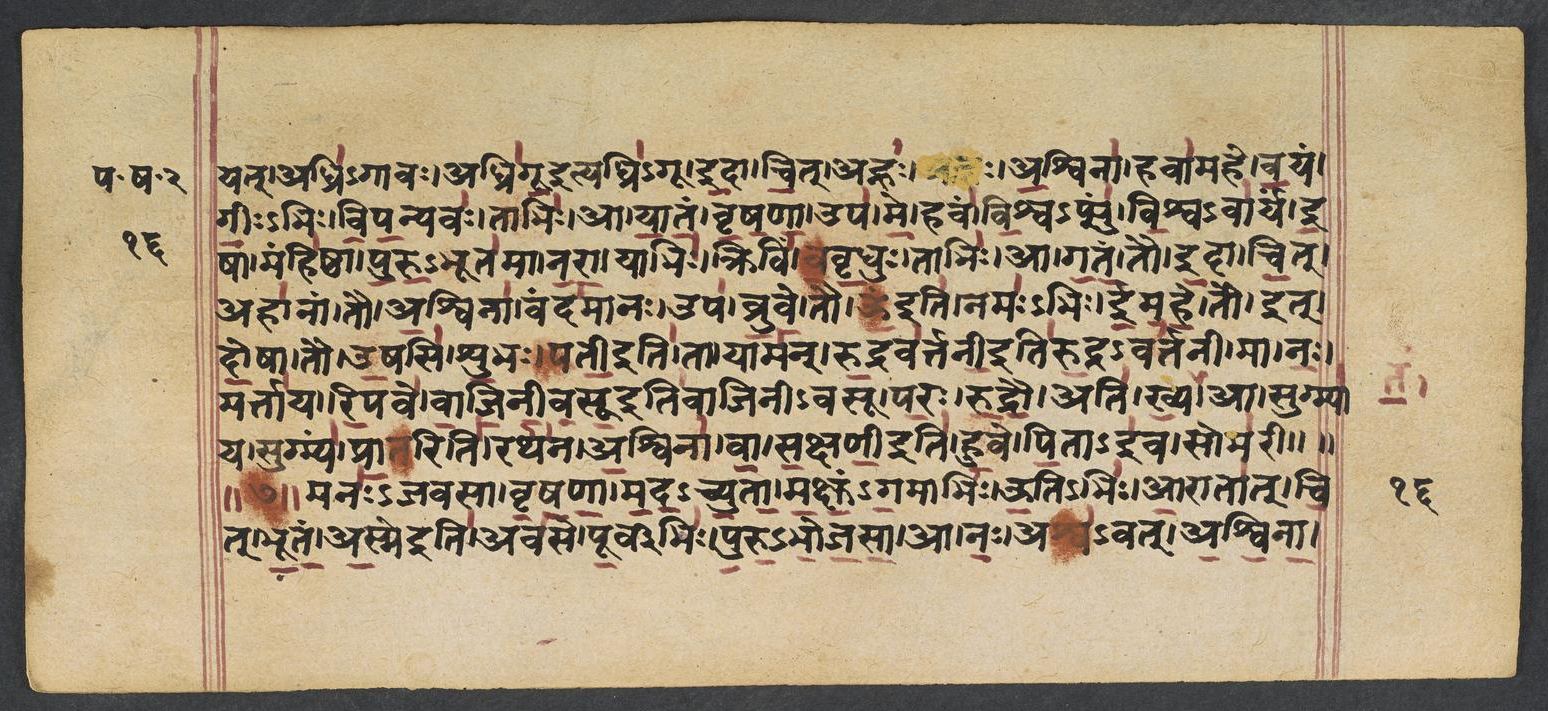
Where on the image
Penn Ms. Coll. 390 Item 41, fol. 594v (numbered 16v by the scribe) (OPenn image 595, upper leaf). Checked on the image: the Rigveda text on this page begins in RV 8.22.11 ‹yat adhri-gāvaḥ adhrigūity adhri-gū›. The next page with Rigveda text, fol. 595r (numbered 17r by the scribe), begins in RV 8.22.17 ‹vartiḥ yāsiṣṭam madhu-pātamā narā›. Verses 8.22.11-16 end on this page.
11yad adhri̍gāvo̱ adhri̍gū i̱dā ci̱d ahno̍ a̱śvinā̱ havā̍mahe | va̱yaṁ gī̱rbhir vi̍pa̱nyava̍ḥ ||
12tābhi̱r ā yā̍taṁ vṛṣa̱ṇopa̍ me̱ hava̍ṁ vi̱śvapsu̍ṁ vi̱śvavā̍ryam | i̱ṣā maṁhi̍ṣṭhā puru̱bhūta̍mā narā̱ yābhi̱ḥ krivi̍ṁ vāvṛ̱dhus tābhi̱r ā ga̍tam ||
13tāv i̱dā ci̱d ahā̍nā̱ṁ tāv a̱śvinā̱ vanda̍māna̱ upa̍ bruve | tā u̱ namo̍bhir īmahe ||
14tāv id do̱ṣā tā u̱ṣasi̍ śu̱bhas patī̱ tā yāma̍n ru̱drava̍rtanī | mā no̱ martā̍ya ri̱pave̍ vājinīvasū pa̱ro ru̍drā̱v ati̍ khyatam ||
15ā sugmyā̍ya̱ sugmya̍m prā̱tā rathe̍nā̱śvinā̍ vā sa̱kṣaṇī̍ | hu̱ve pi̱teva̱ sobha̍rī ||
16mano̍javasā vṛṣaṇā madacyutā makṣuṁga̱mābhi̍r ū̱tibhi̍ḥ | ā̱rāttā̍c cid bhūtam a̱sme ava̍se pū̱rvībhi̍ḥ purubhojasā ||
Compare: Padapāṭha (word-by-word text written in the manuscript; Sansknet e-text via GRETIL)
11yat | adhri-gāvaḥ | adhrigūity adhri-gū | idā | cit | ahnaḥ | aśvinā | havāmahe | vayam | gīḥ-bhiḥ | vipanyavaḥ
12tābhiḥ | ā | yātam | vṛṣaṇā | upa | me | havam | viśva-psum | viśva-vāryam | iṣā | maṃhiṣṭhā | puru-bhūtamā | narā | yābhiḥ | krivim | vavṛdhuḥ | tābhiḥ | ā | gatam
13tau | idā | cit | ahānām | tau | aśvinā | vandamānaḥ | upa | bruve | tau | oṃ iti | namaḥ-bhiḥ | īmahe
14tau | it | doṣā | tau | uṣasi | śubhaḥ | patī iti | tā | yāman | rudravartanī itirudra-vartanī | mā | naḥ | martāya | ripave | vājinīvasūitivājinī-vasū | paraḥ | rudrau | ati | khyatam
15ā | sugmyāya | sugmyam | prātariti | rathena | aśvinā | vā | sakṣaṇī iti | huve | pitāiva | sobharī
16manaḥ-javasā | vṛṣaṇā | mada-cyutā | makṣum-gamābhiḥ | ūti-bhiḥ | ārāttāt | cit | bhūtam | asme iti | avase | pūrvī-bhiḥ | puru-bhojasā
11When we continually invoke the Aṣvins, the resistless, at this time of day, We lovers of the song, with songs.
12Through these, ye Mighty Ones, come hither to my call which brings all blessings, wears all forms,– Tlirough which, All-present Heroes, lavishest of food ye strengthened Krivi, come through these.
13I speak to both of these as such, these Aṣvins whom I reverence at this time of day: With homage we entreat them both.
14Ye who are Lords of splendour, ye whose paths are red, at eve, at mom, at sacrifice, Give us not utterly as prey to mortal foe, ye Rudras, Lords of ample wealth.
15For bliss I call. the blissful car, at morn the inseparable Aṣvins with their car I call, like Sobhari our sire.
16Rapid as thought, and strong, and speeding to thejoy, bringing.your swiftly-coming help, Be to us a protection even from far away Lords of great wealth, with many aids.'
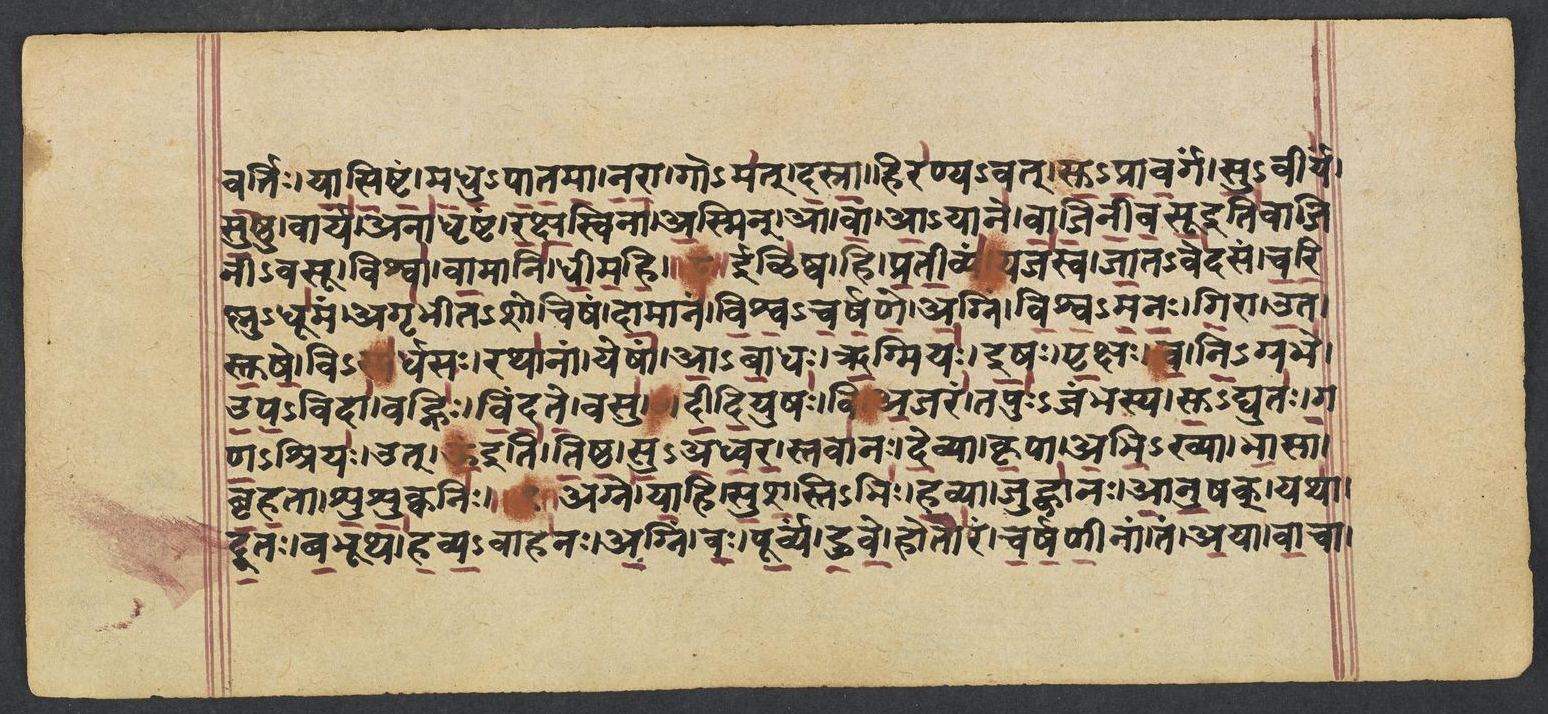
Where on the image
Penn Ms. Coll. 390 Item 41, fol. 595r (numbered 17r by the scribe) (OPenn image 595, lower leaf). Checked on the image: the Rigveda text on this page begins in RV 8.22.17 ‹vartiḥ yāsiṣṭam madhu-pātamā narā›. The next page with Rigveda text, fol. 595v (numbered 17v by the scribe), begins in RV 8.23.7 ‹gṛṇe tam oṃ iti›. Verses 8.22.17-18 end on this page; 8.22.17 begins on fol. 594v (numbered 16v by the scribe).
17ā no̱ aśvā̍vad aśvinā va̱rtir yā̍siṣṭam madhupātamā narā | goma̍d dasrā̱ hira̍ṇyavat ||
18su̱prā̱va̱rgaṁ su̱vīrya̍ṁ su̱ṣṭhu vārya̱m anā̍dhṛṣṭaṁ rakṣa̱svinā̍ | a̱sminn ā vā̍m ā̱yāne̍ vājinīvasū̱ viśvā̍ vā̱māni̍ dhīmahi ||
Compare: Padapāṭha (word-by-word text written in the manuscript; Sansknet e-text via GRETIL)
17ā | naḥ | aśva-vat | aśvinā | vartiḥ | yāsiṣṭam | madhu-pātamā | narā | go--mat | dasrā | hiraṇya-vat
18su-prāvargam | su-vīryam | suṣṭhu | vāryam | anādhṛṣṭam | rakṣasvinā | asmin | ā | vām | āyāne | vājinīvasūitivājinī-vasū | viśvā | vāmāni | dhīmahi
17Come, Wonder-Workers, to our home, our home, O Aṣvins, rich in cattle, steeds, and gold, Chief drinkers of the Soma's juice
18Choice-worthy strength, heroic, firm and excellent, uninjured by the Raksas foe, At this your coming nigh, ye Lords of ample wealth and all good things, may we obtain.
Notes
- Sanskrit: Aufrecht's edition (1877) with the Vedic accents, as entered by van Nooten and Holland (GRETIL).
- English: Ralph T. H. Griffith, The Hymns of the Rigveda (1889-1892; 2nd ed. 1896-1897), from the VedaWeb digital text; OCR slips in that text were corrected against the printed 2nd edition (data/sources/rigveda/griffith_errata.json).
- Padapāṭha (edition text): Sansknet e-text via GRETIL (CC BY-NC-SA 4.0).
Cite
Sources
- Source: Penn Ms. Coll. 390 Item 41 (undated (catalogued with Penn's 18th-19th c. Vedic manuscripts)), OPenn, Public Domain Mark + Aufrecht's accented text (GRETIL) + Griffith's English (VedaWeb) (holding institution)
- Critical edition: Aufrecht (1877), accented e-text via GRETIL
← previous · → next · v cycle view · l back to library