Rigveda 8.59: To Indra and Varuna
Introduction
Rigveda 8.59 is a hymn of 7 verses addressed to Indra and Varuna. It stands in book (maṇḍala) 8, the book of the Kaṇva and Aṅgiras poets. The Rigveda is the oldest collection of Sanskrit hymns, composed in the second half of the second millennium BCE and handed down orally for many centuries before it was written down.
The manuscript shown is Penn Ms. Coll. 390 Item 41 (University of Pennsylvania), an undated paper manuscript of the padapāṭha (the word-by-word recitation text, in which every word is written separately and compounds are split) of the whole Ṛgveda in Devanāgarī, 884 leaves in fascicles, 7-9 lines to the page, accents in red; this hymn stands on fol. 629v-630r. Each section below gives the verses that end on one page; the page boundaries were read on the images (the opening words of every page), not counted out. Where the manuscript is a padapāṭha (the word-by-word recitation text), the section shows Aufrecht's continuous (saṃhitā) text first and, as the edition text, the padapāṭha of the same verses, which is the form written on the page.
How was this verified? (Provenance)
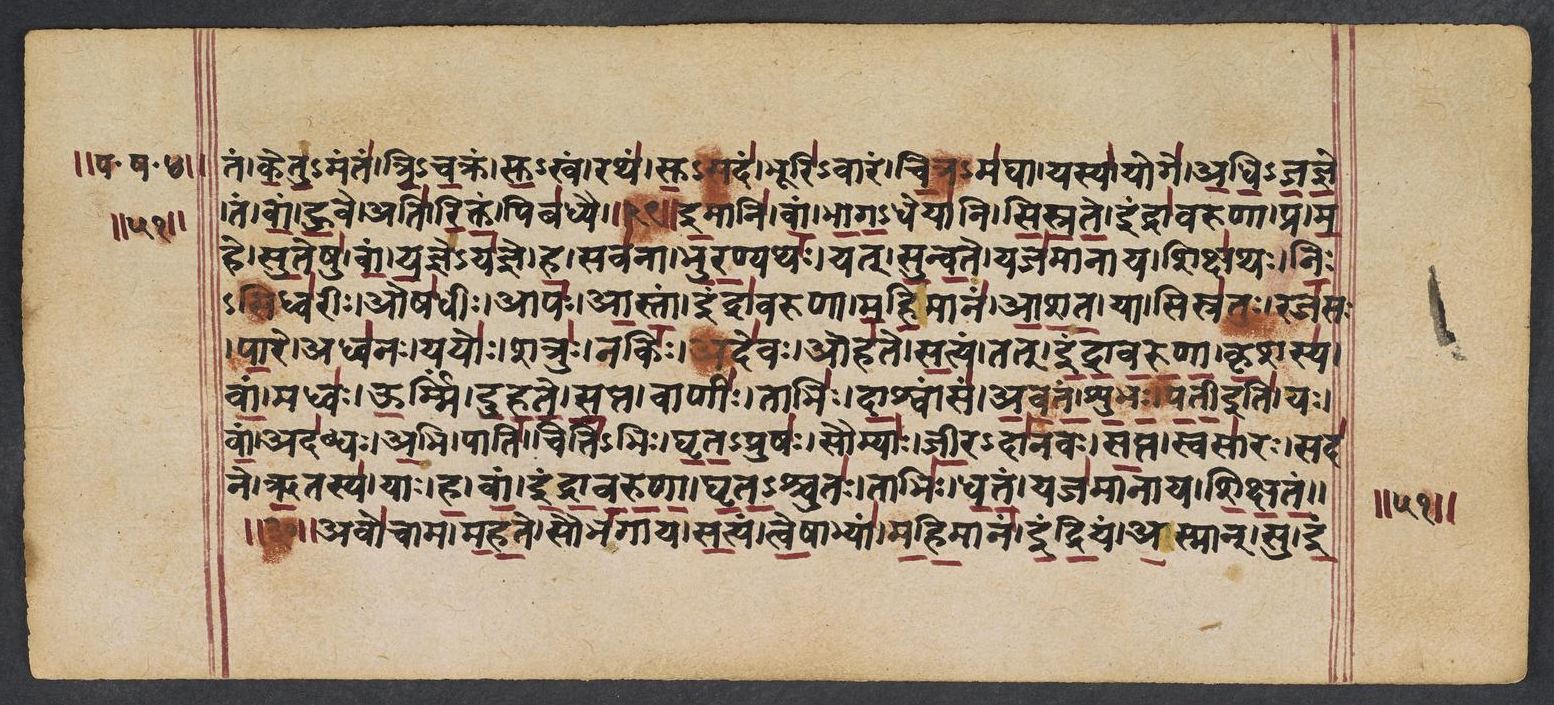
Where on the image
Penn Ms. Coll. 390 Item 41, fol. 629v (numbered 51v by the scribe) (OPenn image 630, upper leaf). Checked on the image: the Rigveda text on this page begins in RV 8.58.3 ‹-jyotiṣmantam ketu-mantam tri-cakram su-kham›. The next page with Rigveda text, fol. 630r (numbered 52r by the scribe), begins in RV 8.59.5 ‹-indrāvaruṇā ghṛta-ścutaḥ tri-bhiḥ sāptebhiḥ›. Verses 8.59.1-4 end on this page.
1i̱māni̍ vām bhāga̱dheyā̍ni sisrata̱ indrā̍varuṇā̱ pra ma̱he su̱teṣu̍ vām | ya̱jñe-ya̍jñe ha̱ sava̍nā bhura̱ṇyatho̱ yat su̍nva̱te yaja̍mānāya̱ śikṣa̍thaḥ ||
2ni̱ṣṣidhva̍rī̱r oṣa̍dhī̱r āpa̍ āstā̱m indrā̍varuṇā mahi̱māna̱m āśa̍ta | yā sisra̍tū̱ raja̍saḥ pā̱re adhva̍no̱ yayo̱ḥ śatru̱r naki̱r āde̍va̱ oha̍te ||
3sa̱tyaṁ tad i̍ndrāvaruṇā kṛ̱śasya̍ vā̱m madhva̍ ū̱rmiṁ du̍hate sa̱pta vāṇī̍ḥ | tābhi̍r dā̱śvāṁsa̍m avataṁ śubhas patī̱ yo vā̱m ada̍bdho a̱bhi pāti̱ citti̍bhiḥ ||
4ghṛ̱ta̱pruṣa̱ḥ saumyā̍ jī̱radā̍navaḥ sa̱pta svasā̍ra̱ḥ sada̍na ṛ̱tasya̍ | yā ha̍ vām indrāvaruṇā ghṛta̱ścuta̱s tābhi̍r dhatta̱ṁ yaja̍mānāya śikṣatam ||
Compare: Padapāṭha (word-by-word text written in the manuscript; Sansknet e-text via GRETIL)
1imāni | vām | bhāga-dheyāni | sisrate | indrāvaruṇā | pra | mahe | suteṣu | vām | yajñe--yajñe | ha | savanā | bhuraṇyathaḥ | yat | sunvate | yajamānāya | śikṣathaḥ
2niḥ-sidhvarīḥ | oṣadhīḥ | āpaḥ | āstām | indrāvaruṇā | mahimānam | āśata | yā | sisratuḥ | rajasaḥ | pāre | adhvanaḥ | yayoḥ | śatruḥ | nakiḥ | adevaḥ | ohate
3satyam | tat | indrāvaruṇā | kṛśasya | vām | madhvaḥ | ūrmim | duhate | sapta | vāṇīḥ | tābhiḥ | dāśvāṃsam | avatam | śubhaḥ | patī iti | yaḥ | vām | adabdhaḥ | abhi | pāti | citti-bhiḥ
4ghṛta-pruṣaḥ | saumyāḥ | jīra-dānavaḥ | sapta | svasāraḥ | sadane | ṛtasya | yāḥ | ha | vām | indrāvaruṇā | ghṛta-ścutaḥ | tābhiḥ | dhattam | yajamānāya | śikṣatam
1IN offerings poured to you, O Indra-Varuṇa, these shares of yours stream forth to glorify your state. Ye haste to the libations at each sacrifice when ye assist the worshipper who sheds the juice.
2The waters and the plants, O Indra-Varuṇa, had efficacious vigour, and attained to might: Ye who have gone beyond the path of middle air,– no godless man is worthy to be called your foe.
3True is your Kr̥iṣa's word, Indra and Varuṇa: The seven holy voices pour a wave of meath. For their sake, Lords of splendour! aid the pious man who, unbewildered, keeps you ever in his thoughts.
4Dropping oil, sweet with Soma, pouring forth their stream, are the Seven Sisters in the seat of sacrifice. These, dropping oil, are yours, O Indra-Varuṇa: with these enrich with gifts and help the worshipper.
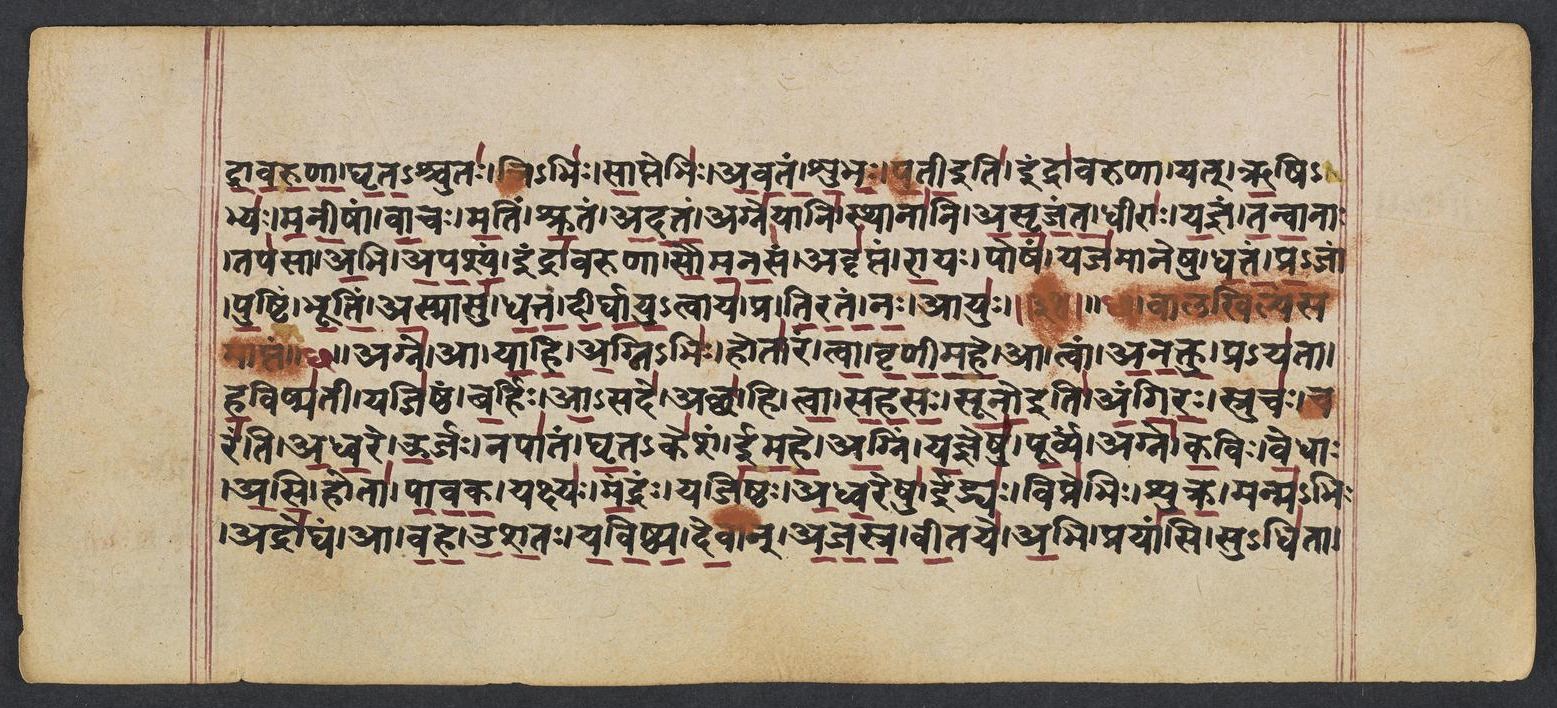
Where on the image
Penn Ms. Coll. 390 Item 41, fol. 630r (numbered 52r by the scribe) (OPenn image 630, lower leaf). Checked on the image: the Rigveda text on this page begins in RV 8.59.5 ‹-indrāvaruṇā ghṛta-ścutaḥ tri-bhiḥ sāptebhiḥ›. The next page with Rigveda text, fol. 630v (numbered 52v by the scribe), begins in RV 8.60.4 ‹ā vaso iti gahi›. Verses 8.59.5-7 end on this page; 8.59.5 begins on fol. 629v (numbered 51v by the scribe).
5avo̍cāma maha̱te saubha̍gāya sa̱tyaṁ tve̱ṣābhyā̍m mahi̱māna̍m indri̱yam | a̱smān sv i̍ndrāvaruṇā ghṛta̱ścuta̱s tribhi̍ḥ sā̱ptebhi̍r avataṁ śubhas patī ||
6indrā̍varuṇā̱ yad ṛ̱ṣibhyo̍ manī̱ṣāṁ vā̱co ma̱tiṁ śru̱tam a̍datta̱m agre̍ | yāni̱ sthānā̍ny asṛjanta̱ dhīrā̍ ya̱jñaṁ ta̍nvā̱nās tapa̍sā̱bhy a̍paśyam ||
7indrā̍varuṇā saumana̱sam adṛ̍ptaṁ rā̱yas poṣa̱ṁ yaja̍māneṣu dhattam | pra̱jām pu̱ṣṭim bhū̍tim a̱smāsu̍ dhattaṁ dīrghāyu̱tvāya̱ pra ti̍rataṁ na̱ āyu̍ḥ ||
Compare: Padapāṭha (word-by-word text written in the manuscript; Sansknet e-text via GRETIL)
5avocāma | mahate | saubhagāya | satyam | tveṣābhyām | mahimānam | indriyam | asmān | su | indrāvaruṇā | ghṛta-ścutaḥ | tri-bhiḥ | sāptebhiḥ | avatam | śubhaḥ | patī iti
6indrāvaruṇā | yat | ṛṣi-bhyaḥ | manīṣām | vācaḥ | matim | śrutam | adattam | agre | yāni | sthānāni | asṛjanta | dhīrāḥ | yajñam | tanvānāḥ | tapasā | abhi | apaśyam
7indrāvaruṇā | saumanasam | adṛptam | rāyaḥ | poṣam | yajamāneṣu | dhattam | pra-jām | puṣṭim | bhūtim | asmāsu | dhattam | dīrghāyu-tvāya | pra | tiratam | naḥ | āyuḥ
5To our great happiness have we ascribed to these Two Bright Ones truthfulness, great strength, and majesty. O Lords of splendour, aid us through the Three-times-Seven, as we pour holy oil, O Indra-Varuṇa.
6What ye in time of old Indra and Varuṇa, gave R̥ishis revelation, thought, and power of song, And places which the wise made, weaving sacrifice,– these through my spirit's fervid glow have I beheld.,
7O Indra-Varuṇa, grant to the worshippers cheerfulness void of pride, and wealth to nourish them. Vouchsafe us food, prosperity, and progeny, and lengthen out our days that we may see long life.
Notes
- Sanskrit: Aufrecht's edition (1877) with the Vedic accents, as entered by van Nooten and Holland (GRETIL).
- English: Ralph T. H. Griffith, The Hymns of the Rigveda (1889-1892; 2nd ed. 1896-1897), from the VedaWeb digital text; OCR slips in that text were corrected against the printed 2nd edition (data/sources/rigveda/griffith_errata.json).
- Padapāṭha (edition text): Sansknet e-text via GRETIL (CC BY-NC-SA 4.0).
Cite
Sources
- Source: Penn Ms. Coll. 390 Item 41 (undated (catalogued with Penn's 18th-19th c. Vedic manuscripts)), OPenn, Public Domain Mark + Aufrecht's accented text (GRETIL) + Griffith's English (VedaWeb) (holding institution)
- Critical edition: Aufrecht (1877), accented e-text via GRETIL
← previous · → next · v cycle view · l back to library