Rigveda 8.60: To Agni
Introduction
Rigveda 8.60 is a hymn of 20 verses addressed to Agni. It stands in book (maṇḍala) 8, the book of the Kaṇva and Aṅgiras poets. The Rigveda is the oldest collection of Sanskrit hymns, composed in the second half of the second millennium BCE and handed down orally for many centuries before it was written down.
The manuscript shown is Penn Ms. Coll. 390 Item 41 (University of Pennsylvania), an undated paper manuscript of the padapāṭha (the word-by-word recitation text, in which every word is written separately and compounds are split) of the whole Ṛgveda in Devanāgarī, 884 leaves in fascicles, 7-9 lines to the page, accents in red; this hymn stands on fol. 630r-631v. Each section below gives the verses that end on one page; the page boundaries were read on the images (the opening words of every page), not counted out. Where the manuscript is a padapāṭha (the word-by-word recitation text), the section shows Aufrecht's continuous (saṃhitā) text first and, as the edition text, the padapāṭha of the same verses, which is the form written on the page.
How was this verified? (Provenance)
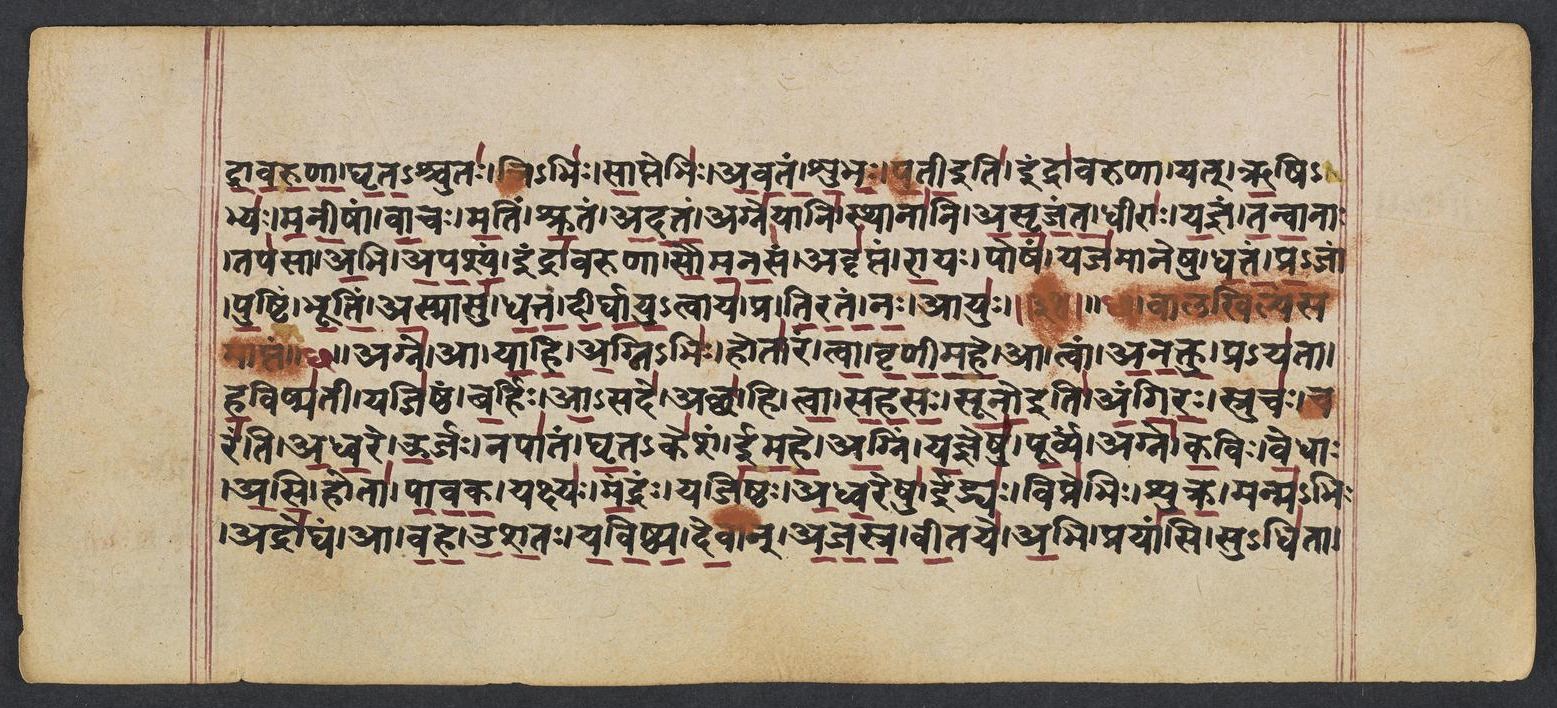
Where on the image
Penn Ms. Coll. 390 Item 41, fol. 630r (numbered 52r by the scribe) (OPenn image 630, lower leaf). Checked on the image: the Rigveda text on this page begins in RV 8.59.5 ‹-indrāvaruṇā ghṛta-ścutaḥ tri-bhiḥ sāptebhiḥ›. The next page with Rigveda text, fol. 630v (numbered 52v by the scribe), begins in RV 8.60.4 ‹ā vaso iti gahi›. Verses 8.60.1-3 end on this page.
1agna̱ ā yā̍hy a̱gnibhi̱r hotā̍raṁ tvā vṛṇīmahe | ā tvām a̍naktu̱ praya̍tā ha̱viṣma̍tī̱ yaji̍ṣṭham ba̱rhir ā̱sade̍ ||
2acchā̱ hi tvā̍ sahasaḥ sūno aṅgira̱ḥ sruca̱ś cara̍nty adhva̱re | ū̱rjo napā̍taṁ ghṛ̱take̍śam īmahe̱ 'gniṁ ya̱jñeṣu̍ pū̱rvyam ||
3agne̍ ka̱vir ve̱dhā a̍si̱ hotā̍ pāvaka̱ yakṣya̍ḥ | ma̱ndro yaji̍ṣṭho adhva̱reṣv īḍyo̱ vipre̍bhiḥ śukra̱ manma̍bhiḥ ||
Compare: Padapāṭha (word-by-word text written in the manuscript; Sansknet e-text via GRETIL)
1agne | ā | yāhi | agni-bhiḥ | hotāram | tvā | vṛṇīmahe | ā | tvām | anaktu | pra-yatā | haviṣmatī | yajiṣṭham | barhiḥ | āsade
2accha | hi | tvā | sahasaḥ | sūno iti | aṅgiraḥ | srucaḥ | caranti | adhvare | ūrjaḥ | napātam | ghṛta-keśam | īmahe | agnim | yajñeṣu | pūrvyam
3agne | kaviḥ | vedhāḥ | asi | hotā | pāvaka | yakṣyaḥ | mandraḥ | yajiṣṭhaḥ | adhvareṣu | īḍyaḥ | viprebhiḥ | śukra | manma-bhiḥ
1AGNI, come hither with thy fires; we choose thee as Invoking Priest. Let the extended ladle full of oil balm thee, best Priest, to sit on sacred grass.
2-For unto thee, O Angiras, O Son of Strength, move ladles in the sacrifice. To Agni, Child of Force, whose locks drop oil, we seek foremost in sacrificial rites.
3Agni, thou art Disposer, Sage, Herald, bright God! and worshipful, Best offerer, cheerful, to be praised in holy rites, pure Lord! by singers with their hymns.
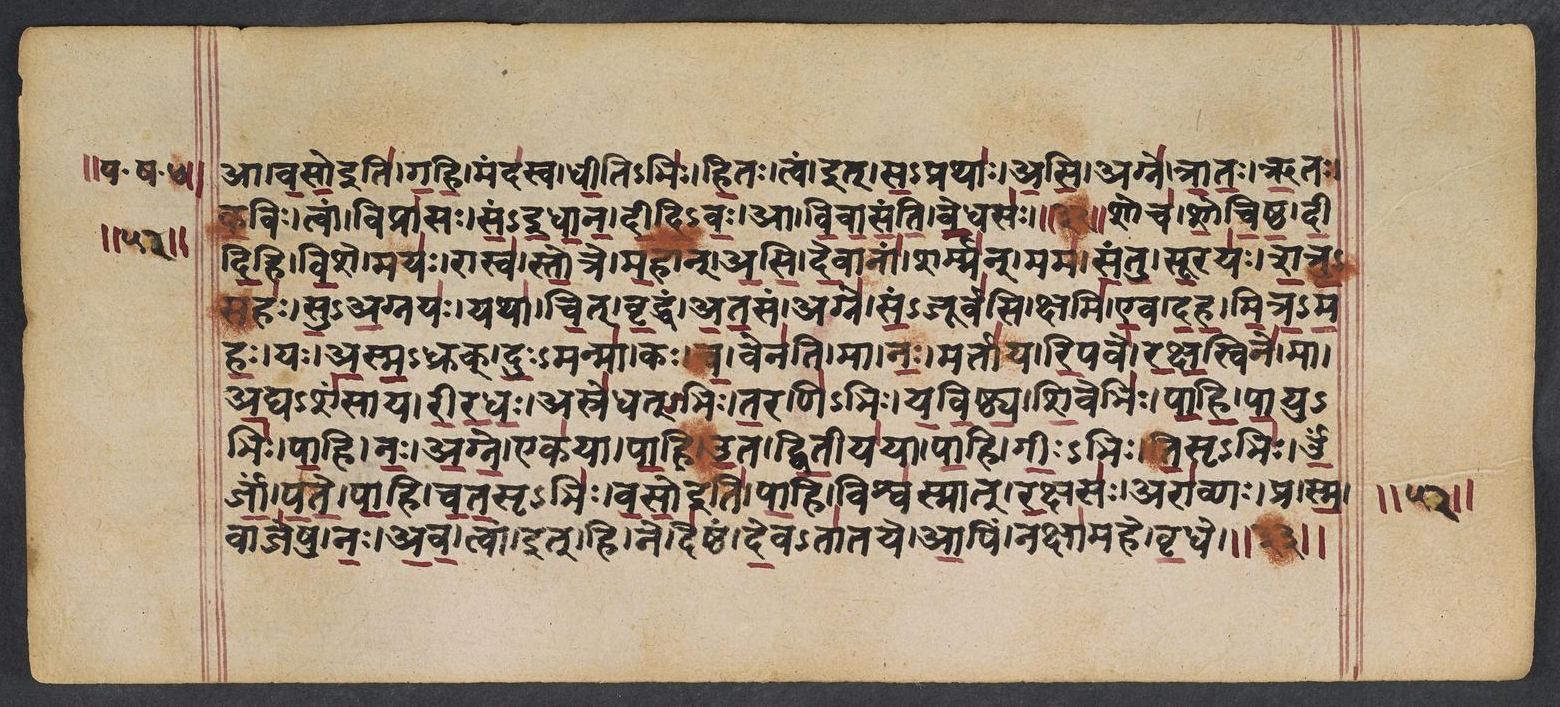
Where on the image
Penn Ms. Coll. 390 Item 41, fol. 630v (numbered 52v by the scribe) (OPenn image 631, upper leaf). Checked on the image: the Rigveda text on this page begins in RV 8.60.4 ‹ā vaso iti gahi›. The next page with Rigveda text, fol. 631r (numbered 53r by the scribe), begins in RV 8.60.11 ‹ā naḥ agne vayaḥ-vṛdham›. Verses 8.60.4-10 end on this page; 8.60.4 begins on fol. 630r (numbered 52r by the scribe).
4adro̍gha̱m ā va̍hośa̱to ya̍viṣṭhya de̱vām̐ a̍jasra vī̱taye̍ | a̱bhi prayā̍ṁsi̱ sudhi̱tā va̍so gahi̱ manda̍sva dhī̱tibhi̍r hi̱taḥ ||
5tvam it sa̱prathā̍ a̱sy agne̍ trātar ṛ̱tas ka̱viḥ | tvāṁ viprā̍saḥ samidhāna dīdiva̱ ā vi̍vāsanti ve̱dhasa̍ḥ ||
6śocā̍ śociṣṭha dīdi̱hi vi̱śe mayo̱ rāsva̍ sto̱tre ma̱hām̐ a̍si | de̱vānā̱ṁ śarma̱n mama̍ santu sū̱raya̍ḥ śatrū̱ṣāha̍ḥ sva̱gnaya̍ḥ ||
7yathā̍ cid vṛ̱ddham a̍ta̱sam agne̍ sa̱ṁjūrva̍si̱ kṣami̍ | e̱vā da̍ha mitramaho̱ yo a̍sma̱dhrug du̱rmanmā̱ kaś ca̱ vena̍ti ||
8mā no̱ martā̍ya ri̱pave̍ rakṣa̱svine̱ māghaśa̍ṁsāya rīradhaḥ | asre̍dhadbhis ta̱raṇi̍bhir yaviṣṭhya śi̱vebhi̍ḥ pāhi pā̱yubhi̍ḥ ||
9pā̱hi no̍ agna̱ eka̍yā pā̱hy u1̱̍ta dvi̱tīya̍yā | pā̱hi gī̱rbhis ti̱sṛbhi̍r ūrjām pate pā̱hi ca̍ta̱sṛbhi̍r vaso ||
10pā̱hi viśva̍smād ra̱kṣaso̱ arā̍vṇa̱ḥ pra sma̱ vāje̍ṣu no 'va | tvām id dhi nedi̍ṣṭhaṁ de̱vatā̍taya ā̱piṁ nakṣā̍mahe vṛ̱dhe ||
Compare: Padapāṭha (word-by-word text written in the manuscript; Sansknet e-text via GRETIL)
4adrogham | ā | vaha | uśataḥ | yaviṣṭhya | devān | ajasra | vītaye | abhi | prayāṃsi | su-dhitā | ā | vaso iti | gahi | mandasva | dhīti-bhiḥ | hitaḥ
5tvam | it | sa-prathāḥ | asi | agne | trātaḥ | ṛtaḥ | kaviḥ | tvām | viprāsaḥ | sam-idhāna | dīdi-vaḥ | ā | vivāsanti | vedhasaḥ
6śoca | śociṣṭha | dīdihi | viśe | mayaḥ | rāsva | stotre | mahān | asi | devānām | śarman | mama | santu | sūrayaḥ | śatru-sahaḥ | su-agnayaḥ
7yathā | cit | ṛddham | atasam | agne | sam-jūrvasi | kṣami | eva | daha | mitra-mahaḥ | yaḥ | asma-dhruk | duḥ-manmā | kaḥ | ca | venati
8mā | naḥ | martāya | ripave | rakṣasvine | mā | agha-śaṃsāya | rīradhaḥ | asredhat-bhiḥ | taraṇi-bhiḥ | yaviṣṭhya | śivebhiḥ | pāhi | pāyu-bhiḥ
9pāhi | naḥ | agne | ekayā | pāhi | uta | dvitīyayā | pāhi | gīḥ-bhiḥ | tisṛ-bhiḥ | ūrjām | pate | pāhi | catasṛ-bhiḥ | vaso iti
10pāhi | viśvasmāt | rakṣasaḥ | arāvṇaḥ | pra | sma | vājeṣu | naḥ | ava | tvām | it | hi | nediṣṭham | deva-tātaye | āpim | nakṣāmahe | vṛdhe
4Most Youthful and Eternal, bring the longing Gods to me, the guileless, for the feast. Come, Vasu, to the banquet that is well-prepared: rejoice thee, gracious, with our songs.
5Famed art thou, Agni, far and wide, Preserver, righteous, and a Sage. The holy singers, O refulgent kindled God! arrangers, call on thee to come.
6Shine, Most Resplendent! blaze, send bliss unto the folk, and to thy worshipper: Great art thou. So may my princes, with good fires, subduing foes, rest in the keeping of the Gods.
7Agni, as thou burnest down to earth even high-grown underwood, So, bright as Mitra is, burn him who injures us, him who plots ill against thy friend.
8Give us not as a prey to mortal enemy, nor to the wicked friend of fiends. With conquering guards, auspicious, unassailable, protect us, O Most Youthful God.
9Protect us, Agni, through the first, protect us through the second hymn, Protect us through three hymns, O Lord of Power and Might, through four hymns, Vasu, guard thou us.
10Preserve us from each fiend who brings the Gods no gift, preserve thou us in deeds of strength: For we possess in thee the nearest Friend of all, for service of the Gods and weal.
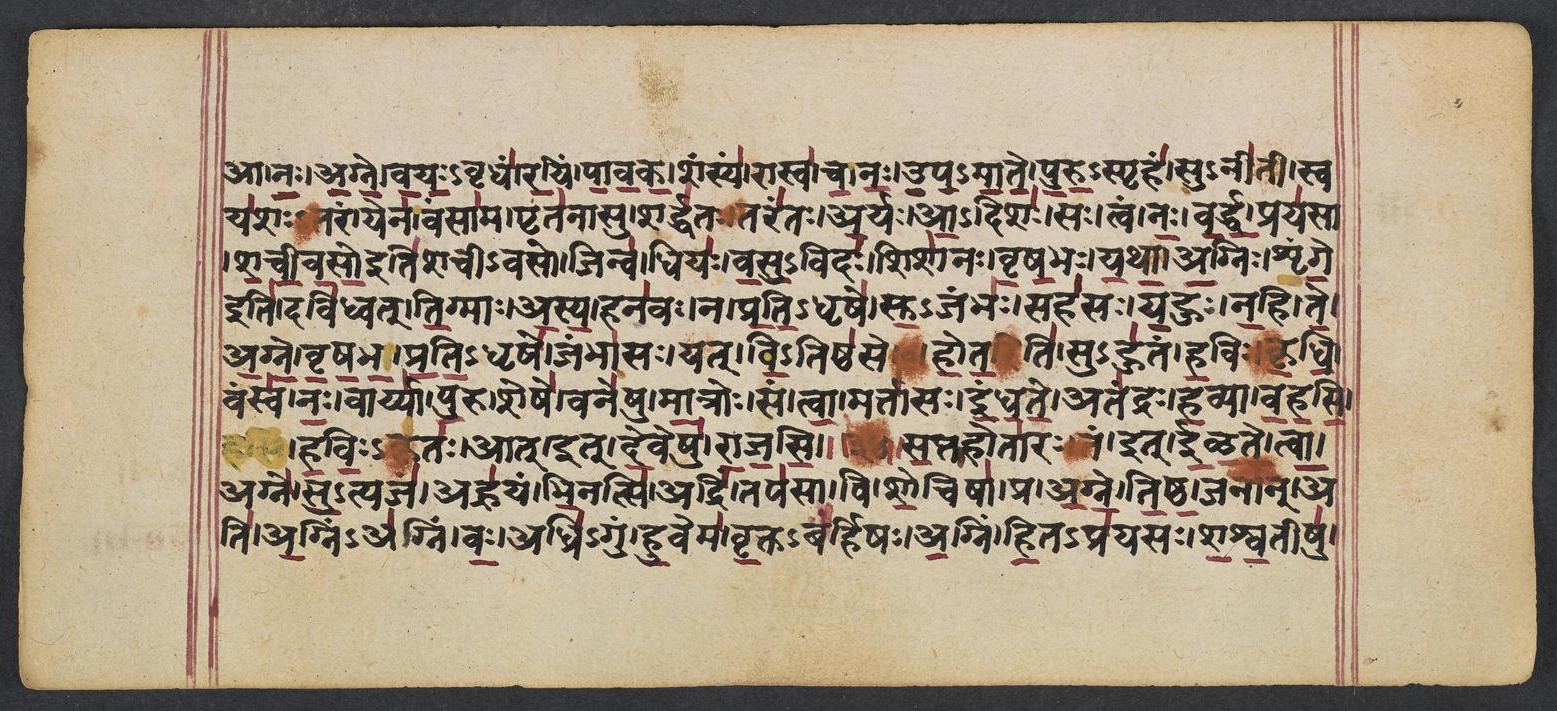
Where on the image
Penn Ms. Coll. 390 Item 41, fol. 631r (numbered 53r by the scribe) (OPenn image 631, lower leaf). Checked on the image: the Rigveda text on this page begins in RV 8.60.11 ‹ā naḥ agne vayaḥ-vṛdham›. The next page with Rigveda text, fol. 631v (numbered 53v by the scribe), begins in RV 8.60.17 ‹ā hotāram carṣaṇīnām›. Verses 8.60.11-16 end on this page.
11ā no̍ agne vayo̱vṛdha̍ṁ ra̱yim pā̍vaka̱ śaṁsya̍m | rāsvā̍ ca na upamāte puru̱spṛha̱ṁ sunī̍tī̱ svaya̍śastaram ||
12yena̱ vaṁsā̍ma̱ pṛta̍nāsu̱ śardha̍ta̱s tara̍nto a̱rya ā̱diśa̍ḥ | sa tvaṁ no̍ vardha̱ praya̍sā śacīvaso̱ jinvā̱ dhiyo̍ vasu̱vida̍ḥ ||
13śiśā̍no vṛṣa̱bho ya̍thā̱gniḥ śṛṅge̱ davi̍dhvat | ti̱gmā a̍sya̱ hana̍vo̱ na pra̍ti̱dhṛṣe̍ su̱jambha̱ḥ saha̍so ya̱huḥ ||
14na̱hi te̍ agne vṛṣabha prati̱dhṛṣe̱ jambhā̍so̱ yad vi̱tiṣṭha̍se | sa tvaṁ no̍ hota̱ḥ suhu̍taṁ ha̱viṣ kṛ̍dhi̱ vaṁsvā̍ no̱ vāryā̍ pu̱ru ||
15śeṣe̱ vane̍ṣu mā̱troḥ saṁ tvā̱ martā̍sa indhate | ata̍ndro ha̱vyā va̍hasi havi̱ṣkṛta̱ ād id de̱veṣu̍ rājasi ||
16sa̱pta hotā̍ra̱s tam id ī̍ḻate̱ tvāgne̍ su̱tyaja̱m ahra̍yam | bhi̱natsy adri̱ṁ tapa̍sā̱ vi śo̱ciṣā̱ prāgne̍ tiṣṭha̱ janā̱m̐ ati̍ ||
Compare: Padapāṭha (word-by-word text written in the manuscript; Sansknet e-text via GRETIL)
11ā | naḥ | agne | vayaḥ-vṛdham | rayim | pāvaka | śaṃsyam | rāsva | ca | naḥ | upa-māte | puru-spṛham | su-nītī | svayaśaḥ-taram
12yena | vaṃsāma | pṛtanāsu | śardhataḥ | tarantaḥ | aryaḥ | ādiśaḥ | saḥ | tvam | naḥ | vardha | pra-yasā | śacīvaso itiśacī-vaso | jinva | dhiyaḥ | vasu-vidaḥ
13śiśānaḥ | vṛṣabhaḥ | yathā | agniḥ | śṛṅge | davidhvat | tigmāḥ | asya | hanavaḥ | na | prati-dhṛṣe | su-jambhaḥ | sahasaḥ | yahuḥ
14nahi | te | agne | vṛṣabha | prati-dhṛṣe | jambhāsaḥ | yat | vi-tiṣṭhase | saḥ | tvam | naḥ | hotariti | su-hutam | haviḥ | kṛdhi | vaṃsva | naḥ | vāryā | puru
15śeṣe | vaneṣu | mātroḥ | sam | tvā | martāsaḥ | indhate | atandraḥ | havyā | vahasi | haviḥ-kṛtaḥ | āt | it | deveṣu | rājasi
16sapta | hotāraḥ | tam | it | īḷate | tvā | agne | su-tyajam | ahrayam | bhinatsi | adr im | tapasā | vi | śociṣā | pra | agne | tiṣṭha | janān | ati
11O Holy Agni, give us wealth renowned with men and strengthening life. Bestow on us, O Helper, that which many crave, more glorious still by righteousness;
12Wherewith we may o’ercome our rivals in the war, o’erpowering the foe’s designs. So wax thou by our food, O Excellent in strength. Quicken our thoughts that find out wealth.
13Agni is even as a bull who whets and brandishes his horns. Well-sharpened are his jaws which may not be withstood: the Child of Strength hath powerful teeth.
14Not to be stayed, O Bull, O Agni, are thy teeth when thou art spreading far and wide. Make our oblations duly offered up, O Priest, and give us store of precious things.
15Thou liest in the wood: from both thy Mothers mortals kindle thee. Unweariedly thou bearest up the offerer’s gifts, then shinest bright among the Gods.
16And so the seven priests, O Agni, worship thee, Free-giver, Everlasting One. Thou cleavest through the rock with heat and fervent glow. Agni, rise up above the men.
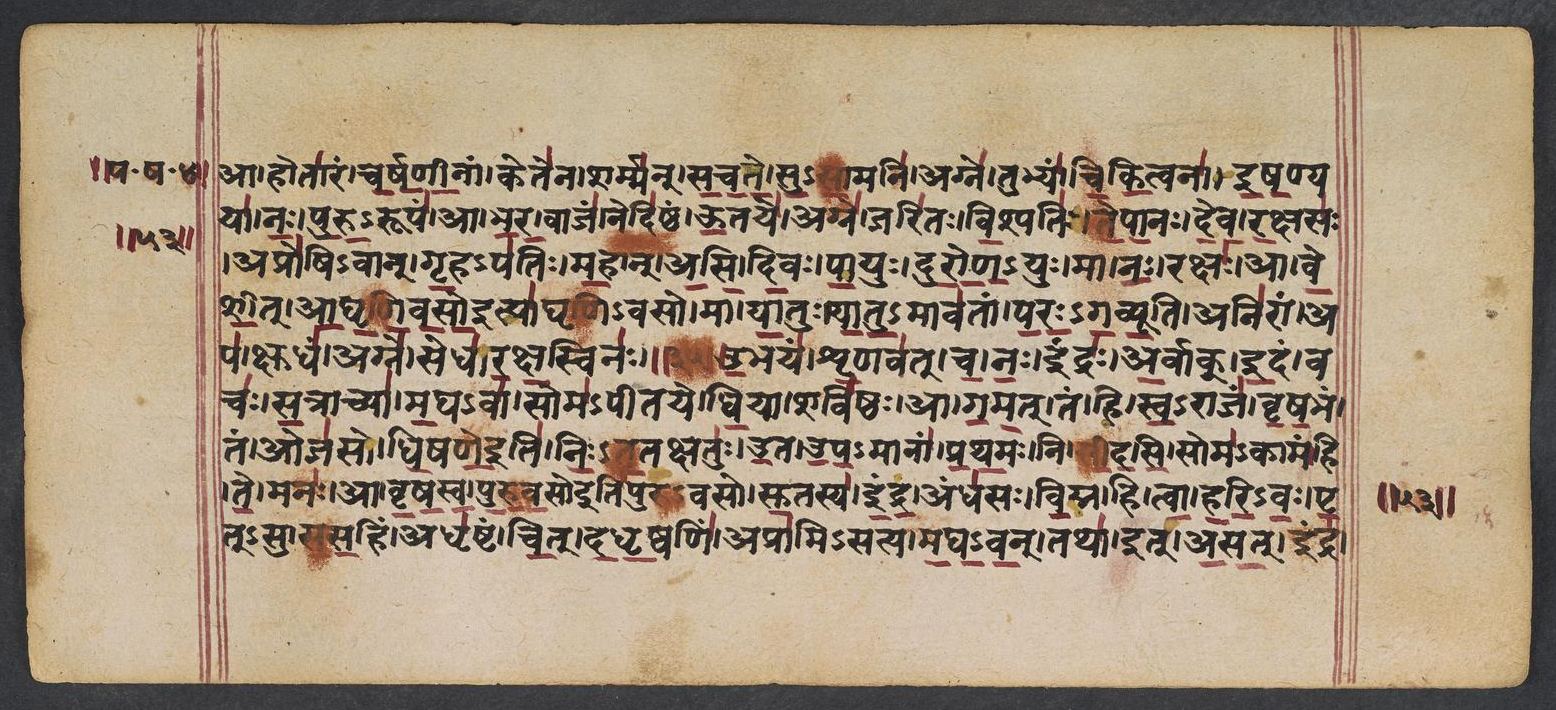
Where on the image
Penn Ms. Coll. 390 Item 41, fol. 631v (numbered 53v by the scribe) (OPenn image 632, upper leaf). Checked on the image: the Rigveda text on this page begins in RV 8.60.17 ‹ā hotāram carṣaṇīnām›. The next page with Rigveda text, fol. 632r (numbered 54r by the scribe), begins in RV 8.61.4 ‹kratvā yathā vaśaḥ sanema›. Verses 8.60.17-20 end on this page; 8.60.17 begins on fol. 631r (numbered 53r by the scribe).
17a̱gnim-a̍gniṁ vo̱ adhri̍guṁ hu̱vema̍ vṛ̱ktaba̍rhiṣaḥ | a̱gniṁ hi̱tapra̍yasaḥ śaśva̱tīṣv ā hotā̍raṁ carṣaṇī̱nām ||
18kete̍na̱ śarma̍n sacate suṣā̱maṇy agne̱ tubhya̍ṁ ciki̱tvanā̍ | i̱ṣa̱ṇyayā̍ naḥ puru̱rūpa̱m ā bha̍ra̱ vāja̱ṁ nedi̍ṣṭham ū̱taye̍ ||
19agne̱ jari̍tar vi̱śpati̍s tepā̱no de̍va ra̱kṣasa̍ḥ | apro̍ṣivān gṛ̱hapa̍tir ma̱hām̐ a̍si di̱vas pā̱yur du̍roṇa̱yuḥ ||
20mā no̱ rakṣa̱ ā ve̍śīd āghṛṇīvaso̱ mā yā̱tur yā̍tu̱māva̍tām | pa̱ro̱ga̱vyū̱ty ani̍rā̱m apa̱ kṣudha̱m agne̱ sedha̍ rakṣa̱svina̍ḥ ||
Compare: Padapāṭha (word-by-word text written in the manuscript; Sansknet e-text via GRETIL)
17agnim-agnim | vaḥ | adhri-gum | huvema | vṛkta-barhiṣaḥ | agnim | hita-prayasaḥ | śaśvatīṣu | ā | hotāram | carṣaṇīnām
18ketena | śarman | sacate | su-sāmani | agne | tubhyam | cikitvanā | iṣaṇyayā | naḥ | puru-rūpam | ā | bhara | vājan | nediṣṭham | ūtaye
19agne | jaritaḥ | viśpatiḥ | tepānaḥ | deva | rakṣasaḥ | aproṣi-vān | gṛha-patiḥ | mahān | asi | divaḥ | pāyuḥ | diroṇa-yuḥ
20mā | naḥ | rakṣaḥ | ā | veśīt | āghṛṇivaso ity āghṛṇi-vaso | mā | yātuḥ | yātu-māvatām | paraḥ-gavyūti | anirām | apa | kṣudham | agne | sedha | rakṣasvinaḥ
17For you let us whose grass is trimmed call Agni, Agni, restless God. Let us whose food is offered call to all the tribes Agni the Invoking Priest of men.
18Agni, with noble psalm that tells his wish he dwells, thinking on thee who guardest him. Speedily bring us strength of many varied sorts to be most near to succour us.
19Agni, Praise-singer! Lord of men, God! burner-up of Rakshasas, Mighty art thou, the ever-present Household-Lord, Home-friend and Guardian from the sky.
20Let no fiend come among us, O thou rich in light, no spell of those who deal in spells. To distant pastures drive faint hunger: far away, O Agni, chase the demons’ friends.
Notes
- Sanskrit: Aufrecht's edition (1877) with the Vedic accents, as entered by van Nooten and Holland (GRETIL).
- English: Ralph T. H. Griffith, The Hymns of the Rigveda (1889-1892; 2nd ed. 1896-1897), from the VedaWeb digital text; OCR slips in that text were corrected against the printed 2nd edition (data/sources/rigveda/griffith_errata.json).
- Padapāṭha (edition text): Sansknet e-text via GRETIL (CC BY-NC-SA 4.0).
Cite
Sources
- Source: Penn Ms. Coll. 390 Item 41 (undated (catalogued with Penn's 18th-19th c. Vedic manuscripts)), OPenn, Public Domain Mark + Aufrecht's accented text (GRETIL) + Griffith's English (VedaWeb) (holding institution)
- Critical edition: Aufrecht (1877), accented e-text via GRETIL
← previous · → next · v cycle view · l back to library