Rigveda 8.80: To Indra
Introduction
Rigveda 8.80 is a hymn of 10 verses addressed to Indra. It stands in book (maṇḍala) 8, the book of the Kaṇva and Aṅgiras poets. The Rigveda is the oldest collection of Sanskrit hymns, composed in the second half of the second millennium BCE and handed down orally for many centuries before it was written down.
The manuscript shown is Penn Ms. Coll. 390 Item 41 (University of Pennsylvania), an undated paper manuscript of the padapāṭha (the word-by-word recitation text, in which every word is written separately and compounds are split) of the whole Ṛgveda in Devanāgarī, 884 leaves in fascicles, 7-9 lines to the page, accents in red; this hymn stands on fol. 648r-648v. Each section below gives the verses that end on one page; the page boundaries were read on the images (the opening words of every page), not counted out. Where the manuscript is a padapāṭha (the word-by-word recitation text), the section shows Aufrecht's continuous (saṃhitā) text first and, as the edition text, the padapāṭha of the same verses, which is the form written on the page.
How was this verified? (Provenance)
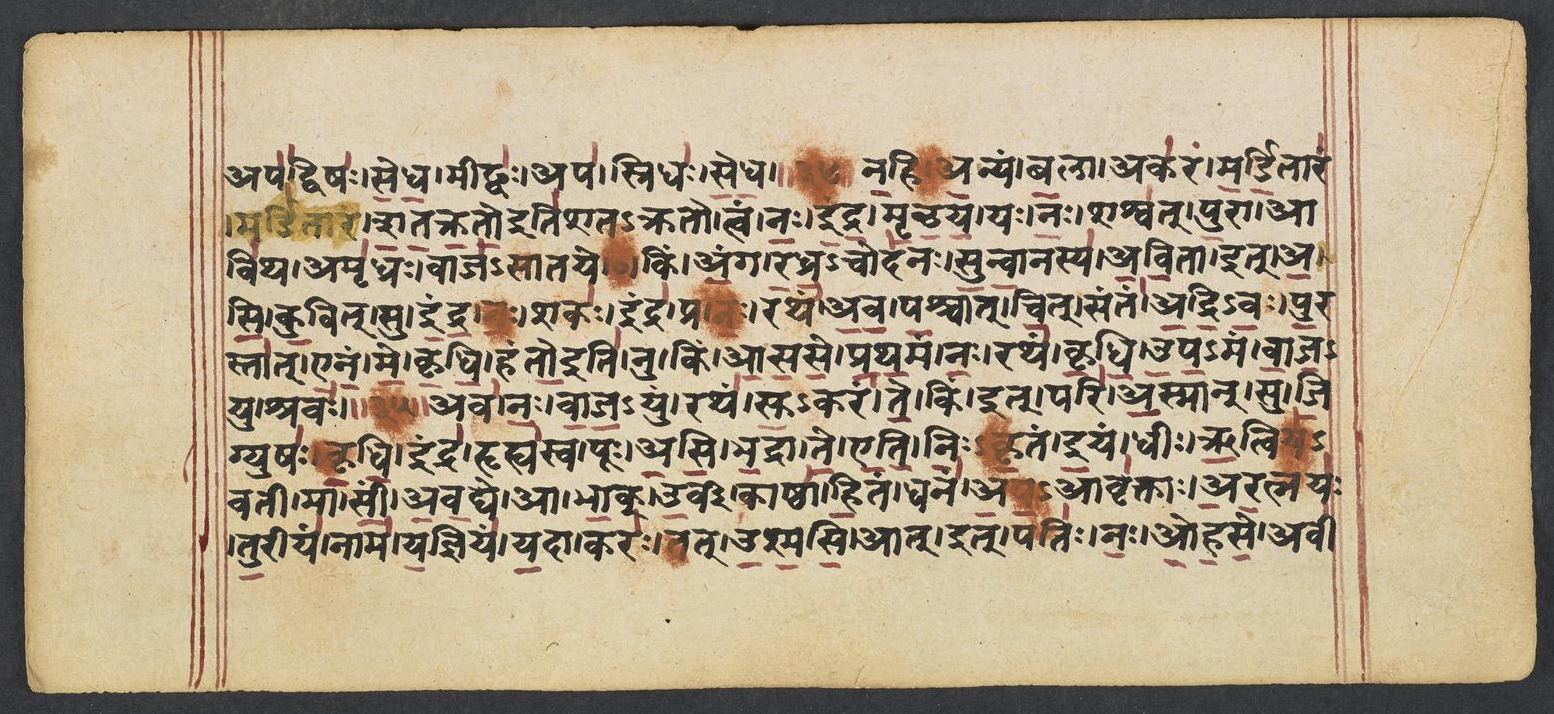
Where on the image
Penn Ms. Coll. 390 Item 41, fol. 648r (numbered 70r by the scribe) (OPenn image 648, lower leaf). Checked on the image: the Rigveda text on this page begins in RV 8.79.9 ‹apa dviṣaḥ sedha mīḍhavaḥ›. The next page with Rigveda text, fol. 648v (numbered 70v by the scribe), begins in RV 8.80.10 ‹-avīvṛdhat vaḥ amṛtāḥ amandīt›. Verses 8.80.1-9 end on this page.
1na̱hy a1̱̍nyam ba̱ḻāka̍ram marḍi̱tāra̍ṁ śatakrato | tvaṁ na̍ indra mṛḻaya ||
2yo na̱ḥ śaśva̍t pu̱rāvi̱thāmṛ̍dhro̱ vāja̍sātaye | sa tvaṁ na̍ indra mṛḻaya ||
3kim a̱ṅga ra̍dhra̱coda̍naḥ sunvā̱nasyā̍vi̱ted a̍si | ku̱vit sv i̍ndra ṇa̱ḥ śaka̍ḥ ||
4indra̱ pra ṇo̱ ratha̍m ava pa̱ścāc ci̱t santa̍m adrivaḥ | pu̱rastā̍d enam me kṛdhi ||
5hanto̱ nu kim ā̍sase pratha̱maṁ no̱ ratha̍ṁ kṛdhi | u̱pa̱maṁ vā̍ja̱yu śrava̍ḥ ||
6avā̍ no vāja̱yuṁ ratha̍ṁ su̱kara̍ṁ te̱ kim it pari̍ | a̱smān su ji̱gyuṣa̍s kṛdhi ||
7indra̱ dṛhya̍sva̱ pūr a̍si bha̱drā ta̍ eti niṣkṛ̱tam | i̱yaṁ dhīr ṛ̱tviyā̍vatī ||
8mā sī̍m ava̱dya ā bhā̍g u̱rvī kāṣṭhā̍ hi̱taṁ dhana̍m | a̱pāvṛ̍ktā ara̱tnaya̍ḥ ||
9tu̱rīya̱ṁ nāma̍ ya̱jñiya̍ṁ ya̱dā kara̱s tad u̍śmasi | ād it pati̍r na ohase ||
Compare: Padapāṭha (word-by-word text written in the manuscript; Sansknet e-text via GRETIL)
1nahi | anyam | balā | akaram | marḍitāram | śatakrato itiśata-krato | tvam | naḥ | indra | mṛḷaya
2yaḥ | naḥ | śaśvat | purā | āvitha | amṛdhraḥ | vāja-sātaye | saḥ | tvam | naḥ | indra | mṛḷaya
3kim | aṅga | radhra-codanaḥ | sunvānasya | avitā | it | asi | kuvit | su | indra | ṇaḥ | śakaḥ
4indra | pra | naḥ | ratham | ava | paścāt | cit | santam | adri-vaḥ | purastāt | enam | me | kṛdhi
5hanto iti | nu | kim | āsase | prathamam | naḥ | ratham | kṛdhi | upa-mam | vāja-yu | śravaḥ
6ava | naḥ | vāja-yum | ratham | su-karam | te | kim | it | pari | asmān | su | jigyuṣaḥ | kṛdhi
7indra | dṛhyasva | pūḥ | asi | bhadrā | te | eti | niḥ-kṛtam | iyam | dhīḥ | ṛtviya-vatī
8mā | sīm | avadye | ā | bhāk | urvī | kāṣṭhā | hitam | dhanam | apa-āvṛktāḥ | aratnayaḥ
9turīyam | nāma | yajñiyam | yadā | karaḥ | tat | uśmasi | āt | it | patiḥ | naḥ | ohase
1O Ṣatakratu! truly I have made none else my Comforter. Indra; be gracious unto us.
2Thou who hast ever aided us kindly of old to win the spoil, As such, O Indra, favour us.
3What now? As prompter of the poor thou helpest him who sheds the juice. Wilt thou not, Indra, strengthen us?
4O Indra, help our chariot on, yea, Thunderer, though it lag behind: Give this my car the foremost place.
5Ho there! why sittest thou at case? Make thou my chariot to be first And bring the fame of victory near.
6Assist our car that seeks the prize. What can be easier for thee? So make thou us victorious.
7Indra, be firm: a fort art thou. To thine appointed place proceeds The auspicious hymn in season due.
8Let not our portion be disgrace. Broad is the course, the prize is set, The barriers are opened wide.
9This thing we wish. that thou mayst take thy fourth, thy sacrificial name. So art thou held to be our Lord.
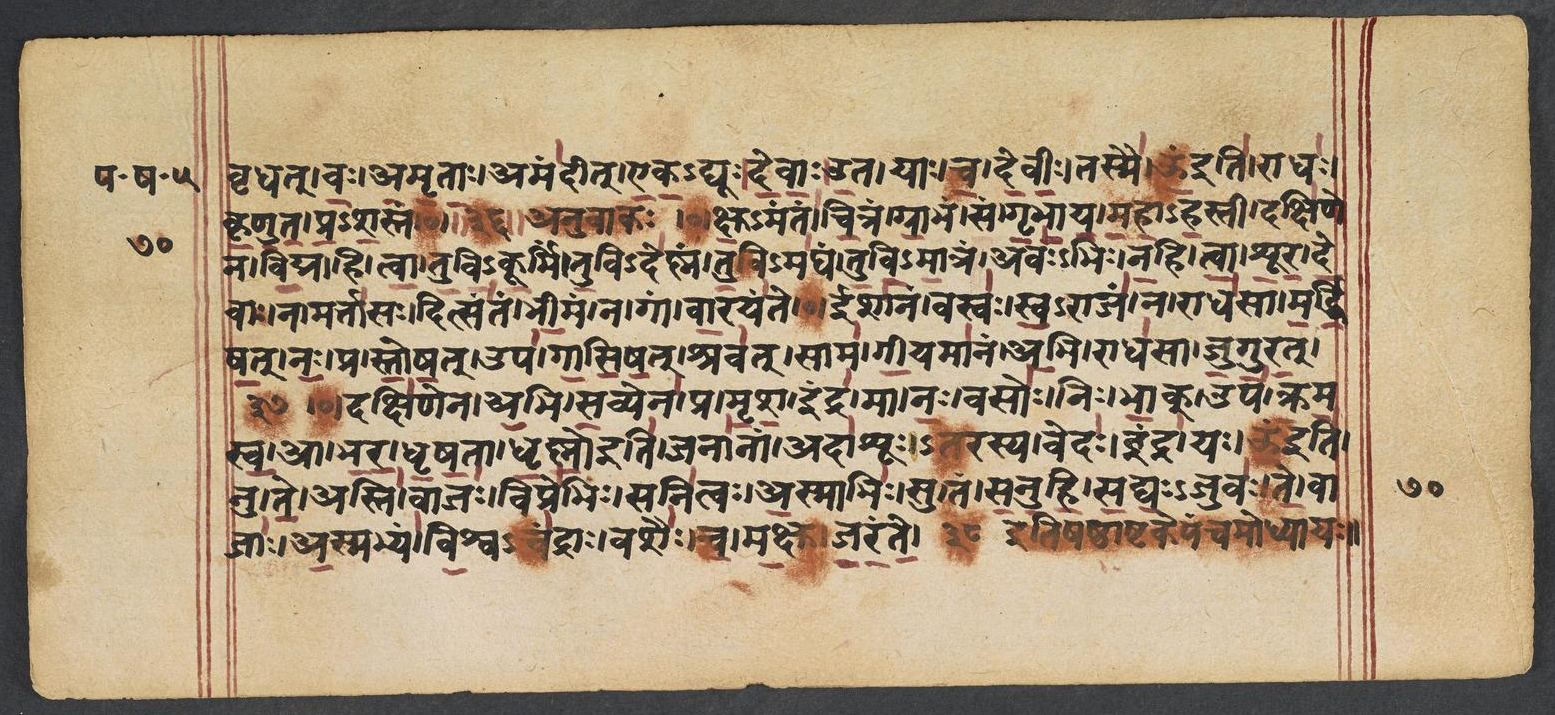
Where on the image
Penn Ms. Coll. 390 Item 41, fol. 648v (numbered 70v by the scribe) (OPenn image 649, upper leaf). Checked on the image: the Rigveda text on this page begins in RV 8.80.10 ‹-avīvṛdhat vaḥ amṛtāḥ amandīt›. The next page with Rigveda text, fol. 649r (numbered 71r by the scribe), begins in RV 8.82.1 ‹ā pra drava parāvataḥ›. Verse 8.80.10 ends on this page; 8.80.10 begins on fol. 648r (numbered 70r by the scribe).
10avī̍vṛdhad vo amṛtā̱ ama̍ndīd eka̱dyūr de̍vā u̱ta yāś ca̍ devīḥ | tasmā̍ u̱ rādha̍ḥ kṛṇuta praśa̱stam prā̱tar ma̱kṣū dhi̱yāva̍sur jagamyāt ||
Compare: Padapāṭha (word-by-word text written in the manuscript; Sansknet e-text via GRETIL)
10avīvṛdhat | vaḥ | amṛtāḥ | amandīt | eka-dyūḥ | devāḥ | uta | yāḥ | ca | devīḥ | tasmai | oṃ iti | rādhaḥ | kṛṇuta | pra-śastam | prātaḥ | makṣu | dhiyāvasuḥ | jagamyāt
10Ekadyû hath exalted you, Immortals: both Goddesses and Gods hath he delighted. Bestow upon him bounty meet for praises. May he, enriched with prayer, come soon and early.
Notes
- Sanskrit: Aufrecht's edition (1877) with the Vedic accents, as entered by van Nooten and Holland (GRETIL).
- English: Ralph T. H. Griffith, The Hymns of the Rigveda (1889-1892; 2nd ed. 1896-1897), from the VedaWeb digital text; OCR slips in that text were corrected against the printed 2nd edition (data/sources/rigveda/griffith_errata.json).
- Padapāṭha (edition text): Sansknet e-text via GRETIL (CC BY-NC-SA 4.0).
Cite
Sources
- Source: Penn Ms. Coll. 390 Item 41 (undated (catalogued with Penn's 18th-19th c. Vedic manuscripts)), OPenn, Public Domain Mark + Aufrecht's accented text (GRETIL) + Griffith's English (VedaWeb) (holding institution)
- Critical edition: Aufrecht (1877), accented e-text via GRETIL
← previous · → next · v cycle view · l back to library