Rigveda 8.88: To Indra
Introduction
Rigveda 8.88 is a hymn of 6 verses addressed to Indra. It stands in book (maṇḍala) 8, the book of the Kaṇva and Aṅgiras poets. The Rigveda is the oldest collection of Sanskrit hymns, composed in the second half of the second millennium BCE and handed down orally for many centuries before it was written down.
The manuscript shown is Penn Ms. Coll. 390 Item 41 (University of Pennsylvania), an undated paper manuscript of the padapāṭha (the word-by-word recitation text, in which every word is written separately and compounds are split) of the whole Ṛgveda in Devanāgarī, 884 leaves in fascicles, 7-9 lines to the page, accents in red; this hymn stands on fol. 651v-652r. Each section below gives the verses that end on one page; the page boundaries were read on the images (the opening words of every page), not counted out. Where the manuscript is a padapāṭha (the word-by-word recitation text), the section shows Aufrecht's continuous (saṃhitā) text first and, as the edition text, the padapāṭha of the same verses, which is the form written on the page.
How was this verified? (Provenance)
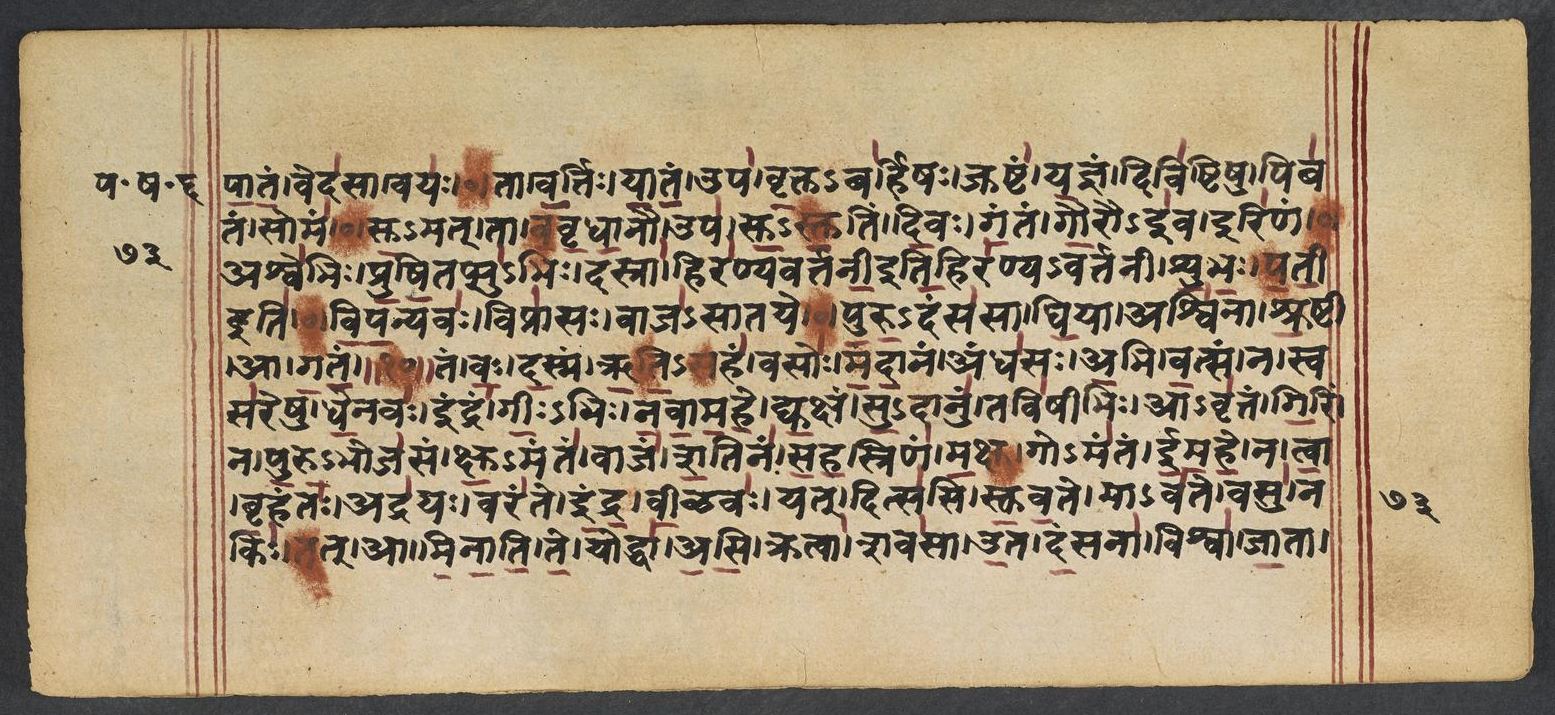
Where on the image
Penn Ms. Coll. 390 Item 41, fol. 651v (numbered 73v by the scribe) (OPenn image 652, upper leaf). Checked on the image: the Rigveda text on this page begins in RV 8.87.2 ‹pācam vedasā vayaḥ›. The next page with Rigveda text, fol. 652r (numbered 74r by the scribe), begins in RV 8.88.4 ‹abhi majmanā ā tvā›. Verses 8.88.1-3 end on this page.
1taṁ vo̍ da̱smam ṛ̍tī̱ṣaha̱ṁ vaso̍r mandā̱nam andha̍saḥ | a̱bhi va̱tsaṁ na svasa̍reṣu dhe̱nava̱ indra̍ṁ gī̱rbhir na̍vāmahe ||
2dyu̱kṣaṁ su̱dānu̱ṁ tavi̍ṣībhi̱r āvṛ̍taṁ gi̱riṁ na pu̍ru̱bhoja̍sam | kṣu̱manta̱ṁ vāja̍ṁ śa̱tina̍ṁ saha̱sriṇa̍m ma̱kṣū goma̍ntam īmahe ||
3na tvā̍ bṛ̱hanto̱ adra̍yo̱ vara̍nta indra vī̱ḻava̍ḥ | yad ditsa̍si stuva̱te māva̍te̱ vasu̱ naki̱ṣ ṭad ā mi̍nāti te ||
Compare: Padapāṭha (word-by-word text written in the manuscript; Sansknet e-text via GRETIL)
1tam | vaḥ | dasmam | ṛti-saham | vasoḥ | mandānam | andhasaḥ | abhi | vatsam | na | svasareṣu | dhenavaḥ | indram | gīḥ-bhiḥ | navāmahe
2dyukṣam | su-dānum | taviṣībhiḥ | āvṛtam | girim | na | puru-bhojasam | kṣu-mantam | vājam | śatinam | sahasriṇam | makṣu | go--mantam | īmahe
3na | tvā | bṛhantaḥ | adrayaḥ | varante | indra | vīḷavaḥ | yat | ditsasi | stuvate | māvate | vasu | nakiḥ | tat | ā | mināti | te
1As cows low to their calves in stalls, so with our songs we glorify This Indra, even your Wondrous God who checks attack, who joys in the delicious juice.
2Celestial, bounteous Giver, girt about with might, rich, mountain-like, in precious things, Him swift we seek. for foodful booty rich in kine, brought hundredfold and thousandfold.
3Indra, the strong and lofty hills are powerless to bar thy way. None stay that act of thine when thou wouldst fain give wealth to one like me who sings thy praise.
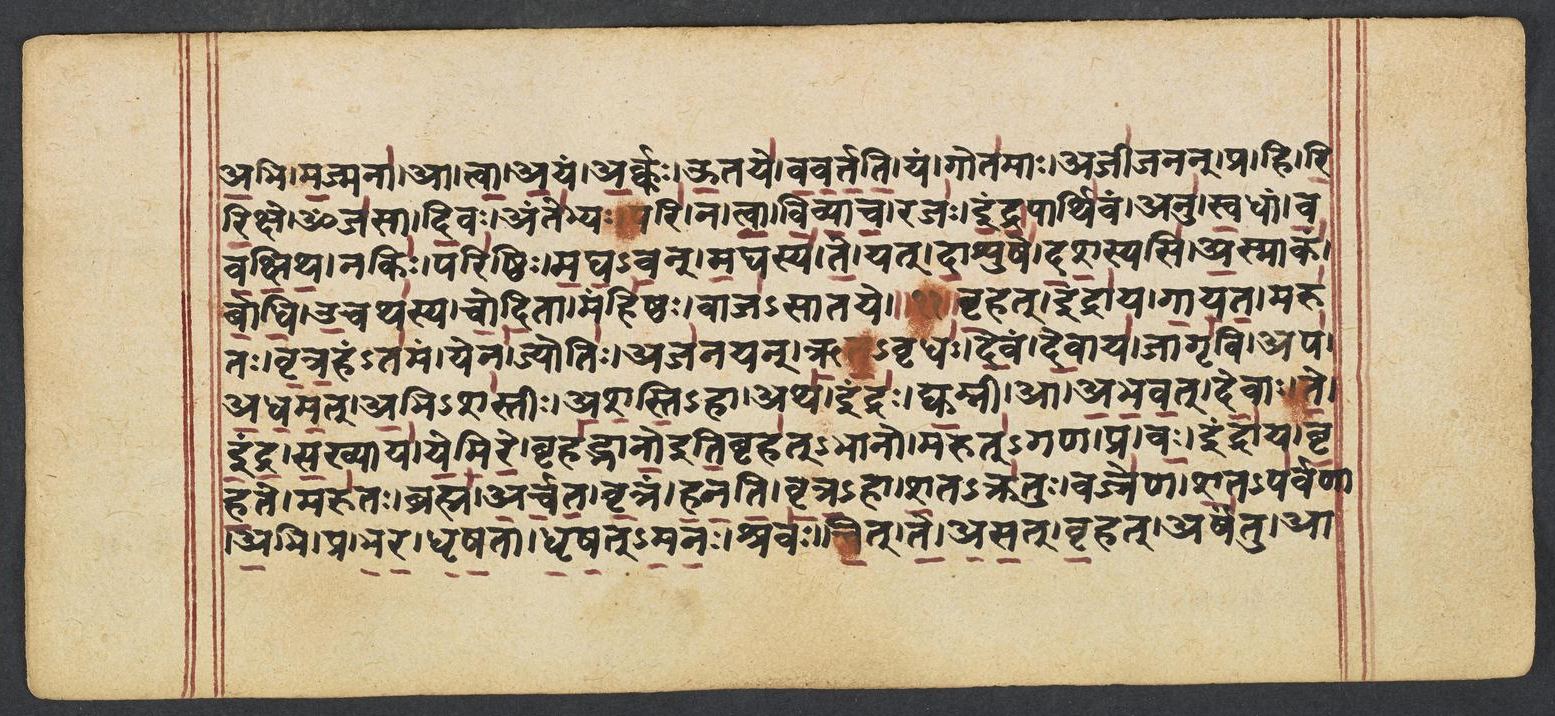
Where on the image
Penn Ms. Coll. 390 Item 41, fol. 652r (numbered 74r by the scribe) (OPenn image 652, lower leaf). Checked on the image: the Rigveda text on this page begins in RV 8.88.4 ‹abhi majmanā ā tvā›. The next page with Rigveda text, fol. 652v (numbered 74v by the scribe), begins in RV 8.89.4 ‹āpaḥ javasā vi mātaraḥ›. Verses 8.88.4-6 end on this page; 8.88.4 begins on fol. 651v (numbered 73v by the scribe).
4yoddhā̍si̱ kratvā̱ śava̍so̱ta da̱ṁsanā̱ viśvā̍ jā̱tābhi ma̱jmanā̍ | ā tvā̱yam a̱rka ū̱taye̍ vavartati̱ yaṁ gota̍mā̱ ajī̍janan ||
5pra hi ri̍ri̱kṣa oja̍sā di̱vo ante̍bhya̱s pari̍ | na tvā̍ vivyāca̱ raja̍ indra̱ pārthi̍va̱m anu̍ sva̱dhāṁ va̍vakṣitha ||
6naki̱ḥ pari̍ṣṭir maghavan ma̱ghasya̍ te̱ yad dā̱śuṣe̍ daśa̱syasi̍ | a̱smāka̍m bodhy u̱catha̍sya codi̱tā maṁhi̍ṣṭho̱ vāja̍sātaye ||
Compare: Padapāṭha (word-by-word text written in the manuscript; Sansknet e-text via GRETIL)
4yoddhā | asi | kratvā | śavasā | uta | daṃsanā | viśvā | jātā | abhi | majmanā | ā | tvā | ayam | arkaḥ | ūtaye | vavartati | yam | gotamāḥ | ajījanan
5pra | hi | ririkṣe | ojasā | divaḥ | antebhyaḥ | pari | na | tvā | vivyāca | rajaḥ | indra | pārthivam | anu | svadhām | vavakṣitha
6nakiḥ | pariṣṭiḥ | magha-van | maghasya | te | yat | dāśuṣe | daśasyasi | asmākam | bodhi | ucathasya | coditā | maṃhiṣṭhaḥ | vāja-sātaye
4A Warrior thou by strength, wisdom, and wondrous deed, in might excellest all that is. Hither may this our hymn attract thee to our help, the hymn which Gotamas have made.
5For in thy might thou stretchest out beyond the boundaries of heaven. The earthly region, Indra, comprehends thee not. After thy Godhead hast thou waxed.
6When, Maghavan, thou honourest the worshipper, no one is there to stay thy wealth. Most liberal Giver thou, do thou inspire our song of praise, that we may win the spoil.
Notes
- Sanskrit: Aufrecht's edition (1877) with the Vedic accents, as entered by van Nooten and Holland (GRETIL).
- English: Ralph T. H. Griffith, The Hymns of the Rigveda (1889-1892; 2nd ed. 1896-1897), from the VedaWeb digital text; OCR slips in that text were corrected against the printed 2nd edition (data/sources/rigveda/griffith_errata.json).
- Padapāṭha (edition text): Sansknet e-text via GRETIL (CC BY-NC-SA 4.0).
Cite
Sources
- Source: Penn Ms. Coll. 390 Item 41 (undated (catalogued with Penn's 18th-19th c. Vedic manuscripts)), OPenn, Public Domain Mark + Aufrecht's accented text (GRETIL) + Griffith's English (VedaWeb) (holding institution)
- Critical edition: Aufrecht (1877), accented e-text via GRETIL
← previous · → next · v cycle view · l back to library