Rigveda 8.87: To Asvins
Introduction
Rigveda 8.87 is a hymn of 6 verses addressed to Asvins. It stands in book (maṇḍala) 8, the book of the Kaṇva and Aṅgiras poets. The Rigveda is the oldest collection of Sanskrit hymns, composed in the second half of the second millennium BCE and handed down orally for many centuries before it was written down.
The manuscript shown is Penn Ms. Coll. 390 Item 41 (University of Pennsylvania), an undated paper manuscript of the padapāṭha (the word-by-word recitation text, in which every word is written separately and compounds are split) of the whole Ṛgveda in Devanāgarī, 884 leaves in fascicles, 7-9 lines to the page, accents in red; this hymn stands on fol. 651r-651v. Each section below gives the verses that end on one page; the page boundaries were read on the images (the opening words of every page), not counted out. Where the manuscript is a padapāṭha (the word-by-word recitation text), the section shows Aufrecht's continuous (saṃhitā) text first and, as the edition text, the padapāṭha of the same verses, which is the form written on the page.
How was this verified? (Provenance)
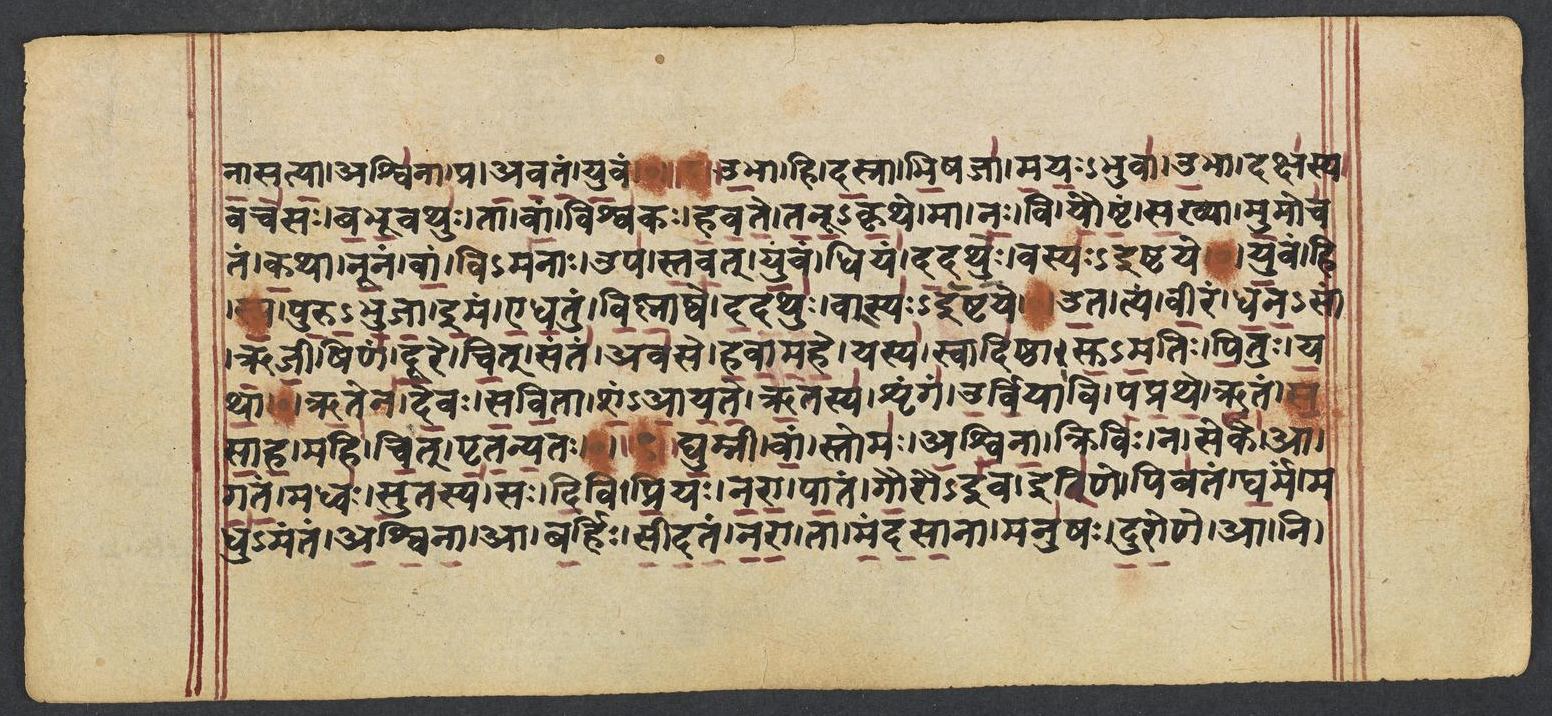
Where on the image
Penn Ms. Coll. 390 Item 41, fol. 651r (numbered 73r by the scribe) (OPenn image 651, lower leaf). Checked on the image: the Rigveda text on this page begins in RV 8.85.9 ‹nāsatyā aśvinā pra avatam›. The next page with Rigveda text, fol. 651v (numbered 73v by the scribe), begins in RV 8.87.2 ‹pācam vedasā vayaḥ›. Verse 8.87.1 ends on this page.
1dyu̱mnī vā̱ṁ stomo̍ aśvinā̱ krivi̱r na seka̱ ā ga̍tam | madhva̍ḥ su̱tasya̱ sa di̱vi pri̱yo na̍rā pā̱taṁ gau̱rāv i̱veri̍ṇe ||
Compare: Padapāṭha (word-by-word text written in the manuscript; Sansknet e-text via GRETIL)
1dyumnī | vām | stomaḥ | aśvinā | kriviḥ | na | seke | ā | gatam | madhvaḥ | sutasya | saḥ | divi | priyaḥ | narā | pātam | gaurau-iva | iriṇe
1SPLENDID, O Aṣvins, is your praise. Come fountain-like, to pour the stream. Of the sweet juice effused-dear is it, Chiefs, in heaven-drink like two wild bulls at a pool.
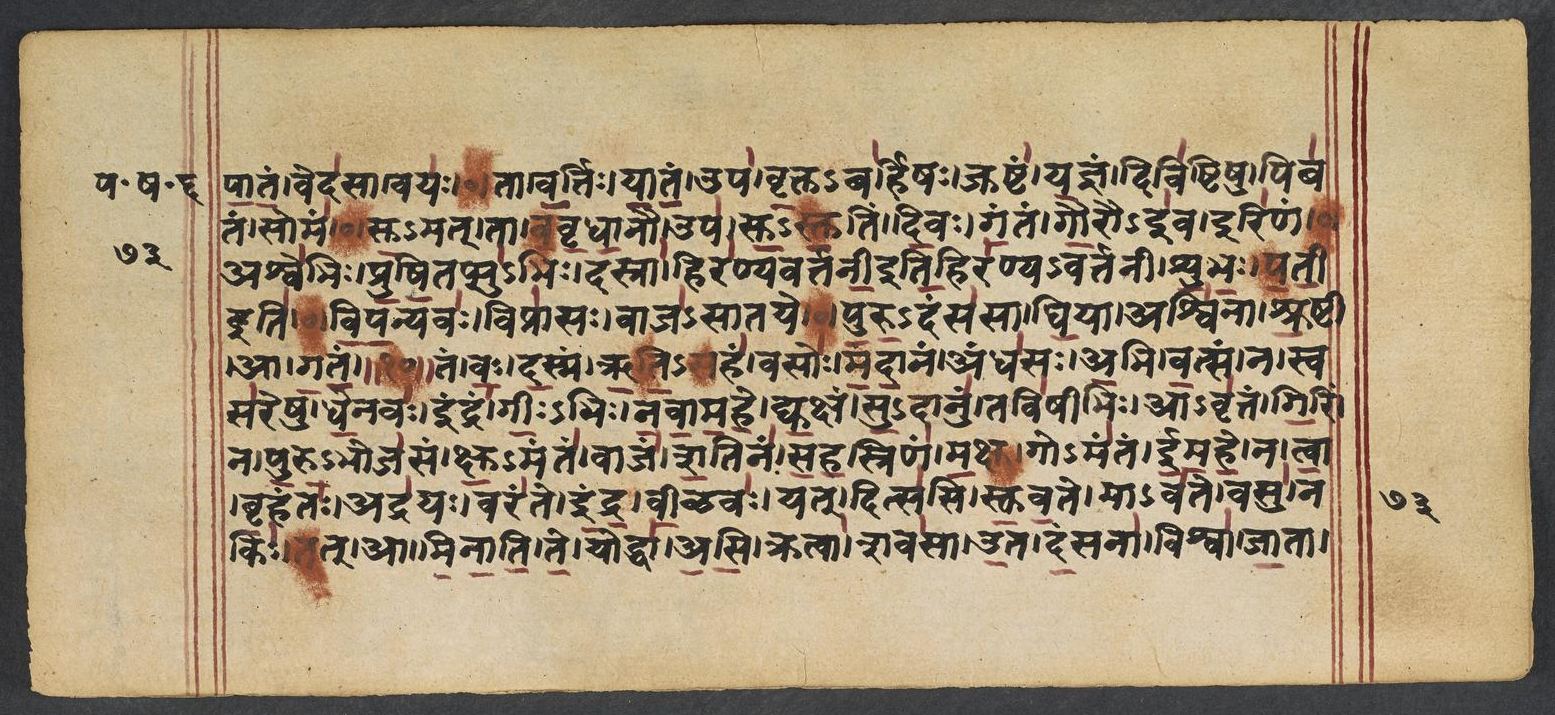
Where on the image
Penn Ms. Coll. 390 Item 41, fol. 651v (numbered 73v by the scribe) (OPenn image 652, upper leaf). Checked on the image: the Rigveda text on this page begins in RV 8.87.2 ‹pācam vedasā vayaḥ›. The next page with Rigveda text, fol. 652r (numbered 74r by the scribe), begins in RV 8.88.4 ‹abhi majmanā ā tvā›. Verses 8.87.2-6 end on this page; 8.87.2 begins on fol. 651r (numbered 73r by the scribe).
2piba̍taṁ gha̱rmam madhu̍mantam aśvi̱nā ba̱rhiḥ sī̍dataṁ narā | tā ma̍ndasā̱nā manu̍ṣo duro̱ṇa ā ni pā̍ta̱ṁ veda̍sā̱ vaya̍ḥ ||
3ā vā̱ṁ viśvā̍bhir ū̱tibhi̍ḥ pri̱yame̍dhā ahūṣata | tā va̱rtir yā̍ta̱m upa̍ vṛ̱ktaba̍rhiṣo̱ juṣṭa̍ṁ ya̱jñaṁ divi̍ṣṭiṣu ||
4piba̍ta̱ṁ soma̱m madhu̍mantam aśvi̱nā ba̱rhiḥ sī̍dataṁ su̱mat | tā vā̍vṛdhā̱nā upa̍ suṣṭu̱tiṁ di̱vo ga̱ntaṁ gau̱rāv i̱veri̍ṇam ||
5ā nū̱naṁ yā̍tam aśvi̱nāśve̍bhiḥ pruṣi̱tapsu̍bhiḥ | dasrā̱ hira̍ṇyavartanī śubhas patī pā̱taṁ soma̍m ṛtāvṛdhā ||
6va̱yaṁ hi vā̱ṁ havā̍mahe vipa̱nyavo̱ viprā̍so̱ vāja̍sātaye | tā va̱lgū da̱srā pu̍ru̱daṁsa̍sā dhi̱yāśvi̍nā śru̱ṣṭy ā ga̍tam ||
Compare: Padapāṭha (word-by-word text written in the manuscript; Sansknet e-text via GRETIL)
2pibatam | gharmam | madhu-mantam | aśvinā | ā | barhiḥ | sīdatam | narā | tā | mandasānā | manuṣaḥ | duroṇe | ā | ni | pācam | vedasā | vayaḥ
3ā | vām | viśvābhiḥ | ūti-bhiḥ | priya-medhāḥ | ahūṣata | tā | vartiḥ | yātam | upa | vṛkta-barhiṣaḥ | juṣṭam | yajñam | diviṣṭiṣu
4pibatam | somam | madhu-mantam | aśvinā | ā | barhiḥ | sīdatam | su-mat | tā | vavṛdhānau | upa | su-stutim | divaḥ | gantam | gaurau-iva | iriṇam
5ā | nūnam | yātam | aśvinā | aśvebhiḥ | pruṣitapsu-bhiḥ | dasrā | hiraṇyavartanī itihiraṇya-vartanī | śubhaḥ | patī iti | pātam | somam | ṛta-vṛdhā
6vayam | hi | vām | havāmahe | vipanyavaḥ | viprāsaḥ | vāja-sātaye | tā | valgū iti | dasrā | puru-daṃsasā | dhiyā | aśvinā | śruṣṭī | ā | gatam
2Drink the libation rich in sweets, O Aṣvins Twain: sit. Heroes, on the sacred grass. Do ye with joyful heart in the abode of man preserve his life by means of wealth.
3The Priyamedhas bid you come with all the succours that are yours. Come to his house whose holy grass is trimmed, to dear sacrifice at the morning rites.
4Drink ye the Soma rich in meath, ye Aṣvins Twain: sit gladly on the sacred grass. So, waxen mighty, to our eulogy from heaven come ye as wild-bulls to the pool.
5Come to us, O ye Aṣvins, now with steeds of many a varied hue, Ye Lords of splendour, wondrous, borne on paths of gold, drink Soma, ye who strengthen Law.
6For we the priestly singers, fain tohymn your praise, invoke you for the gain of strength. So, wondrous, fair, and famed for great deeds come to us, through our hymn, Aṣvins, when ye hear.
Notes
- Sanskrit: Aufrecht's edition (1877) with the Vedic accents, as entered by van Nooten and Holland (GRETIL).
- English: Ralph T. H. Griffith, The Hymns of the Rigveda (1889-1892; 2nd ed. 1896-1897), from the VedaWeb digital text; OCR slips in that text were corrected against the printed 2nd edition (data/sources/rigveda/griffith_errata.json).
- Padapāṭha (edition text): Sansknet e-text via GRETIL (CC BY-NC-SA 4.0).
Cite
Sources
- Source: Penn Ms. Coll. 390 Item 41 (undated (catalogued with Penn's 18th-19th c. Vedic manuscripts)), OPenn, Public Domain Mark + Aufrecht's accented text (GRETIL) + Griffith's English (VedaWeb) (holding institution)
- Critical edition: Aufrecht (1877), accented e-text via GRETIL
← previous · → next · v cycle view · l back to library