Rigveda 8.90: To Indra
Introduction
Rigveda 8.90 is a hymn of 6 verses addressed to Indra. It stands in book (maṇḍala) 8, the book of the Kaṇva and Aṅgiras poets. The Rigveda is the oldest collection of Sanskrit hymns, composed in the second half of the second millennium BCE and handed down orally for many centuries before it was written down.
The manuscript shown is Penn Ms. Coll. 390 Item 41 (University of Pennsylvania), an undated paper manuscript of the padapāṭha (the word-by-word recitation text, in which every word is written separately and compounds are split) of the whole Ṛgveda in Devanāgarī, 884 leaves in fascicles, 7-9 lines to the page, accents in red; this hymn stands on fol. 652v-653r. Each section below gives the verses that end on one page; the page boundaries were read on the images (the opening words of every page), not counted out. Where the manuscript is a padapāṭha (the word-by-word recitation text), the section shows Aufrecht's continuous (saṃhitā) text first and, as the edition text, the padapāṭha of the same verses, which is the form written on the page.
How was this verified? (Provenance)
Where on the image
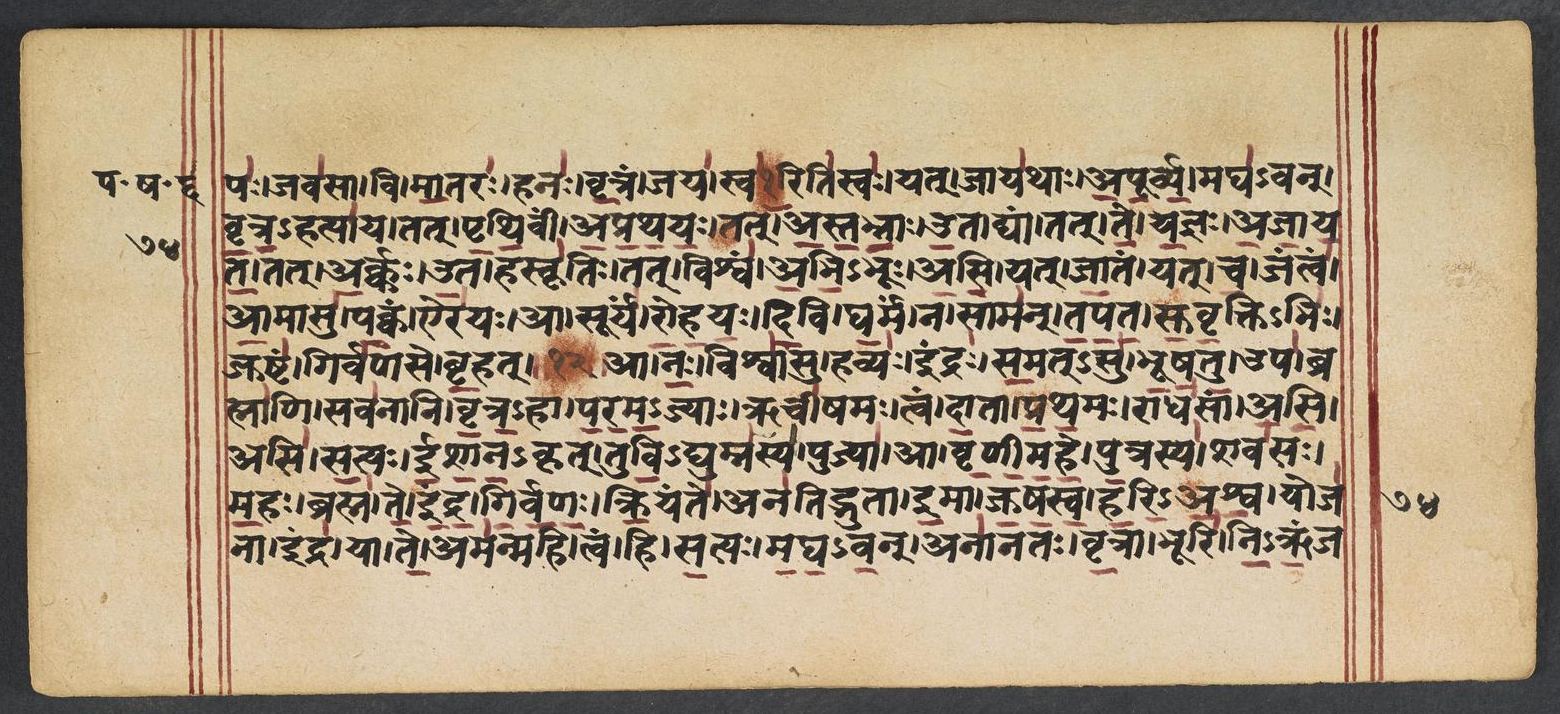
Penn Ms. Coll. 390 Item 41, fol. 652v (numbered 74v by the scribe) (OPenn image 653, upper leaf). Checked on the image: the Rigveda text on this page begins in RV 8.89.4 ‹āpaḥ javasā vi mātaraḥ›. The next page with Rigveda text, fol. 653r (numbered 75r by the scribe), begins in RV 8.90.4 ‹-ni-ṛñjase saḥ tvam śaviṣṭha›. Verses 8.90.1-3 end on this page.
1ā no̱ viśvā̍su̱ havya̱ indra̍ḥ sa̱matsu̍ bhūṣatu | upa̱ brahmā̍ṇi̱ sava̍nāni vṛtra̱hā pa̍rama̱jyā ṛcī̍ṣamaḥ ||
2tvaṁ dā̱tā pra̍tha̱mo rādha̍sām a̱sy asi̍ sa̱tya ī̍śāna̱kṛt | tu̱vi̱dyu̱mnasya̱ yujyā vṛ̍ṇīmahe pu̱trasya̱ śava̍so ma̱haḥ ||
3brahmā̍ ta indra girvaṇaḥ kri̱yante̱ ana̍tidbhutā | i̱mā ju̍ṣasva haryaśva̱ yoja̱nendra̱ yā te̱ ama̍nmahi ||
Compare: Padapāṭha (word-by-word text written in the manuscript; Sansknet e-text via GRETIL)
1ā | naḥ | viśvāsu | havyaḥ | indraḥ | samat-su | bhūṣatu | upa | brahmāṇi | savanāni | vṛtra-hā | parama-jyāḥ | ṛcīṣamaḥ
2tvam | dātā | prathamaḥ | rādhasām | asi | asi | satyaḥ | īśāna-kṛt | tuvi-dyumnasya | yujyā | ā | vṛṇīmahe | putrasya | śavasaḥ | mahaḥ
3brahma | te | indra | girvaṇaḥ | kriyante | anatidbhutā | imā | juṣasva | hari-aśva | yojanā | indra | yā | te | amanmahi
1MAY Indra, who in every fight must be invoked, be near to us. May the most mighty Vr̥itra-slayer, meet for praise, come to libations and to hymns.
2Thou art the best of all in sending bounteous gifts, true art thou, lordly in thine act. We claim alliance with the very Glorious One, yea, with the Mighty Son of Strength.
3Prayers unsurpassed are offered up to thee the Lover of the Song. Indra, Lord of Bay Steeds, accept these fitting hymns, hymns which we have thought out for thee.
Where on the image
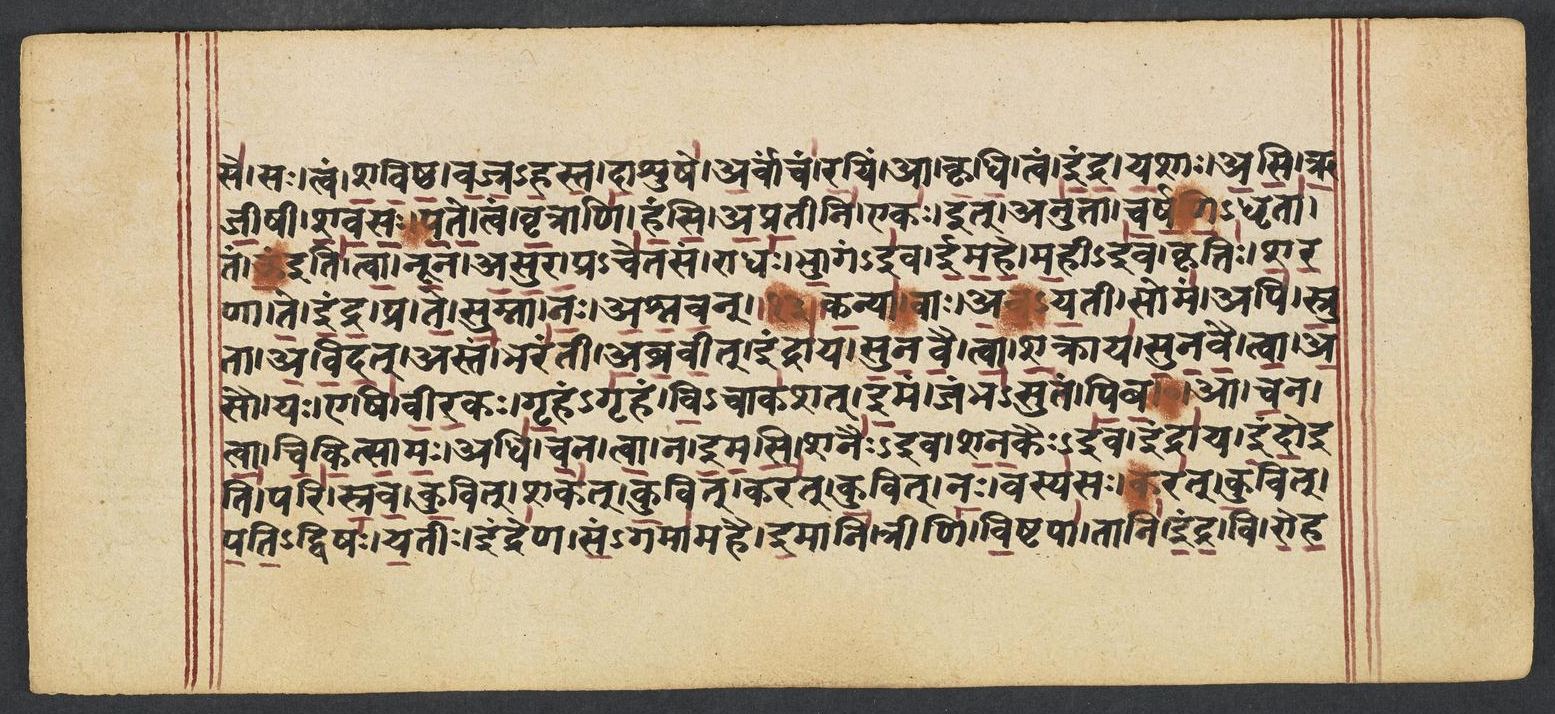
Penn Ms. Coll. 390 Item 41, fol. 653r (numbered 75r by the scribe) (OPenn image 653, lower leaf). Checked on the image: the Rigveda text on this page begins in RV 8.90.4 ‹-ni-ṛñjase saḥ tvam śaviṣṭha›. The next page with Rigveda text, fol. 653v (numbered 75v by the scribe), begins in RV 8.91.5 ‹śiraḥ tatasya urvarām āt›. Verses 8.90.4-6 end on this page; 8.90.4 begins on fol. 652v (numbered 74v by the scribe).
4tvaṁ hi sa̱tyo ma̍ghava̱nn anā̍nato vṛ̱trā bhūri̍ nyṛ̱ñjase̍ | sa tvaṁ śa̍viṣṭha vajrahasta dā̱śuṣe̱ 'rvāñca̍ṁ ra̱yim ā kṛ̍dhi ||
5tvam i̍ndra ya̱śā a̍sy ṛjī̱ṣī śa̍vasas pate | tvaṁ vṛ̱trāṇi̍ haṁsy apra̱tīny eka̱ id anu̍ttā carṣaṇī̱dhṛtā̍ ||
6tam u̍ tvā nū̱nam a̍sura̱ prace̍tasa̱ṁ rādho̍ bhā̱gam i̍vemahe | ma̱hīva̱ kṛtti̍ḥ śara̱ṇā ta̍ indra̱ pra te̍ su̱mnā no̍ aśnavan ||
Compare: Padapāṭha (word-by-word text written in the manuscript; Sansknet e-text via GRETIL)
4tvam | hi | satyaḥ | magha-van | anānataḥ | vṛtrā | bhūri | ni-ṛñjase | saḥ | tvam | śaviṣṭha | vajra-hasta | dāśuṣe | arvāñcam | rayim | ā | kṛdhi
5tvam | indra | yaśāḥ | asi | ṛjīṣī | śavasaḥ | pate | tvam | vṛtrāṇi | haṃsi | apratīni | ekaḥ | it | anuttā | carṣaṇi-dhṛtā
6tam | oṃ iti | tvā | nūnam | asura | pra-cetasam | rādhaḥ | bhāgam-iva | īmahe | mahī-iva | kṛttiḥ | śaraṇā | te | indra | pra | te | sumnā | naḥ | aśnavat
4For thou, O Maghavan, art truthful, ne'er subdued and bringest many a Vr̥itra low. As such, O Mightiest Lord, Wielder of Thunder, send wealth hither to the worshipper.
5O Indra, thou art far-renowned, impetuous, O Lord of Strength. Alone thou slayest with the guardian of mankind resistless never-conquered foes.
6As such we seek thee now, O Asura, thee most wise, craving thy bounty as our share. Thy sheltering defence is like a mighty cloak. So may thy glories reach to us.
Notes
- Sanskrit: Aufrecht's edition (1877) with the Vedic accents, as entered by van Nooten and Holland (GRETIL).
- English: Ralph T. H. Griffith, The Hymns of the Rigveda (1889-1892; 2nd ed. 1896-1897), from the VedaWeb digital text; OCR slips in that text were corrected against the printed 2nd edition (data/sources/rigveda/griffith_errata.json).
- Padapāṭha (edition text): Sansknet e-text via GRETIL (CC BY-NC-SA 4.0).
Cite
Sources
- Source: Penn Ms. Coll. 390 Item 41 (undated (catalogued with Penn's 18th-19th c. Vedic manuscripts)), OPenn, Public Domain Mark + Aufrecht's accented text (GRETIL) + Griffith's English (VedaWeb) (holding institution)
- Critical edition: Aufrecht (1877), accented e-text via GRETIL
← previous · → next · v cycle view · l back to library