Rigveda 9.10: To Soma
Introduction
Rigveda 9.10 is a hymn of 9 verses addressed to Soma. It stands in book (maṇḍala) 9, the hymns to Soma Pavamāna. The Rigveda is the oldest collection of Sanskrit hymns, composed in the second half of the second millennium BCE and handed down orally for many centuries before it was written down.
The manuscript shown is Penn Ms. Coll. 390 Item 41 (University of Pennsylvania), an undated paper manuscript of the padapāṭha (the word-by-word recitation text, in which every word is written separately and compounds are split) of the whole Ṛgveda in Devanāgarī, 884 leaves in fascicles, 7-9 lines to the page, accents in red; this hymn stands on fol. 671v-672r. Each section below gives the verses that end on one page; the page boundaries were read on the images (the opening words of every page), not counted out. Where the manuscript is a padapāṭha (the word-by-word recitation text), the section shows Aufrecht's continuous (saṃhitā) text first and, as the edition text, the padapāṭha of the same verses, which is the form written on the page.
How was this verified? (Provenance)
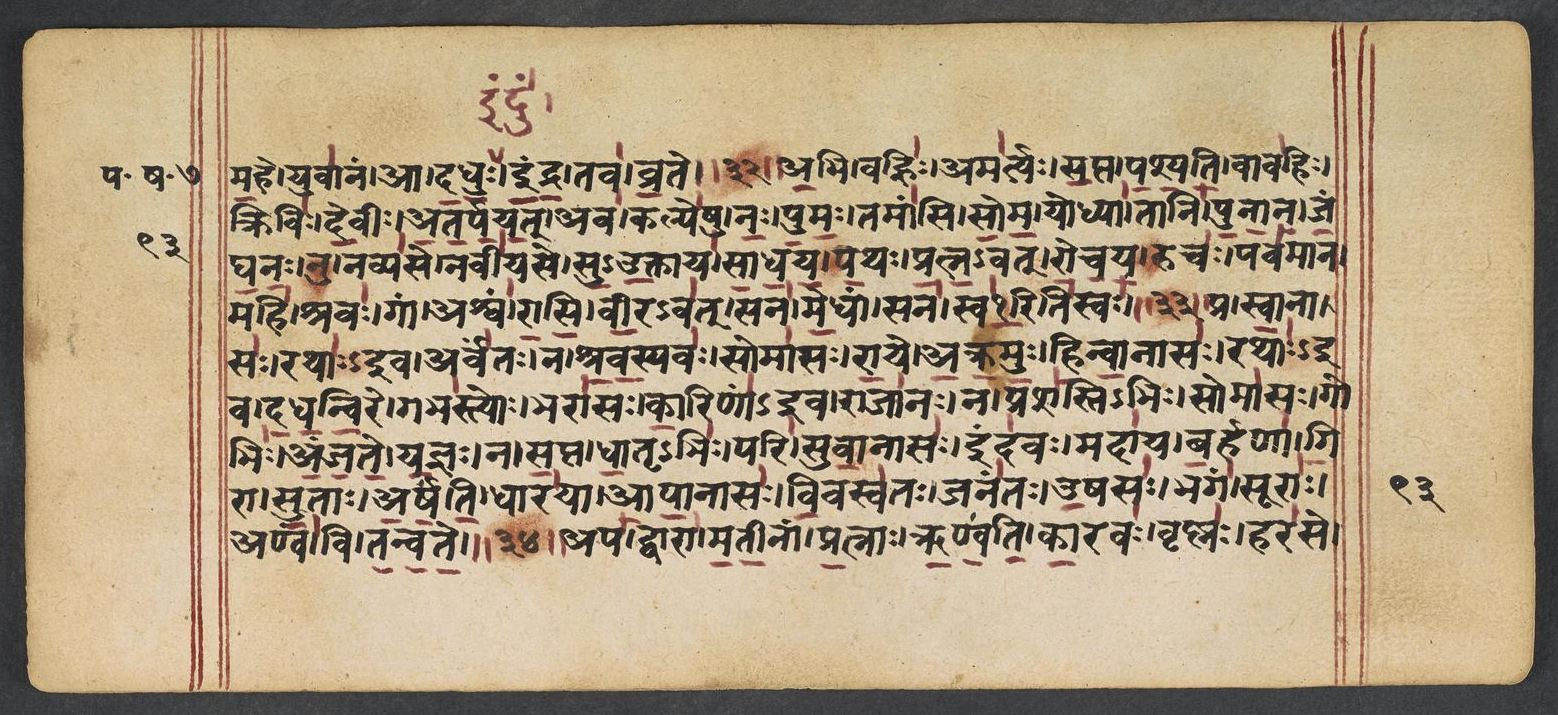
Where on the image
Penn Ms. Coll. 390 Item 41, fol. 671v (numbered 93v by the scribe) (OPenn image 672, upper leaf). Checked on the image: the Rigveda text on this page begins in RV 9.9.5 ‹mahe yuvānam ā dadhuḥ›. The next page with Rigveda text, fol. 672r (numbered 94r by the scribe), begins in RV 9.10.6 ‹āyavaḥ›. Verses 9.10.1-5 end on this page.
1pra svā̱nāso̱ rathā̍ i̱vārva̍nto̱ na śra̍va̱syava̍ḥ | somā̍so rā̱ye a̍kramuḥ ||
2hi̱nvā̱nāso̱ rathā̍ iva dadhanvi̱re gabha̍styoḥ | bharā̍saḥ kā̱riṇā̍m iva ||
3rājā̍no̱ na praśa̍stibhi̱ḥ somā̍so̱ gobhi̍r añjate | ya̱jño na sa̱pta dhā̱tṛbhi̍ḥ ||
4pari̍ suvā̱nāsa̱ inda̍vo̱ madā̍ya ba̱rhaṇā̍ gi̱rā | su̱tā a̍rṣanti̱ dhāra̍yā ||
5ā̱pā̱nāso̍ vi̱vasva̍to̱ jana̍nta u̱ṣaso̱ bhaga̍m | sūrā̱ aṇva̱ṁ vi ta̍nvate ||
Compare: Padapāṭha (word-by-word text written in the manuscript; Sansknet e-text via GRETIL)
1pra | svānāsaḥ | rathāḥ-iva | arvantaḥ | na | śravasyavaḥ | somāsaḥ | rāye | akramuḥ
2hinvānāsaḥ | rathāḥ-iva | dadhanvire | gabhastyoḥ | bharāsaḥ | kāriṇām-iva
3rājānaḥ | na | praśasti-bhiḥ | somāsaḥ | gobhiḥ | añjate | yajñaḥ | na | sapta | dhātṛ-bhiḥ
4pari | suvānāsaḥ | indavaḥ | madāya | barhaṇā | girā | sutāḥ | arṣanti | dhārayā
5āpānāsaḥ | vivasvataḥ | janantaḥ | uṣasaḥ | bhagam | sūrāḥ | aṇvam | vi | tanvate
1LIKE cars that thunder on their way, like coursers eager for renown, Have Soma-drops flowed forth for wealth.
2Forth have they rushed from holding hands, like chariots that are urged to speed, Like joyful songs of singing-men.
3The Somas deck themselves with milk, as Kings are graced with eulogies, And, with seven priests, the sacrifice.
4Pressed for the gladdening draught, the drops flow forth abundantly with song, The Soma juices in a stream.
5Winning Vivasvan's glory and producing Morning's light, the Suns Pass through the openings of the cloth.
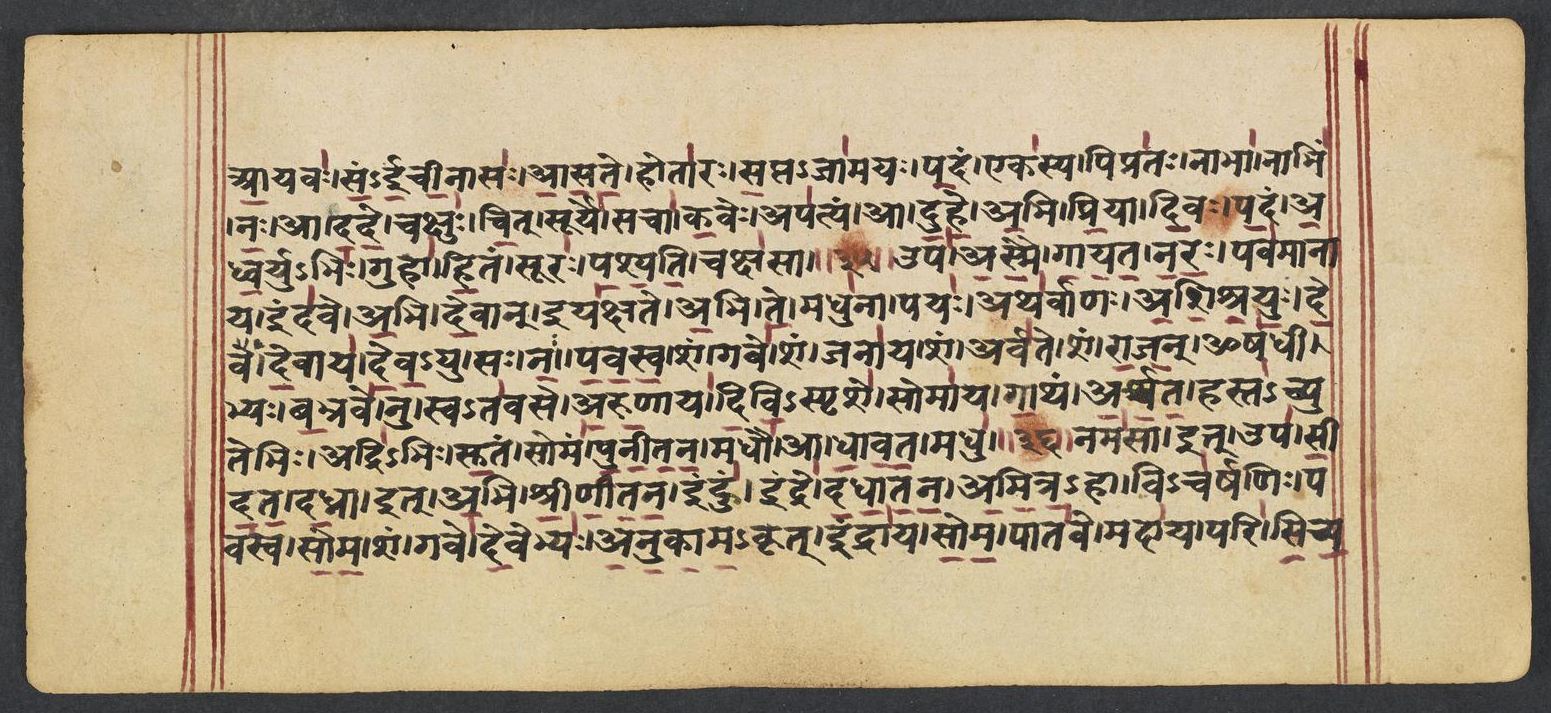
Where on the image
Penn Ms. Coll. 390 Item 41, fol. 672r (numbered 94r by the scribe) (OPenn image 672, lower leaf). Checked on the image: the Rigveda text on this page begins in RV 9.10.6 ‹āyavaḥ›. The next page with Rigveda text, fol. 672v (numbered 94v by the scribe), begins in RV 9.11.8 ‹-sicyase manaḥ-cit manasaḥ patiḥ›. Verses 9.10.6-9 end on this page; 9.10.6 begins on fol. 671v (numbered 93v by the scribe).
6apa̱ dvārā̍ matī̱nām pra̱tnā ṛ̍ṇvanti kā̱rava̍ḥ | vṛṣṇo̱ hara̍sa ā̱yava̍ḥ ||
7sa̱mī̱cī̱nāsa̍ āsate̱ hotā̍raḥ sa̱ptajā̍mayaḥ | pa̱dam eka̍sya̱ pipra̍taḥ ||
8nābhā̱ nābhi̍ṁ na̱ ā da̍de̱ cakṣu̍ś ci̱t sūrye̱ sacā̍ | ka̱ver apa̍tya̱m ā du̍he ||
9a̱bhi pri̱yā di̱vas pa̱dam a̍dhva̱ryubhi̱r guhā̍ hi̱tam | sūra̍ḥ paśyati̱ cakṣa̍sā ||
Compare: Padapāṭha (word-by-word text written in the manuscript; Sansknet e-text via GRETIL)
6apa | dvārā | matīnām | pratnāḥ | ṛṇvanti | kāravaḥ | vṛṣṇaḥ | harase | āyavaḥ
7samīcīnāsaḥ | āsate | hotāraḥ | sapta-jāmayaḥ | padam | ekasya | piprataḥ
8nābhā | nābhim | naḥ | ā | dade | cakṣuḥ | cit | sūrye | sacā | kaveḥ | apatyam | ā | duhe
9abhi | priyā | divaḥ | padam | adhvaryu-bhiḥ | guhā | hitam | sūraḥ | paśyati | cakṣasā
6The singing-men of ancient time open the doors of sacred songs,– Men, for the mighty to accept.
7Combined in close society sit the seven priests, the brother-hood, Filling the station of the One.
8He gives us kinship with the Gods, and with the Sun unites our eye: The Sage's offspring hath appeared.
9The Sun with his dear eye beholds that quarter of the heavens which priests Have placed within the sacred cell.
Notes
- Sanskrit: Aufrecht's edition (1877) with the Vedic accents, as entered by van Nooten and Holland (GRETIL).
- English: Ralph T. H. Griffith, The Hymns of the Rigveda (1889-1892; 2nd ed. 1896-1897), from the VedaWeb digital text; OCR slips in that text were corrected against the printed 2nd edition (data/sources/rigveda/griffith_errata.json).
- Padapāṭha (edition text): Sansknet e-text via GRETIL (CC BY-NC-SA 4.0).
Cite
Sources
- Source: Penn Ms. Coll. 390 Item 41 (undated (catalogued with Penn's 18th-19th c. Vedic manuscripts)), OPenn, Public Domain Mark + Aufrecht's accented text (GRETIL) + Griffith's English (VedaWeb) (holding institution)
- Critical edition: Aufrecht (1877), accented e-text via GRETIL
← previous · → next · v cycle view · l back to library