Rigveda 9.74: To Soma
Introduction
Rigveda 9.74 is a hymn of 9 verses addressed to Soma. It stands in book (maṇḍala) 9, the hymns to Soma Pavamāna. The Rigveda is the oldest collection of Sanskrit hymns, composed in the second half of the second millennium BCE and handed down orally for many centuries before it was written down.
The manuscript shown is Penn Ms. Coll. 390 Item 41 (University of Pennsylvania), an undated paper manuscript of the padapāṭha (the word-by-word recitation text, in which every word is written separately and compounds are split) of the whole Ṛgveda in Devanāgarī, 884 leaves in fascicles, 7-9 lines to the page, accents in red; this hymn stands on fol. 705v-706r. Each section below gives the verses that end on one page; the page boundaries were read on the images (the opening words of every page), not counted out. Where the manuscript is a padapāṭha (the word-by-word recitation text), the section shows Aufrecht's continuous (saṃhitā) text first and, as the edition text, the padapāṭha of the same verses, which is the form written on the page.
How was this verified? (Provenance)
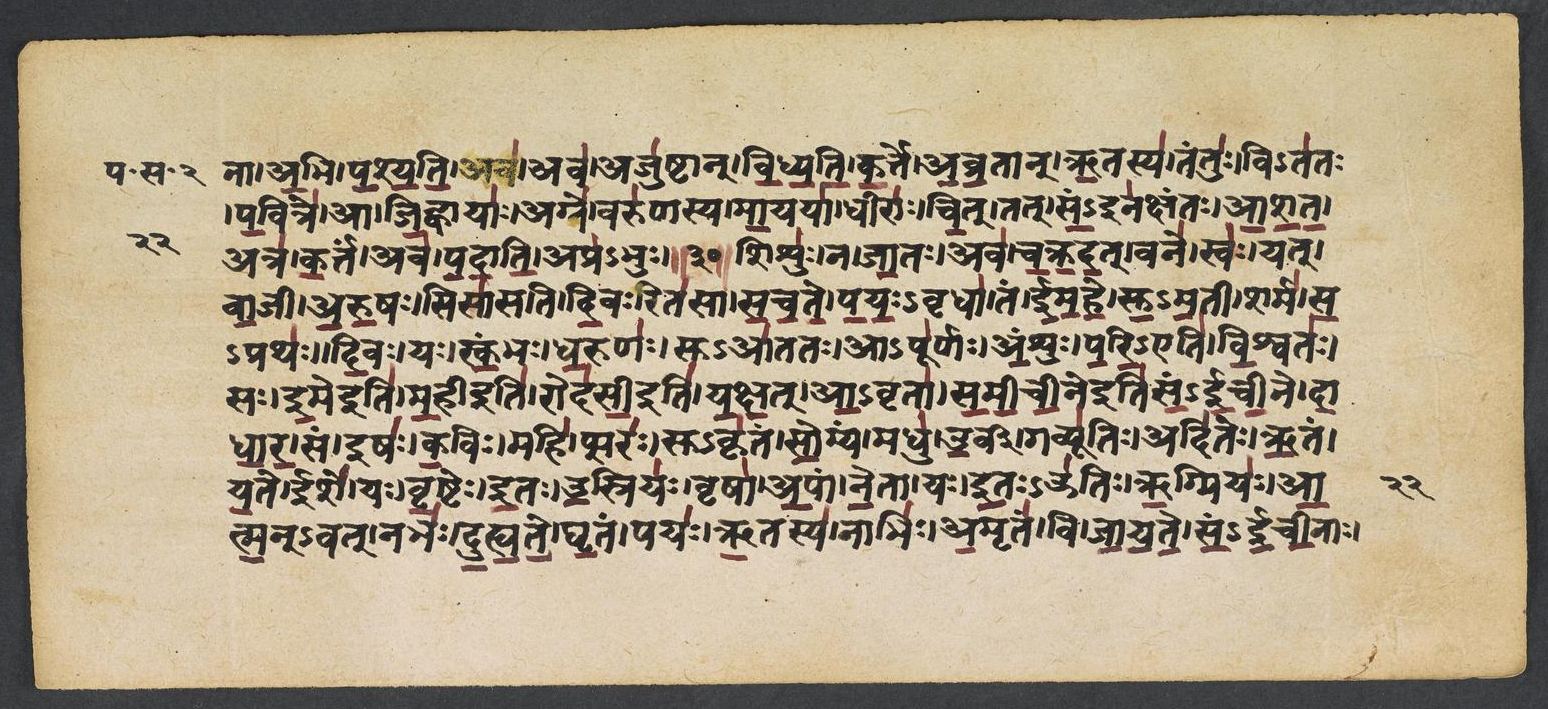
Where on the image
Penn Ms. Coll. 390 Item 41, fol. 705v (numbered 22v by the scribe) (OPenn image 706, upper leaf). Checked on the image: the Rigveda text on this page begins in RV 9.73.8 ‹-bhuvanā abhi paśyati ava›. The next page with Rigveda text, fol. 706r (numbered 23r by the scribe), begins in RV 9.74.4 ‹su-dānavaḥ prīṇanti tam naraḥ›. Verses 9.74.1-3 end on this page.
1śiśu̱r na jā̱to 'va̍ cakrada̱d vane̱ sva1̱̍r yad vā̱jy a̍ru̱ṣaḥ siṣā̍sati | di̱vo reta̍sā sacate payo̱vṛdhā̱ tam ī̍mahe suma̱tī śarma̍ sa̱pratha̍ḥ ||
2di̱vo yaḥ ska̱mbho dha̱ruṇa̱ḥ svā̍tata̱ āpū̍rṇo a̱ṁśuḥ pa̱ryeti̍ vi̱śvata̍ḥ | seme ma̱hī roda̍sī yakṣad ā̱vṛtā̍ samīcī̱ne dā̍dhāra̱ sam iṣa̍ḥ ka̱viḥ ||
3mahi̱ psara̱ḥ sukṛ̍taṁ so̱myam madhū̱rvī gavyū̍ti̱r adi̍ter ṛ̱taṁ ya̱te | īśe̱ yo vṛ̱ṣṭer i̱ta u̱sriyo̱ vṛṣā̱pāṁ ne̱tā ya i̱taū̍tir ṛ̱gmiya̍ḥ ||
Compare: Padapāṭha (word-by-word text written in the manuscript; Sansknet e-text via GRETIL)
1śiśuḥ | na | jātaḥ | ava | cakradat | vane | svaḥ | yat | vājī | aruṣaḥ | sisāsati | divaḥ | retasā | sacate | payaḥ-vṛdhā | tam | īmahe | su-matī | śarma | sa-prathaḥ
2divaḥ | yaḥ | skambhaḥ | dharuṇaḥ | su-ātataḥ | āpūrṇaḥ | aṃśuḥ | pari-eti | viśvataḥ | saḥ | ime iti | mahī iti | rodasī iti | yakṣat | āvṛtā | samīcīne itisam-īcīne | dāhāra | sam | iṣaḥ | kaviḥ
3mahi | psaraḥ | su-kṛtam | somyam | madhu | urvī | gavyūtiḥ | aditeḥ | ṛtam | yate | īśe | yaḥ | vṛṣṭeḥ | itaḥ | usriyaḥ | vṛṣā | apām | netā | yaḥ | itaḥ-ūtiḥ | ṛgmiyaḥ
1BORN like a youngling he hath clamoured in the wood, when he, the Red, the Strong, would win the light of heaven. He comes with heavenly seed that makes the water swell: him for wide-spreading shelter we implore with prayer.
2A far-extended pillar that supports the sky the Soma-stalk, filled full, moves itself every way. He shall bring both these great worlds while the rite proceeds: the Sage holds these who move! together and all food.
3Wide space hath he who follows Aditi's right path, and mighty, well-made food, meath blent with Soma juice; He who from hence commands the rain, Steer of the kine, Leader of floods, who helps us hence, who claims our laud.
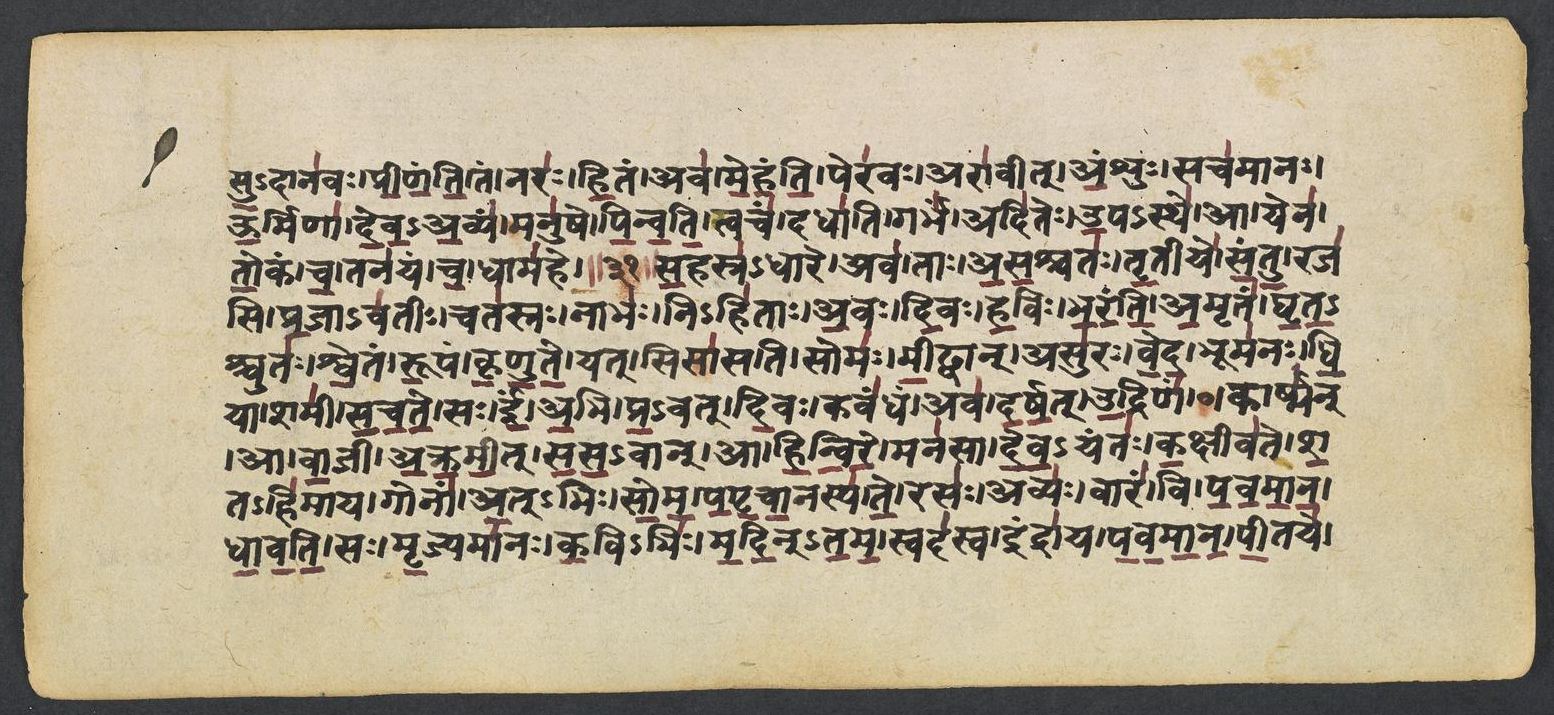
Where on the image
Penn Ms. Coll. 390 Item 41, fol. 706r (numbered 23r by the scribe) (OPenn image 706, lower leaf). Checked on the image: the Rigveda text on this page begins in RV 9.74.4 ‹su-dānavaḥ prīṇanti tam naraḥ›. The next page with Rigveda text, fol. 706v (numbered 23v by the scribe), begins in RV 9.75.1 ‹abhi priyāṇi pavate canaḥ-hitaḥ›. Verses 9.74.4-9 end on this page; 9.74.4 begins on fol. 705v (numbered 22v by the scribe).
4ā̱tma̱nvan nabho̍ duhyate ghṛ̱tam paya̍ ṛ̱tasya̱ nābhi̍r a̱mṛta̱ṁ vi jā̍yate | sa̱mī̱cī̱nāḥ su̱dāna̍vaḥ prīṇanti̱ taṁ naro̍ hi̱tam ava̍ mehanti̱ pera̍vaḥ ||
5arā̍vīd a̱ṁśuḥ saca̍māna ū̱rmiṇā̍ devā̱vya1̱̍m manu̍ṣe pinvati̱ tvaca̍m | dadhā̍ti̱ garbha̱m adi̍ter u̱pastha̱ ā yena̍ to̱kaṁ ca̱ tana̍yaṁ ca̱ dhāma̍he ||
6sa̱hasra̍dhā̱re 'va̱ tā a̍sa̱ścata̍s tṛ̱tīye̍ santu̱ raja̍si pra̱jāva̍tīḥ | cata̍sro̱ nābho̱ nihi̍tā a̱vo di̱vo ha̱vir bha̍ranty a̱mṛta̍ṁ ghṛta̱ścuta̍ḥ ||
7śve̱taṁ rū̱paṁ kṛ̍ṇute̱ yat siṣā̍sati̱ somo̍ mī̱ḍhvām̐ asu̍ro veda̱ bhūma̍naḥ | dhi̱yā śamī̍ sacate̱ sem a̱bhi pra̱vad di̱vas kava̍ndha̱m ava̍ darṣad u̱driṇa̍m ||
8adha̍ śve̱taṁ ka̱laśa̱ṁ gobhi̍r a̱ktaṁ kārṣma̱nn ā vā̱jy a̍kramīt sasa̱vān | ā hi̍nvire̱ mana̍sā deva̱yanta̍ḥ ka̱kṣīva̍te śa̱tahi̍māya̱ gonā̍m ||
9a̱dbhiḥ so̍ma papṛcā̱nasya̍ te̱ raso 'vyo̱ vāra̱ṁ vi pa̍vamāna dhāvati | sa mṛ̱jyamā̍naḥ ka̱vibhi̍r madintama̱ svada̱svendrā̍ya pavamāna pī̱taye̍ ||
Compare: Padapāṭha (word-by-word text written in the manuscript; Sansknet e-text via GRETIL)
4ātman-vat | nabhaḥ | duhyate | ghṛtam | payaḥ | ṛtasya | nābhiḥ | amṛtam | vi | jāyate | samīcīnāḥ | su-dānavaḥ | prīṇanti | tam | naraḥ | hitam | ava | mehanti | peravaḥ
5arāvīt | aṃśuḥ | sacamānaḥ | ūrmiṇā | deva-avyam | manuṣe | pinvati | tvacam | dadhāti | garbham | aditeḥ | upa-sthe | ā | yena | tokam | ca | tanayam | ca | dhāmahe
6sahasra-dhāre | ava | tāḥ | asaścataḥ | tṛtīye | santu | rajasi | prajāvatīḥ | catasraḥ | nābhaḥ | ni-hitāḥ | avaḥ | divaḥ | haviḥ | bharanti | amṛtam | ghṛta-ścutaḥ
7śvetam | rūpam | kṛṇute | yat | sisāsati | somaḥ | mīḍhavān | asuraḥ | veda | bhūmanaḥ | dhiyā | śamī | sacate | saḥ | īm | abhi | pra-vat | divaḥ | kavandham | ava | darṣat | udriṇam
8adha | śvetam | kalaśam | gobhiḥ | aktam | kārṣman | ā | vājī | akramīt | sasa-vān | ā | hinvire | manasā | deva-yantaḥ | kakṣīvate | śata-himāya | gonām
9at-bhiḥ | soma | papṛcānasya | te | rasaḥ | avyaḥ | vāram | vi | pavamāna | dhāvati | saḥ | mṛjyamānaḥ | kavi-bhiḥ | madin-tama | svadasva | indrāya | pavamāna | pītaye
4Butter and milk are drawn from animated cloud; thence Amrit is produced, centre of sacrifice. Hini the Most Bounteous Ones, ever united, love; him as our Friend the Men who make all swell rain down.
5The Soma-stalk hath roared, following with the wave: he swells with sap for man the skin which Gods enjoy. Upon the lap of Aditi he lays the germ, by means whereof we gain children and progeny.
6In the third region which distils a thousand streams, may the Exhaustless Ones descend with procreant power. The kindred Four have been sent downward from the heavens: dropping with oil they bring Amrit and sacred gifts.
7Soma assumes white colour when he strives to gain: the bounteous Asura knows full many a precious boon. Down the steep slope, through song, he comes to sacrifice, and he will burst the water-holding cask of heaven,
8Yea, to the shining milk-anointed beaker, as to his goal, hath stepped the conquering Courser. Pious-souled men have sent their gifts of cattle unto Kakshîvân of the hundred winters.
9Soma, thy juice when thou art blended with the streams, flows, Pavamâna, through the long wool of the sheep. So, cleansed by sages. O best giver of delight, grow sweet for Indra, Pavamâna! for his drink.
Notes
- Sanskrit: Aufrecht's edition (1877) with the Vedic accents, as entered by van Nooten and Holland (GRETIL).
- English: Ralph T. H. Griffith, The Hymns of the Rigveda (1889-1892; 2nd ed. 1896-1897), from the VedaWeb digital text; OCR slips in that text were corrected against the printed 2nd edition (data/sources/rigveda/griffith_errata.json).
- Padapāṭha (edition text): Sansknet e-text via GRETIL (CC BY-NC-SA 4.0).
Cite
Sources
- Source: Penn Ms. Coll. 390 Item 41 (undated (catalogued with Penn's 18th-19th c. Vedic manuscripts)), OPenn, Public Domain Mark + Aufrecht's accented text (GRETIL) + Griffith's English (VedaWeb) (holding institution)
- Critical edition: Aufrecht (1877), accented e-text via GRETIL
← previous · → next · v cycle view · l back to library