Rigveda 9.73: To Soma
Introduction
Rigveda 9.73 is a hymn of 9 verses addressed to Soma. It stands in book (maṇḍala) 9, the hymns to Soma Pavamāna. The Rigveda is the oldest collection of Sanskrit hymns, composed in the second half of the second millennium BCE and handed down orally for many centuries before it was written down.
The manuscript shown is Penn Ms. Coll. 390 Item 41 (University of Pennsylvania), an undated paper manuscript of the padapāṭha (the word-by-word recitation text, in which every word is written separately and compounds are split) of the whole Ṛgveda in Devanāgarī, 884 leaves in fascicles, 7-9 lines to the page, accents in red; this hymn stands on fol. 704v-705v. Each section below gives the verses that end on one page; the page boundaries were read on the images (the opening words of every page), not counted out. Where the manuscript is a padapāṭha (the word-by-word recitation text), the section shows Aufrecht's continuous (saṃhitā) text first and, as the edition text, the padapāṭha of the same verses, which is the form written on the page.
How was this verified? (Provenance)
Where on the image
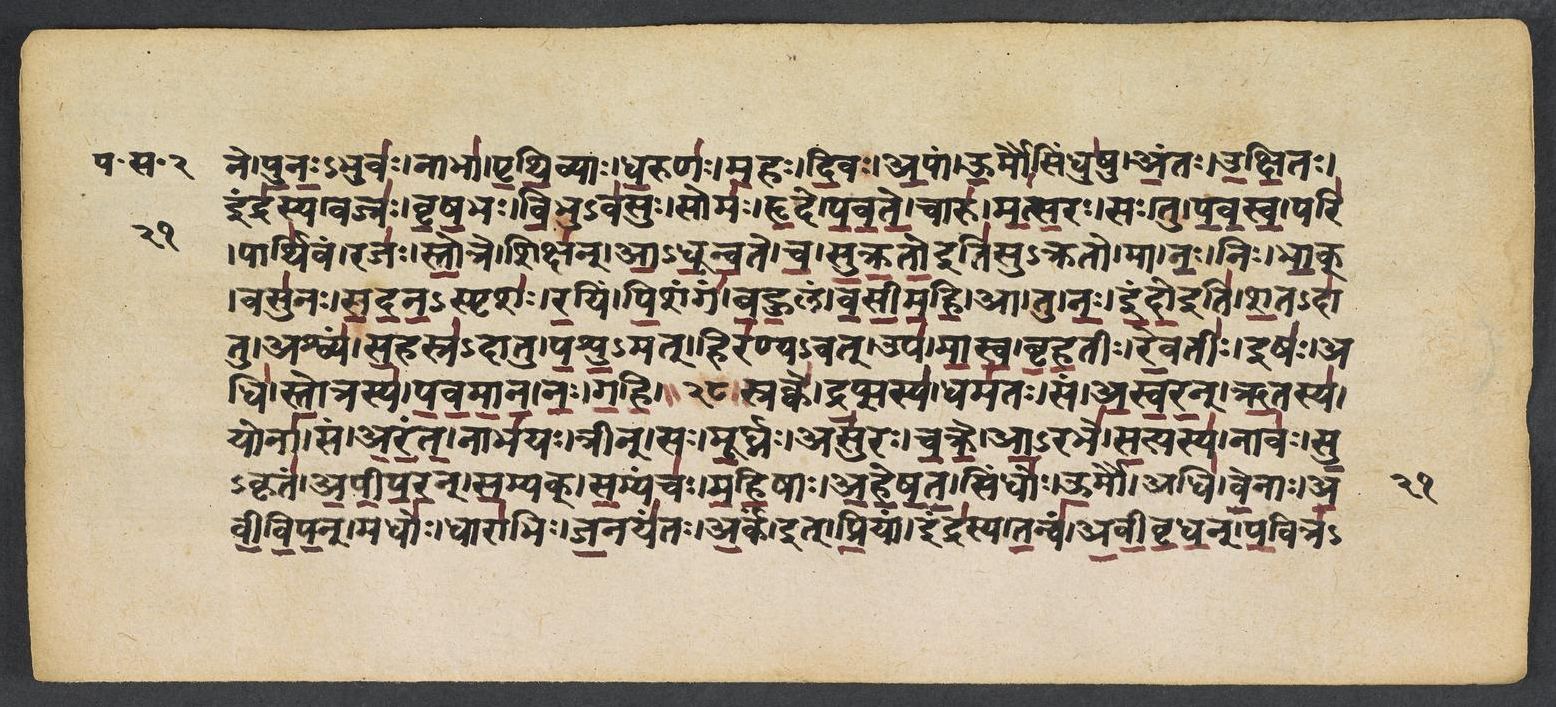
Penn Ms. Coll. 390 Item 41, fol. 704v (numbered 21v by the scribe) (OPenn image 705, upper leaf). Checked on the image: the Rigveda text on this page begins in RV 9.72.6 ‹-sadane punaḥ-bhuvaḥ›. The next page with Rigveda text, fol. 705r (numbered 22r by the scribe), begins in RV 9.73.3 ‹-pavitra-vantaḥ pari vācam āsate›. Verses 9.73.1-2 end on this page.
1srakve̍ dra̱psasya̱ dhama̍ta̱ḥ sam a̍svarann ṛ̱tasya̱ yonā̱ sam a̍ranta̱ nābha̍yaḥ | trīn sa mū̱rdhno asu̍raś cakra ā̱rabhe̍ sa̱tyasya̱ nāva̍ḥ su̱kṛta̍m apīparan ||
2sa̱myak sa̱myañco̍ mahi̱ṣā a̍heṣata̱ sindho̍r ū̱rmāv adhi̍ ve̱nā a̍vīvipan | madho̱r dhārā̍bhir ja̱naya̍nto a̱rkam it pri̱yām indra̍sya ta̱nva̍m avīvṛdhan ||
Compare: Padapāṭha (word-by-word text written in the manuscript; Sansknet e-text via GRETIL)
1srakve | drapsasya | dhamataḥ | sam | asvaran | ṛtasya | yonā | sam | aranta | nābhayaḥ | trīn | saḥ | mūrdhnaḥ | asuraḥ | cakre | ārabhe | satyasya | nāvaḥ | su-kṛtam | apīparan
2samyak | samyañcaḥ | mahiṣāḥ | aheṣata | sindhoḥ | ūrmau | adhi | venāḥ | avīvipan | madhoḥ | dhārābhiḥ | janayantaḥ | arkam | it | priyām | indrasya | tanvam | avīvṛdhan
1THEY from the spouting drop have sounded at the rim: naves speed together to the place of sacrifice. That Asura hath formed, to seize, three lofty heights. The ships of truth have borne the pious man across.
2The strong Steers, gathering, have duly stirred themselves,and over the stream's wave the friends sent forth the song. Engendering the hymn, with flowing streams of meath, Indra's dear body have they caused to wax in strength.
Where on the image
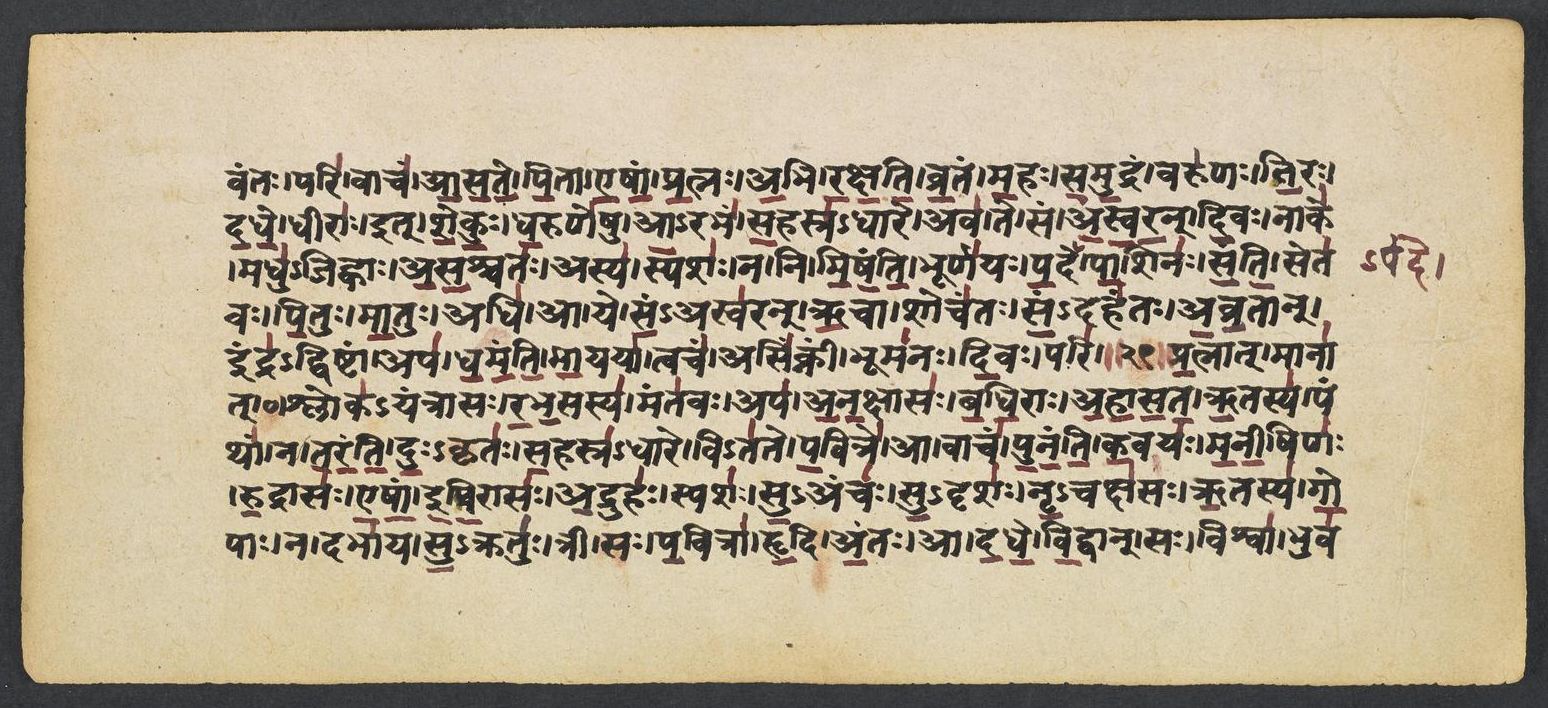
Penn Ms. Coll. 390 Item 41, fol. 705r (numbered 22r by the scribe) (OPenn image 705, lower leaf). Checked on the image: the Rigveda text on this page begins in RV 9.73.3 ‹-pavitra-vantaḥ pari vācam āsate›. The next page with Rigveda text, fol. 705v (numbered 22v by the scribe), begins in RV 9.73.8 ‹-bhuvanā abhi paśyati ava›. Verses 9.73.3-7 end on this page; 9.73.3 begins on fol. 704v (numbered 21v by the scribe).
3pa̱vitra̍vanta̱ḥ pari̱ vāca̍m āsate pi̱taiṣā̍m pra̱tno a̱bhi ra̍kṣati vra̱tam | ma̱haḥ sa̍mu̱draṁ varu̍ṇas ti̱ro da̍dhe̱ dhīrā̱ ic che̍kur dha̱ruṇe̍ṣv ā̱rabha̍m ||
4sa̱hasra̍dhā̱re 'va̱ te sam a̍svaran di̱vo nāke̱ madhu̍jihvā asa̱ścata̍ḥ | asya̱ spaśo̱ na ni mi̍ṣanti̱ bhūrṇa̍yaḥ pa̱de-pa̍de pā̱śina̍ḥ santi̱ seta̍vaḥ ||
5pi̱tur mā̱tur adhy ā ye sa̱masva̍rann ṛ̱cā śoca̍ntaḥ sa̱ṁdaha̍nto avra̱tān | indra̍dviṣṭā̱m apa̍ dhamanti mā̱yayā̱ tvaca̱m asi̍knī̱m bhūma̍no di̱vas pari̍ ||
6pra̱tnān mānā̱d adhy ā ye sa̱masva̍ra̱ñ chloka̍yantrāso rabha̱sasya̱ manta̍vaḥ | apā̍na̱kṣāso̍ badhi̱rā a̍hāsata ṛ̱tasya̱ panthā̱ṁ na ta̍ranti du̱ṣkṛta̍ḥ ||
7sa̱hasra̍dhāre̱ vita̍te pa̱vitra̱ ā vāca̍m punanti ka̱vayo̍ manī̱ṣiṇa̍ḥ | ru̱drāsa̍ eṣām iṣi̱rāso̍ a̱druha̱ḥ spaśa̱ḥ svañca̍ḥ su̱dṛśo̍ nṛ̱cakṣa̍saḥ ||
Compare: Padapāṭha (word-by-word text written in the manuscript; Sansknet e-text via GRETIL)
3pavitra-vantaḥ | pari | vācam | āsate | pitaā | eṣām | pratnaḥ | abhi | rakṣati | vratam | mahaḥ | samudram | varuṇaḥ | tiraḥ | dadhe | dhīrāḥ | it | śekuḥ | dharuṇeṣu | ārabham
4sahasra-dhāre | ava | te | sam | asaran | divaḥ | nāke | madhu-jihvāḥ | asaścataḥ | asya | spaśaḥ | na | ni | miṣanti | bhūrṇayaḥ | pade-pade | pāśinaḥ | santi | setavaḥ
5pituḥ | mātuḥ | adhi | ā | ye | sam-asvaran | ṛcā | śocantaḥ | sam-dahantaḥ | avratān | indra-dviṣṭām | apa | dhamanti | māyayā | tvacam | asiknīm | bhūmanaḥ | divaḥ | pari
6pratnāt | mānāt | adhi | ā | ye | sam-asvaran | śloka-yantrāsaḥ | rabhasasya | mantavaḥ | apa | anakṣāsaḥ | badhirāḥ | ahāsata | ṛtasya | panthām | na | taranti | duḥ-kṛtaḥ
7sahasra-dhāre | vi-tate | pavitre | ā | vācam | punanti | kavayaḥ | manīṣiṇaḥ | rudrāsaḥ | eṣām | iṣirāsaḥ | adruhaḥ | spaśaḥ | su-añcaḥ | su-dṛśaḥ | nṛ-cakṣasaḥ
3With sanctifying gear they sit around the song: their ancient Father guards their holy work from harm. Varuṇa hath o'erspread the mighty sea of air. Sages had power to hold him in sustaining floods.
4Sweet-tongued, exhaustless, they have sent their voices down together, in heaven's vault that pours a thousand streams. His wildly-restless warders never close an eye: in every place are found the bonds that bind man last.
5O'er Sire and Mother they have roared in unison bright with the verse of praise, burning up riteless men, Blowing away with supernatural might from earth and from the heavens the swarthy skin which Indra hates.
6Those which, as guides of song and counsellors of speed, were manifested from their ancient dwelling place,– From these the eyeless and the deaf have turned aside: the wicked travel not the pathway of the Law.
7What time the filter with a thousand streams is stretched, the thoughtful sages purify their song therein. Bright-coloured are their spies, vigorous, void of guile, excellent, fair to see, beholders of mankind.
Where on the image
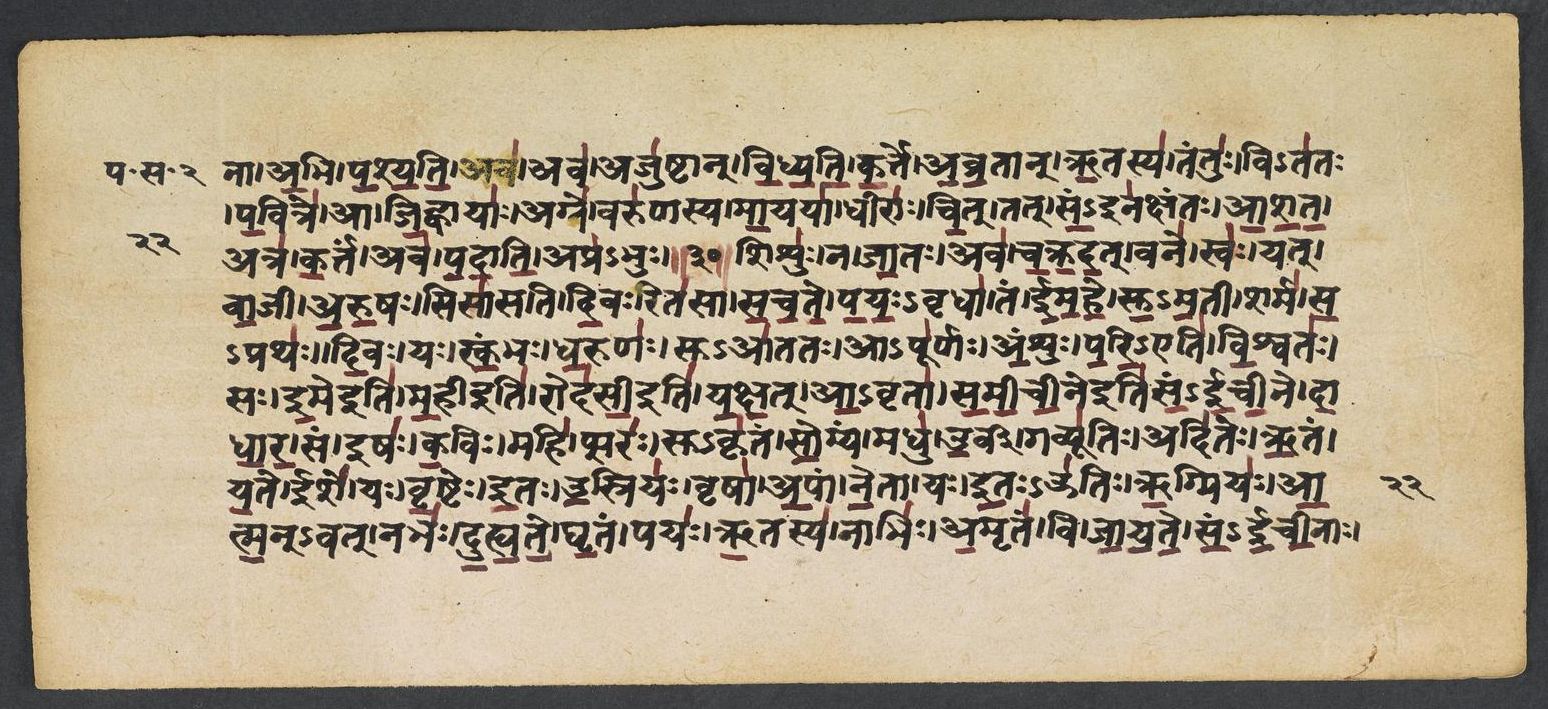
Penn Ms. Coll. 390 Item 41, fol. 705v (numbered 22v by the scribe) (OPenn image 706, upper leaf). Checked on the image: the Rigveda text on this page begins in RV 9.73.8 ‹-bhuvanā abhi paśyati ava›. The next page with Rigveda text, fol. 706r (numbered 23r by the scribe), begins in RV 9.74.4 ‹su-dānavaḥ prīṇanti tam naraḥ›. Verses 9.73.8-9 end on this page; 9.73.8 begins on fol. 705r (numbered 22r by the scribe).
8ṛ̱tasya̍ go̱pā na dabhā̍ya su̱kratu̱s trī ṣa pa̱vitrā̍ hṛ̱dy a1̱̍ntar ā da̍dhe | vi̱dvān sa viśvā̱ bhuva̍nā̱bhi pa̍śya̱ty avāju̍ṣṭān vidhyati ka̱rte a̍vra̱tān ||
9ṛ̱tasya̱ tantu̱r vita̍taḥ pa̱vitra̱ ā ji̱hvāyā̱ agre̱ varu̍ṇasya mā̱yayā̍ | dhīrā̍ś ci̱t tat sa̱mina̍kṣanta āśa̱tātrā̍ ka̱rtam ava̍ padā̱ty apra̍bhuḥ ||
Compare: Padapāṭha (word-by-word text written in the manuscript; Sansknet e-text via GRETIL)
8ṛtasya | gopāḥ | na | dabhāya | su-kratuḥ | trī | saḥ | pavitrā | hṛdi | antaḥ | ā | dadhe | vidvān | saḥ | viśvā | bhuvanā | abhi | paśyati | ava | ajuṣṭān | vidhyati | karte | avratān
9ṛtasya | tantuḥ | vi-tataḥ | pavitre | ā | jihvāyāḥ | agre | varuṇasya | māyayā | dhīrāḥ | cit | tat | sam-inakṣantaḥ | āśata | atra | kartam | ava | padāti | apra-bhuḥ
8Guardian of Law, most wise, he may not be deceived: three Purifiers hath he set within his heart. With wisdom he beholds all creatures that exist: he drives into the pit the hated riteless ones.
9The thread of sacrifice spun in the cleansing sieve, on Varuṇa's tongue-tip, by supernatural might,– This, by their striving, have the prudent ones attained: he who hath not this power shall sink into the pit.
Notes
- Sanskrit: Aufrecht's edition (1877) with the Vedic accents, as entered by van Nooten and Holland (GRETIL).
- English: Ralph T. H. Griffith, The Hymns of the Rigveda (1889-1892; 2nd ed. 1896-1897), from the VedaWeb digital text; OCR slips in that text were corrected against the printed 2nd edition (data/sources/rigveda/griffith_errata.json).
- Padapāṭha (edition text): Sansknet e-text via GRETIL (CC BY-NC-SA 4.0).
Cite
Sources
- Source: Penn Ms. Coll. 390 Item 41 (undated (catalogued with Penn's 18th-19th c. Vedic manuscripts)), OPenn, Public Domain Mark + Aufrecht's accented text (GRETIL) + Griffith's English (VedaWeb) (holding institution)
- Critical edition: Aufrecht (1877), accented e-text via GRETIL
← previous · → next · v cycle view · l back to library